US-Japan Trade and Investment golden age agreement - Oct 2025
Executive Summary
Japan’s “golden age agreement” refers to a set of significant bilateral accords signed in October 2025 between US President Donald Trump and Japan’s newly appointed Prime Minister Sanae Takaichi.
These agreements mark a major deepening of US-Japan strategic, economic, and technology relations—often described as launching a “golden age” for the alliance.
Introduction
The 2025 United States–Japan Strategic Economic and Security Accords
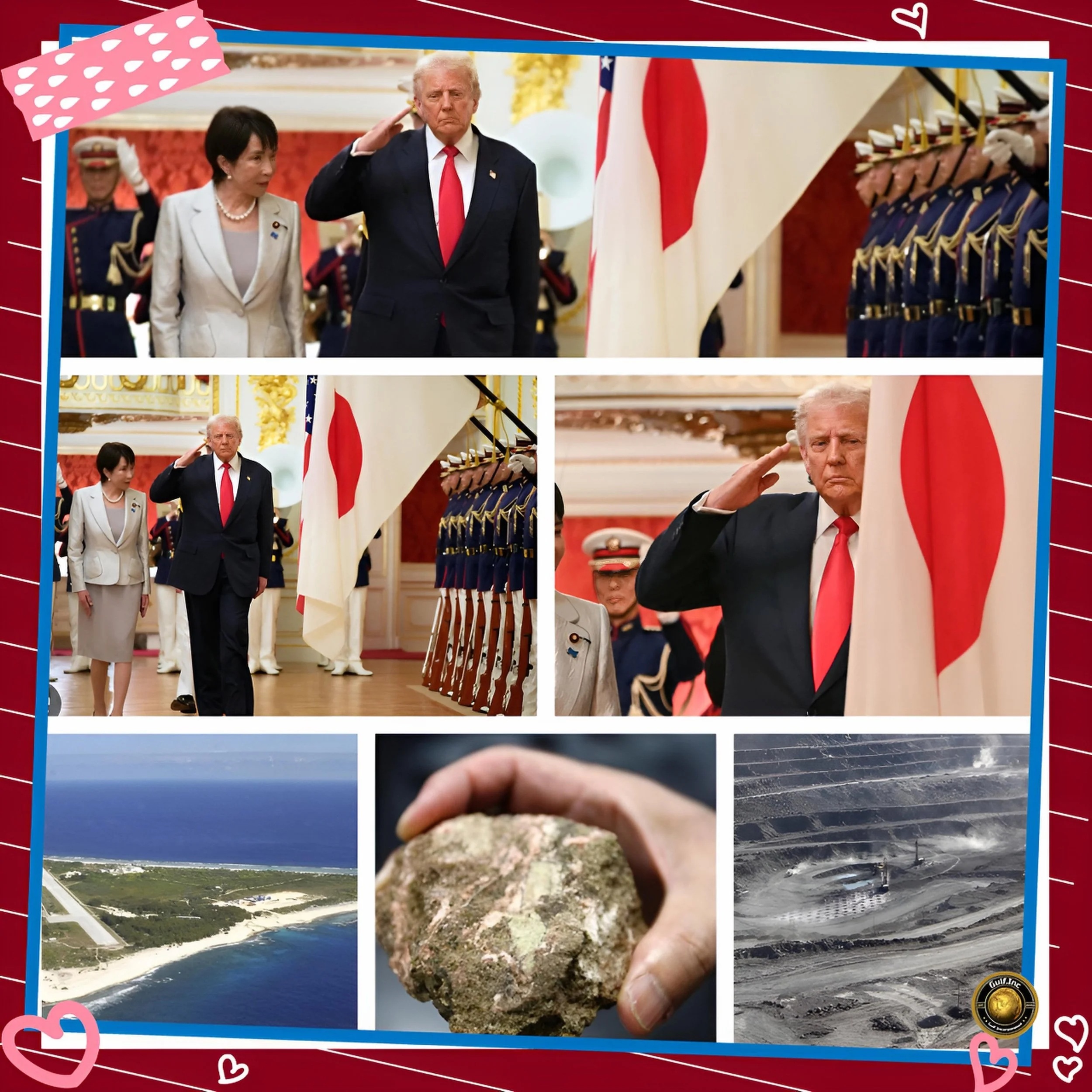
In October 2025, President Donald Trump and Prime Minister Sanae Takaichi finalized a series of landmark agreements in Tokyo, heralding what both leaders described as the “New Golden Age” of the United States–Japan strategic alliance.
These accords encompass multiple domains—including trade, investment, critical minerals, defense cooperation, shipbuilding, and advanced technology—representing the most comprehensive redefinition of bilateral relations in recent decades.
Framework Agreement: “New Golden Age of Alliance”
The primary accord formalized commitments initially outlined in July 2025.
The United States established a nationwide 15 percent baseline tariff on nearly all Japanese imports, representing a reduction from the previously threatened 25 percent general tariff and the 27.5 percent rate on automobiles.
In exchange, Japan committed to investing $550 billion into American industries through 2029.
This investment will be overseen by a U.S.-led body with presidential authority.
Additional provisions include annual Japanese purchases of USD 8 billion in U.S. agricultural exports and USD 7 billion in energy commodities, expanded access for U.S.-certified vehicles exempt from redundant Japanese testing procedures, and mechanisms aimed at aligning regulatory standards between the two nations.
Critical Minerals and Rare Earths Compact
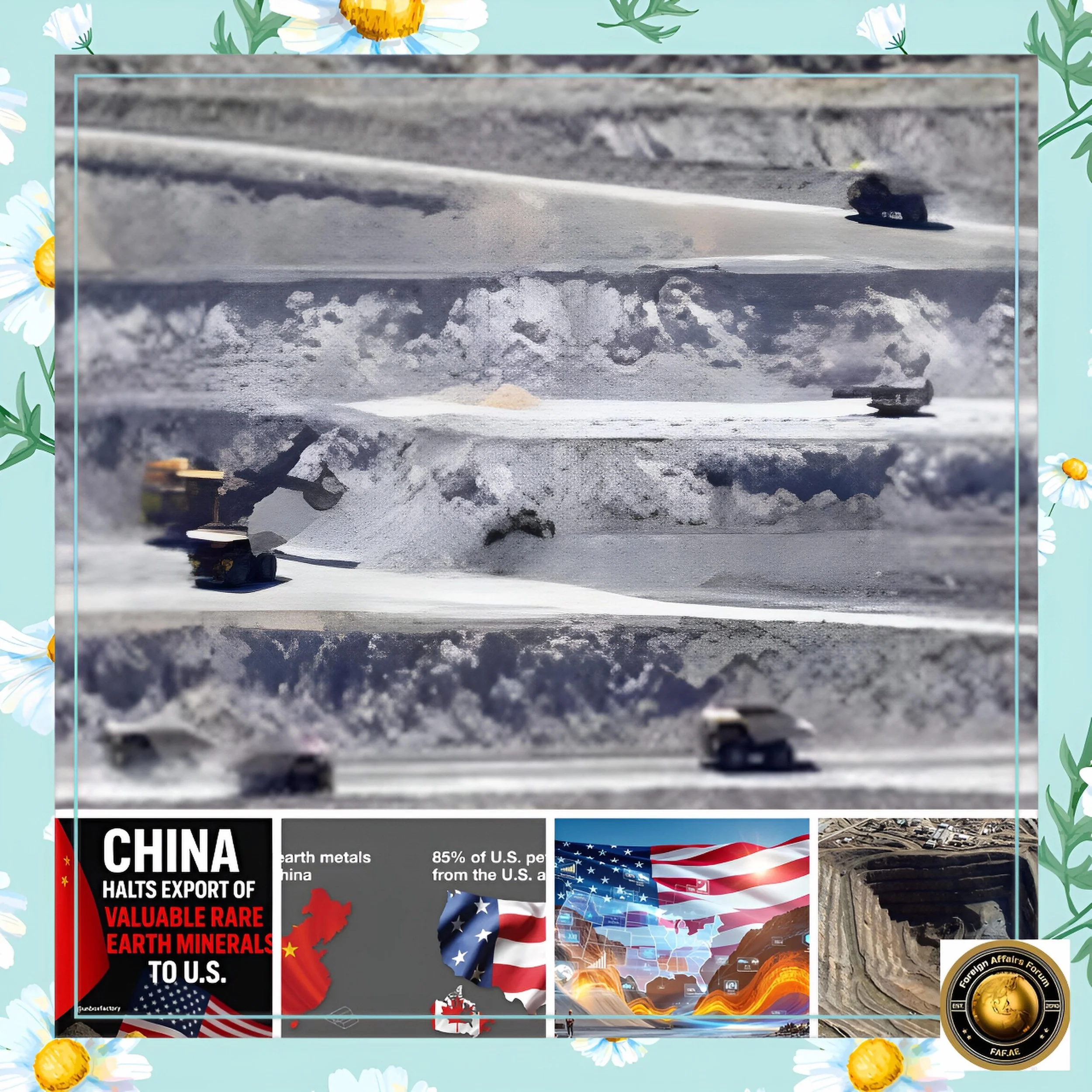
Concurrently signed on October 28, the Critical Minerals and Rare Earths Agreement aims to strengthen supply chain resilience against geopolitical disruptions, particularly those caused by China’s market dominance. Key provisions include.
Joint financing of new mining and processing initiatives within six months.
Establishment of a coordinated governmental “Rapid Response Group” to address emergent supply shocks.
Streamlined permitting processes to accelerate project initiation.
Bilateral stockpiling initiatives to ensure long-term mineral accessibility.
Shipbuilding and Maritime Industrial Cooperation
A supplementary memorandum established a cooperative framework for shipbuilding, integrating investment strategies, technology exchange, and workforce development to expand the maritime industrial capabilities of both nations.
The Technology Prosperity Deal
Another memorandum of cooperation concentrates on emerging technologies—including artificial intelligence, quantum computing, fusion energy, biotechnology, space exploration, 6G development, and secure cloud ecosystems—aims to synchronize research and industrial innovation efforts between both countries.
Is Rare earth mineral agrememt viable?
Japan harbors one of the world’s largest rare earth deposits, estimated at 230–234 million tons, mainly under the Pacific near Minami-Tori-shima Island; these reserves encompass vast quantities of cobalt and nickel sufficient for decades of domestic industrial demand.
Despite their abundance, extraction at 5,000–6,000 meters depth poses formidable technical and economic challenges, rendering exploitation costly and reliant on sophisticated deep-sea mining technologies.
Japan has the rare earth mineral reserves and technical capacity to meet a significant portion of US strategic needs, particularly through recent bilateral agreements aimed at diversifying supply chains and reducing reliance on China.
The new Japan–US framework emphasizes joint mining, processing, investment, and emergency stockpiling to ensure resilient access for both nations’ defense, energy, and technology sectors.
While Japan possesses massive seabed deposits and advanced magnet manufacturing capabilities, practical supply to the US will depend on scaling up mining, overcoming deep-sea extraction challenges, and accelerating non-Chinese processing capacities.
Immediate US needs can be supported by Japanese reserves, but the full supply chain integration—from ore mining to finished magnets—remains under construction, with the partnership projected to attract billions in investment and expand industrial cooperation in the coming years.
Japan’s Tariff Context
Japan continues to uphold one of the most liberal trade regimes globally. According to data from the World Trade Organization (WTO) and the United States International Trade Administration, Japan’s average Most Favored Nation (MFN) tariff stands at 4.3 percent overall, with agricultural goods facing a tariff of 15.5 percent and non-agricultural products at just 2.5 percent.
Notably, key industrial sectors such as transportation equipment and electrical machinery are subject to near-zero tariffs.
Tokyo has articulated that, under the new U.S.–Japan agreement, no tariff concessions have been made that conflict with Japan’s WTO commitments.
Japanese authorities describe the agreement as non-binding and explicitly outside the scope of the WTO’s regional trade framework. Instead, it emphasizes targeted efforts to expand imports and liberalize regulations.
Policy and Economic Analysis
Center for Strategic and International Studies (CSIS)
CSIS analysts argue that the agreement unduly favors United States discretion. The $550 billion investment framework centralizes decision-making within Washington, limiting Japan’s agency. Tariffs may be re-imposed as a means of enforcement, thereby preserving the United States’ ability to exercise economic coercion.
Nomura Research Institute
Takahide Kiuchi has projected that Japan’s gross domestic product (GDP) could contract by approximately 0.55 percent, effectively negating a full year of economic growth.
This decline is expected to result primarily from increased import costs and macroeconomic uncertainty. Kiuchi estimates there is a fifty percent probability that Japan may enter a mild recession within the next fiscal year.
Oxford Economics
The firm maintains a cautious outlook, asserting that the incremental gains from reduced automotive tariffs are overshadowed by ongoing global trade volatility and Japan’s fragile domestic recovery.
Peterson Institute for International Economics (PIIE)
Senior Fellow Mary Lovely has contended that the agreement will have inflationary effects on the United States.
The fifteen percent tariff could lead to higher consumer prices, particularly within the automotive sector, while Japan is unlikely to experience significant increases in export access.
Hoover Institution
Scholars affiliated with the Hoover Institution describe the accords as mutually disadvantageous: American consumers will face higher prices, and Japanese markets will remain largely unaffected in terms of openness to U.S. goods.
Paul Krugman’s Macro Perspective
Nobel laureate Paul Krugman identified three systemic issues: first, increased Japanese investment inflows will widen the U.S. trade deficit through dollar appreciation; second, direct presidential control over investment decisions fosters crony capitalism, which distorts market efficiency; and third, higher import tariffs will exacerbate consumer inflation, undermining the purported economic benefits.
Brookings Institution
Analysts from the Brookings Institution observed inconsistencies between the summaries published by Washington and Tokyo.
The U.S. version describes Japan’s $550 billion commitment as a quasi-sovereign transfer overseen by President Trump, with profit-sharing ratios favoring the United States.
Conversely, Japan characterizes it as a combination of loans, credit guarantees, and limited equity investments. These discrepancies highlight the agreement’s structural ambiguity and potential diplomatic tensions.
Center for Economic and Policy Research (CEPR)
CEPR scholars dismiss the $550 billion figure as unrealistic, equating it to roughly thirteen percent of Japan’s Gross Domestic Product (GDP), and label it as "economically implausible.” They question the credibility of the public portrayal of the agreement.
Carnegie Endowment for International Peace
Researchers from the Carnegie Endowment caution that Japan’s proposed commitment—comparable to its entire annual tax revenue—may place significant fiscal strain on Tokyo.
They further warn that dependence on U.S. policy discretion could pose existential risks should Washington’s stance on China or Taiwan shift abruptly.
Overall, the analysis indicates that Japan maintains a relatively open trade posture, with specific strategic and diplomatic considerations shaping the interpretation and impact of recent agreements.
The economic forecasts and policy analyses collectively suggest cautious optimism tempered by concern over potential economic and geopolitical risks.
Implementation Challenges and Geopolitical Implications
The governing Memorandum of Understanding (MoU) explicitly grants the President of the United States exclusive authority over investment allocations, which are managed through a Commerce Department-chaired oversight committee comprising key officials from both agencies.
Japan is obligated to disburse approved funds within a strict 45-day window from approval; failure to do so results in the immediate reinstatement of tariffs that had been previously reduced or eliminated, serving as a punitive measure.
Profit-sharing clauses within the agreement stipulate that once specific financial thresholds—such as repayment of initial investments plus a 10% return—are achieved, 90% of subsequent profits are to be distributed to the United States, ensuring substantial financial gains.
However, there are ongoing discrepancies concerning the origin of funding—particularly whether funds are sourced from Japan’s sovereign financial institutions, including the Japan Bank for International Cooperation (JBIC) and Nippon Export and Investment Insurance (NEXI)—and what implications this has for Japan’s already elevated debt-to-GDP ratio, which stands at approximately 216 percent as of recent fiscal data.
Though Japan maintains that these commitments are not legally binding and lack enforceability, the U.S. government characterizes them as binding financial obligations, implying legal enforceability and potential repercussions for non-compliance.
Analysts interpret the agreement as a prototype for similar frameworks currently under negotiation with South Korea and the European Union, reflecting a broader strategic shift during the Trump administration toward transactional economic statecraft.
This approach favors investment pledges over traditional trade liberalization efforts, emphasizing direct economic incentives and strategic gains rather than comprehensive trade agreements.
Conclusion
The agreements between the United States and Japan in 2025 represent an unprecedented development in international trade relations, combining traditional tariff negotiations with substantial directed investment commitments.
While these agreements address significant supply chain vulnerabilities—particularly concerning critical minerals predominantly controlled by China—there are notable concerns among scholars regarding economic efficiency, the practicality of implementation, and the precedence set by politically-driven cross-border investments.
Japan has succeeded in securing lower tariffs than initially threatened (15% compared to 25-27.5%), albeit at the expense of considerable financial commitments amid ongoing domestic economic challenges.
The asymmetric nature of these arrangements—where the United States maintains leverage through tariff threats while channeling Japanese capital—has been characterized by numerous scholars as a shift away from rules-based trade towards bilateral, managed trade arrangements that prioritize political relationships over economic efficiency.
The central question pertains to identifying the true beneficiaries and losers resulting from these agreements.
A deeper analysis indicates that consumers in both nations are likely to bear the economic burden, amid ongoing uncertainties concerning tariff power dynamics, disbursement decisions, and the potential for a recession in both Japan and the United States.