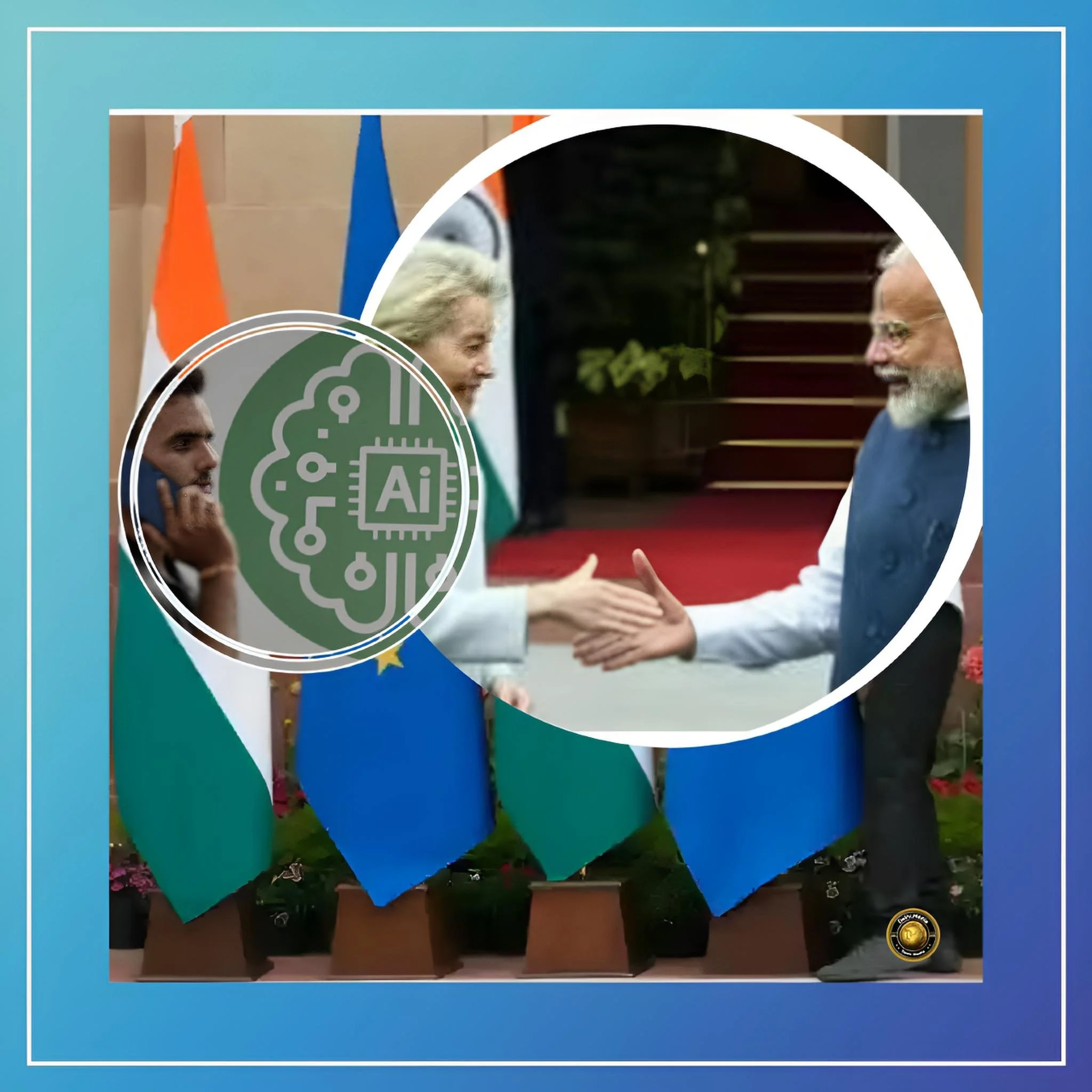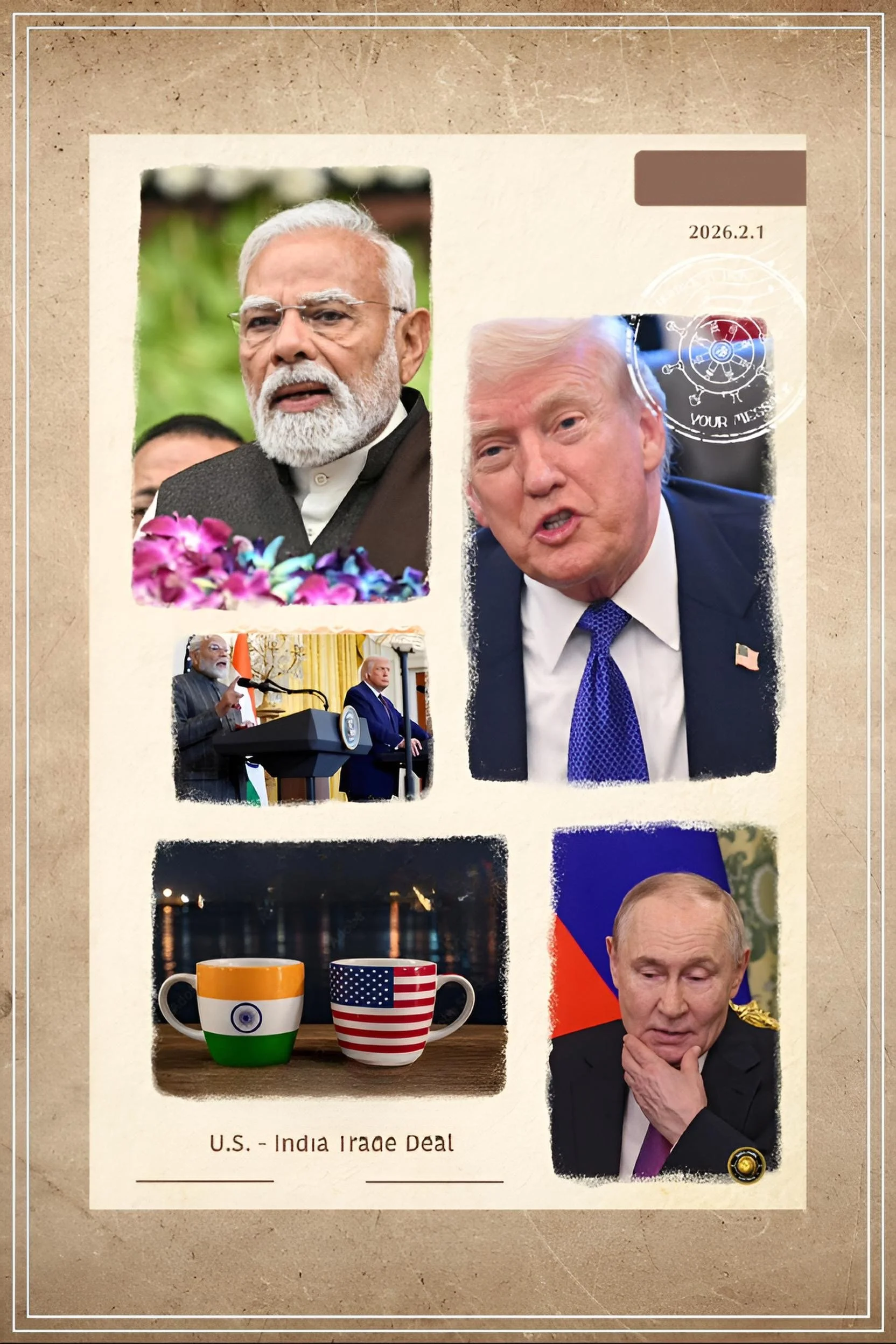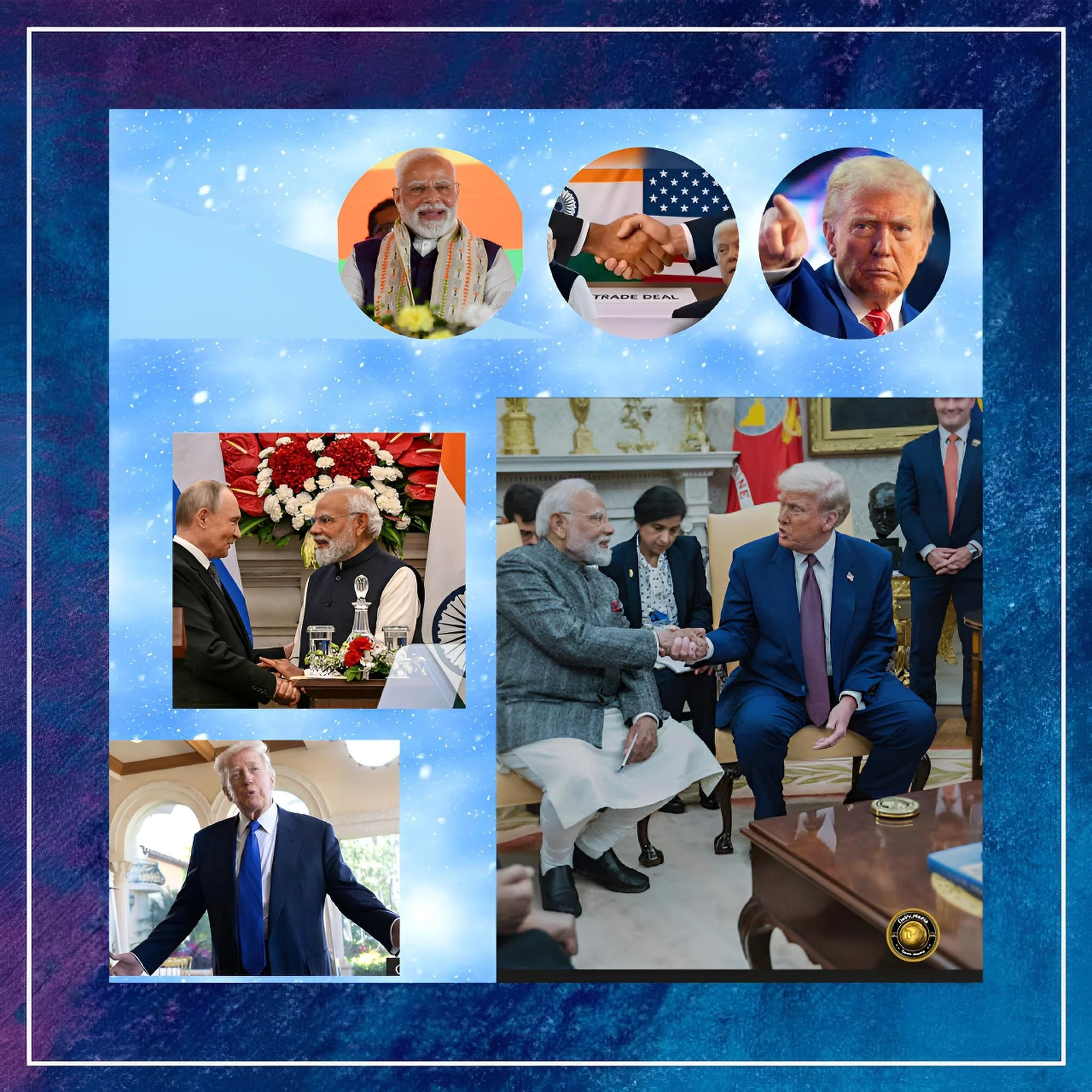
The India-European Union Free Trade Agreement: A Transformative Economic and Strategic Partnership in an Era of Rising Protectionism
Executive Summary
India and the European Union stand at the precipice of concluding one of the most consequential free trade agreements of the contemporary era. Anticipated to be formally announced on January 27, 2026, during the India-EU Summit in New Delhi, this landmark pact encompasses nearly 2 billion consumers and represents approximately 25% of global economic output.
The agreement addresses fundamental trade imbalances that have constrained bilateral commerce, removes substantial tariff barriers across multiple sectors, and reflects a strategic recalibration of global supply chains in response to rising protectionism and geopolitical uncertainties.
For India, the pact addresses immediate vulnerabilities created by the United States' tariff impositions, which have devastated textiles and other labor-intensive industries since August 2025.
For the European Union, the accord facilitates diversification away from reliance on Chinese manufacturing and positions India as a cornerstone of the evolving Indo-Pacific economic architecture.
The strategic urgency for the pact has intensified markedly following recent United States tariff hikes and concerted efforts to diversify global supply chains.
Both parties recognize that this agreement transcends conventional trade mechanics; it represents a response to a fundamentally altered geopolitical landscape characterized by American economic nationalism, Chinese competitive pressures, and the imperative for democratic market economies to construct resilient, interdependent relationships.
Introduction
The Geopolitical Imperative for Economic Integration
The contemporary international trading system confronts unprecedented destabilization.
Since August 2025, the United States has imposed punitive tariffs of 50% on Indian textiles and garments, effectively rendering those sectors uncompetitive in American markets. Simultaneously, the European Union's withdrawal of Generalized System of Preferences benefits in 2023 diminished preferential access for Indian exporters across diverse product categories.
These developments have compelled both India and the European Union to accelerate negotiations that would have appeared improbable merely two years earlier.
The India-EU free trade agreement emerges not as an abstract exercise in economic integration but as a pragmatic necessity. India, despite its position as the world's third-largest economy by 2030 projections, confronts chronic vulnerabilities in diversifying its export markets.
The European Union, for its part, confronts an existential challenge regarding supply chain resilience as geopolitical competition with China intensifies and American protectionism threatens established trading relationships.
This pact represents a convergence of mutual necessity and strategic vision.
Historical Context and Negotiation Timeline
From Stalled Talks to Accelerated Completion
The India-EU trade negotiation process commenced in 2007 but languished for over a decade amid regulatory disagreements, intellectual property disputes, and divergent agricultural sensitivities.
The process languished particularly after India adopted a more assertive negotiating posture at the World Trade Organization, and the European Union focused on integrating environmental and labor standards.
Negotiations were formally relaunched on June 17, 2022, following the Russia-Ukraine conflict, which recalibrated European strategic thinking regarding supply chain diversification and market dependencies.
The acceleration intensified substantially during 2024 and early 2025 as the trajectory of United States policy under the Trump administration became apparent. The administration's imposition of fifty-percent tariffs on Indian textiles, effective from late August 2025, catalyzed negotiations toward conclusion.
The EU, simultaneously confronting American threats regarding automotive tariffs and aluminum duties, recognized the strategic importance of cultivating reliable alternative trading partners.
By January 2026, both parties had achieved substantial convergence on the framework, with technical negotiations focused on the most contentious sectors: automobiles, wines and spirits, agricultural products, and digital services.
EU Trade Commissioner Maros Sefcovic's tenth in-person engagement with Indian Commerce and Industry Minister Piyush Goyal within a single year underscored the extraordinary priority both governments assigned to the conclusion.
Current Status and Key Developments
The Architecture of the Agreement
The anticipated agreement encompasses goods, services, investments, intellectual property arrangements, and digital trade dimensions.
Negotiators have targeted the liberalization of tariffs on approximately 99% of traded goods, though sensitive sectors have required careful calibration.
For Indian exports, the agreement eliminates or substantially reduces tariffs on textiles and garments, where duties currently range from 12% to 16%, creating competitive disadvantages relative to Bangladesh and Vietnam.
Pharmaceutical products, electronics, gems and jewelry, leather goods, and automobile components similarly receive meaningful tariff reductions.
India has secured provisions facilitating professional mobility for its service-sector professionals and improving access to information technology services across the European Union.
The automobile sector represents perhaps the most consequential compromise. India initially resisted European demands for rapid tariff liberalization, citing the vulnerability of domestic manufacturers such as Tata Motors and Mahindra & Mahindra to foreign competition.
The negotiated solution involves a phased approach: India has consented to reduce automobile import duties from highs exceeding 110% to 40% for approximately 200,000 combustion-engine vehicles annually, representing imports exceeding €15,000 per unit.
These reductions will phase further toward 10 % over subsequent years.
Critically, battery electric vehicles have been excluded from immediate tariff reductions for five years, providing domestic manufacturers the temporal space necessary for technological maturation and cost competitiveness.
The wine and spirits sector presented analogous challenges. Indian tariffs on imported wines currently stand at 150%, among the world's highest rates.
The agreement contemplates gradual reductions in phases rather than abrupt elimination, protecting the nascent Indian wine industry while providing European producers with expanded market access as Indian consumer affluence grows.
Agricultural products and dairy have been deliberately excluded from the agreement's scope. This exclusion reflects India's political constraints regarding farmer protections and the European Union's recognition that agricultural liberalization would generate unmanageable domestic opposition.
Notably, rice, spices, and poultry remain excluded, preserving government support mechanisms and farmer livelihoods within both jurisdictions.
For European exporters, the agreement opens substantial market access in chemicals, machinery, aviation components, and specialized equipment.
The European automotive industry anticipates significant expansion as tariff barriers recede, with manufacturers such as Volkswagen, Mercedes-Benz, and BMW positioning themselves to increase direct investment rather than relying solely on imported vehicles. The luxury segments particularly benefit from reduced tariffs on premium automobiles.
The agreement incorporates provisions addressing non-tariff barriers, though with acknowledged limitations. India has committed to reviewing certification and standards procedures that have historically impeded European chemical and pharmaceutical exports.
The European Union, conversely, has accepted India's requests for "data-secure" status under evolving EU digital regulations, addressing Indian anxieties regarding data localization requirements.
The estimated annual tariff savings approach four billion euros, with projections suggesting bilateral trade could double within five years of ratification.
Current bilateral trade in goods and services surpasses $190 billion annually, with India exporting approximately $76 billion in goods and services while importing $61 sixty billion, generating a modest trade surplus.
Latest Facts and Emerging Concerns
Technical and Strategic Dimensions
Several critical issues remain subject to technical finalization as the January 27 announcement approaches.
The European Union has insisted upon intellectual property protections substantially beyond India's current legal framework, particularly regarding patent enforcement for pharmaceutical innovations.
India has expressed concerns that aggressive patent protection mechanisms could impede access to affordable medicines for its population.
The Carbon Border Adjustment Mechanism represents perhaps the most significant unresolved concern for Indian exporters.
The European Union's carbon tariffs, designed to ensure that imported products face comparable carbon pricing to domestically produced goods, threaten to undermine tariff advantages secured through this agreement.
Indian steel, ceramics, and chemical manufacturers confront potential additional costs if the mechanism is implemented without adequate transition periods. Indian negotiators have sought extended transition periods and technical assistance in implementing carbon accounting methodologies compatible with EU requirements.
India has secured commitments for collaborative development programs and co-production agreements that would assist Indian companies in advancing through the value chain, transitioning from component suppliers to systems integrators and exporters of sophisticated manufactured products.
These technology transfer provisions are particularly significant for India's defense manufacturing ambitions.
Non-tariff barriers remain an ongoing challenge despite the agreement's provisions.
European regulatory standards, certification procedures, and testing requirements have historically delayed approval of Indian pharmaceutical and chemical products, creating artificial barriers even in the absence of formal tariffs.
The agreement contemplates accelerated approval mechanisms, though the effectiveness of their implementation remains uncertain.
The agreement's compatibility with India's foreign policy objectives regarding Russia and China requires careful consideration.
The pact does not mandate Indian participation in Western-led sanctions regimes or coalition-building initiatives, permitting India to maintain its strategic autonomy while deepening economic integration with democratic market economies.
Data localization and digital trade provisions are crucial for the Indian technology and business process outsourcing sectors.
The agreement provides Indian IT service providers with more explicit market access commitments while addressing European concerns regarding data protection and cybersecurity.
Cause-and-Effect Analysis
Mechanisms and Ramifications
The immediate causal mechanisms of the agreement operate at multiple levels. Tariff elimination on Indian textiles removes the price disadvantages that rendered Indian garments uncompetitive in European markets relative to Asian competitors offering similar duty-free or low-duty access.
This tariff advantage translates directly into expanded export volume and manufacturing employment within India's textile clusters in Tamil Nadu, Gujarat, and Maharashtra.
Conversely, the reduction in Indian automobile tariffs enables European manufacturers to import vehicles at substantially lower cost, permitting them to offer European cars at prices competitive with Chinese imports and domestically manufactured Indian vehicles.
The phased approach prevents sudden manufacturing dislocation while permitting market adjustment across the five-to-ten-year transition period.
The pharmaceutical sector exhibits a similar dynamic. Indian pharmaceutical manufacturers, who currently export approximately $65 billion annually globally, will gain expanded EU market access for generic and specialized medicines.
This expansion permits Indian companies to capture a greater share of the European generics market, supporting manufacturing growth and employment.
The broader supply chain effects merit particular emphasis. Chinese manufacturing dominance has created vulnerabilities for both India and the European Union.
The agreement provides incentive structures for European manufacturers and Indian component suppliers to develop integrated supply chains, reducing dependencies on Chinese sources.
European investment in Indian manufacturing facilities becomes more attractive as tariff barriers recede and intellectual property protections strengthen.
Indian companies gain access to European capital and technology, accelerating industrial upgrading.
The geopolitical consequences extend beyond conventional trade metrics.
By deepening economic integration with democratic market economies, India reduces its dependence upon Russia for military supplies, capital, and energy resources.
While India will not abandon its relationship with Russia—given ongoing military equipment dependencies and energy supply arrangements—the EU partnership provides alternative sources of defense technologies.
India's defense manufacturing ambitions receive a boost through European co-development agreements.
Simultaneously, the EU gains a reliable Indo-Pacific partner capable of contributing to supply chain resilience and supporting a rules-based international order against Chinese competitive pressures and authoritarian state-directed economic models.
The agreement's sectoral impacts exhibit significant distributional consequences. Indian textile workers, leather manufacturers, gem processors, and pharmaceutical companies benefit substantially. Indian automobile manufacturers, wine producers, and farmers, conversely, experience increased competitive pressure, necessitating efficiency improvements and technological innovation.
European automotive manufacturers, chemical producers, and machinery exporters capture new market opportunities. European agricultural interests are protected mainly through exclusions, though food processing operations gain from access to Indian agricultural inputs.
Future Steps and Ratification Process
From Announcement to Implementation
The announced January 27 conclusion represents the initialing of the negotiated text rather than a binding commitment.
Substantive implementation requires ratification by the European Parliament and the Council within the European Union, and by India's cabinet and parliamentary procedures.
The European Parliament ratification process has become increasingly contentious. Recent parliamentary opposition to EU-South America trade agreements, with legislators pursuing legal challenges in the European Court of Justice, signals potential obstacles.
Environmental and labor groups within the EU have expressed concerns regarding the adequacy of enforcement mechanisms for sustainability and human rights provisions.
Indian negotiators have demonstrated flexibility regarding sustainability linkages but have resisted provisions that would permit European authorities to impose trade sanctions for perceived labor or environmental violations without binding international arbitration.
The Indian ratification process presents distinct political constraints. Agricultural and dairy sectors, despite their exclusion from the agreement, remain sensitive to perceptions of inadequate protection.
Small- and medium-sized enterprises manufacturing automobiles and consumer durables express anxiety about increased import competition.
These constituencies require political accommodation through adjustments to industrial policy and transition assistance programs.
Technical implementation details must be completed following ratification. The agreement contemplates the establishment of joint committees to manage disputes, adjust tariff schedules, and periodically review sectoral coverage.
Customs authorities in both jurisdictions require training regarding the agreement's rules of origin, tariff classifications, and documentation requirements.
The agreement's effectiveness depends substantially on the quality of its implementation. European regulatory authorities must accelerate approval procedures for Indian pharmaceuticals and chemicals consistent with commitment provisions.
Indian authorities must similarly streamline certification procedures for European machinery, automotive components, and industrial equipment. Establishing effective dispute-resolution mechanisms that enable rapid resolution of tariff misclassifications and other technical disputes will significantly enhance the agreement's practical benefits.
Trade remedies provisions require careful attention. Both jurisdictions retain safeguard provisions permitting temporary tariff increases during periods of import surges that threaten domestic industries. The agreement contemplates consultation and notification procedures designed to prevent safeguard implementation from degenerating into disguised protectionism.
Conclusion
A Partnership of Strategic Necessity and Mutual Benefit
The India-European Union free trade agreement represents far more than conventional commercial negotiation outcomes.
It embodies a strategic response to geopolitical disruption, American economic nationalism, and the imperative for democratic market economies to cultivate resilient, reciprocal trading relationships with a demonstrated commitment to a rules-based international order.
For India, the agreement addresses immediate vulnerabilities created by the United States tariff impositions while positioning the nation as an essential alternative to Chinese manufacturing capacity.
The pact facilitates India's emergence as the global economy's primary growth center over the forthcoming decade, providing European companies, investors, and technology providers with privileged access to the world's fastest-expanding primary market.
The technology transfer commitments embedded within the agreement support India's industrial upgrading ambitions across defense manufacturing, advanced electronics, and capital goods production.
For the European Union, the agreement delivers supply chain diversification away from Chinese manufacturing dependencies, reduces exposure to the unpredictability of American trade policy, and establishes a partnership with a strategically consequential Indo-Pacific economy.
The access granted to India's growing consumer market, estimated to exceed six hundred million middle-class consumers by 2030, provides European companies with expansion opportunities as political and regulatory barriers recede.
The agreement's success ultimately depends upon implementation quality, political commitment to managed protectionism, and mutual recognition that deeper economic integration serves both parties' strategic interests. The severity created by contemporary geopolitical disruption provided the catalyst for the conclusion.
Sustained commitment to mutual benefit across the transition period will determine whether this landmark pact generates the prosperity and resilience both parties anticipate.