The ASEAN Summit and Potential Strategic Involvement of the United States: Malaysia 2025
Introduction
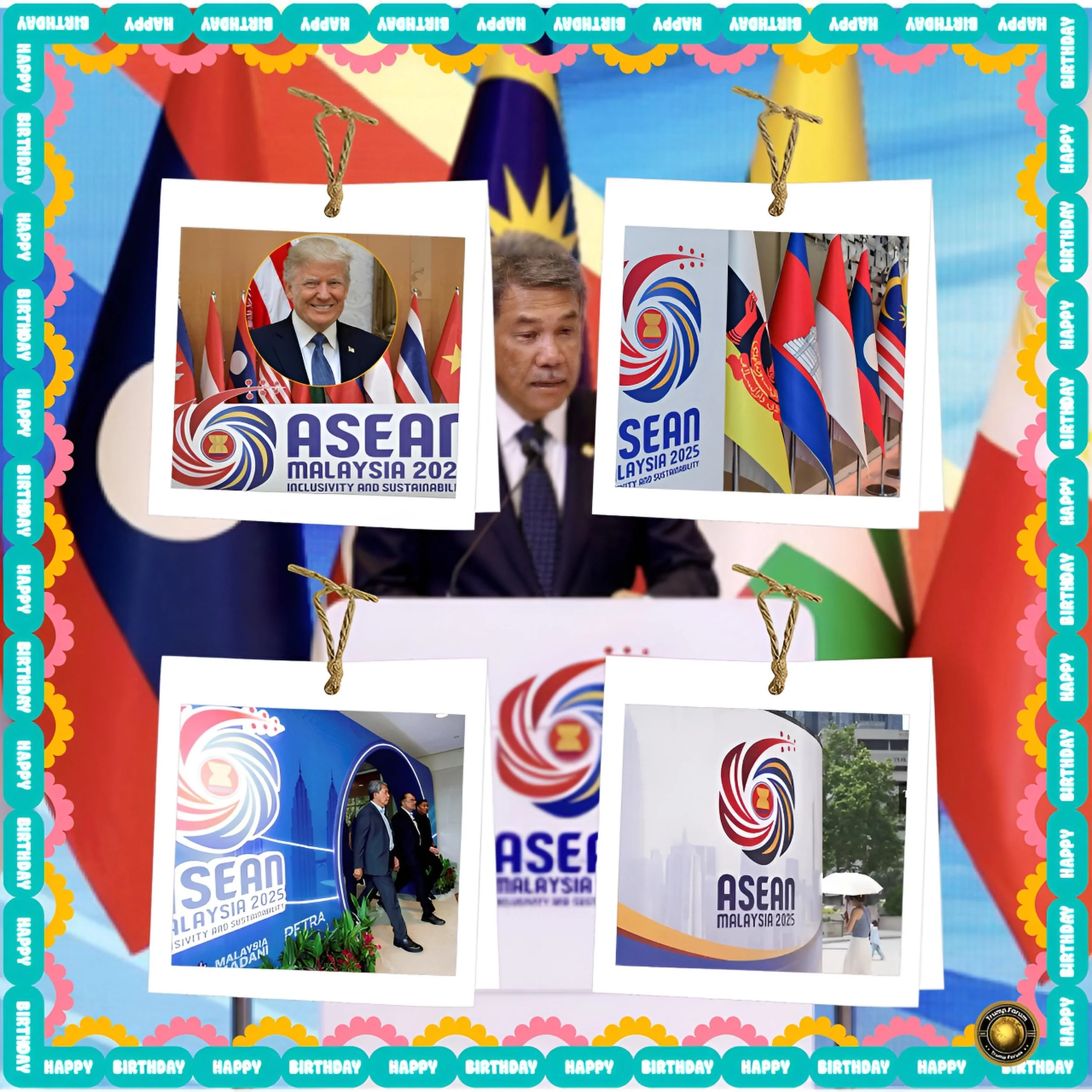
President Donald Trump has received an invitation to participate in the 47th ASEAN Summit, scheduled to take place in Kuala Lumpur, Malaysia, from October 26 to 28, 2025.
This invitation is driven by strategic, economic, and diplomatic considerations that serve the interests of both the United States and Southeast Asia amid the escalating competition between the United States and China.
Trade and Economic Objectives
Malaysian Prime Minister Anwar Ibrahim extended the invitation primarily to facilitate trade negotiations and secure economic advantages for the region.
President Trump’s participation is anticipated to result in a significant announcement, potentially including a free trade agreement (FTA) between ASEAN and the United States or sector-specific tariff relief on critical industries such as semiconductors and rare earth elements.
Malaysia and the United States have already signed a provisional framework for reciprocal tariffs, and ASEAN leaders view the summit as an opportunity to negotiate relief from the 19% general tariff imposed by the United States on regional imports.
Economists expect the announcement of new investments from U.S. companies, particularly in semiconductor manufacturing—companies like Micron Technology, which operates major facilities in Malaysia—and joint ventures in rare earth industries.
The invitation also reflects ASEAN’s pragmatic diplomatic approach.
Prime Minister Anwar defended participation by asserting that diplomacy is a contest of endurance, where national and regional interests take precedence over ideological differences.
Peace Mediation and Security Engagement
President Trump will preside over the signing of the Kuala Lumpur Accord, which formalizes a ceasefire between Cambodia and Thailand brokered in July 2025 following border conflicts.
Malaysia’s foreign minister confirmed that diplomatic mediation would be a key agenda item of the summit.
Reports indicate that Trump made his participation conditional upon presiding over this event, thereby positioning himself as a regional peacemaker and marginalizing Chinese mediation efforts.
This strategy enables the United States to demonstrate its involvement in Southeast Asian security affairs while providing ASEAN with a face-saving mechanism—the ceasefire showcases U.S. engagement.
Also, it highlights ASEAN’s limitations in resolving internal disputes.
Geostrategic Balance and ASEAN Centrality
For ASEAN, inviting President Trump aligns with the principle of ASEAN centrality, which seeks to maintain the organization’s central role in regional diplomatic architecture, while practicing an active non-alignment between major powers.
Prime Minister Anwar characterized this as ensuring U.S. engagement in the Indo-Pacific region without the organization being drawn solely into either American or Chinese spheres of influence.
The summit offers ASEAN an opportunity to demonstrate strategic autonomy by engaging with both Washington and Beijing on its own terms, maximizing economic and security benefits from each.
It underscores ASEAN’s intent to pursue a balanced and independent foreign policy that aligns with its broader regional interests.
U.S. Participation in ASEAN Summits: A Historical Overview
The United States has a longstanding history of engagement with ASEAN-led summits. Although presidential attendance has varied over the years, the U.S. has consistently maintained a dialogue partnership status with ASEAN since establishing formal relations.
Presidential Attendance Record
In 2009, President Barack Obama made history as the first U.S. president to meet all ten ASEAN leaders collectively.
During his tenure, he actively participated in key ASEAN summits, including the 2016 U.S.-ASEAN Summit in Laos. Obama also hosted the first U.S.-ASEAN standalone summit on U.S. soil at Sunnylands, California, in February 2016, elevating the relationship to a strategic partnership.
President Trump attended the 2017 U.S.-ASEAN Summit in the Philippines but did not participate in subsequent ASEAN-led multilateral summits during his first term in office.
This absence was perceived as neglect by Southeast Asian leaders, as Trump's “America First” policy and withdrawal from the Trans-Pacific Partnership fueled concerns that Washington was retreating from the region.
President Joe Biden demonstrated a strong commitment to ASEAN by attending virtually in 2021 and in person in Cambodia in 2022, elevating the relationship to a Comprehensive Strategic Partnership.
Although Biden did not attend the 2023 ASEAN Summit, sending Vice President Kamala Harris instead, this move was widely viewed as a diplomatic snub, despite official explanations to the contrary.
Trump’s upcoming attendance in 2025 signifies only the second time a U.S. president has participated in ASEAN-related summits since Obama, marking a significant renewal of U.S. engagement. It also represents the first visit to Malaysia by a U.S. president since 2015.
Why Trump Prioritizes ASEAN
Trump’s strategic interest in ASEAN centers on countering China's economic influence, diversifying supply chains, and advancing transactional diplomacy, rather than traditional alliance-building or multilateralism.
Critical Minerals and Supply Chain Security
Trump’s administration has aggressively pursued diversification of rare earth minerals to challenge China’s dominant 90% processing capacity.
Just days before the ASEAN Summit, Trump signed an $8.5 billion deal with Australia to develop rare earth projects.
ASEAN nations, especially Malaysia, with their rich deposits and processing capabilities, are crucial partners in breaking China’s stranglehold.
The semiconductor industry is another key focus. Major U.S.-owned firms, such as Micron Technology, operate significant facilities in Southeast Asia.
Trump aims to secure tariff exemptions and promote joint ventures to strengthen U.S. semiconductor supply chains.
Transactional Diplomacy and Deal-Making
Unlike Biden, who emphasizes values-based partnerships and multilateral frameworks, Trump pursues ASEAN through bilateral, deal-oriented engagements focused on immediate economic benefits.
His priorities include critical minerals, semiconductors, agricultural exports such as soybeans, and defense sales.
A notable example is the Cambodia-Thailand ceasefire, which Trump leverages as a diplomatic achievement to bolster his regional profile while avoiding substantial resource commitments.
Countering Chinese Influence
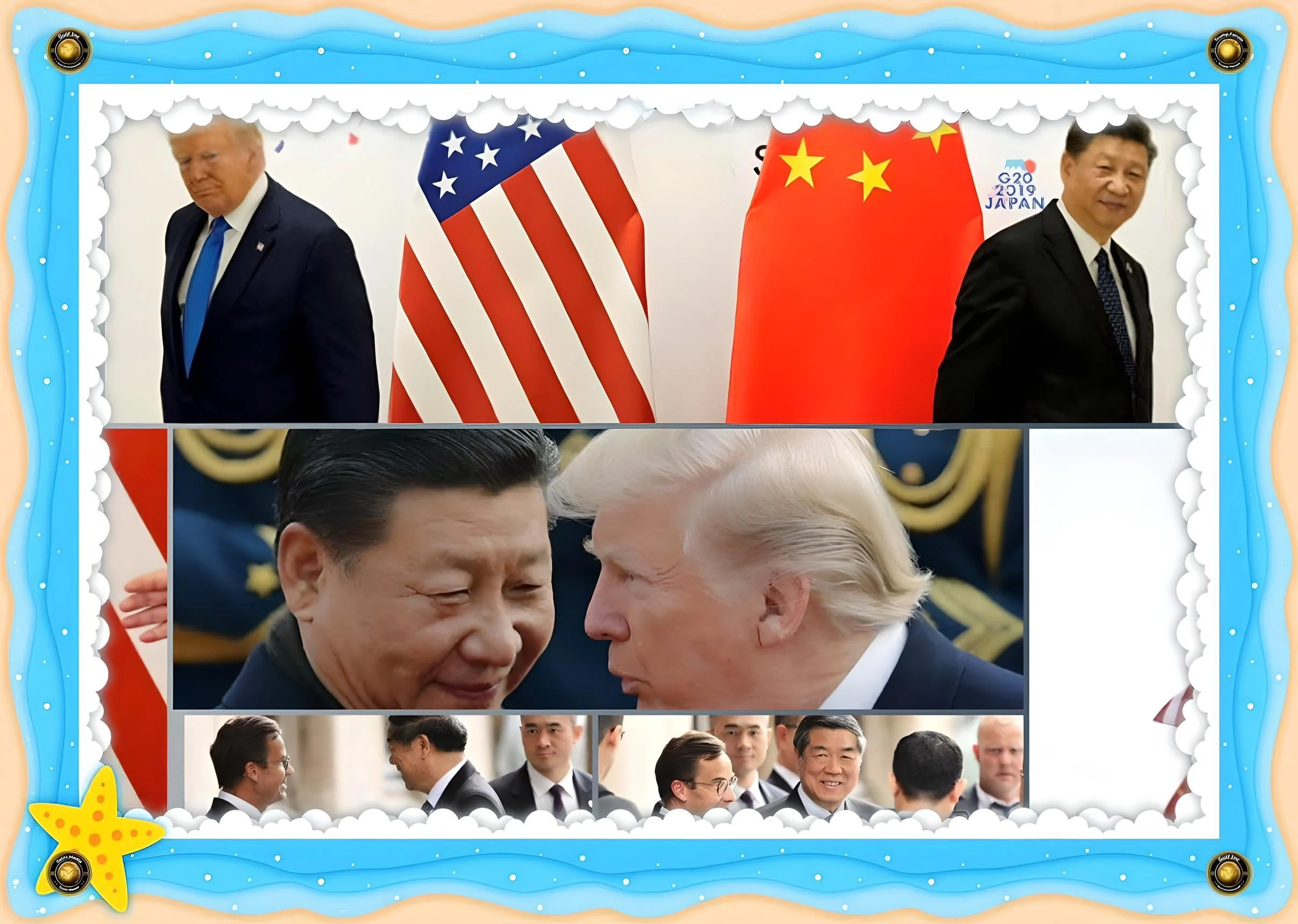
Despite his often conciliatory rhetoric toward Beijing, Trump perceives ASEAN as a vital buffer against Chinese dominance in the Indo-Pacific.
Southeast Asia’s strategic location, which hosts over $3 trillion in annual maritime commerce, makes its influence there paramount.
Maintaining U.S. influence prevents China from establishing regional hegemony, especially in the South China Sea, where multiple ASEAN members contest Chinese territorial claims.
While Trump has historically been selective and inconsistent in his engagement with Southeast Asia—often focusing on China when directly involved—his administration recognizes ASEAN's importance in regional stability.
China and India at the Summit
China and India will be prominent at the 47th ASEAN Summit and the East Asia Summit.
Chinese Premier Li Qiang will attend, reaffirming China’s role as an official ASEAN Dialogue Partner since 1996, with a recent upgrade to a Comprehensive Strategic Partnership.
India’s participation is anticipated, though not yet confirmed, reflecting the complex diplomatic calculus.
Prime Minister Narendra Modi faces the challenge of balancing relationships with the QUAD nations and BRICS countries. Hosting both the QUAD and BRICS summits in 2026 underscores India’s strategic diplomatic positioning.
Vladimir Putin and leaders from Brazil, South Africa, Italy, and Japan are also expected to attend, signifying the summit’s global importance.
Scholarly Analysis: ASEAN’s Role in U.S.-China Competition
Academic research characterizes ASEAN as operating within an increasingly precarious position amidst the strategic rivalry between the United States and China.
Scholars highlight both the limitations and potential opportunities associated with the organization’s traditional hedging strategy.
ASEAN Centrality Under Threat
There is a scholarly consensus that the principle of ASEAN centrality—the notion that ASEAN should serve as the focal point of regional diplomatic architecture—faces unprecedented challenges due to escalating competition between Washington and Beijing.
Zhang (2023) argues that, although both the United States and China rhetorically support ASEAN centrality, their strategic investments pose more challenges than benefits for ASEAN.
The fundamental issue arises from incompatible strategies: the United States' Indo-Pacific Strategy relies on exclusive security alliances such as QUAD and AUKUS, aimed at containing China. In contrast, ASEAN’s vision emphasizes open, inclusive regional cooperation.
As Zhang observes, “The centrality of ASEAN would not survive being pulled into the U.S.-built camp to contain China."
Similarly, China’s preference for bilateral negotiations over multilateral mechanisms—particularly evident in the South China Sea disputes—effectively sidelines ASEAN when Beijing perceives it as inconvenient.
Koyuncu (2021) and Das (2024) describe this phenomenon as a paradox: external powers employ “rhetorical support for ASEAN centrality as a deflection strategy,” publicly endorsing the principle while engaging in actions that undermine regional cohesion.
Regional dialogue platforms are increasingly serving as outlets for geopolitical contestation rather than forums that prioritize ASEAN’s economic and security interests.
Strategic Autonomy Through Hedging
Despite these challenges, scholarly analysis highlights ASEAN’s notable resilience through the effective use of sophisticated hedging strategies.
Kulk (2016, 2021) and Goh (2005) articulate hedging as pursuing dual objectives: “return maximization” through economic engagement and limited bandwagoning, and “risk contingency” through indirect balancing and dominance denial.
This approach allows ASEAN member states to derive economic and political advantages while mitigating losses amid rising significant power tensions.
Zhang (2023) notes that ASEAN renewed its centrality in 2022 by fostering internal consensus, expanding partnership networks—including achieving Comprehensive Strategic Partnerships with both the United States and China—and guiding major powers towards incorporating ASEAN priorities within their regional agendas.
The organization successfully hosted significant diplomatic events, such as the ASEAN Summit, G20, and APEC, while maintaining neutral positions on divisive issues such as the Russia-Ukraine conflict and tensions across the Taiwan Strait.
Differentiated Hedging Strategies
Scholars categorize ASEAN member states into three groups based on their respective hedging approaches:
Counterbalancers (Philippines, Singapore, Vietnam): These countries maintain robust security alliances with the United States and advocate for increased Western presence to counterbalance Chinese influence.
Singapore exemplifies a "heavy hedging" approach, hosting U.S. military assets while pragmatically cultivating economic ties with China and engaging in security partnerships with multiple powers.
Hedgers (Indonesia, Malaysia, Thailand): These states adopt neutral policies, seeking to maximize benefits from both the United States and China while avoiding entanglement in their rivalry.
Malaysia’s invitation to former President Trump, alongside its maintenance of close economic relations with China, typifies this stance.
Chinese-dependent states (Laos, Myanmar, Cambodia): These nations rely heavily on Chinese investment for infrastructure development and economic growth, which makes them hesitant to challenge Beijing’s regional ambitions.
For example, China holds approximately fifty percent of Laos’s external debt, totaling $10.5 billion, exemplifying the economic leverage that constrains its strategic options.
Multipolarity and the New Non-Aligned Movement
Zhang (2023) and other scholars interpret ASEAN’s contemporary strategy as fostering a "new non-aligned movement” to mitigate the risks associated with a "new Cold War" scenario.
Indonesian President Joko Widodo explicitly emphasized that ASEAN must avoid becoming an “agent” of major global powers and prevent the escalation of geopolitical tensions into regional Cold War polarization.
Singaporean Foreign Minister Vivian Balakrishnan has proposed the concept of a “non-aligned movement in technology,” advocating for open, inclusive multilateral networks in science, technology, and supply chains designed to resist bifurcation between the United States and China.
This approach aligns with scholarly analyses of ASEAN’s efforts to promote multipolarity within the regional order.
Rather than accepting a bipolar framework dominated by the United States and China, ASEAN aims to expand strategic space by forging partnerships with middle powers such as the European Union, Japan, South Korea, and Australia, and by diversifying its economic relationships.
The organization’s expansion of the Treaty of Amity and Cooperation to fifty signatories exemplifies its efforts to promulgate norms of multilateral cooperation and peaceful coexistence.
Structural Constraints and Sustainability Challenges
Critical academic commentary raises questions regarding the long-term viability of hedging strategies.
Kuik (2016) contends that hedging rests on three premises—namely, the absence of immediate threats, ideological fault lines, and all-out great power rivalry—that are increasingly undermined by escalations in U.S.-China competition. As rivalry intensifies, these premises are becoming "increasingly shaky”.
Liu (2019) highlights systemic pressures that will intensify if great power competition escalates into confrontation or conflict, potentially constraining the strategic flexibility of Southeast Asian countries.
Jones and Jenne warn that hedging as a form of "reactive prudence” faces limitations, as ambiguous maneuvering may lead to dissatisfaction among the United States and China, thereby increasing regional instability.
The 2022 Shangri-La Dialogue highlighted these dynamics when Malaysian and Fijian defense ministers expressed concern that the U.S.-China confrontation overshadowed regional priorities, including food security, economic growth, and climate change.
An analysis concluded that ASEAN’s economic and security concerns have been marginalized as its regional influence wanes.
Economic Interdependence as a Double-Edged Sword
Scholars underline the dual role of economic ties, which serve both as strategic assets and vulnerabilities. China’s Belt and Road Initiative has contributed to regional development but also deepened economic dependencies, with critics referring to this as “debt trap diplomacy”.
However, ASEAN has demonstrated pragmatic diplomacy by leveraging this competition. After elevating its relationship with China to a Comprehensive Strategic Partnership in 2021, ASEAN also upgraded its partnership with the United States in 2022, illustrating its capacity to extract concessions from both powers.
Security cooperation remains primarily focused on the United States, with a focus on maritime domain awareness, countering illegal fishing, and conducting military exercises.
Conversely, economic cooperation is more oriented toward China, involving initiatives such as RCEP, the digital economy, and green development projects. As Zhang notes, “ASEAN consistently emphasizes that China and the United States are of equal importance to advancing its interests."
Conclusion
Scholarly projections suggest that ASEAN’s strategic autonomy hinges on maintaining internal unity amid divergent member interests, expanding partnerships beyond the United States and China, and effectively operationalizing the ASEAN Outlook on the Indo-Pacific as an alternative framework to great power competition.
The organization’s capacity to sustain regional centrality amidst “weaponized interdependence," where connectivity can transform from a stabilizing force to a vulnerability, will be decisive in shaping or being shaped by the emerging regional order.
As one expert summarized, “ASEAN’s ability to preserve its centrality and adapt to external pressures will determine its success in fostering a stable and prosperous regional future."
The 2025 summit will serve as a critical test of whether ASEAN can maintain its strategic autonomy or be compelled to align more closely with the United States and China's regional visions.