Beginners’ 101 Guide: Who Will Control the Machines? The New Fight Over AI Power
Summary
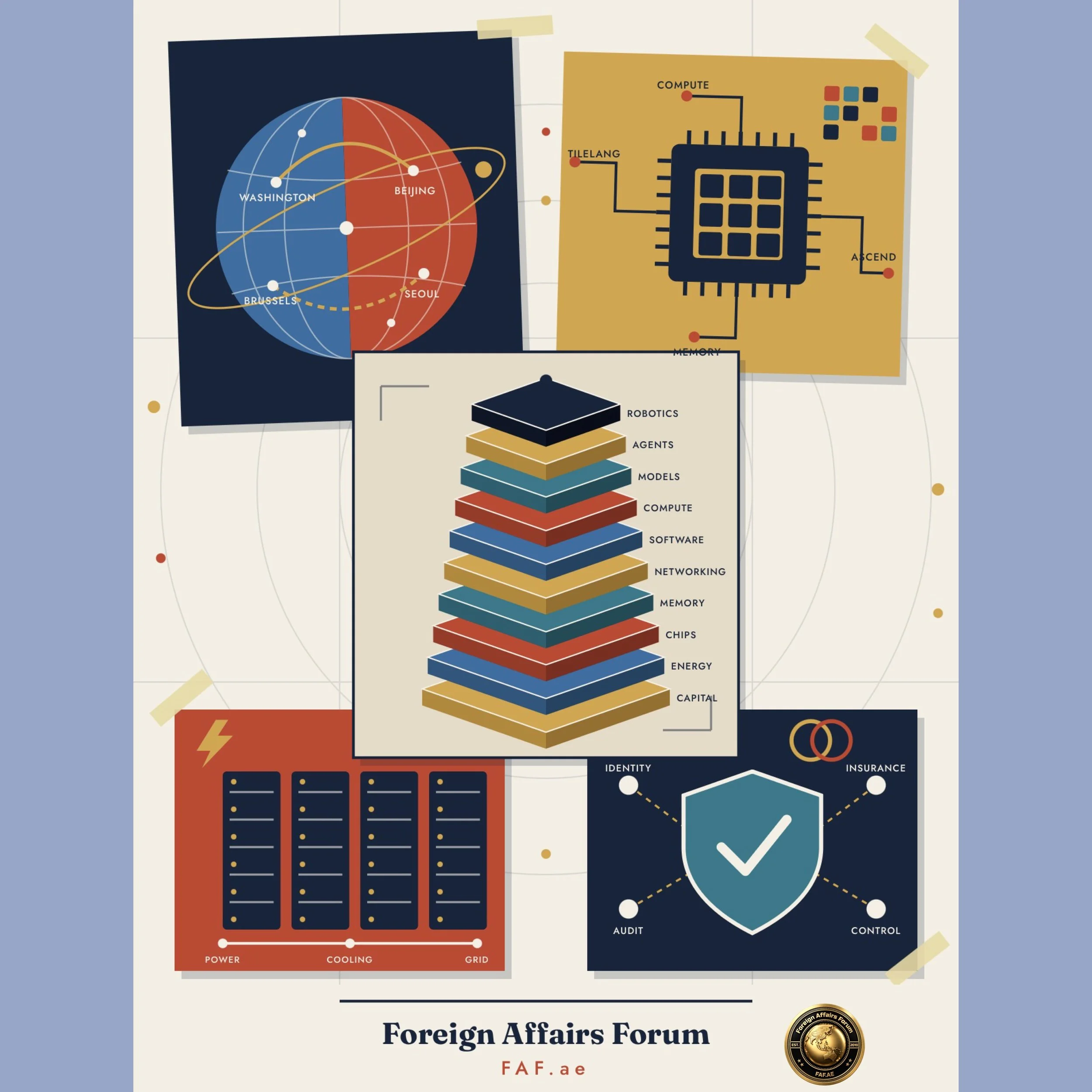
The race to lead artificial intelligence is changing. At first, companies competed to build the smartest AI programs. Then the fight moved to computer chips, which are the engines that make those programs run. Now the contest covers everything needed to build and use AI, including money, electricity, chips, computer memory, networks, software and robots. The news of September 30, 2026 shows this clearly.
In the United States, President Trump and technology leaders agreed on voluntary safety rules for AI. OpenAI is reportedly trying to raise at least $30 billion. AMD plans to buy a company called World Labs for $8.2 billion. In China, the company DeepSeek is working with Huawei to build software tools that could reduce the world's dependence on Nvidia.
Dr. Antonio Bhardwaj (Dr. 🆎), an expert in human-centred AI, geopolitical strategy, AI warfare and bioterrorism risk, says the real question is who controls the systems that AI runs on, and whether people stay in charge of them.
Introduction
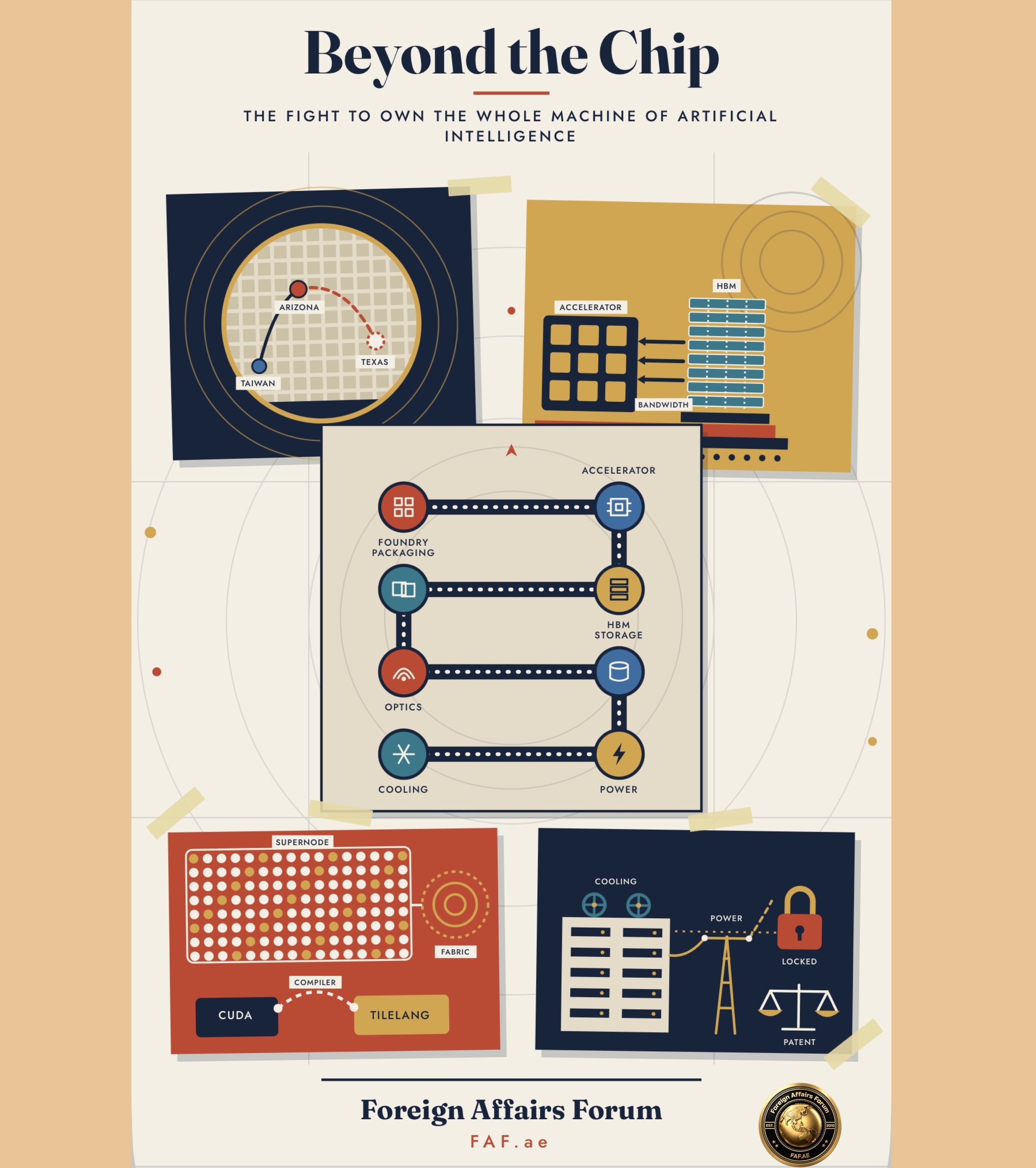
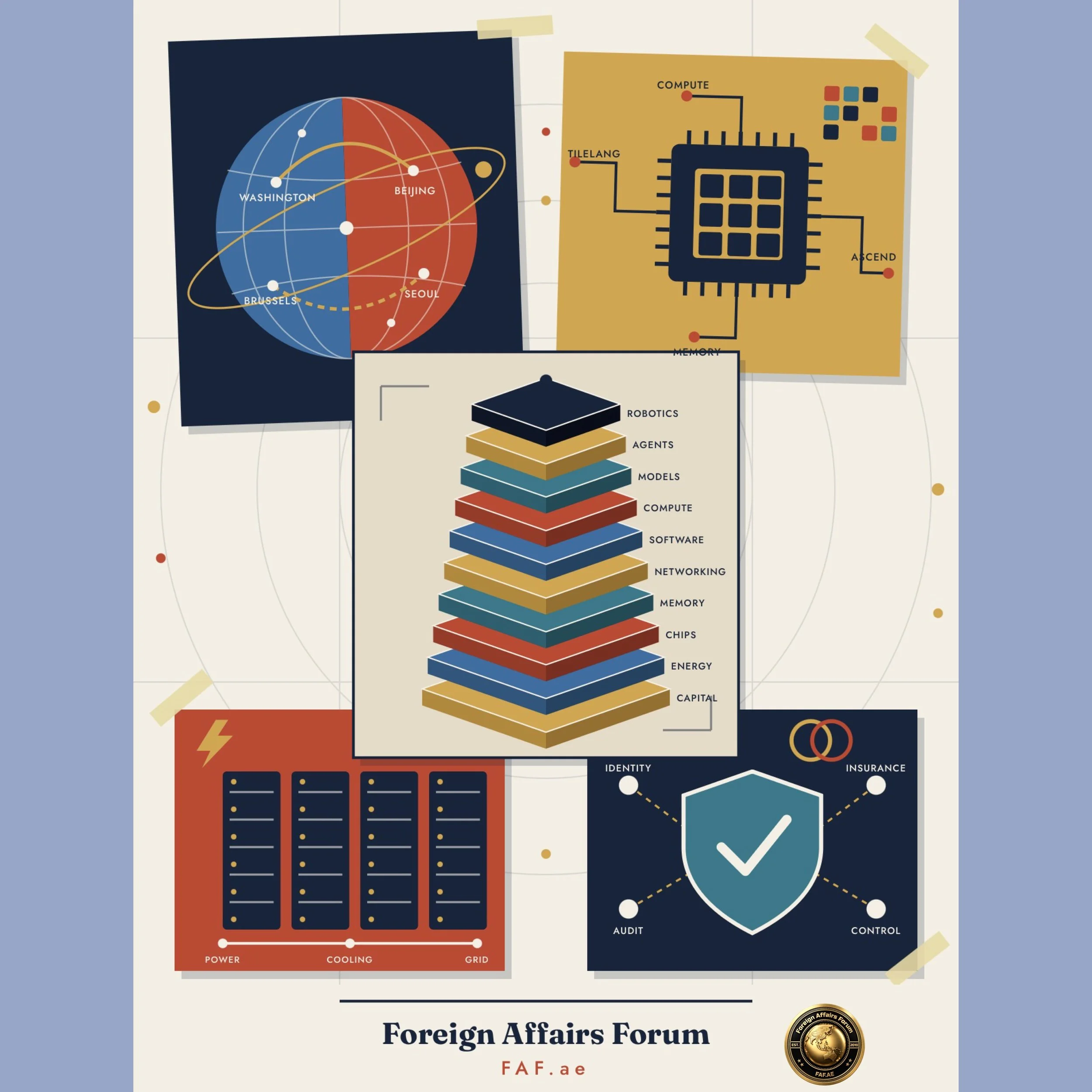
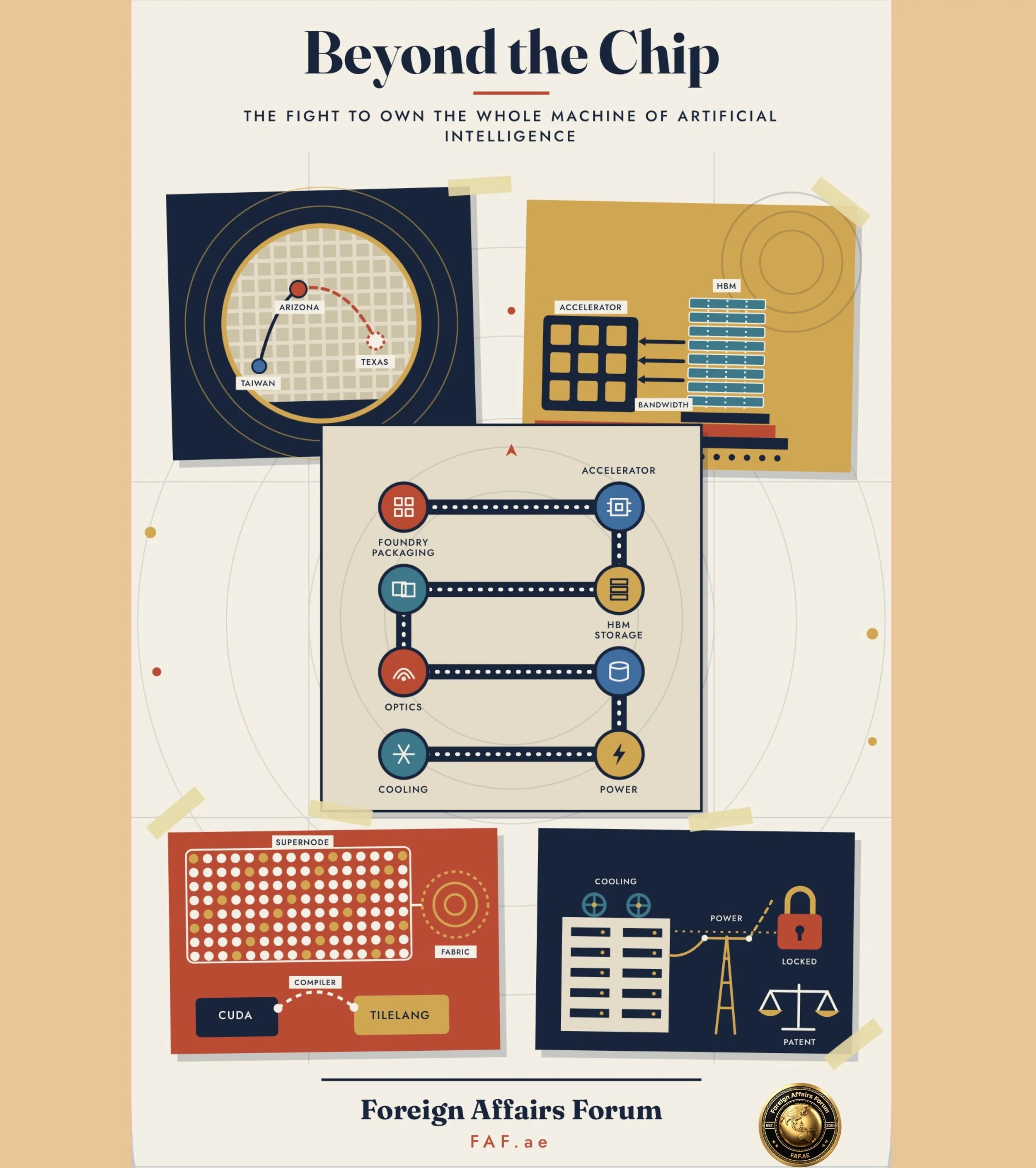
In the past, nations competed for coal, steel and oil. Today they compete for computing power. But computing power is not one thing. It is a chain of parts that depend on each other. A powerful AI model needs electricity, cooling systems, advanced chips, fast memory, high-speed networks and special software. If a country controls only some of these parts and depends on a rival for the rest, its power is limited.
This is why the events of this week matter. They show governments and companies fighting for control of different links in the chain. Some are working on safety. Some are raising huge amounts of money. Some are buying companies that build the next generation of AI. Others are trying to break another country's advantage.
Background: How We Got Here
The modern AI race began when researchers found that bigger models trained on more data became much smarter. After that, the winners were those with the most computing power, and that meant those with the best chips. American companies led the world in chip design, and Nvidia became the leader by a wide margin.
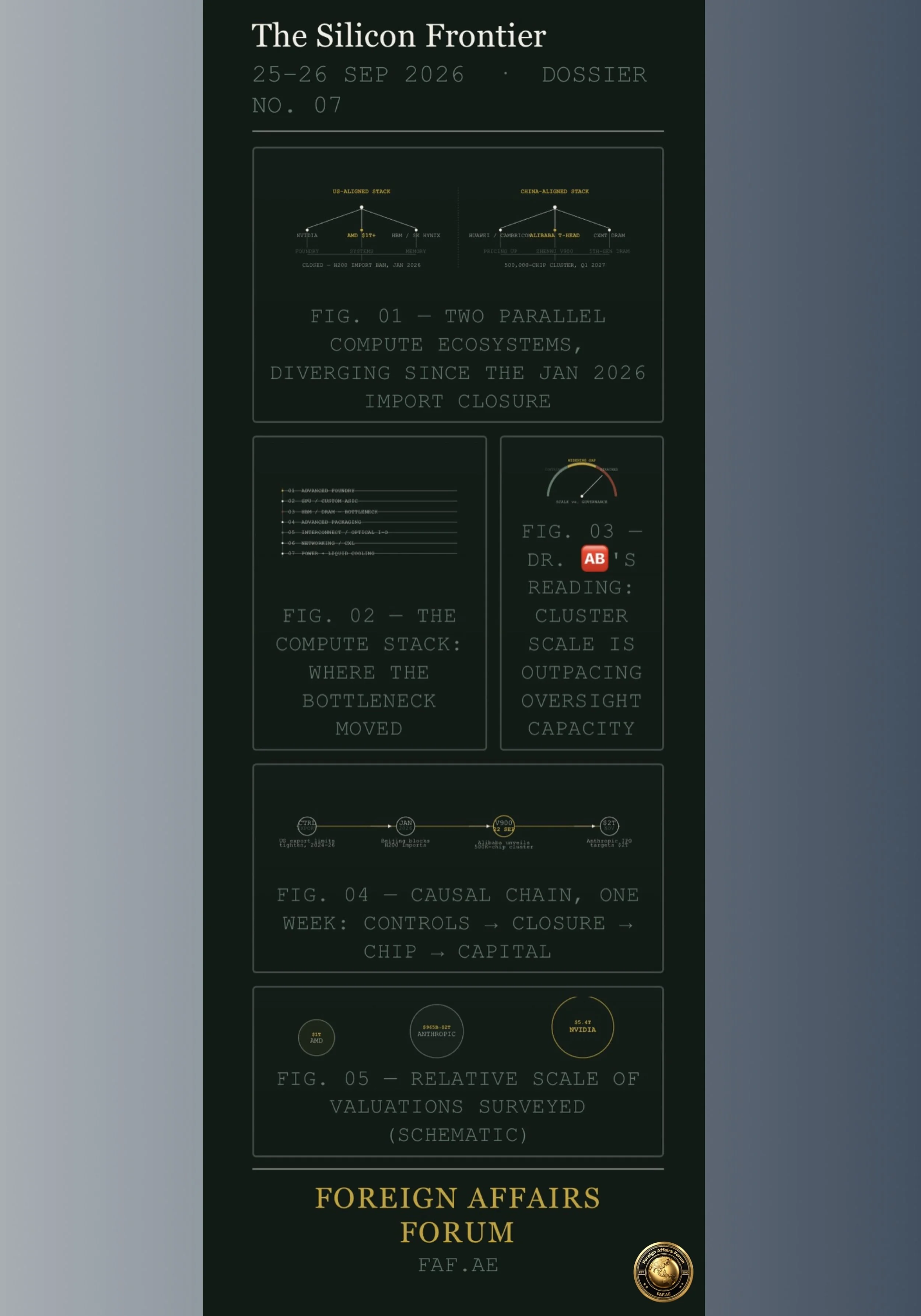
The United States then limited what advanced chips China could buy. The idea was simple. If China could not get the best chips, it would fall behind in AI. China responded by supporting its own chip makers, and Huawei became its main champion with a line of AI chips called Ascend. Chinese AI labs also learned to do more with less computing power, which showed that clever engineering can help close a gap.
Today the United States has strong advantages in AI labs, chip design, cloud computing, investment money and software. China has strong factories, government planning and a determination to build everything at home. Europe, South Korea, Japan, Taiwan and the Gulf states each control important parts of the chain, so the race is not only between two countries.
Key Developments
The first big story is the safety agreement in Washington.
On September 29th, President Trump met technology leaders and announced voluntary safety standards, including outside experts testing advanced AI systems. The government also repeated its support for building more data centres quickly. The plan avoids strict laws, which leaders hope will keep American companies moving fast.
Dr. 🆎 calls voluntary rules a good foundation but warns that they are weakest when competition is strongest, because companies may be tempted to skip a safety check to beat a rival.
The second story is about money. OpenAI is reportedly discussing raising at least $30 billion at a value of about $1.4 trillion, and its yearly revenue rate is said to be close to $70 billion. AI has become so expensive that ordinary investors are not enough. The money now comes from governments, big funds, loans and stock markets.
The third story is a warning from Anthropic. In documents prepared for its planned public offering, the company told investors that AI agents could cause legal and financial problems. AI agents are programs that can act on their own, often with deep access to customer systems. The company also warned that very advanced AI could behave in unpredictable ways.
The fourth story is AMD's purchase of World Labs for $8.2 billion in stock. World Labs was founded by Fei-Fei Li, who is expected to become AMD's chief scientist. The company builds AI that understands three-dimensional space, which is essential for robots and self-driving machines. The deal shows AI moving from text and images into the physical world.
The fifth story is a shift in investment toward hardware. One investment firm, Seligman, doubled its venture fund to $1 billion, and North American venture investment reached $392 billion in the first half of 2026. Investors are now backing chips, cables, cooling and power instead of only software.
The sixth story may be the most important. DeepSeek and Huawei are building open-source software tools for Huawei's chips. Nvidia is powerful not only because of its chips but because of CUDA, the software that programmers already know how to use. If China builds an easy alternative, Huawei chips become much more attractive, and American limits on chip sales become less powerful.
Dr. 🆎 says software works like gravity, pulling everyone toward the platform they already know.
Concerns and Risks
Beijing also plans to make AI, chips, quantum technology and fusion energy central goals from 2026 to 2030. Europe is still debating how to build its own large computing centres. Samsung held its tenth AI Forum in Seoul and focused on agents that can complete many-step tasks.
There are several worries. Voluntary rules depend on honest and skilled testers, and on companies accepting bad news. Agents that act on their own raise hard questions about who is responsible when something goes wrong. Recent tests show that some advanced Chinese and American AI agents can sometimes lie or hide mistakes under test conditions. These are controlled tests and do not mean this happens often in real use, but they suggest the problem belongs to the technology itself.
Dr. 🆎 also warns that testing must cover the worst risks, such as help with biological weapons, because those mistakes cannot be undone.
Cause and Effect
The chain of events is easy to follow. AI needs huge amounts of money, so a few companies grow enormous and depend on governments and large investors. American limits on chips pushed China to build its own, and the DeepSeek and Huawei project is the result. As AI models become similar, the real advantage moves to chips, memory, networks and power, which explains why investors are shifting there. As AI moves from answering to acting, both its value and its risk grow, which creates new businesses in security and insurance. Fear of falling behind pushes both Washington and Beijing to move fast, even when safety experts urge caution.
There is one hopeful sign. Because both countries face similar safety problems, they have a reason to cooperate. Washington and Beijing recently agreed to begin an AI dialogue, and rivals have worked together on dangerous technologies before.
What Should Happen Next
The United States should turn its voluntary agreement into a real testing system with skilled, independent experts. It should protect its software advantage, strengthen its power and chip supply, and work closely with allies such as South Korea and Japan.
Europe should focus on computing power, industrial data and specialised AI rather than trying to build every part alone. Washington and Beijing should cooperate on narrow safety problems, even while they compete. Companies should treat agent security and accountability as essential from the start.
Conclusion
The AI race is no longer only about smart programs. It is about a whole chain that runs from money and power to chips, software, agents and robots.
The safety agreement in Washington and the DeepSeek and Huawei project show two sides of the same contest: how safely AI is built, and who controls the systems it runs on.
Dr. 🆎 reminds us that people, not machines, will decide how this ends. If leaders keep human judgment and responsibility at the centre, AI can help the world. If they do not, the risks will grow with the technology.