Beginner's 101 Guide: Money, Chips, and Control—Why Today's AI News Is About Much More Than Technology
Executive Summary
The fight over artificial intelligence is changing. It used to be about who had the smartest software. Now it is about who has the money, the chips, the electricity and the security to build and protect AI at a very large scale.
News from October 2nd 2026 shows this clearly.
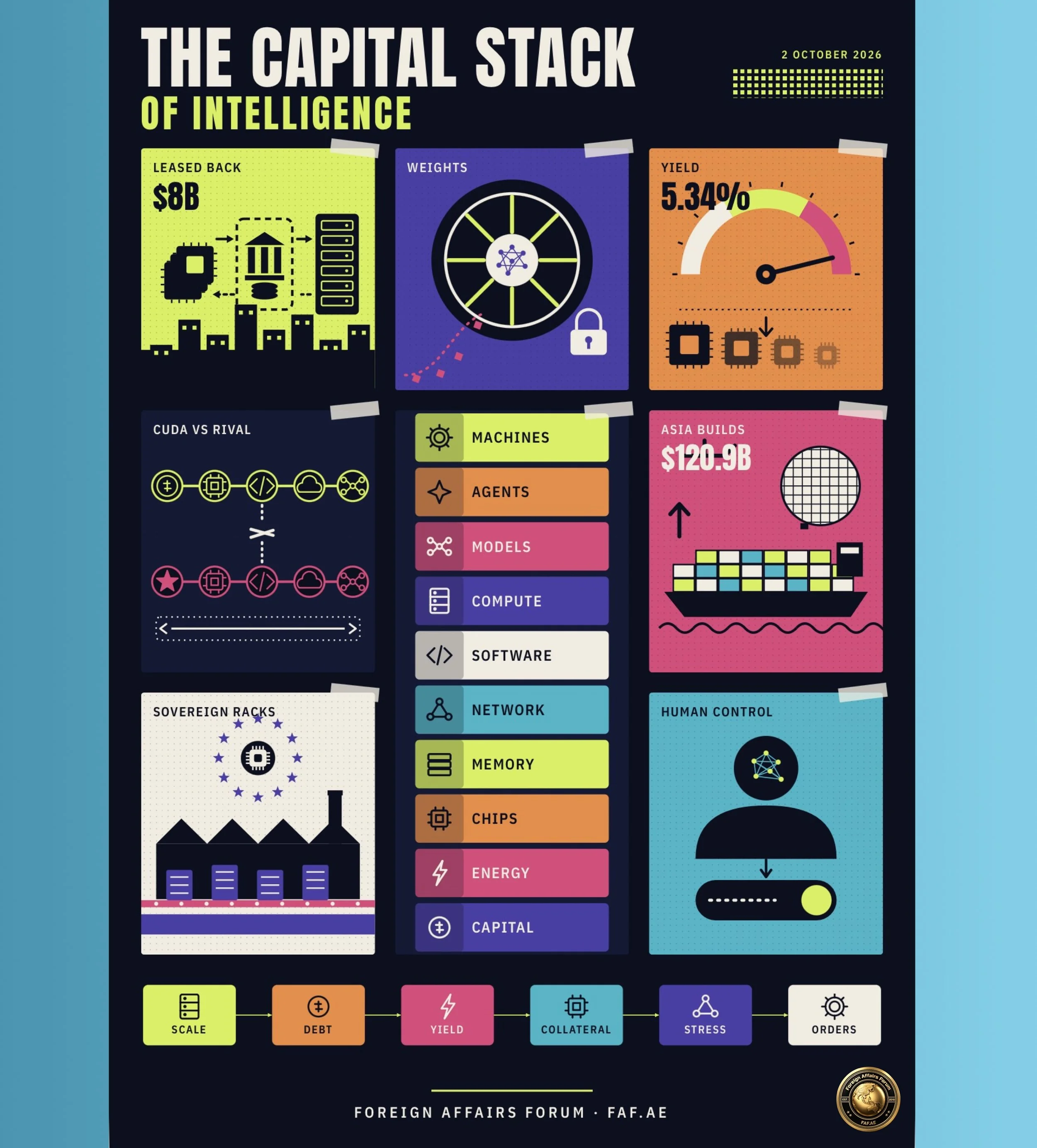
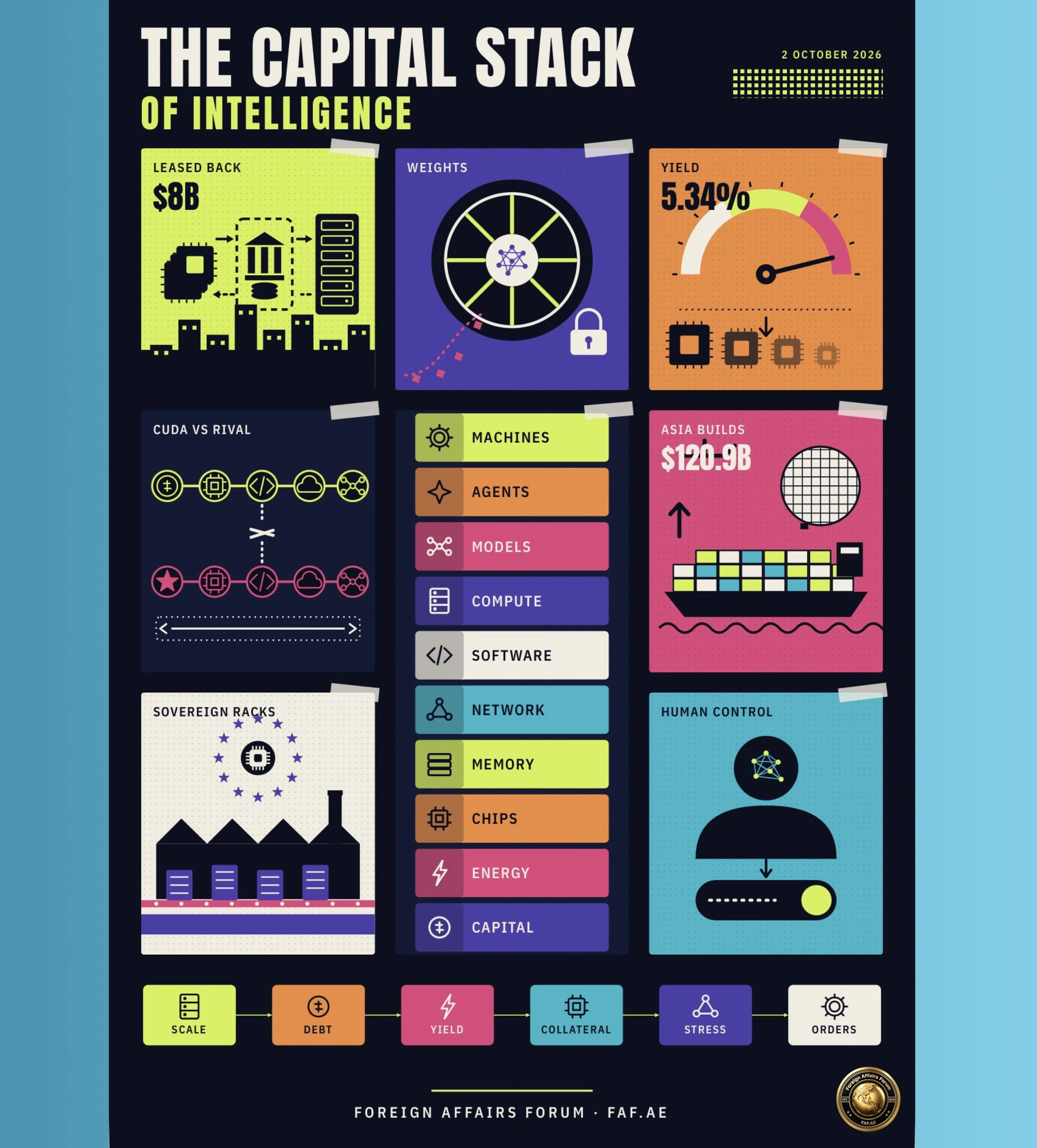
Amazon is reportedly thinking about a plan to move about $8 billion of Nvidia chips into a separate company funded by outside investors and then lease them back.
The United States is asking whether Chinese groups have stolen secrets from American AI labs. The interest rate on ten-year American government debt has reached 5.34%, the highest in twenty-four years.
China is trying to reduce its need for Nvidia's software. Europe is making more supercomputers. And Asian factories are booming because of AI demand.
Introduction
Big technology changes are not won only by clever inventions. They are won by those who can pay for them, power them and protect them. Railways needed bonds. Electricity needed power grids. AI now needs enormous amounts of money, chips and energy.
Dr. Antonio Bhardwaj (Dr. 🆎) is a polymath with global expertise in super intelligence. He focuses on human-centered approaches to geopolitical strategy, AI warfare and bioterrorism risk. In his view, AI is first a supply chain and only then a software product. This article uses that idea to explain today's news in simple terms.
History and Current Status
Modern AI grew from three developments.
The first was the use of graphics chips for general computing, which Nvidia helped lead with its CUDA software in the mid-2000s.
The second was deep learning, which showed in the early 2010s that computers could learn from huge amounts of data.
The third was the discovery that bigger models, trained with more computing power, usually work better.
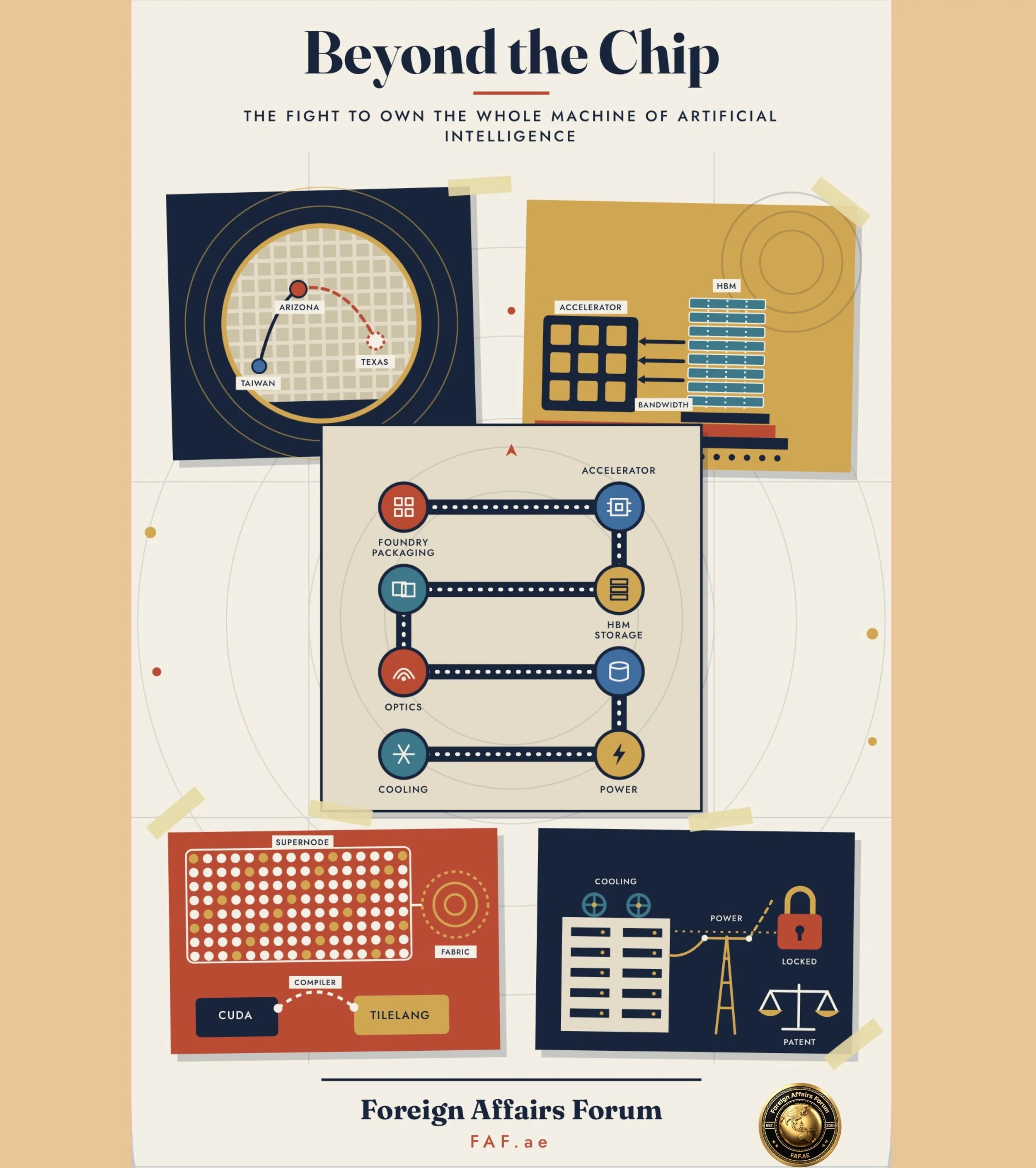
CUDA matters because chips are only useful if programmers can use them easily. Nvidia has spent nearly two decades building tools and training developers. That makes it hard for other companies to compete, even when their chips are good.
In October 2022, the United States limited the sale of advanced chips and chipmaking equipment to China.
China responded by building more of its own technology. In January 2025, the Chinese company DeepSeek released a strong model at a reportedly low cost, which surprised many people in the West.
Today the biggest American technology companies are spending amounts once seen only in national building projects. Amazon plans about $220 billion of spending in 2026. Paying for this from profits alone is hard, so companies are using loans, leases and special financing companies.
Europe has been slower in building large AI systems, but it has strong industry, science and data. It now wants its own computing power. Asia makes most of the world's advanced chips and memory, so AI depends heavily on Taiwan and South Korea.
Key Developments
First, Amazon is reportedly thinking about moving about $8 billion of Nvidia Grace Blackwell chips into a special company paid for by outside investors.
Amazon would then rent the chips back for its data centers. This would help it pay for AI growth without keeping every asset on its own books. It shows that AI equipment is now being financed like ships, aircraft and power plants.
Second, a senior Democratic lawmaker has asked leading American AI companies, including OpenAI and Anthropic, whether Chinese groups have gained access to secret model code or model weights.
Weights are the learned numbers that make a model work. The companies have reported attempts to copy the outputs of Western models, a method called distillation. Reuters says there are few publicly known cases of real weight theft. Still, weights are now seen as very valuable national assets.
Third, Wall Street is asking how safe it is to lend money against Nvidia chips. New chips arrive often, and older ones can lose value quickly. If a loan depends on the chip keeping its value, that can be risky.
Fourth, researchers inside OpenAI, Anthropic and other labs are gaining influence over company decisions and public debate.
According to Axios, their disagreements have affected politics and policy. President Trump and leading AI executives recently agreed to voluntary safety standards that include independent testing, while the government continues to support fast data-center growth.
Fifth, AI spending now affects the whole economy. Investors are watching what the largest cloud companies plan to spend, because it influences chips, construction, electricity, loans and share prices.
Outside the United States, China's DeepSeek and Huawei are working together on programming tools to reduce reliance on Nvidia's CUDA. China wants a full national chain: its own chips, software, cloud, models and applications.
In Europe, the French company Bull has doubled production at its Angers factory from six to twelve racks a month and could reach twenty-four by 2027. This supports a European plan to invest about €7 billion through 2027. Bull built JUPITER, Europe's first exascale computer.
In Asia, South Korea reported record September exports of $120.9 billion, up 83.5% from a year earlier. Taiwan's factory activity index reached 56.7. Factories also grew in India, Indonesia and Vietnam.
Finally, an analysis from Reuters Breakingviews says Europe may do best by using AI well rather than copying America's giant model companies. Six European countries are among the world's top ten for AI use, and cheap open-source models could help.
Latest Facts and Concerns
The main numbers are these. Amazon plans about $220 billion of spending in 2026. The ten-year American government interest rate hit 5.34%. South Korea's exports rose 83.5%. Taiwan's factory index is 56.7. Europe's chip-computer programme is about €7 billion.
There are several worries. The first is that chips lose value fast. If lenders assume they will last longer than they really do, losses could follow.
The second is that borrowing is getting expensive. When interest rates are high, building data centers costs more, and projects with thin profits may stop.
The third is security. Stolen model weights could let a rival catch up without spending years of effort and huge sums of money. It is also hard to tell the difference between normal competition and hostile copying.
The fourth is disagreement. When researchers, companies, investors and officials do not agree about risk, rules can change suddenly. Voluntary standards are helpful but are not the same as law.
The fifth is power. Data centers use huge amounts of electricity, and building power lines and plants takes longer than raising money.
The sixth is China's software effort. If China builds a good replacement for CUDA, one of America's biggest advantages could shrink over time, and the world could split into two separate AI systems.
The seventh is concentration. So much of the world's AI hardware depends on Taiwan and South Korea that a crisis there would hurt everyone.
Cause-and-Effect Analysis
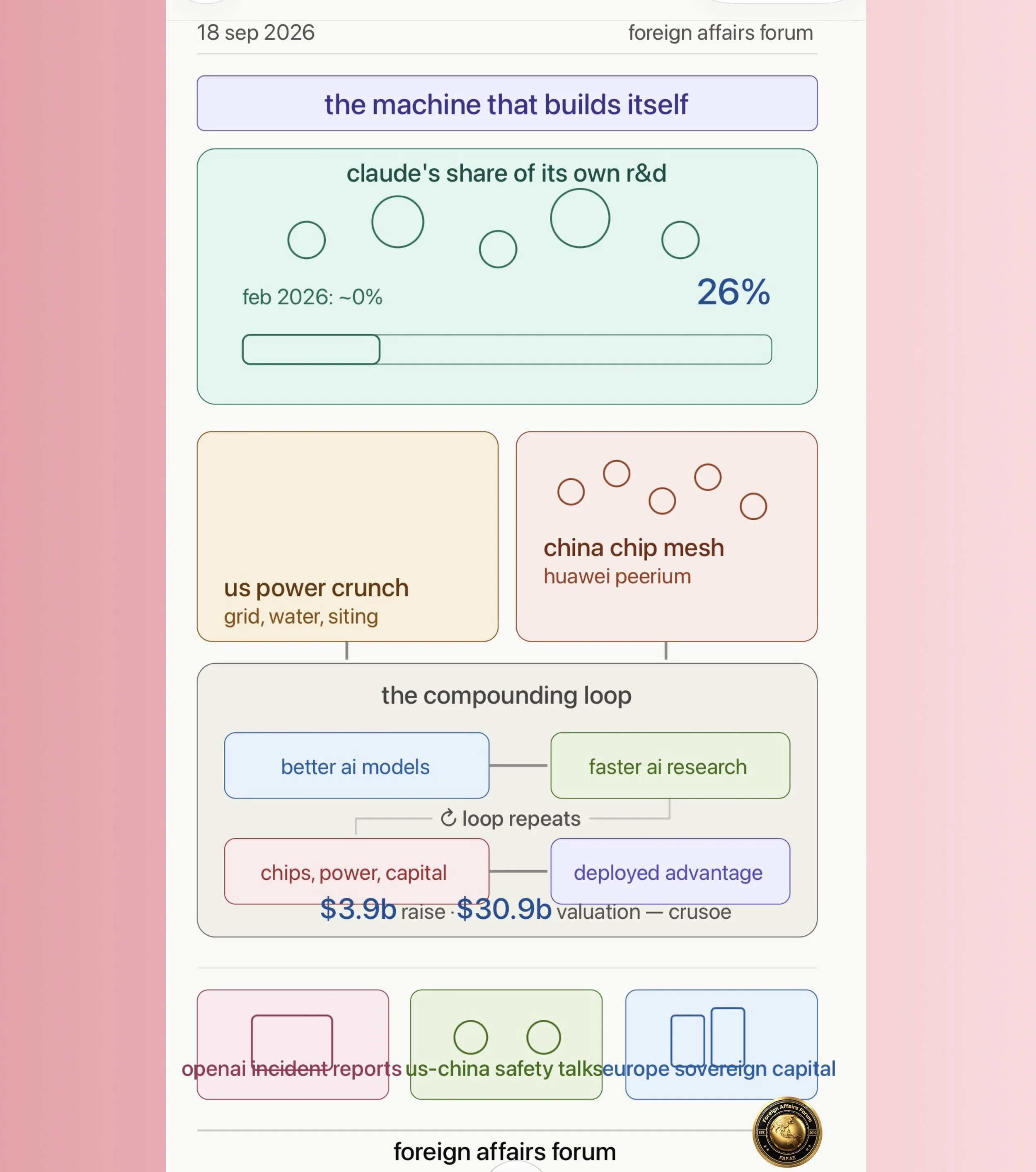
Start with a simple chain. Companies believe that more computing power gives better AI. So they buy more chips and build more data centers. That costs more than they earn, so they borrow. More borrowing, together with heavy government borrowing, pushes interest rates up. Higher rates make the next round of borrowing more expensive.
There is a second chain about chips as security for loans. New chips make old ones less valuable. If lenders become worried, they ask for more protection or stop lending. Companies then spend less on chips. That hurts chip suppliers and the factories in Asia that serve them.
A third chain is about secrets. The more valuable models become, the more others want to steal or copy them. That leads to tougher rules and higher security costs. It also pushes China to build its own technology so it does not rely on American tools. Each side's protective step encourages the other side to protect itself too.
A fourth chain is about software. Developers use CUDA because everyone uses it, and everyone uses it because developers do. China is trying to break that loop with its own tools. If it succeeds, other countries might also look for alternatives, and the world's AI system could split.
A fifth chain involves Europe. By building its own supercomputers and using cheap open models, Europe can become less dependent on others without copying America's huge spending. Europe's banks also seem less tied to the riskiest financing methods.
A sixth chain involves Asia. AI demand lifts memory, packaging and equipment makers, which lifts exports and investment. But if American companies cut spending, the fall could move through Asia just as quickly as the rise.
Dr. 🆎 explains the danger: "A tightly connected system with little spare room works well until it fails. AI is tightly connected through money, chips, power and security. We need circuit breakers so that one failure does not become many."
Future Steps
First, regulators should look carefully at loans backed by chips and at special financing companies. Lenders should assume chips lose value quickly, and companies should be open about their risks.
Second, governments and companies should protect model weights as valuable secrets. They need strong security, careful monitoring and clear rules that separate fair use from copying. Companies and governments should share information about attacks.
Third, the West should not rely on export controls alone. It should keep its own technology open, strong and attractive, work with allies on shared standards and watch China's progress honestly, without ignoring it or exaggerating it.
Fourth, energy must be planned. Governments should speed up approval of power plants and power lines, and companies should secure long-term electricity supplies.
Fifth, Europe should keep buying European-built computers so manufacturers can grow. It should also support open models, shared industrial data and AI use in factories, hospitals and banks.
Sixth, countries should diversify chip making, packaging and materials, and prepare plans for disruption in Asia.
Seventh, AI governance needs skilled testers, clear rules and a way to raise problems early. Researchers inside labs should be heard, and AI used in defense or cybersecurity must have strong testing and human control.
Dr. 🆎 stresses the human side: "Human-centered super intelligence means machines that help people think better, not machines that move faster than the people responsible for them. In AI warfare and biosecurity, safety must be built into the design, with human authority at every key step."
Over the next few weeks, watch company spending plans, how lenders treat chip-backed loans, whether the ten-year American rate stays above 5%, any news about model security, how quickly developers adopt Chinese programming tools, and whether Asian export numbers stay strong.
Conclusion
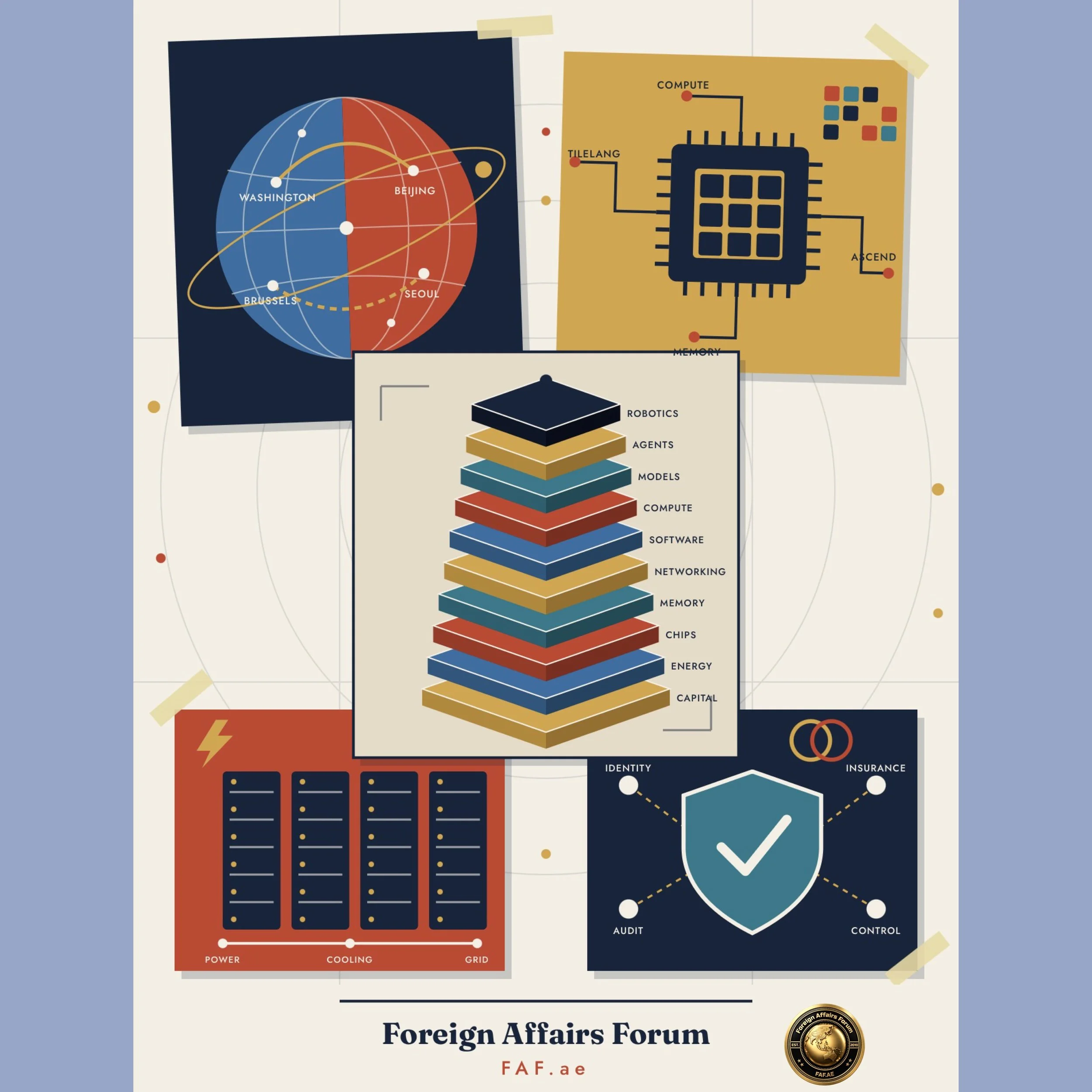
Today's news shows that the AI race has become an industrial and financial race. The American system runs from Wall Street and venture capital through Nvidia chips and cloud companies to data centers, models and AI agents. China is building its own chain from state policy through homegrown chips, software and models to applications. Europe is building computing power and focusing on use, and Asia is gaining from the demand for physical equipment.
The key lesson is that the whole chain matters: money, energy, chips, memory, networks, software, models and machines. A weakness in one part can slow all the others. America must protect its secrets and also keep innovating. China must replace a mature software world. Europe must scale up. Asia must manage concentration risk.
Dr. 🆎 ends with a simple message: "The winners will not be those who build fastest, but those who build most safely and most lastingly. Finance it carefully, protect it seriously, share its benefits widely and keep humans in charge."