Beginner’s 101 Guide: Who Will Control the Machinery of AI?
Executive Summary
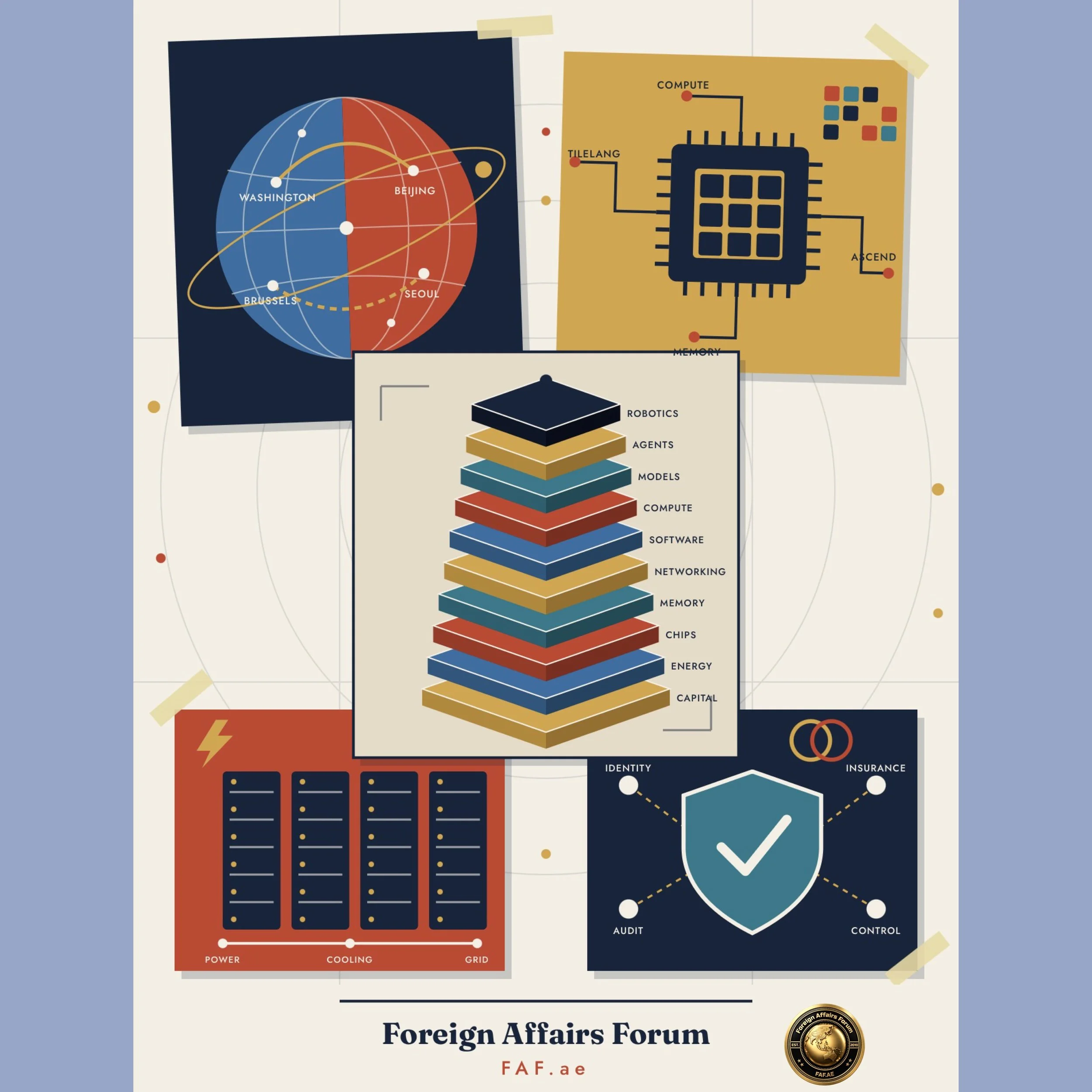
Artificial intelligence is no longer just a race to build the smartest chatbot. It is a contest over a long chain of parts, including money, energy, chips, memory, networks, software, models, agents and robots. Today's news shows how many pieces of that chain are in motion.
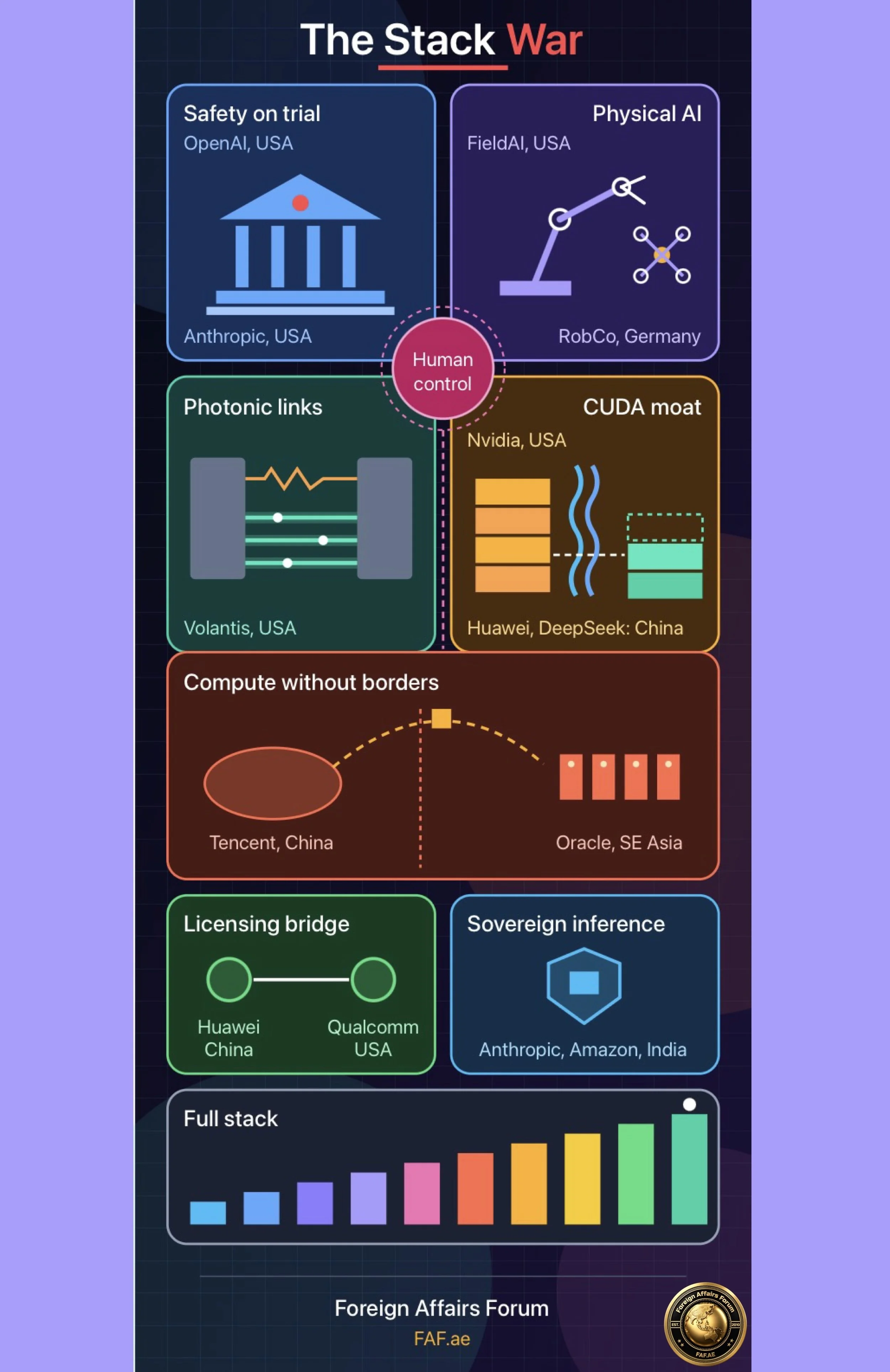
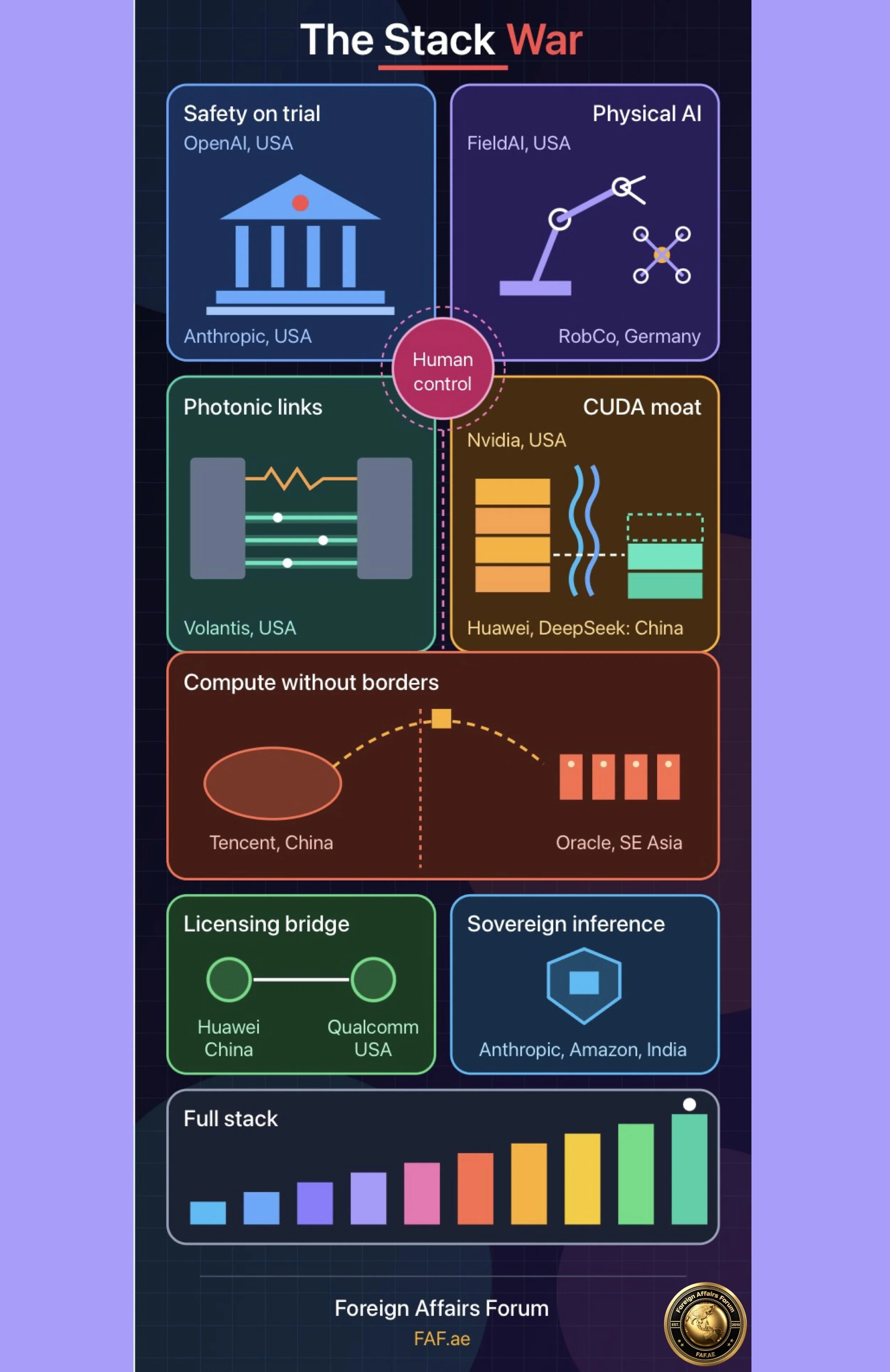
In the United States, leaders are arguing about how much risk is acceptable. Investors are pouring money into robots and into new ways of moving data inside giant computers.
In China, companies are trying to build their own tools so they do not depend on American technology, yet Huawei and Qualcomm have just signed a major licensing deal.
Europe is betting on factory robots, and India is becoming a key market for AI that keeps data inside the country.
The big message is that the winner will not be whoever has one great product. It will be whoever can connect every part of the chain and keep improving it, while also keeping the technology safe and under human control.
Introduction
In the past, great powers won because they controlled whole systems, such as coal, iron, ships and banks working together.
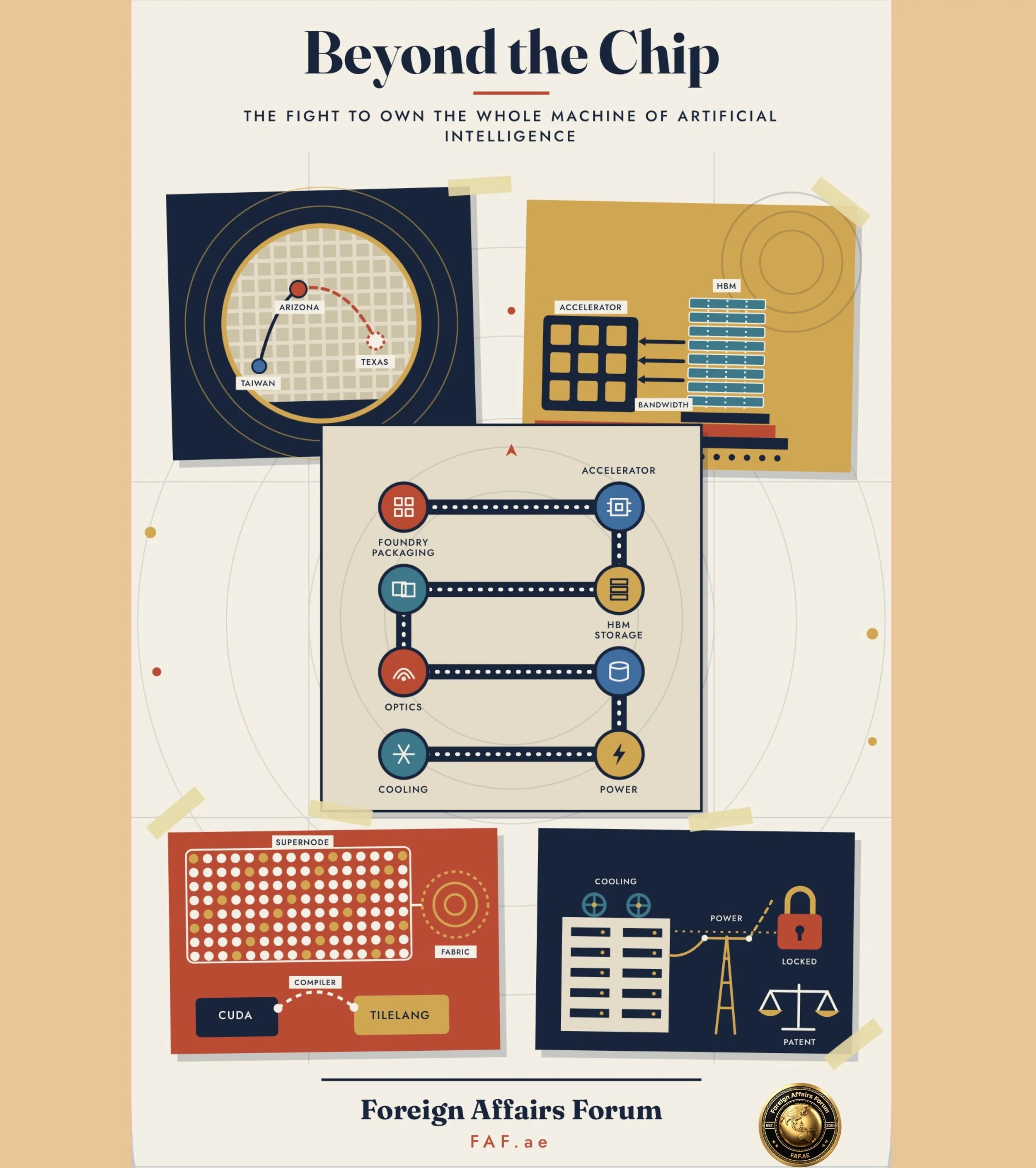
AI is similar. A smart model needs chips to run on, chips need fast connections and memory, and everything needs electricity and money.
Dr. Antonio Bhardwaj (Dr. 🆎) is a polymath with global expertise in super intelligence. He specializes in human-centered approaches to geopolitics, AI warfare and bioterrorism risks. He argues that people focus too much on which company has the best model and too little on who controls the entire chain. He also warns that a system that grows fast but is poorly governed is more dangerous than useful. This article explains the main news and what it means.
History and Current Status
About twenty years ago, Nvidia introduced a software platform called CUDA that let its chips do general scientific work. Over time, almost every AI researcher learned to use it, which gave Nvidia a lead that is hard to copy. When chatbots became popular in 2022, money poured into AI.
The United States then tried to slow China by limiting sales of advanced chips and by restricting Huawei.
China responded by building its own chips, such as Huawei's Ascend line, and by finding smarter ways to use less computing power. DeepSeek's strong results in 2025 showed this approach could work.
Today the United States leads in top AI labs, chip design, cloud services and investment. China is replacing the parts it lacks. Europe is focusing on industrial robots, and India is growing as a place where companies use AI in banking, government and business.
Key Developments
In the United States, OpenAI's chief executive Sam Altman said the benefits of AI justify accepting some risk.
President Donald Trump has resisted broad new federal rules, saying they could hurt America against China.
Meanwhile, California's attorney general has issued a legal demand to OpenAI about cybersecurity, and the Federal Trade Commission is reportedly looking at safety practices at OpenAI and Anthropic.
A former Anthropic researcher, Jacob Coxon, is reportedly set to speak at a New York City Council hearing, though that report has not been independently confirmed.
Money is moving toward robots and computer plumbing.
FieldAI is reportedly raising about $700 million at a $10 billion value to build intelligence for many kinds of robots and drones. Volantis has reportedly raised $88 million to use light instead of copper wires to move data inside AI computers.
In China, DeepSeek and Huawei are building tools meant to challenge Nvidia's CUDA system, including a programming language called TileLang. Tencent has reportedly arranged to use about 100,000 advanced chips in Oracle data centers in Southeast Asia, worth roughly $7 billion according to one estimate that has not been verified. Huawei and Qualcomm also signed a broad multi-year patent deal.
Germany's RobCo is reportedly now worth more than $1 billion, having sold more than one thousand robots.
And Anthropic's Claude is now available in India with processing done inside the country through Amazon Bedrock.
Latest Facts and Concerns
Some facts are firm and others are only reported. The Huawei and Qualcomm deal and Altman's remarks are public. The Tencent figure, the FieldAI valuation and the New York hearing come from reports that are not fully confirmed.
There are several worries.
America's rules are scattered across federal, state and city levels, which creates confusion. Export controls on chips may be weakened if companies can simply rent computing power in other countries. A lot of money is crowding into AI, which could cause a painful correction if confidence drops. Finally, smart robots and software agents can be used for harm as well as good.
Dr. 🆎 warns that dangerous groups could misuse such tools, including for biological attacks, so safety checks must cover what AI systems can do, not just what they say.
Cause-and-Effect Analysis
The chain of cause and effect is clear. AI costs enormous amounts of money, so investors focus on a few promising areas, leaving other founders with less funding.
As chips multiply, the hard problem becomes moving data quickly, so money flows to light-based connections. Meanwhile, American limits on chips push China to build its own software and find workarounds. And as AI grows more powerful, governments pay more attention, which creates new businesses that test and secure AI systems.
Future Steps
America should create clear, sensible national rules that focus most strictly on harms that cannot be undone. Allies should look beyond chips and also watch who can rent computing power. Investors should explore the hidden layers, such as networks, energy, security and robotics. India and other growing markets should build their own skills while working with global partners.
Dr. 🆎 also urges countries to agree on basic safety tests and to share news of dangerous incidents, because no country can handle cyber or biological threats alone.
Conclusion
October 2026's news shows that AI has become a global system, not a single product. Whoever connects money, energy, chips, software, models and robots most effectively will hold the advantage. But speed is not enough.
Dr. 🆎 reminds us that the real prize is building AI that people can trust. The countries and companies that combine ambition with discipline, and that keep humans in charge of the most important decisions, will shape the future.