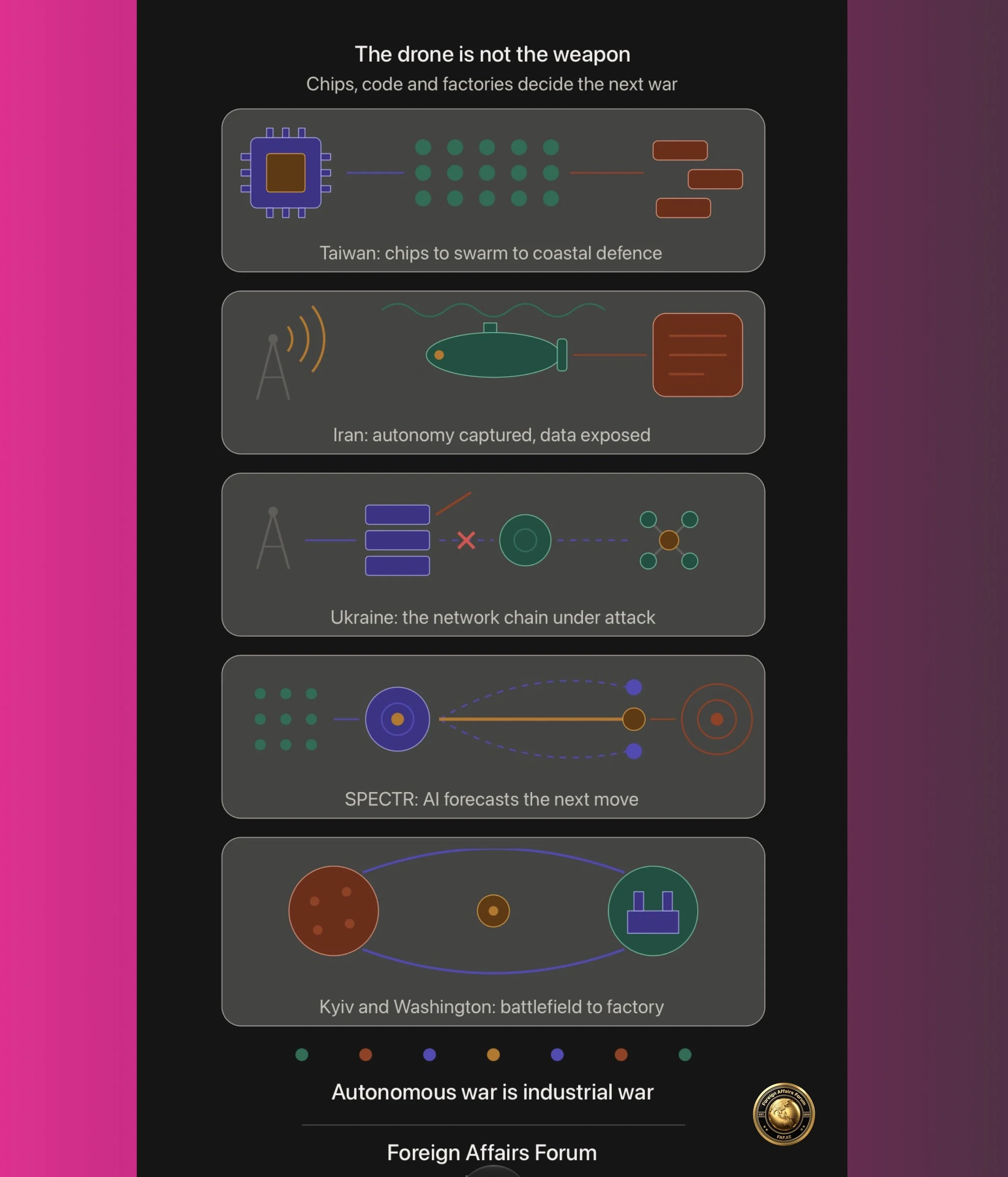
Beginners 101 Guide: Inside the New Age of Drone War: Why Factories Matter More Than Machines
Summary
The Big Picture
Wars are changing fast.
For years, people thought the most important thing was having the best drone.
This week showed that this idea is out of date. What matters far more is who can build drones in huge numbers, protect them from enemy tricks, keep the networks running, and learn from each battle to make the next drone better.
Five news stories from September 28th, 2026 show this clearly. They come from Taiwan, the Middle East, Ukraine and the United States.
Taken together, they tell one story.
Modern war is becoming a contest between whole industrial systems, not just between weapons.
Dr. Antonio Bhardwaj is an expert in human-centred AI, geopolitics, AI warfare and the risk of biological attacks. He says people often look at the wrong thing. The drone is the part everyone sees, but it is also the part that is easiest to lose.
The real power lies in the chips, software, networks and factories behind it.
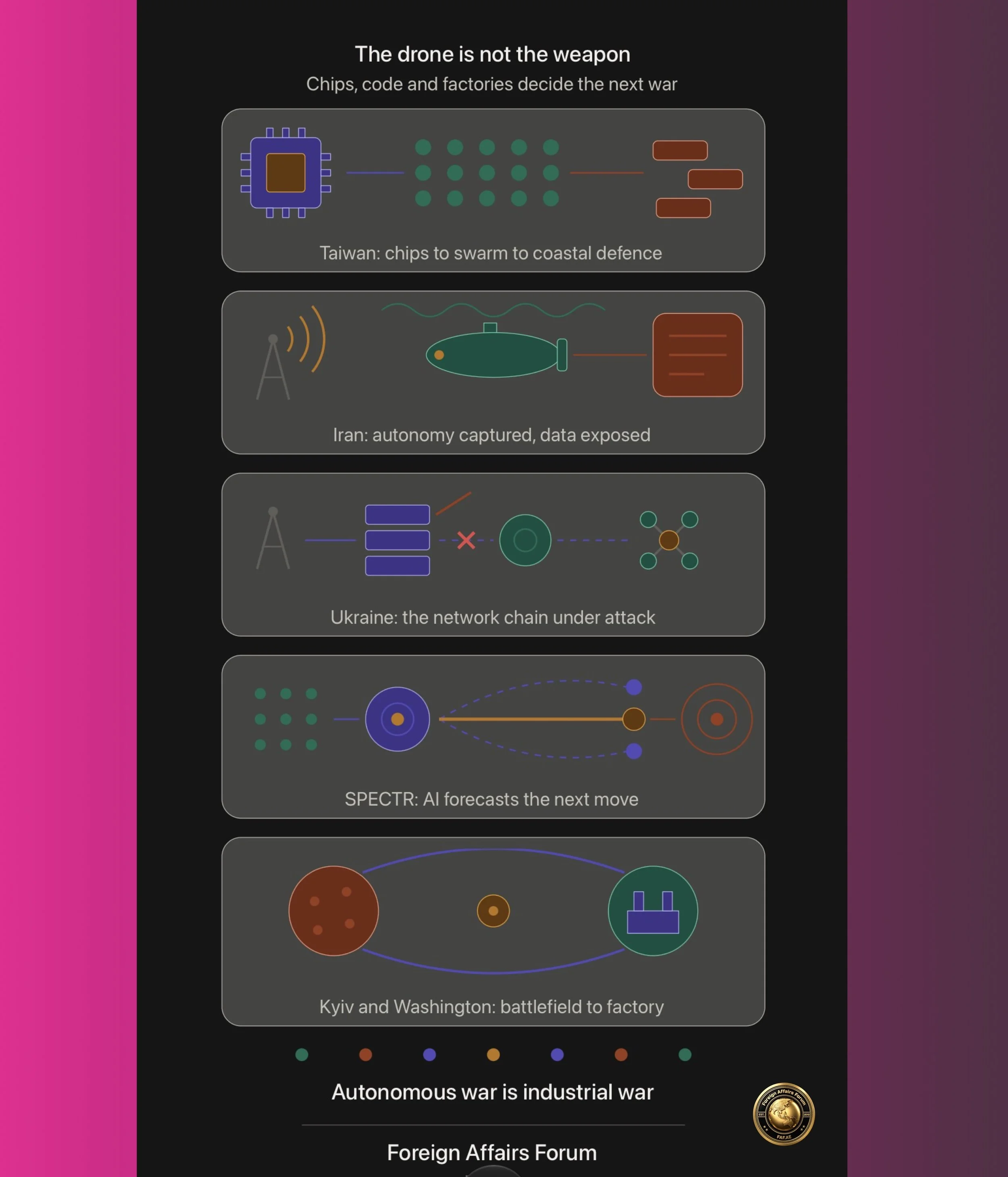
Taiwan Builds a Drone Industry
Taiwan's President Lai Ching-te broke ground on a new drone centre in the southern county of Chiayi.
Alongside a new research campus, the project includes an industrial park that will hold about 100 companies and cost around $217 million. Its goal is to build drones without using any parts from China.
This matters because China makes most of the world's small commercial drones and many of their key parts. If a war began, Taiwan could not count on buying parts from its rival. So Taiwan wants to build the whole chain itself, using its famous skills in computer chips and precision manufacturing.
The numbers being discussed are large.
Reports say Taiwan plans to buy more than 600 drones for watching its coast, over 40,000 small attack drones and more than 100 small attack boats. These are plans, not finished weapons, but they show the idea.
Taiwan cannot match China's huge army ship for ship. Instead, it hopes that thousands of cheap drones would make an invasion by sea very hard and very costly.
Iran Says It Captured Another American Machine
On September 27, Iran's Revolutionary Guard Corps said it had captured an American underwater drone, called a REMUS 600, in the Strait of Hormuz. It said it used electronic warfare, which means jamming or confusing a machine's signals.
Iran says it will now examine the drone and take out its data. The American military reportedly disputed the claim, and outsiders have not confirmed what really happened.
Even so, the story teaches a lesson. A drone can go where a sailor should not, and it can be lost without anyone dying. But a lost drone can fall into enemy hands. Its software, maps and secret codes could be studied and copied.
So future drones need to be built as if capture will happen.
They need strong locks on their data, software split into small parts, and the ability to wipe themselves clean.
A drone that can be tricked, jammed or captured whole is a gift to the enemy.
Russia Attacks Ukraine's Networks
Russia has spent the past week hitting the digital systems that keep Ukraine connected.
On September 27th, the headquarters of Kyivstar, Ukraine's biggest mobile phone company, was struck. Nobody there was hurt.
Russia also said it hit a data centre belonging to another phone company, though that company has not confirmed it.
President Zelensky said a data centre in Kyiv was hit twice, wounding two children and an adult. Earlier attacks left around one hundred thousand homes without internet.
Why does this matter for drones?
Modern drone warfare depends on a chain.
Phone networks link to data centres. Data centres power the software. The software guides sensors and drones. If you break the first link, everything further along suffers.
Ukraine's foreign minister pointed out that quick warnings about missiles and drones save lives, and those warnings need working networks.
The lesson goes beyond Ukraine.
Any army that relies on cloud computing and AI must spread its computers around, keep backup connections and make sure its machines can still work when the network goes down.
In the future, the server farm itself becomes a target.
Ukraine Tests an AI That Predicts the Enemy
Ukraine's defence ministry is testing a new AI system called SPECTR. It was built by a new AI centre that the ministry set up in March 2026 with help from Britain, which gave £500,000.
SPECTR studies battlefield information, looks for patterns in what Russian forces do, and suggests what they might do next. Several combat units are already testing it.
Earlier AI could only help people see, for example by recognising a tank in a picture.
SPECTR tries to help commanders understand and predict.
Ukraine has a huge store of battlefield data, including five million labelled images, which gives it a real advantage in training such systems.
But there are risks. Battlefield data is messy and can be faked. Russia could deliberately create false patterns to fool the AI. Tired officers might also trust a machine's advice too quickly.
Dr. 🆎 warns that when AI makes decisions faster, humans have less time to think, and the pressure to trust the machine grows. The new contest may be AI prediction against AI deception.
The United States and Ukraine Join Forces
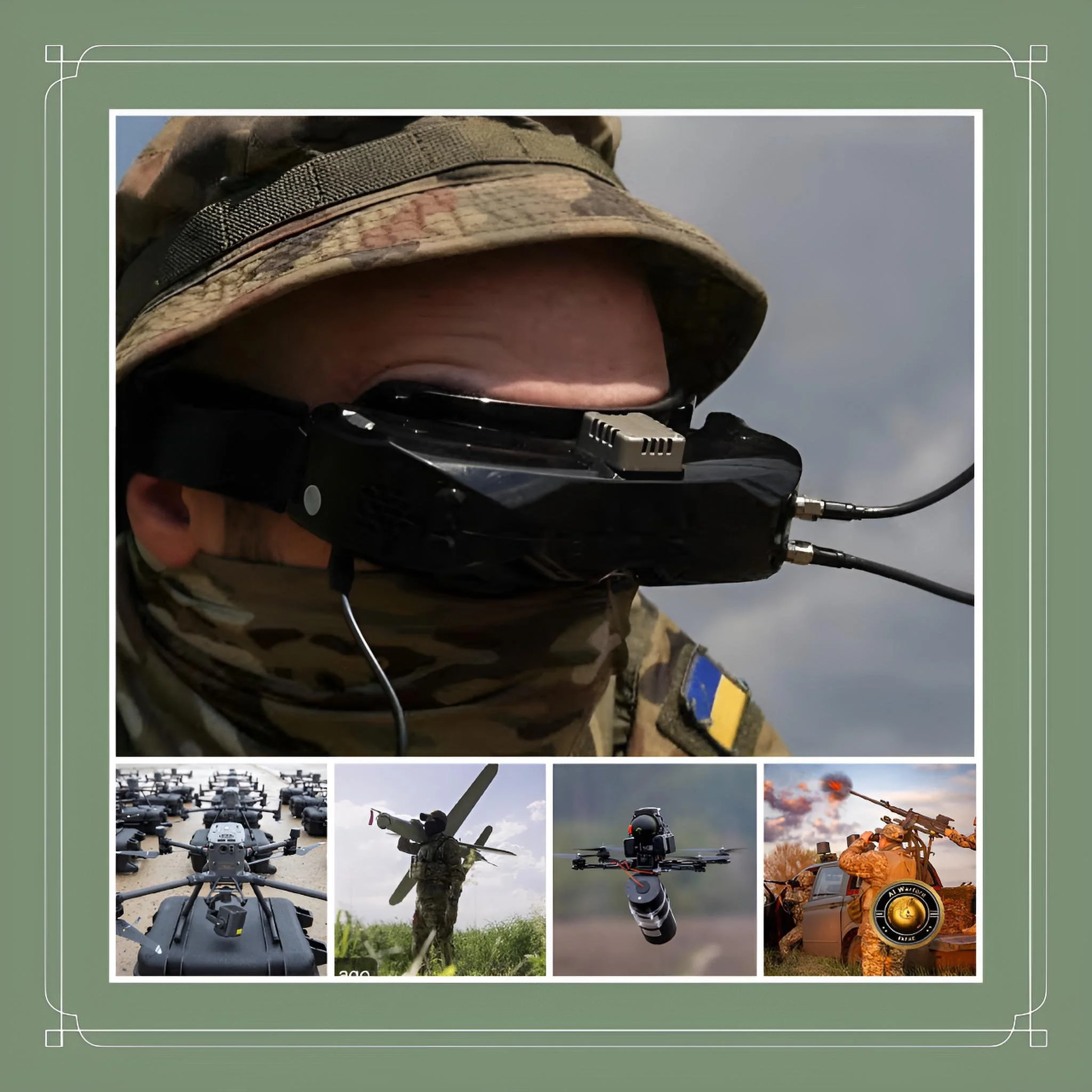
Ukraine and the United States are working on a deal to share drone technology and battlefield lessons.
Ukraine already has similar agreements with eleven countries. This spring, when the American Army urgently needed thousands of Ukrainian-designed interceptor drones in the Middle East, they were shipped within days. But they only worked properly weeks later, because Ukrainian parts and Ukrainian experts were needed to fit them into air defences.
That story shows why the deal matters.
Ukraine has something American laboratories cannot make: millions of hours of real war experience. It knows what survives jamming, bad weather and enemy tricks.
Ukrainian groups say AI-guided drone strikes have grown about tenfold this year. These numbers come from the Ukrainian side, so they should be treated with care, but they show how fast things are moving.
If the United States can combine Ukraine's learning speed with its money, chip technology, software skills and factories, it could build a much faster way of making weapons. Instead of ten years to develop a system, the cycle might be counted in months.
Why These Stories Are Connected
Think of them as one chain.
Ukraine's war taught the world what works.
Taiwan turned those lessons into an industrial plan. Iran's claimed capture shows that cheap machines can be lost and studied. Russia's attacks show that networks are targets.
SPECTR shows AI moving into command decisions. And the American and Ukrainian deal shows how battle lessons can flow back into factories.
Each link causes the next.
Cheap drones are useful, but they are easy to lose, so they must be protected, which costs money. Networks make drones powerful, but they attract attacks, so they must be spread out.
Data makes AI smarter, but it also invites deception, so the AI must be tested against tricks. And sharing technology speeds up progress, but it also spreads dangerous tools to more countries.
Dr. 🆎 raises another warning. Cheap, autonomous machines are becoming easier for anyone to use. The same technology that helps a drone hit a tank could carry a dangerous payload to a crowded place. He argues that controlling autonomous weapons must be part of the wider fight against the spread of weapons, especially given his concern about biological threats.
What Should Happen Next
Experts suggest several sensible steps.
Every autonomous machine should be built expecting that it may be captured, with strong protection for its data. Countries should build tougher digital networks, with computers spread across many places and backup plans when connections fail. Democracies should share the work of making parts, so that no single country, especially a rival, can cut off the supply.
AI systems that predict enemy moves must be tested against tricks and must always leave real human judgment in charge of big decisions. When countries share battlefield data and technology, they need clear rules about security, ownership and exports. And governments should talk to each other.
Just as the United States and China agreed last week to open a channel for AI incidents, other rivals can agree on ways to check quickly what has happened when a drone is captured or an incident occurs, before a mistake becomes a crisis.
The Bottom Line
The lesson of September 28th is simple.
The question used to be who has the best drone on day one of a war. The better question is who can build the next hundred thousand drones after the first hundred thousand are destroyed. That depends on chips, software, networks, factories and supply chains.
Taiwan's decision to build a whole national drone industry may be the most important story of the week.
Autonomous war is turning into industrial war.
The real weapon is the technology system behind the machine, and the countries that build, protect and govern it wisely will be the ones best able to keep the peace.