Beginners 101 Guide: The drone age grows up: data, directed energy and the new rules of military competition
Executive summary
Five major developments in the first two weeks of August 2026 reveal that the world’s most important militaries are no longer just buying better drones — they are building the entire ecosystems that allow autonomous warfare to keep getting better.
Ukraine is turning battlefield video into AI training fuel. South Korea is testing weapons in real combat conditions. Taiwan and the Czech Republic are building drone supply chains together.
The US Marines are deploying a weapon that can zap dozens of drones out of the sky with a single microwave burst. And the US Army is letting private companies test missiles and drones on its ranges for the first time.
Taken together, these five moves describe a new era of military competition — one where the winner is not the country with the best drone today but the one with the fastest-improving drone ecosystem by next month.
The battlefield as laboratory
For the past four years, the war in Ukraine has been the world’s most intense and consequential drone conflict.
Millions of unmanned aerial vehicles have been built, deployed, destroyed, and replaced in cycles that defy conventional military procurement logic. Ukraine, lacking the manufacturing depth of Russia, responded by moving faster.
New drone designs appeared every few weeks, incorporating lessons from the last engagement — changes to flight profiles to evade jamming, new navigation systems to compensate for GPS disruption, cheaper materials to allow replacement at scale.
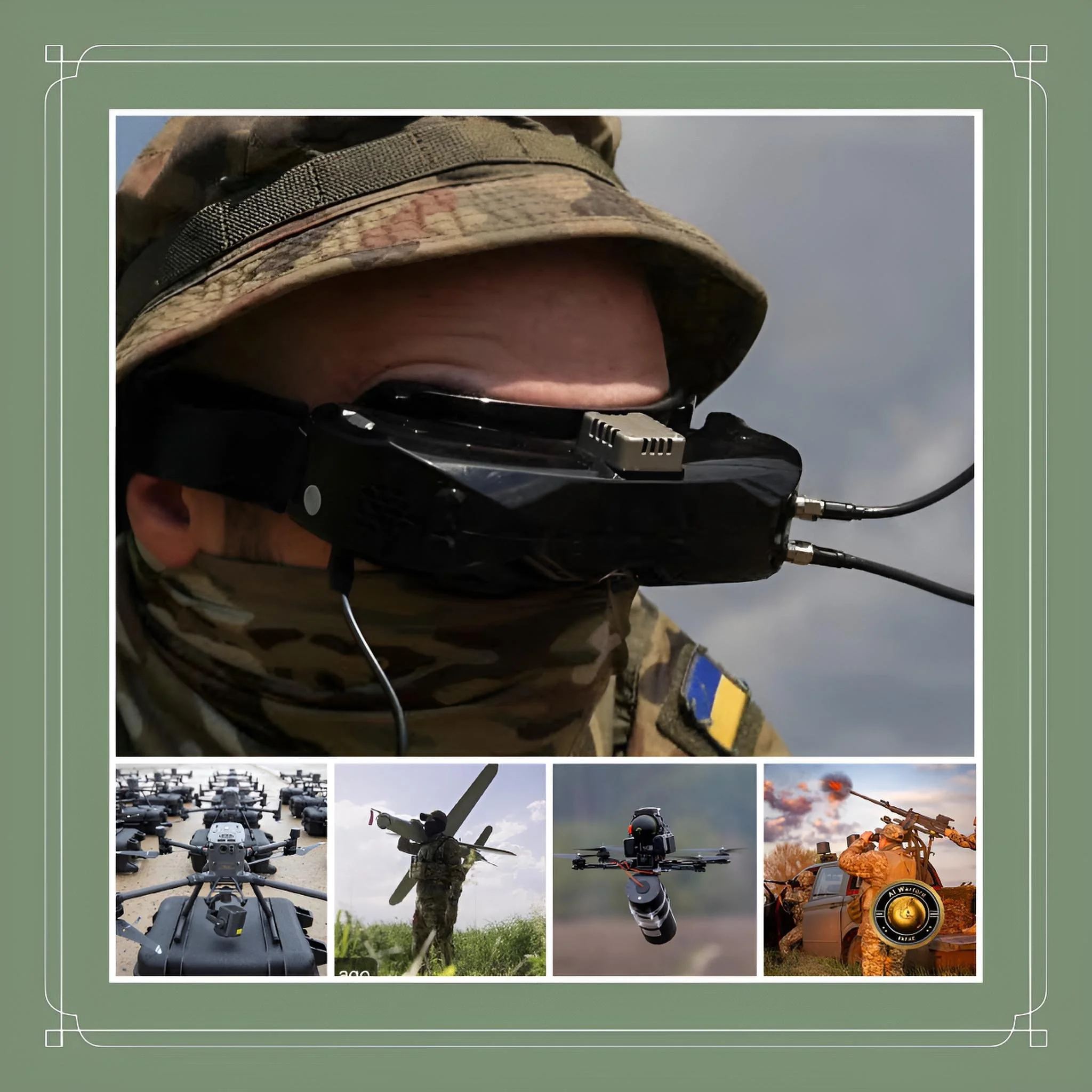
What Ukraine has also built, almost inadvertently, is the world’s most valuable military AI training dataset. Every drone mission captured on video, every enemy vehicle identified and tagged, every thermal signature recorded has been feeding a platform called Avengers Labs, run by Ukraine’s Ministry of Defence.
This platform now contains five million annotated battlefield images — frames from real combat, labelled with what they show: tanks, artillery, infantry, Shahed drones, reconnaissance aircraft.
Ukraine has now opened this platform to its own defence companies.
The logic is straightforward but profound: any single company trying to build AI models for drone target recognition would struggle for years to assemble a dataset of comparable quality and scale.
Ukraine already has it, built at enormous cost, and it is now making that asset work harder by letting trusted partners train their models on it.
Systems trained on this data are already detecting approximately 70% of enemy targets in real time across more than 100,000 drone video streams per month.
Partner countries can also access the platform, subject to vetting. The condition — Ukraine keeps the improved AI model — ensures that every company that uses the dataset makes Ukraine’s own systems better in the process.
Dr. Antonio Bhardwaj (Dr. 🆎), who advises governments and institutions on AI and geopolitical strategy, calls this a new form of defence diplomacy: data sovereignty becoming as important as territorial sovereignty.
South Korea goes to school in Ukraine
South Korea is a defence-industrial powerhouse. It makes excellent artillery systems, advanced warships, and sophisticated electronics.
But the Ukraine war has taught every military that conventional excellence is not enough if it cannot be quickly adapted, tested in real conditions, and iterated based on operational feedback.
South Korean startup Newtype Industries has become the first Korean defence company to test its technology directly with Ukrainian military units.
Its AI-enabled software “Barbara” is designed to improve how artillery fire is coordinated — making 155-millimetre shells, which are in desperately short supply, hit their targets more reliably. The insight is sharp: drones have not replaced artillery; they have made it more urgent to use artillery precisely and efficiently.
For South Korea, which faces a real military threat from North Korea — and which has watched North Korean soldiers gain drone combat experience fighting alongside Russian forces in Ukraine — the ability to field-test AI-enabled defence systems in live conditions is strategically invaluable.
No simulation can replicate the electromagnetic warfare environment, the psychological pressure, or the pace of real combat. South Korea is now planning to train 500,000 of its soldiers to operate drones, backed by real investment, informed by real battlefield lessons.
Taiwan and the Czech Republic: building a supply chain for survival
Taiwan’s situation is in some ways the most urgent of all. It is a dense, island-based democracy facing a militarily superior adversary across a narrow strait.
Its survival in any future conflict depends heavily on its ability to field enormous numbers of cheap, replaceable, locally sustainable unmanned systems even under blockade conditions. The Ukrainian experience — building a resilient drone production network spread across dozens of countries — is directly relevant.
Taiwan sold $115 million worth of drones abroad in just the first three months of 2026, more than in all of 2025. The Czech Republic is its top customer, and most of those drones ultimately reach Ukraine.
The route is triangular — Taiwan to Czech Republic to Ukraine — partly because Ukraine maintains formal diplomatic relations with China and cannot deal directly with Taipei at the governmental level. But the operational result is the same: Ukrainian forces are using Taiwanese-made drones, and the battle performance of those drones is feeding back into Taiwanese design decisions.
Taiwan has also created a new coastal defence command combining drones, mobile missiles, and artillery — a direct application of the asymmetric defence logic that Ukraine has field-tested. The drone workshop hosted with Czech Republic representatives, focusing explicitly on Ukrainian war lessons, is one node in a growing network through which this knowledge is being systematically transferred.
Dr. 🆎 has emphasised that Taiwan’s challenge is not sophistication but volume and resilience: the ability to keep producing and deploying drones even after the first wave of a conflict has disrupted supply chains and communications.
The microwave that kills swarms
The US Marine Corps has just funded a weapon that could change the economics of counter-drone warfare fundamentally.
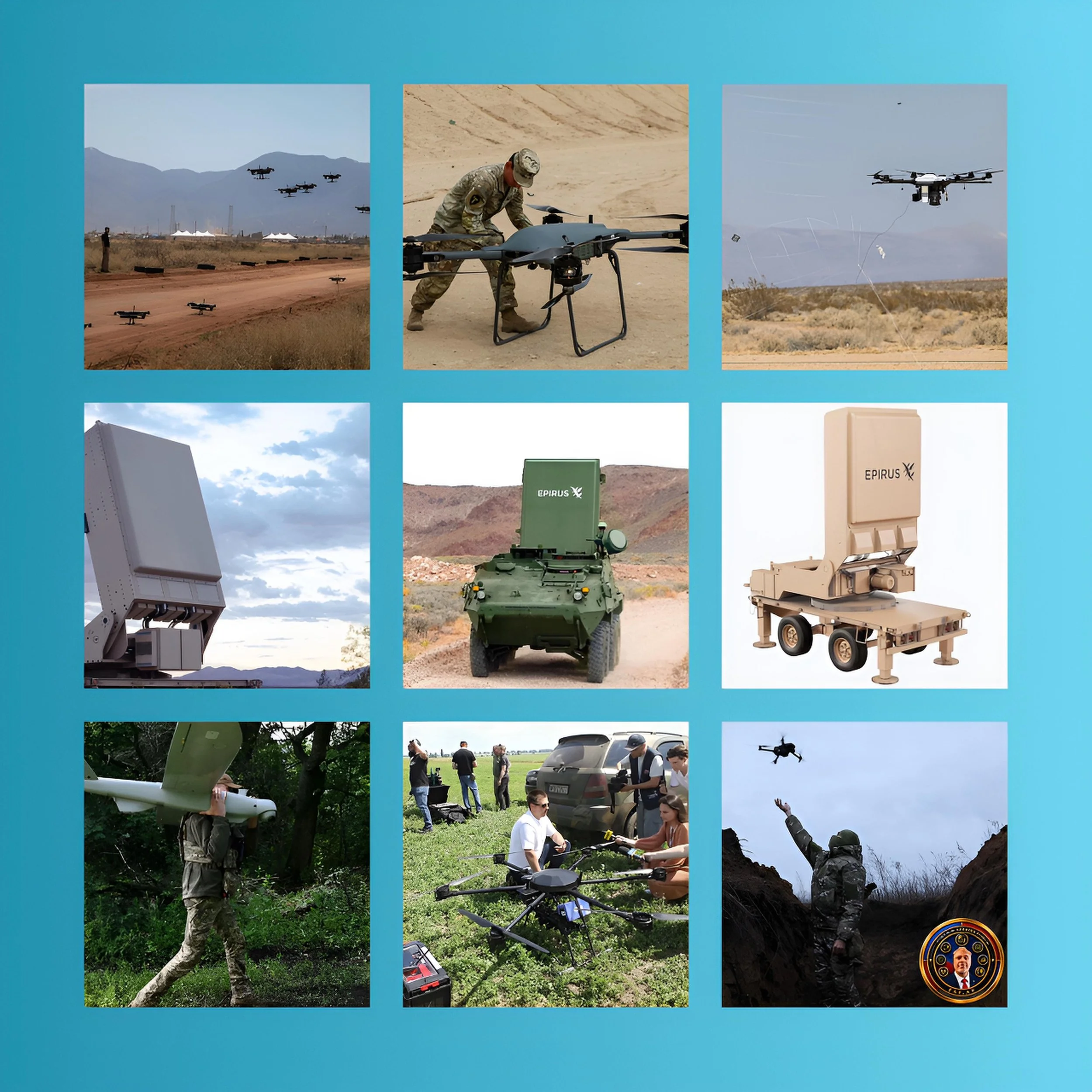
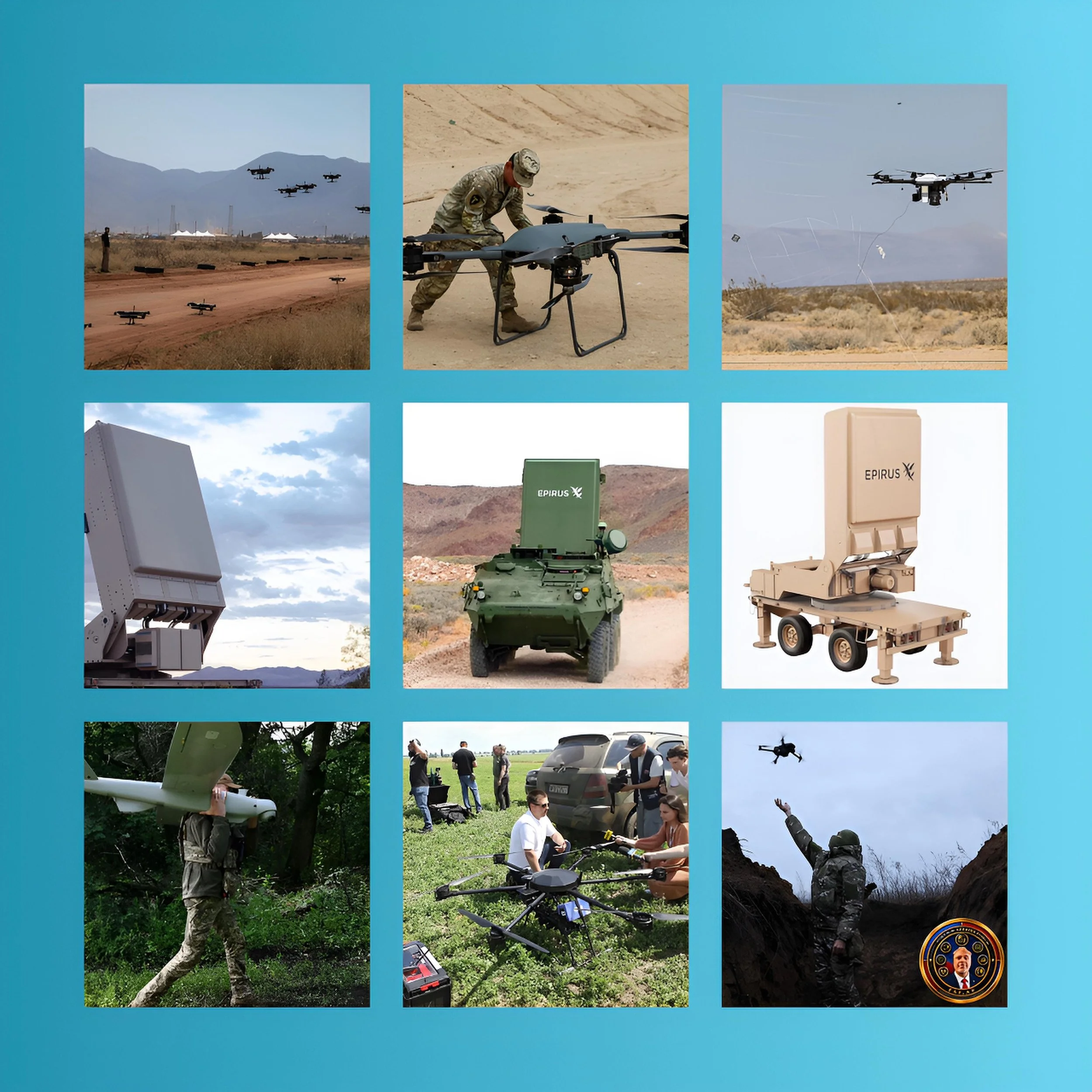
The HAVOC system, built by Epirus and awarded an $11 million contract, fires bursts of high-power microwave energy that can disable dozens of drones in a single pulse — frying their flight computers, speed controllers, and sensors without needing to fire a separate missile at each one.
This matters enormously because of a simple but devastating equation. A Patriot interceptor missile costs around $4 million. An Iranian-made Shahed drone costs somewhere between $20,000 and $50,000.
At those prices, Iran can afford to send wave after wave of drones and simply bankrupt the defenders through interceptor depletion.
The Iran war of 2026 has already caused this problem at scale — US stockpiles of advanced interceptors are visibly strained, and analysts have warned that conserving what remains is forcing difficult trade-offs.
HAVOC inverts that equation. A microwave burst costs almost nothing per engagement. If the system can reliably disable dozens of drones per burst, the cost per drone killed collapses to a tiny fraction of the kinetic alternative.
Epirus has already demonstrated a prior version of the system taking down forty-nine drones in a single pulse. The HAVOC system is expected to be delivered in early 2027, mounted on a universal sled that can attach to virtually any military vehicle.
Dr. 🆎 notes that this convergence of autonomous target identification with directed-energy engagement raises important questions about human oversight. When a system can identify and destroy fifty targets in a fraction of a second, the traditional model of a human authorising each engagement becomes operationally impractical.
Designing the right framework for human oversight of autonomous engagement decisions — fast enough to be militarily relevant, careful enough to prevent miscalculation — is one of the most urgent problems in contemporary defence AI governance.
America opens its testing doors
Perhaps the least dramatic of the five developments, but arguably the most structurally important, is the US Army’s decision to open five military test ranges to private companies.
Drone and missile companies can now apply through an online marketplace and receive range access within thirty days — even without a military contract. One of those ranges, in Morocco, is international.
The significance is in what this removes: the most stubborn bottleneck in American defence innovation, which is not the shortage of clever ideas or engineering talent but the impossibility of testing those ideas in realistic conditions without years of bureaucratic navigation.
The Army has explicitly modelled one of its test events on Ukrainian electronic warfare conditions — mimicking the jamming, spoofing, and signal disruption that Ukrainian drones face every day. For an American startup that has never seen a contested electromagnetic environment, that experience is invaluable.
The underlying diagnosis is honest and overdue: the US built only 300,000 first-person-view drones in 2025, while a single Ukrainian manufacturer plans to produce more than three million in 2026.
The gap is not an engineering gap. It is an innovation pipeline gap — the distance between a working prototype and a tested, procured, mass-produced system. The open-range initiative attacks that bottleneck directly.
What this all adds up to
Dr. 🆎’s synthesis is both clear and challenging. The lesson of these five developments, taken together, is that the military competition of the coming decade will not be decided primarily by which country has the best drone. It will be decided by which country has the best drone-improvement ecosystem: the data to train AI models, the testing infrastructure to validate them at realistic scale, the production capacity to manufacture improved systems at volume, and the directed-energy defences to survive long enough to deploy them.
Ukraine has built that ecosystem under fire, at extraordinary human cost, over four years of existential conflict.
Its allies are now building versions of it in peacetime, informed by Ukrainian lessons. Whether they can build them fast enough — and whether the governance frameworks that prevent autonomous systems from causing unintended catastrophe can keep pace with the systems themselves — are the defining strategic questions of the decade ahead.