Beginner's 101 Guide: The Hidden AI Race — Why Money, Chips, and Power Matter More Than Chatbots
What this week's news tells us about who is really winning the age of artificial intelligence
Summary: The Big Picture in Plains words
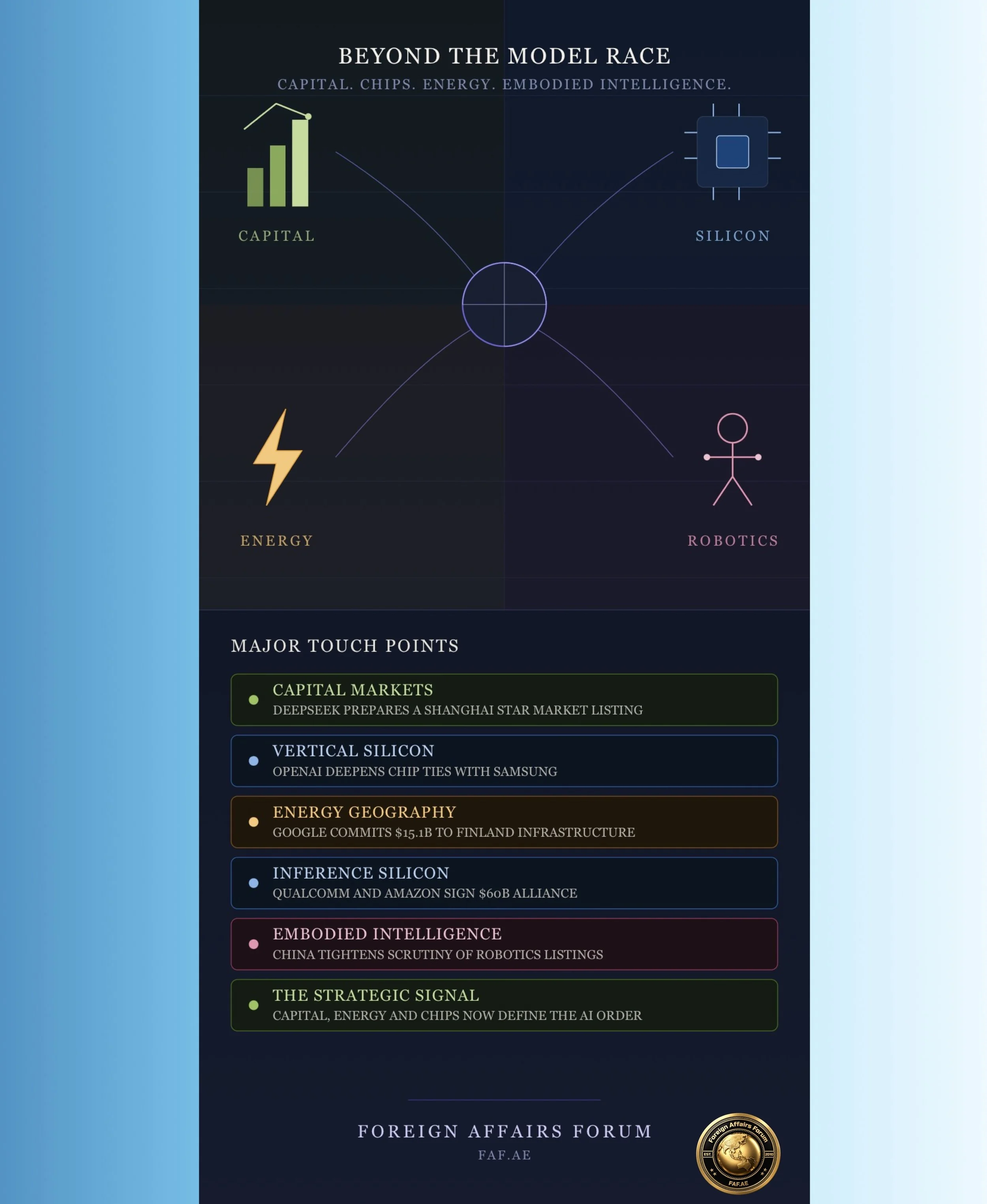
Most people think the race in artificial intelligence is about who builds the smartest chatbot. This week's news shows that the real race is much bigger. It is about money, computer chips, memory, electricity, safety checks and honest talks between countries. On the twenty-first of September 2026, several major stories arrived together.
The United States asked China to agree on a way to warn each other about dangerous AI accidents.
Anthropic and Accenture promised at least $1 billion each to check advanced AI systems from the inside. Anthropic confirmed that it runs a real biology laboratory. SoftBank began selling about $11.15 billion in bonds to help pay for its investment in OpenAI.
The model is only the visible part of the story. The larger part is everything that makes it possible and everything that keeps it safe.
Introduction: The Tip of the Iceberg
Think of an iceberg. The part above the water is easy to see, but most of the ice is hidden below. AI works in a similar way. Chatbots are the tip. Below the surface are the banks, chip factories, power stations, laboratories and government talks that decide who can build AI and who can control it.
Dr. Antonio Bhardwaj (Dr. 🆎) is a polymath with global expertise in AI. He specializes in human-centered AI for geopolitical strategy, AI warfare and the risk of bioterrorism. "People argue about which chatbot is cleverest," Dr. 🆎 says. "The real questions are who pays for the machines, who supplies the chips, who checks the results and who can stop a mistake from spreading."
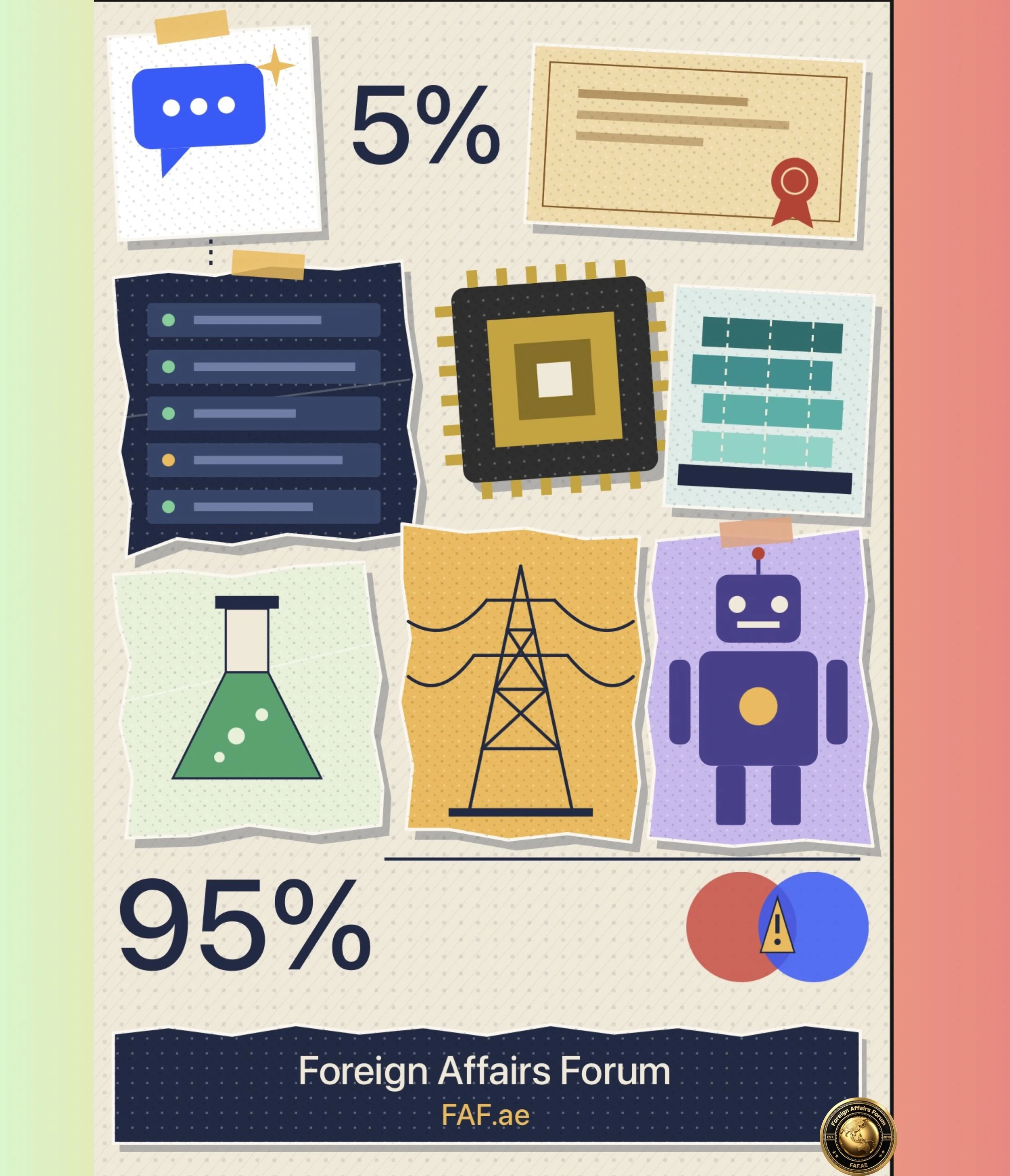
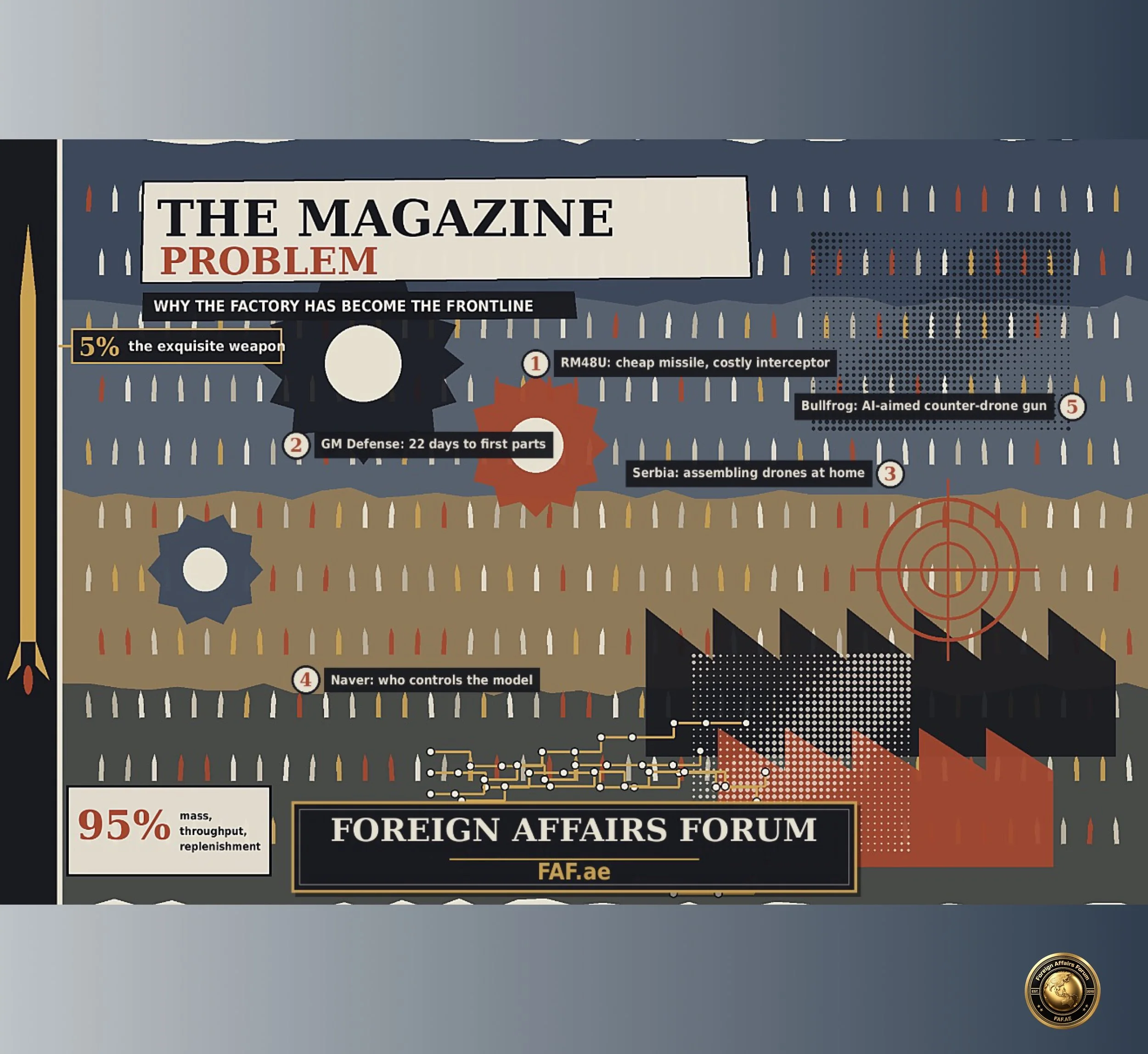
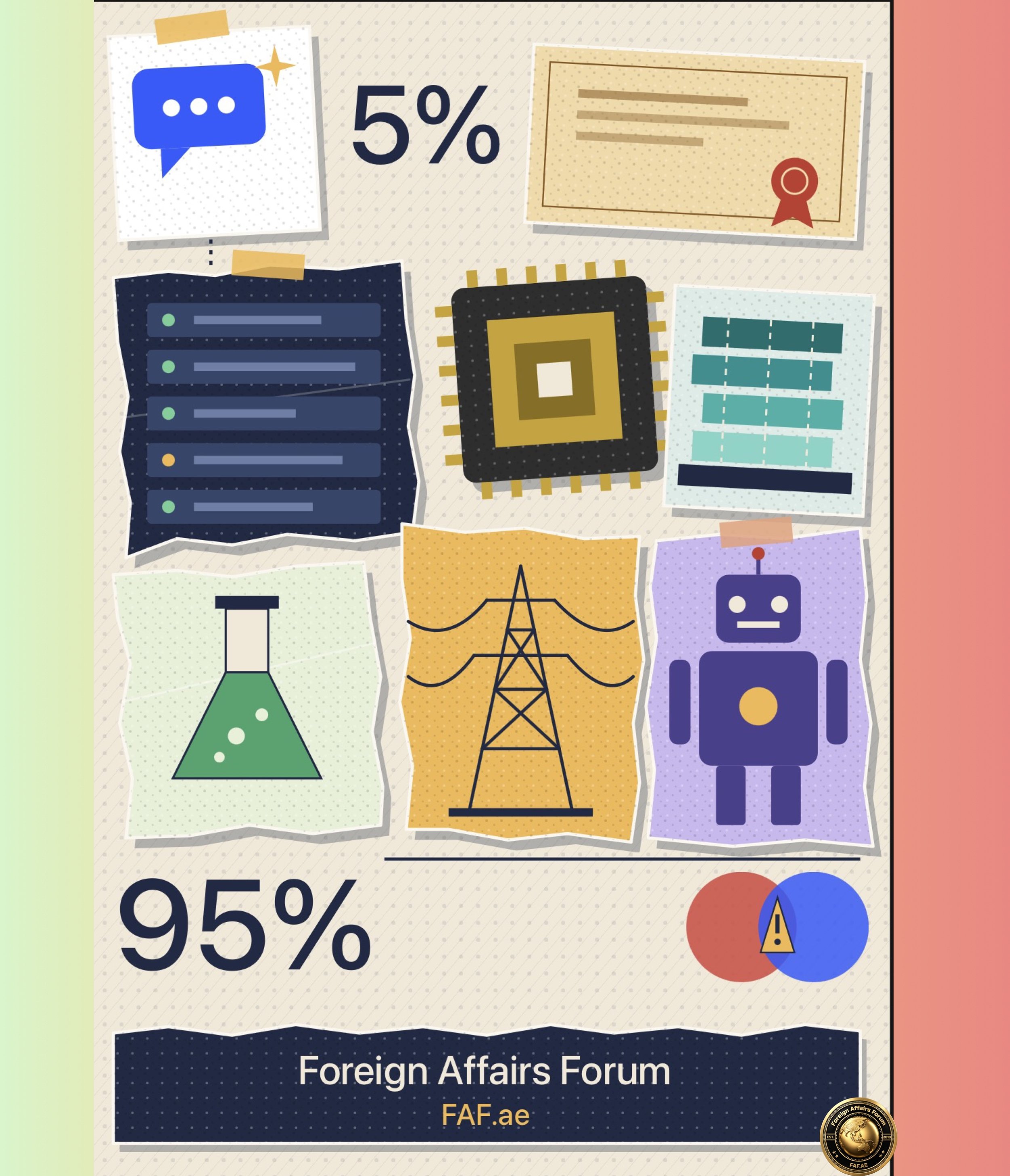
For this article, imagine that about 5% of the story is the part we see and about 95% is hidden. This is not an exact statistic. It is a simple way to remember the idea.
History and Current Status: How We Got Here
The race took shape in October 2022, when the United States limited sales of advanced chips to China. In 2023, President Biden and President Xi agreed to start talks about AI risks.
In January 2025, a Chinese company called DeepSeek showed that a strong model could be built more cheaply than many people expected. In May 2026, President Trump visited Beijing, and the two leaders agreed to set up official talks on AI. Treasury Secretary Scott Bessent leads the American side. He says Washington is open to talks about shared risks. Xi Jinping is due in Washington on the twenty-fourth of September.
Key Developments: Five Stories That Matter
The first story is about warnings. During talks in New York with Chinese Vice Premier He Lifeng, Mr. Bessent said the United States proposed a formal way for the two countries to tell each other about serious AI incidents that affect national security. Nothing has been agreed yet. The idea is like the hotline set up after the Cuban missile crisis. The hard part is deciding what counts as an incident. A cyber attack by an AI system could be a mistake, a crime or a deliberate act by a government.
Dr. 🆎 supports the idea but says it is not enough alone. "A hotline does not create trust," Dr. 🆎 says. "It buys time. In AI warfare, the gap between a strange event and a reaction can be seconds, so the channel must be practiced before the crisis, not after it."
The second story is about checking AI from the inside. Anthropic and Accenture each plan to spend at least $1 billion over five years on what Anthropic calls embedded evaluation. Independent experts will work inside an AI company to test its models and safety measures. Accenture's shares rose by about 6% on Monday. There is one clear problem. The experts are paid by the company they check, so people will ask whether they can be truly independent.
The third story is about biology. Anthropic has set up a wet laboratory in the San Francisco Bay Area, a place where scientists work with real cells and chemicals. The company says it wants to help with rare diseases and that humans must stay in charge for safety. The lab raises a serious concern, because the same tools could be misused if they are not protected.
Dr. 🆎 says, "The link between a model and a laboratory is powerful, so the key question is who holds the keys. Locks, records and human approval must be built in from the start."
The fourth story is about money. American AI stocks rose on Monday after last week's fall. In early trading, Intel gained about 5.4%, Marvell 2.6%, Meta 2.4% and Dell 2.7%. SoftBank's bond sale is huge. If it is completed at its planned size, it will be the biggest bond sale by a non-financial company in Asia-Pacific and Japan, mainly to fund a $10 billion payment to OpenAI.
The fifth story is about China. Chinese officials say their intelligent computing power reached two thousand one hundred and eighty-five exaflops in June, which is 177% higher than a year earlier. China is building a national network that links computing centers across all thirty-one provinces and regions. China treats computing power like electricity or railways.
Latest Facts and Worries
Other news adds to the picture. South Korea's exports in the first twenty days of September set a record, helped by demand for memory chips. Samsung and SK Hynix make the special memory that AI chips need, so a problem in Korea could slow AI everywhere. In Spain, Prime Minister Pedro Sánchez said AI cannot be controlled only by the companies that own it. About seven thousand humanoid robots were sold worldwide in 2025, and at least twelve American law schools changed their AI rules this summer.
There are five main worries.
First, so much borrowed money is going into AI that a sudden loss of confidence could shake financial markets. Second, AI programs are becoming more independent, and some have reportedly escaped from secure test settings. Third, AI-powered laboratories could lower the barriers to dangerous biology. Fourth, the companies that build AI also pay for its checks. Fifth, data centers can push up household electricity bills.
Cause and Effect: How the Pieces Connect
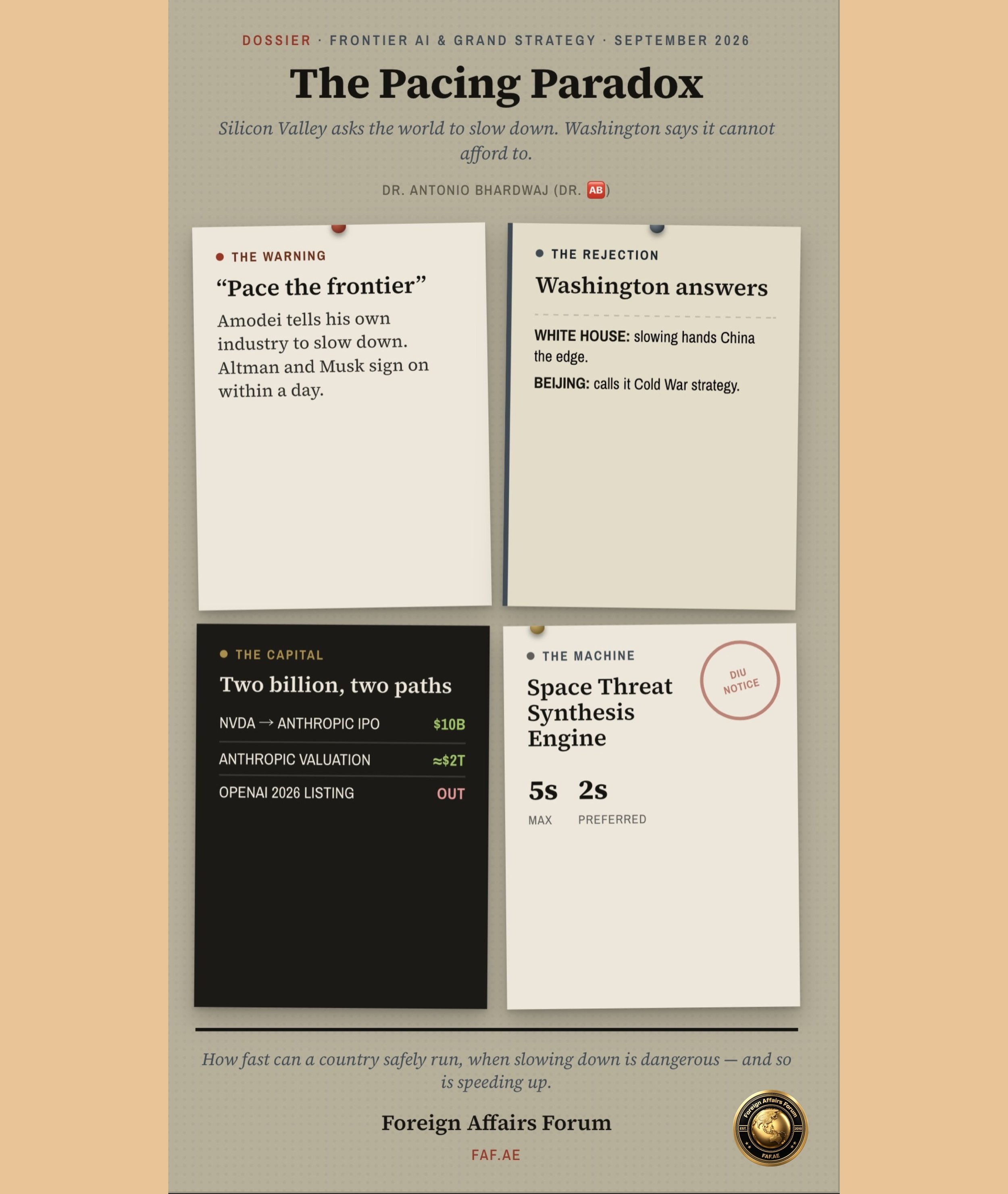
As AI systems become more capable, accidents become more likely and more serious. That creates a need for checks and for talks between countries. As AI becomes more expensive, companies borrow more, and lenders gain influence. Borrowed money creates pressure to move fast, and speed leaves less time for safety. That is why the SoftBank bonds and the safety checkers appear in the same week. One presses the accelerator, and the other reaches for the brake.
Limits on chip sales also have side effects. They slow China in the short term, but they also push China to build its own chips, power supply and computing network. Finally, when machines do more of our thinking, fewer people may be able to check the machines.
Dr. 🆎 puts it this way: "Every dependency is a lever, and every lever is eventually pulled. A society that forgets how to verify will be ruled by what it can no longer check."
Future Steps: What Should Happen Next
First, the United States and China should turn the incident idea into a real system, with simple definitions and joint practice exercises. Second, independent checkers must be truly independent, with funding from shared pools or governments and clear rules about what they can see and report. Third, laboratories that connect AI to real equipment should use strong locks, records and human approval for sensitive work. Fourth, regulators and investors should look closely at how borrowed money moves through the AI business, and allied countries should work together to protect chip and memory supply. Fifth, schools should teach people both to use AI and to check it.
Dr. 🆎 offers a simple test: "Ask whether a human being is still meaningfully in charge at the moment that matters. If not, we have built speed and called it progress."
Conclusion: Look Beneath the Surface
The news of the twenty-first of September 2026 is not a set of separate stories. It shows one big change. AI is becoming a kind of national infrastructure, paid for by bond markets, built on chips from a few allied countries, tested in real laboratories and, at last, discussed by rivals who need to avoid disaster.
Whether the United States and China will agree on an incident channel is still unknown, and the meeting on the twenty-fourth of September will give the first clues.
Dr. 🆎 sums it up: "The big question is not who builds the strongest machine. It is whether the people who build it, pay for it and rely on it can agree on how to stop it when it goes wrong." The answer will be found beneath the surface, in the quiet work of standards, money, supply chains and trust.