Machines at the Front: How AI-Enabled Autonomy, the NATO Drone Edge, and the New Defense Industrial Order Are Rewriting the Grammar of War
Executive Summary
The Algorithmic Turn in Global Defense: Autonomy, Alliance, and the Restructuring of Military Power
The first half of 2026 has crystallized what defense analysts and strategic planners had for years treated as a speculative proposition: that artificial intelligence and autonomous systems would become not merely supplementary instruments of warfare but its defining structural feature.
Across four interlocking domains — Ukraine’s live battlefield laboratory, NATO’s institutionalized counter-drone architecture, the aeronautical renaissance on display at the 2026 Farnborough International Airshow, and the unprecedented reconfiguration of the American and allied defense industrial base — the algorithmic turn in military strategy has passed the point of reversibility.
The numbers are unambiguous: the global AI in defense and aerospace market is projected to grow from $4.2 billion in 2026 to $42.8 billion by 2036, registering a compound annual growth rate of 26.4% over the forecast period.
Behind those figures lies a structural transformation in how states conceptualize military advantage, how alliances organize collective defense, and how industry must position itself to remain relevant in an era of algorithmic competition.
FAF examines that transformation across each of its principal dimensions, situating current developments within their historical context, tracing the causal chains that connect them, and assessing the strategic implications for the decade ahead.
Introduction: When Software Became the Weapon
The history of military innovation is marked by a small number of genuinely inflection points — moments when a new technology so thoroughly disrupted prevailing assumptions about the conduct of war that no amount of doctrinal adaptation could restore the old equilibrium.
The introduction of the stirrup, the long bow, the ironclad warship, the tank, the aircraft carrier, nuclear fission: each of these technologies forced a renegotiation of the relationship between political objectives and military means, between the state and its security apparatus, and between the nations that mastered the new tools and those that did not.
Artificial intelligence applied to autonomous military systems represents such a moment.
What distinguishes it from earlier military-technological revolutions is not primarily the lethality of individual platforms — modern AI-enabled drones are, in isolation, far less destructive than a cruise missile or an artillery shell — but the extraordinary compression of the innovation cycle, the democratization of capability across a wide range of state and non-state stakeholders, and the resulting obsolescence of procurement models built on the assumption that strategic advantage could be purchased slowly, deliberated at length, and maintained across the lifetime of a platform measured in decades.
The rhythm of modern defense competition now operates in weeks, not years.
As a senior Pentagon official articulated in April 2026 when presenting the administration’s fiscal year 2027 defense budget request, drone and autonomous warfare technologies are now evolving “in a timeframe of weeks, not the typical years” of conventional defense acquisition.
That single observation carries within it the seeds of a comprehensive reorganization of how states must think about defense readiness, industrial policy, and alliance cohesion in the years ahead.
Historical Context: From Remote Control to Cognitive Autonomy
The genealogy of unmanned military systems extends further than popular commentary typically acknowledges. The United States deployed remotely piloted target drones during the Second World War, and the Firebee reconnaissance drone was already in regular service over North Vietnam by the mid-1960s. Israel’s innovative use of unmanned aerial vehicles for real-time battle damage assessment during the 1982 Lebanon campaign established the template for intelligence, surveillance, and reconnaissance missions that would define the drone’s role throughout the 1980s and 1990s.
The Predator and Reaper programs of the post-September 2001 era brought lethal autonomy into institutional practice across the American military, though both platforms remained tethered to continuous human operator oversight across satellite links covering thousands of miles.
What has changed since then is not simply a matter of degree but of kind. The coupling of advanced machine learning with miniaturized high-performance computing, the maturation of computer vision algorithms capable of reliable target discrimination in cluttered environments, and the near-ubiquitous availability of commercial-grade inertial navigation have together produced a generation of platforms capable of making consequential decisions within the targeting cycle without real-time human input.
Ukraine’s experience since 2022 has served as the proving ground for this transition. Both Ukrainian and Russian forces have deployed AI for target detection, intelligence analysis, demining, navigation, and electronic warfare in heavily jammed and GPS-denied environments, effectively demonstrating under genuine combat stress that autonomous systems can perform reliably in precisely the electromagnetic conditions that would have rendered earlier generations of remotely piloted aircraft inoperable.
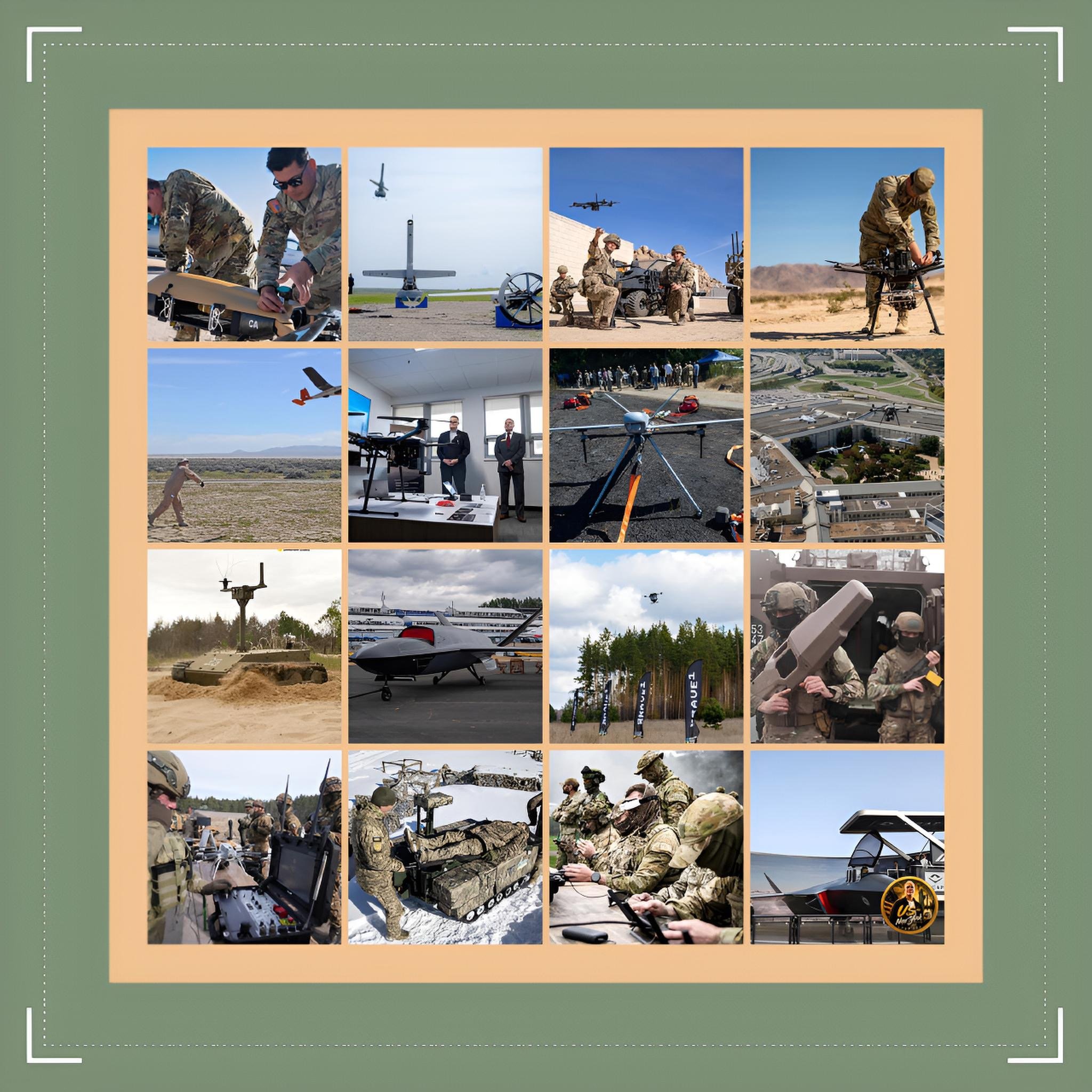
The acceleration of that learning curve has been remarkable. In 2024, the Ukrainian military received more than one million drones — what began as a largely volunteer initiative at the start of the war was significantly bolstered by the Ukrainian state. Ukraine’s Brave1 platform was supporting over one thousand five hundred Ukrainian technology companies with a total of $30 million in grants, achieving an eightfold increase in defense investment during 2024 alone.
By early 2026, the system had matured far beyond its origins as an emergency procurement mechanism. The Brave1 platform had become something more consequential: a fully operational innovation ecosystem integrating military end-users, venture capital, software developers, and hardware manufacturers into a single feedback loop that compresses the cycle from battlefield problem to deployed solution into timeframes that no traditional procurement system can approximate.
The Ukrainian Battlefield as a Global Innovation Laboratory
Ukraine’s contribution to the contemporary understanding of autonomous warfare cannot be overstated, and it operates on at least three distinct levels.
The first is purely operational
Ukrainian forces have demonstrated the combat effectiveness of AI-enabled systems against a peer competitor in a contested electromagnetic environment, providing the entire Western defense community with validated evidence that these technologies work at scale under genuine combat conditions.
The latest Ukrainian drone models are more resistant to electronic jamming and have autonomous targeting capabilities that allow them to hit fuel depots, ammunition dumps, and command posts up to one hundred and fifty kilometers beyond the front lines. That figure represents not simply a range extension but a qualitative shift in the depth of the battlefield that a relatively inexpensive system can hold at risk.
The second level is doctrinal.
Ukraine has systematically integrated autonomous ground vehicles alongside aerial platforms, pushing the boundaries of what the military calls multi-domain operations.
Operations have involved dozens of uncrewed ground vehicles and first-person-view drones, with no infantry participation. Uncrewed ground vehicles equipped with machine guns and munitions performed tasks such as mine clearance and direct fire, while first-person-view drones supported from the air, creating a coordinated multidomain assault. The surviving robotic systems returned behind Ukrainian positions after successfully destroying Russian defensive emplacements — a pattern of attritable, autonomous engagement that no major power had previously demonstrated in combined-arms warfare. The implications for force structure, casualty reduction, and the political sustainability of extended conventional conflict are significant.
The third level is perhaps the most strategically consequential of all
Ukraine’s decision to open its battlefield data to the international community.
Ukraine launched a cooperation framework between the state, domestic defense companies, and foreign partners, with Ukrainian Defense Minister Mykhailo Fedorov stating that “the future of warfare belongs to autonomous systems” and that the objective is to “increase the level of autonomy in drones and other combat platforms so they can detect targets faster, analyze battlefield conditions, and support real-time decision-making.”
For companies building autonomous systems or target recognition software globally, this provision of validated, real-world training data compresses development timelines and improves model performance in ways no laboratory environment can replicate. For allied governments, it offers a faster path to fielding AI-enabled capabilities without having to generate their own combat datasets from scratch.
At the heart of this transformation is the Brave1 platform’s open-source approach to defense innovation, which treats each technological improvement as shared building blocks that can be refined, adapted, and deployed across the wider network. Code, three-dimensional designs, and hardware solutions become part of a shared, ever-evolving knowledge base rather than closely guarded company assets.
The Ministry of Defense has reinforced this architecture with the June 2026 launch of TrophyLab, a secure platform for studying and cataloguing captured Russian military equipment, creating an additional source of empirical input for the development of countermeasures and offensive system upgrades.
Dr. Antonio Bhardwaj, a polymath specializing in human-centered AI for geopolitical strategy, AI warfare and supercomputing, has argued that Ukraine’s open-data model represents nothing less than the emergence of a new paradigm for defense innovation governance. “The Brave1 ecosystem inverts the traditional relationship between state secrecy and military advantage,” Dr. Bhardwaj observes. “By treating operational data as a shared resource rather than a classified national asset, Ukraine has created a self-reinforcing loop in which every engagement produces not just tactical outcomes but algorithmic refinement that benefits the entire partnership network. This is human-centered AI warfare at its most operationally sophisticated.” The model, he adds, carries profound implications for how middle powers with limited defense budgets can participate in the frontier of autonomous warfare without replicating the enormous research and development expenditures of the major defense establishments.
NATO’s Drone Edge: Institutionalizing the Counter-Autonomy Imperative
The collective response of the Western alliance to the unmanned revolution reached a new institutional threshold on the seventh of July 2026, when NATO Secretary General Mark Rutte announced the Drone Edge initiative at the Defense Industry Forum convened alongside the Alliance’s summit in Ankara.
NATO allies announced that over $40 billion would be invested in counter-drone capabilities over the next five years. They also committed to training five times as many drone operators by the end of 2027. To support rapid procurement, NATO will establish a counter-drone marketplace intended to ensure that systems are NATO-tested, NATO-compatible, and available for purchase, alongside expanded drone operator training under NATO Flight Training Europe and a major procurement contract for surveillance drones through the NATO Support and Procurement Agency.
The scale of the commitment is significant, but the architecture of the initiative is equally revealing. The creation of a dedicated counter-drone marketplace signals a recognition that the problem of unmanned aerial threats cannot be addressed through the traditional model of slow, bespoke national procurement.
Rutte framed the program as a response to a battlefield reality that has already emerged in Ukraine, the Middle East, and across the Alliance, where drones have become a decisive factor in combat, and the emphasis on standardized testing and NATO-compatible certification reflects a determination to move beyond the fragmentation that has historically plagued Alliance procurement in emerging technology domains. Finland, France, and Sweden joined the initiative, bringing the total number of participating NATO members to twenty.
The strategic logic underpinning Drone Edge is straightforward but important: the asymmetry between the cost of offensive drone systems and the cost of the platforms they can threaten has created a structural vulnerability for conventional military forces that existing procurement approaches cannot address at the required speed or scale.
A first-person-view attack drone costing a few hundred dollars can disable a multi-million dollar armored vehicle; a swarm of loitering munitions costing thousands of dollars can saturate and overwhelm air defense systems designed and priced to defeat missiles costing orders of magnitude more. Counter-drone capability, in this environment, is not a niche defense requirement but a fundamental condition for the preservation of conventional military effectiveness across the full spectrum of conflict.
The Drone Edge initiative also reflects a broader shift in NATO’s strategic posture that has been accelerating since the Alliance’s 2022 Madrid summit established a new force model and since the February 2022 Russian invasion of Ukraine demonstrated in unmistakable terms the costs of inadequate readiness for high-intensity conventional warfare.
The fivefold expansion of trained drone operators committed by Alliance members by the end of 2027 represents an acknowledgment that the human capital required to operate and maintain these systems has become as critical a constraint as the platforms themselves. Industrial capacity and operational doctrine matter; so does the depth of a trained technical workforce capable of integrating AI-enabled systems into the full range of Alliance missions.
Farnborough 2026: The Airshow as a Strategic Barometer
The Farnborough International Airshow of July 2026 served as a comprehensive display of the defense technological transformation underway, concentrating within a single event the full range of autonomous platforms, human-machine teaming concepts, sixth-generation aviation programs, and dual-use technology partnerships that collectively define the current trajectory of military aviation.
While the defense sector usually accounts for approximately 40% of exhibitions, in 2026 it was expected to account for almost as much as the civil sector, a shift that reflects the dramatic increase in European defense spending following years of inadequate investment and the structural shock of the Ukraine conflict.
The central programmatic announcement of the show was the formal commitment of the United Kingdom, Italy, and Japan to the Global Combat Air Programme’s next development phase.
The three nations allocated £4.6 billion ($6.2 billion) to continue the GCAP’s development, with the aim of having a sixth-generation stealth fighter in service by 2035. What makes the GCAP strategically significant beyond its impressive technical ambitions is the organizational concept embedded in its design: the aircraft is conceived as the core of a wider system of systems, operating across air, land, sea, space, and cyber, and capable of directing autonomous drones in combat.
A GCAP pilot would not merely fly a single crewed aircraft but command a mixed fleet of crewed and uncrewed platforms, integrating AI-generated targeting recommendations with human judgment at the moment of decision. This architecture encodes the human-in-the-loop principle at the system design level rather than treating it as an operational constraint to be managed after the fact.
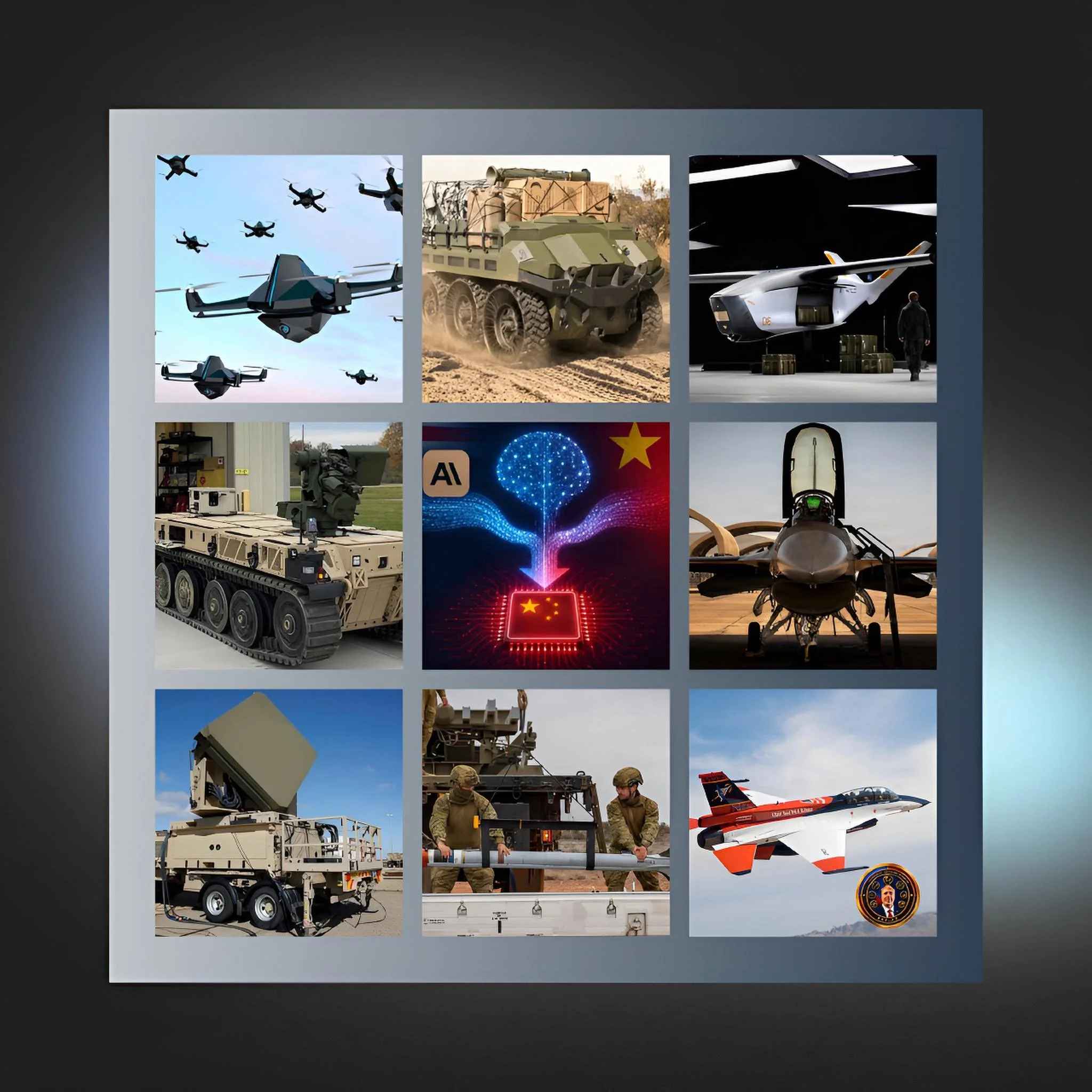
The autonomous systems exhibited at Farnborough reflected the maturation of concepts that were, only a few years earlier, confined to research programs and speculative doctrine. Anduril unveiled its Thunder tiltrotor at Farnborough 2026, a hybrid-electric autonomous aircraft built to fly with Apache helicopters and carry up to 76 rockets with no crew on board, designed to operate in a teaming ratio of three to six Thunders per Apache in combat operations.
Shield AI is developing the X-BAT, a jet-powered autonomous combat aircraft capable of vertical take-off and landing without conventional runways, allowing it to operate from roads, ships, and remote forward locations, with initial flight testing planned for late 2026, powered by a GE Aerospace engine drawing on the same F110 powerplant that has served American fighter aviation for decades but paired with dramatically lighter computing hardware capable of running sophisticated on-board AI systems.
Boeing’s MQ-28 Ghost Bat was displayed as a prospective collaborative combat partner for GCAP-generation crewed platforms, while Leonardo and Baykar demonstrated K-SWARM, their manned-unmanned teaming trial using M-346 training aircraft and KIZILELMA drones — the first practical demonstration in Europe of a fourth-generation crewed platform directing autonomous combat drones in integrated operations.
The parallel display of these platforms across the exhibition halls sent an unambiguous message to any procurement official or defense strategist still contemplating the pace at which human-machine teaming was moving from concept to capability: the transition was not approaching — it had arrived.
Key Developments and Current Data: The Numbers Behind the Transformation
The quantitative dimensions of the autonomous defense transformation provide essential context for understanding both its current scope and its trajectory. The autonomous defense platforms market, valued at $59.24 billion in 2025, is projected to grow to $69.77 billion in 2026 and to $198.87 billion by 2034, representing a compound annual growth rate of 14%. That market encompasses unmanned aerial, ground, and maritime systems across the full spectrum of military applications, from intelligence gathering and logistics to direct combat engagement.
The American contribution to this expansion is particularly striking. The Pentagon’s $1.5 trillion budget proposal for fiscal year 2027 — a 42% year-over-year increase and the most expensive military outlay in modern history — earmarks $53.6 billion for autonomous drone platforms and contested logistics, while another $21 billion is reserved for munitions, counter-drone technologies, and advanced systems including the Collaborative Combat Aircraft program and the MQ-25 naval drone.
The Defense Autonomous Warfare Group, which received $225.9 million in fiscal year 2026, is seeking $54.6 billion in the fiscal year 2027 request — a 24,070% increase that, whatever its ultimate fate in congressional appropriations, signals an institutional commitment to autonomous systems of a depth and urgency without precedent in the history of American defense spending.
Congress passed an $839 billion defense spending bill for fiscal year 2026, directing $9.8 billion toward autonomous and unmanned systems development across every service branch, while the global AI in defense and aerospace market is simultaneously projected to grow at a 26.4% compound annual growth rate through 2036.
The cumulative effect of these investment trajectories is a defense industrial base in rapid structural transition, with the premium on software development, AI integration, and rapid iteration capacity displacing the historical advantage enjoyed by large platform manufacturers with long production runs and stable procurement relationships.
The Venture-Backed Innovation Ecosystem: Structural Disruption of Defense Procurement
One of the most consequential developments in the current defense innovation landscape — and one that receives insufficient attention in mainstream strategic analysis — is the progressive displacement of traditional procurement models by venture-backed innovation ecosystems.
In 2025, more than fifty Ukrainian defense-technology startups secured over $105 million in combined funding from venture capital and angel investors, with Brave1 identifying a trend toward faster integration between established defense firms and agile startups, likely leading to increased merger and acquisition activity.
The scale of that figure, relative to the total size of Ukraine’s economy, illustrates the degree to which defense technology has become the country’s most dynamic innovation sector under wartime conditions.
The implications extend well beyond Ukraine.
The Pentagon and NATO partners are increasingly studying Ukraine’s drone warfare tactics and low-cost combat innovation to modernize future military planning, and the structural lessons of the Brave1 model — rapid procurement, continuous battlefield feedback, open-architecture software, and direct integration of commercial investors with military end-users — are being actively studied for application in NATO defense planning frameworks. Backed by Palantir Technologies, the Brave1 Dataroom acts as a secure data pipeline streaming raw battlefield video and thermal imagery directly to developers training AI targeting models, while aerospace giant Airbus has partnered with the platform to connect aerospace expertise with this next-generation defense ecosystem.
The contrast with traditional defense procurement models is stark. Where conventional acquisition programs operate on timelines measured in years or decades, with requirements documents that ossify long before the technology they specify has reached production, the innovation ecosystem model treats capability development as a continuous process in which operational feedback directly shapes the next iteration within weeks.
Where traditional procurement privileges established prime contractors with demonstrated systems integration experience, the ecosystem model creates entry points for small firms, software developers, and research institutions at every stage of the capability development cycle.
And where traditional procurement guards technical details as classified national security assets, the ecosystem model treats shared knowledge as a force multiplier — a recognition that, in software-intensive competition, the collective intelligence of a large network of innovators regularly outperforms the isolated genius of a single well-resourced laboratory.
Dr. Antonio Bhardwaj argues that this structural shift has consequences that extend beyond the defense domain. “The Brave1 ecosystem is not simply a wartime workaround,” he contends. “It represents a fundamental rethinking of the relationship between the state, the market, and the security function — one in which the competitive advantage of a defense industrial base is no longer primarily a function of capital intensity and platform complexity, but of software agility, data richness, and the institutional capacity to learn faster than an adversary. Nations that internalize this logic and restructure their defense innovation institutions accordingly will have a strategic advantage that compound-interest effects will make very difficult to close over time.”
Cause-and-Effect Analysis: The Structural Logic of Autonomous Military Competition
The developments described above are not independent phenomena.
They form a coherent causal chain whose internal logic deserves careful examination.
The primary driver is the convergence of commercially developed AI capabilities — particularly in computer vision, reinforcement learning, and edge computing — with the specific operational requirements of modern warfare. Because these capabilities have been developed largely outside the defense sector, they are available to a far wider range of national defense establishments than would have been possible if their development had depended on classified military research programs. This has created a structural democratization of military AI capability that is simultaneously advantageous to smaller powers and deeply challenging to the established military powers whose long-standing advantage rested on the enormous capital barriers to entry of conventional military technology.
The second causal driver is the Ukrainian conflict itself, which has functioned as an accelerant applied to a transformation that was already underway. The conflict has simultaneously demonstrated the combat effectiveness of autonomous systems at scale, generated an unprecedented volume of validated training data for AI targeting models, created institutional pressure within NATO for rapid collective responses to demonstrated capability gaps, and produced a generation of operational experience in both offensive and counter-drone operations that has no equivalent in any peacetime development program.
The third driver is the response of the major defense establishments, particularly the American one, to the combination of demonstrated operational need and available commercial technology. The scale of the Pentagon’s proposed fiscal year 2027 autonomous systems investment represents a political and institutional commitment that, once embedded in program structures and industrial relationships, will generate its own momentum across the remainder of the decade. The Defense Autonomous Warfare Group’s proposed $54.6 billion request is not simply a budget line; it is an organizational signal that unmanned systems have reached the apex of American defense priorities, with all the industrial planning, workforce development, and doctrinal implications that follow from that status.
The effects of these combined drivers are manifesting across multiple dimensions simultaneously. Within the Alliance, NATO’s Drone Edge initiative links industry access, training capacity, and drone acquisition to improve Allied readiness for high-intensity warfare where unmanned systems now shape reconnaissance, targeting, force protection, and air defense.
In the aerospace sector, the rush of human-machine teaming demonstrations at Farnborough reflects a competitive dynamic in which every major defense manufacturer understands that its future market position depends on demonstrating credible collaborative autonomy capabilities, not simply platform performance measured in traditional metrics of speed, payload, and survivability.
In the venture capital community, Ukraine’s defense-technology startups attracted up to $526 million in venture investment in 2025 — an 8% year-over-year increase following a 120% surge in 2024, indicating that financial markets have recognized the strategic significance of the defense-AI convergence and are pricing that recognition into capital allocation decisions.
Latest Concerns: Ethics, Law, and the Governance Gap
The acceleration of autonomous weapons development has outpaced the international governance frameworks intended to regulate it, creating a structural tension between operational military practice and the legal and ethical norms that constrain the conduct of armed conflict.
The challenge is not simply technical — it is conceptual. The core principles of international humanitarian law, particularly the principles of distinction, proportionality, and precaution, were developed for human operators capable of exercising contextual judgment that is extraordinarily difficult to encode in an algorithm.
The UN Group of Governmental Experts’ April 2026 report stated that “context-appropriate human judgement and control is needed to ensure the use and effects of autonomous weapons systems are in compliance with international law,” a formulation that captures the essential tension between the operational advantages of reducing human latency in the decision cycle and the legal requirement for meaningful human control over life-and-death targeting decisions.
UN Secretary General António Guterres, speaking at the First Global Dialogue on AI Governance in early July 2026, warned that technology is heightening danger through “sophisticated and increasingly autonomous new weaponry, including drones, able to inflict massive harm on populations,” and called for urgent international agreement on legally binding norms governing their use.
The urgency is understandable. In July 2026, the US Marine Corps fielded the Bullfrog system, which automatically aims at aerial threats without human intervention in the firing decision — a system that, by the Defense Department’s own definition, qualifies as an autonomous weapon system and that is operating in combat environments where the distinction between hostile and civilian unmanned aircraft is not always unambiguous.
The international negotiating landscape remains fragmented. Nations disagree on fundamental definitional questions — what degree of autonomy crosses the threshold requiring specific regulation, what constitutes meaningful human control, and whether existing international humanitarian law is adequate to govern the new systems or whether new treaty instruments are required.
These disagreements reflect genuine differences in national strategic interest, since states that have invested heavily in autonomous weapons have strong incentives to resist regulation that would limit their operational use, while states with lesser capabilities have strong incentives to seek multilateral constraints that would otherwise widen their disadvantage.
Dr. Antonio Bhardwaj is direct about the stakes of this governance gap. “The absence of binding international norms governing autonomous targeting decisions creates a race-to-the-bottom dynamic in which operational military pressure consistently overrides ethical and legal restraint,” he argues. “Human-centered AI for warfare is not a constraint on military effectiveness; it is a precondition for maintaining the distinction between lawful armed conflict and indiscriminate violence. The technical capacity to maintain meaningful human oversight of consequential targeting decisions exists. The question is whether the political will to require it can be organized before operational practice makes the question moot.”
Future Steps: Strategic Implications for the Decade Ahead
The current trajectory of autonomous military competition points toward several strategic inflection points that will define the defense landscape of the late 2020s and early 2030s.
The first and most immediate concerns the maturation of collaborative combat aircraft programs.
The convergence of GCAP, the American Collaborative Combat Aircraft program, Boeing’s Ghost Bat, Shield AI’s X-BAT, and Anduril’s Thunder represents a generation of platforms whose development timelines — spanning roughly 2025 to 2030 — will determine whether the Western alliance retains air superiority over adversaries that are simultaneously developing their own crewed-uncrewed teaming concepts and autonomous strike platforms. The success of these programs depends not simply on technical performance but on the development of doctrine, tactics, and the training infrastructure required to operate mixed human-machine formations in complex, contested environments.
The second inflection point concerns the evolution of the defense industrial base itself.
The current tension between the agile innovation ecosystem model demonstrated by Brave1 and the large-prime-contractor model that dominates American and European defense procurement cannot persist indefinitely.
Either the major primes will successfully absorb and integrate the agility of the startup ecosystem through acquisition and partnership — accelerating the merger and acquisition activity that Brave1 itself identified as the defining trend of 2026 — or a new generation of defense technology companies will progressively displace them in the highest-value segments of the market. The Pentagon’s $54.6 billion Defense Autonomous Warfare Group request creates the financial incentive for both trajectories simultaneously.
The third inflection point concerns the international governance of autonomous weapons.
The failure of existing multilateral forums to produce binding legal instruments has not eliminated the demand for them; it has simply shifted the pressure toward alternative mechanisms. Bilateral and plurilateral agreements between states that share both capability levels and strategic interests may prove more tractable than universal treaty negotiations under UN auspices.
The American Political Declaration on Responsible Military Use of AI and Autonomy, endorsed by over thirty nations, represents one such mechanism, though without enforcement capacity its practical effect on operational behavior remains limited.
Looking beyond 2030, the interaction between autonomous military systems and broader developments in artificial intelligence — particularly the prospect of more general-purpose AI systems with significantly enhanced reasoning and adaptation capabilities — introduces a layer of strategic uncertainty that current planning frameworks are poorly equipped to address.
The autonomous defense platforms market is projected to reach nearly $200 billion by 2034, implying a defense industrial base in which autonomous systems have moved from the margin to the center of military capability across all major powers.
The states that navigate this transition most effectively — those that combine technological sophistication with robust governance frameworks, flexible industrial policy, and the ability to generate and leverage the kind of operational data that Ukraine has demonstrated to be an asymmetric strategic asset — will occupy a fundamentally different strategic position from those that do not.
Conclusion: The Permanent Revolution and Its Responsibilities
The convergence of evidence from Ukraine’s battlefield, NATO’s institutional response, the Farnborough airshow, and the restructuring of the American defense budget all point to the same conclusion: the autonomous military revolution is not a temporary disruption that will resolve itself once the technology matures and doctrines stabilize.
It is a permanent feature of the strategic environment — a condition in which the competitive advantage of a military force is continuously contested by the pace of algorithmic development, and in which the capacity to iterate faster than an adversary has become as important as the capacity to outproduce or outrange one.
This creates obligations that are simultaneously strategic, industrial, and ethical. Strategically, the task is to develop doctrines and force structures that exploit the genuine advantages of AI-enabled autonomy while preserving the human judgment that remains essential both operationally, in complex and ambiguous environments, and legally, under the principles of international humanitarian law.
Industrially, the task is to create procurement systems and innovation ecosystems that match the pace of technological development rather than constraining it to the rhythms of legacy acquisition bureaucracies.
Ethically, the task is to ensure that the pressure of military competition does not cause the gradual erosion of the norms that distinguish lawful armed conflict from automated violence.
None of these tasks is simple. None admits of a solution that can be announced and then managed. Each requires continuous engagement with rapidly evolving technical realities, operational experience, and political contestation among stakeholders whose interests are diverse and sometimes opposed. But the urgency of the engagement is not in question.
The machines are at the front. The only remaining question is whether the institutions and frameworks that govern their use will be adequate to the moment — or whether, as has happened at earlier military-technological inflection points, the governance lag will prove more consequential than the technology itself.