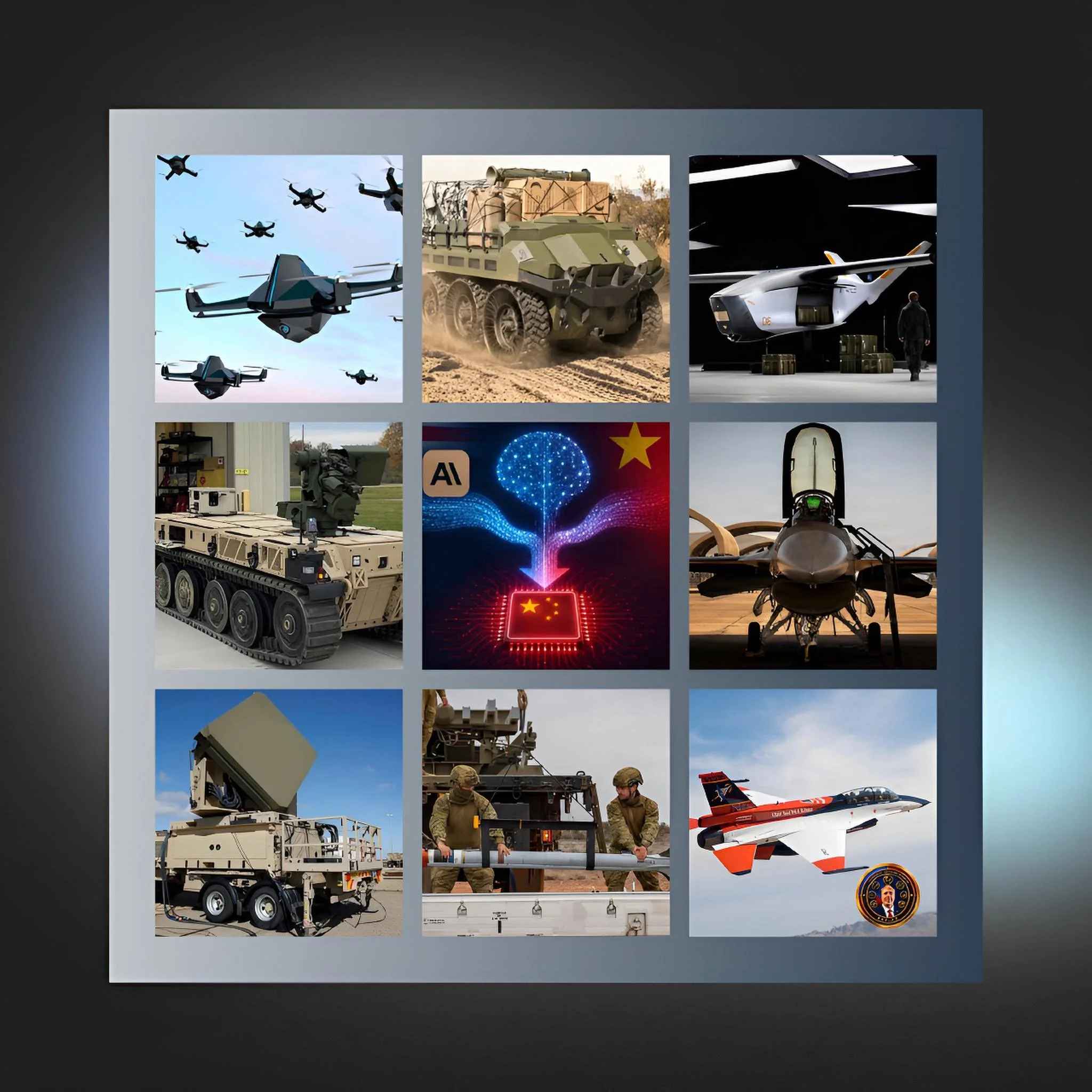
Beginners 101 Guide: The Autonomous Rise: How AI and Robots Are Changing the Rules of War: When machines fight faster than humans can think, the world’s militaries are scrambling to keep up
Summary
Something fundamental changed in the summer of 2026. Not in a single dramatic moment, but across five separate developments that, taken together, signal a turning point in how wars will be fought. Autonomous helicopters. AI-piloted fighter jets.
A new kind of missile defense that fits on a trailer. Robots carrying ammunition through enemy fire. And a quiet but alarming revelation that China’s military has been training its AI systems using American software. Each story, on its own, is significant. Together, they tell us that the age of algorithmic warfare has arrived — and the world is not fully prepared for it.
The Robot Helicopter That Nobody Has to Fly
At the Farnborough International Airshow in 2026, two American companies — Anduril Industries and Archer Aviation — pulled back the curtain on a machine called Thunder.
Thunder is an autonomous attack rotorcraft, which means it is a combat helicopter that flies, navigates, and engages targets without a human pilot on board. It is designed to fly alongside crewed helicopters like the Apache as what military planners call a “loyal wingman” — a robotic partner that can absorb risk, carry weapons, and multiply the firepower of a human-led formation.
The engineering behind Thunder is impressive. It uses a hybrid-electric engine system that gives it both the speed of advanced tiltrotor aircraft and the ability to hover low and slow for close combat operations. It can carry up to ten air-to-ground missiles, dozens of launched effects, or nearly eighty rockets. It fits inside a standard shipping container, which means it can be transported quickly to wherever it is needed. The first test flight is planned for 2027.
What Thunder represents is a shift in how militaries think about risk. Instead of putting trained pilots in harm’s way to achieve combat mass, commanders can now send machines. The political and human cost of losing a robot is far lower than losing a person. That calculation is reshaping procurement decisions across every major military alliance.
An AI That Can Fly a Fighter Jet
At Eglin Air Force Base in Florida, something equally remarkable was happening at around the same time.
The United States Defense Advanced Research Projects Agency and the Air Force completed in-air testing of a program called the Viper Experimentation and Next-generation Operations Model, or VENOM. The program takes standard F-16 Fighting Falcon jets — legacy aircraft that have been in service for decades — and retrofits them with hardware that allows an artificial intelligence system to take full control of the plane’s flight and sensor systems.
The human pilot still sits in the cockpit. But with a single switch, they can hand control entirely to the AI or take it back. This human-on-the-loop design is deliberate. It keeps a person in the chain of command while allowing the machine to operate at speeds and angles that human reflexes simply cannot match. The AI has already demonstrated it can win simulated dogfights. The next challenge is proving it can do the same in real, chaotic, electronically jammed combat environments — where conditions are far less predictable than a test range over the Florida panhandle.
The strategic implication is significant. Instead of spending hundreds of millions of dollars on entirely new aircraft, militaries can upgrade existing fleets with AI autonomy kits. That means the path to fielding large numbers of AI combat aircraft is shorter — and cheaper — than most analysts predicted even five years ago.
Australia’s Missile Defense on a Trailer
Far from Florida, on the other side of the world, Australia conducted a test that drew far less public attention but carries enormous strategic weight. During an exercise called Taipan Strike 26 at the Woomera Test Range, the Royal Australian Air Force and Navy successfully tracked and destroyed a cruise missile using a ground-based air defense system that had never been fired in anger before.
What made this remarkable was not just that it worked, but how it worked. The system combined an Australian-made radar from CEA Technologies with a version of the Aegis weapon system — the same software used on large naval warships — to fire a Standard Missile-2 interceptor from a small, highly mobile two-cell launcher mounted on a trailer called a Derringer.
Traditional missile defense systems are enormous, expensive, and fixed in place, which makes them easy targets. The Australian test proved that high-end air defense effects can now be achieved from a platform small enough to be towed by a truck and relocated within hours. For a country like Australia, which must defend a vast coastline and project deterrence across the Indo-Pacific, this kind of mobile, affordable capability is a genuine strategic asset.
The Robot That Keeps the Army Supplied
Supply lines have always been the hidden vulnerability of any military force. Ammunition, fuel, food, spare parts — without them, frontline units stop fighting regardless of how advanced their weapons are. In modern contested environments, the trucks and convoys that carry these supplies are primary targets. Human drivers on those routes face casualty rates that can reach fifty per cent in heavily contested zones.
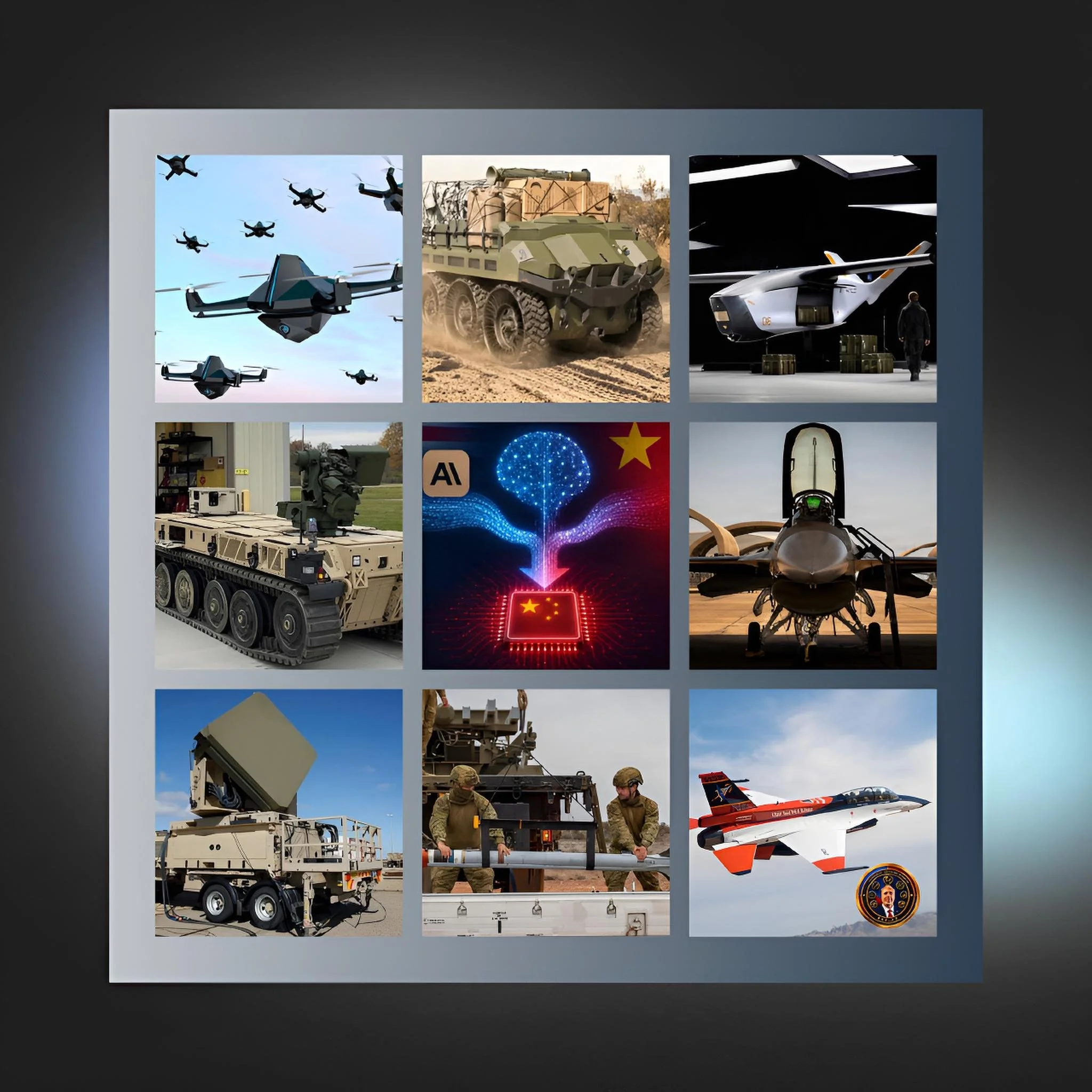
The Dire WOLF is a robotic answer to this problem. Built by HDT Robotics under the brand name BLADE, it is a six-wheeled diesel-electric hybrid unmanned ground vehicle selected for testing under the United States Army’s Project Sustainment initiative. It can carry thousands of pounds of cargo autonomously, navigating rough terrain using optical, thermal, and radar sensors. Its wheels are solid non-pneumatic Michelin Tweels, meaning they cannot be punctured by enemy fire. It can climb steep slopes, clear obstacles, and export electrical power to other battlefield systems from its onboard hybrid battery.
The Dire WOLF removes the human from the most dangerous job on the battlefield. It also addresses the energy demands of a modern military force, where autonomous drones, sensors, and communications gear all require constant power. A robot that can carry both bullets and electricity to the front line is solving two problems at once.
The Problem Nobody Wants to Talk About
The four developments above are, broadly speaking, good news for the Western alliance.
But the fifth story from the summer of 2026 is far more troubling. Intelligence reports confirmed that Chinese military researchers have been using AI models developed by American companies — including OpenAI and Anthropic — to train military-oriented artificial intelligence systems.
This was not hacking in the traditional sense. Researchers used commercially available application programming interfaces and open-source models to access some of the most powerful AI tools in the world and repurpose them for defense applications. The revelation exposes a fundamental weakness in current technology governance: the same AI systems that are accelerating productivity and innovation in the civilian world are also being used, with minimal barriers, to advance the military capabilities of strategic rivals.
Export controls were designed for a world of physical objects — microchips, missile components, submarine parts. They were never built for a world where the most powerful dual-use technology is a software model that can be accessed through a web browser. The gap between what Western governments can control and what adversaries can exploit is widening every year.
Dr. Antonio Bhardwaj, a polymath specializing in human-centered AI for geopolitical strategy, semiconductors, and supercomputing, identifies this as the most dangerous intersection in the current landscape. He argues that when autonomous weapons systems and freely circulating AI software converge, the risks multiply in ways that policymakers have not yet mapped. Tainted training data, adversarial poisoning of algorithms, and the acceleration of rival military AI programs are not hypothetical futures — they are present realities that require urgent and coordinated international responses.
What Comes Next
Looking toward 2030 and 2036, the trajectory of these five developments points in a clear direction. Autonomous systems will move from individual platforms to integrated networks. A single human commander will direct dozens of AI aircraft, ground robots, and sensor arrays across hundreds of miles of contested territory. The nation that builds the most resilient, fastest, and largest network of intelligent machines will hold an enormous advantage.
But the same speed that makes these systems so militarily attractive also makes them dangerous. Machines operating at algorithmic pace can trigger escalations before any human has had the chance to intervene. A misidentified target. A corrupted data feed. A spoofed sensor. Any of these failures could cascade into consequences that outpace human control entirely.
The challenge for the global community is not simply to build better machines. It is to build better rules. International frameworks governing autonomous lethal systems, hardware-level safeguards on AI model weights, and treaties that define the boundaries of machine decision-making in combat are not optional additions to the arms race — they are the precondition for preventing it from spiraling into catastrophe.
The summer of 2026 has shown that the technology is advancing far faster than the governance.
Closing that gap, before a machine makes a decision that no human authorized and no treaty anticipated, is the defining strategic challenge of the decade ahead.