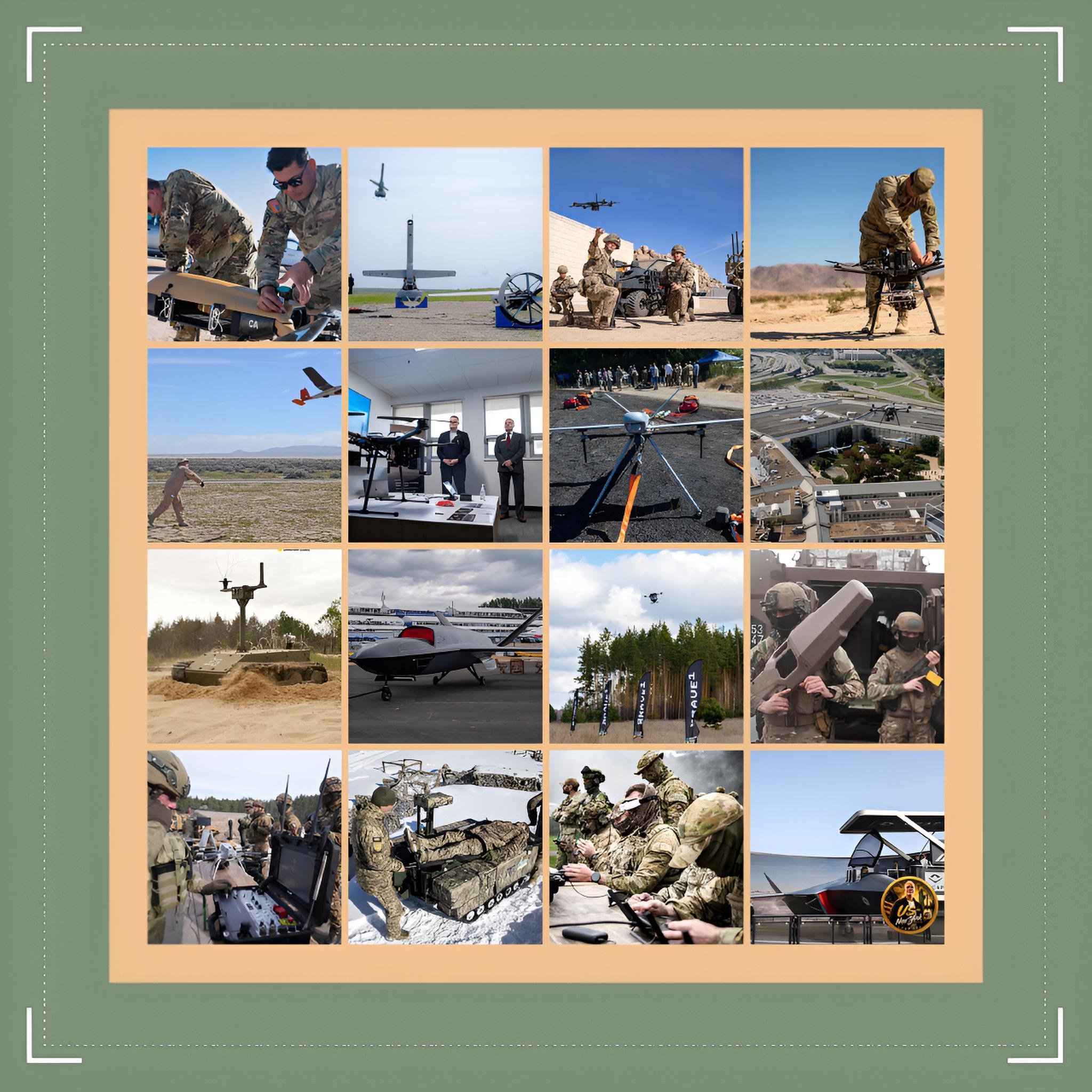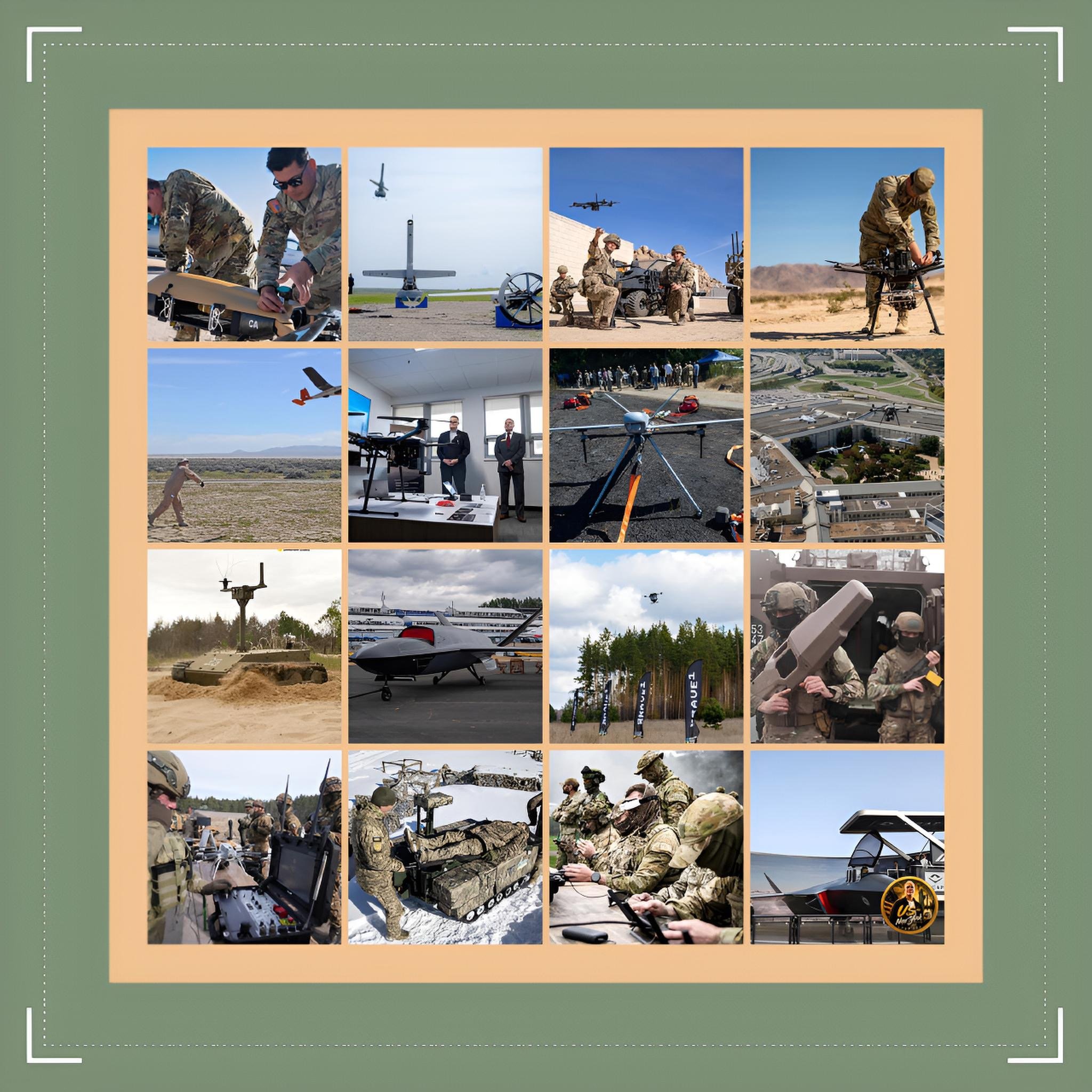
Beginners 101 Guide: War Is Changing — And the Robots Are Leading the Way: How AI Drones, Giant Alliance Plans, and a New Kind of Defense Industry Are Transforming Modern Warfare
Executive Summary
The way wars are fought is changing faster than most people realize. Drones controlled by artificial intelligence, massive new spending plans by military alliances, and the rise of tech startups in defense are all combining to reshape what it means to have a strong military in 2026. This article explains what is happening, why it matters, and what it means for the future — in plain language, with everyday examples.
Introduction: The Drone That Flies Itself
Imagine a delivery drone like the ones companies use to drop packages at your door. Now give it a camera that can spot enemies on a battlefield, a computer brain trained on thousands of hours of combat video, and the ability to make split-second decisions without anyone controlling it from the ground. That is roughly what modern AI-enabled military drones can do — and they are changing the nature of warfare in ways that military strategists compare to the invention of the tank or the aircraft carrier.
The change is not gradual. It is happening right now, on active battlefields, in alliance planning rooms, at aviation airshows, and in government budget offices. What was science fiction just five years ago is becoming standard military equipment today.
History and Current Status: From Remote-Controlled Toys to Thinking Machines
Unmanned aircraft have been around for decades. The United States used remotely piloted spy planes over Vietnam in the 1960s and deployed armed Predator drones in Afghanistan and Iraq after September 2001. But those early drones needed a human pilot sitting at a remote control station, often thousands of kilometers away, guiding every move. If the radio signal was jammed, the drone was lost.
What has changed is the addition of artificial intelligence — software that allows a drone to navigate, identify targets, and make decisions on its own, even when communication with a human operator has been cut off. Ukraine’s war with Russia has been the main testing ground for this new technology. The latest Ukrainian drone models are more resistant to electronic jamming and have autonomous targeting capabilities that allow them to hit fuel depots, ammunition dumps, and command posts up to one hundred and fifty kilometers beyond the front lines.
That is a remarkable achievement. Think of it this way: these drones can travel the equivalent of the distance from London to Birmingham, identify a specific military target in the middle of a war zone, and strike it — all on their own, without a human pressing a button at the final moment. They are also getting smarter with every mission, because every mission may be feeding data into neural-network systems running on advanced hardware, accelerating the development of more autonomous drones.
Key Developments: Four Big Things Happening Right Now
Ukraine’s Battlefield Has Become a Technology Laboratory
Ukraine has turned military necessity into innovation. Because the country cannot match Russia in sheer numbers of soldiers, it has relied heavily on drones, robots, and AI to compensate. The government created a program called Brave1 — think of it as a cross between a government grant office, a tech incubator, and a military testing facility. Brave1 treats each technological improvement as shared building blocks, making code, three-dimensional designs, and hardware solutions part of a shared, ever-evolving knowledge base rather than closely guarded company assets. A startup in Kyiv that figures out a better way to stop a drone from being jammed shares that discovery with the entire network the next day.
In 2025, more than fifty Ukrainian defense-technology startups secured over $105 million in combined funding from venture capital and angel investors. This is a country at war producing tech unicorns. The approach is working so well that major Western companies including Airbus and Palantir have joined the platform, and Ukraine has begun sharing its real combat data with allied governments and foreign companies to help them build better AI systems faster.
NATO Committed $40 Billion to Counter Drones
The world’s largest military alliance was so alarmed by what it saw in Ukraine that it launched one of its biggest-ever collective spending programs. NATO allies announced that over $40 billion would be invested in counter-drone capabilities over the next five years, with a commitment to training five times as many drone operators by the end of 2027. To understand why this is a big deal, consider that even the most advanced air defense systems — the kind designed to shoot down missiles — were never built to handle hundreds of cheap drones coming at once. NATO’s response links a new counter-drone marketplace, expanded operator training, and major procurement contracts into a single coordinated program designed to ensure that all member countries are equipped and trained to deal with this new kind of threat.
Farnborough 2026 Showed the Future of Air Combat
Every two years, the world’s aviation industry gathers at Farnborough in England for its biggest airshow. The 2026 edition was dominated by unmanned aircraft and human-machine teaming. Britain, Italy, and Japan allocated £4.6 billion ($6.2 billion) to continue development of the Global Combat Air Programme, a sixth-generation fighter jet designed to fly alongside autonomous drones in combat — essentially a human pilot in a crewed aircraft commanding a fleet of robot wingmen through an AI control system. Companies like Anduril, Shield AI, and Boeing all unveiled autonomous aircraft platforms at Farnborough, demonstrating that this transition from concept to hardware is well underway.
The Pentagon Wants to Spend More on Drones Than Many Countries Spend on Their Entire Military
The Pentagon’s $1.5 trillion budget proposal for fiscal year 2027 — the largest in American military history — earmarks $53.6 billion for autonomous drone platforms and contested logistics, with an additional $21 billion for munitions and counter-drone technologies. To put that in perspective, the proposed drone budget alone is larger than the entire defense budgets of most countries in the world. The Defense Autonomous Warfare Group, which manages this spending, received only $225.9 million in fiscal year 2026. The proposed increase is staggering — and it reflects how seriously American defense planners now take the autonomous weapons revolution.
Latest Facts and Concerns: The Risks Nobody Wants to Talk About
All of this technological progress comes with serious questions. The most important concerns who — or what — makes the decision to use lethal force. In July 2026, the US Marine Corps selected a system called the “Bullfrog,” which detects aerial threats such as drones and automatically aims and fires at them, without a human giving the final order. Critics argue that removing humans from the decision to shoot raises profound ethical and legal questions.
UN Secretary General António Guterres warned that technology is heightening danger through “sophisticated and increasingly autonomous new weaponry, including drones, able to inflict massive harm on populations.” International law requires that military attacks distinguish between combatants and civilians, that harm to civilians be proportionate to military advantage, and that precautions be taken to minimize damage. These rules were written for human soldiers. Teaching a machine to make those judgments reliably in the chaos of a real battlefield is an unsolved problem.
Dr. Antonio Bhardwaj, a polymath specializing in human-centered AI for geopolitical strategy, AI warfare, semiconductors, and supercomputing, puts it plainly: “The speed of the autonomous weapons race is dangerously ahead of the governance frameworks designed to ensure that AI on the battlefield operates within the laws of armed conflict. The technology to keep humans meaningfully in the loop already exists. The missing ingredient is political will — and if that will is not organized soon, operational military habit will make the gap permanent.”
Cause and Effect: Why This Is All Happening Now
The timing of this revolution is not accidental. Three forces have converged at once. First, commercial artificial intelligence — the same technology that powers your phone’s face recognition or a streaming service’s recommendations — has become powerful enough and cheap enough to be installed in military drones. Second, the war in Ukraine created a real-world testing ground for these technologies at scale, generating enormous amounts of training data and battle-proven operational concepts that have accelerated development timelines by years. Third, major governments recognized the scale of the change and began redirecting enormous sums of money toward autonomous systems, which in turn attracted private investment and accelerated innovation still further. Each of these forces amplifies the others.
Future Steps: What Comes Next
The immediate priority for NATO members is fulfilling the training commitments made under Drone Edge — getting five times more drone operators trained and certified by 2027. For the defense industry, the next few years will see a wave of consolidation as large traditional defense companies acquire smaller AI-focused startups to absorb their agility and technical expertise.
Internationally, pressure is building for some form of binding agreement on autonomous weapons. Whether that takes the form of a new UN treaty, bilateral agreements between major powers, or a broader extension of existing international humanitarian law remains contested — but the pressure will intensify as more systems with automatic targeting capabilities are deployed by more countries.
Conclusion: Humans Must Stay in Charge
The autonomous military revolution is real, it is accelerating, and it is reshaping the global balance of military power in ways that will be felt for decades. The autonomous defense platforms market is projected to grow from approximately $70 billion in 2026 to nearly $200 billion by 2034, reflecting investment decisions already made and contracts already signed. The robots will keep coming.
But technology is not destiny. The choices that governments, alliances, industries, and international institutions make in the next few years about how to govern autonomous weapons, how to preserve meaningful human judgment in life-and-death decisions, and how to ensure that the innovation ecosystems that are producing these systems are accountable to democratic values and legal norms will determine whether this revolution makes the world safer or more dangerous.
The machines may be getting smarter. The humans who oversee them must get wiser — and faster.