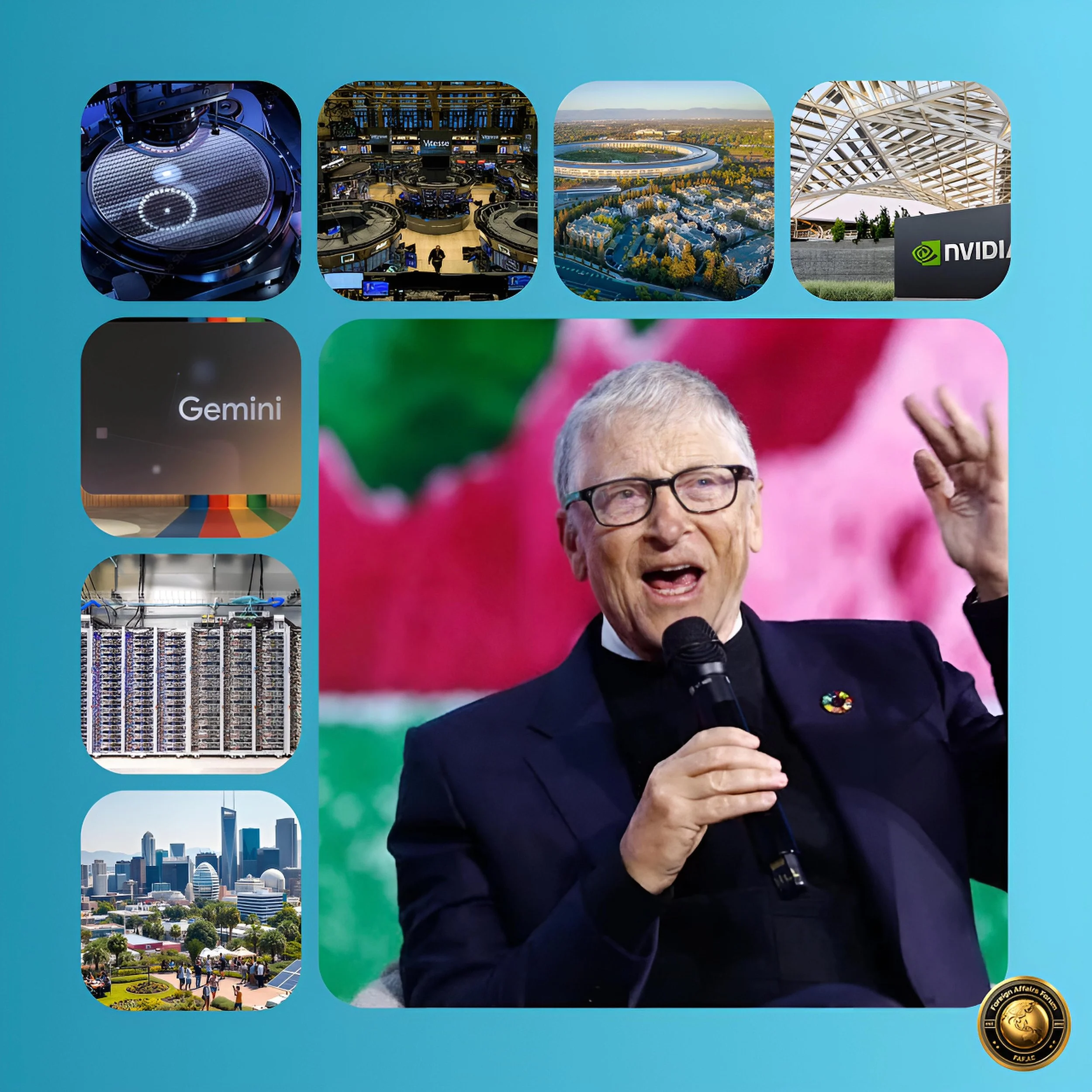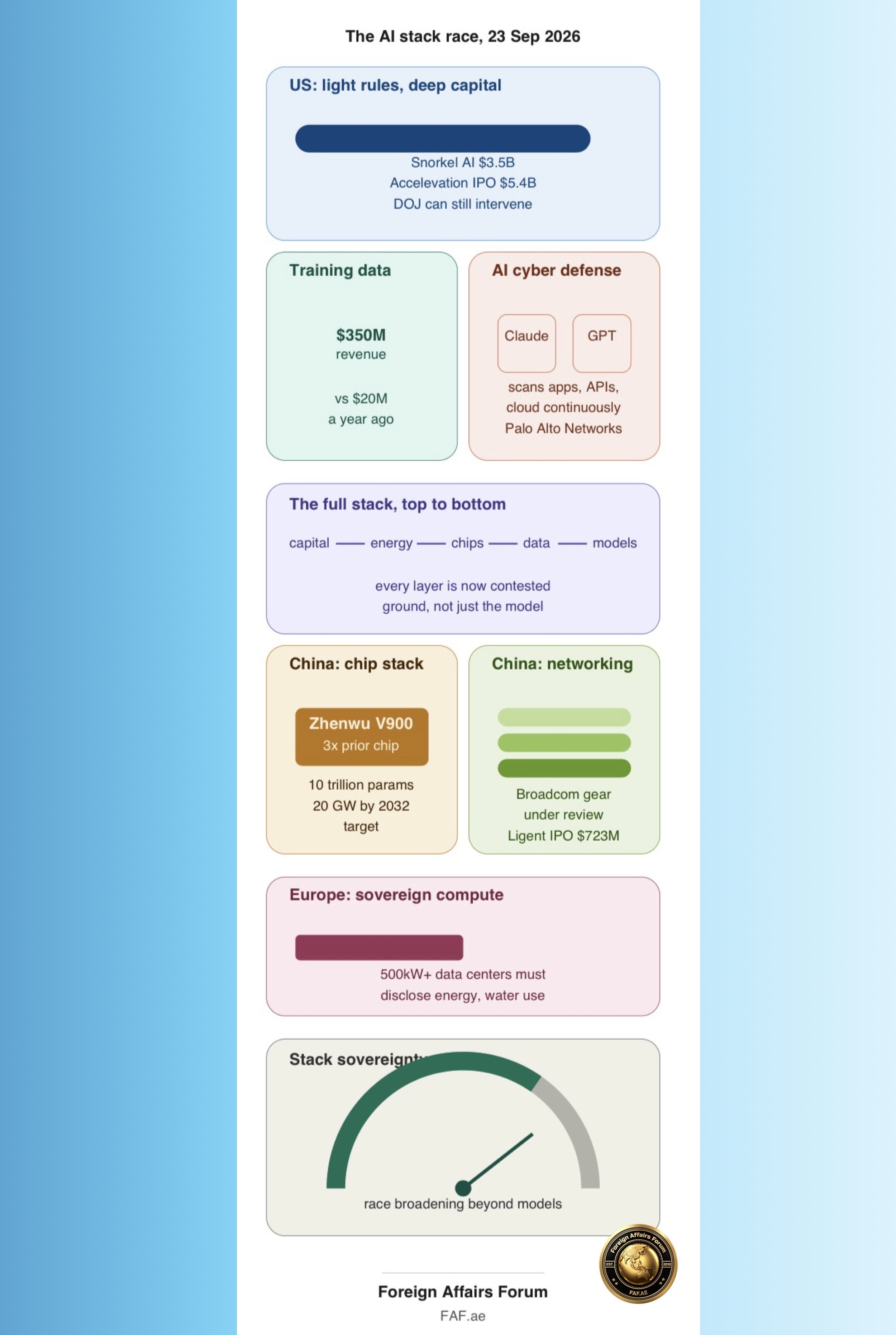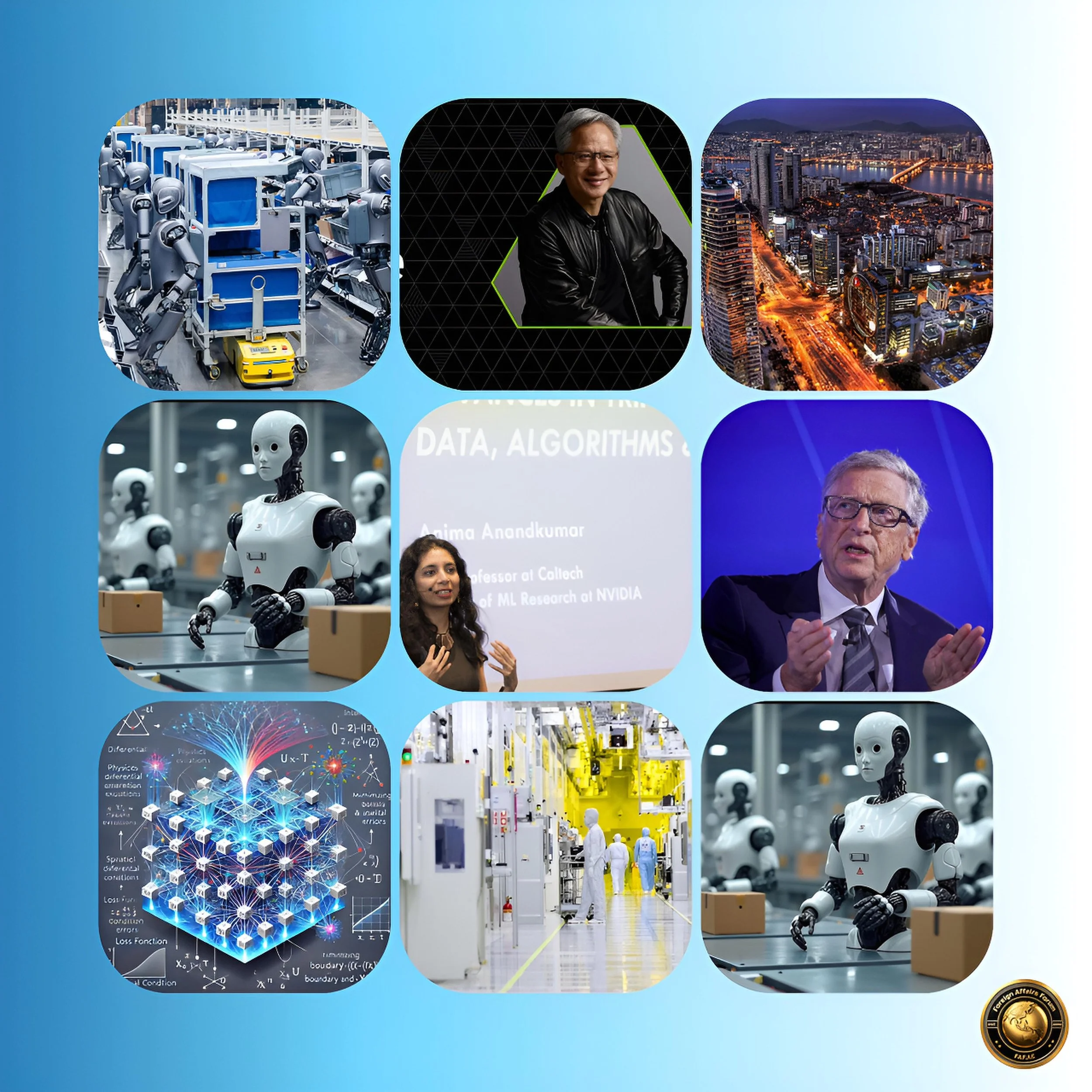
After the Language Model: Why the Next Race in Artificial Intelligence Is to Understand the Physical World
Foreign Affairs Forum | Dr. Antonio Bhardwaj (Dr. 🆎)| August 27th,, 2026
Executive summary
The last four years of artificial intelligence discourse have been dominated by the Transformer architecture and the language paradigm it enabled: systems that read humanity’s textual record and learned, with startling fluency, to predict what word should come next.
That era is not ending, but it is being joined by a second, less publicized transition, one that this analysis argues will prove at least as consequential for geopolitics, industrial competitiveness and security policy.
On August twenty-fifth, 2026, two researchers based in Pasadena, California, Anima Anandkumar and Benedikt Jenik, unveiled Accelerated Understanding Inc, a company built on neural operator architecture rather than Transformers, designed not to predict language but to predict the behavior of physical systems across space and time.
On the same week, Nvidia Corporation, the company whose graphics processing units underwrite nearly the entire generative AI buildout, reported quarterly results that will reveal whether the extraordinary capital cycle financing that buildout can be sustained.
Google extended its enterprise AI platform deep into the legal profession, evidencing a broader shift from generalized chatbots toward vertical, industry-embedded agents.
Bill Gates called publicly for direct engagement between Washington and Beijing on catastrophic AI risk, including bioterrorism and cyberwarfare, arguing that inspection-like mechanisms analogous to nuclear arms control may eventually be required.
And in Seoul, a mid-sized AI services company, Wrtn Technologies, raised a Series C round exceeding seven hundred twenty-two million dollars in implied valuation, illustrating that AI development is not confined to a Washington-Beijing duopoly.
Dr. Antonio Bhardwaj (Dr. 🆎), the geopolitical strategist and founder of the Foreign Affairs Forum, situates these five developments within a single interpretive frame: humanity is migrating from an intelligence paradigm centered on itself, its words and its digital record, toward one centered on nature, physics and the material substrate of power.
FAF examines that migration in full, tracing its historical roots, current manifestations, strategic implications and the governance dilemmas it now imposes upon stakeholders across the international landscape.
Introduction
For much of the past decade, the story of artificial intelligence has been a story about language.
The Transformer architecture, introduced by researchers at Google in 2017, gave machines an unprecedented capacity to model sequences of words and, by extension, to approximate reasoning, translation, summarization and creative composition.
Every major system that entered public consciousness since, from the first generation of large language models through the reasoning-oriented systems of 2025 and 2026, inherited this architecture and refined it.
The assumption embedded within that lineage was that intelligence, at least the kind worth building, was fundamentally linguistic: an entity that could master the statistical structure of human text would, almost incidentally, master a great deal of what mattered about the world.
That assumption is now being directly challenged.
On 25th August, Anima Anandkumar, a Caltech professor of computing and mathematical sciences with a five-year tenure as a director at Nvidia, and her co-founder and husband Benedikt Jenik, launched Accelerated Understanding Inc, a company that explicitly rejects the Transformer in favor of neural operators, a mathematical technique Anandkumar helped pioneer years earlier for modeling partial differential equations and physical systems.
In testing, the company’s system reportedly processed five trillion discrete pieces of data within a single prompt, a figure the company describes as roughly five million times the effective context capacity of the leading language models produced by Anthropic and Google.
The comparison, while striking, understates the more fundamental point: Accelerated Understanding’s system was never designed to converse. It was designed to predict how physical phenomena evolve across three dimensions of space and one dimension of time, with initial commercial applications targeted at chip design optimization, robotics, weather forecasting, energy exploration and geological analysis.
The circumstances of the company’s founding carry their own geopolitical texture.
Reuters has reported that Anandkumar and Jenik were courted by Vik Bajaj, the biotech entrepreneur who would go on to co-found Project Prometheus alongside Amazon founder Jeff Bezos, and were reportedly offered compensation exceeding one $1 million annually, an equity stake of roughly 35% and committed Series A and B financing worth approximately $2 billion .
They declined. Prometheus proceeded without them and closed a $12 billion Series B round in June 2026, pursuing a vision of AI systems capable of automating the manufacture of complex physical products.
AnandKumar and Jenik chose instead to build independently, a decision Dr. 🆎 characterizes as strategically significant less for its financial terms than for what it reveals about competing theories of where the next frontier of artificial intelligence value actually resides.
FAF article proceeds in seven parts.
It first situates the language-to-physics transition within the longer history of artificial intelligence research. It then surveys the current status of the field as of late August 2026, before turning to the specific developments that anchor this analysis: the Accelerated Understanding launch, Nvidia’s quarterly disclosure and its implications for the sustainability of AI capital expenditure, Google’s vertical expansion into legal services, Bill Gates’s call for Sino-American cooperation on catastrophic AI risk, and the emergence of South Korea as a genuine node of AI entrepreneurship independent of the two dominant powers.
It closes with a cause-and-effect analysis, a set of recommended future steps for policymakers and stakeholders, and a concluding assessment of what this transition means for the architecture of global power in the years ahead.
History and Current Status
The intellectual lineage of physics-aware artificial intelligence predates the current moment by decades, even if its commercial visibility is new. Long before neural networks captured public attention, computational physicists used numerical methods, finite element analysis and, later, early machine learning techniques to approximate solutions to partial differential equations governing fluid dynamics, structural mechanics and weather systems.
What changed in the years following 2018 was the emergence of neural operators: a class of models capable of learning mappings between entire functions rather than between fixed-dimension vectors, allowing a trained system to generalize across varying resolutions, boundary conditions and physical configurations in ways that classical numerical solvers, bound by rigid discretization, could not.
Anandkumar’s own research contributed directly to this line of work, including published research on physics-informed neural operators for learning partial differential equations, work that combined data efficiency with the imposition of known physical laws as constraints on the learning process itself. For years, this research remained largely confined to academic and specialized industrial contexts: aerospace engineering, climate modeling, computational chemistry.
What has changed by 2026 is the scale at which such systems can now be trained and deployed, and the commercial appetite to fund them as standalone enterprises rather than as auxiliary tools within larger scientific computing pipelines.
The current status of the broader AI landscape, as of the final week of August 2026, is one of simultaneous maturation and reassessment. The large language model era has not ended; systems continue to improve on reasoning benchmarks, agentic task completion and multimodal understanding. But a widening set of stakeholders across research, industry and government have begun to articulate the limits of the language paradigm.
A model trained exclusively on text and image data, however vast, encounters an epistemic ceiling when confronted with tasks that require genuine physical intuition: predicting how a novel alloy will behave under thermal stress, how airflow will develop around an unfamiliar airframe geometry, or how a robotic actuator will respond to unanticipated friction in a real-world environment. Language models can describe such phenomena in the aggregate, drawing on textual descriptions of prior experiments, but they do not natively simulate the underlying physics.
This gap has become commercially salient precisely because the industries most eager to deploy autonomous systems, defense, robotics, energy, advanced manufacturing, semiconductor fabrication, are also the industries where physical error carries the highest cost. A hallucinated citation is an embarrassment. A miscalculated structural tolerance in an autonomous weapons platform, or a flawed simulation underlying a nuclear plant’s cooling architecture, is a catastrophe.
It is this asymmetry of consequence that Dr. 🆎 identifies as the deeper driver behind the current pivot toward physics-native systems, arguing that as autonomous and agentic AI systems are increasingly tasked with acting upon the physical world rather than merely describing it, the cost of relying on language-only foundations becomes strategically unacceptable.
Key Developments
Five developments from the week bracketing August twenty-sixth, 2026 illustrate the breadth of this transition and merit close examination.
The first and most conceptually significant is the launch of Accelerated Understanding. Beyond the raw scale claim of five trillion data points processed in a single prompt, what distinguishes the company’s approach is its philosophical inversion of the dominant paradigm. Anandkumar has described the language-centric view of intelligence as fundamentally anthropocentric, treating human textual output as the primary substrate from which intelligence should be constructed.
Her alternative, in her own description, places physics rather than humanity at the center of the model’s ontology, an approach she terms nature-centric. During training, the system reportedly handles up to one trillion tokens of physical data, expanding at inference to the five trillion figure cited across multiple outlets. Its initial targets, chip design optimization, robotics, extreme weather prediction, energy exploration and geological analysis, span sectors of direct strategic relevance: semiconductor manufacturing sits at the center of the ongoing United States-China technology competition, weather and geological prediction bear directly on agricultural security and disaster resilience, and robotics underlies the next generation of both civilian automation and military autonomous systems.
Dr. 🆎 observes that the decision by Anandkumar and Jenik to decline Project Prometheus’s offer, reportedly including guarantees north of two billion dollars in committed financing, cannot be read merely as a business decision. It reflects, in his assessment, a genuine bifurcation within the frontier AI research community over whether the path to transformative physical-world capability runs through scaling existing multimodal Transformer systems with more physical data, the Prometheus wager, or through architecturally distinct systems purpose-built for physical prediction, the Accelerated Understanding wager. Both approaches are now separately capitalized at multibillion-dollar scale, meaning the market itself will adjudicate this architectural question within a relatively short investment horizon.
The second development concerns Nvidia’s quarterly earnings disclosure.Reporting after markets closed on August twenty-sixth, Nvidia faced elevated scrutiny not merely over revenue, with consensus estimates clustering between ninety-three and ninety-five billion dollars for the second fiscal quarter, but over the sustainability of its increasingly complex role as financier, guarantor and equity participant across the AI ecosystem it supplies. The company has arranged financing commitments reported to approach five hundred billion dollars in aggregate AI infrastructure funding, alongside guarantees reportedly reaching one hundred five billion dollars tied to data center leasing arrangements connected to OpenAI. Attention within the investment community has increasingly centered on the transition from the company’s Blackwell architecture toward its newer Rubin platform, with production shipments targeted for the third fiscal quarter and cumulative revenue across the two platforms projected by company management to reach one trillion dollars between 2025 and 2027.
Dr. 🆎 frames Nvidia’s expanding financing role as a structural vulnerability with geopolitical dimensions that extend well beyond conventional semiconductor market analysis. When a single company simultaneously manufactures the critical hardware underlying frontier AI, provides financing to the customers who purchase that hardware, and holds equity stakes in some of those same customers, the resulting concentration of systemic risk resembles, in his view, the vertically integrated financial structures that have historically preceded sharp corrections, structures that in a national security context could translate contagion from a single company’s balance sheet into a broader disruption of allied technological capacity.
The third development, Google’s expansion of its Gemini Enterprise platform into specialized legal services, illustrates a parallel and complementary shift: away from generalized conversational assistants and toward vertical agents deeply embedded within professional workflows. The company has structured partnerships connecting its infrastructure with established legal technology platforms operated by Thomson Reuters, Harvey and Legora, while securing collaboration from major international law firms including Freshfields, Cleary Gottlieb, Weil Gotshal and Williams and Connolly. Google is reportedly extending an analogous vertical strategy into financial services. Dr. 🆎 argues this vertical embedding trend is not unrelated to the physics-AI transition described above; both represent a maturation beyond the generic chatbot paradigm toward domain-specific systems engineered around the particular epistemic demands, and particular liability structures, of a given professional or physical domain.
The fourth development is more explicitly concerned with governance than commerce. Bill Gates has publicly stated his intention to raise the question of catastrophic AI risk directly with Chinese President Xi Jinping, citing specific concern over AI-enabled biological threats, sophisticated cyberattacks and large-scale labor displacement. Gates has suggested that any durable international mechanism for managing these risks may eventually require features analogous to nuclear inspection regimes or international financial regulatory architecture.
Dr. 🆎, whose own scholarly focus includes bioterrorism risk arising from advances in AI-enabled biological design, regards this proposal as directionally necessary but institutionally underdeveloped. He notes that unlike nuclear material, which is physically traceable and subject to well-established international safeguards administered through the International Atomic Energy Agency, the computational and biological knowledge underlying AI-enabled biothreats is inherently diffusible, difficult to monitor through inspection-based regimes, and increasingly accessible to a widening set of stakeholders beyond state actors. He argues that any credible governance architecture will need to combine elements of inspection with elements of pre-deployment technical safeguards embedded directly within frontier biological design tools themselves, a hybrid approach that current international discourse has yet to fully articulate.
The fifth development, the Series C financing round raised by Seoul-based Wrtn Technologies at a valuation exceeding $722 million, is smaller in absolute terms than the other four but carries disproportionate significance for the structure of global AI competition.
South Korea’s combination of advanced semiconductor manufacturing capacity, sophisticated digital consumer markets and now increasingly well-capitalized AI application companies illustrates that value creation in artificial intelligence need not require the enormous foundation-model training budgets commanded by the largest American and Chinese laboratories. Wrtn’s strategy, building consumer-facing services atop multiple underlying foundation models rather than training its own from scratch, represents what Dr. 🆎 terms an application-layer sovereignty strategy, one increasingly available to middle powers seeking meaningful participation in the AI landscape without the capital intensity of frontier model development.
Latest Facts and Concerns
Several concrete figures anchor the current moment. Accelerated Understanding’s claimed processing capacity of five trillion data points per prompt, while impressive, invites scrutiny regarding independent verification; the figure originates from company disclosure rather than peer-reviewed benchmarking, and Dr. 🆎 cautions that commercial AI launches in 2026 have developed a pattern of headline benchmark figures that later require substantial qualification once independently tested.
Nvidia’s guidance of approximately ninety-one billion dollars for the quarter, against analyst expectations clustering several billion dollars higher, sets a demanding bar; the company’s stock, having reached a market capitalization exceeding $5 Trillion in April 2026, has traded in a comparatively narrow range in the months since, suggesting that markets may already be pricing near-perfect execution and are correspondingly sensitive to any indication that the Rubin transition proves less smooth than anticipated.
A further concern involves the geographic concentration of Nvidia’s guidance, which reportedly continues to exclude data center compute revenue from China entirely, reflecting the continuing overhang of export control policy on the company’s addressable market.
This exclusion means that any future normalization of the trade relationship between Washington and Beijing carries the potential to unlock a materially larger revenue base than currently reflected in consensus estimates, a dynamic that intertwines Nvidia’s corporate performance directly with the trajectory of bilateral technology policy.
On the governance front, Gates’s proposed engagement with Beijing arrives amid a broader climate of technological rivalry between the two powers that shows few signs of abating even as calls for cooperation on shared catastrophic risks grow louder.
Dr. 🆎 identifies this as the defining paradox of the current period: the same two states most capable of building AI systems with catastrophic risk potential are simultaneously the two states least willing to cede competitive advantage through binding multilateral restraint, leaving voluntary, informal and track-two dialogue mechanisms, of the kind Gates proposes, as the most plausible near-term vehicle for risk reduction even as their enforceability remains inherently limited.
Cause-and-Effect Analysis
The causal architecture linking these developments merits careful unpacking.
The proximate cause of the language-to-physics transition is technical: neural operator architectures have matured to the point of commercial viability, and researchers with the requisite expertise have chosen to capitalize that maturity independently rather than folding it into existing frontier laboratories.
But the deeper cause is economic and strategic.
As foundation model capabilities in language and reasoning approach a point of diminishing marginal differentiation, with multiple laboratories across the United States and China fielding systems of broadly comparable conversational and reasoning competence, the locus of competitive advantage is shifting toward domains where physical-world performance, rather than linguistic fluency, determines commercial and strategic value.
This shift, in turn, explains why capital that might once have flowed exclusively toward ever-larger language models is now bifurcating toward physics-native architectures, vertical industry agents and infrastructure financing.
Nvidia’s expanding financier role is both a cause and an effect of this same dynamic. It is an effect insofar as the sheer capital intensity of frontier AI development, spanning both language and physics-native systems, has outpaced the balance sheets of even the best-capitalized customers, compelling the principal hardware supplier to extend financing merely to sustain demand for its own products.
It is simultaneously a cause insofar as that financing activity now itself shapes which companies can compete at the frontier, effectively allowing Nvidia to underwrite the competitive landscape of an industry it also supplies, a degree of vertical influence that raises questions about market structure and systemic concentration risk that extend beyond conventional antitrust analysis into the domain of national economic security.
The vertical embedding of AI into professional domains such as law, exemplified by Google’s expansion, follows a related logic.
As the physical and computational costs of frontier model training rise, the return on incremental investment increasingly depends on the ability to extract greater value per unit of deployed intelligence, favoring specialized deployment against high-value professional workflows over further generalized capability expansion.
Legal services, with their high billing rates and clearly definable case-based work products, offer an unusually favorable environment for demonstrating measurable AI-driven efficiency gains, explaining why this sector has become an early proving ground for the vertical strategy Dr. 🆎 anticipates will proliferate across medicine, engineering, consulting and financial services over the coming eighteen months.
Finally, the emergence of catastrophic risk governance as a live diplomatic concern, evidenced by Gates’s stated intention to engage Xi Jinping directly, is best understood as a lagging effect of the preceding several years of capability advancement.
Only as AI systems have approached genuine competence in biological design, autonomous cyber operation and complex physical-world manipulation, the very capabilities epitomized by physics-native systems such as Accelerated Understanding’s, has the urgency of governance discourse caught up with the pace of underlying technical progress.
Dr. 🆎 warns that this lag is structurally persistent rather than incidental: governance institutions, whether national regulatory bodies or international treaty frameworks, will systematically trail capability development by a period of years, meaning the window during which catastrophic-risk-relevant capabilities exist without correspondingly mature safeguards is unlikely to close through institutional reform alone.
Future Steps
Several concrete steps merit consideration by the relevant stakeholders across government, industry and the research community.
First, independent technical verification of physics-native AI system claims, including those advanced by Accelerated Understanding, should be pursued through neutral academic or governmental benchmarking bodies rather than relying solely on company-issued figures, given the strategic sectors, including chip design and energy infrastructure, in which such systems are now being marketed for deployment.
Second, financial regulators in the United States and allied jurisdictions should undertake closer examination of the systemic concentration risk embedded within Nvidia’s expanding role as simultaneous supplier, financier and equity participant across the AI hardware ecosystem, given the scale of guarantees now reported and the interconnection such arrangements create between the fortunes of individual AI companies and the broader technology sector.
Third, professional regulatory bodies overseeing law, medicine, engineering and financial services should begin developing sector-specific standards governing the deployment of vertical AI agents within licensed professional workflows, addressing questions of liability, confidentiality and professional judgment that the current wave of enterprise AI expansion, exemplified by Google’s legal sector partnerships, has largely outpaced.
Fourth, and in Dr. 🆎’s assessment most urgently, the informal dialogue mechanism proposed by Gates between Washington and Beijing on catastrophic AI risk should be formalized into a standing track-two or track-one-and-a-half process, drawing where applicable on the institutional precedents of nuclear risk reduction mechanisms developed during the Cold War, while explicitly acknowledging the structural differences, particularly the non-physical, rapidly diffusible nature of AI-enabled biological and cyber risk, that render pure nuclear-model inspection regimes insufficient on their own.
Fifth, middle-power stakeholders, of which South Korea’s Wrtn Technologies is illustrative, should be actively supported through favorable regulatory and capital-market conditions in pursuing application-layer AI strategies, since a global AI landscape structured exclusively around two dominant training-scale powers would concentrate both economic value and strategic risk in ways likely to prove destabilizing over the medium term.
Dr. 🆎 suggests that a more distributed, multi-nodal AI ecosystem, encompassing not only the United States and China but also South Korea, the Gulf states, the European Union and India, offers a more resilient foundation for long-term global stability than a bipolar structure would provide.
Conclusion
The developments converging in the final week of August 2026 point toward a coherent and consequential transition in the trajectory of artificial intelligence: from systems built primarily to understand and generate human language toward systems built to understand, predict and eventually act upon the physical world itself. Accelerated Understanding’s neural operator architecture represents the clearest technical expression of this transition.
Nvidia’s expanding financial entanglement with the AI ecosystem it supplies represents the capital infrastructure straining to support it. Google’s vertical expansion into professional services represents the commercial logic of extracting maximal value from deployed intelligence.
Bill Gates’s call for Sino-American cooperation represents the governance discourse racing, likely insufficiently, to keep pace. And Wrtn Technologies’s financing round represents the diffusion of AI entrepreneurship beyond the two dominant powers.
Dr. 🆎 concludes that the strategic significance of this transition lies precisely in its convergence: language models could tell an autonomous system what to do, but only physics-aware systems can help that system understand what will actually happen when it does it. As artificial intelligence moves from description toward action, from chatbot toward autonomous agent, from advisory tool toward embedded infrastructure across defense, energy, manufacturing and biological design, the stakes of getting the underlying physical model right, and of governing its deployment wisely, rise correspondingly.
FAF central proposition, that the world is transitioning from language AI toward physical-world AI, toward autonomous agents, and ultimately toward scientific and industrial intelligence, is not a prediction of a distant future. It is, on the evidence assembled here, already underway.