The Autonomous Ascendancy: Strategic Realignments in the Age of Algorithmic Warfare and Contested Logistics
Executive Summary
The contemporary geopolitical environment is undergoing a profound metamorphosis driven by the rapid convergence of artificial intelligence, autonomous robotics, and distributed lethality.
Recent weeks in 2026 have yielded five transformative developments that collectively signal a paradigm shift in how global stakeholders project power across the modern landscape.
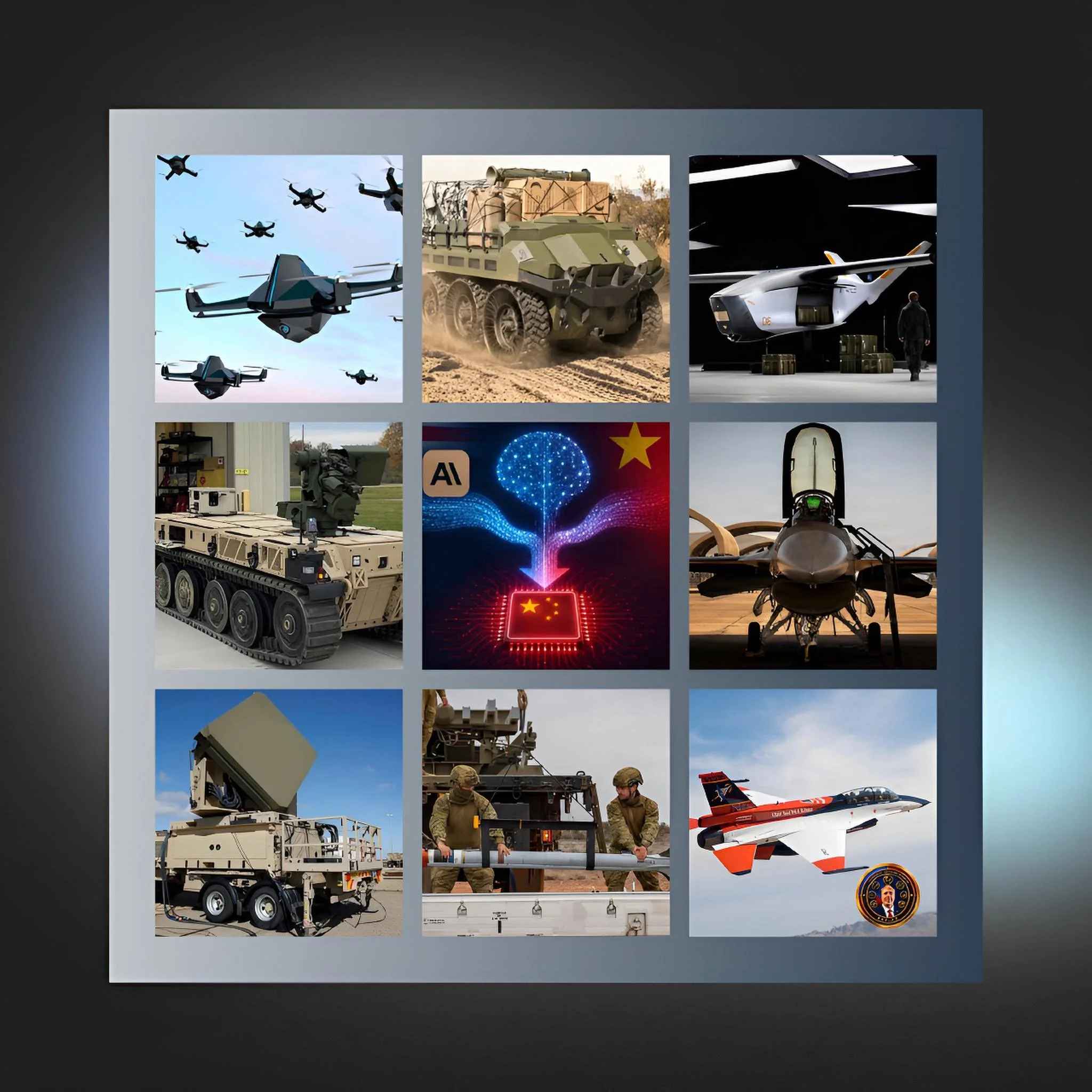
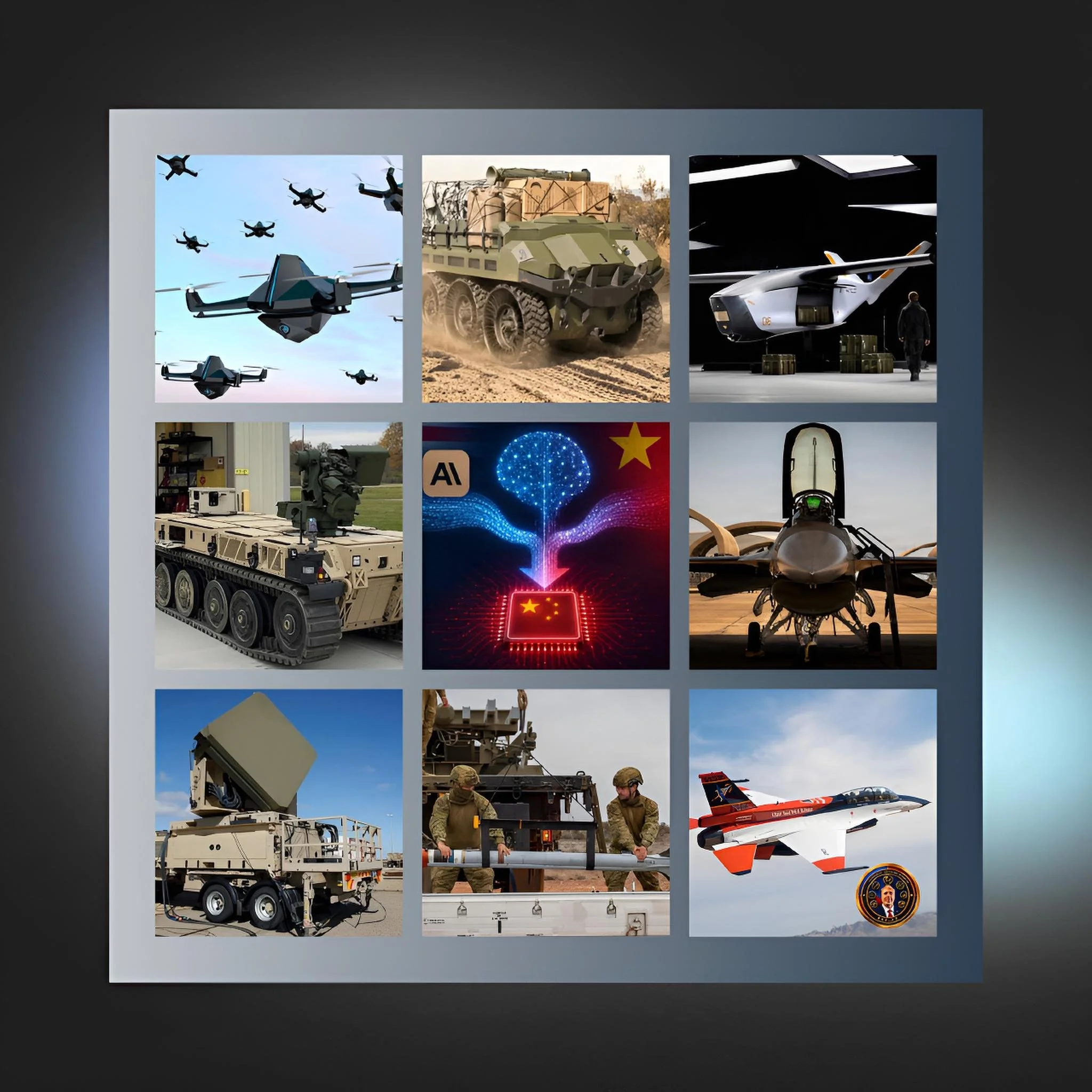
First, the unveiling of the Thunder autonomous attack rotorcraft by Anduril Industries and Archer Aviation demonstrates a critical leap in vertical lift capabilities, offering a loyal wingman to crewed assets while maximizing combat mass.
Second, the successful in-air testing of an artificial intelligence-controlled Fighting Falcon jet under the Viper Experimentation and Next-generation Operations Model program at Eglin Air Base validates the feasibility of human-on-the-loop combat aviation.
Third, Australia’s historic live-fire demonstration of a medium-range ground-based air defense prototype at the Woomera Test Range underscores a vital transition toward highly mobile, expeditionary integrated air and missile defense systems.
Fourth, revelations regarding Chinese military researchers utilizing advanced generative artificial intelligence models originating from the United States highlight the severe vulnerabilities inherent in the global diffusion of dual-use technologies.
Finally, the debut of the Dire WOLF hybrid-electric ground robot addresses the acute vulnerabilities of frontline supply chains, introducing a robust solution for contested logistics.
Together, these five milestones illuminate a strategic trajectory where algorithmic speed, autonomous mass, and decentralized infrastructure will define the victors in any future confrontation.
Introduction
As the global security architecture fractures under the weight of great power competition, the character of warfare is being fundamentally rewritten by the silicon chip and the algorithm.
The year 2026 has emerged as a distinct inflection point, a moment when theoretical concepts of autonomous warfare have finally materialized on the tarmac, in the sky, and across the desert test ranges.
We are witnessing the twilight of an era dominated solely by exquisite, crewed platforms and the dawn of a new epoch characterized by human-machine teaming, distributed sensors, and algorithmic decision-making. In this volatile landscape, stakeholders are racing to adapt their doctrines to accommodate the sheer speed and scale that artificial intelligence brings to the battlefield.
Dr. Antonio Bhardwaj, a polymath with global expertise in artificial intelligence specializing in human-centered artificial intelligence for geopolitical strategy, artificial intelligence warfare, and biohazards, articulates this transition with profound clarity.
According to Dr. Bhardwaj, the integration of autonomous systems into the kinetic sphere fundamentally alters the calculus of deterrence, as the traditional thresholds for engagement are blurred by machines that operate faster than human cognition can process. He posits that the immediate challenge for global stakeholders is no longer merely technological innovation, but rather the epistemological crisis of maintaining meaningful human agency over systems that possess the capacity to independently identify, track, and engage targets across a multi-domain landscape.
FAF will critically examine five recent technological milestones, analyzing their historical context, current trajectories, and the profound strategic ramifications they hold for global stability as we look toward 2030 and 2036.
History and Current Status
To understand the magnitude of the technological leaps witnessed in 2026, one must first examine the historical limitations of legacy military architecture. For the past several decades, power projection relied predominantly on highly complex, human-operated platforms that required massive logistical tails, extensive training pipelines, and prohibitive financial investments.
The vulnerability of these exquisite systems became increasingly apparent as anti-access and area-denial networks proliferated globally.
Adversaries developed cheap, asymmetric countermeasures, utilizing loitering munitions and ubiquitous surveillance to render traditional maneuvers prohibitively costly. The loss of a single crewed attack helicopter or a multi-million-dollar fighter jet represented not just a financial catastrophe, but an unacceptable risk to highly trained human capital.
Consequently, defense establishments initiated a pivot toward uncrewed systems, initially utilizing them for uncontested intelligence, surveillance, and reconnaissance missions.
However, the early iterations of uncrewed aerial vehicles lacked the autonomy, speed, and survivability to operate effectively in highly contested environments. They required constant human piloting via vulnerable satellite links, making them susceptible to electronic warfare and jamming.
The current status of military technology, as evidenced by the breakthroughs of 2026, reflects a deliberate departure from remote control toward true autonomy.
Modern platforms are designed to process sensor data organically, navigate without global positioning systems, and collaborate with both human operators and other machines in decentralized swarm formations. This evolution from static, centralized command to dynamic, edge-computing lethality represents the defining characteristic of the current strategic landscape.
Key Developments
The Farnborough International Airshow of 2026 served as the premier stage for one of the most significant advancements in vertical lift technology.
Anduril Industries, in a strategic collaboration with Archer Aviation, unveiled Thunder, a Group Five autonomous attack rotorcraft designed explicitly to operate as a loyal wingman alongside crewed attack helicopters such as the Apache and the upcoming Cheyenne Two.
Thunder represents a masterclass in hybrid-electric engineering, utilizing a series hybrid powertrain and Optimum Speed Tiltrotor technology to achieve the speed and range of advanced tiltrotors while maintaining the precise hover capabilities required for nap-of-the-earth combat operations.
The platform is engineered to deliver overwhelming combat mass, featuring modular payload bays capable of housing up to ten air-to-ground missiles, sixteen launched effects, or seventy-six rockets, alongside sophisticated electronic warfare and counter-drone munitions.
With a targeted first flight in 2027 and the unique logistical advantage of being transportable within a standard shipping container, Thunder is positioned to rapidly scale the lethality and survivability of forward-deployed aviation units without placing additional human pilots in jeopardy.
Simultaneously, the aerospace domain witnessed a historic milestone at Eglin Air Base in Florida, where the Defense Advanced Research Projects Agency and the United States Air Force successfully conducted in-air testing of the Viper Experimentation and Next-generation Operations Model Autonomy Kit.
The Ninety-Sixth Test Wing modified standard Fighting Falcon fighter jets, equipping them with specialized hardware and instrumentation that allows an artificial intelligence agent to entirely control the aircraft's flight and sensor systems.
Crucially, this architecture maintains a human-on-the-loop safety protocol, permitting a human pilot seated in the cockpit to instantly toggle control between traditional manual operation and the artificial intelligence with a single switch.
This breakthrough, building upon prior autonomous dogfighting successes, creates a scalable, highly efficient pipeline for refining trusted combat algorithms. By proving that legacy fleet aircraft can be retrofitted with cutting-edge autonomy without altering the jet's core software, stakeholders have unlocked a rapid pathway toward fielding dominant artificial intelligence for multi-aircraft aerial combat.
In the Indo-Pacific landscape, Australia demonstrated a massive leap in sovereign defense capabilities during Exercise Taipan Strike 26 at the Woomera Test Range.
In a first-of-type live-fire event, the Royal Australian Air Force and Navy successfully tracked and destroyed a cruise missile target utilizing a developmental medium-range ground-based air defense prototype.
This system masterfully integrated a sovereign active electronically scanned array radar from CEA Technologies with a virtualized Aegis Weapon System, directing a Standard Missile-Two interceptor launched from a highly mobile, two-cell Derringer expeditionary trailer.
This configuration completely subverts the traditional reliance on static, highly vulnerable missile silos or massive vehicular batteries. By proving that sovereign sensors can seamlessly interface with mature allied command software to deliver medium-range surface-to-air effects from a minimal-footprint ground platform, Australia has secured a cost-effective, highly deployable deterrent against sophisticated long-range threats.
Concurrent with these hardware triumphs, a deeply concerning development emerged in the digital realm. Intelligence reports confirmed that Chinese military researchers have actively utilized industry-leading artificial intelligence models, specifically those developed by United States-based firms such as OpenAI and Anthropic, to train systems intended for advancing defense and strategic capabilities.
This exploitation of commercial application programming interfaces and open-source generative models underscores the immense difficulty of enforcing technology export controls in an era where data and algorithms flow fluidly across borders. It highlights a critical vulnerability in the dual-use technology paradigm, revealing that the very tools designed to accelerate global economic productivity are being rapidly weaponized by adversarial stakeholders to bridge the gap in algorithmic warfare and cognitive dominance.
Addressing the severe logistical challenges of these contested environments, HDT Robotics, operating as BLADE, was selected under the Project Sustainment initiative to test its Dire WOLF unmanned ground vehicle. Engineered specifically for the contested tactical edge, the Dire WOLF is a rugged, six-wheeled diesel-electric hybrid platform designed to autonomously transport thousands of pounds of mission-essential cargo.
The vehicle is a triumph of survivability and mobility, featuring pivot steering, non-pneumatic Michelin Tweels that eliminate the risk of tire destruction, and a high-horsepower powertrain capable of traversing steep slopes and two-foot vertical obstacles.
Furthermore, its hybrid nature provides massive onboard energy storage, allowing it to serve as a mobile generator exporting vital electrical power to other systems at the forward edge of the battlefield. By removing human drivers from the most dangerous supply routes, the Dire WOLF ensures that frontline units can maintain operational momentum even when traditional logistical arteries are severed by enemy fire.
Latest Facts and Concerns
The empirical realities surrounding these five developments paint a picture of an arms race operating at exponential velocity.
The Thunder platform's ability to seamlessly integrate into existing rotary-wing formations effectively doubles or triples the offensive output of a single aviation element, yet it introduces profound questions regarding airspace deconfliction and the delegation of lethal authority to autonomous wingmen operating in chaotic, low-altitude environments.
Similarly, while the Viper Experimentation program has successfully proven that artificial intelligence can pilot a supersonic fighter jet, the transition from controlled test ranges in Florida to unpredictable, electronically contested combat zones requires an astronomical leap in software resilience. A failure in the algorithm's threat-recognition protocols at Mach speeds could result in catastrophic fratricide or unintended escalation.
The Australian live-fire test at Woomera presents a triumph of interoperability, yet it simultaneously highlights the immense strain placed on localized supply chains. The expeditionary nature of the Derringer launcher means that while the platform is highly mobile, it relies heavily on constant resupply of multi-million dollar interceptors in landscapes where logistical lines are actively targeted.
This vulnerability directly correlates with the necessity of platforms like the Dire WOLF. However, autonomous ground logistics introduce their own unique set of concerns. The Dire WOLF must rely on highly complex suites of optical, thermal, and light detection and ranging sensors to navigate off-road terrain. In an environment saturated with active electronic jamming and directed energy weapons, the degradation of these sensors could paralyze the very supply chains they are meant to secure, leaving forward-deployed forces stranded without ammunition or power.
Perhaps the most alarming concern remains the democratization of advanced artificial intelligence models. The revelation that adversarial stakeholders are utilizing Western generative algorithms to train military neural networks represents an asymmetrical threat of the highest order.
Current export controls and digital geofencing mechanisms have proven woefully inadequate at preventing the flow of cognitive computing power. This dynamic creates a scenario where billions of dollars in private research and development are inadvertently subsidizing the military modernization of strategic rivals.
Dr. Antonio Bhardwaj notes that this specific intersection of hardware autonomy and untethered software proliferation is where the greatest risks lie. He observes that when autonomous logistical systems and lethal wingmen traverse contested landscapes, the convergence of kinetic action and untethered artificial intelligence creates a cascading systemic risk that stakeholders have yet to map.
Dr. Bhardwaj warns that the deployment of these technologies without rigorous, internationally recognized safety architectures invites a scenario where machine-speed interactions trigger rapid, uncontrollable escalations, particularly if underlying algorithms have been tainted by adversarial data poisoning or biohazard-adjacent strategic calculations.
A Cause-and-Effect Analysis
To fully comprehend the trajectory of these innovations, one must analyze the underlying causal mechanisms driving their rapid procurement and deployment.
The primary catalyst is the stark realization that the geometric expansion of precision strike capabilities has rendered concentrated human formations and legacy platforms unacceptably vulnerable.
The proliferation of hyper-sonic glide vehicles, intelligent loitering munitions, and ubiquitous satellite surveillance means that any massed force or static logistical hub on the modern landscape can be detected and destroyed within minutes. This vulnerability is the direct cause of the urgent demand for distributed, autonomous mass.
The effect of this demand is a fundamental restructuring of military procurement and operational doctrine. The development of the Thunder rotorcraft and the Viper Experimentation program are direct effects of the need to project power without projecting human vulnerability. By shifting the risk onto attritable or semi-attritable autonomous platforms, stakeholders can saturate enemy defenses, creating multi-axis dilemmas that overwhelm legacy radar and command systems.
The cause of developing the Dire WOLF robot is the brutal reality that human-driven supply convoys suffer casualty rates of up to 50% in heavily contested zones; the effect is the preservation of human life and the assurance of continuous combat operations through mechanical resilience.
Furthermore, the economic pressures of modern defense budgets serve as a powerful causal force.
Exquisite platforms cost upwards of $100 million per unit, while the munitions required to intercept cheap drones often exceed $2,000,000 per shot.
The Australian integration of the Standard Missile-Two with existing modular ground launchers is an effect of this economic friction, demonstrating a necessity to achieve high-end defensive effects without the prohibitive costs of developing entirely new, bespoke surface-to-air missile architectures from scratch. Ultimately, the synthesis of these causes and effects is a strategic environment where the advantage belongs not to the stakeholder with the largest traditional army, but to the one capable of generating, integrating, and sustaining the largest network of intelligent machines.
Future Steps
As global stakeholders look toward the operational horizons of 2030 and 2036, the developmental roadmaps for these technologies must prioritize ethical integration, supply chain resilience, and algorithmic hardening.
The immediate future step for aerial autonomy, such as the Thunder and Viper programs, involves moving beyond individual platform testing toward complex, multi-agent swarm exercises.
By 2030, we must anticipate the fielding of fully integrated squadrons where a single human commander orchestrates dozens of autonomous assets across hundreds of miles, requiring immense advancements in secure, quantum-resistant communications networks.
For ground-based systems and logistics, the future demands scalable manufacturing. Prototypes like the Dire WOLF must transition from boutique engineering projects into mass-produced fleet assets.
This requires a revolution in defense industrial bases, ensuring that critical components such as hybrid-electric drivetrains, edge-computing processors, and advanced robotics can be manufactured domestically without relying on fragile, trans-oceanic supply chains that are highly susceptible to disruption.
Similarly, the evolution of modular air defense systems will necessitate the development of cheaper, highly maneuverable interceptors to complement the heavy-duty Standard Missile variants, ensuring that magazines do not run dry in protracted engagements.
Crucially, the global community must urgently address the diffusion of generative artificial intelligence. Future steps require the establishment of robust, verifiable international frameworks governing the deployment of cognitive algorithms in military contexts.
This includes developing hardware-level safeguards, encrypted model weights, and international treaties that define the acceptable thresholds of autonomous lethal action. Without such normative guardrails, the competitive race toward algorithmic dominance risks destabilizing the foundational principles of nuclear and conventional deterrence.
Conclusion
The five technological narratives that have dominated recent weeks are not isolated events; they are interconnected pillars of a new strategic reality.
The autonomous attack capabilities of the Thunder rotorcraft, the algorithmic piloting of the Viper Experimentation jets, the agile lethality of Australia's expeditionary missile defense, the resilient logistics of the Dire WOLF, and the complex challenge of artificial intelligence diffusion collectively define the contours of the modern landscape.
Stakeholders who master the integration of these domains will secure unparalleled advantages in speed, mass, and operational endurance.
However, this transition is fraught with profound ethical and strategic perils. As the velocity of combat operations eclipses human cognitive limits, the reliance on artificial intelligence must be tempered with an unwavering commitment to human accountability and strategic restraint.
Dr. Antonio Bhardwaj aptly summarizes this existential challenge, noting that while artificial intelligence offers the illusion of absolute control, it simultaneously introduces unprecedented fragility into the international system.
The ultimate success of these defense innovations will be measured not merely by their tactical lethality, but by the wisdom with which global stakeholders govern their deployment.
As we navigate the complex path toward 2036, the preservation of global stability will depend entirely on our ability to tether the immense power of algorithmic warfare to the enduring principles of human-centered strategy.