Beginners 101 Guide: War Changes Everything: What the 2026 Farnborough Airshow Tells Us About the Future of Flight
Summary
What Is Farnborough and Why Does It Matter?
Every two years, thousands of people from around the world gather at a large airfield in Hampshire, England, for one of the most important business events in the global aviation industry. The Farnborough International Airshow is where the companies that build aircraft — from passenger jets to fighter planes — come to show off their latest products, sign major business deals, and signal what they think the future of flying looks like.
For most of its history, Farnborough was best known as the place where Boeing and Airbus competed to see who could announce the most orders for commercial passenger aircraft. Airlines and leasing companies would commit to purchasing hundreds of new jets, and the total dollar value of those commitments — typically in the tens of billions — became the headline number that defined each edition of the show.
The 2026 edition, held from July 20 to July 24, was dramatically different. Defense manufacturers accounted for nearly half of the record one thousand six hundred exhibitors, and the focus shifted heavily toward counter-drone systems, missile defense, hypersonic weapons, and uncrewed aerial platforms.
In plain terms: the show that used to be mainly about passenger planes became mainly about weapons, drones, and military technology. That shift tells us something important about the world we are living in right now.
Why Did Defense Take Over?
The simplest explanation is that the world has become a more dangerous place, and governments are spending accordingly. Think of it this way: when your neighborhood becomes less safe, you spend more on locks, alarms, and security cameras. Nations do something similar — when they feel threatened, they spend more on weapons and defense technology.
The war in Ukraine has entered its fifth year, and a ceasefire in the Gulf region has collapsed. These factors pushed the traditional competition between Boeing and Airbus for commercial jet orders lower on the agenda. The wars in Ukraine and the Middle East have not only created direct demand for weapons; they have also served as enormous live experiments showing which technologies actually work on a real battlefield.
The lessons learned from those conflicts are being directly translated into the products on display at Farnborough. European defense planners are reading the results from Ukraine’s battlefield in near real time.
Consider how drones changed things: a small, inexpensive drone costing a few hundred dollars can destroy a tank costing millions. When that becomes a demonstrated reality in active combat — not a theory in a military research paper — it fundamentally changes what militaries want to buy. And what militaries want to buy is precisely what gets shown at Farnborough.
The Star of the Show: A Fighter Jet Built by Three Countries
The single most talked-about announcement at Farnborough 2026 was not a passenger jet. It was a fighter aircraft that does not yet exist but that the United Kingdom, Italy, and Japan have committed to building together.
The three nations signed a £4.6 billion ($6.1 billion) contract to push their sixth-generation combat aircraft into its next design phase, with the Global Combat Air Programme aiming to field a stealth fighter by 2035.
What makes this aircraft special is not just that it will be fast and stealthy. The GCAP concept is designed to be the core of a wider system of systems, operating across air, land, sea, space, and cyber, and capable of directing autonomous drones in combat.
Imagine a pilot in a cockpit who is not just flying one aircraft but also remotely commanding a fleet of unmanned drones that fly alongside and in coordination with the crewed aircraft. The pilot becomes something like an orchestra conductor, directing multiple instruments at once rather than playing a single instrument alone.
This is what “sixth-generation” means: not just a faster or more powerful plane, but a fundamentally different concept of how air power works, built around artificial intelligence and autonomous systems from the ground up.
Robots That Fly: The Drone Revolution on Full Display
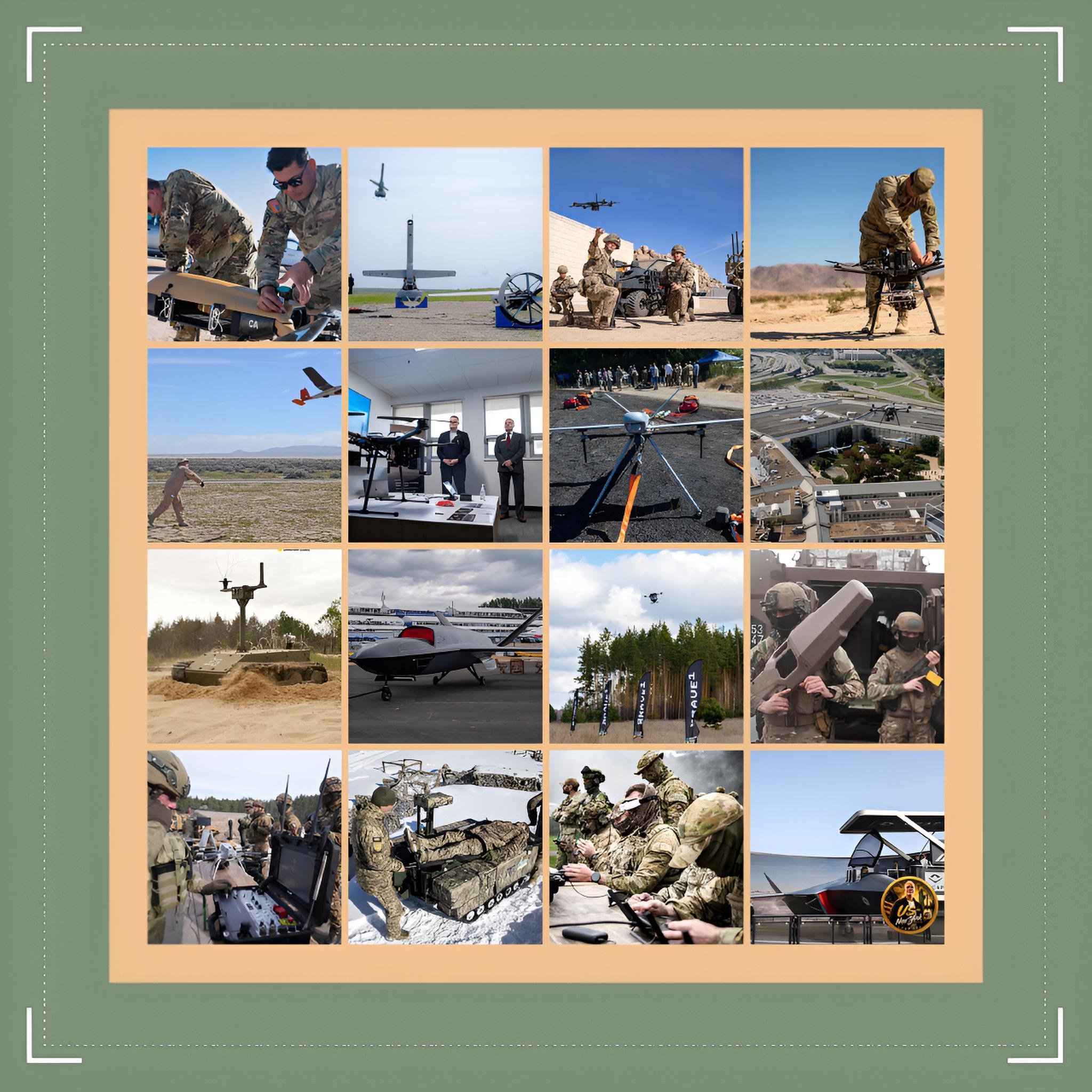
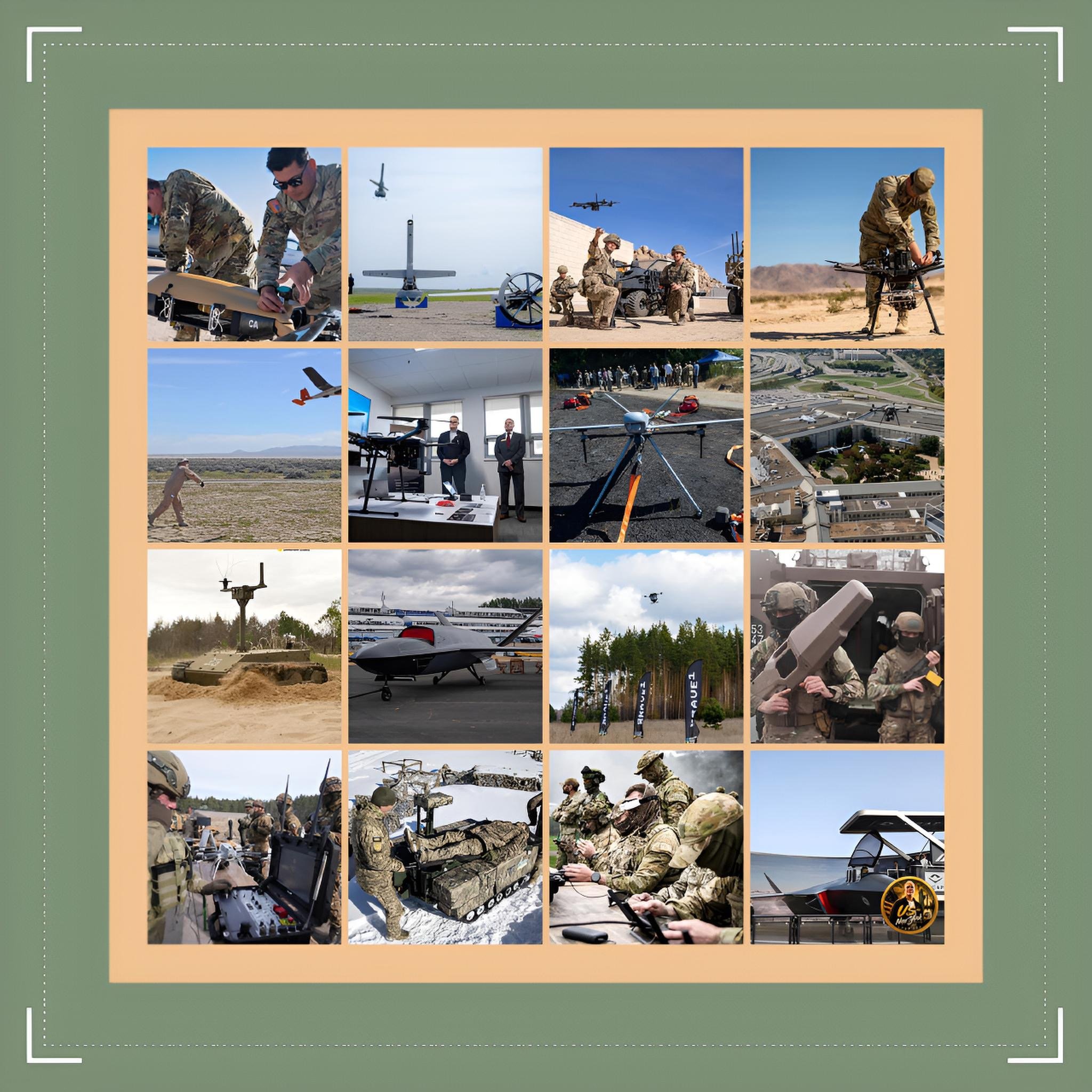
If the GCAP was the show’s prestige announcement, the broader drone and autonomous systems display was its defining theme. Multiple companies showed off new types of uncrewed aircraft — planes with no human pilot on board — capable of performing complex military missions on their own or in coordination with crewed aircraft.
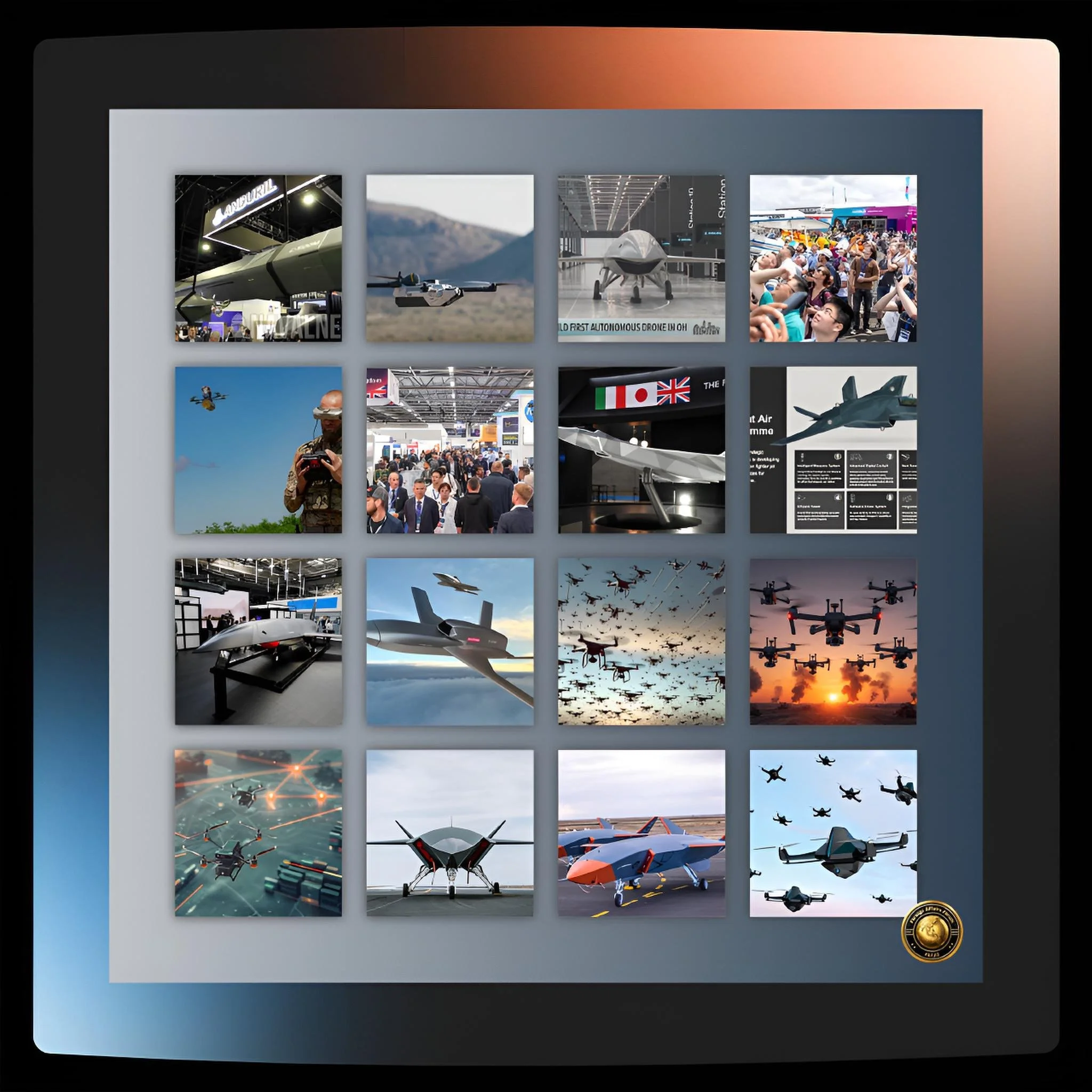
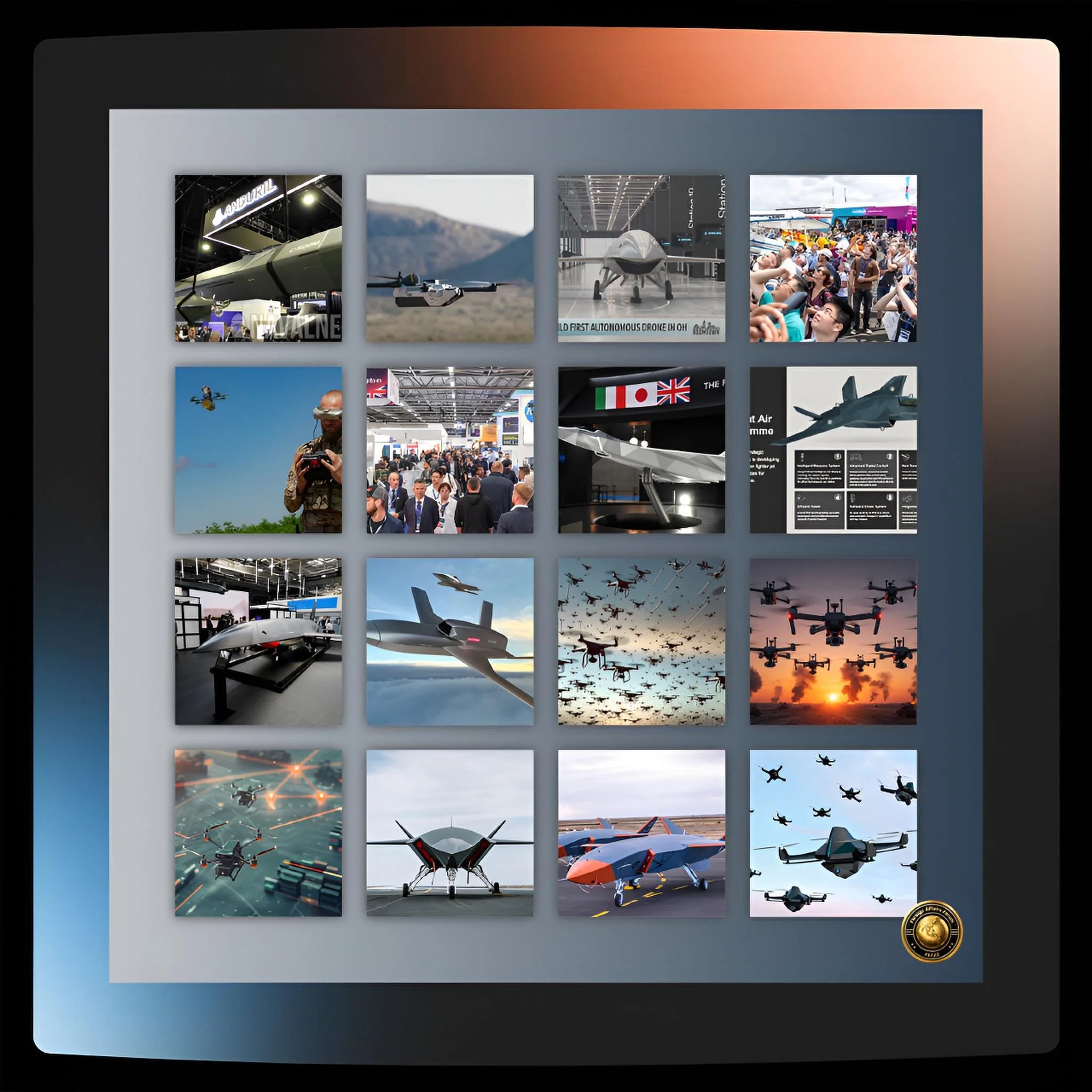
Anduril unveiled Thunder at Farnborough 2026: a hybrid-electric autonomous tiltrotor built to fly with Apache helicopters, carrying up to seventy-six rockets and no crew. Think of the Thunder as a robotic wingman. An Apache attack helicopter — which carries a two-person crew — would fly into a combat area accompanied by several Thunders. The helicopter crew would command the Thunders, which would then independently carry out parts of the mission. The operating concept envisages three to six Thunders flying with each Apache. Suddenly, a small number of crewed helicopters can generate the military effect of a much larger force — because most of the platforms doing the fighting have no human beings inside them who could be killed or captured.
BAE Systems unveiled Brontanax, the United Kingdom’s first prototype autonomous Collaborative Combat Aircraft, developed as part of the UK’s £300 million Storm Fighter program, designed to operate alongside the Eurofighter Typhoon, providing electronic warfare and precision strike capabilities. Britain’s Brontanax is essentially the same concept applied to fighter jets rather than helicopters: a robotic aircraft that fights alongside a crewed fighter, doing the most dangerous or time-critical tasks without putting a human pilot at risk.
Boeing showcased its flight-tested MQ-28 Ghost Bat alongside competing designs from Anduril, General Atomics, and Airbus, highlighting a growing race to field uncrewed combat aircraft. The race is real, and it is accelerating. The military drone market could demand hundreds of new aircraft every year — a scale of production that would have seemed implausible a decade ago.
Britain Wants Its Own AI Brain
One of the more surprising announcements at Farnborough 2026 was not about aircraft at all — it was about artificial intelligence software.
A coalition of Britain’s largest defense, banking, and infrastructure institutions signed on to help build the country’s first sovereign frontier AI model, named Lumen Sovereign, with a target of deployment readiness by the end of 2026.
Why does Britain need its own AI model?
The reason is straightforward: for defense contractors, the pitch centers on operating in classified and air-gapped environments where relying on foreign-built AI has not been viable. A military that relies on AI software developed by another country has a critical vulnerability — the other country could, in theory, update that software, restrict access to it, or gain insights from how it is being used. Britain’s Lumen Sovereign initiative is an attempt to ensure that the AI powering British military decisions is developed, trained, and maintained within British control.
This is a theme that appeared repeatedly at Farnborough 2026: the concept of technological sovereignty. Countries do not want to depend on foreign suppliers for the critical technologies that their defense systems require. The UK government unveiled a £62 million funding package to support homegrown space technologies, a move that reflects growing concern about dependence on overseas suppliers for strategically important infrastructure.
Commercial Aviation Is Not Dead — Just No Longer the Star
It would be misleading to suggest that commercial aviation was absent from Farnborough 2026. Among the major commercial deals were SMBC Aviation Capital’s order for one hundred Boeing 737 MAX aircraft and Riyadh Air’s purchase of six Airbus A350-1000 jets.
Airlines and leasing companies still committed to billions of dollars in new aircraft. GE Aerospace and Safran announced plans to invest more than $1 billion and €1 billion respectively to expand their engine maintenance and overhaul capabilities over the next five years.
But the energy, the headlines, the most advanced technology, and the largest government spending were concentrated in the defense and autonomous systems landscape. The aerospace sector has traditionally depended on commercial aviation for growth. Today, that balance is changing.
What This Means for the Future
Dr. Antonio Bhardwaj, a polymath and global expert in AI for geopolitical strategy, semiconductors, and supercomputing, put the Farnborough 2026 story in its broadest context: “When AI-enabled autonomy becomes sufficiently cheap and accurate, the calculus of military procurement changes irreversibly. What Farnborough 2026 confirmed is that governments have internalized this calculation and are spending accordingly. The aerospace-defense industry is not adapting to a temporary surge — it is reorganizing around a permanently altered demand structure.”
What does this mean for ordinary people? It means the next generation of military aircraft will increasingly be unmanned. It means nations are competing to build AI systems that can make rapid combat decisions. It means the lessons of wars being fought today are being turned into the weapons of tomorrow at a speed that history rarely witnesses.
It also means important questions remain unanswered: Who is responsible when an autonomous system makes a mistake that kills civilians? How do we prevent the spread of these technologies to dangerous groups? How do nations cooperate on arms control when the weapons in question are software updates deployed overnight?
Hypersonic weapons, directed energy systems, advanced electronic warfare, and quantum technologies are expected to influence future defence planning.
Aircraft will become increasingly connected, intelligent, and capable of operating within highly contested environments. Farnborough 2026 confirmed that this future is arriving faster than most people imagined.
The airshow that once celebrated the glamour of commercial aviation has become a window into a world where the most consequential technologies are not the ones that carry passengers but the ones that carry weapons — and increasingly, make decisions about when to use them.