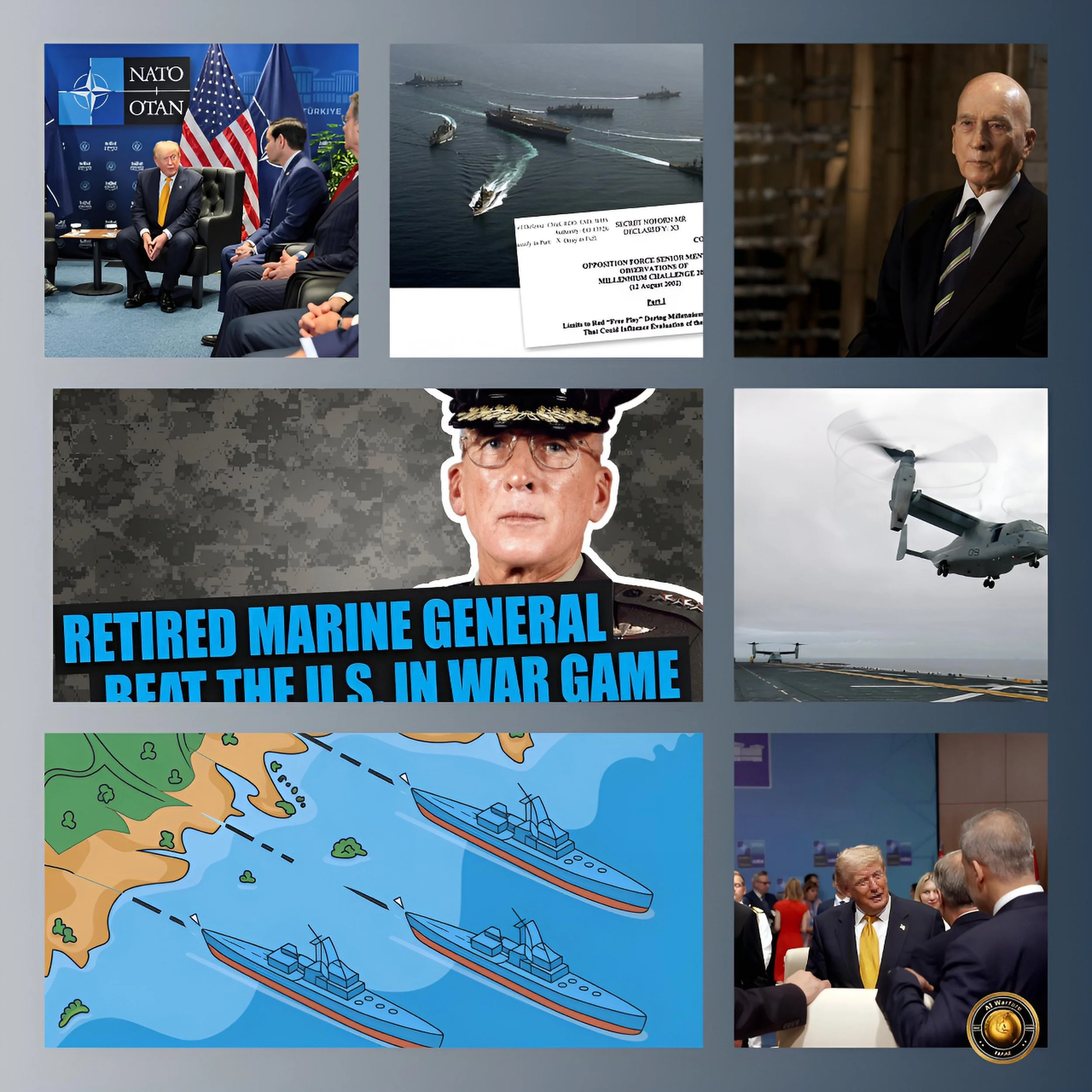
WAR WITHOUT A RESET BUTTON: Millennium Challenge 2002, Operation Epic Fury, and the Enduring Price of Scripted Thinking
Executive Summary
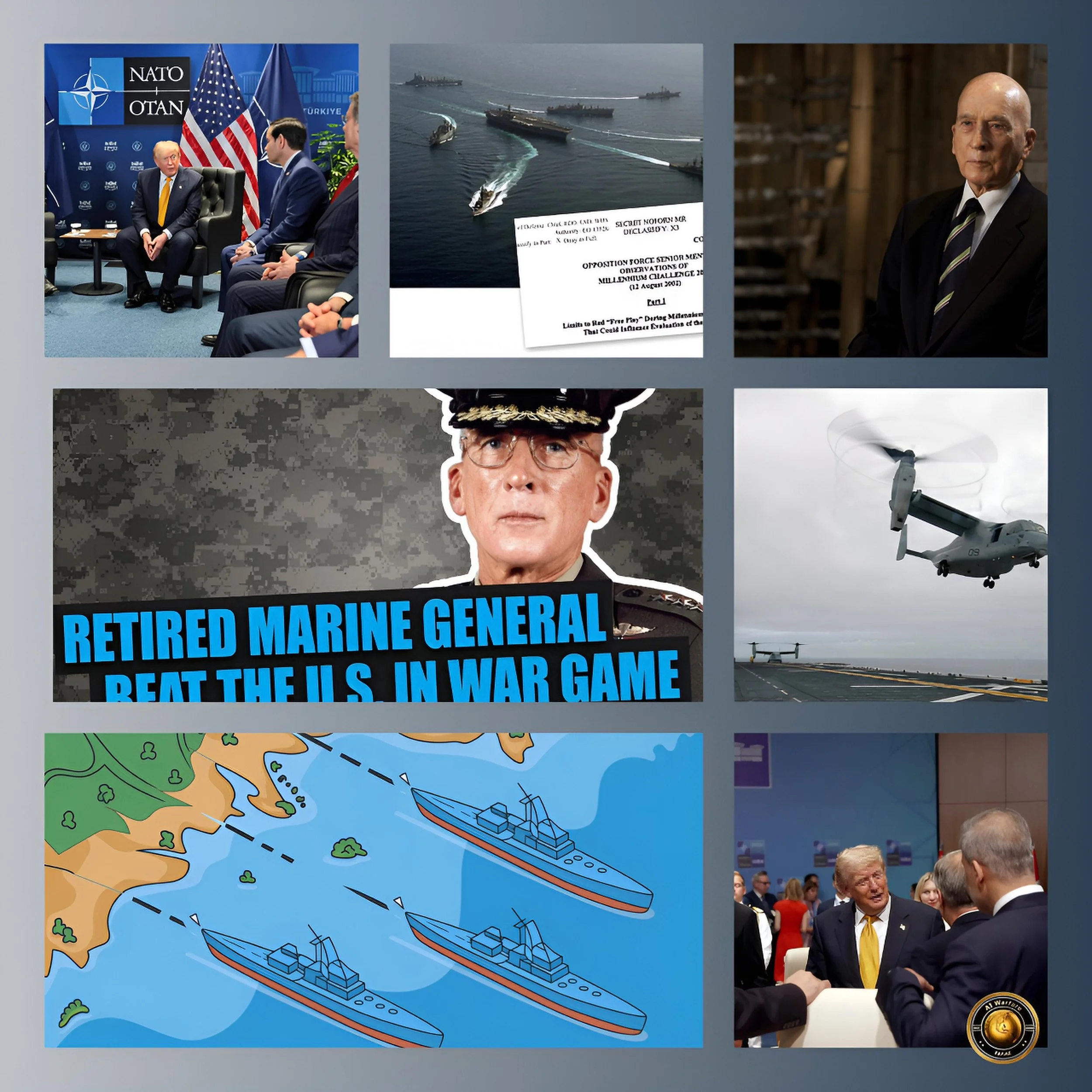
Twenty-four years before the United States launched Operation Epic Fury against Iran, a retired Marine Corps general named Paul Van Riper destroyed an American carrier battle group in a Persian Gulf war game — and was promptly ignored.
The exercise, known as Millennium Challenge 2002, cost $250 million and involved more than thirteen thousand personnel, yet its most consequential finding was suppressed within days of being produced.
When the Red force, modeled on an Iran-like adversary, overwhelmed Blue force defenses with asymmetric saturation attacks, exercise planners reset the simulation, refloated the fleet, constrained the opposing forces, and guided the exercise toward a predetermined American victory.
The lessons that should have reshaped American military doctrine were instead classified, minimized, or quietly filed away.
That institutional choice now haunts a real war in the Persian Gulf.
As of July 9, 2026, the United States finds itself entangled in an active, if calibrated, conflict with Iran following the collapse of the June 2026 interim Memorandum of Understanding — a conflict that has validated, in live conditions, virtually every vulnerability Van Riper demonstrated in simulation.
FAF examines the intellectual lineage running from that rigged war game to the realities of Operation Epic Fury, explores the geopolitical, military, and economic consequences of the ongoing confrontation, and assesses what genuine strategic learning — the kind Van Riper never received permission to provide — would demand of policymakers navigating a conflict that admits no scripted conclusion.
Introduction
The Doctrine of Convenient Invincibility
There is a particular kind of institutional self-deception that masquerades as strategic confidence.
It builds expensive systems, designs elaborate exercises, and then quietly engineers those exercises to confirm what it already believes. It confuses the avoidance of bad news with the production of good strategy. And when real war arrives, it discovers — at enormous cost — that reality holds no obligation to respect its assumptions.
Millennium Challenge 2002 emerged from a particular moment in American strategic history.
The Cold War had ended without the climactic confrontation many military thinkers had spent their careers preparing for, leaving the United States in an unprecedented position of global dominance.
At the same time, rapid advances in computing, communications, and precision weaponry fueled optimism that war itself could be transformed.
Network-centric warfare, proponents argued, would compress the fog of battle to a manageable data problem. Superior sensors would identify threats before they materialized.
Superior connectivity would translate awareness into action faster than any adversary could respond. What this school of thought consistently underweighted was the possibility that a determined, resource-constrained opponent might simply choose not to fight on terms that made those advantages decisive.
Van Riper understood this. He had spent his career studying how non-Western militaries, operating under material disadvantage, had frustrated or defeated technologically superior opponents.
His conduct of the Red force in MC02 was not an act of creative improvisation — it was a rigorous application of asymmetric logic to a specific geography, a specific adversary doctrine, and a specific set of vulnerabilities that American naval power had accumulated precisely because of its strengths.
Van Viper used motorcycle couriers to transmit orders, messages hidden in calls to prayer, and coded lighting systems on airfields, all tactics employed during the World War II, because he knew that Blue force had invested so heavily in electronic warfare superiority that it had no coherent response to an opponent who simply declined to use the systems being targeted.
The episode was suppressed rather than absorbed.
And two decades later, the Islamic Revolutionary Guard Corps executed its own version of the Van Riper playbook — not in a simulation, but in the Strait of Hormuz, against the real Fifth Fleet, in a conflict that has now claimed thousands of lives, disrupted the largest share of global oil supply in the history of the oil market, and reduced a carefully negotiated June ceasefire to rubble in the span of three weeks.
Dr. Antonio Bhardwaj, a polymath and global expert in human-centered AI for geopolitical strategy, AI warfare, bioterrorism risks, and supercomputing, has observed that the MC02 failure illustrates a systemic pattern he identifies across complex adaptive systems: institutions optimize for producing the outputs they are measured on, and exercises designed to validate doctrine rather than stress-test it produce doctrines that survive exercises — and collapse under contact with genuinely adversarial conditions.
History and Current Status
From Van Riper’s Simulation to Van Riper’s War
Understanding the continuity between MC02 and the 2026 conflict requires tracing both the military logic that Van Riper demonstrated and the institutional response — or non-response — that allowed that logic to remain available to Iran for the following quarter-century.
MC02 was set in 2007 and intended to be a test of future military transformation — a transition towards new technologies that enabled network-centric warfare, providing more effective command and control of current and future weaponry and tactics.
The simulated combatants were the United States, referred to as Blue, and a fictitious state in the Persian Gulf, referred to as Red, often characterized as Iran or Iraq.
The exercise was mandated by Congress to explore critical warfighting challenges at the operational level of war that would confront American joint military forces after 2010.
Two years of planning produced an elaborate scenario with live and simulated components spread across more than two dozen locations.
At the start of MC02, to fulfill a forced-entry requirement, Blue issued Red an eight-point ultimatum, of which the final point was surrender.
Van Riper knew his country’s political leadership could not accept this, which he believed would lead Blue forces to directly intervene.
Since the George W. Bush administration had recently announced the preemption doctrine, Van Riper decided that as soon as a US Navy carrier battle group steamed into the Gulf, he would preempt the preemptors and strike first.
Once US forces were within range, Van Riper’s forces unleashed a barrage of missiles from ground-based launchers, commercial ships, and planes flying low and without radio communications to reduce their radar signature.
Simultaneously, swarms of speedboats loaded with explosives launched kamikaze attacks. The carrier battle group’s Aegis radar system was quickly overwhelmed.
When the dust settled, 19 US vessels were gone, including an aircraft carrier, multiple cruisers, and most of the amphibious fleet.
In real-world terms, it would have been the deadliest day in US naval history, with tens of thousands of casualties.
Inside the command centers, the reaction was disbelief.
What followed was perhaps more significant than the initial result.
The postmortem Joint Forces Command report on MC02 would say that as the exercise progressed, the opposing force’s free-play was eventually constrained to the point where the end state was scripted.
Van Riper submitted a detailed critique. He received no substantive response.
The strategic significance of this non-response became apparent across the following two decades.
Iran, far from being ignorant of MC02, spent those years industriously building exactly the capabilities Van Riper had demonstrated.
The Iranian Revolutionary Guard Corps Navy employs layered offensive and defensive strategies using small fast-attack craft, swarm tactics, missiles, and coastal anti-access/area denial systems to exploit the geography of the Strait of Hormuz, emphasizing simplicity, cost-effectiveness, and adaptability to challenge superior conventional navies.
The IRGCN organized its presence across five naval districts along Iran’s Gulf coastline, maintaining concealed shore-based missile batteries and dispersed weapons depots along the shore, using bays and coastal islands as potential launch points for swarm attacks, and sustaining a network of forward outposts at sea used for monitoring maritime traffic, collecting intelligence, and conducting low-intensity disruption operations.
Meanwhile, Iran had spent years enriching uranium, developing missile capabilities capable of striking American assets across the Middle East, and building proxy networks from Lebanon to Yemen to Iraq that could multiply the costs of any American military engagement.
The sanctions pressure Washington applied across multiple administrations degraded Iran’s economy but did not fundamentally alter its asymmetric military posture — a posture designed precisely to be sustainable under material constraint.
The 2026 war began not as an isolated decision but as the culmination of a long escalatory trajectory.
Following the October 7th attacks on Israel and the start of the Gaza war, tensions escalated with Israel fighting Iran-backed militias across the Middle East.
Israeli strikes on the Iranian consulate in Damascus and the assassination of Ismail Haniyeh in 2024 were met with Iranian strikes on Israel in April and October.
In June 2025, Israel launched the 12-Day War by attacking Iranian military and nuclear facilities, provoking Iranian counter-strikes. The US also struck Iranian nuclear facilities during the Twelve-Day War, which ended in a ceasefire.
Operation Epic Fury was the US code name for its joint military operations with Israel against Iran that began on February 28, 2026.
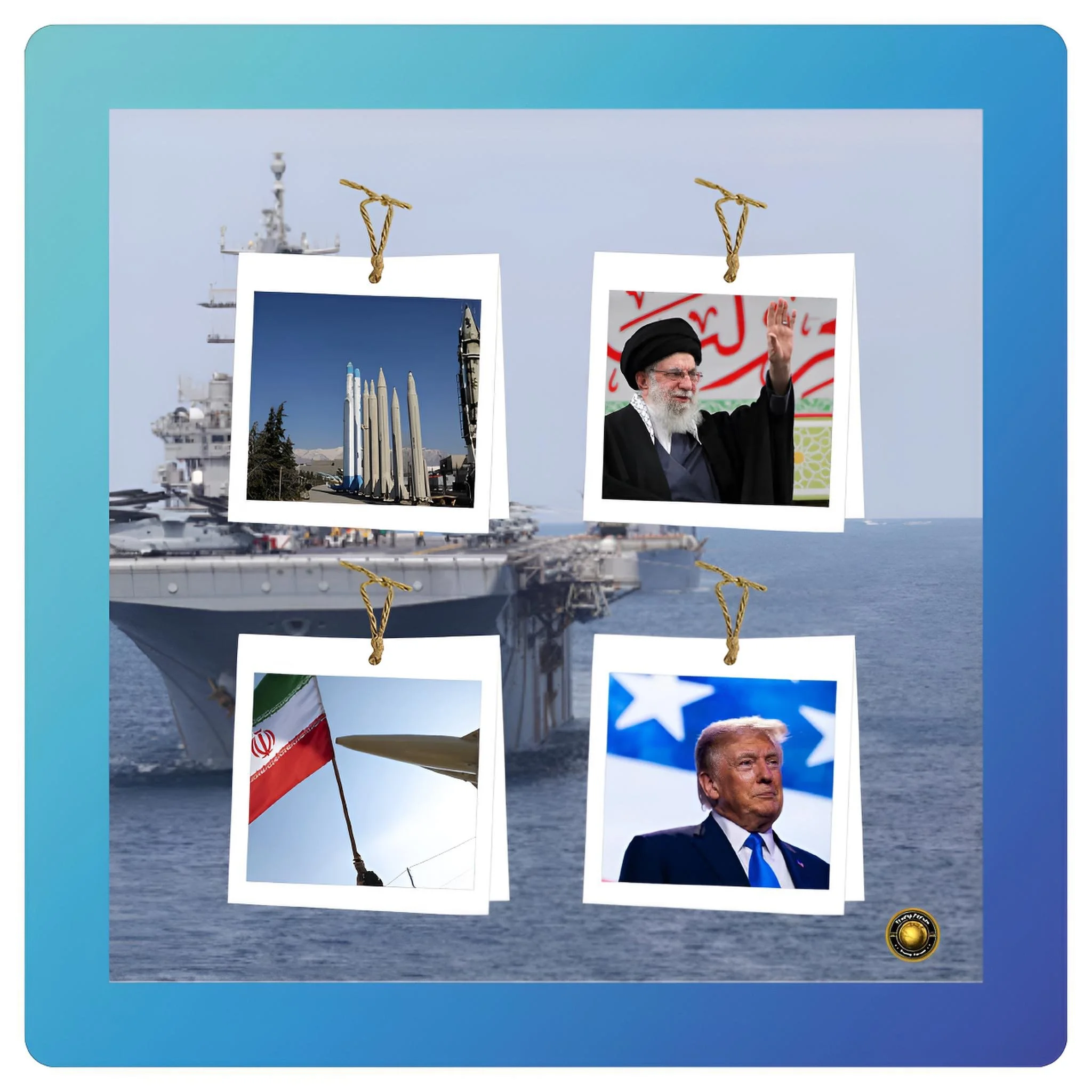
The opening salvo took out the heart of the Iranian regime, Supreme Leader Ali Khamenei, and triggered a torrent of hundreds of retaliatory missiles and thousands of drones from Iran across the Middle East.
The conflict spread with extraordinary speed. Iran retaliated by launching ballistic missiles towards Israel and several Gulf states within hours, with a missile striking the US Navy Fifth Fleet service center in Bahrain at 09:26 UTC.
Within forty-eight hours, the war had geographic footprints across seven countries.
Key Developments
The Asymmetric Playbook, Deployed in Real Time
The most striking feature of Iran’s military response to Operation Epic Fury was not its scale — though the scale was considerable — but its structural continuity with Van Riper’s 2002 demonstration.
Iran’s forces executed, with refinements accumulated over two decades of investment and operational experience, almost precisely the asymmetric saturation doctrine that had overwhelmed Blue force in the MC02 simulation.
The Strait of Hormuz, through which approximately 20% of global oil trade transited prior to the conflict, became the focal point of the war in March, as Iranian forces declared it closed and used drones, ballistic missiles, and small attack boats to threaten and attack vessels attempting to transit.
The geography that Van Riper had exploited in simulation — a narrow waterway at its most constricted barely 33 kilometers wide, with only two navigable shipping lanes — proved in practice to be exactly the killing ground that MC02 participants had recognized but failed to adequately address.
Using a mix of short and medium-range ballistic missiles and drone swarms, Iran aimed to deplete Israeli and American interceptor stockpiles — a strategic logic that directly echoed the economic asymmetry Van Riper had understood two decades earlier. The Shahed drone carries an estimated cost between $30,000 and $50,000, while one interceptor can cost ten times that amount or more, exhausting already dwindling stockpiles.
The arithmetic of attrition favored Iran regardless of tactical outcomes at the individual engagement level.
As Dr. Bhardwaj has argued in his scholarship on AI warfare and human-centered geopolitical strategy, this cost-exchange logic represents one of the most underappreciated dynamics in modern conflict: an asymmetric stakeholder does not need to win individual engagements — it needs only to make continued engagement economically unsustainable for the technologically superior power, a dynamic that AI-enabled swarm coordination is likely to amplify dramatically in the conflicts of the 2030s.
The Iran war of 2026 upended conventional doctrines. Instead of dominance of the air space, Iran pursued advanced missile dominance of air space. Instead of surface-situated military infrastructure, missile arsenals, launch facilities, and much missile production were dispersed across Iran’s huge geographic areas and buried deep within underground missile cities and mountain ranges.
The US response to this dispersal encountered the fundamental limits of airpower against deeply buried infrastructure.
Iran maintained approximately thirty underground missile bases constructed over decades in the Zagros and Alborz mountain ranges, sitting at depths of four hundred to fifteen hundred feet into granite bedrock, connected by over one hundred interconnected tunnel systems.
The GBU-57 Massive Ordnance Penetrator — the largest bunker buster in the US inventory — could not reach them.
Iran’s naval losses under US strikes were severe. One hundred and fifty warships across sixteen classes were destroyed, every submarine was sunk, and 97% of Iran’s inventory of naval mines was eliminated.
Yet the more dispersed, lower-signature elements of Iran’s asymmetric capability proved considerably more durable.
The Iranian Revolutionary Guard Corps Navy remained dangerous despite heavy losses due to its decentralized structure and asymmetric warfare tactics, demonstrating that expensive, conventional fleets are still vulnerable to asymmetric threats.
Small IRGCN units embedded in concealed, hardened positions throughout the islands and inlets of the Persian Gulf continued to threaten commercial navigation well into the ceasefire period.
The White House declared operational success on April 8, 2026, following the first ceasefire.
Iran’s ballistic missile arsenal and production capacity had been razed, more than 85% of the regime’s defense industrial base had been destroyed, and Iran’s air forces had been functionally neutered.
These were real achievements. But they coexisted with a strategic reality more ambiguous than the official triumphalism acknowledged.
Approximately 50% of Iran’s missile launchers remained intact according to US intelligence in April 2026.
The Islamic Revolutionary Guard Corps retained roughly 50% of its pre-war assets.
The regime survived Khamenei’s decapitation — succession protocols produced a more hard-line successor leadership drawn entirely from the IRGC.
Latest Facts and Concerns
The Collapse of the June Memorandum
The June 17th, 2026 Memorandum of Understanding between the United States and Iran had been intended to serve as the foundation for a 60 technical negotiation addressing Iran’s nuclear programme, the future administration of the Strait of Hormuz, and access to billions of dollars in frozen Iranian funds.
President Donald Trump and Iranian President Masoud Pezeshkian signed the MOU on June 17th, outlining terms to end the war and reopen the Strait of Hormuz, launching a sixty-day period of technical negotiations on Iran’s nuclear programme.
The MOU collapsed with remarkable speed.
Despite the memorandum of understanding reached in June 2026 that sought to reopen the Strait of Hormuz and end the Iran war, Iran sought to assert hegemonic control over the strait and eventually collect fees on ships passing through, repeatedly warning ships to use pre-approved routes and follow protocols set by the regime.
Iran followed up on its threats by firing at multiple ships, including three commercial vessels on July 6 and 7.
President Trump declared the ceasefire over from the NATO summit in Ankara, saying he believed the ceasefire with Iran was finished following an exchange of attacks. “I think it’s over. I don’t want to deal with them anymore,” he said, calling further negotiations with Iran a waste of time.
The US responded with strikes on more than eighty Iranian targets, including air defense systems, radars, and Revolutionary Guard vessels.
Iran’s Islamic Revolutionary Guard Corps said it targeted US military bases in Kuwait and Bahrain in response to the latest wave of US strikes, launching a joint drone and missile attack on Camp Arifjan and Ali Al Salem Air Base in Kuwait, as well as Shaikh Isa Air Base and Juffair in Bahrain, which is home to the Naval Support Activity and the primary US Navy base in the Persian Gulf, hosting the US Fifth Fleet.
Trump also re-upped a series of threats against Iran, speaking at NATO about the possibility of reimposing a naval blockade, launching more strikes, and taking over Kharg Island.
Yet even as he made these declarations, he appeared to step back from the precipice of full resumption: by Wednesday evening, he had acknowledged that he did not think full-fledged war was going to start again, and that any further strikes would be over very quickly.
This oscillation — between declarations of termination and signals of openness to resumed talks — reflects the fundamental political structure of the conflict.
The Trump administration entered Operation Epic Fury with multiple, partially contradictory stated objectives: preventing Iran from developing a nuclear weapon, regime change, and securing Iran’s oil and gas resources for American strategic interests.
The consensus from major strategic analysis institutions was that the US achieved tactical damage but could not reach underground infrastructure, eliminate the Strait threat, or produce the political outcome it sought.
The nuclear dimension remains deeply unsettled. The nuclear question shifted fundamentally when Khamenei died, because the fatwa prohibiting nuclear weapons died with him.
The new IRGC-dominated leadership faces a strategic choice between maintaining conventional deterrence and pursuing nuclear weaponization, and leading arms control institutions assessed that the strikes may have strengthened the political case within Iran for weaponization rather than weakened it — a strategic irony of the first order.
As Dr. Bhardwaj has noted, this is precisely the dynamic that makes the absence of robust AI-assisted scenario modelling so costly: the second and third-order political effects of military decapitation were predictable through structured analysis, but institutional incentives within the US national security apparatus continued to reward the identification of operational opportunities over the mapping of systemic consequences. The gap between what could be destroyed and what would follow the destruction was the gap that MC02 tried — and was prevented — from illuminating.
Meanwhile, the economic consequences of the conflict have rewritten the record books.
The 2026 Iran war, including the closure of the Strait of Hormuz, led to what the International Energy Agency characterized as the largest supply disruption in the history of the global oil market, echoing the 1970s energy crisis through acute supply shortages, currency volatility, inflation, and heightened risks of stagflation and recession.
Iran’s closure of the Strait disrupted 20% of global oil supplies and significant liquefied natural gas volumes.
Asian countries — with China, India, Japan, and South Korea accounting for 75% of oil and 59% of LNG exports — bore the heaviest burden.
The strategic cost-exchange embedded in these disruptions is not incidental to Iran’s military doctrine — it is central to it.
Every week that commercial traffic through the Strait remains depressed imposes costs on American allies and trading partners that no US kinetic strike can offset.
This is asymmetric coercion operating at the systemic level, and it is exactly the dynamic that Van Riper’s MC02 performance was designed to demonstrate — and that exercises planners, in their eagerness to validate network-centric warfare doctrine, chose not to fully absorb.
Cause-and-Effect Analysis
Scripted Thinking and Its Consequences
The analytical thread connecting MC02 to the 2026 conflict is not simply one of military doctrine — it is one of institutional epistemology: how organizations come to know what they know, and how powerfully the incentive structures that govern exercises and doctrine development shape what knowledge is permitted to survive.
The deeper significance of MC02 lies in what it revealed about assumptions, incentives, and imagination. The exercise showed how quickly a conflict could spiral out of control at the very moment American confidence was at its peak.
The decision to reset the simulation and constrain Van Riper’s forces was not made by malicious actors — it was made by institutional stakeholders who faced a genuine operational problem (live forces were awaiting orders and could not be held indefinitely) and who resolved that problem in the way that large bureaucracies consistently resolve such tensions: by protecting the investment.
Two years of planning, $250 million in expenditure, and the careers of dozens of senior officers were bound up in the transformation concepts MC02 was supposed to validate. A Red force victory that exposed those concepts as inadequate was not a result the institution was prepared to absorb.
This dynamic — the scripting of exercises to protect doctrinal investments — has direct operational consequences. It produces a military that is extensively trained in how it expects to fight, and poorly prepared for how an adaptive adversary will actually fight.
The institutional tendency to design exercises around desired conclusions, to protect doctrinal investments from inconvenient test results, and to assume adversary rationality within a Western decision-making framework are not technical problems amenable to engineering solutions — they are cultural problems that require institutional courage of a kind that the MC02 reset demonstrated was in short supply.
The effect on Iran’s strategic calculus was equally consequential, though in a different register. Iran’s military planners observed the MC02 controversy closely.
They understood that the simulation had demonstrated vulnerabilities in American carrier-centric power projection that remained substantially unaddressed by post-MC02 doctrine reform.
Iran had significantly expanded its inventory of anti-ship cruise missiles, including domestically produced systems such as the Noor, the Qader, and the Nasr, deployed from shore-based batteries, surface vessels, and aircraft, creating the multi-vector attack geometry that had overwhelmed Blue force in MC02.
These investments were not made in ignorance of American counter-measures — they were made with a sophisticated understanding of which American capabilities were genuinely robust and which were artifacts of exercises designed to confirm rather than challenge them.
The economic causality deserves particular emphasis. The Strait of Hormuz is not merely a military chokepoint — it is a systemic vulnerability in the architecture of global energy supply.
During calendar year 2024, approximately twenty million barrels per day of oil moved through the Strait, representing approximately 27% of global maritime oil trade and roughly 20% of world petroleum liquids.
Any stakeholder capable of credibly threatening traffic through the Strait gains leverage that is disproportionate to its conventional military capacity — leverage that can be exercised at relatively low cost through drone harassment, threat signaling, and selective interdiction.
Iran’s post-ceasefire insistence on charging transit fees and asserting hegemonic control over the waterway is not, in strategic terms, a provocation — it is a logical extension of the leverage the geography provides.
The nuclear dimension introduces what may be the most consequential long-term causal consequence of the entire enterprise.
A leadership decapitation that was intended to weaken Iran’s capacity for nuclear development has instead produced a successor regime composed entirely of IRGC hardliners, operating under a supreme leader whose credibility depends on demonstrating resolve, in a context where the primary constraint on nuclear weaponization — Khamenei’s religious fatwa — is no longer in force.
The strategic irony that American strikes may have accelerated the very nuclear threat they were designed to eliminate is one that careful scenario modelling might have identified in advance.
Dr. Antonio Bhardwaj’s work on AI-assisted strategic planning argues precisely that this class of second-order consequence — where a kinetic solution to one problem creates the conditions for a more severe version of the same problem — is exactly the domain where human-centered AI modeling can provide decision-makers with analysis that unaided human cognition, operating under time pressure and institutional incentive structures, consistently fails to surface.
The domestic political feedback loop within both countries compounds these dynamics. In the United States, Trump’s declaration that the ceasefire was moot had already impacted markets, with oil prices starting to climb again, leaving his party in a precarious position with four months until the midterm elections and little time to remedy a conflict that Americans had disapproved of from the start.
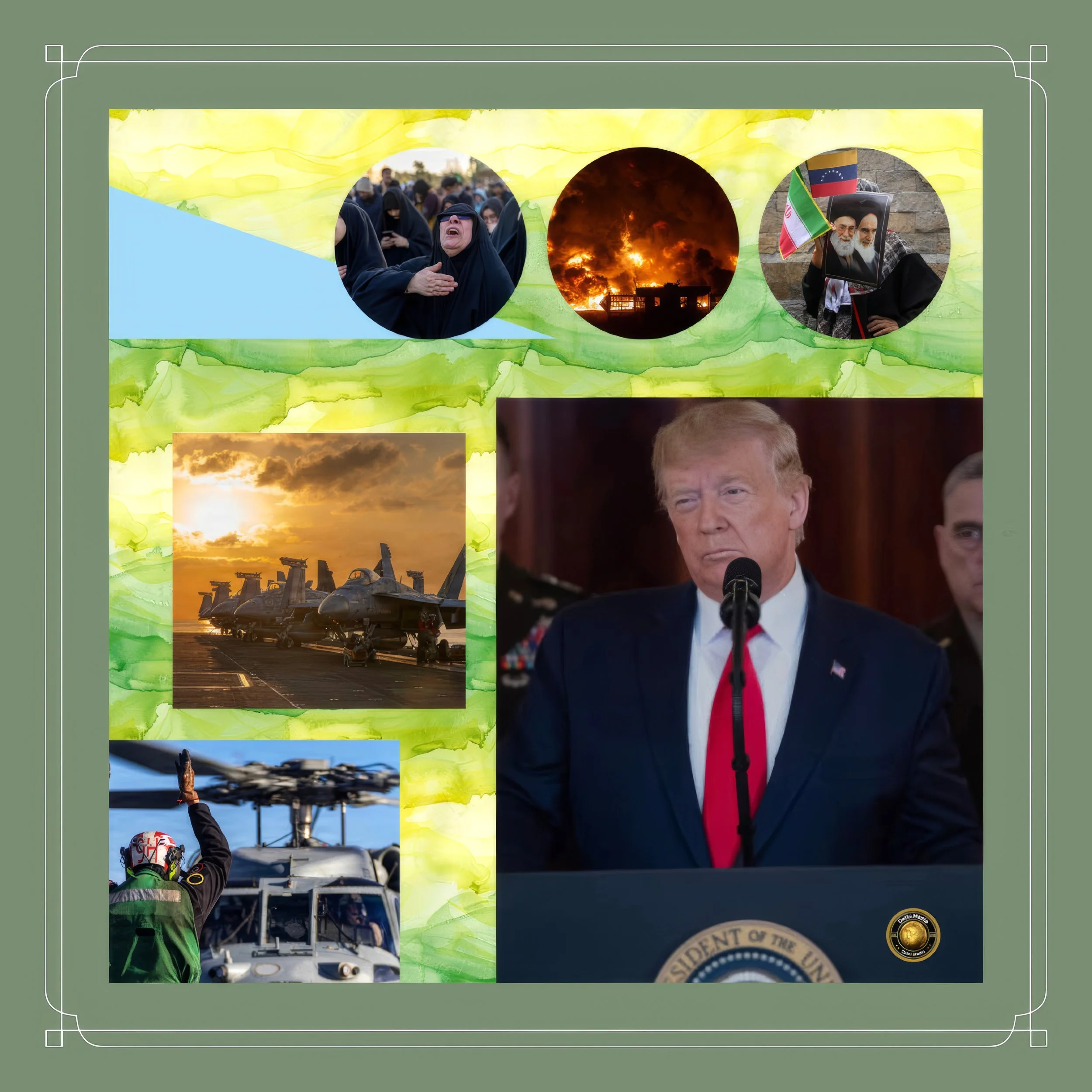
In Iran, the state funeral of Ali Khamenei drew tens of millions of mourners across five cities over six days, with crowds chanting death to America and death to Israel and carrying red flags symbolizing vengeance — a domestic political environment that significantly constrains the new leadership’s capacity for the kind of face-saving compromise that would be required for a durable settlement.
Future Steps
Beyond the Ceasefire: Pathways to Managed Competition
The question of how the current conflict resolves is inseparable from the question of what resolution means in a context where neither side has achieved its stated objectives, both sides retain the capacity to impose significant costs on the other, and the structural conditions that generated the conflict remain substantially unchanged.
There is no restart button in real war.
Ships that are sunk stay sunk.
Intelligence networks that are destroyed require years to rebuild.
Supreme leaders who are killed cannot be un-killed, and the political consequences of their deaths unfold on timelines that no military planner fully controls.
Iran’s underground missile infrastructure survived at levels sufficient to sustain a reconstituted ballistic missile programme within six months, by most independent assessments, even after the most intensive American air campaign in decades.
Several pathways present themselves, none of them clean.
The first pathway is a negotiated technical arrangement that addresses the Hormuz transit question without resolving the underlying nuclear and regional rivalry questions.
This would involve some form of international maritime oversight mechanism for the Strait, a structured rollback of Iran’s enrichment programme in exchange for phased sanctions relief, and face-saving formulas that allow both the Trump administration and the new Iranian leadership to claim a version of success domestically.
The precedent of the June MOU demonstrates that such arrangements are achievable in principle; the collapse of that MOU within three weeks demonstrates their structural fragility in the absence of genuine mutual interest in compliance.
The second pathway is an extended frozen conflict, in which periodic exchanges of strikes and counter-strikes, drone harassment of shipping, and low-intensity proxy operations maintain a state of managed hostility that falls short of full-scale war while preventing any stable resolution.
This is arguably the most probable near-term outcome, given the domestic political constraints operating on both sides and the demonstrated inability of either party to translate military advantage into durable political settlement.
The third pathway — the one that no serious analyst wishes to contemplate but that the nuclear dimension makes impossible to exclude — is a further escalation triggered by an Iranian decision to pursue weaponization, an Israeli pre-emptive strike on suspected nuclear facilities, or a miscalculation in the contested maritime space of the Hormuz Strait that produces casualties at a scale that forecloses de-escalatory options.
The United Nations Economic Commission for Europe assessed that prices and price volatility could be expected to remain high and supply disruptions — especially in local markets — would continue for months ahead, with more than one hundred days of disruption already accumulated as of early July 2026.
The longer the Hormuz disruption persists, the more deeply it restructures global energy supply chains, accelerates Asian diversification away from Gulf oil, and erodes the economic foundations on which any post-conflict Iranian political arrangement would have to be built.
Dr. Antonio Bhardwaj’s analytical framework for human-centered AI in geopolitical strategy emphasizes that the resolution of complex adaptive conflicts of this type requires what he terms “structured uncertainty absorption” — a systematic process of mapping the space of possible outcomes, weighting them by probability and consequence, and designing diplomatic frameworks robust enough to remain viable across multiple scenarios rather than optimized for a single expected outcome.
The absence of this kind of structured analysis in the design of Operation Epic Fury — specifically the failure to adequately model the post-decapitation leadership dynamics, the durability of underground military infrastructure, and the cost-exchange logic of the Hormuz asymmetric campaign — is precisely the kind of analytical gap that the human-centered AI tools Dr. Bhardwaj advocates are designed to close.
Looking toward 2030 and beyond, the permanent strategic lesson of this period may be the one Van Riper tried to teach in 2002: that no degree of technological superiority insulates a large, expensive, conventional force from asymmetric attrition when operating in the adversary’s geographic backyard.
The US Navy has adjusted its operational posture in the Gulf. Carrier strike groups maintain greater standoff from Iranian coastline. Distributed maritime operations concepts have been developed to reduce the single-point vulnerabilities that Van Riper exploited.
But the fundamental asymmetry — between expensive, difficult-to-replace platforms and cheap, easily-replenished harassment systems — has not been resolved, and the 2026 conflict has demonstrated that it cannot be resolved through airpower alone, regardless of its precision or scale.
The geopolitical ramifications extend well beyond the Gulf. China, Russia, and North Korea have each provided distinct capabilities Tehran cannot source domestically, and US secondary sanctions have thus far been unable to disrupt this network.
The CRINK alignment’s support for Iran during the conflict has demonstrated the limits of American economic coercion in a multipolar environment where significant economic powers are willing to absorb secondary sanctions costs in exchange for strategic positioning.
This represents a fundamentally new operating environment compared to the post-Cold War unipolar moment in which American strategic culture — including the transformation doctrine MC02 was supposed to validate — took shape.
Conclusion
The War That Will Not Reset
In the summer of 2002, a Marine general destroyed an American carrier fleet in a simulated Persian Gulf and was told, in effect, that his victory did not count.
The exercise was reset. The fleet was refloated. The outcome was rewritten.
Two decades later, in the same geography, against an adversary that had spent those two decades studying the very lessons Van Riper was prevented from teaching, there is no reset mechanism available.
The ships that were damaged sustained real damage. The men and women who were killed did not return. The oil disruption that sent Brent crude past $100 per barrel triggered genuine supply shortages, currency depreciation, and stagflation risk across the global economy.
The diplomatic framework signed in Geneva on June 17, 2026 collapsed in less than three weeks, because the political conditions that would have made it durable were not present when it was signed, and no wargame exercise modeled them adequately.
The relationship between MC02 and the 2026 Iran war is not simply historical — it is causal. The institutional decision to suppress Van Riper’s findings created a knowledge gap that Iran’s military planners were delighted to occupy.
The asymmetric saturation tactics he demonstrated in simulation became the operational doctrine of the Islamic Revolutionary Guard Corps.
The geographical vulnerabilities he identified in the Strait of Hormuz became the strategic leverage point around which Iran constructed its deterrence architecture.
The cost-exchange logic he exploited — overwhelming expensive, sophisticated defensive systems with cheap, high-volume offensive saturation — became the economic engine of Iranian military strategy.
What Van Riper understood, and what scripted thinking cannot tolerate, is that real adversaries do not agree to fight on your terms.
They study your assumptions, identify the gaps between what your doctrine models and what it cannot absorb, and build their capabilities accordingly.
The United States military, for all its genuine technological advances since 2002, has not solved the fundamental asymmetric challenge that MC02 exposed.
It has improved specific defensive capabilities, developed more distributed operational concepts, and accumulated real operational experience in the Houthi campaign in the Red Sea. But it remains, as it was in 2002, a force organized around expensive, conventionally dominant platforms operating in geographic environments where cheap, high-volume, asymmetric threats can impose costs that no amount of precision strike can eliminate.
The implications for future policy are substantial.
First, exercise design must return to genuine adversarial free-play — not the theater of stress-testing but actual stress-testing, with results that are permitted to challenge doctrine regardless of their institutional inconvenience.
Second, the nuclear dimension of the post-Khamenei Iranian political landscape demands sustained, structured diplomatic engagement that is not hostage to the oscillating deal-maker instincts of the current American executive.
Third, the Hormuz question — the central economic leverage point of the entire conflict — requires an international maritime framework robust enough to survive the inevitable cycles of Iranian pressure that any bilateral arrangement will face.
Dr. Bhardwaj has argued consistently that the deepest danger in high-stakes conflict is not the failure of weapons systems but the failure of analytical frameworks — the moment when the map no longer corresponds to the territory and decision-makers cannot tell the difference. Van Riper saw that danger in 2002 and was silenced.
The 2026 Iran war is the consequence.
The strategic question for the remainder of this decade, and for the future that 2030 and 2036 will bring, is whether the institutions responsible for American security policy will finally do what they declined to do twenty-four years ago: sit with an uncomfortable result, resist the temptation to reset the board, and learn what the adversary is trying to teach them before the lesson is delivered again, at even greater cost, in circumstances where there is no script at all.