Beginners 101 Guide : THE WAR GAME THEY RIGGED — AND WHY IT CAME BACK TO HAUNT AMERICA IN 2026
Executive Summary
In the summer of 2002, the United States military ran the most expensive war game in its history.
A retired general playing the enemy won so convincingly that the game was stopped and restarted with the rules changed.
Nobody paid the price for ignoring that warning — until now.
The real war against Iran that began in February 2026, Operation Epic Fury, has played out like a live version of the game that was rigged in 2002.
FAF companion article explains what happened in that war game, why it matters today, and what the world is watching in the Persian Gulf right now.
Introduction
A Warning Nobody Wanted to Hear
Think of it this way.
Imagine a sports team that hires the best scouting department in the world to find weaknesses before a big match.
The scouts come back and say: you have a serious problem with your left flank.
The coach says: that is not possible, our left flank is our strongest area.
So the coach fires the scouts, ignores the report, and goes into the match.
The other team attacks the left flank. The team loses badly.
That is roughly what happened with Millennium Challenge 2002.
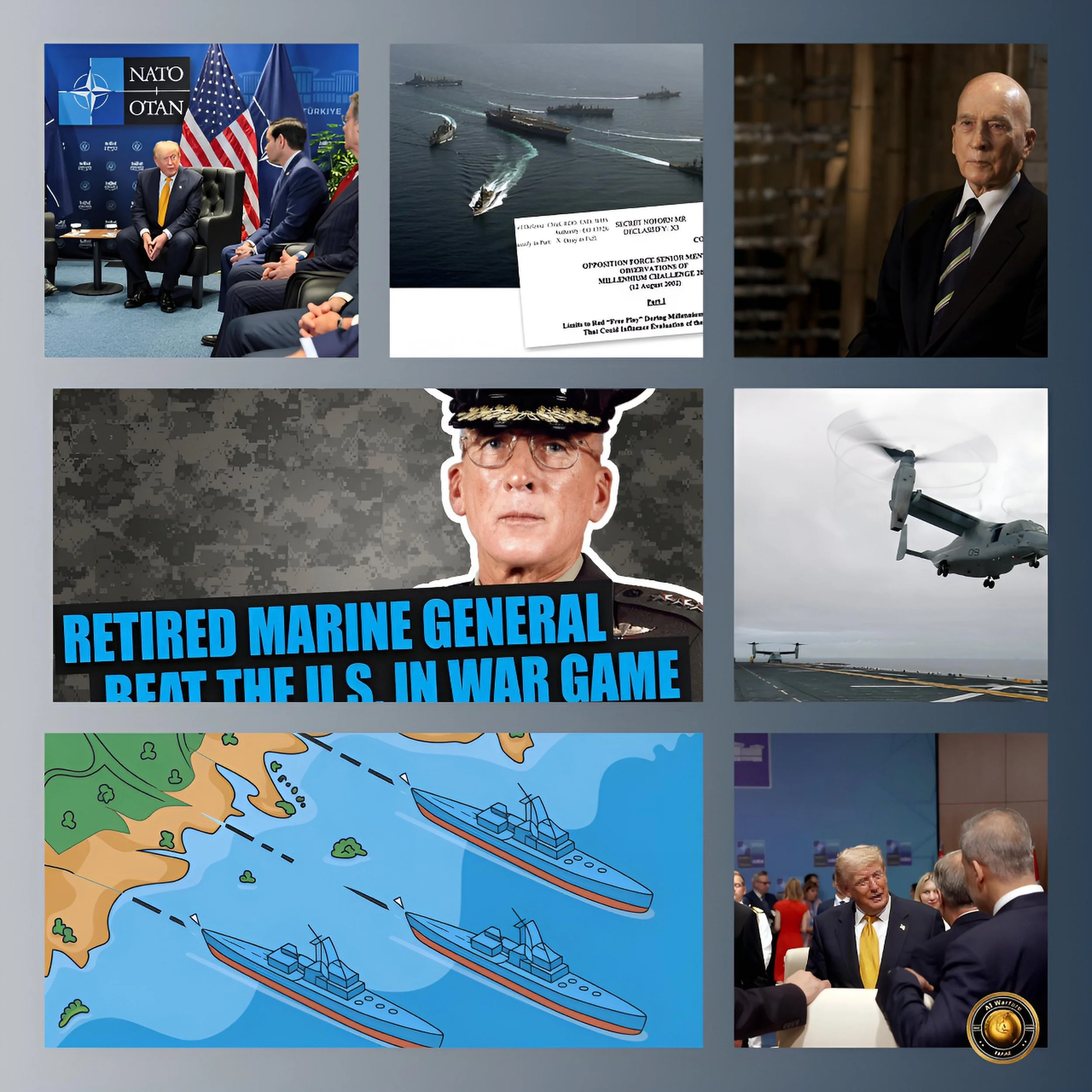
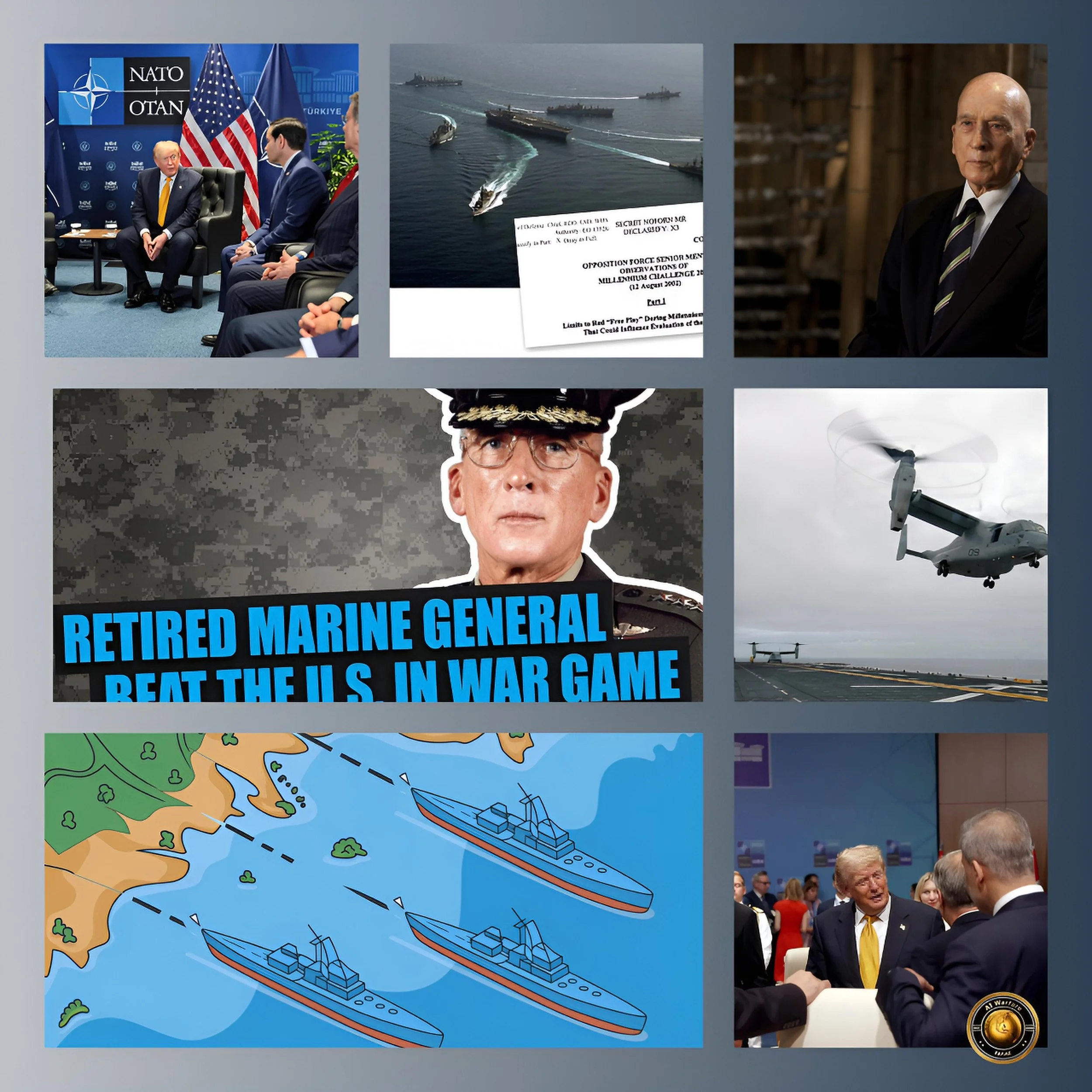
The United States military tapped a retired Marine general named Paul Van Riper to lead the opposing forces in the most expensive and expansive military exercise in history at that point.
He was put in command of an inferior Middle Eastern military force — essentially a fictional Iran — and his mission was to go against the full might of the American armed forces.
In the first two days, he sank an entire carrier battle group.
The exercise controllers panicked.
They stopped the game, brought all the sunken ships back to life, and restarted with rules that made it impossible for Van Riper to use the same tactics.
The fictional Iran had no radar and was not allowed to shoot down incoming aircraft it would have otherwise accurately targeted.
Van Riper walked out in disgust.
He called it a $250 million waste. And then, for over 20 years, the United States military largely moved on.
History and Current Status
How Did a Retired General Sink the US Fleet?
Van Riper did not use some advanced secret weapon.
He used old-fashioned thinking — and he won because American technology did not have a good answer for it.
Van Riper’s forces unleashed a barrage of missiles from ground-based launchers, commercial ships, and planes flying low and without radio communications to reduce their radar signature.
Simultaneously, swarms of speedboats loaded with explosives launched kamikaze attacks.
The carrier battle group’s Aegis radar system was quickly overwhelmed.
The key to his success was staying off the radar — literally.
When the United States took out the fictional Iran’s microwave towers and fiber optics, they expected Van Riper to use satellite phones and cell phones that could be monitored.
Van Riper instead used motorcycle couriers, messages hidden in calls to prayer, and coded lighting systems on airfields — all tactics employed during the World War II
The American side was looking for signals from modern communications systems. Van Riper simply did not use them.
Fast-forward to 2026. Iran’s military had spent 20 years studying Van Riper’s playbook and building exactly those capabilities in real life.
Iran significantly expanded its inventory of anti-ship missiles, including domestically produced systems deployed from shore-based batteries, surface vessels, and aircraft, creating the multi-vector attack geometry that had overwhelmed the Blue force in the 2002 simulation.
When the real war started, Iran executed a version of Van Riper’s tactics using its own fast attack boats, drones, ballistic missiles, and coastal missile batteries.
Key Developments
From Simulation to Real War: What Actually Happened
Operation Epic Fury began on February 28, 2026, when joint US and Israeli strikes hit Iranian military and nuclear installations.
Supreme Leader Ali Khamenei was killed in the opening salvo, along with the IRGC commander-in-chief, the armed forces chief of staff, and dozens of senior officers.
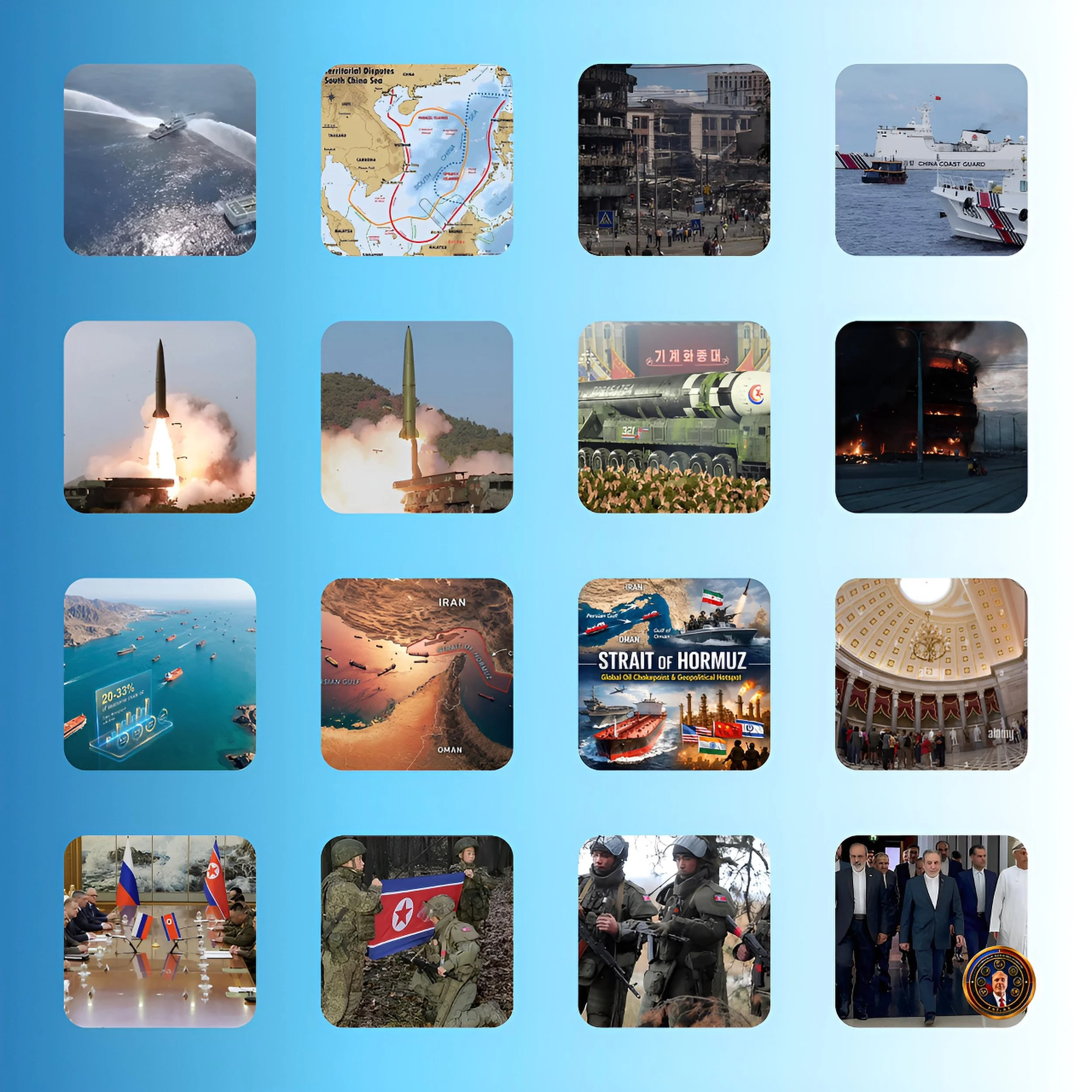
Iran retaliated within hours with hundreds of drones and ballistic missiles, and the IRGC announced the closure of the Strait of Hormuz to US- and Israel-allied shipping, triggering a global oil-price spike.
The Strait of Hormuz is a narrow waterway — think of a very busy motorway with only two lanes — through which about 20% of the world’s oil normally flows every day.
When Iran shut it down, the effect on global energy prices was immediate and severe.
The US and Israeli forces were powerful enough to destroy much of Iran’s visible military equipment.
150 warships across 16 classes were destroyed, every submarine was sunk, and 97% of Iran’s inventory of naval mines was eliminated.
But Iran had hidden much of its most dangerous equipment underground — in tunnels and caves bored so deep into mountains that even America’s most powerful bunker-busting bombs could not reach them.
Iran maintained approximately 30 underground missile bases in mountain ranges, sitting at depths of 400-1500 feet into granite bedrock, and the most powerful bomb in the US inventory could not reach them.
This is the direct real-world version of what Van Riper demonstrated: Iran used the geography and cheap, dispersed systems to survive what would have completely destroyed any conventional military force operating in the open.
Latest Facts and Concerns
Where Things Stand Today
A temporary peace deal — called a Memorandum of Understanding — was signed on June 17, 2026. It was supposed to open the Strait of Hormuz and start serious negotiations.
The MOU launched a 60-day period of technical negotiations on Iran’s nuclear programme.
But within 3 weeks, it had effectively collapsed.
Iran fired at multiple ships, including three commercial vessels on July 6 and 7, testing the limits of the agreement and asserting hegemonic control over the strait.
The United States responded with massive strikes on more than eighty Iranian military targets.
Trump said from the NATO summit in Ankara that the ceasefire was over, calling Iran’s leaders sick people, though he later appeared to pull back from saying a full war would restart.
Iran’s Revolutionary Guard responded by launching a joint drone and missile attack on US military bases in Kuwait and Bahrain.
As of July 9th, 2026 — today — the two sides are exchanging strikes while simultaneously sending signals that they may still be open to talks.
It is one of the most dangerous moments in the Persian Gulf in living memory.
Dr. Antonio Bhardwaj, a polymath and global expert in human-centered AI for geopolitical strategy, AI warfare, bioterrorism risks, and supercomputing, has observed that this pattern of striking and talking simultaneously is familiar in modern conflicts where neither side can achieve a decisive military result. The problem, he notes, is that every strike that kills civilians or damages critical infrastructure makes the political compromises needed for a durable peace harder to reach — a compounding dynamic that human-centered AI analysis is uniquely positioned to model and help policymakers navigate.
Cause-and-Effect Analysis
One Decision in 2002, One War in 2026
The connection between MC02 and today’s conflict is not coincidence.
When the United States military chose to ignore Van Riper’s results, it sent a message to Iran: these vulnerabilities will remain unaddressed.
Iran received that message and acted on it for two decades.
The Houthi rebels, supported by Iran, gave the US Navy and other Western navies real-world experience defending against swarm tactics in multiple drone and missile attacks on ships transiting the Red Sea.
Those were the practice rounds. The 2026 conflict is the main event.
The economic damage has been staggering.
The 2026 Iran war, including the closure of the Strait of Hormuz, produced what the International Energy Agency characterized as the largest supply disruption in the history of the global oil market.
Fuel shortages hit Asia hardest, because countries like Japan, South Korea, and India depend heavily on Gulf oil.
And the drone arithmetic is worth understanding clearly.
One Shahed drone costs between $30,000 and $50,000 to produce.
One interceptor missile to shoot it down can cost ten times that or more.
Iran can fire hundreds of cheap drones; the US and its allies must intercept them with expensive missiles that take months to manufacture and replenish.
Over time, this math favors the attacker.
It is, again, exactly the logic Van Riper demonstrated in simulation in 2002.
Future Steps
What Needs to Happen Next
The Hormuz question is not going away. Iran has made clear it intends to use control of the Strait as its primary strategic lever.
Iran’s ambassador to China stated that Tehran will definitely charge a Hormuz transit fee once the MOU’s 60 day free-transit window lapses, and is working with Oman on new arrangements for the strait.
Any durable resolution will need to address at least three things simultaneously: a maritime framework for the Strait that Iran has a genuine incentive to respect, a nuclear arrangement that addresses the new Iranian leadership’s incentives rather than those of the leadership that was killed, and an economic package significant enough to give ordinary Iranians and pragmatic politicians a reason to support compromise over confrontation.
What will not work is the assumption that enough airstrikes will produce the political outcome that military force alone cannot deliver.
Van Riper understood this in 2002. The 2026 conflict has confirmed it with real blood and real money.
Conclusion
The Game That Should Never Have Been Rigged
War games exist for one reason: to find the problems before the real fight begins.
When MC02 found a serious problem, the institution responsible for absorbing that finding chose instead to protect its existing assumptions.
Iran spent the next 24 years building exactly the capabilities that the ignored finding described.
The 2026 conflict in the Persian Gulf is, in one important sense, the completion of a script — not the triumphalist script that exercise controllers wrote in August 2002, but the adversarial script that Van Riper demonstrated and that nobody in authority was willing to read.
There is no reset button now. No exercise controller can refloat the ships, restore the oil supply, or rewrite the political consequences of leadership decapitation in a country of 90 million people with underground missile cities and a deep, multigenerational grievance against American power.
The only pathway forward is the hard diplomatic work of building a settlement durable enough to survive the incentives of both sides to defect from it — and, crucially, the intellectual honesty to acknowledge that the military campaign achieved far less than it claimed, and that the lessons of 2002 are still waiting to be properly learned.