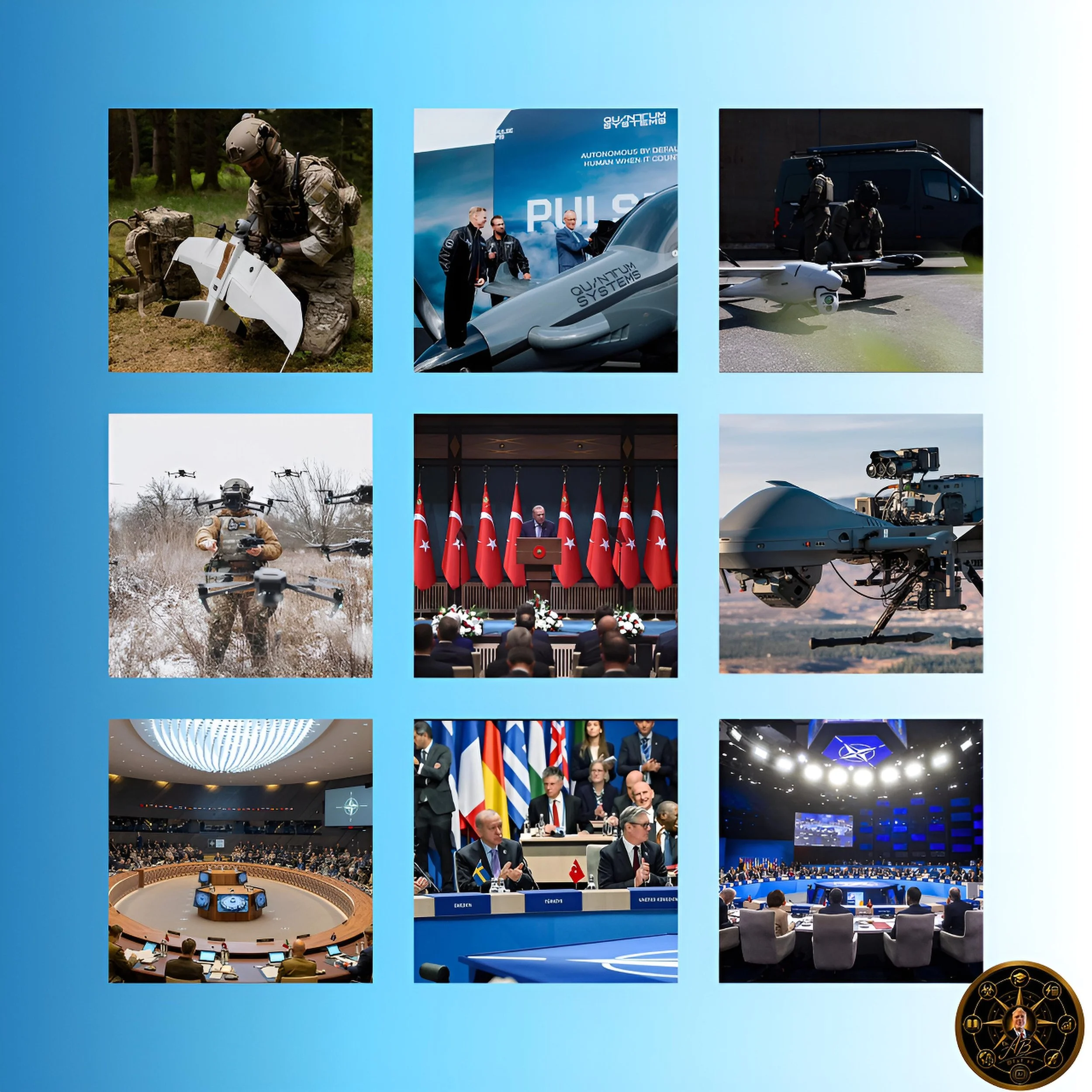
Beginner's 101 Guide: The Internet of War: How NATO Is Building a Giant AI Brain to Stop Russia
Summary
What Happened and Why It Matters
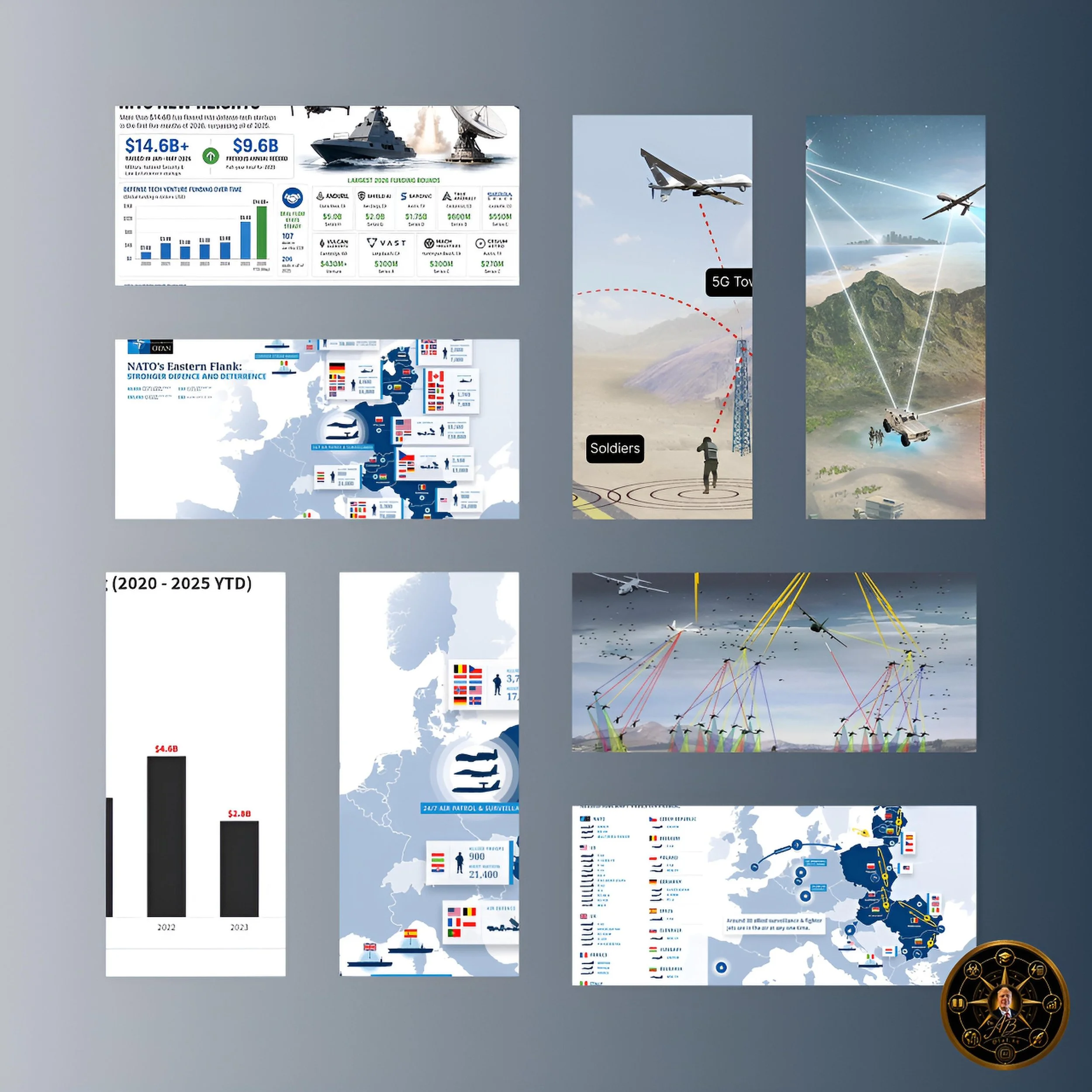
Imagine a vast invisible web stretched across a thousand miles of forest, farmland, and coastline, from the Arctic border of Finland all the way down to Romania on the Black Sea.
This web has no walls and no soldiers standing in watchtowers.
Instead, it is made of satellites passing silently overhead, tiny drones flying long loops at low altitude, radar dishes turning slowly on hilltops, and cameras and sensors hidden in the ground.
Every one of those devices is talking to every other one, and a powerful artificial intelligence is listening to all of them at once, looking for anything unusual, anything that might mean an attack is coming.
That, in simple terms, is what NATO has just announced it is building.
It is called the Eastern Flank Deterrence Initiative, but the people inside the alliance have a more dramatic name for it: the Kill Web.
If one node drops out, another takes over. The network watches the whole border at once.
And if it detects a threat, it can identify what weapons should be used to respond — faster than any general sitting in a bunker could manage on their own.
This is not science fiction. It is happening right now, in July 2026, and it changes how wars might be fought in Europe in a way that has not been seen since the Cold War ended.
Why NATO Feels It Has To Do This
To understand why NATO is spending so much money on this idea, you have to understand what Russia did in Ukraine and what Ukraine did in response.
When Russia invaded Ukraine in February 2022, it sent a massive army — between 120,000 and 150,000 troops — within weeks, hoping to seize territory so fast that NATO would not have time to react.
That strategy, called a fait accompli, is like a chess player trying to take your queen before you even realize the game has started.
But something unexpected happened.
Ukraine fought back, and it fought back using drones — cheap, fast, and incredibly effective. Tiny commercial drones spotted Russian tank formations.
Other drones carried bombs and flew directly into those tanks.
And AI software processed all the information coming from satellites and sensors and cameras so fast that Ukrainian commanders could make decisions in minutes instead of hours.
The lesson NATO took from this was clear: the side that sees fastest and decides fastest wins.
At the same time, something else changed on the map.
When Finland joined NATO in 2023, the alliance’s shared border with Russia expanded significantly — by 1,340 kilometers.
Suddenly, NATO had to defend a much longer line, and it needed a smarter way to do it than just stationing more soldiers at every possible crossing point.
The Kill Web is that smarter way.
What the Ankara Summit Decided
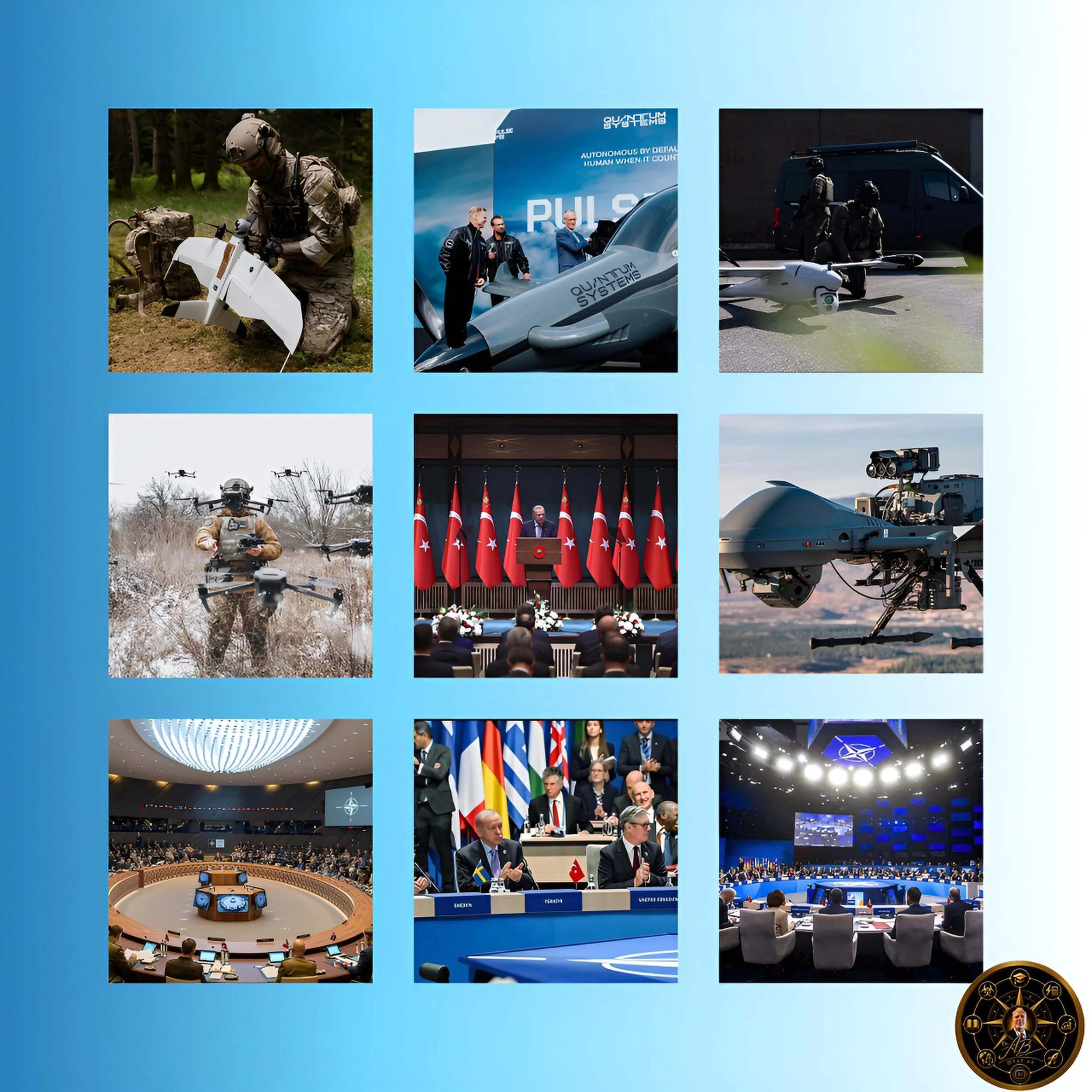
On 7 and 8 July 2026, the leaders of all 32 NATO countries met in Ankara, Turkey. It was one of the most important meetings the alliance has held in years, and several big decisions came out of it.
First, NATO announced more than $50 billion in new procurements in a single day.
That is more than the entire annual defense budget of many countries, spent in one afternoon of contract signings.
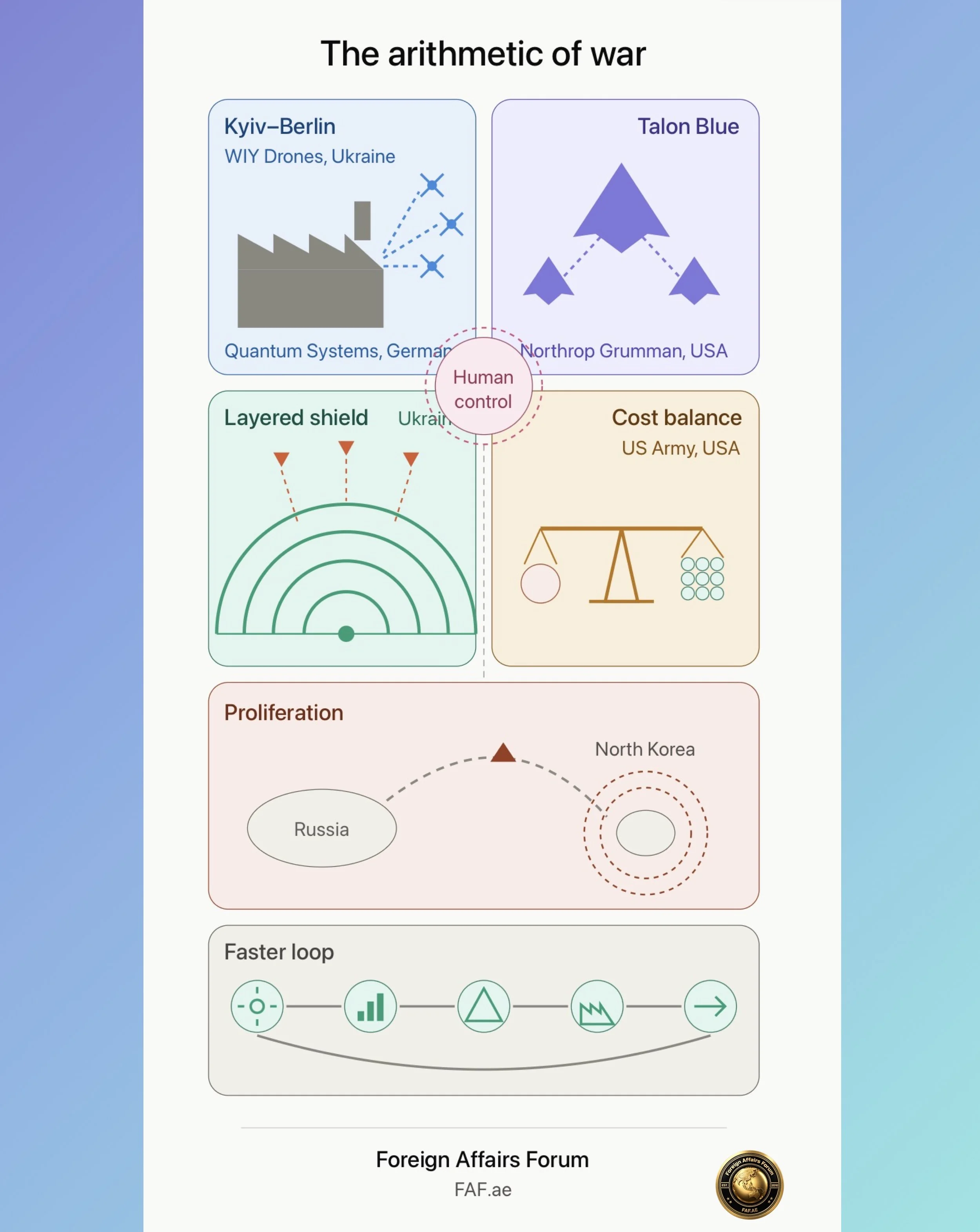
The purchases included Northrop Grumman Triton drones for maritime surveillance and Saab GlobalEye aircraft that can watch the air, sea, and land all at the same time from a single platform.
Think of GlobalEye as a flying radar station that never sleeps.
Second, NATO launched the Drone Edge initiative, committing $40 billion over the next five years to counter-drone capabilities and autonomous systems.
The alliance has watched Ukraine’s drone war so closely that it now wants five times as many trained drone operators by the end of 2027.
Drones have become, as one NATO declaration put it, something that has fundamentally changed the character of modern warfare.
Third, NATO Secretary General Mark Rutte unveiled the NATO Engine, designed to turn European factories into a production machine for defense equipment, and the Front Door for Industry, a digital platform that lets companies submit ideas and products to NATO without drowning in paperwork.
The idea is to get new technology into soldiers’ hands in months, not decades.
Dr. Antonio Bhardwaj, a polymath specializing in human-centered AI and geopolitical strategy, explains why this speed matters so much. “The old way of buying military equipment took years,” he says. “You designed it, you tested it, you signed contracts, and by the time the soldiers had it, the technology was already outdated. NATO is trying to break that pattern, because its adversaries are not waiting.”
The Private Money Pouring Into War Machines
One of the most striking things about the new era of AI warfare is how much of it is being funded not by governments but by private investors.
The clearest example is Quantum Systems, a company based in Munich, Germany, that builds autonomous drones and the software that links them together.
In early July 2026, it raised $1.2 billion in a single funding round, giving it a total value of around $8 billion.
That is the largest private defense-tech investment in European history.
The money came from major financial institutions including Blackstone, Airbus, and Advent, with additional backing from Fidelity and Wellington Management.
What makes Quantum Systems interesting is not just how much money it has raised but what it has actually done. Its autonomous systems completed over 19,000 missions in Ukraine in 2025.
These are not experiments on a test range. They are real operations in a real war. The company also has factories in seven countries, including Ukraine itself.
Across the Atlantic, similar investment is pouring in. U.S. defense tech companies have raised a record $17.4 billion so far in 2026, with individual companies like Anduril raising $5 billion and Shield AI raising $2 billion.
The message from investors is that AI-powered autonomous military systems are where money goes now — not just into social media apps or streaming services, but into the software that runs the next generation of warfighting.
The Other Revolution: Sensing the World Without GPS
While everyone is talking about drones and AI, there is a quieter revolution happening in a field called quantum sensing, and it could turn out to be just as important.
You probably use GPS every time you drive somewhere or look up directions on your phone. GPS works by your device receiving signals from satellites overhead.
The problem is that those signals are easy to block or fake. Russia has been doing exactly that over Ukraine, sending out fake GPS signals to confuse drones and missiles. It is like someone holding up a fake road sign to make you drive off a cliff.
Quantum sensing solves this problem in an elegant way.
Quantum magnetometers — devices so sensitive they can measure the tiny variations in the Earth’s own magnetic field — can be used for navigation without any satellite signal at all.
The solution is completely passive and undetectable and cannot be jammed or spoofed by known conventional techniques.
A drone using quantum magnetic navigation does not need to look up at the sky for GPS. It reads the ground beneath it like a fingerprint.
On 24 June 2026, the U.S. Defense Innovation Unit announced Project Farseer, a multi-phase program to transition quantum sensing and timing technologies directly to the military, with investments expected to reach up to $200 million within the next year.
If this works as planned, it means that even in a war where the enemy has blocked every GPS signal for thousands of kilometers, NATO’s autonomous systems could still navigate, target, and operate with precision.
What This Means for the Future — and What Could Go Wrong
Taken together, the Kill Web, the Drone Edge, the surge of private capital into defense AI, and the advance of quantum sensing paint a picture of warfare that would have been unrecognizable just a decade ago.
The battlefield of the future is not a field at all. It is a data network, stretching from space to underground, processed by algorithms operating at speeds no human brain can match.
This creates capabilities that are genuinely impressive.
NATO can now plausibly claim that any significant Russian military movement along the entire eastern border — a convoy of tanks in Finland, a submarine leaving port in St. Petersburg, a battalion moving toward Estonia — would be detected almost immediately, analyzed by AI, and matched to available weapons within minutes.
That is a powerful deterrent. If you believe the web will catch you before you can do any damage, you might not try.
But it also creates risks that are not simple to dismiss.
The most obvious is the speed problem. An alliance that hands early decisions to AI has to be sure the machines read the battlefield right.
What happens if the AI makes a mistake?
What if a commercial fishing boat looks enough like a military vessel that the system identifies it as a threat?
What if software trained on one kind of conflict behaves unexpectedly in a situation its designers never anticipated?
In ordinary software, a mistake crashes your phone. In a weapons system, a mistake might start a war.
The second risk is the escalation problem. Russia watches what NATO is building.
Every new drone, every new AI system, every quantum sensor is information that Russia’s own military planners are analyzing.
NATO says the Kill Web is purely defensive — meant to stop Russia from attacking, not to enable NATO to attack Russia.
But from Moscow, a system that can detect and strike Russian forces anywhere along the border looks a lot like an offensive capability dressed in defensive language.
The history of arms races shows that both sides usually think they are the cautious defensive one.
Dr. Antonio Bhardwaj summarizes the challenge with characteristic directness. “The technology is moving faster than the rules,” he says. “NATO is building systems that can make life-or-death decisions in seconds.
But the legal and ethical frameworks governing when those decisions can be made — who authorizes them, how mistakes are investigated, what protections civilians have — were written for a world where humans had hours or days to deliberate.
That gap needs to close before the systems are fully deployed, not after.”
Conclusion: The Network Has Become the Weapon
What NATO has announced in July 2026 is more than a list of new equipment purchases. It is a statement about what security means in the modern world.
Security used to mean soldiers on the border, guns pointed outward.
Now it means data flowing through networks, algorithms making assessments, and autonomous machines acting on those assessments with a speed that no human can match.
The stakes are high. Five NATO nations are already exceeding their defense spending targets, with Lithuania spending 5.33% of GDP on defense.
Billions of dollars of private money are flowing into AI defense companies. And somewhere along NATO’s eastern border, satellites are already watching, sensors are already listening, and the Kill Web is already being woven into place.
Whether this network succeeds in making Europe safer, or whether it creates new dangers of its own, will depend not only on how well the technology works but on how wisely it is governed.
A web that catches attackers is a shield. A web that no one fully understands or controls is something more complicated — and potentially something more dangerous.
The task for NATO’s governments in the years ahead is not only to build the network.
It is to ensure that the humans who are supposed to oversee it are genuinely in charge of it, and not merely watching it run.