The Arsenal Goes Airborne: How the 2026 Farnborough International Airshow Confirmed the Death of the Commercial-First Aerospace Era: The Weaponization of an Institution
Executive Summary
For seven decades, the Farnborough International Airshow served as the world’s preeminent barometer of commercial aviation ambition — a biennial spectacle where Boeing and Airbus competed for headline order numbers and where the volume of jetliner commitments was treated as a proxy for global economic confidence.
The 2026 edition, held from July 20 to July 24 at the Hampshire aerodrome southwest of London, marked the definitive end of that era.
Defense manufacturers accounted for nearly half of the record one thousand six hundred exhibitors, and the focus shifted heavily toward counter-drone systems, missile defense, hypersonic weapons, and uncrewed aerial platforms alongside standard commercial fleet announcements.
The five-day tradeshow welcomed 141,000 trade and public visitors — a 41% increase compared to the previous edition — and served as the venue for commercial agreements totaling more than $84.7 billion.
Yet behind the headline figures, the structural story was unambiguous: military technologies, autonomous systems, artificial intelligence, and sovereign defense industrial capacity had displaced the commercial jetliner as the primary axis around which the global aerospace industry now revolves.
FAF article examines that structural shift through multiple lenses — historical, strategic, technological, and political — and argues that the 2026 Farnborough Airshow was not merely a product showcase but a civilizational signal: the international security environment has fundamentally repriced the value of military-industrial capacity, and the aerospace industry has responded with a speed and coherence that peacetime institutions rarely achieve.
Introduction: A Show Transformed
The Farnborough International Airshow was founded in 1948, three years after the conclusion of a war that had made Britain the most productive combat aircraft manufacturer on earth. Its origins were explicitly military, celebrating the Royal Air Force’s technological legacy and inviting the world’s defense establishments to witness British aeronautical superiority.
Over subsequent decades, as the Cold War settled into an uneasy equilibrium and commercial aviation exploded into one of the most economically consequential industries in human history, Farnborough progressively reoriented toward the civilian market.
By the early 2000s, the showpiece announcements were not the unveiling of fighter aircraft or guided munitions but the order tallies of widebody commercial jets — deals worth tens of billions of dollars announced by airlines and leasing companies over choreographed press conferences.
The war in Ukraine has entered its fifth year, and a ceasefire in the Gulf region has collapsed. These factors pushed the traditional competition between Boeing and Airbus for commercial jet orders lower on the agenda at the show. One of the industry’s most influential figures warned that the shift to drones and AI systems could disrupt defense as much as SpaceX transformed the launch business, as wars in Ukraine and Iran expose the need for faster developments and mass production. The implication was startling in its clarity: Farnborough 2026 was not witnessing an evolutionary refinement of the existing aerospace order but a structural discontinuity whose consequences will ripple through industrial policy, strategic alliance formation, and geopolitical competition for the better part of a generation.
Dr. Antonio Bhardwaj, a polymath with global expertise in AI specializing in human-centered AI for geopolitical strategy, semiconductors, and supercomputing, observed that this inflection point had been visible in the data long before it became visible in the headlines. “When AI-enabled autonomy becomes sufficiently cheap and accurate, the calculus of military procurement changes irreversibly,” he noted. “What Farnborough 2026 confirmed is that governments have internalized this calculus and are now spending accordingly. The aerospace-defense industry is not adapting to a temporary surge in defense budgets — it is reorganizing around a permanently altered demand structure.”
History and Current Status: Seventy-Eight Years of Structural Evolution
The Farnborough International Airshow has always been a mirror of its geopolitical moment. In its early Cold War decades, it was a showcase of Western air power, with fly-bys of experimental jet aircraft and the implicit message that NATO’s technological margin over the Soviet bloc remained decisive. As détente softened strategic tensions in the 1970s and commercial aviation boomed on the back of deregulation and mass tourism, Farnborough’s center of gravity migrated toward the civilian sector.
The collapse of the Soviet Union in 1991 accelerated this process, producing what came to be known as the peace dividend — a reallocation of defense resources toward social spending and commercial investment that was reflected in the airshow’s order announcements throughout the 1990s and 2000s.
The 2026 Farnborough International Airshow, held July 20 through July 24, marked a decisive structural evolution in the event’s seventy-eight-year history as military technologies, defense electronics, and autonomous systems anchored the biennial aerospace gathering. That shift had been building incrementally since Russia’s annexation of Crimea in 2014 and accelerated dramatically following the full-scale invasion of Ukraine in 2022. By 2026, the compounding of multiple simultaneous security crises — Ukraine, the Gulf, Taiwan Strait tensions, and the broader U.S.-China strategic rivalry — had created conditions in which defense demand was not cyclical but structural.
Defence contracts are becoming an increasingly important source of revenue for aerospace manufacturers. Governments are investing in advanced surveillance systems, transport aircraft, missile defence, electronic warfare, autonomous platforms, and next-generation combat aircraft at levels not seen for decades.
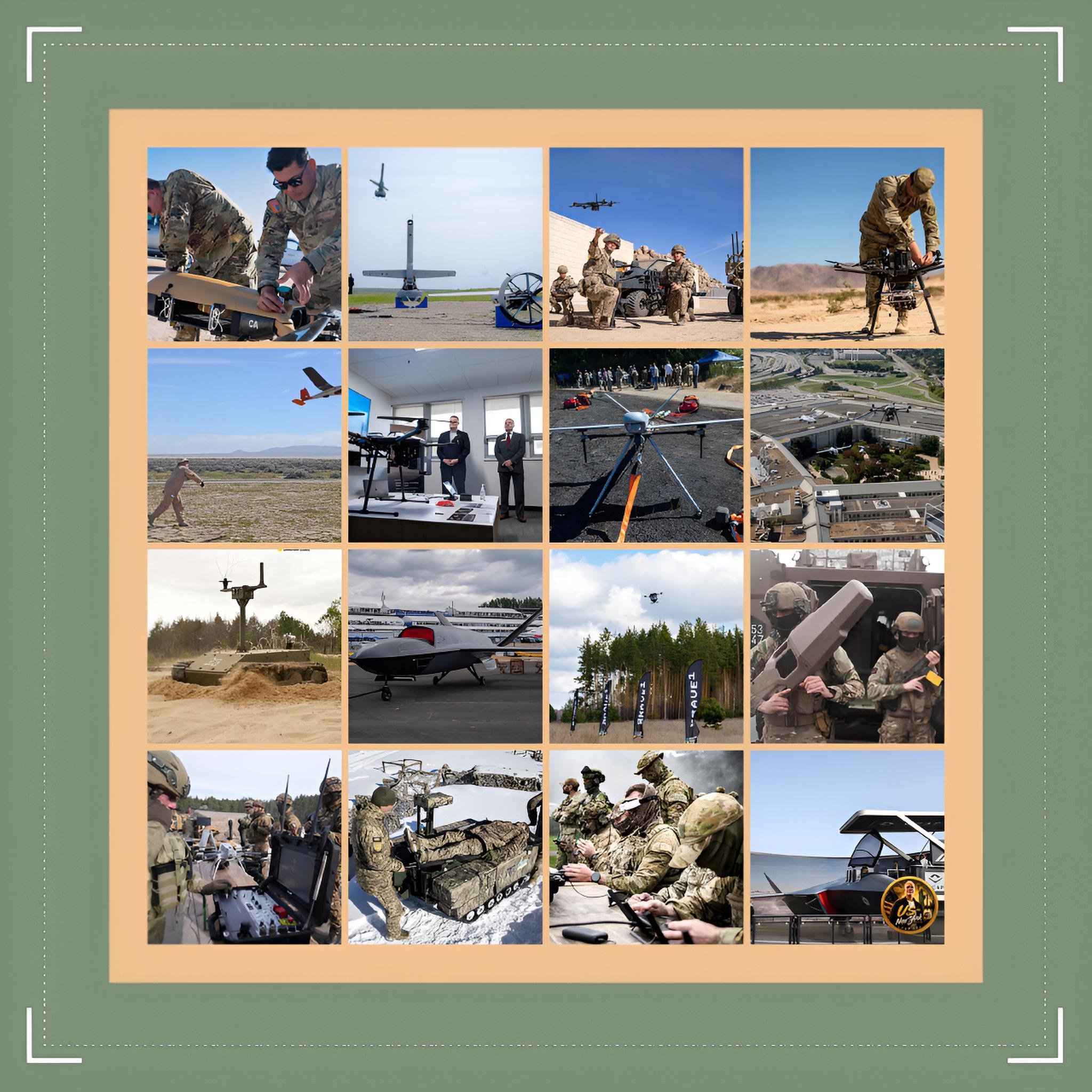
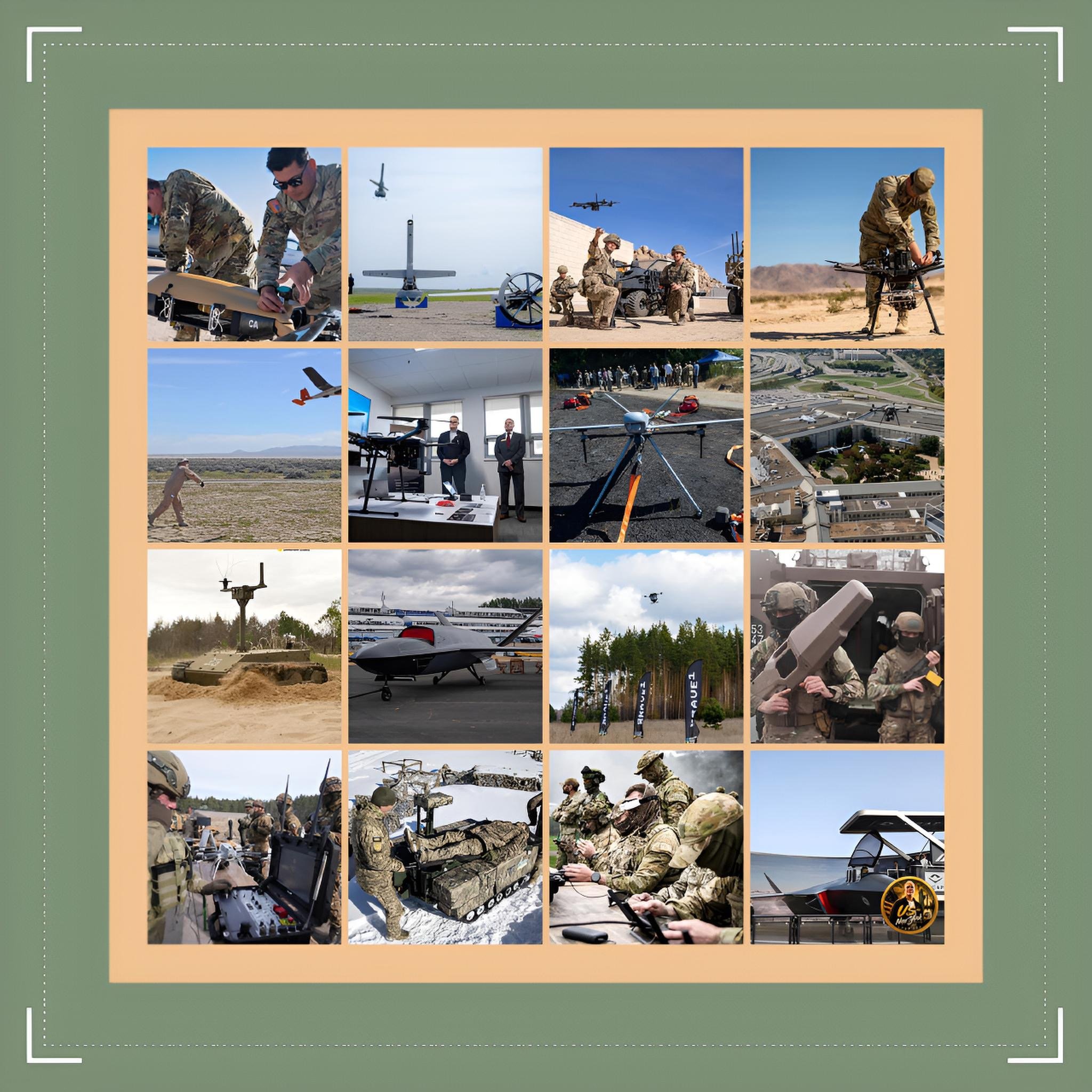
The operational lessons drawn from active conflict zones were, by 2026, informing procurement decisions at a speed that traditional defense acquisition cycles had never previously achieved. Military planners are no longer preparing for isolated regional conflicts. Instead, they are adapting to an increasingly complex environment where conventional warfare, cyber operations, space capabilities, electronic warfare, and artificial intelligence converge. This convergence was physically manifest at Farnborough 2026, where the exhibition halls contained not only the traditional display of aircraft hardware but sophisticated AI software platforms, electronic warfare suites, swarm coordination systems, and autonomous targeting architectures — all marketed to government procurement agencies operating under the pressure of active wartime demand.
Key Developments: The Technologies That Defined the Show
The GCAP Breakthrough and the Architecture of Sixth-Generation Air Power
No single announcement at Farnborough 2026 carried more strategic weight than the formal confirmation of the Global Combat Air Programme’s development contract. The United Kingdom, Italy, and Japan signed a £4.6 billion ($6.1 billion) contract to push their sixth-generation combat aircraft into its next design phase. The Global Combat Air Programme, or GCAP, is the trilateral effort to field a stealth fighter by 2035. The significance of the GCAP contract extended well beyond its financial magnitude. The programme represents the most ambitious attempt in contemporary defense history to pool national technological capabilities across three continents into a single coherent platform — one whose design philosophy is explicitly premised on the integration of artificial intelligence, autonomous drone command, and software-defined combat management.
The GCAP concept — a broad, clean delta wing — is meant to be the core of a wider system of systems, operating across air, land, sea, space, and cyber, and directing autonomous drones in combat. This architecture is not incidental to the platform; it is the platform. The sixth-generation fighter is, at its core, an AI coordination node — a crewed aircraft whose primary military value in the 2030s and beyond will derive not from its own kinetic capabilities but from its capacity to direct and manage networks of uncrewed systems operating across multiple domains simultaneously. The GCAP announcement thus embodied the broader thesis of Farnborough 2026: that the future of military aviation is inseparable from artificial intelligence.
The Royal Air Force laid out an aggressive timeline, with Air Marshal Sir Harv Smyth telling journalists that the RAF wished to become “Europe’s first sixth-generation air force,” a feat that would require fielding a sixth-generation formation before 2030.
BAE Systems’ Brontanax and the Collaborative Combat Aircraft Race
BAE Systems unveiled Brontanax, the United Kingdom’s first prototype autonomous Collaborative Combat Aircraft, developed at Warton, Lancashire, as part of the UK’s £300 million Storm Fighter program to deliver an operational capability before the end of the decade. Designed to operate alongside the Eurofighter Typhoon, the uncrewed aircraft provides electronic warfare and precision strike capabilities. The Brontanax represented something qualitatively distinct from earlier generations of remotely piloted aircraft: a system explicitly designed for semi-autonomous decision-making within a crewed-uncrewed teaming framework, capable of conducting electronic warfare suppression and precision strike without requiring continuous human authorization at the individual weapons release level. BAE Systems also introduced Blizzard, a new multi-mission uncrewed air system designed for intelligence collection, reconnaissance, electronic warfare, and precision strike operations.
Boeing showcased its flight-tested MQ-28 Ghost Bat alongside competing designs from Anduril, General Atomics, and Airbus, highlighting a growing race to field uncrewed combat aircraft. The emerging requirement centers on affordable sensor, electronic-warfare, and missile-carrying platforms that can extend the reach and survivability of crewed fighters under human control. The convergence of European and American manufacturers on this requirement confirmed that the Collaborative Combat Aircraft concept has moved decisively from research program to operational procurement priority. The market could demand hundreds of aircraft each year.
Anduril’s Thunder and the Commercial-to-Defense Technology Pipeline
Anduril unveiled Thunder at Farnborough 2026: a hybrid-electric autonomous tiltrotor built to fly with Apache helicopters, carrying up to seventy-six rockets and no crew. The Thunder was perhaps the most vivid illustration at Farnborough 2026 of the transformation in defense industrial supply chains. Anduril Industries is not a legacy defense prime; it is a technology company founded by Silicon Valley veterans who have applied commercial software development methodologies — rapid iteration, continuous deployment, AI-native architecture — to the design of military systems. The result is a platform with capabilities that would have required years of traditional defense acquisition to develop, produced in a fraction of the time and at a fraction of the cost of comparable legacy systems.
Anduril and Archer formally launched the Thunder at Farnborough, a Group Five autonomous tiltrotor aircraft billed as a loyal wingman for the Apache attack helicopter, with the operating concept envisaging three to six Thunders flying with each Apache. The operating concept was as significant as the hardware: not a single drone extending a single crewed platform’s capability, but a multiplier that fundamentally alters the force generation mathematics of attack aviation. A flight of Apaches accompanied by Thunder formations would present adversary air defense systems with targeting problems of an order of magnitude greater complexity than a conventional rotary-wing formation.
The Sovereign AI Imperative: Britain’s Lumen Sovereign
One of the most strategically consequential announcements of the show occurred not on the flight line but in the exhibition halls, where a coalition of Britain’s largest defense, banking, and infrastructure institutions signed on to help build the country’s first sovereign frontier AI model. BAE Systems, Babcock International Group, Thales UK, Leonardo UK, and Telefónica Tech UK have joined major financial institutions in signing memoranda of understanding to co-design the contracted AI model, named Lumen Sovereign, with the company targeting deployment readiness by the end of 2026. The Lumen Sovereign initiative was explicitly conceived to address the operational reality that for defense contractors, the pitch centers on operating in classified and air-gapped environments where relying on foreign-built AI has not been viable.
The sovereign AI initiative intersected with the broader theme of the UK government’s £62 million funding package to support homegrown space technologies, including satellite communications systems, in-orbit security capabilities, and emerging commercial space technologies — a move that reflects growing concern about dependence on overseas suppliers for strategically important infrastructure.
MBDA, General Atomics, and the Integration of Precision Strike
European defense firm MBDA is working with U.S. firm General Atomics to integrate the SPEAR miniature cruise missile onto the MQ-9B and Gambit Six unmanned aircraft, as displayed at the Farnborough airshow. The MBDA-General Atomics integration partnership exemplified the accelerating cross-Atlantic convergence of precision strike and autonomous platform technologies — a convergence driven partly by shared operational requirements emerging from the Ukraine conflict and partly by the recognition that European platforms need American autonomy software while American uncrewed systems benefit from European precision munitions expertise.
Latest Facts and Concerns: The Strategic Anxiety Beneath the Showcase
The Mass Production Problem
Beneath the showcasing of advanced technologies, Farnborough 2026 was haunted by a persistent and publicly acknowledged anxiety: that the Western defense industrial base remains structurally incapable of producing the quantities of advanced munitions and autonomous systems that real wartime consumption requires at the speed that active conflicts demand. Weapons makers entered their biennial event witnessing the biggest rise in European defense spending since the Cold War but with unresolved questions about where and how it will be spent.
Aerospace and defense manufacturers are struggling to meet weapons demand while trying to solidify a fragile recovery in commercial jet and engine production. This dual pressure — the need to sustain commercial production lines while simultaneously ramping military manufacturing — exposed a structural tension within the aerospace industry that no single contract announcement could resolve. Low stocks of Patriot missiles highlighted how far the West’s war production ramp-up remains from the levels that sustained attrition warfare would require, particularly when simultaneously supporting Ukraine, replacing missile stocks consumed in Middle Eastern operations, and building reserves for contingencies in the Indo-Pacific.
The Ethics of Autonomous Weapons and the Accountability Deficit
The proliferation of autonomous and semi-autonomous weapons systems on display at Farnborough 2026 intensified international debates that legal scholars and ethicists had been pursuing for a decade without reaching definitive conclusions. The crewed-uncrewed teaming architectures demonstrated by BAE Systems, Anduril, and Boeing all operated within frameworks in which human operators retained nominal command authority while autonomous systems made time-critical decisions — including, in many architectures, weapons employment decisions — at machine speed. Some industry leaders warned that defense technology startups developing drones and AI-powered targeting software could disrupt the industry, similar to how SpaceX transformed the launch business.
The international humanitarian law framework developed under the Geneva Conventions was designed for systems whose weapons employment is unambiguously attributable to an identifiable human decision-maker. When an autonomous tiltrotor selects and engages a target within a pre-authorized engagement envelope, the chain of accountability becomes diffuse in ways that existing legal instruments do not adequately address. Farnborough 2026 presented these systems to the world as mature products approaching operational deployment without providing corresponding visibility into the governance frameworks that would constrain their use.
The Dual-Use Dilemma and Technology Transfer Risk
The commercial-to-defense technology flow that characterized Farnborough 2026 — AI firms, commercial autonomy companies, and consumer electronics suppliers contributing components and architectures to military systems — introduced significant technology transfer vulnerabilities that traditional export control regimes were not designed to manage. In June 2026, the European Innovation Council Fund extended its funding mandate to include dual-use and defence-related technologies for investment opportunities worth over €1.4 billion. The expanding definition of dual-use technology accelerated the pace at which commercial innovations entered the defense supply chain, but it also created new vectors through which adversaries could acquire sensitive capabilities through commercial procurement channels that lacked the scrutiny applied to direct military sales.
Cause-and-Effect Analysis: The Systemic Logic Behind the Pivot
The defense orientation of Farnborough 2026 was not an autonomous event but the visible culmination of a series of reinforcing causal chains that had been developing across the preceding decade. Understanding those chains is essential to projecting their consequences with analytical precision.
The primary causal driver was the accumulation of active conflict experience that provided real-time feedback on weapons system effectiveness.
Ukraine has been running the world’s most advanced real-world laboratory for autonomous warfare since 2022, and European defense planners are reading the results in near real time.
The operational data emerging from Ukraine — documenting the effectiveness of first-person-view drones, the vulnerability of armored formations to autonomous munitions, the role of electronic warfare in degrading guided weapons, and the importance of software updates in maintaining battlefield superiority — was being processed by procurement agencies with a directness and speed that peacetime defense planning had never achieved.
This operational feedback loop produced a second-order effect: the rapid validation of technology concepts that had previously existed primarily in laboratory or simulation environments.
When AI-guided drone swarms demonstrated the ability to raise first-strike accuracy from below 20% to above 90% in operational Ukrainian conditions — as documented by the Auterion Skynode S chip’s battlefield performance — the investment case for autonomous systems shifted from speculative to empirically grounded. NATO committed $40 billion via its new Drone Edge Initiative, Germany funded fifty thousand AI-guided first-person-view drones for Ukraine, and Helsing raised $1.8 billion — all within weeks of each other in July 2026 — because the data had removed the uncertainty that previously justified procurement caution.
A third causal layer concerned the structural transformation of the defense technology supply chain.
The entry of Silicon Valley-heritage firms like Anduril Industries into defense procurement — firms that applied commercial software development methodologies to weapons system design — fundamentally altered the competitive dynamics of the industry. Tom Enders, president of the German Council on Foreign Relations and co-chairman of German defense startup Helsing, told Reuters that younger companies are aggressive and not risk-averse. He noted that these startups spend their own money and that procurement agencies are adapting to work with them. The consequence was a compression of the development cycle from years to months for software-defined systems, and the emergence of a competitive threat to legacy defense primes whose cost structures and acquisition timelines were calibrated to a procurement environment that no longer existed.
The effect of these converging causes on Farnborough 2026 was structural rather than incidental.
Companies that once specialised in commercial aerospace now invest heavily in artificial intelligence, cybersecurity, satellite communications, robotics, cloud computing, and autonomous technologies. The show’s physical geography — the addition of a sixth exhibition hall to accommodate defense and dual-use technology exhibitors — was the most tangible evidence that the industry had reorganized its priorities at a level below that of individual corporate strategy, at the level of the industry’s fundamental productive logic.
Dr. Antonio Bhardwaj, whose research on human-centered AI for geopolitical strategy has addressed precisely this intersection of autonomous systems and governance, framed the causal logic with characteristic precision: “The Farnborough pivot is the market’s response to a strategic environment that has been fundamentally repriced by conflict data. Governments are no longer buying defense capabilities against projected future threats — they are buying against demonstrated present requirements. That distinction changes everything about the pace, scale, and architecture of what gets procured. And when AI is embedded in the procurement logic itself, the feedback loop between capability and requirement tightens in ways that traditional arms control frameworks were not designed to manage.”
The commercial aviation sector, meanwhile, experienced its own consequential effects from the defense pivot, though they were more ambiguous in character.
Boeing and Airbus secured the first major orders for commercial airliners.
Among the major commercial deals were Irish lessor SMBC Aviation Capital’s order for one hundred Boeing 737 MAX aircraft and Riyadh Air’s purchase of six Airbus A350-1000 jets.
Commercial aviation remained commercially substantial — the aggregate deal value confirmed that the sector continued to generate enormous economic activity — but its status as the primary engine of aerospace innovation had been superseded. The most advanced engineering talent, the most intensive capital allocation, and the most urgent government attention were all concentrated in the defense landscape.
Future Steps: The Architecture of the Post-2026 Defense Aerospace Order
The strategic implications of Farnborough 2026 extend across multiple time horizons, each characterized by distinct policy challenges and technological trajectories.
In the near term, the most immediate consequence is the acceleration of Collaborative Combat Aircraft procurement across NATO member states. With the UK Defence Investment Plan having allocated £300 million to demonstrate a CCA capability before 2030, the RAF’s StormFighter programme is among the most advanced national CCA efforts in the Western alliance. Other NATO members face comparable pressures to develop or procure autonomous wingman capabilities within similarly compressed timeframes. The result will be an intensive period of competitive testing, industrial partnership formation, and capability demonstration over the next three to four years, culminating in initial operational deployments that will redefine the force structure of Western air power before the end of the decade.
In the medium term, the GCAP programme’s progression toward its 2035 fielding target will serve as the defining test of whether multilateral defense industrial cooperation can match the pace of capability development that bilateral or national programmes have historically achieved. The £4.6 billion development contract confirmed the political commitment of the UK, Italy, and Japan, but it did not resolve the deeper technical and industrial integration challenges inherent in developing a shared sixth-generation platform across three national defense industrial bases with distinct procurement cultures, industrial priorities, and technological strengths.
The sovereign AI imperative — crystallized at Farnborough 2026 by the Lumen Sovereign coalition — will become an increasingly prominent axis of defense industrial policy over the medium term. BAE Systems Group CTO Rob Merryweather framed the collaboration as a way to strengthen the UK’s industrial base while keeping critical AI capabilities under British control. As AI becomes progressively embedded in weapons employment decisions, targeting architectures, electronic warfare systems, and logistics optimization, the dependency of national defense capabilities on AI models developed and maintained by foreign commercial entities will become an unacceptable strategic vulnerability. The 2026 Farnborough Airshow marked the moment when this realization moved from theoretical concern to active industrial response.
The organizing body plans to further expand dedicated zones for dual-use technologies, space situational awareness, and sovereign defense manufacturing for the 2028 gathering. This institutional response confirmed that the shift witnessed in 2026 was not a temporary anomaly but a permanent reorientation — one that will intensify as geopolitical competition deepens, as AI capabilities mature, and as the operational lessons of active conflicts continue to inform procurement decisions with unprecedented granularity.
The longer-term trajectory extends toward a fundamental restructuring of the relationship between commercial and defense aerospace.
CFM International, the joint venture equally owned by GE Aerospace and Safran Aircraft Engines, announced substantial investments aimed at expanding its open maintenance, repair, and overhaul ecosystem, with GE Aerospace planning to invest more than $1 billion while Safran commits over €1 billion to this initiative. Such investments in commercial propulsion infrastructure confirmed that commercial aviation retained its economic weight, but the innovation leadership — and with it, the talent, capital, and strategic priority that innovation leadership attracts — had migrated decisively toward the defense sector.
The geopolitical implications of this migration will be profound.
Nations with strong commercial aerospace industries but weak defense industrial bases will find themselves increasingly dependent on external suppliers for the autonomous and AI-enabled capabilities that the 2026 landscape defined as essential. Nations with strong defense industrial bases but limited AI development capacity — as illustrated by the Lumen Sovereign initiative — will face strategic vulnerabilities in precisely the domain that is becoming most operationally consequential. The race to close these gaps, simultaneously and under time pressure, will shape alliance relationships, export control regimes, industrial policy, and strategic competition for the remainder of the decade.
Conclusion: The End of the Peacetime Aerospace Paradigm
The 2026 Farnborough International Airshow will be remembered as the moment the global aerospace industry formally acknowledged what geopolitical reality had been insisting upon for several years: that the peacetime paradigm of commercial aviation primacy was over, and that the industry’s most consequential work in the coming decade would be defined not by seat capacity and fuel efficiency but by autonomous capability, software-defined warfare, and the integration of artificial intelligence into every layer of military operational planning.
The global security environment is arguably more complex and volatile today than it has been in many, many decades, and security threats are evolving at a breakneck pace, as Air Chief Marshal Harv Smyth observed at the International Air Chiefs Conference immediately preceding the show. That assessment was not rhetorical; it was the operational context that explained the presence of autonomous attack rotorcraft, sixth-generation fighter prototypes, sovereign AI platforms, and directed-energy integration programs on the same exhibition grounds where leasing companies once announced widebody jet orders.
The transformation confirmed at Farnborough 2026 carries implications that extend far beyond the aerospace sector.
The acceleration of AI integration into weapons systems, the compression of development cycles through commercial technology methodologies, and the emergence of autonomous combat platforms approaching operational deployment together constitute a shift in the nature of military power itself — one whose governance challenges are as profound as its technological achievements. The industry demonstrated at Farnborough that it possesses the technical capability to build the systems that the 2026 security environment demands. Whether the international community possesses the institutional capacity to govern the use of those systems with the care that their consequences require remains, as of July 2026, an open and urgent question.
Dr. Antonio Bhardwaj, reflecting on the strategic architecture that Farnborough 2026 revealed, offered the observation that most precisely captures the moment’s significance: “What we witnessed at Farnborough was not a defense boom. It was a structural repricing of security. Governments have concluded that the cost of autonomous and AI-enabled military capability is lower than the cost of strategic vulnerability. When that calculation becomes universal, the entire ecosystem — industrial, technological, regulatory, and geopolitical — reorganizes around it. Farnborough 2026 was the moment that reorganization became publicly legible.”
The aerospace industry has reorganized. The question now is whether the political and diplomatic institutions responsible for managing the consequences of military technological transformation will achieve comparable coherence with comparable speed.