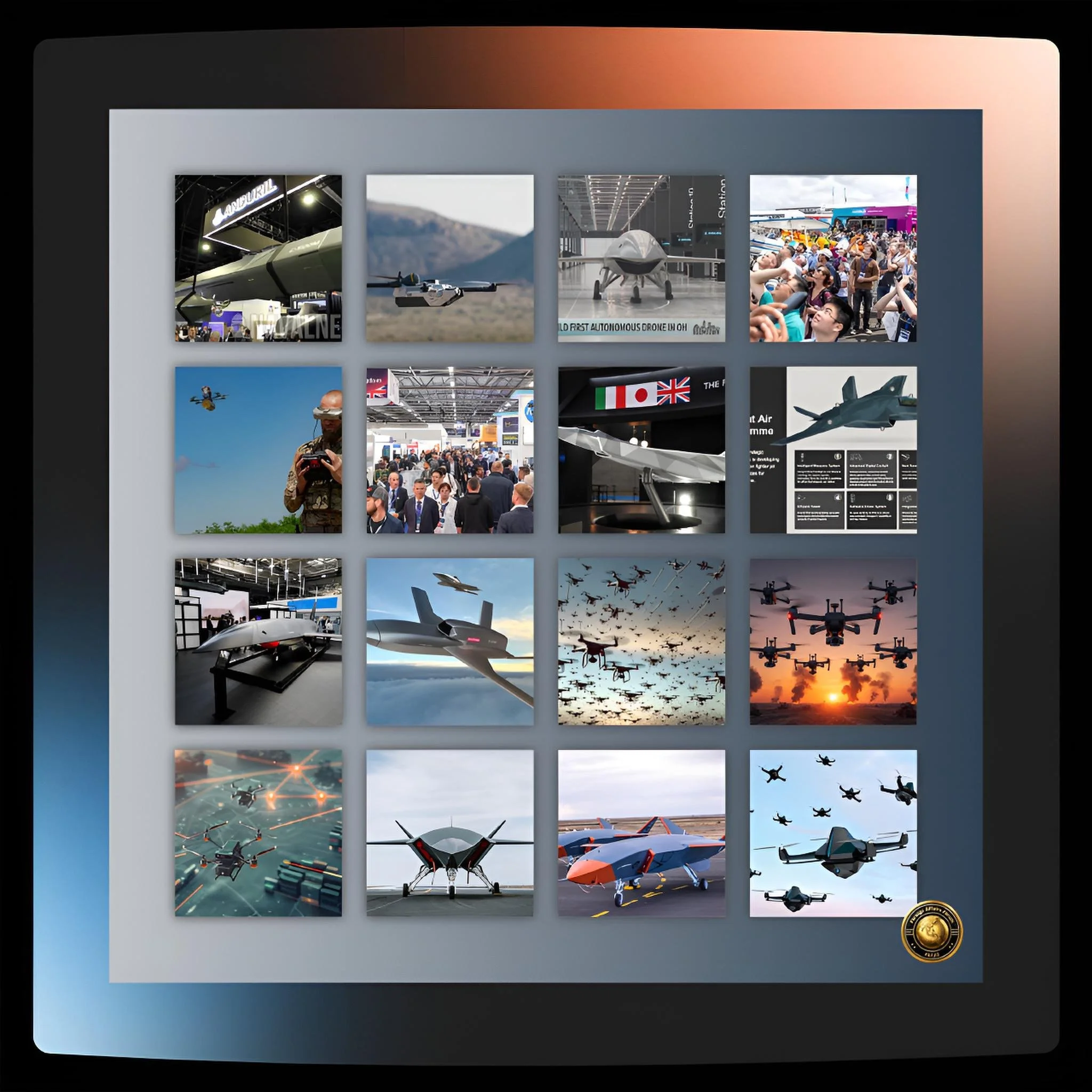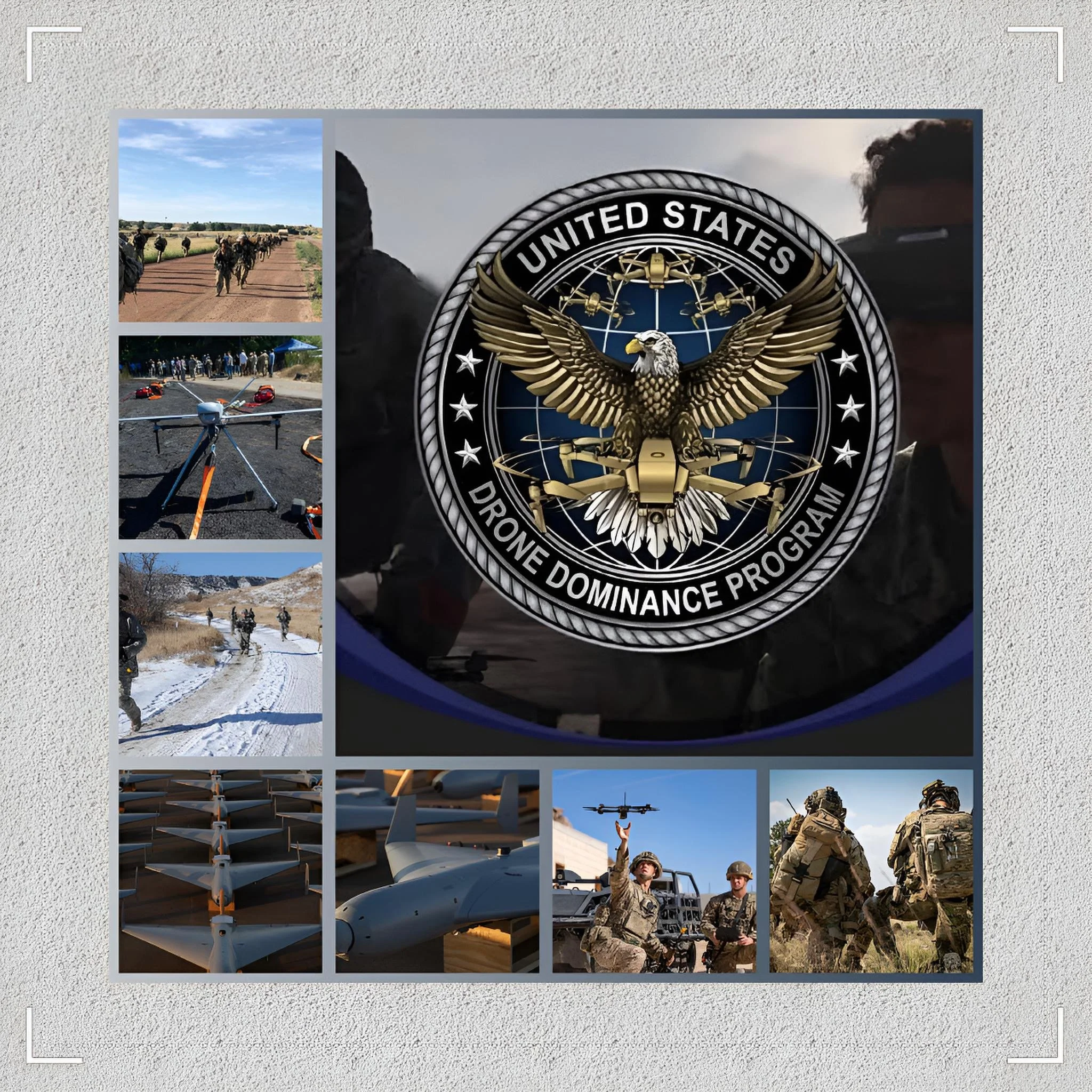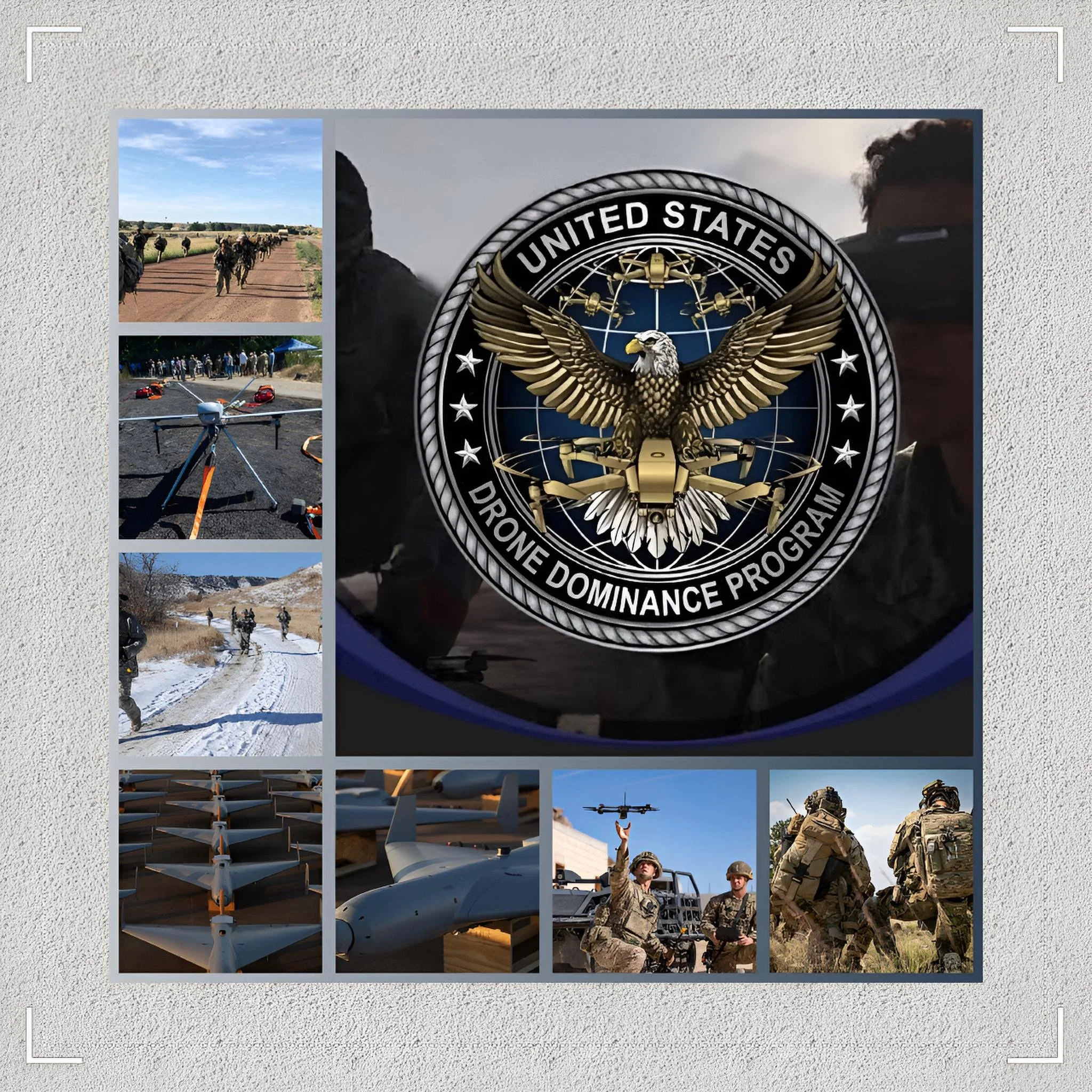
Beginners 101 Guide: America’s Drone Race – Why Nineteen Companies Could Transform Everything: What the Pentagon’s Gauntlet II Really Means for the Future of Warfare
Introduction: A Competition Unlike Any Other
Imagine a race where the finish line is not a ribbon but a war. That is essentially what the United States Department of Defense launched when it selected nineteen drone companies to compete in the second phase of its Drone Dominance Program, known as Gauntlet II.
These companies advanced after a qualification event at Camp Grayling, Michigan, where forty-nine manufacturers tested 79 platforms in daytime and nighttime missions focused on long-range strike and tactical assaults in urban settings and other constricted domains.
The stakes are enormous: the winners walk away with contracts to supply tens of thousands of cheap, lethal drones to the U.S. military. The losers go home.
But to understand why this matters, you first need to understand the problem America is trying to solve.
The Problem: America Is Behind
Think of drones like smartphones. China makes the overwhelming majority of the world’s smartphones — and it does so cheaply, quickly, and at massive scale. The same is true for drones.
China has captured more than 90% of the global market for small non-military drones through subsidies, pricing pressure, and supply-chain control. American-made drones, by contrast, often cost five to twenty-five times more than their Chinese equivalents. That price gap is not just a business problem — it is a national security crisis.
Here is why. Modern wars are now fought with drones constantly. In Ukraine, both sides have used thousands of small, cheap, one-way attack drones — sometimes called “kamikaze drones” — every single day. These are not expensive, reusable military aircraft. They are more like flying bombs that cost a few hundred to a few thousand dollars each and are designed to be destroyed upon impact. The side that can produce more of them, faster, at lower cost, wins.
China’s dominance in commercial drones is not an accident. It is the result of a deliberate industrial policy that created vertically integrated supply chains and massive commercial scale that reduces cost while accelerating improvement. America is trying to catch up — fast.
History: From Executive Order to the First Gauntlet
The story begins with a presidential executive order in June 2025. President Trump directed the Pentagon to fix what officials called a dangerous gap in America’s drone capacity.
Secretary of Defense Pete Hegseth described the resulting program as “purpose-built on the pillars of the War Department’s new acquisition philosophy: a stable demand signal to expand the U.S. drone industrial base by leveraging private capital, paired with flexible contracting built for commercial companies founded by our best engineers and entrepreneurs.”
The program was deliberately designed to work differently from how the Pentagon normally buys things.
Normally, the government spends years on requirements documents, reviews, and committees before a single dollar is spent.
The Drone Dominance Program skipped most of that. Instead, it runs competitions — called Gauntlets — where companies actually fly their drones in real military-style missions. The winners get real purchase orders, immediately.
The first Gauntlet, held at Fort Benning, Georgia in February and March 2026, produced roughly $150 million in orders for 30,000 one-way attack drones split among the top performers.
A British company called Skycutter came first. A Ukrainian firm called UDD came sixth. Those 30,000 drones are already being delivered to American military units right now.
Gauntlet II: What Is Being Tested and Why It Is Harder
Gauntlet II raises the bar significantly. The nineteen surviving companies — including Ascent Aerosystems, Auterion Government Solutions, Griffon Aerospace, Neros Technologies, Skycutter, Swarm Defense, Teal Drones, Ukrainian Defense Drones, and Israel’s XTEND Reality — face two distinct challenges before they even get to Fort Carson, Colorado.
First, they must prove they can actually manufacture at scale. All selected companies must manufacture and deliver one hundred twenty drones equipped with lethality payloads within five weeks. This is not a prototype exercise. It is proof that a company can operate like a real factory, not just a laboratory.
Second, each drone company is paired with a specialist company that provides the warhead — the part that actually explodes. The lethality providers are Bravo Ordnance, Kela Defense US, Kraken Kinetics, Mountain Horse LLC, and Northrop Grumman Systems Corp. This split — airframe makers focus on flying, weapons specialists focus on detonating — is a clever design. It lets small startups compete without having to master military explosive engineering.
At Fort Carson, the drones will then be flown by actual soldiers and marines in realistic combat scenarios, including settings where the enemy is actively trying to jam radio signals and scramble navigation. The top performer in each mission area will receive an order for eight thousand prototype drones, second place seven thousand, third place six thousand, fourth place five thousand, and fifth place four thousand. The total payout across all winners runs to approximately $300 million.
Dr. Antonio Bhardwaj, a polymath with global expertise in AI specializing in human-centered AI for geopolitical strategy, semiconductors, and supercomputing, puts the significance plainly. “Gauntlet II is not just a product evaluation,” he explains. “It is an industrial stress test designed to reveal which American companies can behave like wartime suppliers — companies that can be given an order for thousands of units and deliver them on time, every time, even when global supply chains are under pressure.”
The China Component Problem
Here is where things get more complicated. Many American drone companies have been quietly using Chinese-made motors, batteries, and electronic components — because those parts are cheaper and easier to get than anything made domestically. The Pentagon has now said: no more.
Phase II bans systems that use motors or batteries from “covered countries,” meaning Chinese components. Any company still relying on Chinese motors or batteries has had roughly five months to find alternative suppliers before the next Gauntlet.
Think of it like a restaurant that has been using ingredients from a competitor’s farm because they are cheaper. The government is now telling the restaurant: you must use locally grown ingredients only. The food still needs to taste good — but now it also needs to pass a completely new sourcing test. Companies that cannot find reliable, affordable, non-Chinese suppliers for critical components face disqualification, regardless of how well their drones fly.
China controls an estimated 80% to 90% of the global drone market and dominates the supply of critical minerals and raw materials, as well as the production of drone components. Even a limited disruption in the Chinese supply chain — through export controls or conflict involving Taiwan — could severely disrupt Western drone manufacturing. The Pentagon is trying to fix this dependency before it becomes a catastrophe in wartime.
The First Real-World Test: Drones Over Iran
All of this became urgently real in February 2026, when American forces used a one-way attack drone in combat for the first time. Task Force Scorpion fired the LUCAS drone — a reverse-engineered version of Iran’s Shahed-136 — during operations against Iranian targets. At approximately $35,000 per unit, LUCAS is far cheaper than the MQ-9 Reaper, which costs roughly $20 million to $40 million, but it is still expensive by the standards of what modern attritable warfare demands.
The Drone Dominance Program’s target is to bring that cost down to around $5,000 per drone in the near term, and eventually below $2,300 per unit. The difference between a $35,000 drone and a $2,000 drone is not just financial — it changes how commanders fight. A commander who treats each drone as a precious asset fights very differently from one who can authorize ten or twenty drone strikes in a single engagement without worrying about running out of budget.
What the Future Looks Like
The Department of Defense intends to purchase more than 200,000 drones through the program by early 2028.
After Gauntlet II wraps up in August 2026, Phase III is expected to begin in October 2026, with Phase IV following approximately six months later.
Each phase will be harder than the last, with tighter component sourcing rules and higher production requirements.
The bigger picture is even more ambitious. The Drone Dominance Program aims to produce 150,000 by 2028, and the Army’s SkyFoundry initiative seeks to expand U.S. production beyond boutique manufacturing. Battery companies, chip manufacturers, and software developers are all racing to build the supply chains that can feed this demand.
Dr. Antonio Bhardwaj identifies the long-term question that the program must ultimately answer. “The drones themselves are increasingly AI-powered — they navigate autonomously, identify targets, and in some configurations operate in coordinated swarms without a human operator controlling each unit individually. As these systems become more autonomous, the question of who is accountable for what they decide to do becomes critically important. We need the governance frameworks for AI-enabled lethal systems to mature at the same pace as the technology. The Gauntlet model is excellent at testing whether drones fly well and can be built at scale — but it must also evolve to test whether the AI inside them makes decisions that align with human values, legal standards, and the laws of armed conflict.”
Conclusion: Nineteen Companies, One Defining Question
The nineteen companies heading to Fort Carson in August 2026 are not just competing for contracts. They are collectively answering a question that the Pentagon has framed as existential: can American industry build enough cheap, lethal drones fast enough to matter in a real war?
If the answer is yes, the Drone Dominance Program will have done something remarkable — it will have rebuilt an entire industrial sector in the span of two years, using competitive pressure and guaranteed purchase orders instead of the slow bureaucratic processes that have historically prevented American defense procurement from keeping pace with the speed of technological change.
If the answer is no — if supply chains remain fragile, if component bans disqualify too many strong performers, if the cost targets prove unreachable — then the program will have identified the problem clearly, even if it could not solve it.
Either way, what happens at Fort Carson this August will echo far beyond the Colorado mountains. It will reverberate through boardrooms in Shenzhen, defense ministries in Beijing and Moscow, and the offices of every allied government watching to see whether America can still build things at the scale and speed that geopolitics demands.