America’s $1.1 Billion Drone Gauntlet: The Eleven Vendors Reshaping the Future of War, Capital Markets, and the Western Defense Industrial Base
Executive Summary
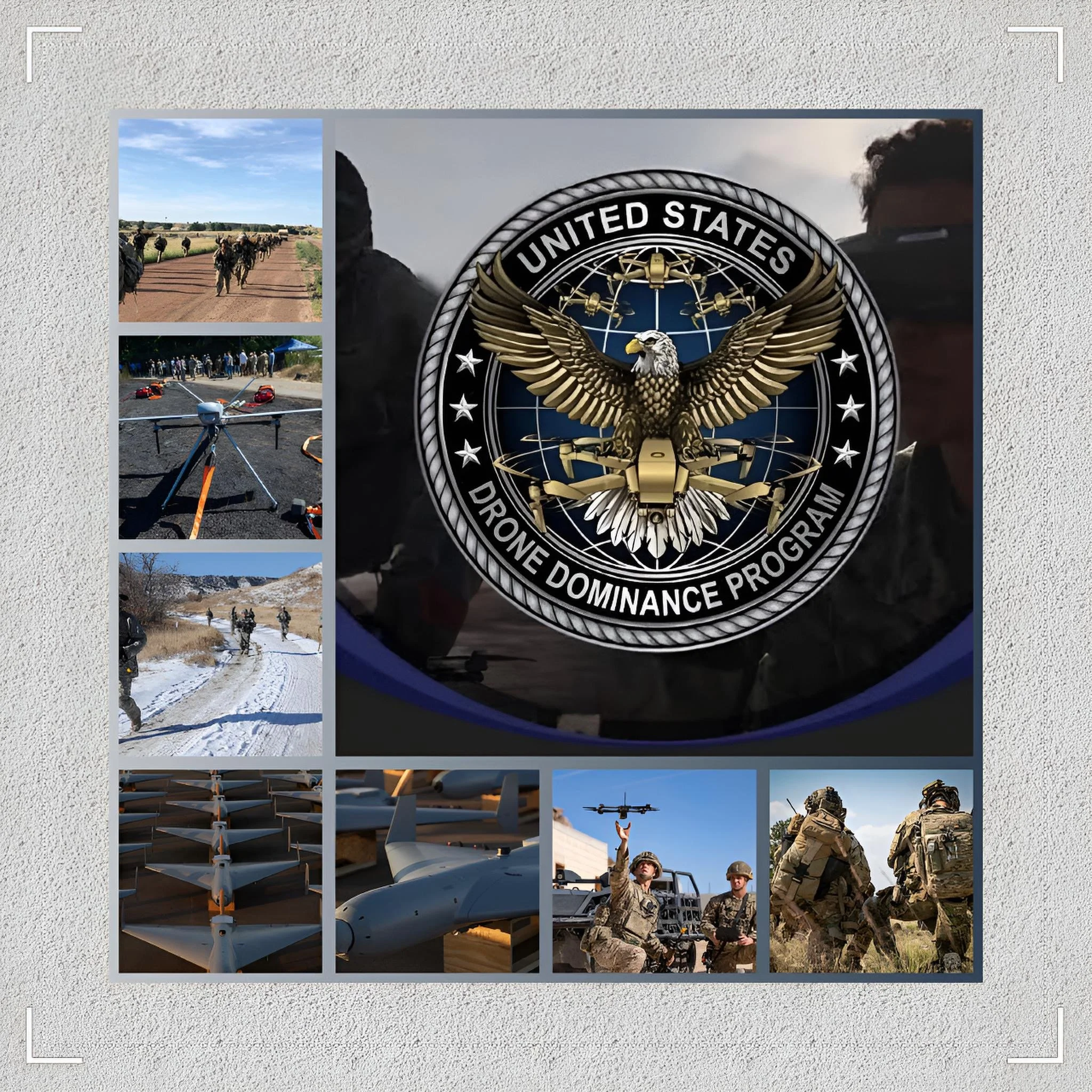
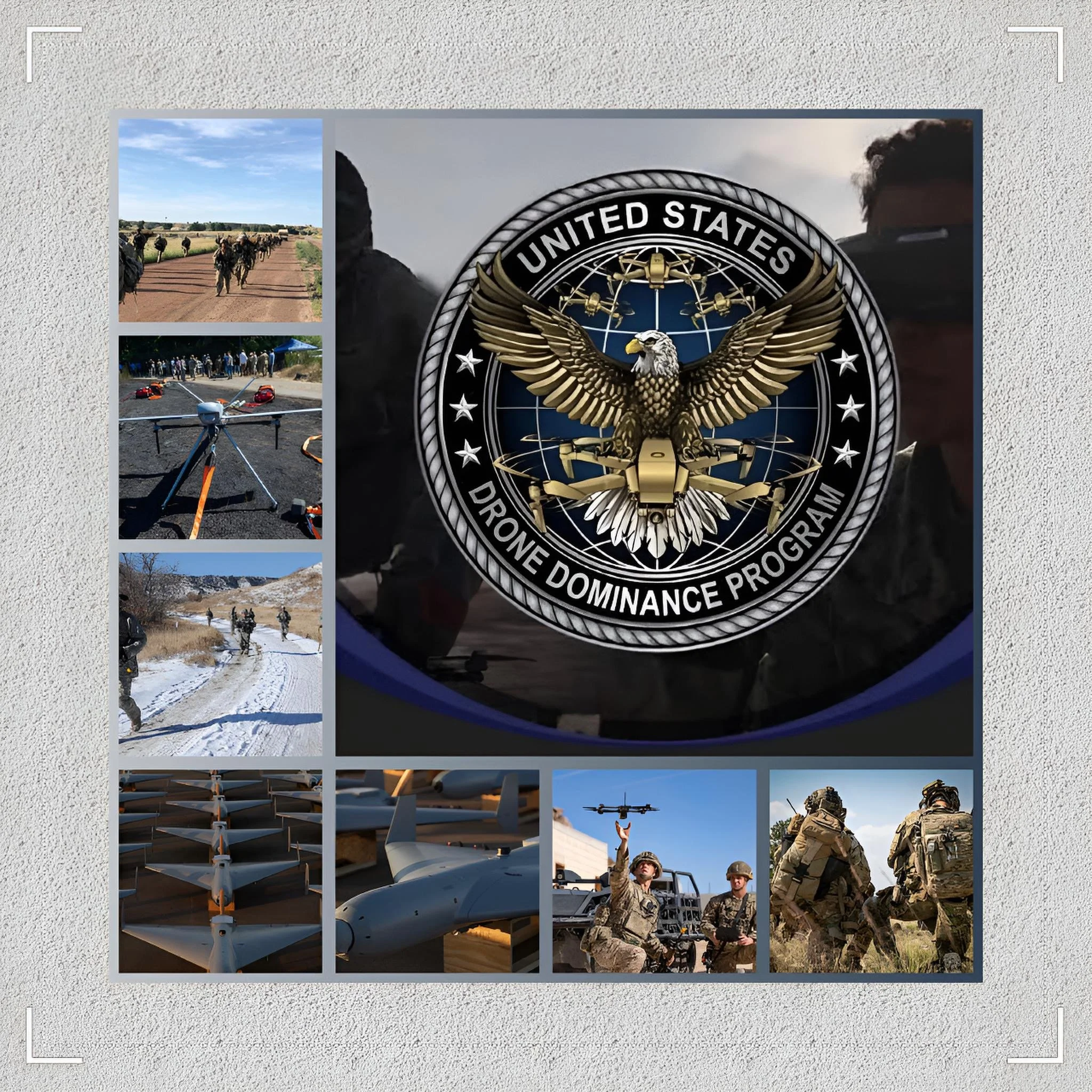
The Pentagon’s Drone Dominance Program, formally announced in December 2025 and structured under the authority of the United States Department of War, represents one of the most consequential defense procurement realignments in a generation.
With a cumulative funding signal of $1.1 billion distributed across four competitive phases, the program targets the acquisition of more than 340,000 low-cost, one-way attack unmanned aerial systems by 2027.
Eleven companies emerged from the first Gauntlet competition, held at Fort Moore, Georgia, in February and March 2026, earning the right to share $150 million in prototype orders for 30,000 systems.
These eleven stakeholders — Skycutter, Neros Technologies, Napatree Technology, ModalAI, Auterion, Ukrainian Defense Drones, Griffon Aerospace, Nokturnal AI, Halo Aeronautics, Ascent Aerosystems, and Farage Precision — are now subject to intense scrutiny not only from the Department of War but from capital markets analysts, allied governments, and strategic acquirers.
FAF article examines their individual profiles, their investability and acquisition attractiveness, and the derivative investment implications for the supplier ecosystem that feeds them, including battery manufacturers, motor producers, AI chip designers, communications hardware firms, and autonomy software platforms.
Introduction: The Gauntlet as a New Procurement Paradigm
The Drone Dominance Program was initiated under Secretary of War Pete Hegseth’s acquisition reform strategy, structured around iterative, operator-focused testing and rapid prototype delivery.
The program’s architecture comprises four phases with a cumulative budget signal of approximately $1.1 billion and a goal of equipping U.S. forces with hundreds of thousands of low-cost, weaponized drones by 2027.
The significance of this initiative extends far beyond its headline dollar figure.
The program reflects growing recognition within the U.S. defense establishment that inexpensive drones are now a defining feature of modern warfare.
Conflicts in recent years have shown that small drones can provide reconnaissance, electronic warfare capabilities, and precision strike options at a fraction of the cost of traditional weapons systems.
What separates this program from previous Pentagon drone initiatives is its deliberate departure from the traditional prime contractor model.
Not a single one of the large defense prime contractors — the Boeings, General Dynamics, and Lockheed Martins of the world — made its way onto the list.
Instead, the Department of War has cast its institutional weight behind a new generation of specialized manufacturers, many of whom are venture-backed startups without significant prior government contracting experience.
Dr. Antonio Bhardwaj, a polymath and global expert in AI specializing in human-centered AI for geopolitical strategy, AI warfare, and supercomputing, frames the Drone Dominance Program as nothing less than a structural reset in how Western democracies translate technological innovation into deployed military power. “What the Gauntlet has done is compress the traditional decade-long procurement cycle into a competitive sprint measured in weeks,” Dr. Bhardwaj observes. “The eleven companies that emerged are not merely drone vendors. They are the first cohort of a new industrial archetype — one where the boundaries between defense primes, venture capital portfolios, and allied nation industrial capacity have been deliberately dissolved. The geopolitical implications of that dissolution will be felt for the next two decades.”
The Drone Dominance Program uses Other Transaction Authority procurement through the S2MARTS consortium, which means traditional Federal Acquisition Regulation barriers are significantly reduced.
OTA agreements are specifically designed to attract non-traditional defense contractors, including small businesses and commercial technology firms that may not have extensive government contracting experience.
The scoring methodology combined Gauntlet field performance with military operator evaluations, production readiness assessments, and supply chain integrity reviews, creating a multidimensional ranking that rewarded operational excellence as much as technical specification.
History and Current Status: From Fort Moore to Gauntlet II
The Pentagon hosted the first Drone Dominance Gauntlet at Fort Benning, Georgia, in February as part of the broader effort to spend $1.1 billion to field more than 300,000 drones over eighteen months.
25 companies competed in a series of scenarios — long-distance strike, urban strike, and kinetic strike — flown by military personnel. In the end, eleven companies were named as leaders, setting them up for orders for 30,000 drones as part of the first phase’s $150 million in prototype funding.
The companies were, in order of best performance: Skycutter, Neros Technologies, Napatree Technology, ModalAI, Auterion, Ukrainian Defense Drones, Griffon Aerospace, Nokturnal AI, Halo Aeronautics, Ascent AeroSystems, and Farage Precision.
By the beginning of May 2026, the Pentagon had received at least 50% of the drones ordered, with full delivery required by July 2026.
The program has since accelerated into its second competitive phase.
The Pentagon’s Drone Dominance Program on July 1st said it invited 19 companies to compete in the final stage of its second challenge round in August with a chance to win production orders worth a combined $300 million.
The expansion from 11 to 19 finalists for Gauntlet II reflects the Department of War’s deliberate strategy of maintaining competitive pressure while widening the qualified industrial base.
Field evaluations are scheduled to run from August 2026 through January 2027, with a procurement target of 60,000 tactical drones to be allocated among 10 winners.
The Eleven: Company Profiles, Investment Status, and Strategic Positioning
Understanding the commercial and investment architecture of these 11 companies requires examining them through several lenses simultaneously: their current ownership structure, their production scalability, their supply chain integrity under the National Defense Authorization Act’s domestic content requirements, and their positioning within the broader consolidation wave that is already reshaping defense technology.
Skycutter occupies a singularly arresting position within the cohort. At the United States Army’s Fort Moore in Georgia, Skycutter achieved an unprecedented score of 99.3 out of 100.
The margin between Skycutter and the runner-up, Neros, stood at 11.8 points — a statistically significant variance in a field where the subsequent seven competitors were separated by fewer than three points.
Skycutter submitted a bid in partnership with Ukrainian tech company SkyFall, with which it has been working since 2022, using a modified Shrike 10 Fiber first-person view drone.
SkyFall’s portfolio includes its P1-Sun FPV interceptor drone and Vampire hexacopter, widely used in Ukraine against Russian targets.
The strategic significance of a British company claiming first place in a program designed to build American domestic industrial capacity has generated substantial tension within the program’s political architecture.
Skycutter is a British unmanned aerial systems company headquartered in the East Midlands, England, specializing in the design and manufacture of military-grade drone platforms, building a portfolio that spans long-endurance hydrogen fuel cell multi-rotors, heavy-lift intelligence, surveillance, and reconnaissance platforms, and low-cost one-way attack systems.
That result secured Skycutter an initial contract of $20 million for up to 2,500 drones, with the potential to scale toward $200 million as the program matures.
As a privately held company with no disclosed funding rounds, Skycutter presents a compelling but opaque investment profile; its absence from public markets and its lack of disclosed capitalization structure make it a prime acquisition target for a larger European or American defence group seeking validated, combat-architecture drone technology at a moment when sovereign governments are prepared to pay premium prices for proven performance.
Neros Technologies, finishing second with a score of 87.5 points, represents perhaps the most conventionally investable proposition in the cohort.
Neros is a defense technology company manufacturing low-cost expendable drones, founded by professional drone racers, having raised $121 million across three rounds from five investors, with approximately 50 employees based in El Segundo, California.
The company’s vertical integration strategy — building its own ground control stations and unmanned aerial systems under a single manufacturing architecture — and its NDAA-audited supply chain give it a structural advantage as the program moves into Gauntlet II’s hard domestic-content requirements.
The racing-culture origins of Neros’s founding team, accustomed to iterative engineering at extreme speed, have translated remarkably well into the Pentagon’s sprint-procurement model.
At $121 million raised but without a public listing, Neros sits precisely at the pre-IPO threshold that historically attracts both strategic acquirers from the aerospace sector and growth-equity investors seeking defense-market exposure ahead of a market listing.
Napatree Technology claimed third place with a score of 80.3 and, notably, received the highest operator-usability score in Gauntlet I, reflecting its emphasis on intuitive systems designed for military personnel with minimal training time.
This specific capability — the ability to field a system that warfighters can operate effectively after two hours of instruction — has emerged as one of the most consequential differentiators in the program’s evaluation framework.
For an investment perspective, Napatree remains almost entirely opaque in terms of disclosed financials or funding history, placing it firmly in the category of a company whose value lies primarily in its acquisition attractiveness to a prime contractor seeking human-machine teaming capability.
ModalAI, the fourth-ranked company, occupies a distinct position in the competitive landscape because it operates primarily as an enabling-technology platform rather than a pure-play drone manufacturer.
ModalAI builds flight computers, autonomous navigation systems, and software development kits that underpin the operations of multiple other companies in the drone ecosystem.
ModalAI’s GPS-denied navigation capabilities have been identified as a critical technical differentiator in electronic warfare scenarios, where RF-only platforms become inoperable under active jamming.
This cross-platform utility means that ModalAI’s commercial success is not solely dependent on its own drone manufacturing volumes but on the aggregate production of the broader industry cohort that licenses its technology.
That makes ModalAI uniquely positioned for either a standalone IPO leveraging a software-like revenue multiple or an acquisition by a defence prime seeking to embed autonomous navigation capability across an entire product family.
Auterion, finishing fifth, brings a distinctive organizational complexity to the cohort.
The company’s Swiss research and development roots and its California commercial operations create a dual-jurisdiction profile that complicates both NDAA compliance and acquisition scenarios but simultaneously enables access to European defense procurement markets that are now mobilizing their own drone industrial bases at speed.
Auterion has raised $25 million in venture-backed funding, offering enterprises and governments an ecosystem of software-defined drones, payloads, and applications within a single platform based on open-source standards.
The open-source foundation of Auterion’s architecture is a strategic double-edged instrument: it accelerates ecosystem adoption but creates intellectual property exposure that sophisticated acquirers will need to navigate carefully.
Ukrainian Defense Drones (UDD), finishing sixth, carries geopolitical weight that transcends its technical scoring.
Operating as the U.S.-based corporate vehicle for the Ukrainian manufacturer F-Drones, UDD’s flagship F10 tactical strike drone navigated the opening phase of the competition, officially qualifying for UAV supply lines to the U.S. Department of War.
The combat validation that Ukrainian drone technology carries — earned across three years of high-intensity operations against sophisticated Russian electronic warfare and air defense systems — represents a form of real-world testing that no laboratory evaluation can replicate.
However, UDD faces the highest supply chain remediation burden in the cohort, as its platforms carry deep Chinese-component dependencies in motors and batteries that represent a hard disqualification gate as the program moves into Gauntlet II.
The resolution of that supply chain dependency will determine whether UDD can translate battlefield credibility into enduring American defense contracts or whether it becomes a transitional platform superseded by more domestically aligned competitors.
Griffon Aerospace, the seventh-ranked company, brings legacy aerospace manufacturing credentials to a competition largely dominated by startups.
With existing Department of Defense manufacturing infrastructure and an established track record in target drone production, Griffon was one of only a handful of companies in the cohort to receive a “clean” supply chain assessment from program evaluators.
The Army has separately selected Griffon for its Launched Effects Long-Range program, contracted to deliver precision strike systems.
This dual-track positioning — appearing in both the Drone Dominance Program and the Army’s Launched Effects acquisition — dramatically enhances Griffon’s strategic value and creates a revenue diversification profile that makes it one of the most attractive acquisition targets in the entire cohort for a large aerospace prime seeking unmanned systems capability.
Nokturnal AI, ranking eighth, represents the cohort’s most explicit fusion of artificial intelligence with airframe engineering.
As its name suggests, the company’s competitive differentiation lies in AI-enabled autonomous targeting and navigation capabilities, particularly in low-light and contested electromagnetic environments.
The absence of public financial disclosures for Nokturnal AI suggests a very early-stage organization, but its program performance signals technology maturity that substantially exceeds what its organizational scale might imply.
For investors, Nokturnal AI represents the highest-risk, highest-potential-return proposition in the 11: either it scales rapidly on the back of Drone Dominance orders to become a compelling IPO candidate, or its technology gets absorbed by a larger platform through acquisition at a price that rewards its founders without delivering public-market returns to outside investors.
Halo Aeronautics and Farage Precision, finishing ninth and eleventh respectively, occupy the tail of the Gauntlet I leaderboard but remain within the program’s contract distribution framework.
Both companies face the most acute production scalability questions of any cohort members: neither has published public production data, and the sixty-thousand-unit requirement of Gauntlet II is likely to expose undercapitalized vendors.
Their primary investment thesis rests on technology differentiation rather than manufacturing scale, making them more logical acquisition targets for larger defence groups than standalone IPO candidates in the near term.
Ascent Aerosystems, finishing tenth, presents one of the most structurally differentiated profiles in the cohort.
Ascent was acquired by Robinson Helicopter Company in April 2024 and now manufactures its Spirit and Spartan coaxial platforms at Robinson’s FAA-certified facility in Torrance, California, while retaining its Massachusetts engineering team and its identity as the only U.S. coaxial unmanned aerial vehicle manufacturer.
The Robinson acquisition resolves the production scalability question that haunts other cohort members: Ascent now has access to FAA-certified manufacturing infrastructure with decades of rotorcraft production experience behind it.
Program evaluators awarded Ascent the “most production-ready” designation among all Gauntlet I participants.
From an investment perspective, Ascent is effectively already absorbed into a private company and is unlikely to pursue an independent IPO; its strategic value accrues directly to Robinson Helicopter’s balance sheet, making it a compelling asset for any investor seeking exposure to Robinson through private market channels.
Key Developments: Supply Chain Sovereignty and the China Displacement Imperative
The single most consequential operational development shaping the commercial futures of all eleven companies is the Department of War’s hard supply chain requirement.
In Gauntlet II, motors and batteries from foreign production will be excluded in order to protect the domestic supply chain.
This single policy decision has reordered the competitive landscape and created a multi-billion-$ opportunity for domestic component manufacturers that will prove more durable than the contracts won by any individual drone vendor.
The Phase II hard gate stipulates that motors and batteries from covered countries, specifically China, are disqualifying. Companies have approximately four months from Gauntlet I results to restructure their supply chains.
Already assessed as clean are Neros, audited under NDAA standards, Griffon with its aerospace supply chain, and Ascent with its domestic manufacturing infrastructure.
High-risk companies include Ukrainian Defense Drones with its deeply Chinese-dependent bill of materials, Auterion with a complex open-architecture sourcing audit requirement, and any company relying on T-Motor or iFlight brushless DC motors.
This creates a derivative investment thesis of considerable power.
The companies that supply NDAA-compliant motors, batteries, communications hardware, and AI flight controllers to the eleven Gauntlet winners are positioned to benefit regardless of which vendor ultimately receives the largest share of program contracts.
Unusual Machines (NYSE American: UMAC) has emerged as the most visible publicly investable beneficiary of this dynamic.
UMAC supplies key components to over half of Drone Dominance program winners, positioning it as a beneficiary regardless of which OEMs win contracts.
UMAC reported first-quarter results for fiscal 2026 showing sales growth of 296.4% year-over-year to $8.10 million, with its largest customer accounting for approximately 19% of Q1 revenue while its top-selling product accounted for about 12.7% of revenue.
Roth Capital analysts have initiated coverage with a Buy rating, and the stock has attracted a consensus “Strong Buy” from the majority of analysts covering it.
UMAC has further announced the acquisition of DroneNX LLC, known as Upgrade Energy, expanding via the $52 million Upgrade Energy acquisition and new production facilities, aiming for vertical integration and market share gains in both defense and commercial drone sectors.
Doodle Labs, a supplier of radio modules used in at least seven of the Drone Dominance program participants, has also emerged as a critical communications infrastructure beneficiary.
As the program’s electronic warfare resilience requirements escalate — with Gauntlet II introducing active jamming scenarios that will stress RF-dependent platforms — the premium commanded by fiber-optic guidance systems and spectrum-resilient communications hardware will increase correspondingly.
Silvus Technologies and TrellisWare, which manufacture the mesh radio systems required for multi-drone single-operator command and control, are similarly positioned to benefit from every dollar of program expansion.
In the artificial intelligence and edge compute segment, the requirement for GPS-denied navigation and autonomous target acquisition creates structural demand for specialized AI inference chips and companion software frameworks.
Qualcomm’s RB5 flight platform, upon which ModalAI’s systems are built, has become an indirect beneficiary through ModalAI’s competitive success.
The broader implication for the semiconductor industry is that the drone dominance program is creating a new end-market for edge AI processors operating under military qualification standards — a market that sits adjacent to but distinct from the commercial autonomous vehicle and industrial robotics segments that currently anchor AI chip demand forecasting.
Latest Facts and Concerns: The Gauntlet II Competitive Landscape
The United States Department of Defense has selected nineteen companies to advance to Gauntlet II of its $1.1-billion Drone Dominance program, bringing them a stage closer to competing for production orders totaling 60,000 small-class one-way attack unmanned aerial systems.
The companies advanced after a qualification event at Camp Grayling, Michigan, where 49 manufacturers tested 79 platforms in daytime and nighttime missions focused on long-range strike and tactical assaults in urban settings and other constricted domains.
All 11 Gauntlet I winners — Skycutter, Neros, Napatree, ModalAI, Auterion, Ukrainian Defense Drones, Griffon Aerospace, Nokturnal AI, Halo Aeronautics, Ascent Aerosystems, and Farage Precision — advanced to the Gauntlet II final alongside eight new entrants including XTEND Reality, which completed its merger-based Nasdaq listing via JFB Construction at a valuation of $1.5 billion.
XTEND is participating in Gauntlet II with its STRIKER platform, an XOS-powered indoor mission system purpose-built for tactical operations in complex, GPS-denied environments.
The expansion of the competitive field introduces a set of concerns that capital markets observers must weigh carefully.
The entry of AeroVironment and Kratos into Gauntlet II’s broader field signals that established publicly traded defence companies have recognized the existential stakes of exclusion from what is effectively the U.S. military’s foundational drone procurement pipeline for the remainder of the decade.
AeroVironment’s recent $117 million Army contract for P550 unmanned aircraft systems and its $1.1 billion order backlog as of early 2026 demonstrate that the prime contractor tier is not conceding the market.
If AeroVironment or Kratos advances significantly in Gauntlet II, the valuation premiums currently being attached to the eleven Gauntlet I winners may be compressed by the competitive re-entry of better-capitalized rivals.
A separate structural concern involves the geopolitical sensitivity of Skycutter’s first-place finish.
The program was explicitly designed to strengthen American domestic industrial capacity, yet its leading performer is a British company.
Congressional scrutiny of this dynamic has intensified, with some lawmakers questioning whether a program funded under the “Big Beautiful Bill’s” domestic spending provisions should generate its most lucrative contracts for a foreign-domiciled entity.
Skycutter’s announced plans to establish U.S. manufacturing capacity represent a partial answer to this concern, but the timeline and scale of that expansion remain undisclosed.
Dr. Antonio Bhardwaj offers a more expansive reading of these tensions. “The discomfort about Skycutter’s dominance reflects a broader category error in how Western governments think about defense industrial sovereignty,” he argues. “In an era of AI-enabled autonomous systems, the decisive advantage no longer lies in where a chassis is assembled. It lies in who controls the guidance software, the training data architecture, the electronic warfare resilience engineering, and the autonomous decision protocols. Skycutter’s victory is a signal that the United Kingdom’s drone engineering ecosystem has produced something genuinely superior at this moment. The question for American policymakers is not whether to penalize that superiority but how to absorb it into an alliance-level industrial framework that distributes production while concentrating the most sensitive intellectual property within FVEY jurisdictions.”
Cause-and-Effect Analysis: Investment Flows and Industrial Consequences
The Drone Dominance Program has already generated demonstrable market consequences across multiple asset classes.
The first-order effect is the direct contract revenue flowing to the eleven winners.
At $150 million for 30,000 units, the average per-company allocation at equal distribution would be approximately $13.6 million — a meaningful revenue event for startups but insufficient to support the production scale-up required for Gauntlet II volumes at 60,000 units.
This creates an immediate financing pressure that is already manifesting as investor interest in companies that have previously operated below the radar of institutional defence investors.
The second-order effect is the supplier uplift dynamic that Unusual Machines exemplifies.
Over half of the selected companies are UMAC customers.
The program continues to run on schedule with Phase 2 dates already set, and the sourcing requirements favor U.S. production of components.
The mathematical elegance of the supplier position is that it captures value from the entire competitive field rather than betting on the success of any single drone vendor.
This position is structurally analogous to the “picks and shovels” strategy that historically generated superior risk-adjusted returns during previous technology waves: while individual drone manufacturers will win and lose market share through the Gauntlet iterations, every winner must purchase motors, batteries, communications hardware, and AI chips from a domestic supplier base that is simultaneously supply-constrained and demand-driven.
The third-order effect is the M&A acceleration that the program’s validation framework enables.
The Gauntlet scoring system functions, inadvertently or by design, as a due diligence proxy for potential acquirers.
A company that scores 80 points or above in a live military evaluation conducted by actual warfighters has demonstrated operational credibility that no investment banker’s pitch deck can manufacture.
Griffon Aerospace’s dual appearance in Drone Dominance and the Army’s Launched Effects program makes it a particularly compelling acquisition target for a European aerospace group seeking American production infrastructure and validated combat-relevant technology.
Auterion’s open-source platform position makes it attractive to any prime contractor seeking to embed standardized drone operating system capability across a product portfolio.
ModalAI’s enabling-technology architecture makes it an ideal bolt-on acquisition for a semiconductor company seeking to extend its AI inference silicon into the military unmanned systems market.
The fourth-order effect, and perhaps the most geopolitically significant, is the normalization of Ukrainian defense technology within the American procurement system.
UDD’s sixth-place finish, and Skycutter’s partnership with SkyFall, have effectively inserted combat-validated Ukrainian drone engineering into the most heavily scrutinized defense acquisition program the United States has launched in a generation.
If Gauntlet II produces Ukrainian-affiliated winners at production scale, the political and strategic arguments for deeper NATO-aligned defense industrial integration will be materially strengthened — with implications that extend far beyond the drone sector into artillery ammunition production, electronic warfare systems, and armour.
Future Steps: The Path to Gauntlet II and Beyond
From Gauntlet II, up to twelve vendors will be selected to deliver 60,000 drones at a lower per-unit ceiling, the opening salvo toward a target of 340,000 weaponized drones by 2027.
The financial architecture of the subsequent phases — with cumulative program value reaching $1.1 billion — creates a long-duration revenue visibility that is unusual in defence startup financing and that is already beginning to attract the attention of growth equity and cross-over investors who have historically avoided early-stage defence companies because of the binary risk of contract loss.
For the eleven Gauntlet I companies specifically, the immediate strategic imperatives are threefold.
First, supply chain remediation: every company with residual Chinese-component exposure must achieve domestic substitution before the August Gauntlet II evaluation or face disqualification.
Second, production scaling: the transition from prototype orders of several hundred units to production orders measured in tens of thousands requires manufacturing infrastructure investment that will demand significant capital infusion, whether through venture rounds, strategic partnerships with established aerospace manufacturers, or direct acquisition.
Third, retention of the technical talent that produced the Gauntlet I performance scores, in an environment where every major defence prime and technology company in the United States is simultaneously competing for the same engineering profiles.
Mismash, the Drone Dominance program director, has stated that the gauntlets will be ongoing competitions — the 14 companies cut in the first round can incorporate feedback and compete for the next round.
This iterative architecture means the program functions less like a traditional defence contract and more like a continuous market mechanism, permanently pressuring winners to improve and permanently offering losers the chance to return.
For investors, this creates a more volatile but ultimately more merit-driven allocation of capital than the traditional cost-plus contracting model.
The longer investment horizon extends to 2030 and 2036, when the implications of this program’s industrial choices will have compounded into either a robust domestic unmanned systems sector or a fragmented landscape of contract-dependent vendors without durable competitive moats.
The companies that use the Drone Dominance Program as a launchpad for commercial diversification — moving from military one-way attack systems into civilian logistics, infrastructure inspection, emergency response, and autonomous delivery — will be the ones whose investment cases survive beyond the inevitable cyclicality of defence spending.
Companies that remain purely military procurement-dependent will find themselves exposed to the political risk of administration changes, budget sequestration, and the shifting strategic priorities that have historically disrupted every defence technology wave within a decade of its emergence.
Dr. Antonio Bhardwaj situates this within his broader framework for understanding AI-enabled geopolitical competition. “What we are watching in the Drone Dominance Program is the earliest phase of a shift that will eventually encompass every dimension of kinetic and non-kinetic military capability,” he contends. “The eleven companies that survived the first Gauntlet are not merely winning procurement contracts. They are establishing the design standards, the training data architectures, the electronic warfare resilience protocols, and the human-machine teaming interfaces that will define autonomous combat systems through the 2030s. The nations whose companies set those standards will exercise a form of soft-power leverage over allied militaries that is qualitatively different from — and more durable than — the leverage that flows from weapons sales under the traditional foreign military sales framework.”
Conclusion: A New Industrial Order Measured in Kilowatt-Hours and Inference Cycles
The eleven companies that survived the Pentagon’s first Drone Dominance Gauntlet represent something more consequential than the winners of a well-funded defence procurement competition.
They are the founding cohort of a new industrial archetype in which startup engineering velocity, combat-validated technology, and open-architecture software platforms have demonstrated decisive superiority over the institutional advantages of established aerospace primes.
The capital market implications of that demonstration are still being digested by investors who built their defence equity frameworks around Lockheed Martin contract cycles, Boeing production schedules, and Raytheon missile system backlogs.
The publicly investable surface area of the eleven companies themselves is currently thin: most are private, undisclosed in their capitalization, and in the early stages of transitioning from prototype delivery to production scale.
The more immediately accessible investment thesis runs through the supplier ecosystem — through UMAC’s NDAA-compliant motors and batteries, through communications hardware platforms embedded across multiple cohort members, through AI inference chip architectures that enable GPS-denied autonomous navigation, and through autonomy software companies like Swarmer whose combat-validated swarm coordination algorithms are now attracting institutional capital at valuations that reflect the strategic premium the market is placing on proven military AI software.
What stands out about the list of Gauntlet I winners is that it is largely composed of specialized drone manufacturers rather than the major aerospace and defense contractors that have historically dominated military aviation procurement.
This structural displacement is not temporary.
The OTA procurement pathway that enabled these companies’ selection has been deliberately preserved and expanded by the Department of War precisely because it consistently produces better military outcomes than the traditional FAR-based contracting system at a fraction of the cost and timeline.
The companies that have now been validated through the Gauntlet process carry a form of institutional credibility that will prove durable across multiple program cycles, multiple administration changes, and multiple international procurement competitions.
The investment case, ultimately, rests on a single empirical observation: modern warfare is being progressively redefined by the mass deployment of low-cost, AI-guided, autonomous systems.
The nations and companies that lead that redefinition will accrue both military advantage and economic returns on a scale that the current market valuations of even the most prominent drone-adjacent public companies do not yet adequately reflect.
The Drone Dominance Program, imperfect and incomplete as its first iteration inevitably is, has done something of lasting significance: it has revealed which organizations are actually capable of building the hardware, software, and industrial systems that this redefinition requires.
The eleven companies that emerged from Fort Moore in March 2026 are the answer to that question, for now.