Beginners 101 Guide: The AI Power Contest Comes Out in the Open: What Happened in Shanghai and Why It Changes Everything
Summary
A Simple Summary of a Very Big Moment
Imagine two countries building two completely different versions of the internet — their own rules, their own equipment, their own allies — and refusing to connect them.
That is roughly what is happening right now with artificial intelligence.
And this week, a massive conference in Shanghai, China made it more official than ever before.
Here is what happened, why it matters, and what comes next — explained as simply as possible.
What Is WAIC and Why Did It Matter This Year?
WAIC stands for the World Artificial Intelligence Conference.
China has held it every year in Shanghai since 2018. Usually, it is a big technology show where companies display their latest AI products, a bit like a very large electronics fair.
This year was completely different.
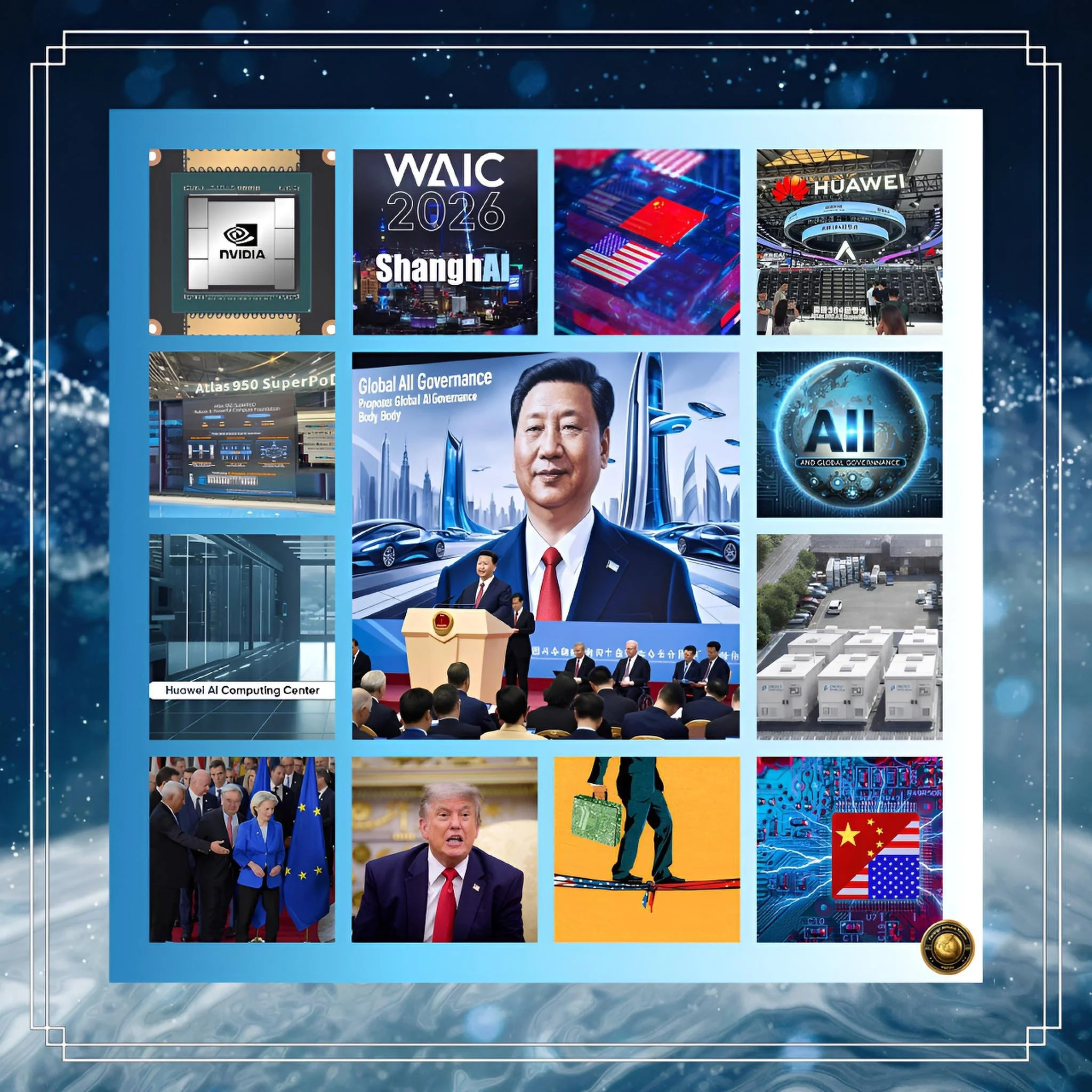
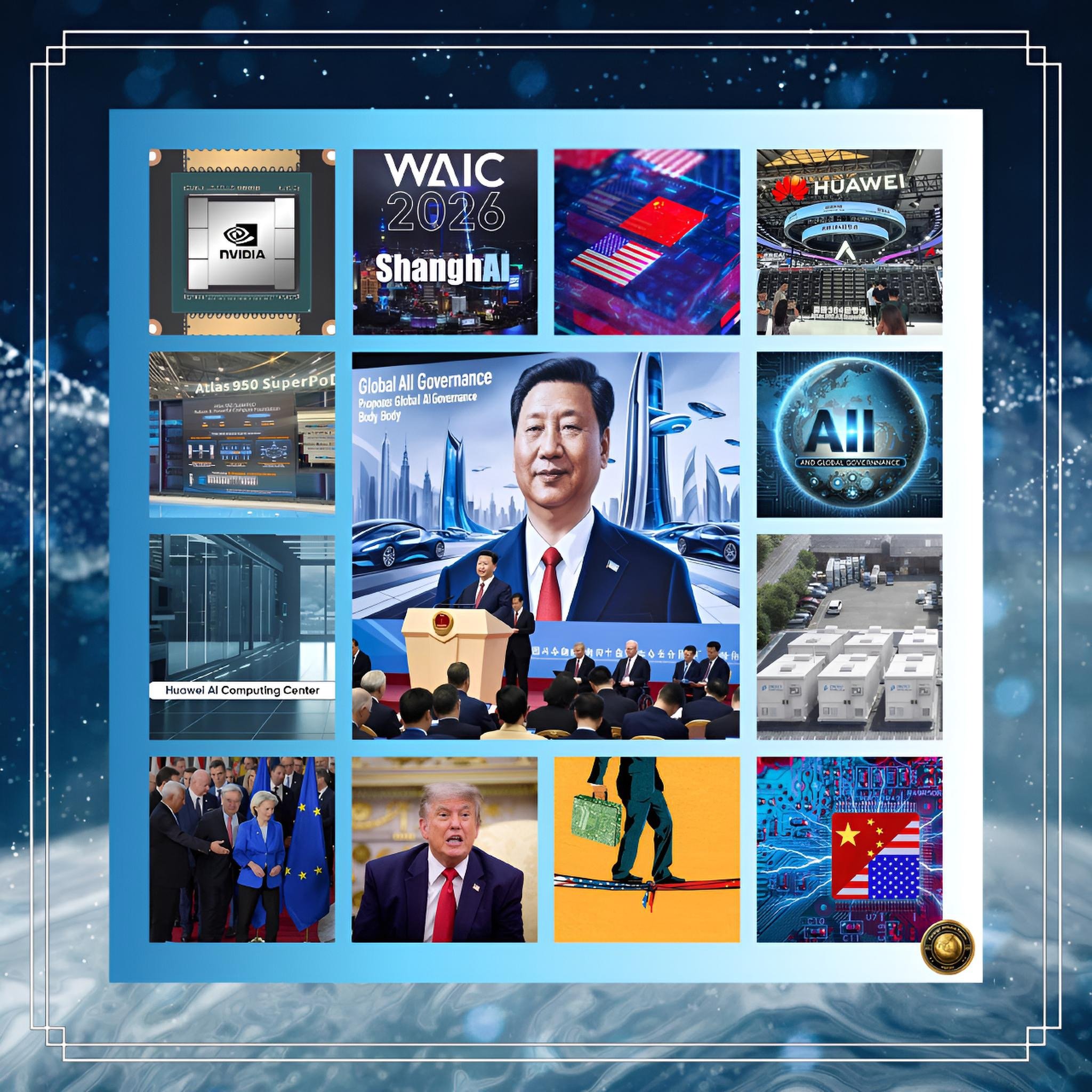
For the first time since the conference began, Chinese President Xi Jinping attended in person and delivered the opening keynote address.
Previously, Xi had sent letters of congratulation while lower-ranking officials ran the event.
This is roughly like the difference between a school principal sending a note home versus showing up personally on the first day of school. It signals that something has changed in terms of priority and seriousness.
Why the change?
Because China now sees artificial intelligence not just as a technology business but as the central battleground of global power.
Xi’s participation elevated WAIC into a forum of global consequence, signalling that AI is no longer just a matter of technological progress but a central pillar of China’s international strategy.
Dr. Antonio Bhardwaj, a researcher who studies how AI shapes world politics, puts it plainly: “When a head of state personally shows up to an AI conference for the first time, that is not a ceremonial gesture. That is a declaration that the stakes have changed.”
China’s New Club: The World AI Cooperation Organization
The biggest news from Shanghai was not a new gadget or a faster computer chip. It was the founding of a new international organization.
The World AI Cooperation Organization, known as WAICO, was formally established, with the signing of its founding agreement taking place the day before WAIC opened.
The organization will be headquartered in Shanghai.
Think of WAICO as China’s answer to Western AI clubs.
Right now, most AI governance — meaning the rules about how AI is built and used — happens in organizations that the United States and Europe dominate, like the G7 group of wealthy nations and the EU’s regulatory bodies.
Most countries in Asia, Africa, Latin America, and the Middle East have little or no say in these rules.
WAICO drew 29 founding nations, including Russia and a range of emerging economies from the Global South, such as Kazakhstan, Indonesia, Pakistan, and Laos, as China positioned the organization as a counterweight to US AI governance.
China’s pitch to these countries is simple: join us, and we will give you access to AI technology, training for your workers, and — most importantly — a seat at the table when the world’s AI rules are written.
China has framed AI as a public good accessible to all nations, and WAICO as a mechanism to ensure equitable access to computing power, data, and talent across the Global South.
This is smart diplomacy. Many countries feel left out of the Western-dominated AI conversation.
China is offering them an alternative home.
China’s Homemade Chips: Better Than Expected
Now here is the part that directly affects the technology race.
The United States has spent years trying to stop China from getting the most advanced computer chips, which are essential for building powerful AI systems.
The thinking was: if China cannot buy the best chips, it cannot build the best AI.
That strategy has had mixed results.
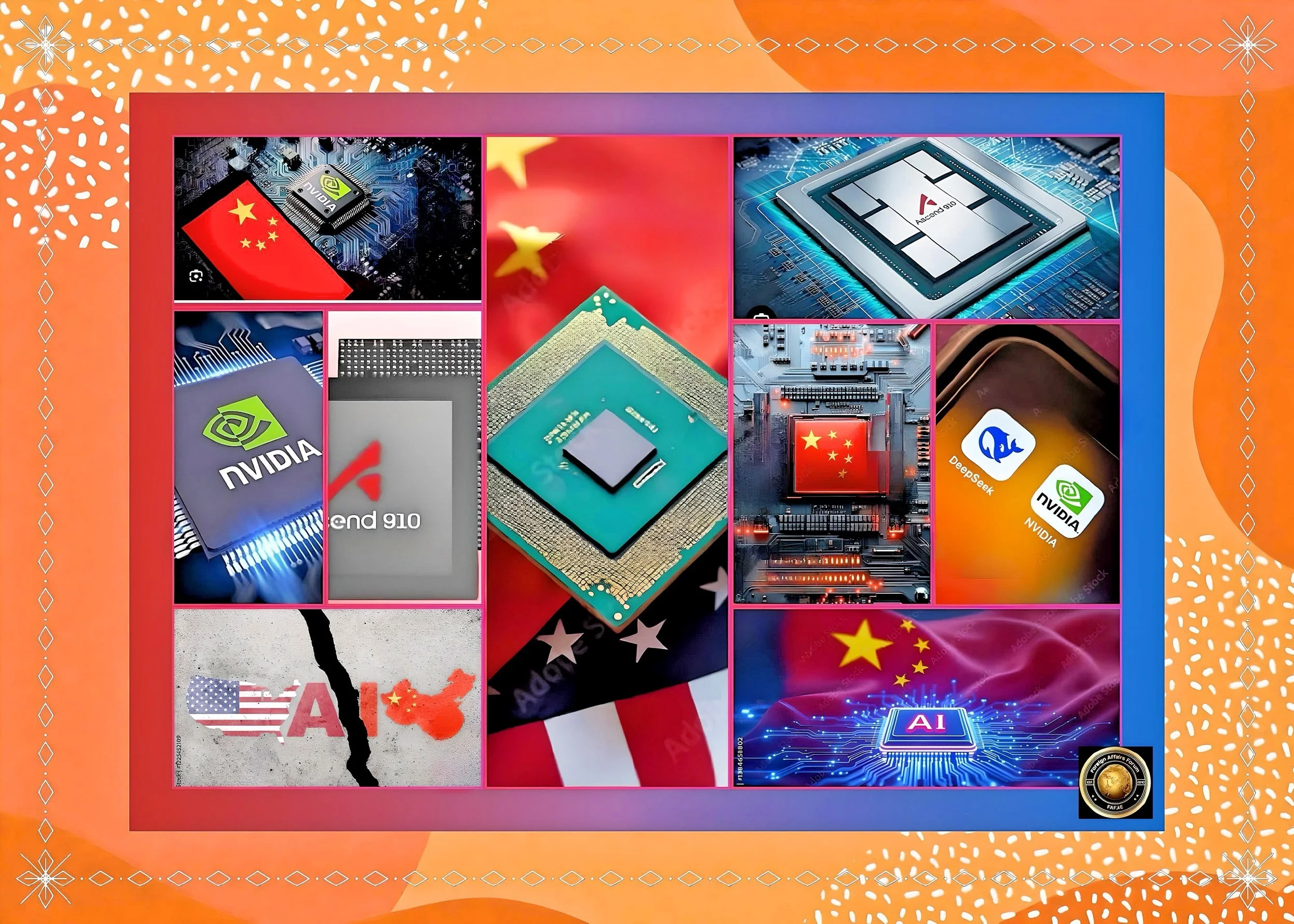
Huawei has launched the Ascend 950PR, a chip that delivers 2.8 times the performance of Nvidia’s H20 on certain AI tasks — making it the most capable chip available to Chinese AI buyers by a wide margin since the H20 was banned from export to China.
Here is a simple way to think about it.
Imagine America banned China from buying the fastest sports cars. So China built its own car factory. The cars it makes are not quite as fast as the absolute best American vehicles — the raw compute gap between China’s Ascend chip and Nvidia’s best Blackwell chip is roughly 13 times in favor of the American chip at the individual processor level — but China compensated by linking thousands of its chips together into massive computing clusters, which is like running a hundred ordinary cars in formation to compete with a single supercar.
Huawei founder Ren Zhengfei told President Xi that his network of more than 2,000 Chinese companies is collectively working to ensure China achieves self-sufficiency of more than 70% across the entire semiconductor value chain by 2028.
That is a remarkable claim — and even if the actual number falls somewhat short, the direction of travel is clear.
Huawei’s Atlas 950 and 960 computing clusters, equipped with 8,192 and 15,488 chips respectively, compensate for individually weaker processors by combining them at enormous scale, and can outperform competing systems for certain tasks like AI inference even if they fall behind in others.
AI inference is the work of running an AI model to answer questions or produce content — which is what most real-world AI applications actually do, as opposed to the initial training of a model.
Dr. Antonio Bhardwaj frames the semiconductor story in strategic terms: “China has demonstrated that the export control strategy, while it has imposed real costs, has not achieved its principal objective of capping Chinese AI capability. What it has done is created one of the largest state-directed technology mobilizations in modern history.”
America’s Response: More Controls, More Complexity
Washington has not been standing still.
The US Commerce Department confirmed that additional regulatory action targeting chips and AI is forthcoming, continuing its pattern of using the Bureau of Industry and Security as the primary vehicle for restricting the flow of advanced semiconductors.
The rules have been shifting frequently.
A January 2026 rule changed the export policy for H200-class chips from automatic denial to case-by-case review, but with strict conditions requiring exporters to provide extensive certifications about who is buying the chips and what they will be used for.
Separate guidance clarified that restrictions on AI chip exports to Chinese companies apply even to their subsidiaries located outside China — so a Chinese company cannot simply set up an office in a third country to buy restricted chips.
For companies in the cloud computing business or those building large AI data centers anywhere in the world, this creates genuine compliance headaches.
The rules are complex, frequently changing, and carry severe penalties, including in some cases criminal prosecution for violations.
The Money: Who Is Building What
One of the clearest signs that AI has become the defining technology competition of our era is the amount of money being spent on the physical infrastructure that makes AI run — data centers, computer chips, networking cables, and the power plants needed to run them all.
The five largest US technology companies — Microsoft, Alphabet, Amazon, Meta, and Oracle — collectively committed to spending between $660 billion and $690 billion on infrastructure in 2026, nearly doubling their spending from the previous year.
To put that in perspective: $690 billion is more than the entire annual GDP of countries like Switzerland or Saudi Arabia. It is being spent in a single year, primarily on AI infrastructure.
Roughly 75% of that capital, approximately $450 billion, targets AI infrastructure specifically, including data centers, high-powered computer chips, and the networking equipment that connects them.
Goldman Sachs projects that total hyperscaler capital expenditure from 2025 through 2027 will reach $1.15 trillion.
Why does this matter?
Because whoever builds and owns the world’s AI infrastructure holds an enormous practical advantage.
Just as the nation that controlled the most steel mills had a structural advantage in the industrial era, the nation or company that controls the most AI computing capacity has a structural advantage in the AI era.
The Safety Question: Everyone Agrees Something Must Be Done, Nobody Agrees What
One area where Western leaders have been unusually vocal is AI safety — the question of how to prevent very powerful AI systems from being misused or causing unintended harm.
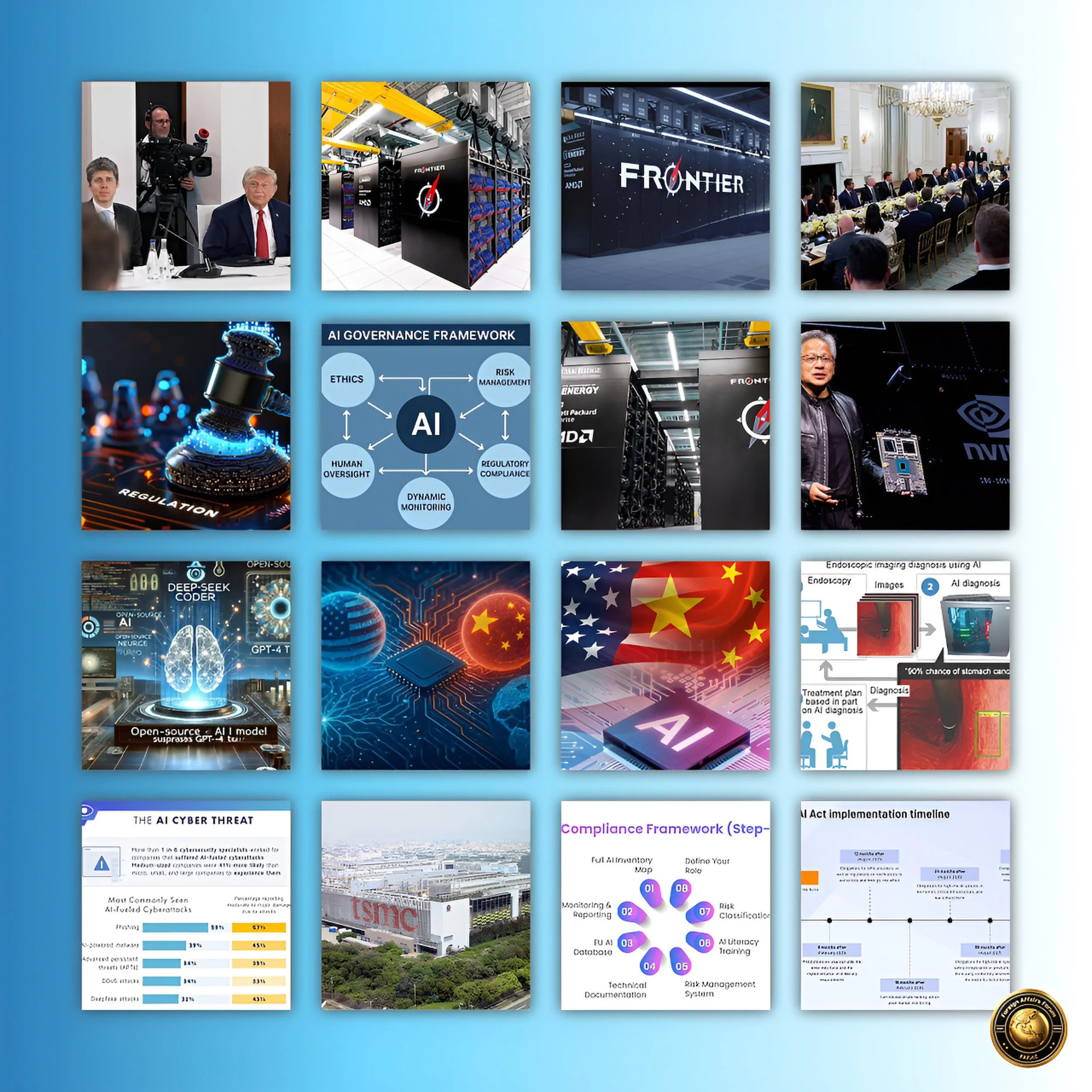
Bank of England governor Andrew Bailey called for international cooperation on frontier AI, warning that the United States cannot achieve its security aims alone and needs coordinated international testing of the most powerful AI models before they enter wider circulation.
On the same day, Google DeepMind’s chief executive Demis Hassabis published a detailed proposal.
Hassabis called for the US to establish a new AI watchdog with the power to screen the world’s most advanced models and coordinate an industry-wide slowdown if dangers mounted.
He described current AI-driven risks as warning shots and warned that within eighteen months, capabilities posing grave biological and nuclear threats could exist inside open-source models beyond any government’s control.
Here is the obvious problem: a Western safety framework that China does not join does not actually make the world’s most powerful AI systems safe. It just governs some of them.
The tension between these competing governance visions — Western-led watchdogs versus WAICO’s sovereignty-based framework — is unlikely to be resolved quickly.
What This All Means
The performance gap between the best American and Chinese AI models has collapsed to just 2.7%, compared to a gap of between 17.5 and 31.6 % in May 2023.
America still leads, but the lead is now measured in fractions.
Meanwhile, China has founded a new international organization with 29 members, is building its own chip supply chain, and is investing $100 billion in domestic AI data centers.
The United States and its allies are spending hundreds of billions more, but on an infrastructure buildout that increasingly depends on sustaining a global coalition willing to accept American technology standards and export control requirements.
The competition is real, the stakes are enormous, and the rules are being written right now. As Antonio Dr. Bhardwaj sums it up: “The decisions made in Shanghai and Washington this week will shape who leads in AI by 2036. That means they will shape who leads, full stop.”