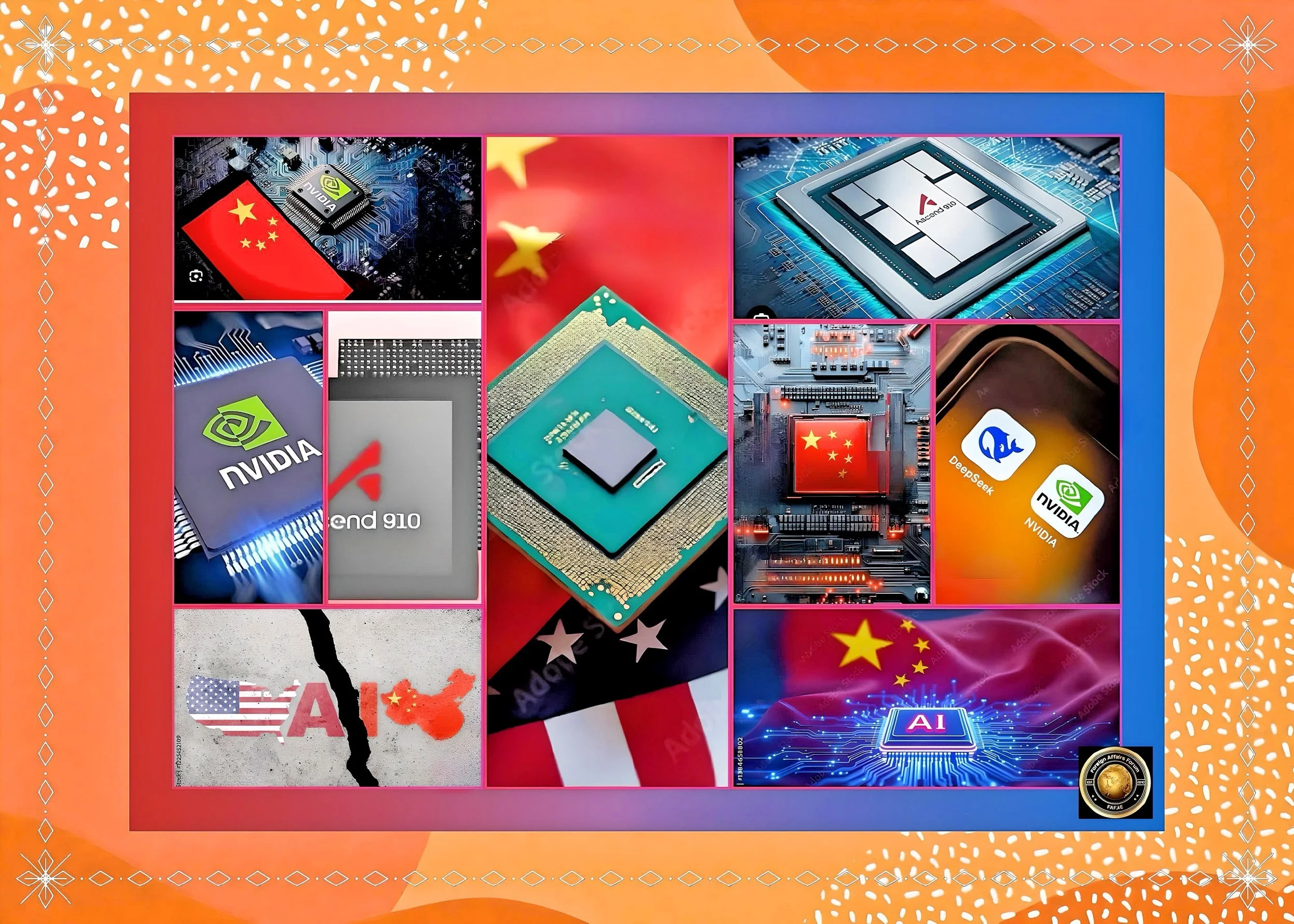
China’s Response to Nvidia Export Restrictions and Semiconductor Self-Reliance
Introduction
The latest escalation in US-China tech tensions has significantly impacted the global semiconductor industry.
Nvidia’s recent export restrictions have catalyzed an accelerated push for semiconductor self-sufficiency in China.
These developments represent a critical juncture in the ongoing technological competition between the world’s two largest economies, with far-reaching implications for innovation and production worldwide.
US Export Restrictions and Their Impact on Nvidia
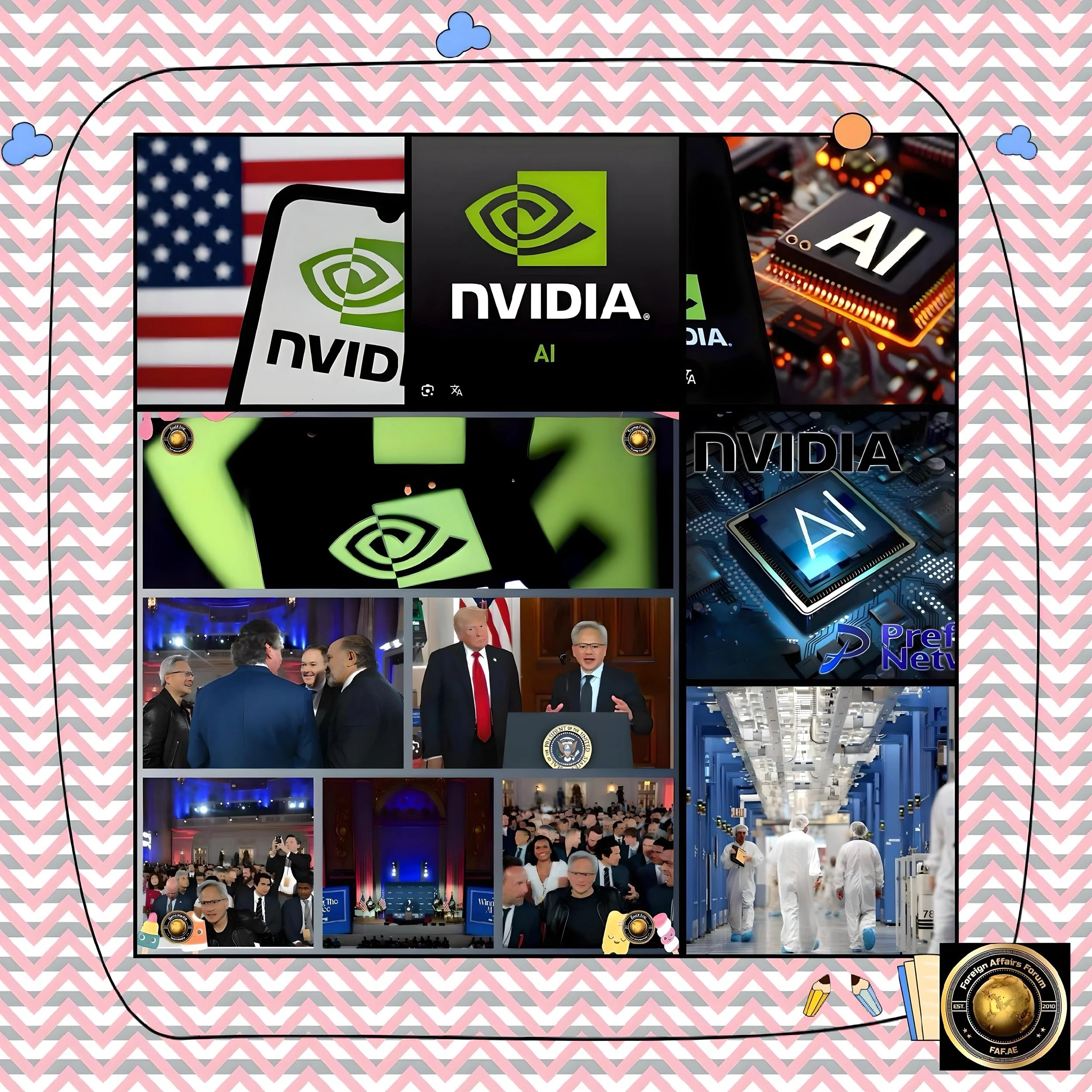
On April 9, 2025, the US government informed Nvidia that it would need to obtain a license to export its H20 AI chips to China, effectively restricting access to Nvidia’s most advanced AI processor legally available in the Chinese market.
This decision is part of Washington’s broader effort to limit China’s access to advanced AI technology.
Washington cites national security concerns that these chips could potentially aid Chinese military applications.
Nvidia specifically engineered the H20 chip to comply with previous US export controls imposed in 2022 and updated in 2023.
Despite these design accommodations, the Trump administration maintained the restrictive approach established by the previous Biden administration’s Framework for Artificial Intelligence Diffusion.
As a result, Nvidia announced it would take a substantial $5.5 billion charge in its first quarter of fiscal year 2026, with its stock dropping 6% in extended trading following the announcement.
Nvidia CEO Jensen Huang has publicly urged the US government to reconsider these restrictions, arguing that current policies hinder American companies’ ability to capitalize on global opportunities.
In a media statement, Huang emphasized, “We need to accelerate the diffusion of American AI technology around the world.
The administration's policies and encouragement need to support that.”
He further warned that “China is not behind. Are they ahead of us? China is right behind us. We’re very “ underscoring the competitive dynamics at play.
China’s “Vocal for Local” Semiconductor Strategy
In response to these restrictions, China has intensified its push toward semiconductor self-reliance with a “vocal for local” approach.
The Chinese government has been actively encouraging domestic technology companies to prioritize locally produced AI chips over foreign solutions like those from Nvidia and AMD.
While no official ban has been placed on Nvidia’s China-tailored H20 GPU, Chinese companies have received informal guidance to favor homegrown alternatives such as those developed by Huawei Technologies.
This shift represents China’s broader strategy to reduce dependence on foreign technology, particularly in critical sectors like artificial intelligence and high-performance computing.
The government’s push has coincided with the rapid growth of the global AI chip market.
Taiwan Semiconductor Manufacturing Co’s CEO has projected that the AI chip sector will expand much faster than the overall semiconductor industry, highlighting the strategic importance of these components for future technological advancement.
Domestic Chipmakers Rising to the Challenge
Huawei’s Accelerated Chip Development
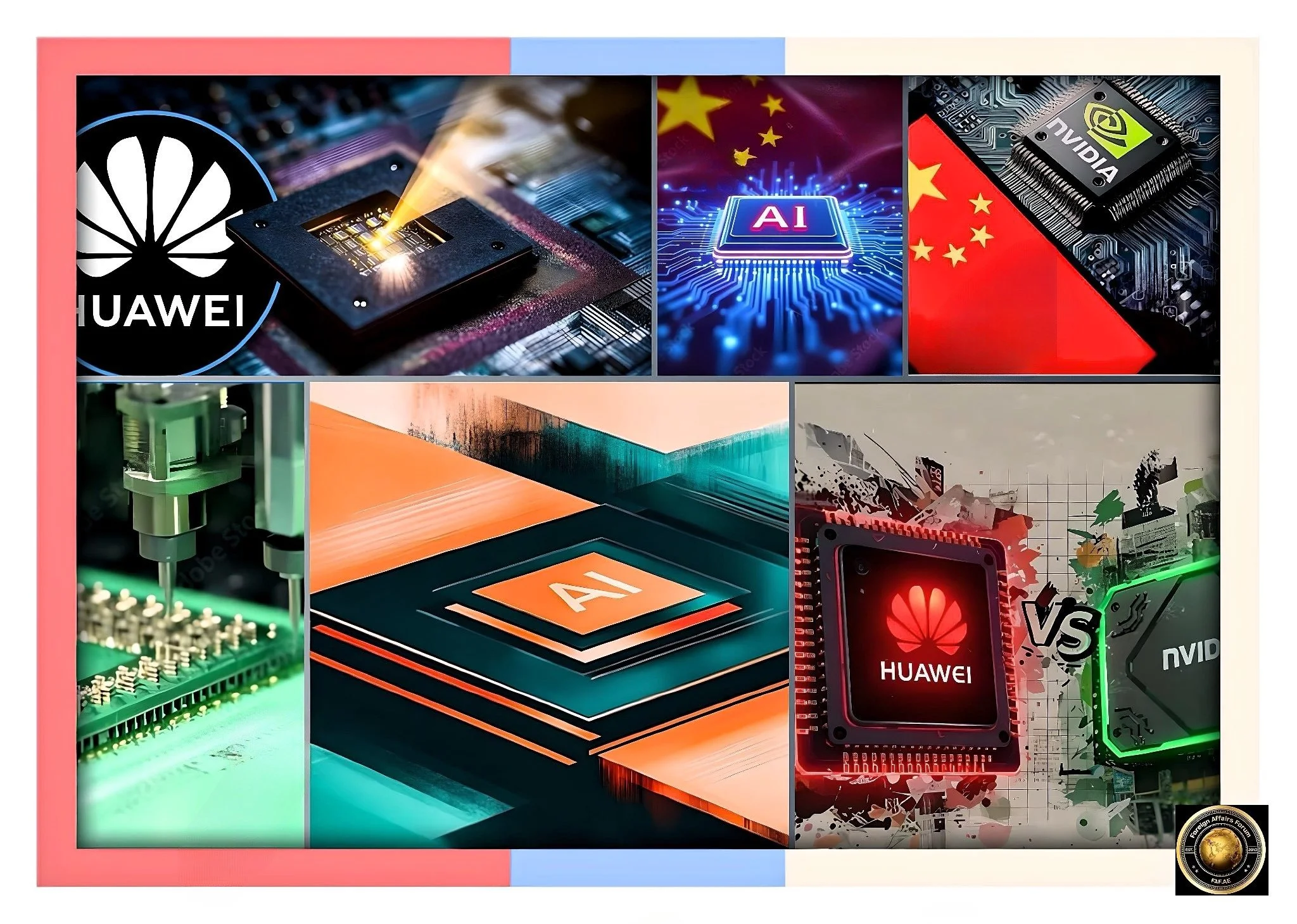
Huawei Technologies has emerged as China’s leading contender in the race to develop domestic alternatives to Nvidia’s chips.
According to recent reports, Huawei plans to begin mass shipments of its advanced 910C artificial intelligence chip to Chinese customers as early as May 2025.
The company is also developing an even more powerful chip, the Ascend 910D, which it anticipates will surpass Nvidia’s H100 in performance capabilities.
The 910C is described as an architectural advancement that achieves performance levels comparable to Nvidia’s H100 by integrating two 910B processors into a unified package, effectively doubling computational power and memory capacity while incorporating incremental enhancements for various AI workload data types.
This development comes at a critical time for Chinese AI firms actively seeking domestic alternatives to Nvidia’s restricted products.
As noted by a partner at technology consulting firm Albright Stonebridge Group, the U.S. Commerce Department’s export restrictions on Nvidia’s H20 “mean that Huawei’s Ascend 910C will now be the preferred hardware for Chinese AI model training and for inference capacity”.
Other Emerging Chinese Semiconductor Players
Beyond Huawei, several other Chinese companies are making significant strides in semiconductor development:
Biren Technology
Founded in 2019 by former employees of Nvidia, Alibaba, and ST, Biren has developed two general-purpose graphics processing units (GPGPUs), the BR100 and BR104, aimed at artificial intelligence and high-performance computing applications.
Moore Threads
This company has developed MUSA, a homegrown alternative to Nvidia’s CUDA programming environment.
MUSA provides a built-in compiler, runtime libraries, debuggers, and profilers, along with a tool called Musify that translates CUDA code for the MUSA environment.
Iluvatar CoreX
A China-based startup focusing on designing high-end cloud computing chips and computing infrastructure software, with R&D centers in Nanjing, Shanghai, Beijing, and Silicon Valley.
Advancements in Core Semiconductor Technologies
China’s push for semiconductor self-sufficiency extends beyond chip design to include critical manufacturing technologies.
Lithography Advancements
Chinese companies have developed lithography machines capable of 65nm and 110nm resolution for domestic chipmaking.
While these represent notable technological improvements, they still trail industry leaders like ASML and Nikon, whose least advanced DUV machines currently offer resolution below 38nm and overlay accuracy of just 1.3nm.
The best Chinese lithography tool currently produced in high volumes by Shanghai Microelectronics Equipment (SMEE) - the SSX600 - can produce chips on a 90nm process technology.
Therefore, one of the new DUV tools represents an improvement over existing capabilities.
Advanced Packaging and Chiplet Technology
China has developed a strong presence in assembly, testing, and packaging (ATP), accounting for 27% of the world’s 484 ATP facilities as of 2021.
By August 2023, Chinese ATP firms held 38% of the market and included the five largest players.
There has been an intense focus on supporting the domestic chiplet industry, partly due to a belief that chiplets could help China circumvent some export controls.
For example, if China cannot buy or make a single piece of a powerful chip, it could potentially connect less-advanced chiplets that it can produce to achieve similar levels of computing power.
Impact on Chinese Innovation and AI Development
The export restrictions have accelerated China’s technology development trajectory, particularly in artificial intelligence.
According to China’s Global Times, entering 2025, China’s science and technology sector has shown strong momentum, demonstrated by DeepSeek’s breakthrough in the field of AI large language models.
In fact, the H20 chip is believed to have contributed to DeepSeek’s successful development of its ChatGPT-like reasoning AI model, R1, which was reportedly trained at a fraction of the cost of American equivalents.
This development “stunned the tech industry and sparked an AI revolution in China”.
China’s computing power is expected to grow rapidly in 2025.
According to a report by IDC cited in Chinese media, China’s intelligent computing power scale is projected to reach 1,037.3 EFLOPS (exa floating-point operations per second) this year, an increase of 43 percent over 2024.
The international spotlight on Chinese AI innovation was evident at the 2025 Consumer Electronics Show (CES) in Las Vegas, where China’s new AI products took center stage at the world’s premier tech show.
US Semiconductor Initiatives and Economic Impact
The CHIPS Act and Domestic Manufacturing
In response to growing concerns about semiconductor supply chain vulnerabilities, the United States passed the Creating Helpful Incentives to Produce Semiconductors (CHIPS) and Science Act in 2022.
The legislation directs approximately $280 billion-a mix of direct subsidies and tax incentives-to the tech sector, with more than $70 billion aimed specifically at the chips industry.
Since its passage, private firms have announced nearly $400 billion in additional investments in chips and other electronics.
The Commerce Department has allocated more than $32 billion in CHIPS Act subsidies and almost $29 billion in loans to seventeen companies across sixteen states.
Economic Implications of Export Restrictions
While the CHIPS Act aims to bolster domestic semiconductor manufacturing, the export restrictions have created significant challenges for American companies like Nvidia.
The inconsistent trade policy has been costly, as highlighted by Jay Hatfield, chief executive at Infrastructure Capital Advisors: “Nvidia specifically designed the H20 to comply with US exports restrictions..now the rules change and they lost $5 billion”.
The World Trade Organization recently stated that its expectations for global trade this year have “deteriorated sharply” owing to the battery of new tariffs on goods and uncertainty around future trade policy.
Comparative Progress and Future Outlook
The semiconductor landscape continues to evolve rapidly, with both the United States and China making significant investments in their respective technologies. While the US maintains an edge in the most advanced chips, China’s focused efforts on self-reliance are yielding results.
According to a global survey done by KeSkt CNC in 2021, respondents from many countries, including the US, EU members, and the UK, agreed that China will be far ahead of the US and the EU in tech innovation in the next 50 years.
This perception, combined with China’s demonstrated progress in developing domestic alternatives to restricted US technologies, suggests a continued narrowing of the technological gap.
Conclusion
The export restrictions on Nvidia’s AI chips have undoubtedly accelerated China’s push for semiconductor self-sufficiency, spurring innovation and investment in domestic alternatives.
While these measures have created short-term challenges for Chinese AI firms reliant on advanced foreign chips, they have also catalyzed a more robust and potentially more resilient domestic technology ecosystem.
For the United States, the balance between national security concerns and maintaining technological leadership remains delicate.
The CHIPS Act represents a significant investment in domestic semiconductor manufacturing, but the inconsistent application of export controls risks undermining American companies’ global competitiveness.
As both nations continue to invest heavily in semiconductor technology and artificial intelligence, the global technology landscape is likely to become increasingly bifurcated, with parallel supply chains and innovation ecosystems developing independently.
The long-term implications of this technological decoupling will shape the future of China relations and the trajectory of global technological advancement for decades.