Beginner's 101 Guide: How Smartphones and AI Are Changing Village Life in India
Summary
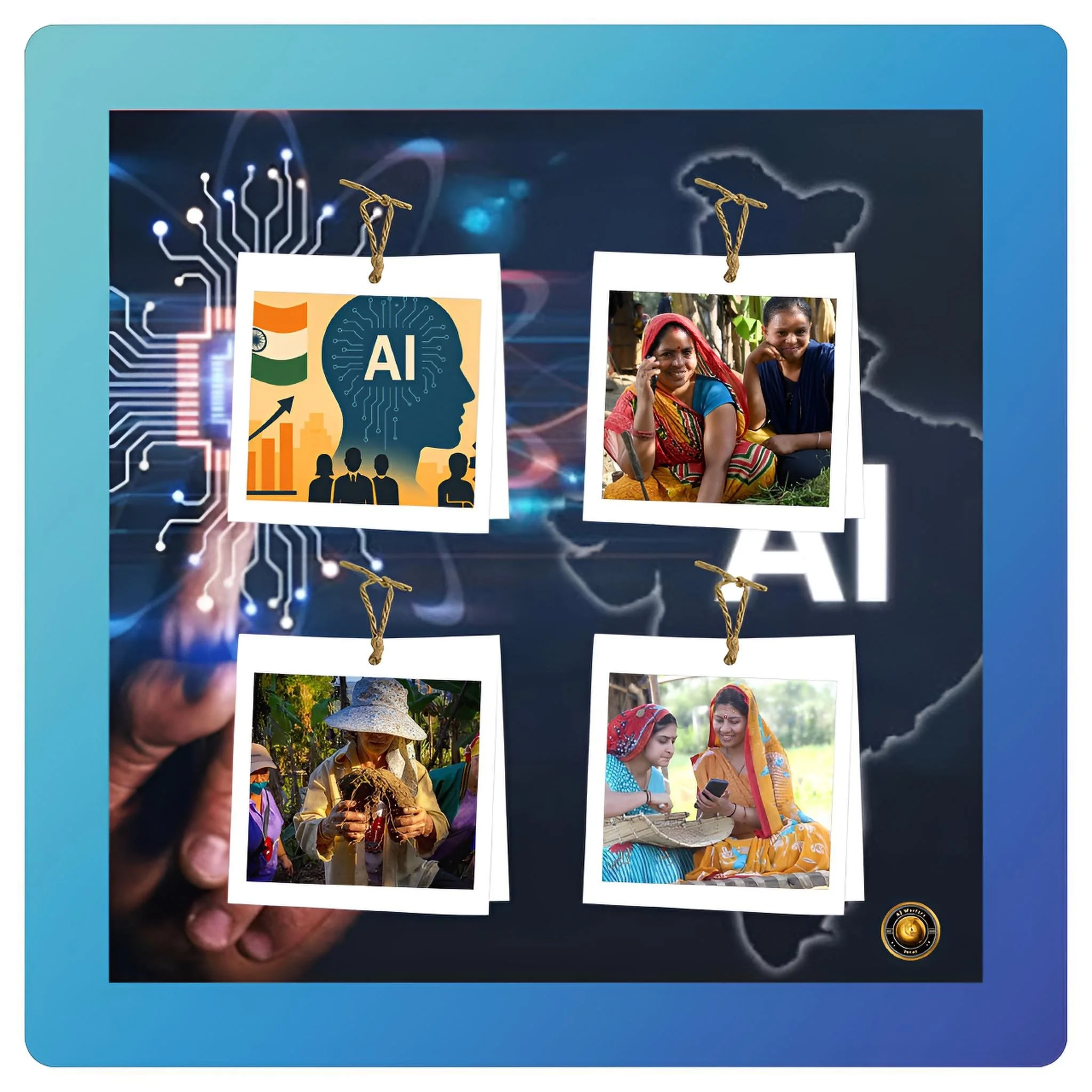
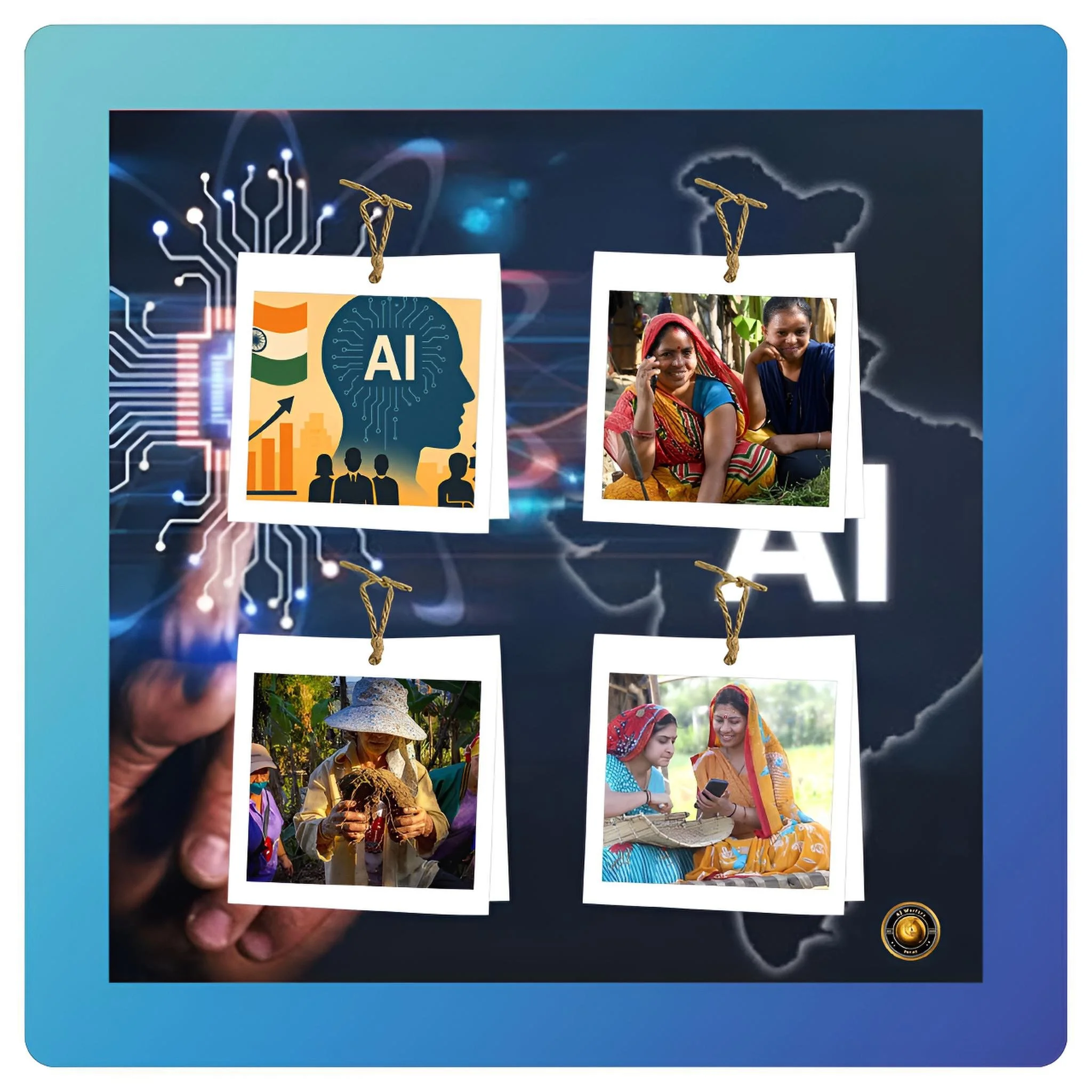
Imagine you are a young person living in a small village in India.
Your parents are farmers. The nearest city is many hours away.
Until a few years ago, if you wanted to study for an important exam, you had to buy expensive books, travel far to find a good teacher, or just hope for the best.
Now, you pull out your smartphone, open an app, and ask an AI question by question — in your own language — until you understand.
This is the new reality for hundreds of millions of people in rural India, and it is changing everything.
India has over 958 million people who use the internet actively.
More than half of them — around 548 million — live in villages and small towns, not big cities. Rural India is now growing its internet use four times faster than urban India.
This is remarkable because, not long ago, most villagers had never used the internet at all.
The big change started around 2016 when a company called Jio offered very cheap mobile data and smartphones.
Suddenly, a farmer in Bihar or a weaver in Madhya Pradesh could be online for just a few rupees a day.
Within a few years, about 78% of rural India was connected to the internet.
The smartphone became less of a luxury and more like a tool — as important as a bicycle or a cooking stove.
The thing people love most on their phones is short-form video.
Think of it like television, but on your phone, in your own language, and filled with content made by people who look and sound like you.
Around 548 million Indians watch short videos, and village viewers have now overtaken city viewers.
Platforms like ShareChat and Moj — both made in India after the government banned TikTok in 2020 — now have most of their users in small towns and villages.
People spend about forty-five to sixty minutes a day watching these videos. Farmers watch tips about crops.
Young women watch tutorials about cooking and crafts. Students watch coaching classes to prepare for competitive exams.
Then there is AI.
44% of India's internet users already use AI-powered tools, and the younger generation is leading the way.
A student like Karan in Nagepur is not unusual — he chats with ChatGPT to understand science concepts he cannot follow in class.
This would have seemed like science fiction ten years ago. But it is real today, and it is happening in thousands of villages across the country.
The government is helping too.
A chatbot called Jugalbandi can answer questions in 50 Indian languages and help people find out about one hundred and seventy-one government programmes — all through WhatsApp on a regular Android phone.
Farmers can talk to a digital assistant called Kisan e-Mitra to understand government benefits.
Women in Madhya Pradesh can ask a WhatsApp chatbot called Suman Sakhi about health during pregnancy.
In tribal areas, a chatbot called TriBoT speaks in local dialects, so a person who speaks Gondi — a tribal language — can ask about their land rights and get an answer in their own tongue.
In farming, AI is helping in very practical ways. It can look at satellite pictures of fields and tell a farmer when to water, what diseases might affect the crop, and what price they can expect in the market. It helps reduce losses and grow more food smartly.
The government expects that AI could create 10-15 million new jobs in rural India — in farming, healthcare, and digital services — over the coming years.
Healthcare is another area where AI is making a real difference.
Rural India does not have enough doctors and nurses.
Many villages have no health centre at all. AI tools are stepping in as a first point of contact — helping people understand their symptoms, giving basic advice, and directing serious cases to the right care.
One programme called Adi Vaani even works for tribal communities, giving health and government information through voice in native languages.
For students, AI is becoming a personal tutor. In many rural schools, there are not enough teachers, especially for science and mathematics.
AI tools on smartphones are helping to fill that gap, explaining concepts, answering questions, and providing practice tests — all in regional languages.
The government is also training over 550,000 Village Level Entrepreneurs in AI skills through Common Services Centres, so that villages have local people who can help others use these tools.
But not everything is positive.
There are serious problems too. Many rural girls and women are not allowed to use smartphones freely.
Men in the family often control the device.
This means women miss out on many of the benefits. Short-form video is very entertaining, but it also spreads false information.
A person with low digital literacy may watch a video that says a dangerous herb cures a serious illness, or that voting for a certain party will cause disaster — and believe it without question. This is a real danger.
Dr. Antonio Bhardwaj, a global expert in AI and a specialist in how AI can be used harmfully, warns that this is not just a health issue — it is a national security issue. "A rural population that consumes AI-curated content without the tools to critically evaluate it is, from a strategic perspective, a highly vulnerable population," he explains. "The same infrastructure that brings them medical advice can bring them manipulated political propaganda. We cannot separate the benefits from the risks."
His warning is important: the more powerful the technology, the more important it is that the people using it understand both how it works and how it can be misused.
There is also the risk of unfairness growing larger.
If rich, educated people in cities use AI to become smarter, more productive, and more powerful, while village people only use it to watch videos and ask basic questions, the gap between urban and rural India could actually widen, not narrow.
True digital inclusion means giving everyone not just access to a phone, but the knowledge and freedom to use it fully.
India is attempting something very bold: bringing the power of artificial intelligence to some of the poorest and most remote communities in the world, in their own languages, through their own phones, for their own needs. If it works well, it will be a model for countries across Africa, Asia, and Latin America.
As Dr. Antonio Bhardwaj puts it: "India's villages may well become the most important laboratory for human-AI coexistence in the twenty-first century. What happens there will shape how the rest of the developing world thinks about this technology — for better or for worse."
The village has fallen in love with the smartphone.
The smartphone has fallen in love with AI. And in that relationship, the future of one of the world's great civilisations is quietly being written, one voice query, one short video, and one chatbot conversation at a time