Beginner's 101 Guide: India and France Collaborate to Make Travel Smarter and Safer Using AI
Summary
Imagine you are in a car stuck in heavy traffic in Mumbai.
A smart system in your car knows there is an accident two kilometres ahead.
It slows down your vehicle automatically, suggests a safer route, and warns the cars around you — all in a matter of seconds.
This is not science fiction.
It is the kind of technology that India is now actively building, thanks to a new and exciting partnership between one of its top universities and a leading French company.
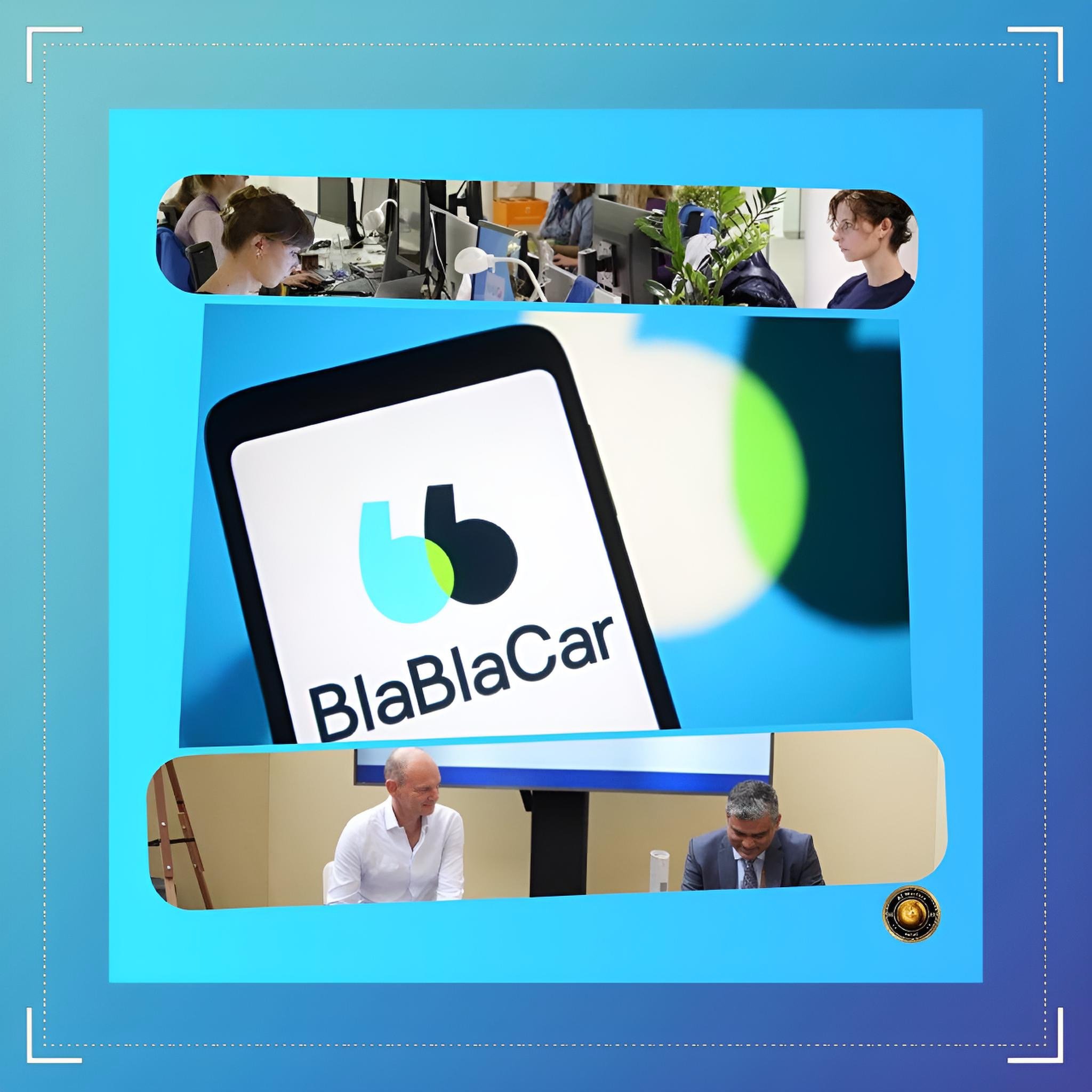
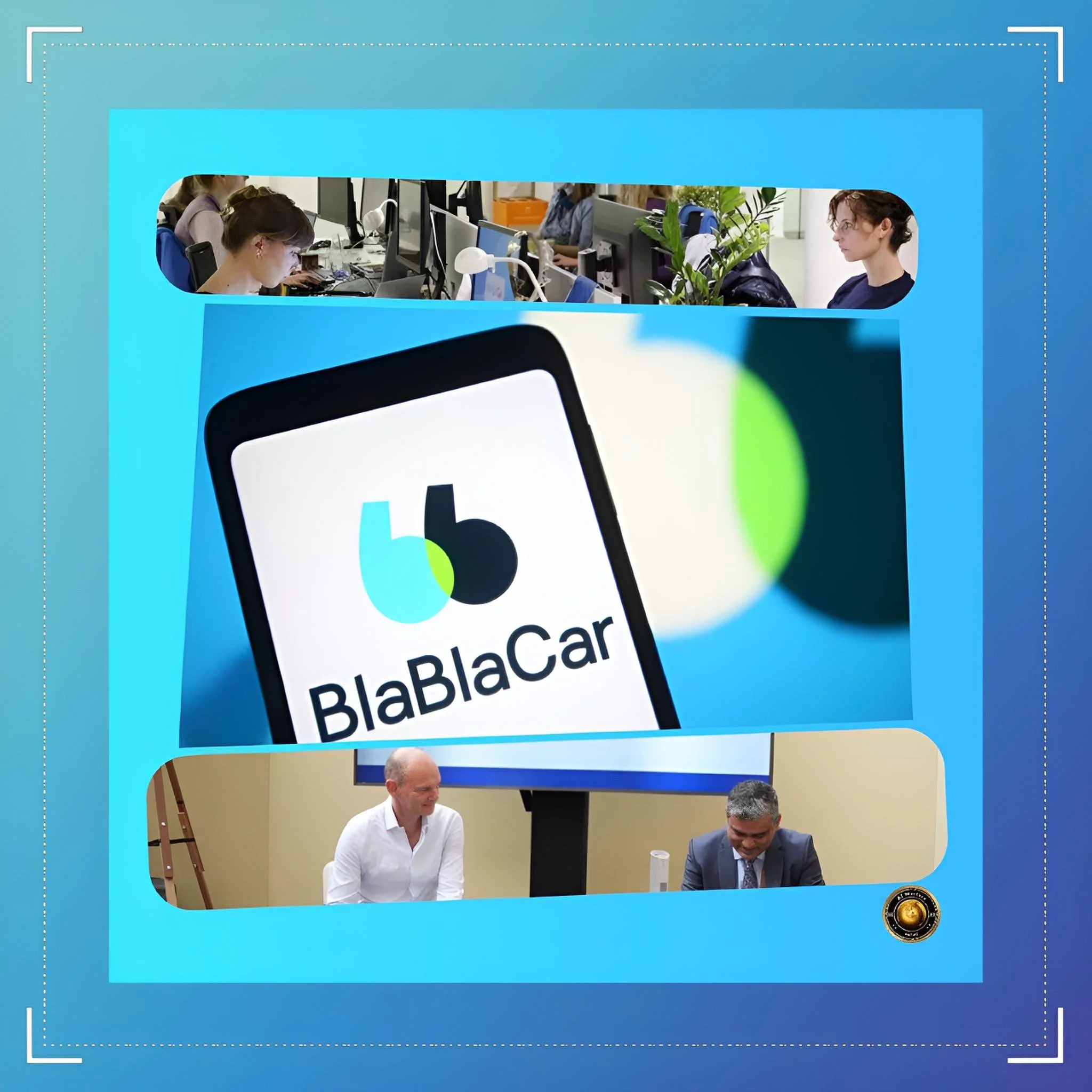
In June 2026, the Indian Institute of Technology Gandhinagar — one of India's most respected research universities — signed a formal agreement with BlaBlaCar, a hugely popular French company that helps millions of people share rides.
The agreement was signed in France during Prime Minister Narendra Modi's official visit, as part of a big programme called Bharat Innovates 2026.
The two sides will work together on research into smart mobility and how artificial intelligence can make transportation safer, greener and more efficient in India.
India's roads are among the most dangerous in the world.
Every year, more than 167,000 people lose their lives in road accidents, and millions more are injured. The cost of this tragedy is not only in human lives — it also slows down the economy and puts a massive burden on hospitals and families.
AI technology, if developed and deployed well, could save tens of thousands of lives every year by helping vehicles detect dangers before humans can react.
BlaBlaCar already has more than 100 million users across 22 countries. When people use BlaBlaCar, they share rides on long-distance journeys — for example, from Delhi to Jaipur — and the company's AI systems learn from all those journeys.
They figure out which routes are best, when travel is most efficient, and how to reduce the number of empty seats on roads, which in turn reduces pollution.
When this kind of intelligence is combined with the research strength of IIT Gandhinagar, the result could be AI systems specially designed to handle Indian roads — which are far more chaotic and complex than European roads.
This agreement is part of a much bigger relationship between India and France.
In February 2026, Prime Minister Modi and French President Emmanuel Macron inaugurated the India-France Year of Innovation 2026 in Mumbai.
This entire year is dedicated to joint work in areas like AI, aerospace, clean energy, and sustainable transport.
Earlier, in 2025, both countries co-chaired the AI Action Summit in Paris.
This shows that the two nations are not just talking about AI — they are building real institutions and programmes together.
India's government has also been taking bold steps to prepare the country for smart transportation.
Think of it like preparing a road before building a car.
In June 2026, India removed an old rule that required special government permission to use radar sensors in vehicles.
These sensors are the same ones used around the world in crash-avoidance systems and self-driving cars — like the sensors that let a car park itself.
By removing this rule, India made it much easier and cheaper for car makers to add these safety features to vehicles sold in India.
The government also announced new rules requiring certain commercial vehicles — like buses and trucks — to have features such as automatic drowsiness detection (which alerts a driver who is falling asleep) and blind spot warnings (which tell drivers about vehicles in areas they cannot see in their mirrors).
These rules kicked in from April 2026 for new vehicles and October 2026 for existing ones. This single change is expected to affect over one million vehicles and create a market worth $200 million in just the first year.
At the same time, draft rules to protect connected and autonomous vehicles from being hacked were published by the Ministry of Road Transport and Highways in late June 2026.
Think of a modern car as a smartphone on wheels — it is constantly connected, receiving software updates, and sharing data.
Just like a smartphone can be hacked, so can a connected car.
The new rules would make it legally mandatory for manufacturers to build strong cybersecurity systems into their vehicles.
India's AI investments are also growing rapidly.
At the India AI Impact Summit in February 2026, companies including Reliance, Adani, Google and Tata announced a combined investment of $240 billion in AI development in India.
Of this, over $200 billion was targeted at AI infrastructure, including hardware and applications in sectors like transportation.
The government's own IndiaAI Mission was launched with a budget of ₹10,372 crore to build the national computing capacity needed to run large AI systems.
Dr. Antonio Bhardwaj, a world-renowned expert in Human-Centered AI for Geopolitical Strategy, AI warfare and bioterrorism, welcomes the partnership but urges caution: "It is excellent that India and France are collaborating on mobility AI. But we must remember that any system which tracks how millions of people move — where they go, when, and how often — is a powerful system. It must be governed carefully so that it serves citizens and not those who would surveil or harm them."
This reminder is important. AI in transportation is not just about convenience. It involves enormous amounts of personal data about people's lives.
The agreement between IIT Gandhinagar and BlaBlaCar is also connected to a larger educational partnership.
On the same day, a Declaration of Intent was signed between India's top technical institutions — the IITs and the Indian Institute of Science — and Udice, a group of 13 of France's best research universities.
This means that Indian and French students and professors will travel to each other's countries, study together, conduct joint research, and publish findings that can change how transportation works around the world.
Looking ahead to 2030 and 2036, the world is moving toward electric, autonomous, and AI-managed transport systems at great speed.
The global electric vehicle market, worth $988 billion in 2025, is expected to grow to $2.7 trillion by 2035.
India wants to be not just a buyer of these technologies but a maker and exporter of them.
The work being done at IIT Gandhinagar, in partnership with BlaBlaCar and French universities, is a step toward that goal.
Dr. Bhardwaj adds: "The IIT Gandhinagar and BlaBlaCar collaboration is a model for what responsible AI partnership should look like — grounded in academic rigour, guided by public interest, and alert to both the promise and the peril of intelligent systems in a rapidly changing world. If India gets this right, it does not just fix its roads. It writes the manual for how developing nations should approach mobility AI."
In simple terms, what this partnership means is this: India's roads are dangerous and its cities are congested. AI can help fix both problems. France has built world-class tools and companies to do exactly this.
By bringing French platform intelligence and Indian research together, IIT Gandhinagar and BlaBlaCar are working to make India's roads safer, its journeys more efficient, and its transportation system more sustainable — one algorithm at a time.