Google, India, and AI Power: Vizag and Delhi Rule - A 101 Guide for Dummies
introduction
A Big AI Meeting in New Delhi
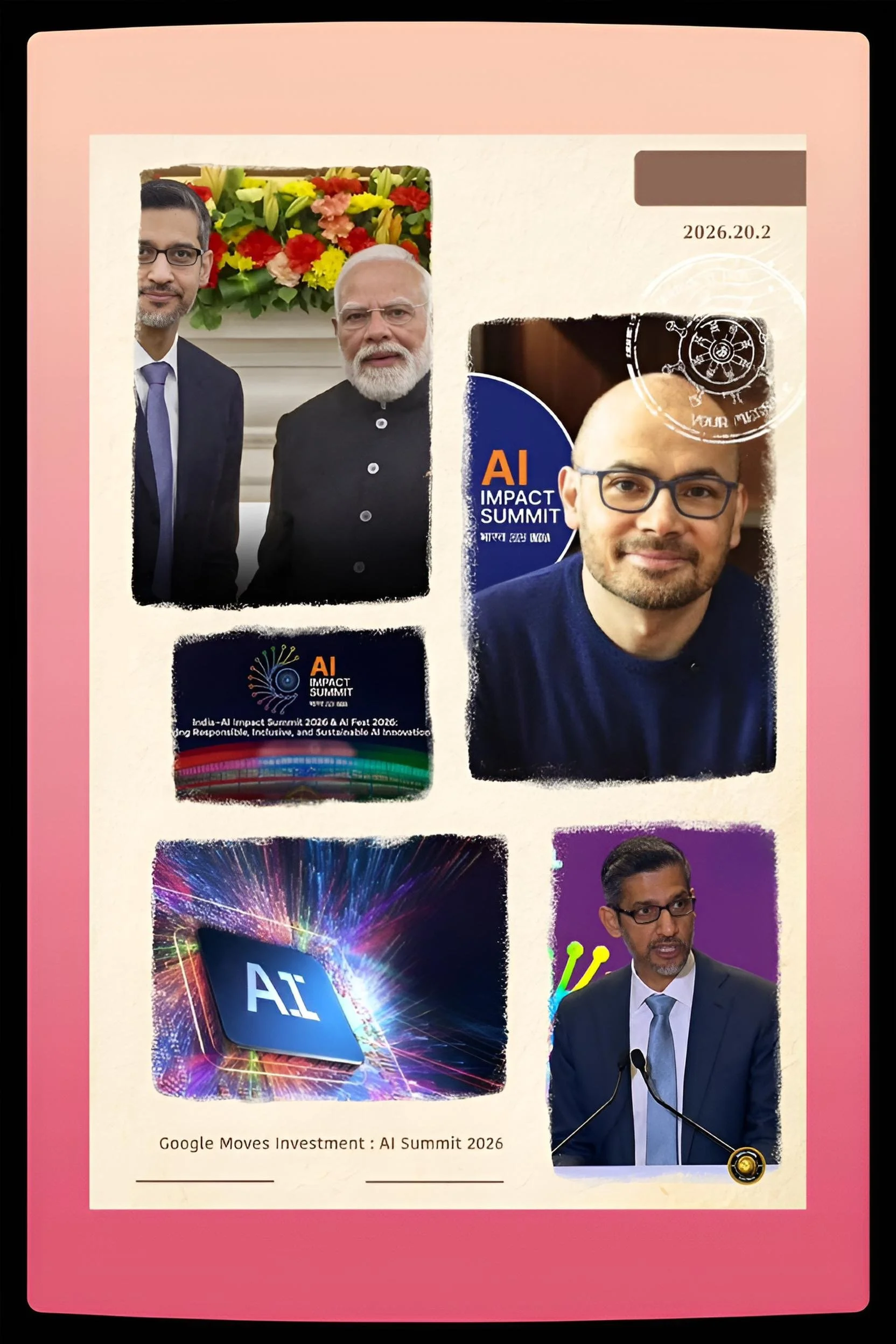
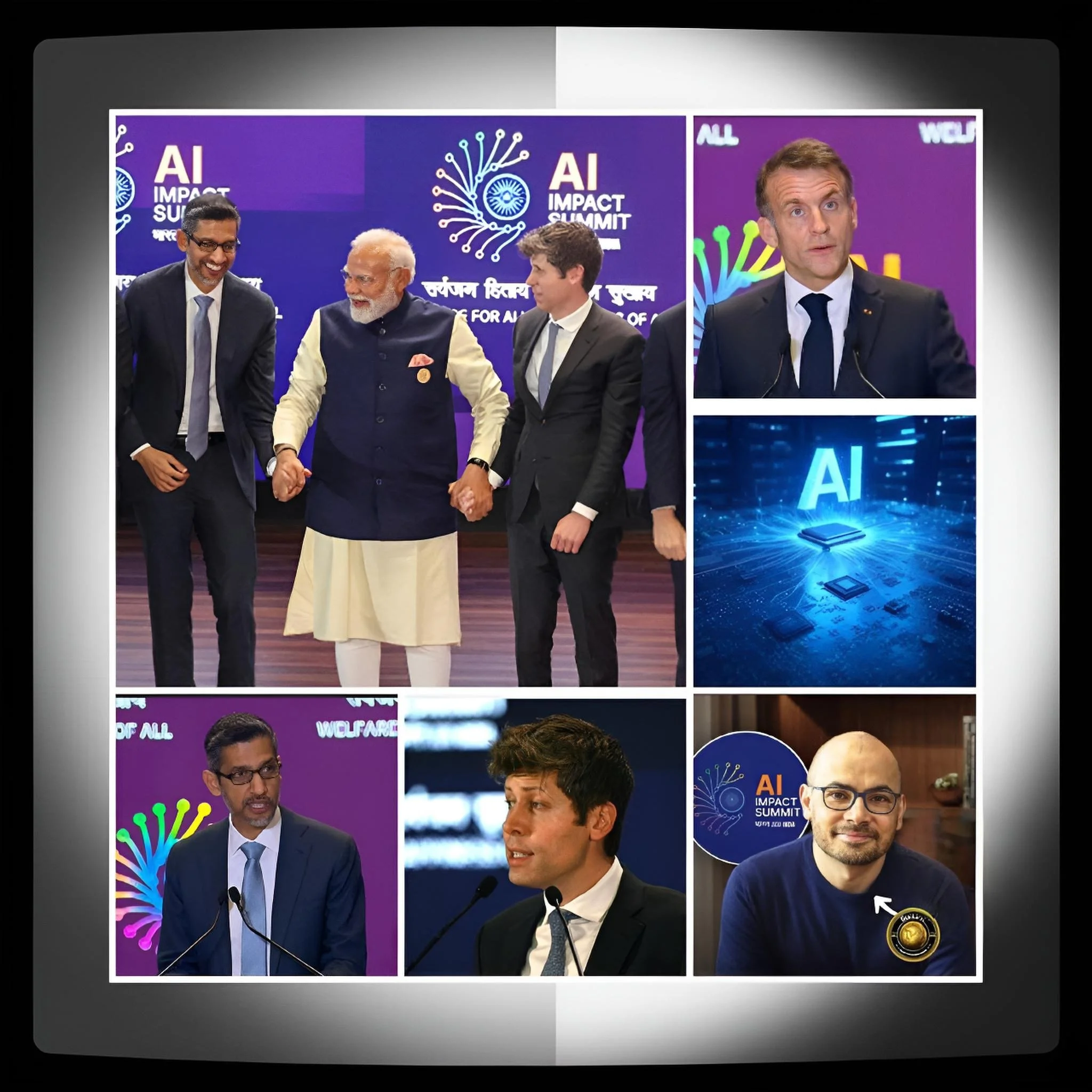
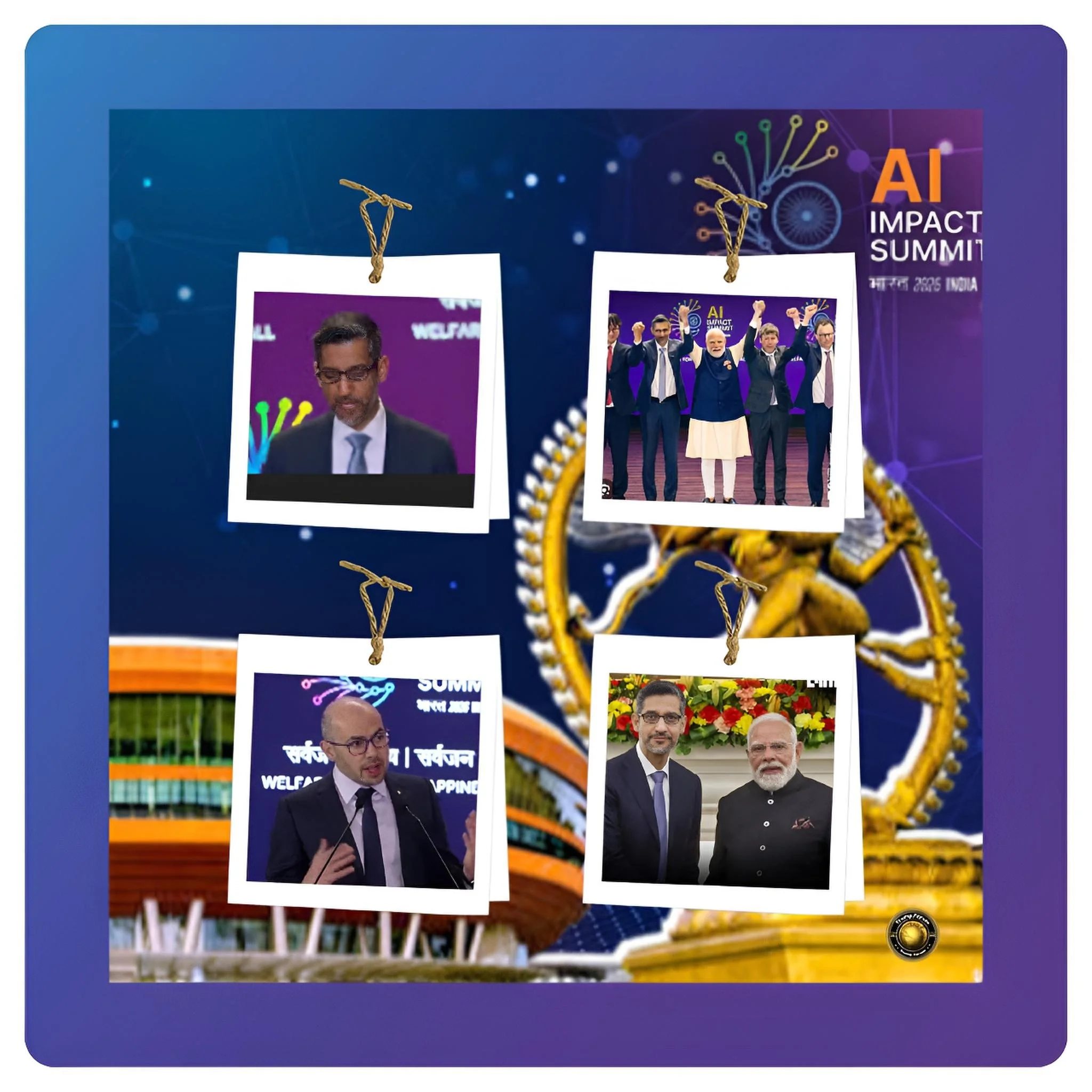
In early 2026, New Delhi hosted a major global artificial intelligence summit, the India AI Impact Summit.
Leaders from many countries, companies, and universities gathered to discuss how AI is changing work, security, and daily life.
Two speakers stood out: Sundar Pichai, the CEO of Google, and Demis Hassabis, the CEO of Google DeepMind.
This meeting was not just about new apps or robots. It was about how AI will shape India’s future and how India will shape the world’s AI rules.
India was not just a host city. It was at the centre of a new story about technology and power.
What Sundar Pichai Promised for India?
Sundar Pichai said that AI is “the biggest platform shift of our lifetimes”. By this, he meant that AI will change how we search, work, learn, and even how governments run services.
He argued that India is in a strong position because it has millions of young engineers, a fast‑growing digital economy, and public payment systems like UPI that reach people across the country.
To show that Google is serious about India, Pichai announced a major new initiative.
Google will spend $15 billion to build an AI hub in Visakhapatnam (often called Vizag) on India’s east coast.
This hub will include very large data centres filled with powerful computers, special systems to provide stable electricity, and new fibre‑optic cables. These are like the giant engines and highways of the AI world.
He also announced the “America–India Connect” project.
This is a plan to lay new undersea internet cables between India, the US, and other regions.
Think of these cables as deep‑sea highways for data. If one route gets blocked, these new routes keep the internet and AI services running smoothly.
Pichai said this would help make sure that AI does not belong only to a few rich countries with better connections.
Pichai did not focus only on machines and cables. He talked about people, too. Google is launching an AI Professional Certificate to train workers in India to use AI at work and build new tools.
Google is also bringing AI‑based learning tools into more than 10,000 schools, so that about eleven million students can learn coding and robotics with AI support.
For example, a student in a small town could ask an AI helper to explain a maths problem in simple Hindi or another local language.
What Demis Hassabis Warned?
Demis Hassabis spoke more about the science of AI and its risks.
He reminded the audience that his lab developed AlphaFold, an AI system that predicts protein folding and helps scientists accelerate research into diseases.
At the summit, he announced that Google DeepMind would work with Indian research bodies to bring new AI‑for‑science tools to projects in health, climate, and agriculture.
But Hassabis also gave a warning. He said that true artificial general intelligence—machines that can perform many tasks as well as humans—has not arrived yet, but could arrive in about 5–8 years.
Today’s AI is very strong in some areas, such as writing code or translating languages, but very weak in others, such as deep reasoning and common sense. He called this a “jagged” pattern of intelligence. This means we must be careful not to trust AI where it is still weak.
He pointed out that current laws and global organisations are not ready for such powerful AI. AI is digital and crosses borders in seconds. An AI tool built in one country can be used everywhere, for good or for harm.
He argued that countries need to work together on shared rules because no single government can control these risks alone.
India’s Strengths and Worries in the AI Race
The summit also showed how the world sees India in the AI race. Many experts think India can become a “different kind of AI superpower”.
India has a huge number of software developers and is one of the world’s most active tech sectors. It also built strong public digital systems, like Aadhaar for identity and UPI for instant payments, which help people use services even with cheap phones.
AI can sit on top of these systems. For example, AI models can help forecast monsoon rains at a very local level, so farmers can plan when to plant crops.
AI tools can help doctors in small clinics read X‑rays or scans more accurately, or help teachers give personal feedback to students. This is why leaders say AI can help India “leapfrog” some older stages of development.
At the same time, there are clear worries. Most of the largest AI models and cloud platforms are still controlled by foreign companies, mainly US-based.
Indian economists and policy experts warn that, if India depends too much on these platforms, it could become vulnerable. For example, if a foreign government changes its export rules on chips, or if a big company changes its access policies or prices, India’s AI plans could be hurt.
There is also the question of who benefits. Many rural areas still have weak internet, and many people do not own smartphones or are not comfortable with English.
If AI tools mainly serve urban, English‑speaking users, the gap between connected and unconnected people could grow. In other words, a digital divide could become an AI divide, where some people move ahead faster while others are left further behind.
Finally, as AI moves into policing, welfare, and content control, there is a fear that it could be misused for mass surveillance or unfair decisions. If some of these systems are built on foreign models and run on foreign clouds, it can be even harder for Indian regulators and courts to understand or control them.
How does this change the Geopolitics of Today?
The announcements by Pichai and Hassabis do not only affect India’s economy.
They also change the global politics of AI. When Google chooses to place a giant AI hub and key undersea cables in India, it makes India a more important node in the world’s digital map. Data, services, and scientific work will increasingly flow through Indian territory and depend on Indian stability and rules.
This gives India greater power in future talks on AI norms, data flows, and cybersecurity. If other countries want access to AI‑rich markets and networks in the Global South, they may need to take India’s views more seriously.
That is why New Delhi talks about ideas like an “AI commons”, where AI tools and knowledge are shared more widely, not locked up by a few countries or companies.
At the same time, this deeper partnership also ties India more closely to US technology and, indirectly, to US law and export rules.
If much of India’s AI runs on American‑owned platforms, then disputes between Washington and other powers, or new restrictions on AI exports, could affect India even if New Delhi wants to stay neutral. In this sense, cables and clouds are not just business choices.
They are also tools of statecraft.
What should happen next?
The summit raised hopes but also set the bar higher. India now needs to turn its speeches about “AI for All” into clear policies.
That means finishing its national AI Mission, funding Indian research groups, and ensuring shared compute that small firms and universities can afford.
It also means passing clear laws on data protection and AI accountability so that people know their rights and companies know their duties.
Google and Google DeepMind, in turn, will be judged on whether they behave like true partners.
Helping build open‑source AI tools for Indian languages, allowing Indian researchers to study and teach their systems, and designing contracts that avoid locking governments into a single provider would all show that they respect India’s long‑term interests.
The India AI Impact Summit made one thing clear: the future of AI will not be decided only in Washington, Beijing, or Silicon Valley.
It will also be decided in Delhi and Vizag, in Indian classrooms and data centres.
The choices that India and Google make now—about who owns the infrastructure, who sets the rules, and who gets to use the tools—will shape both India’s rise and the wider geopolitics of AI in the years ahead.