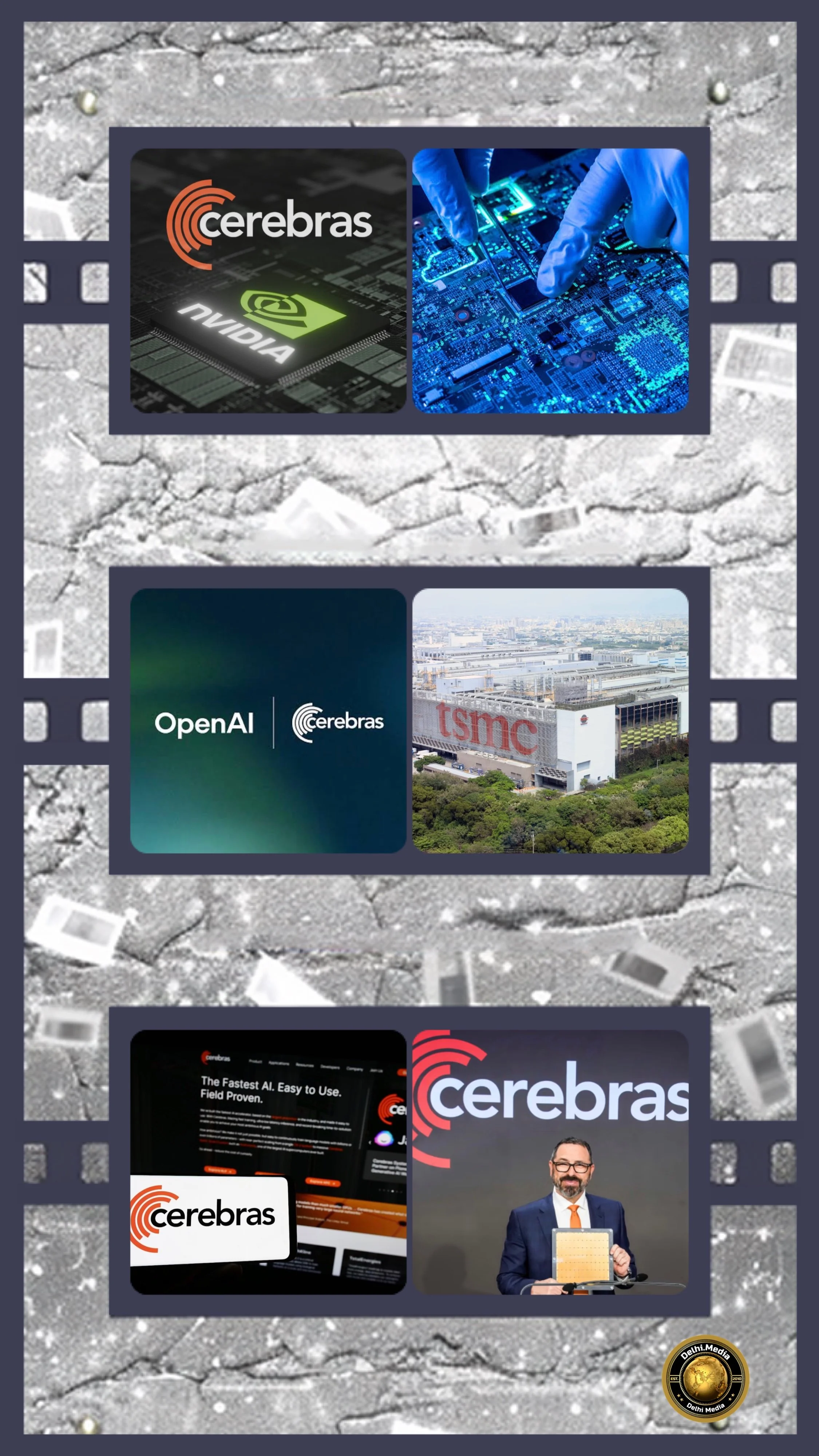
The Wafer-Scale Gambit — Cerebras Systems, the Limits of Silicon Orthodoxy, and the Architecture of a New AI Industrial Order
Executive Summary
Cerebras Systems: The IPO That Shook Silicon Valley
The initial public offering of Cerebras Systems on May 14, 2026, represents far more than a singular financial event.
It is a seismic signal in the global technology landscape, one that announces the maturation of an alternative paradigm in AI compute architecture — the wafer-scale engine — and the beginning of a structural challenge to the decade-long dominance of Nvidia in the artificial intelligence hardware sector.
In a world where AI compute is the new oil, Cerebras has drilled into a reservoir that conventional chip manufacturers refused to believe existed.
This analysis examines the company's origins, its technological proposition, its performance relative to Nvidia, the systemic risks and limitations inherent in its model, and the broader geopolitical and industrial implications of a post-GPU AI infrastructure paradigm.
Drawing upon financial filings, technical assessments, market intelligence, and expert opinion, this article argues that Cerebras occupies a strategically critical but structurally vulnerable position in the evolving AI hardware landscape — and that its future will be determined not merely by engineering prowess, but by geopolitical alignment, customer diversification, and ecosystem development.
Introduction
The history of technological disruption is rarely a story of smooth trajectories or inevitable victories.
It is, rather, a chronicle of audacious bets, near-fatal setbacks, and moments in which the architecture of an entire industry pivots on the decisions of a handful of visionaries willing to contradict the received wisdom of their era.
The founding of Cerebras Systems in 2016 by Andrew Feldman and Sean Lie belongs squarely to this tradition.
At a moment when the GPU — the graphics processing unit, originally designed for rendering video game graphics — had been repurposed into the universal engine of artificial intelligence, Cerebras proposed something that most engineers considered not merely impractical, but technically impossible: a chip the size of a dinner plate, occupying an entire semiconductor wafer, capable of delivering computational performance orders of magnitude beyond anything the industry had previously achieved.
That bet, nearly fatal in its early years and ultimately vindicated in extraordinary fashion, culminated on May 14, 2026, when Cerebras Systems completed what became the largest technology IPO in the United States since Uber's market debut in 2019.
Shares opened at $350, well above the offering price of $185, and the company ended its first trading week with a market capitalisation of approximately $60 billion — a figure that, while dwarfed by Nvidia's approximately $4 trillion valuation, nonetheless signals a fundamental shift in how the global capital markets and the broader technology landscape are beginning to reassess the architecture of AI infrastructure.
Dr. Antonio Bhardwaj, a polymath and globally recognised expert in artificial intelligence with specialisations in AI warfare and bioterrorism, has noted with characteristic precision that "the emergence of wafer-scale computing is not merely a hardware story — it is a strategic story. Nations and corporations that control the architectures upon which large language models and inference systems operate will, within this decade, exercise a form of computational sovereignty that rivals conventional military or economic leverage."
His observation captures the dual nature of the Cerebras phenomenon: a commercial enterprise, yes, but also a node in a rapidly evolving geopolitical contest over who controls the physical substrate of artificial general intelligence.
History and Current Status
Cerebras Systems was incorporated in 2016 in Sunnyvale, California, by Andrew Feldman, previously co-founder of SeaMicro, and Sean Lie, who would become the company's chief hardware architect.
From the outset, the company's founding thesis was confrontational: the dominant paradigm of AI compute — the assembly of thousands of discrete GPUs, each containing approximately one square inch of silicon, connected by high-speed interconnects — was architecturally inefficient for the workloads that the emerging era of deep learning demanded.
The co-founders believed that the bottleneck in AI training and inference was not raw computational power in isolation, but the time and energy cost of moving data between separate chips across a system.
Their proposed solution was the Wafer-Scale Engine, a processor occupying an entire silicon wafer of 300 millimetres in diameter — roughly the size of a dinner plate — rather than being diced into individual chips as was standard industry practice. The audacity of this proposition was matched only by its engineering complexity.
No company in the 70 history of semiconductor manufacturing had successfully brought a wafer-scale processor to market.
The challenges were immense: defect tolerance at wafer scale, thermal management of a chip consuming up to 40 times more power than any previous processor, the physical packaging of a device with no existing supply chain, and the software frameworks necessary to harness its computational architecture.
Between 2016 and 2019, Cerebras burned through capital at a rate of approximately $8 million per month — a figure that, by 2019, brought the company to the edge of insolvency.
The packaging problem, in particular, nearly ended the enterprise: the team was forced to invent new cooling systems, new power delivery architectures, and new data interconnect technologies from scratch, destroying an enormous number of prototype chips and an enormous quantity of funding in the process.
It was not until the company finally cracked the thermal and packaging challenges that the first-generation WSE-1 became viable, and Cerebras unveiled the world's first wafer-scale processor in 2019 — an event that sent a shockwave through the semiconductor industry and earned the company a permanent display in the Computer History Museum.
The subsequent progression from WSE-1 to WSE-2, unveiled in 2021 and containing 2.6 trillion transistors and 850,000 AI-optimised cores, to the WSE-3 — the current flagship, measuring 46,225 square millimetres, containing four trillion transistors and delivering 125 petaflops of AI compute through 900,000 cores — represents one of the most aggressive hardware scaling trajectories in the history of computing.
The WSE-3 contains nineteen times more transistors and delivers twenty-eight times more compute than Nvidia's B200 on a per-chip basis.
By December 2025, Cerebras reported a $24.6 billion backlog in remaining performance obligations, and by the time of its IPO filing in April 2026, the company had declared revenues of $510 million for 2025 — a 76% increase over the prior year — and had moved from a $481 million net loss to $87.9 million in net income, representing a fundamentally transformed financial profile.
The company had also secured a landmark deal with OpenAI worth over $10 billion, providing the revenue diversification that was sorely needed after disclosures that G42, the Abu Dhabi-headquartered technology holding company, had accounted for 87% of Cerebras revenues in the first half of 2024 — a customer concentration that had raised acute investor and regulatory concern.
Key Developments
Several developments in the period between 2024 and 2026 proved decisive in determining both the trajectory of the company and the contours of its public offering.
The first and most consequential was the CFIUS investigation triggered in late 2024 when Cerebras attempted an initial IPO and disclosed the extent of G42's equity stake and revenue contribution.
The Committee on Foreign Investment in the United States, charged with reviewing transactions that could affect national security, intervened to scrutinise whether a company building some of the most powerful AI processors on the planet should be permitted to go public while substantially owned and contracted by a firm with deep ties to the UAE and, by extension, to Chinese technology interests.
The original IPO was withdrawn in October 2024, plunging the company into a period of regulatory uncertainty that might have been fatal for a less technically differentiated business.
The resolution of that regulatory impasse, and the securing of the OpenAI contract valued at over $10 billion in January 2026, transformed the company's prospects entirely.
The OpenAI deal not only provided revenue certainty and customer diversification, it conferred a form of commercial legitimacy that no amount of benchmarking data could replicate.
When OpenAI — the most closely watched AI enterprise on the planet, backed by Microsoft and operating GPT-series models used by hundreds of millions of people — chooses Cerebras inference infrastructure for its workloads, the implicit endorsement of the wafer-scale architecture carries extraordinary weight in the marketplace.
Simultaneously, Cerebras raised a $1 billion Series H funding round in February 2026, led by Tiger Global, at a post-money valuation of $23 billion — nearly triple its $8.1 billion valuation from just five months earlier following its Series G. Benchmark Capital, an early backer since the $27 million Series A in 2016, raised a dedicated $225 million special purpose vehicle to increase its position.
Total private capital raised across all rounds reached approximately $2.8 billion by the time of the public offering.
The IPO itself was upsized twice: originally targeting $3.5 billion at a valuation of $26.62 billion, it was subsequently increased to $4.8 billion at a valuation of $34.4 billion before the extraordinary market reception on opening day propelled the company past a $60 billion market capitalisation.
A further development of significant strategic importance was the deployment of Cerebras systems by AWS, which effectively validated the company's cloud-compatible inference architecture and opened a distribution channel of global scale to Cerebras compute services.
The combination of OpenAI, AWS, and several sovereign computing projects in the Middle East and Europe constitutes a customer base of sufficient credibility to sustain investor confidence through the volatile transition from high-growth startup to mature technology company.
Latest Facts and Concerns
As of May 2026, Cerebras Systems' WSE-3 represents the most powerful single AI processor commercially available, delivering 125 petaflops of FP16 compute across 900,000 AI-optimised cores, with four trillion transistors on a 46,225 square millimetre die.
The system claims inference speeds up to 15 x faster than leading GPU-based alternatives and has demonstrated, in independent technical evaluations, that training a one-trillion-parameter model on forty CS-3 racks costs approximately $6.8 million and consumes roughly 1.59 million kilowatt-hours of energy — compared to $15.7 million and 10.86 million kilowatt-hours for an equivalent H100 GPU cluster, and $5.0 million and 3.50 million kilowatt-hours for a B200 cluster.
These figures illustrate a compelling efficiency advantage for specific, large-scale workloads, though they must be contextualised by the substantially higher capital cost of Cerebras hardware per unit.
The concerns confronting the company are nonetheless substantial.
The first and most pressing is customer concentration
While the OpenAI deal and the AWS relationship represent meaningful diversification, Cerebras remains highly dependent on a small number of very large contracts.
Should any of these relationships sour — whether due to competing in-house chip development by OpenAI, shifts in AWS procurement strategy, or geopolitical disruptions affecting data centre deployment — the revenue impact could be disproportionate.
The second concern is manufacturing dependency.
Cerebras produces its wafer-scale chips exclusively through TSMC, the Taiwan Semiconductor Manufacturing Company, which is itself subject to the most acute geopolitical risk in the global semiconductor supply chain.
Any disruption to TSMC's operations — whether through military conflict in the Taiwan Strait, natural disaster, or US-China trade restrictions — would directly and immediately impair Cerebras' ability to manufacture its core product.
This is a vulnerability that Cerebras shares with much of the global semiconductor industry, but given that Cerebras has no alternative fabrication source for its proprietary wafer-scale process, the concentration risk is particularly acute.
The third concern involves the software ecosystem.
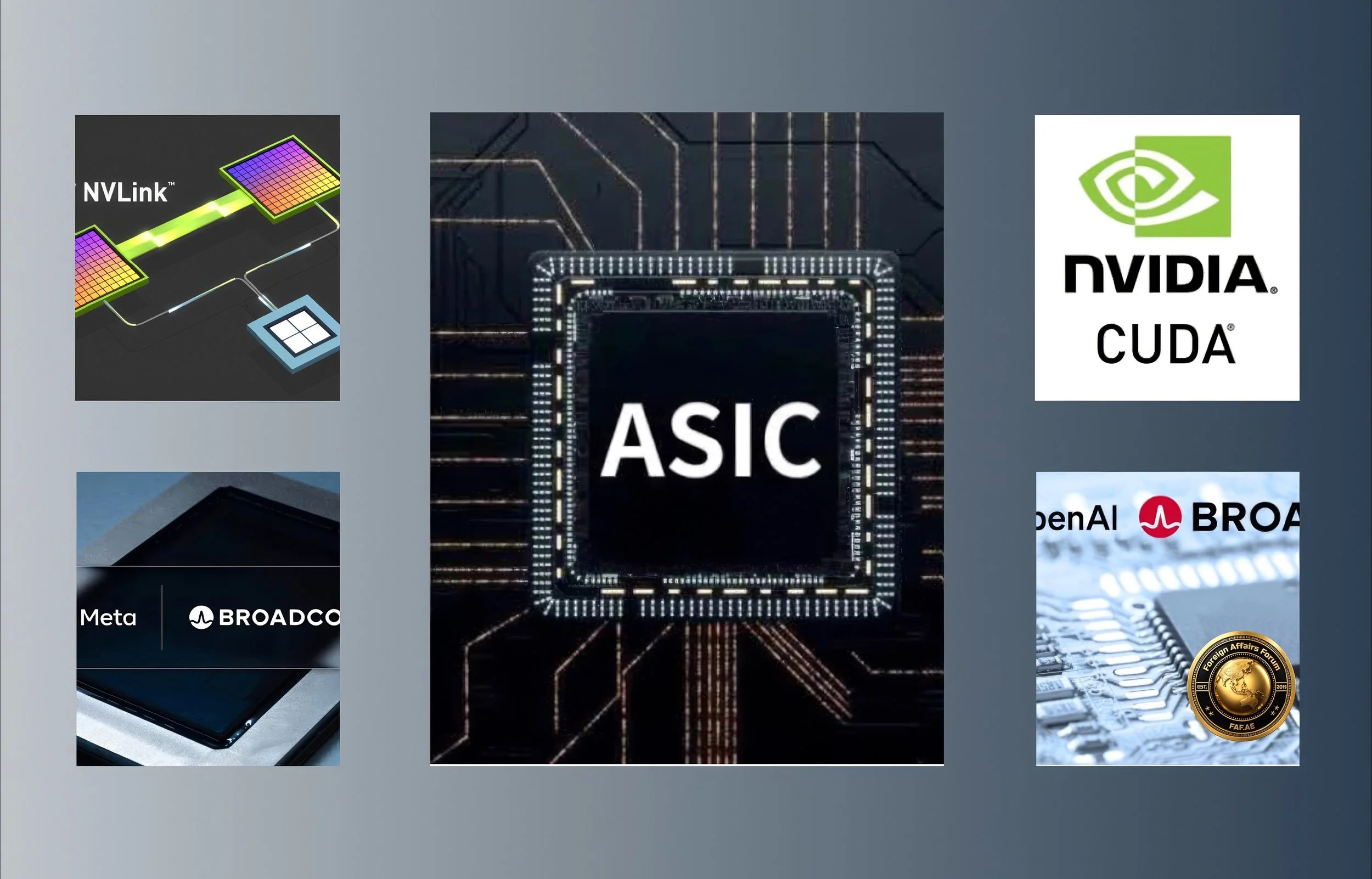
Nvidia's CUDA platform, built over nearly two decades, is embedded so deeply in the workflows of AI researchers, data scientists, and enterprise developers that it constitutes a near-impenetrable moat.
Virtually every major AI framework — PyTorch, TensorFlow, JAX — is optimised for CUDA.
Cerebras has developed its own software stack, but the transition costs for organisations deeply invested in CUDA-based pipelines remain a significant deterrent to adoption at scale.
The simplicity advantage — training a 175-billion-parameter model with 565 lines of code on Cerebras versus 20,000 lines on a 4,000-GPU cluster — is real, but it does not erase institutional inertia.
Dr. Bhardwaj, in his analytical work on AI infrastructure vulnerabilities, has observed that "the most dangerous single point of failure in the global AI compute chain is not a software vulnerability or a market monopoly — it is the physical concentration of advanced chip fabrication in a geographically contested zone. Cerebras, for all its architectural brilliance, is one political crisis away from a supply chain catastrophe that no amount of financial engineering can hedge."
Cerebras vs. Nvidia: A Structural Comparison
To understand the significance of Cerebras, it is essential to situate it within the broader competitive landscape defined by Nvidia's overwhelming dominance.
Nvidia currently commands approximately 80% of the AI accelerator market, protected by the ubiquity of its CUDA software ecosystem, the breadth of its hardware product line, and the extraordinary depth of its relationships with hyperscale cloud providers, research institutions, and enterprise AI departments.
Its market capitalization of nearly $4 trillion makes it one of the most valuable companies in human history, and its H100 and B200 GPU series remain the de facto standard for AI training and inference globally.
Against this backdrop, Cerebras occupies a deliberately asymmetric position. It does not seek to compete across the full spectrum of AI compute workloads — it cannot, given the unit economics of wafer-scale manufacturing. Instead, it targets the highest-value, highest-throughput segment of the market: large-scale model training and high-speed inference for frontier models. In this segment, the performance differential is striking.
A single CS-3 rack delivers 250 petaflops of peak FP16 compute, compared to 32 petaflops for an H100 rack and 108 petaflops for a B200 rack — a differential of 7.8 times and 2.3 times respectively. The energy efficiency advantage is similarly compelling for large-scale deployments.
However, Nvidia's advantages in programmability, supply chain scalability, software ecosystem maturity, and price-performance across general workloads remain formidable.
The vast majority of AI compute demand is not for training trillion-parameter frontier models — it is for a far broader range of inference, fine-tuning, and application-layer workloads where Nvidia's GPU clusters remain more practical, more affordable, and more interoperable with existing infrastructure.
Cerebras' chief operating officer has likened the company's go-to-market strategy to an all-you-can-eat buffet: rather than attempting to serve every workload, Cerebras has chosen to excel in a specific and highly lucrative portion of the market before expanding.
Cause-and-Effect Analysis
The chain of causation that produced the Cerebras IPO moment of 2026 runs deep and extends across multiple dimensions of the global technology landscape.
At the most fundamental level, the insatiable demand for AI compute — driven by the proliferation of large language models, the expansion of AI inference into commercial and consumer applications, and the sovereign ambitions of nations seeking to build domestic AI infrastructure — has created a market environment in which Nvidia's GPU supply is chronically insufficient to meet demand.
This supply constraint has incentivized hyperscale cloud providers, sovereign wealth funds, and frontier AI laboratories to diversify their hardware dependencies, creating the commercial opening into which Cerebras has stepped.
The regulatory environment has simultaneously shaped the company's trajectory in complex ways.
The CFIUS investigation of 2024, while initially catastrophic for Cerebras' IPO ambitions, ultimately compelled the company to undertake the customer diversification — specifically, the landmark OpenAI contract — that transformed its financial profile from vulnerability to strength.
In a paradoxical but instructive causation, regulatory pressure designed to protect US national security interests effectively accelerated the commercial development of one of America's most strategically important AI hardware companies.
The broader geopolitical contest over AI supremacy between the United States and China has also directly benefited Cerebras.
As the US government has tightened export controls on advanced semiconductors — restricting the sale of Nvidia H100 and A100 chips to China — the strategic premium attached to domestically developed, US-manufactured AI hardware has increased substantially.
Cerebras, as a US-incorporated company manufacturing on TSMC's advanced nodes, is positioned as a beneficiary of the industrial policy logic that seeks to consolidate AI hardware advantages within the transatlantic alliance system.
Dr. Antonio Bhardwaj has argued in his assessments of AI warfare dynamics that "the weaponization of compute — the deliberate restriction of semiconductor access as an instrument of geopolitical leverage — has fundamentally altered the risk calculus for AI hardware investments. Companies like Cerebras that offer genuine architectural alternatives to the dominant paradigm are not merely commercial enterprises; they are strategic assets in a conflict that has not yet acquired formal military characteristics but is already being prosecuted with industrial ferocity."
The effect of these converging forces has been to transform Cerebras from an engineering curiosity into a genuinely contested strategic asset.
The IPO's extraordinary reception — investor orders exceeding 20x the number of shares offered, according to Bloomberg — reflects not merely enthusiasm for a technically differentiated product, but a calculated bet that the AI hardware landscape of 2030 and beyond will be materially more diverse, and potentially more contested, than today.
Benefits and Limitations of the Cerebras Architecture
The advantages of the Cerebras Wafer-Scale Engine architecture are both substantial and well-documented.
The elimination of the inter-chip communication overhead that plagues multi-GPU systems — in which data must traverse high-speed but nonetheless bandwidth-limited interconnects between separate processors — represents a fundamental architectural efficiency gain.
In a conventional Nvidia GPU cluster, the movement of data between chips consumes a significant fraction of the total energy budget and introduces latency that compounds at scale.
On the WSE-3, data travels shorter distances entirely within the single wafer, with 900,000 cores and four trillion transistors communicating through on-chip fabric at a bandwidth that no multi-chip system can match.
The use of SRAM — static random-access memory — rather than the DRAM employed in conventional processors represents a further advantage.
SRAM is faster and lower-latency than DRAM, and the sheer physical scale of the WSE-3 allows Cerebras to incorporate a volume of on-chip SRAM that would be impossible in a conventional chip, effectively eliminating the memory bandwidth bottleneck that constrains GPU performance on large-model workloads.
The result is an inference speed that Cerebras claims is up to fifteen times faster than leading GPU-based alternatives for frontier model serving — a differential that translates directly into reduced serving cost per token and improved user experience at scale.
The energy efficiency advantage is particularly significant in an era in which the power consumption of AI data centres has become a major concern for governments, utilities, and infrastructure investors.
Training a one-trillion-parameter model on Cerebras CS-3 hardware consumes approximately 1.59 million kilowatt-hours, compared to 10.86 million kilowatt-hours for an H100 cluster — a reduction of nearly seven times. For data centre operators facing power constraints and carbon commitments, this differential is of acute commercial relevance.
The limitations of the architecture are equally important to understand. The wafer-scale manufacturing process is inherently more complex and expensive than conventional chip fabrication.
While Cerebras has engineered a fault-tolerant architecture that routes around defective cores — addressing the most fundamental obstacle to wafer-scale production — the cost per unit of compute remains substantially higher than for GPU-based alternatives in most non-frontier workloads.
The economic case for Cerebras hardware is compelling only at the highest levels of model scale and inference throughput; for the vast middle market of enterprise AI deployment, GPU clusters remain more cost-effective.
The software ecosystem limitation is perhaps the most durable structural challenge. Nvidia's CUDA platform represents approximately two decades of investment by millions of developers, research institutions, and commercial enterprises.
The entire AI research ecosystem — its frameworks, its tools, its talent — is oriented around CUDA. Cerebras has built its own software stack, and has demonstrated that certain classes of workloads can be executed with far less code complexity on its architecture, but the switching costs for organisations deeply embedded in CUDA-based pipelines are significant.
Until Cerebras can either achieve full CUDA compatibility or build a developer ecosystem of comparable breadth, it will remain dependent on the subset of customers whose workloads are sufficiently large and sufficiently standardised to justify the migration.
Future Steps
The trajectory of Cerebras Systems over the next five to ten years will be determined by several key strategic decisions and external variables.
The first and most consequential is the pace of customer diversification.
The company must convert the momentum of its IPO success and the credibility conferred by the OpenAI and AWS relationships into a broader portfolio of enterprise and sovereign customers.
The $24.6 billion backlog in remaining performance obligations as of the end of 2025 provides a strong foundation, but backlog is not revenue, and execution risk in deploying large-scale AI infrastructure remains substantial.
The second strategic priority is software ecosystem development.
Without a compelling developer ecosystem, Cerebras will remain a specialised tool rather than a general-purpose platform.
The company must invest aggressively in framework compatibility, developer tools, and the cultivation of an open-source community capable of generating the applications and use cases that drive adoption beyond frontier model training. The historical precedent of CUDA's ascent — built as much on developer evangelism as on hardware performance — is instructive.
The third dimension is geopolitical positioning.
In a landscape where AI hardware has acquired strategic significance comparable to defence technology, Cerebras must navigate a complex web of national security considerations, export control regimes, and sovereign computing ambitions.
The company's US incorporation and TSMC manufacturing relationship place it firmly within the US-led technology alliance system, but its significant customer exposure in the Middle East — particularly through sovereign AI infrastructure projects — requires careful calibration to avoid regulatory friction of the kind that nearly ended its first IPO attempt.
Looking to 2030 and 2036, the question of whether wafer-scale integration will emerge as a dominant paradigm or remain a premium niche will depend substantially on whether TSMC and its competitors can develop fabrication processes that reduce the cost differential between wafer-scale and conventional chip production, and on whether the continued scaling of AI model parameters reaches the point at which Cerebras' architectural advantages become compelling for the majority rather than a minority of workloads.
If, as many analysts expect, frontier models continue to grow toward multi-trillion-parameter architectures, the memory bandwidth and inter-chip latency advantages of wafer-scale processing will become progressively more significant, and the commercial case for Cerebras will strengthen accordingly.
Dr. Antonio Bhardwaj has offered a cautionary observation: "Technological advantage in AI hardware is not self-perpetuating. The history of computing is littered with architecturally superior technologies that were overwhelmed by the network effects, ecosystem investments, and manufacturing scale of their less elegant but more commercially entrenched competitors. Cerebras has achieved something genuinely remarkable — but the sustainability of its position will require as much strategic and political intelligence as it has already demanded in engineering brilliance."
Conclusion
The Cerebras IPO of May 2026 is both a commercial triumph and a Civilizational signal.
It marks the emergence of a credible architectural alternative to the GPU paradigm that has dominated AI compute for more than a decade, and the validation by global capital markets of a technology proposition that most experts considered impossible as recently as seven years ago.
The company's wafer-scale engine architecture offers performance, energy efficiency, and programming simplicity advantages that are real, measurable, and growing in commercial relevance as frontier AI models scale toward complexity levels that conventional GPU clusters struggle to serve economically.
Yet the challenges confronting Cerebras are as real as its achievements.
Customer concentration, manufacturing dependency, software ecosystem immaturity, and the formidable competitive resources of Nvidia — backed by the deepest developer ecosystem, the most mature supply chain, and the most powerful institutional relationships in the technology industry — represent structural constraints that no amount of engineering excellence can resolve without sustained commercial and strategic execution.
The company's ability to convert its extraordinary IPO moment into a durable market position will depend on the pace of customer diversification, the depth of its software investment, and the quality of its navigation through a geopolitical landscape that increasingly treats AI hardware as a domain of national strategic competition.
In the words of Dr. Antonio Bhardwaj: "We are witnessing the early stages of an architectural bifurcation in AI infrastructure that will have consequences extending well beyond the balance sheets of competing semiconductor companies.
The decisions made by Cerebras, by Nvidia, by TSMC, and by the governments that shape their operating environments over the next decade will determine not merely market share, but the distribution of computational power — and with it, strategic capability — across the international system."
The wafer-scale gambit has paid off. Whether it reshapes the global AI industrial order, or merely occupies a lucrative but peripheral position within a landscape still dominated by the GPU paradigm, will be among the defining technology questions of this decade.