THE IPO WAVE AND THE ENSHRINEMENT OF AI POWER: CORPORATE GOVERNANCE IN THE AGE OF FRONTIER CAPITAL
Executive Summary
The simultaneous movement of SpaceX, OpenAI, and Anthropic toward public markets in 2026 constitutes an extraordinary governance inflection point.
Each company has engineered bespoke structural arrangements — dual-class voting hierarchies, nonprofit oversight boards, long-term benefit trusts — that depart radically from the century-long evolution of Anglo-American corporate governance.
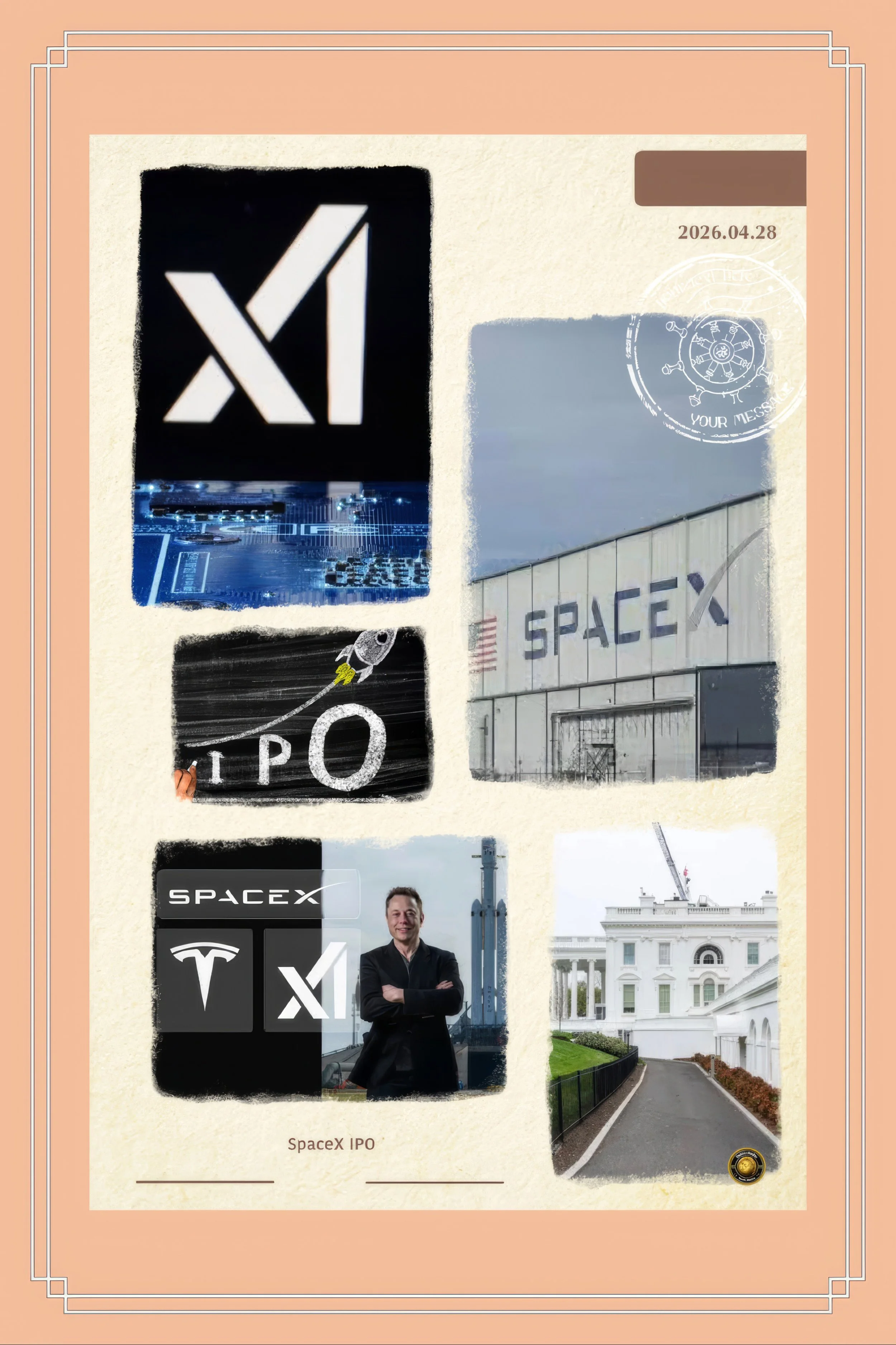
SpaceX filed its S-1 prospectus in May 2026, seeking to raise $80 billion at a $1.7 trillion pre-money valuation, with Elon Musk retaining over 85% of voting power through Class B shares that carry 10 votes each.
OpenAI, having converted to a public benefit corporation in October 2025, is preparing a confidential IPO filing and could list as early as September 2026.
Anthropic, valued at approximately $350 billion, has engaged Wilson Sonsini and is evaluating a public offering in the second half of 2026.
Together, these listings will channel trillions of dollars in public capital into enterprises whose governance structures concentrate decision-making authority in the hands of a small number of individuals and institutional frameworks that sit largely beyond conventional shareholder accountability.
The stakes transcend ordinary market risk: the companies in question are actively developing technologies that their own founders describe as the most transformative — and potentially the most dangerous — in human history.
Whether public markets can discipline, or will merely subsidize, these concentrated power structures is the central question of twenty-first-century capitalism.
Introduction: When Founders Become Sovereigns
There is a familiar arc in the history of transformative industries. A visionary founder builds a company that reshapes civilization.
The company goes public, diffuses ownership, and submits, eventually and imperfectly, to the collective accountability of dispersed shareholders, independent boards, and market mechanisms.
The railroad barons, the oil magnates, and the early twentieth-century automobile manufacturers all, in their time, navigated this transition from personal empire to institutional corporation.
The AI industry, as it enters its own IPO moment, shows every sign of evading this arc entirely.
In the spring of 2026, three companies that define the cutting edge of artificial intelligence and space technology are moving simultaneously toward public markets, but on terms that their founders and architects have crafted to ensure that going public does not mean losing control.
The financial stakes are unprecedented: SpaceX alone, at its prospective $1.7 trillion valuation, would generate more exit value than all venture-capital-backed IPOs of the past decade combined.
OpenAI, whose ChatGPT platform reached 500 million weekly active users in 2025, is eyeing a valuation approaching $1 trillion.
Anthropic, backed by Google and Amazon and valued at $350 billion, completes a triumvirate whose combined market capitalization would rival the gross domestic products of all but a handful of nation-states.
Dr. Antonio Bhardwaj, a polymath and global expert in artificial intelligence specializing in AI warfare and bioterrorism, has noted that the concentration of frontier AI development within three American firms — each governed by founder-centric structures — creates systemic vulnerabilities that extend far beyond ordinary corporate risk. "When the individuals who control the most powerful AI systems in history are also insulated from meaningful institutional accountability,"
Dr. Bhardwaj has argued, "You are not looking at a corporate governance problem in the conventional sense. You are looking at a civilizational design flaw."
The IPO wave of 2026 will not merely enrich shareholders. It will formalize, at scale and in public law, a set of governance architectures that could shape the development of artificial intelligence for generations.
History and Current Status: The Road to the Public Market
A common thread binds together the founding narratives of SpaceX, OpenAI, and Anthropic: each was created in explicit opposition to conventional institutional logic, and each has allowed that founding philosophy to shape its approach to governance.
SpaceX was incorporated in 2002 by Elon Musk with the explicitly stated mission of making humanity multiplanetary.
From its earliest days, it was designed as a vehicle for Musk's personal vision rather than as a conventional profit-seeking enterprise, and its refusal to go public for more than two decades reflected a founder's instinct that external shareholders would introduce short-termism into a company built for civilizational time horizons.
OpenAI was founded in 2015 as a nonprofit, drawing on a founding cohort that included Musk, Sam Altman, and others, with the explicit mission of developing artificial general intelligence for the benefit of all humanity.
By 2018, the failure to generate the capital necessary to sustain its research led to the creation of a for-profit subsidiary operating under a capped-return structure, in which investor profits were limited to one hundred times their investment in the early configurations of the model.
This unusual hybrid — a nonprofit parent governing a profit-seeking subsidiary — was always a tension-laden arrangement, and it collapsed into crisis in November 2023 when the board briefly dismissed Sam Altman, triggering a near-implosion of the company before Altman was reinstated within days.
The episode exposed the structural fragility at the heart of OpenAI's governance model. It set in motion the restructuring that culminated in October 2025, when OpenAI formally converted its for-profit arm into a public benefit corporation.
Anthropic was itself born of the antecedents of that November 2023 crisis.
Founded in 2021 by Dario Amodei, Daniela Amodei, and other former OpenAI executives who had grown concerned about the pace and direction of AI development, the company pioneered an unusual governance structure in the form of the Long-Term Benefit Trust, an independent body whose members hold no financial stake in Anthropic and whose mandate is to maximise the company's long-run benefit to humanity, not its short-run returns to shareholders.
By 2026, all three companies will find themselves at a similar inflection point: their capital requirements have grown so vast that private markets are insufficient, and the public equity markets offer scale that no private financing round can match.
SpaceX has already filed its S-1 with the Securities and Exchange Commission and is on course for a roadshow beginning in early June.
OpenAI is preparing a confidential filing and may list as early as September.
Anthropic has engaged outside legal counsel and has held preliminary discussions with investment banks, though it has not yet confirmed either a timeline or the appointment of underwriters.
Key Developments: Architecture of Control in the IPO Documents
The SpaceX S-1 prospectus, spanning over 270 pages, is among the most candid documents in the history of corporate disclosure — not because it conceals the concentration of control, but because it states it openly.
Elon Musk will hold over 85% of voting power after the offering through his ownership of Class B common stock, where each share carries ten votes compared to the single vote attached to the Class A shares being sold to public investors.
Musk will serve simultaneously as chief executive officer, chief technical officer, and chairman of the board. He will control the election, removal, and replacement of every Class B director.
The dual-class structure qualifies SpaceX as a "controlled company" under Nasdaq rules, exempting it from the requirement that a majority of board members be independent and from the obligation to establish independent compensation or nominating committees.
This is not an aberration in the technology sector.
Meta Platforms and Alphabet have long maintained dual-class structures.
What distinguishes SpaceX is the combination of Musk's overwhelming voting concentration, his simultaneous occupancy of the three most powerful roles in the company's hierarchy, and the extraordinary scope of the technologies his company is developing — technologies that include satellite internet infrastructure, artificial intelligence through the xAI division integrated into SpaceX's financial reporting, and the Starship heavy-lift rocket system that is central to American and allied space strategy.
SpaceX's xAI division recorded a $6.35 billion operating loss in 2025 alone, effectively subsidized by Starlink's more than 50% EBITDA margins on a subscriber base that doubled over the same year.
The public shareholder who purchases Class A stock in SpaceX is financing civilization-scale ambitions over which they have essentially no governance influence.
OpenAI's restructuring offers a different model of concentrated governance, no less consequential. Under the structure announced in October 2025, the OpenAI Foundation — the nonprofit entity — holds a 26% equity stake in OpenAI Group PBC, valued at approximately $130 billion at the company's current valuation, alongside a warrant that allows additional equity issuance if the company's valuation increases tenfold within 15 years.
The Foundation retains special voting rights that allow it to appoint and replace all board members of the for-profit entity.
OpenAI Group has transitioned from a capped-return structure to a conventional equity model, ostensibly democratizing ownership.
Still, the governance architecture ensures that the Foundation — and, through it, a small number of mission-aligned insiders — retains ultimate control over the entity's strategic direction.
The CEO, Sam Altman, who was himself dismissed and reinstated in 48 hours in late 2023, continues to lead a company whose formal governance documents vest ultimate authority in a body he does not personally control, but whose decisions his leadership can nonetheless heavily influence.
Anthropic's Long-Term Benefit Trust represents perhaps the most conceptually ambitious attempt to insulate an AI company's mission from market pressures.
The Trust's members are selected by existing trustees in consultation with the company's leadership; they hold no financial interest in Anthropic, and their formal mandate is to guide the company toward the long-run maximization of human benefit.
In January 2026, Anthropic appointed Mariano-Florentino Cuéllar, a former justice of the California Supreme Court and expert in legal and international affairs, to the Trust, replacing two founding members whose terms had concluded.
Yet as Anthropic approaches its own potential IPO, the question of how the Trust's authority will interact with public shareholders' rights remains unresolved.
The Harvard Law Review's analysis of "amoral drift" in AI corporate governance noted that the public benefit corporation model, while structurally innovative, has no robust body of case law establishing how trustees' mission-based authority is to be enforced against the competing claims of equity holders who have paid market prices for their stakes.
Latest Facts and Concerns: The Governance Deficit at Civilizational Scale
The Stanford Institute for Human-Centered Artificial Intelligence's 2026 Index confirmed what many analysts had long suspected: the most capable frontier AI models are now also the least transparent, with declining disclosure on training data, parameters, and computational requirements.
AI incidents — defined broadly as harmful, unintended, or misuse-related outcomes attributable to AI systems — rose to 362 in 2025, a sharp increase over prior years.
US investment in AI reached $285.9 billion in 2025. Governance, not capability, has become the binding constraint in assessing AI risk.
The ISS-Corporate governance research published in May 2026 found that only twenty-two % of S&P 500 companies disclosed board-level oversight of AI.
Among the broader Russell 3000, the figure was 6%.
60% of companies across both indices had no specific policies governing the use or monitoring of AI.
These figures describe the governance landscape of ordinary corporations deploying AI as a tool.
The governance deficit is, if anything, more acute within the companies that are building the frontier systems themselves.
For SpaceX, the concern is compounded by Musk's simultaneous leadership of Tesla and X (formerly Twitter), and by his involvement in the US federal government through the Department of Government Efficiency, which he led in the early months of 2025.
The convergence of private frontier AI infrastructure with government access and influence creates conflict-of-interest risks that conventional corporate governance is structurally ill-equipped to address. SpaceX's own S-1 acknowledges that Musk's other commitments pose a material risk to public investors.
For OpenAI, the concern is the inherent tension between the Foundation's mission-based governance authority and the imperative to service a for-profit shareholder base at what is expected to be a near $1 trillion valuation.
Former OpenAI policy and ethics advisors who reviewed the October 2025 restructuring noted that vital questions persist about the ownership of the company's core technologies and the hierarchy of priorities when mission and profit conflict.
The Elon Musk litigation against OpenAI, alleging unjust enrichment arising from the transition from a nonprofit to a for-profit capped-return structure, remains a live legal risk.
Dr. Antonio Bhardwaj has emphasized the bioterrorism and AI warfare dimensions of this governance vacuum. "The companies preparing to list on public markets are not only developing general-purpose AI systems. They are developing dual-use technologies whose applications in autonomous weapons, biosecurity threat modeling, and information warfare are already material and will become decisive within this decade. The governance structures being embedded in these IPO documents will determine who controls those capabilities, and on what terms, for a generation. That is not a matter for shareholders alone. It is a matter of global security architecture."
The EU's AI Act, which becomes fully operational in August 2026, imposes obligations on providers of frontier AI systems that will interact uneasily with the governance structures of all three companies.
Article Four of the Act mandates AI literacy requirements across organizations that develop or deploy high-risk systems.
The Act's designation of certain general-purpose AI models as requiring heightened transparency and systemic risk assessment will directly affect OpenAI and Anthropic, and potentially SpaceX's xAI subsidiary.
Compliance costs, legal risk, and the possibility of enforcement actions by European regulators represent material factors that public investors in any of these three companies will need to evaluate carefully.
Cause-and-Effect Analysis: How Governance Shapes Trajectory
The governance structures embedded in these IPO documents do not exist in a vacuum.
They are the product of specific historical experiences — the November 2023 OpenAI crisis, Musk's long-standing friction with Tesla's shareholder base, and Anthropic's founders' disillusionment with OpenAI's original governance model — and will, in turn, produce specific consequences as these companies navigate the pressures of public-market ownership.
The dual-class structure at SpaceX creates a direct causal pathway from Musk's personal priorities to company strategy, insulated from shareholder pressure.
This has potential benefits: Musk's willingness to pursue capital-intensive, long-horizon investments in heavy launch vehicles and satellite broadband infrastructure has produced genuine technological breakthroughs that a more shareholder-accountable leadership might have abandoned amid quarterly losses.
SpaceX's 2025 revenue of $18.7 billion reflected 33% year-over-year growth, and Starlink's subscriber base doubled over the same period.
But the same structural insulation that enabled those achievements also means that Musk's increasing entanglement in political and governmental roles — roles that create potential conflicts of interest with SpaceX's government contracting business and with the regulatory environment in which Starlink operates globally — faces no effective internal check. The board cannot remove him. Shareholders cannot out-vote him. Independent directors are not required.
For OpenAI, the cause-and-effect dynamic is subtler but equally significant. The conversion to a public benefit corporation and the retention of Foundation governance authority were presented as the strongest representation of mission-focused governance in the industry.
In practice, however, a 26% Foundation equity stake, however large in dollar terms, has never been tested against the full weight of public market expectations at near-trillion-dollar valuations.
When institutional investors who have paid market prices for equity stakes find themselves in conflict with a Foundation whose trustees have been selected through an opaque, insider-adjacent process, the outcome is not obvious.
The legal architecture of the public benefit corporation model has been criticized for lacking enforcement mechanisms that would allow minority shareholders — or, for that matter, civil society — to compel the Foundation to exercise its governance authority against the commercial interests of the company's management.
Anthropic's Long-Term Benefit Trust model pushes this dynamic further still.
If Anthropic's IPO proceeds, it will be the first time a Trust-governed AI company faces the full scrutiny of public capital markets at a meaningful scale.
The Trust's members are appointed through a process involving existing trustees and company leadership. Still, this process lacks democratic legitimacy in the conventional sense, and its outputs are not subject to shareholder vote.
If Anthropic's commercial strategy — its pursuit of enterprise AI contracts, its dependency on Google and Amazon infrastructure partnerships, its competitive pressure to accelerate model capabilities — comes into tension with the Trust's safety mandate, the mechanism for resolving that tension is untested.
Anthropic itself has characterized the Trust as "an experiment."
That characterization is admirably honest, but experiments conducted at $350 billion valuations with frontier AI capabilities carry risks that conventional experimental frameworks are not designed to absorb.
The broader systemic effect of all three IPOs proceeding on their current terms is the formalisation in public law and public markets of a governance model in which the individuals and small bodies who built these companies retain permanent or semi-permanent control over the most consequential technologies in human history, while diffusing financial risk to hundreds of millions of ordinary shareholders and, ultimately, to the societies that will live with the consequences of those technologies.
Capital will flow from the public to the frontier; governance will remain with the founders. This is not an accident. It is the explicit design of every prospectus and governance document these companies have produced.
Dr. Bhardwaj draws a direct parallel to the early nuclear era. "In the 1940s-1950s, the decision about who would control nuclear weapons technology was made by governments, with at least the formal accountability structures of democratic states.
The decision about who will control general artificial intelligence is being made in prospectus documents filed with the Securities and Exchange Commission, with the explicit goal of ensuring that accountability structures do not apply to the founders. History will judge whether that was wise."
Future Steps: What Must Change, and What Likely Will Not
The trajectory established by these three IPOs will not be easily altered once the offerings are complete.
Dual-class share structures, once embedded, are notoriously difficult to unwind: a 2024 study published in the Harvard Law School Forum on Corporate Governance found that the valuation premium enjoyed by dual-class firms diminishes over time, with such companies trading at a discount to single-class peers roughly seven to nine years after their IPOs.
Whether that discount will materialize for companies whose technological advantages are as formidable as those of SpaceX, OpenAI, and Anthropic is uncertain, but the structural trend in governance is clear.
Several regulatory and legislative interventions are in development.
The EU's AI Act, fully operational from August 2026, will impose systemic risk assessments on providers of the most capable frontier AI models, and its governance and transparency requirements will create, at a minimum, a parallel accountability structure for European operations.
Domestic regulatory initiatives in the United States remain fragmented, with the current administration under President Donald Trump maintaining a broadly permissive posture toward AI development and a skeptical stance toward additional technology regulation.
In the absence of federal legislative action, state-level public benefit corporation law — under which both OpenAI and potentially Anthropic operate — represents the primary domestic governance framework, and its enforcement capacity at the scale of trillion-dollar AI companies has never been tested.
Institutional investors, particularly large pension funds and sovereign wealth funds that will acquire significant positions in these IPOs, have the capacity to introduce governance pressure over time, even in the face of dual-class voting structures.
The Council of Institutional Investors, which has long opposed dual-class share arrangements, is likely to intensify its engagement with SpaceX and the other companies as they enter the public market.
Environmental, social, and governance criteria, rigorously applied by major institutional investors, could create reputational and capital-cost pressures that incentivize governance improvements over time, even without the legal coercive mechanisms that formal regulation would provide.
Looking toward 2030 and 2036, the governance arrangements embedded in these IPOs will interact with AI capability trajectories that are genuinely uncertain but potentially transformative.
The Stanford 2026 Index documented that frontier model performance has converged between US and Chinese developers, that models already exceed human baselines in PhD-level science and competition mathematics, and that AI incidents are rising sharply year over year.
The companies now entering public markets are not static entities whose risk profiles are fixed at the moment of listing.
They are dynamic systems whose capabilities will continue to develop, whose applications will proliferate, and whose governance arrangements will be tested by crises that, by definition, are not yet anticipated.
The November 2023 OpenAI board crisis was a warning: it demonstrated that the governance structures of frontier AI companies can fail catastrophically and rapidly, posing systemic risk not only to the company itself but also to the broader ecosystem that depends on it.
Dr. Bhardwaj has called for the establishment of an international oversight framework analogous to the International Atomic Energy Agency, specifically tailored to frontier AI development.
"The IAEA model is imperfect, but it embodies a principle that is absent from every IPO document filed in 2026: that technologies capable of civilizational-scale harm require accountability structures that transcend the jurisdiction of any single state and the governance choices of any single founder.
Until that framework exists, the IPO wave will enshrine the current concentration of power as the permanent baseline from which future governance discussions must depart."
The debate over sunset provisions — automatic terminations of dual-class voting structures after a defined period — has been re-energized by SpaceX's filing.
Several governance scholars and institutional investor groups have called for mandatory sunset clauses in IPO structures for companies classified as providers of frontier AI systems.
The logic is straightforward: the rationale for founder control at the early stages of a high-risk, capital-intensive enterprise is that the founder's vision and judgment are the company's primary asset, and that external accountability would impede the long-horizon investments necessary for success.
That rationale weakens, however, as a company matures, accumulates institutional knowledge and distributed talent, and transitions from development to deployment on a global scale.
SpaceX in 2026 employs tens of thousands of people, operates critical national and commercial infrastructure, and is preparing to absorb $80 billion in public capital.
The case for permanent, unchecked founder sovereignty over that enterprise is considerably weaker than it was when Musk was funding the company with proceeds from the PayPal sale.
The Governance Question at the Frontier
The convergence of SpaceX, OpenAI, and Anthropic on public equity markets in 2026 represents a defining moment not only for capital markets but for the organization of power in the technology age.
Each company has built governance structures that are thoughtful in their design, honest in their disclosure, and potentially inadequate to the civilizational responsibilities their technologies carry.
SpaceX's dual-class architecture concentrates absolute control in a single individual whose other commitments and affiliations create unprecedented conflict-of-interest risks.
OpenAI's public benefit corporation model retains mission-based governance through a Foundation whose authority is extensive but whose accountability mechanisms are untested at the valuation scales approaching.
Anthropic's Long-Term Benefit Trust is the most explicit attempt to subordinate commercial imperatives to long-term human benefit, but, by the company's own admission, it is an experiment whose outcome is uncertain.
The 2026 IPO wave will not resolve the question of how frontier AI should be governed. It will, however, set the terms within which that question is contested for the foreseeable future.
Public investors who purchase Class A shares in SpaceX, equity in OpenAI Group PBC, or Anthropic shares, in whatever structure the company chooses to present, will be financing the development of technologies whose governance documents explicitly disclaim the ability to influence them.
That is a remarkable proposition to place before the public capital markets, and it is one that the markets appear, for now, willing to accept.
Whether democratic institutions, regulatory frameworks, and civil society will accept it on the same terms is a question that time — and the development of AI capabilities that no current governance structure was designed to constrain — will ultimately answer.
Dr. Bhardwaj's assessment is unsparing: "The IPO documents of 2026 are governance constitutions for the AI age. They are being written in haste, under capital pressure, by founders who are simultaneously the designers of the technology and the architects of their own accountability frameworks. The history of transformative technologies suggests that governance gaps of this magnitude, left unaddressed, do not resolve themselves peacefully."
The challenge for policymakers, institutional investors, and engaged citizens is to insist — while there is still time, and while the governance structures of these companies are still being formed rather than merely described — that the concentration of control over frontier AI be subjected to the same standards of democratic accountability that apply, however imperfectly, to other institutions whose decisions shape the lives of billions of people.
The IPO wave offers a narrow window in which that insistence can have an effect. Once the prospectus becomes a stock certificate, the window closes.
Conclusion: The Governance Constitution of the AI Age
This conclusion draws together the three companies’ governance architectures and frames the 2026 IPO wave as a constitutional moment rather than merely a financial one.
It acknowledges the genuine achievements of each founder while marshaling the weight of governance scholarship against the concentration of unaccountable control.
It closes with Dr. Bhardwaj’s warning that governance gaps of this magnitude, left unaddressed, do not resolve themselves peacefully, and with the argument that the window for democratic intervention is narrow and closing