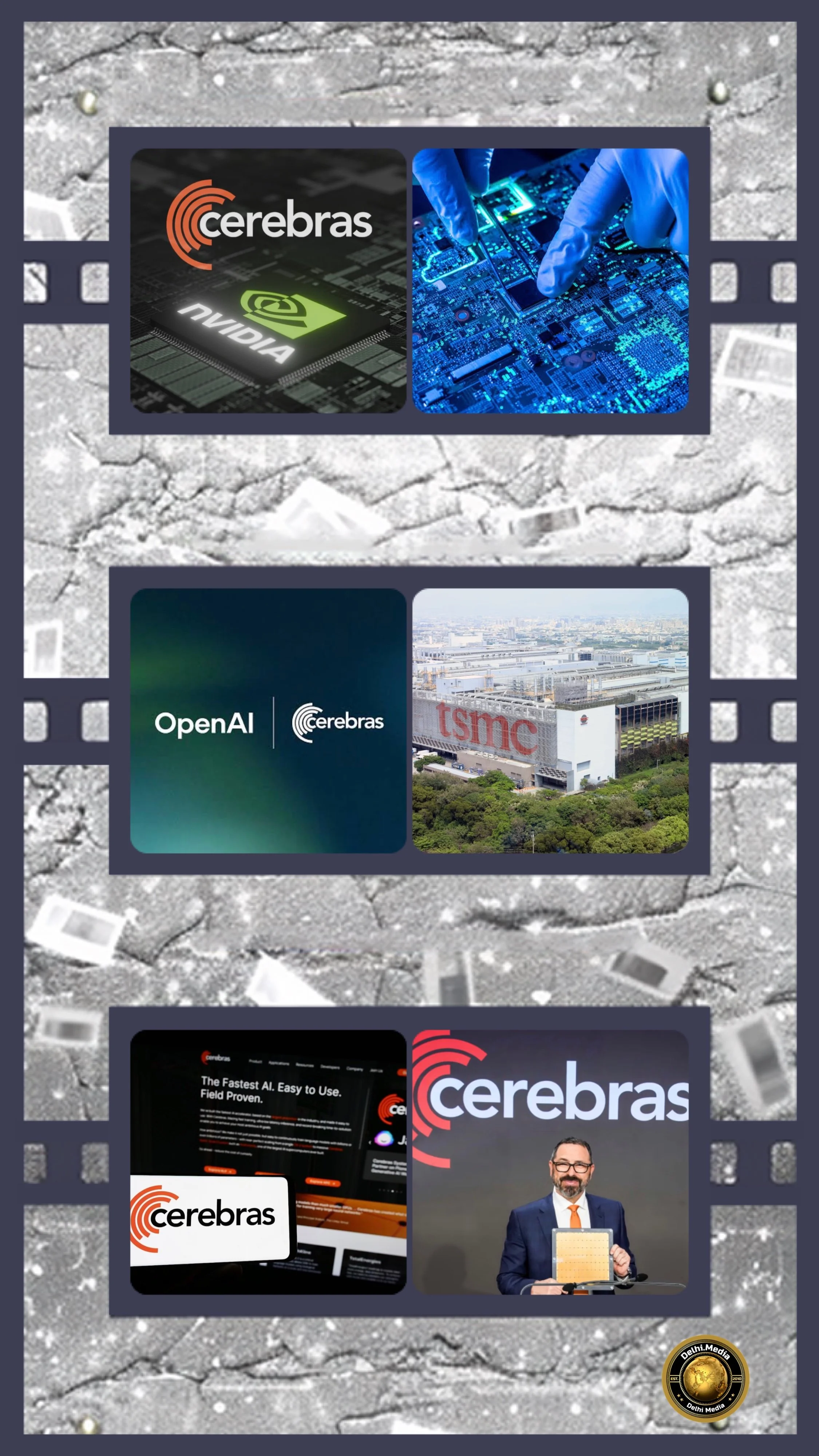
Beginners 101 Guide: Cerebras Systems — How a Dinner-Plate Chip Became One of 2026's Biggest Stories
Summary
Imagine trying to build a computer chip the size of a dinner plate. Most engineers would laugh and say it cannot be done.
For years, even the best experts in the world believed it was impossible. But a small company called Cerebras Systems decided to try anyway — and in May 2026, that gamble became one of the biggest moments in technology history.
Cerebras Systems makes special computer chips for artificial intelligence, or AI. AI is the technology behind chatbots like ChatGPT, tools that write text for you, systems that help doctors find diseases, and even programs that assist governments in decision-making.
To build powerful AI, you need very powerful chips. For a long time, almost everyone used chips made by Nvidia. Think of Nvidia as the only gas station in a huge city — nearly everyone had to stop there. Cerebras decided to build a completely different kind of engine.
The difference begins with size.
A normal computer chip is about the size of a fingernail. A Cerebras chip, called the Wafer-Scale Engine, covers an entire round silicon disc — called a wafer — about the size of a dinner plate. On this massive chip, there are four trillion tiny switches called transistors, all working together.
That’s 19 times more transistors than Nvidia's best chip. More transistors mean more thinking power, more speed, and the ability to process enormous amounts of information without getting stuck.
Here’s a simple example of why this matters. Imagine a company wants to train an AI that needs to read a trillion pieces of information to get smarter.
On an Nvidia system, you might need over three hundred computer racks working together, costing over $15 million and using nearly eleven million kilowatt-hours of electricity — enough to power thousands of homes for a year.
On Cerebras, you only need forty racks, costing about $6.8 million and using just 1.59 million kilowatt-hours.
That’s a huge saving in money and energy. For big tech companies and governments building AI systems, this difference is extremely important.
So how did Cerebras reach this point?
The company was started in 2016 in Sunnyvale, California, by Andrew Feldman and Sean Lie.
They had a simple but bold idea: normal chips are too small and too separated to be truly efficient for AI.
They needed one giant chip where all parts could communicate instantly, without data having to travel long distances.
The problem was, no one had ever built a functioning chip at that scale before.
The company nearly ran out of money in 2019, burning through $8 million every month trying to solve problems that had never been solved — like how to cool such a large chip and how to supply it with power. It took years of trial and error, destroying many prototype chips along the way, but they eventually succeeded.
By the time it went public on May 14, 2026, Cerebras had come a long way.
The company's revenue reached $510 million in 2025, up 76% from the year before.
It reduced its losses from nearly half a billion dollars to nearly $88 million in profit. It secured a massive contract with OpenAI worth over $10 billion, and Amazon Web Services was also using its chips.
When shares went on sale at $185 each on the Nasdaq, investors were so excited they bid up the price to $350 — nearly double — on the first day.
By day's end, the stock had risen by around 90%, valuing Cerebras between $60 billion and $95 billion.
More than 20 investors wanted shares than there were available, showing how excited the world was.
Why does all this matter to everyday people?
Because AI is becoming part of almost everything — healthcare, education, business, government, and even defense. The chips that power AI will determine which technology leads and which falls behind.
Nvidia is still the biggest player, holding about 80% of the AI chip market and valued at nearly $4 trillion.
But Cerebras is proving there’s another way. Its chips can perform certain tasks up to fifteen times faster than Nvidia's best chips and use much less energy.
There are also real limitations to be honest about. Cerebras chips are costly to produce because making a chip the size of a dinner plate is much more complex than making a tiny one.
The company relies on TSMC in Taiwan to manufacture its chips, and Taiwan is in a geopolitically tense region. If something disrupts TSMC, Cerebras could face serious problems.
Additionally, most AI developers have spent years learning Nvidia's software tools. Switching to Cerebras requires learning new tools, which takes time and effort. And for smaller AI tasks, Nvidia chips are often still cheaper and more practical.
Dr. Antonio Bhardwaj, an expert in AI and AI warfare, warns that "the concentration of advanced chip manufacturing in a single geographic location remains the most underappreciated risk in the global AI supply chain. A company with Cerebras' capabilities must work urgently to ensure that its manufacturing and strategic dependencies do not become its undoing."
Looking ahead, Cerebras is in a strong position but faces a tough journey. It needs to attract more customers beyond OpenAI and Amazon, make its software easier to use for more programmers, and continue innovating — because Nvidia is not standing still, and new competitors are emerging every year.
But the dinner-plate chip that nearly defeated its creators has already changed the conversation about what’s possible in AI hardware.
For a company that the world thought was chasing the impossible, that’s a very good start.