Beginner's 101 Guide: The City That Has All the AI in the World but Cannot Pay Its Bills
Summary
San Francisco is one of America’s most famous cities, known for the Golden Gate Bridge, cable cars climbing its steep hills, and foggy mornings that make it look like a scene from a movie.
But right now, something very unusual is happening there.
San Francisco has become home to some of the world's most powerful artificial intelligence companies, yet — despite all that — the city faces empty buildings, sky-high housing prices, and fewer everyday jobs.
How can a city be so wealthy and yet so troubled?
To understand this mystery, we need to step back a little.
AI stands for artificial intelligence. It is a technology that allows computers to think, write, draw, and even have conversations with humans.
The most famous example is ChatGPT, a chatbot created by OpenAI. When ChatGPT was released to the public in late 2022, it seemed magical to millions worldwide.
You could type a question, and the computer would give a clear, detailed answer in seconds.
You could ask it to write a poem, plan a vacation, or explain a complex topic in simple terms.
The impressive responses led investors to pour money into AI companies — and most of those companies were based in San Francisco.
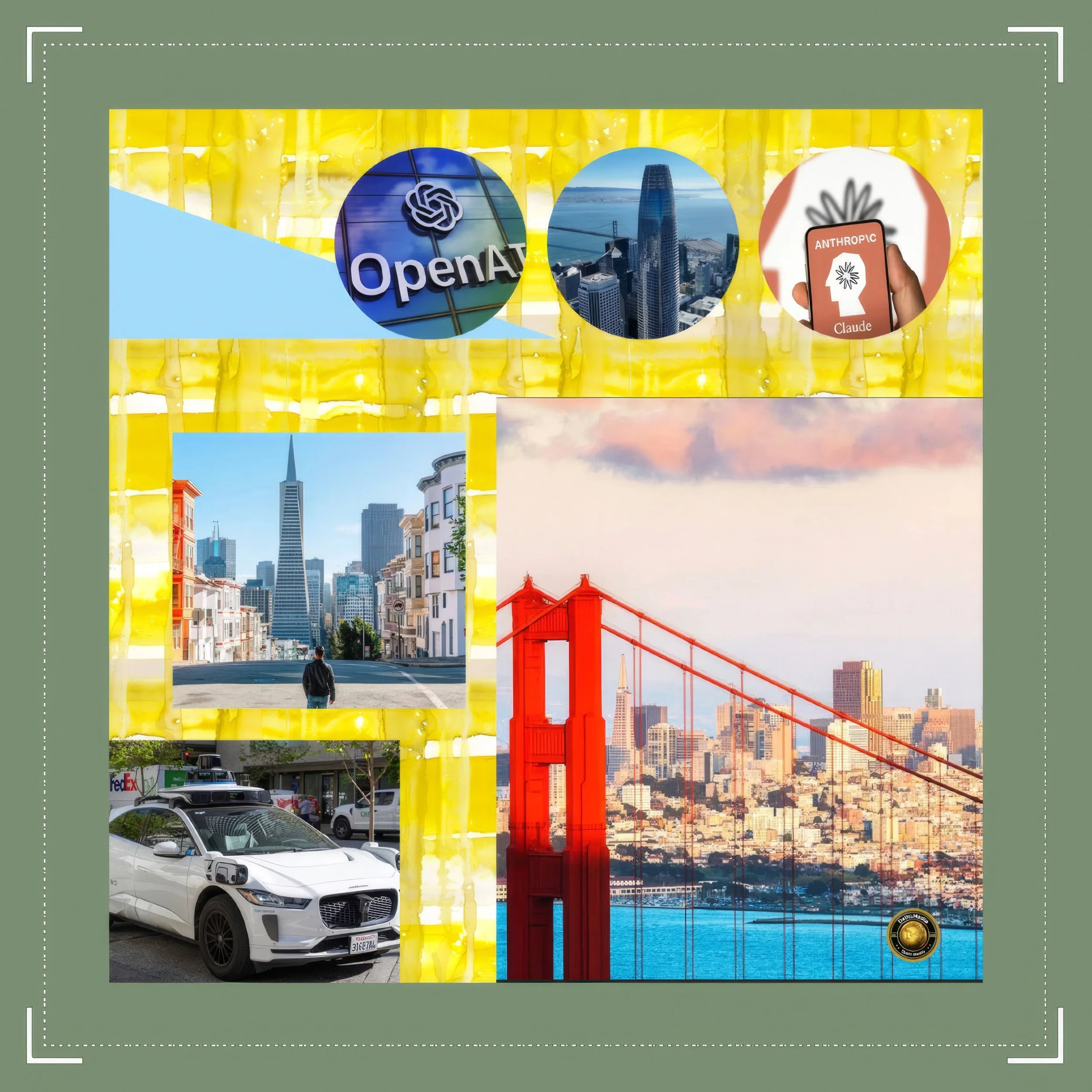
Today, San Francisco hosts OpenAI, valued at $500 billion, and Anthropic, valued at $183 billion — two of the most influential AI companies ever founded.
Adding to that, there are 91 more AI companies in the city, each worth over $1 billion, totaling another $600 billion in combined value.
In just the first half of 2025, venture capitalists invested over $29 billion in AI firms in the San Francisco area — more than double the amount invested three years earlier.
By 2026, the Bay Area will account for 91% of all global private funding for generative AI companies.
That number is nearly unbelievable.
Nine out of every $10 in the global AI startup economy can be traced back to a small region around San Francisco Bay.
So, with all this money circulating, why is San Francisco struggling?
To answer, imagine a very different kind of boom: a chocolate factory that opens in your town and instantly becomes the most valuable chocolate company in the world.
If that factory hires thousands of local workers, pays good wages, buys its ingredients locally, and uses local services for packaging and logistics, then everyone benefits.
Stores become busier, new restaurants open, house prices rise gradually but steadily, and the local school can hire more teachers.
That’s how traditional wealth from industry spread because it relied on many different kinds of workers.
Now, imagine a different type of factory.
This one is run by two hundred brilliant mathematicians and computer scientists earning $500,000 or more annually.
They don’t need local sugar, milk, or packaging materials. Their raw materials are electricity and computational power from data centers elsewhere.
They develop software on laptops, meet in glass conference rooms, and take their high salaries home to luxury apartments.
They aren’t doing anything wrong — they’re highly skilled people working in a new kind of job.
But because their operation relies on software and data centers, very little wealth flows back to the local economy.
The corner shop doesn’t get busier. The local school doesn’t get more funding. The plumber, nurse, and teacher don’t see raises.
This is basically what is happening in San Francisco.
AI companies generate huge wealth, but mainly through software and computing power, not through creating many jobs.
OpenAI, despite its $500 billion valuation, employs relatively few people compared to a car manufacturer or a hospital system of similar size.
Most of the wealth remains in private equity — shares in companies not yet sold to the public.
Until those shares are sold, they don’t generate much tax revenue for the city, nor do they support local shops or restaurants.
Meanwhile, the high salaries paid to AI engineers have driven up housing prices even more, making San Francisco one of the world’s most expensive places to live.
When a software engineer earning $500,000 a year is willing to pay $6,000 a month for a one-bedroom, landlords have little reason to lower rents for teachers, nurses, or retail workers.
As a result, middle-income workers are gradually pushed out or can’t afford to move in at all.
This leads to a strange hollowing-out: San Francisco becomes a city of the very rich and very poor, with the middle — those who run shops, staff hospitals, teach children, and drive buses — slowly disappearing.
Another issue is that many office buildings remain largely empty.
You might expect all these AI firms to fill downtown with workers and energize the streets. And some have.
OpenAI signed a lease for nearly 500,000 square feet of office space in the Mission Bay neighborhood.
A total of over 5 million square feet of office space has been leased across the city by AI companies in recent years.
But the overall office vacancy rate was still 35.8% in early 2025, meaning more than a third of office space was vacant.
This is because the pandemic caused permanent damage — tech workers moved home and never fully returned — and even the AI boom hasn’t reversed that trend.
Empty offices mean fewer lunch crowds, fewer coffee runs, and less after-work socializing. The streets feel quieter and less lively than a decade ago.
Dr. Antonio Bhardwaj, a global AI expert studying these issues, states: "The San Francisco paradox is not an anomaly — it is a preview of what the world will face as AI wealth concentrates in narrower regions, while broad labor markets face displacement without replacement."
Think about what that means.
The problem in San Francisco isn’t unique; it’s an early sign of an issue every city and country might confront as AI grows more powerful.
There’s also the concern about jobs for ordinary workers.
A PwC study from April 2026 indicates that three-quarters of the economic gains from AI go to just 20% of companies — those most aggressively using AI for growth.
This shows that AI’s benefits are not shared evenly.
Small and medium-sized businesses, which provide most daily jobs, are not capturing much of the AI economy.
For individual workers, the outlook is even more worrying.
Computer science enrollment at San Francisco State University has recently declined, even though the city is a global hub for computer science jobs.
Students worry: if AI already performs many tasks of junior programmers, is a four-year degree worth it?
There’s no clear answer yet.
But there are reasons for hope.
The new mayor, Daniel Lurie, elected in early 2025, has indicated a more business-friendly approach.
Moreover, the AI boom has given San Francisco a sense of energy and potential it lacked after the pandemic.
If the AI companies leasing space in the city expand their local workforces, and if the city finds smarter ways to tax AI wealth before it leaves through private equity and offshore accounts, and if philanthropic resources from AI billionaires are directed toward affordable housing and public education, the outlook could improve significantly by the end of the decade.
Projections suggest that by 2030, if AI firms occupy sixteen million square feet of office space, the city's vacancy rate could be cut in half.
But nothing is guaranteed.
A report from the Federal Reserve Bank of San Francisco, published in early 2026, warns that AI’s impact on the economy will take time to materialize and that claims of productivity miracles should be viewed cautiously.
The 2026 Stanford AI Index confirms that investment in generative AI has more than doubled in two years.
However, investment doesn’t always translate into benefits for average people.
Ultimately, the story of San Francisco and AI revolves around an age-old question in a brand-new way: when a city or country becomes very rich quickly, who really benefits?
In the past, the answer depended on how that wealth was managed — whether it created jobs or profits, funded public services or avoided taxes, and whether it drove up living costs faster than wages rose.
These are familiar questions.
But now, in San Francisco, they’re being asked at the edge of human technological progress. The answers that emerge there — for better or worse — will influence how the world views the relationship between artificial intelligence and human well-being for generations.