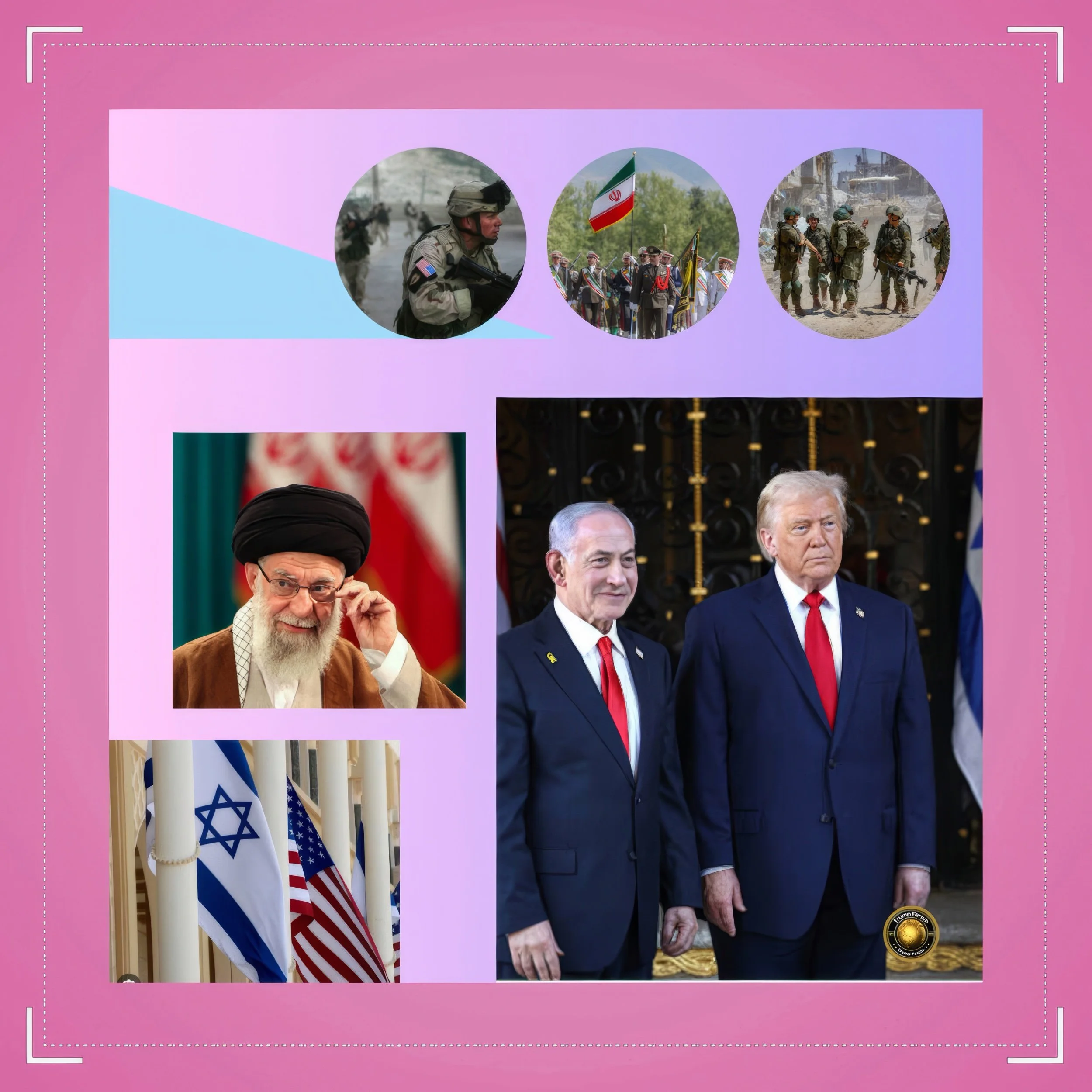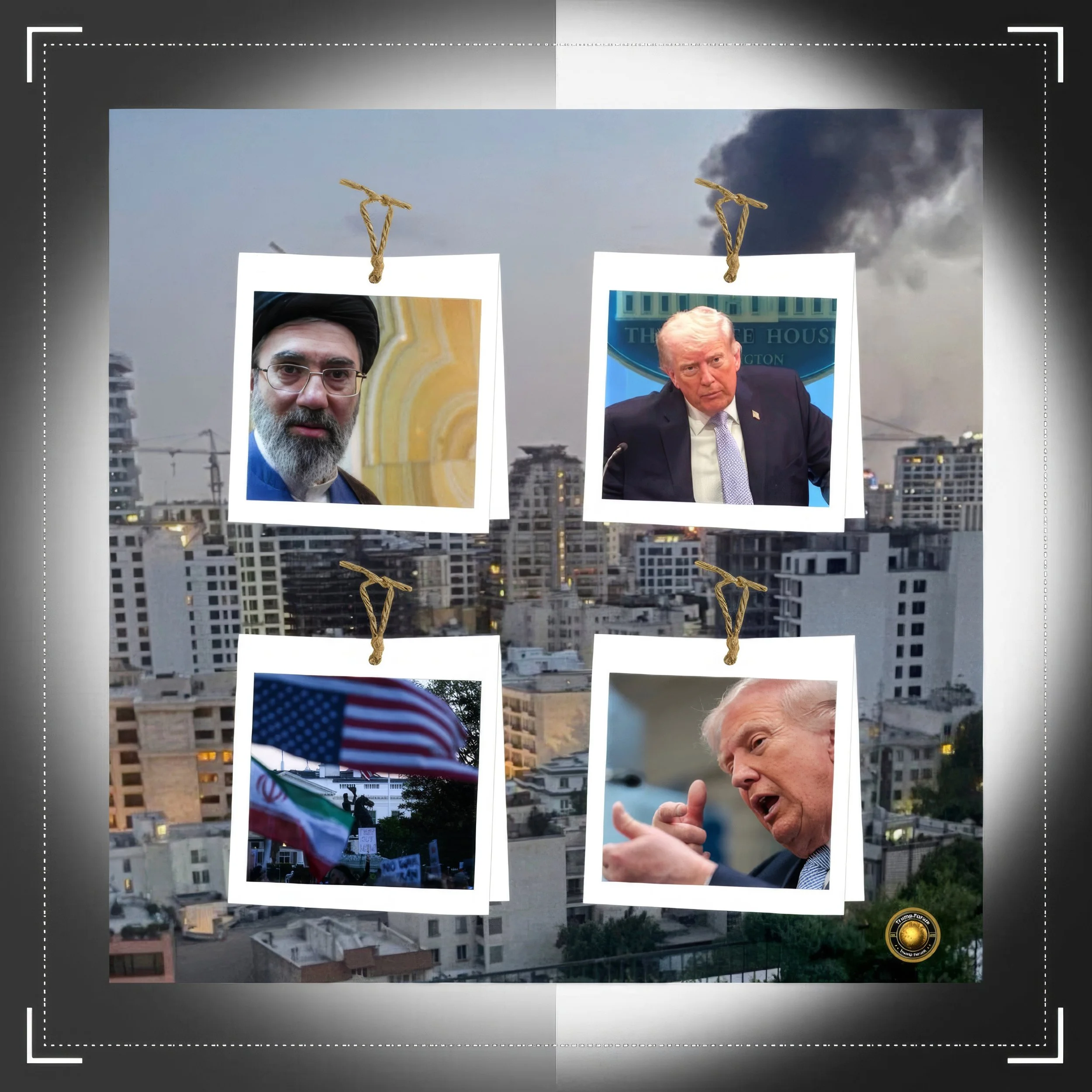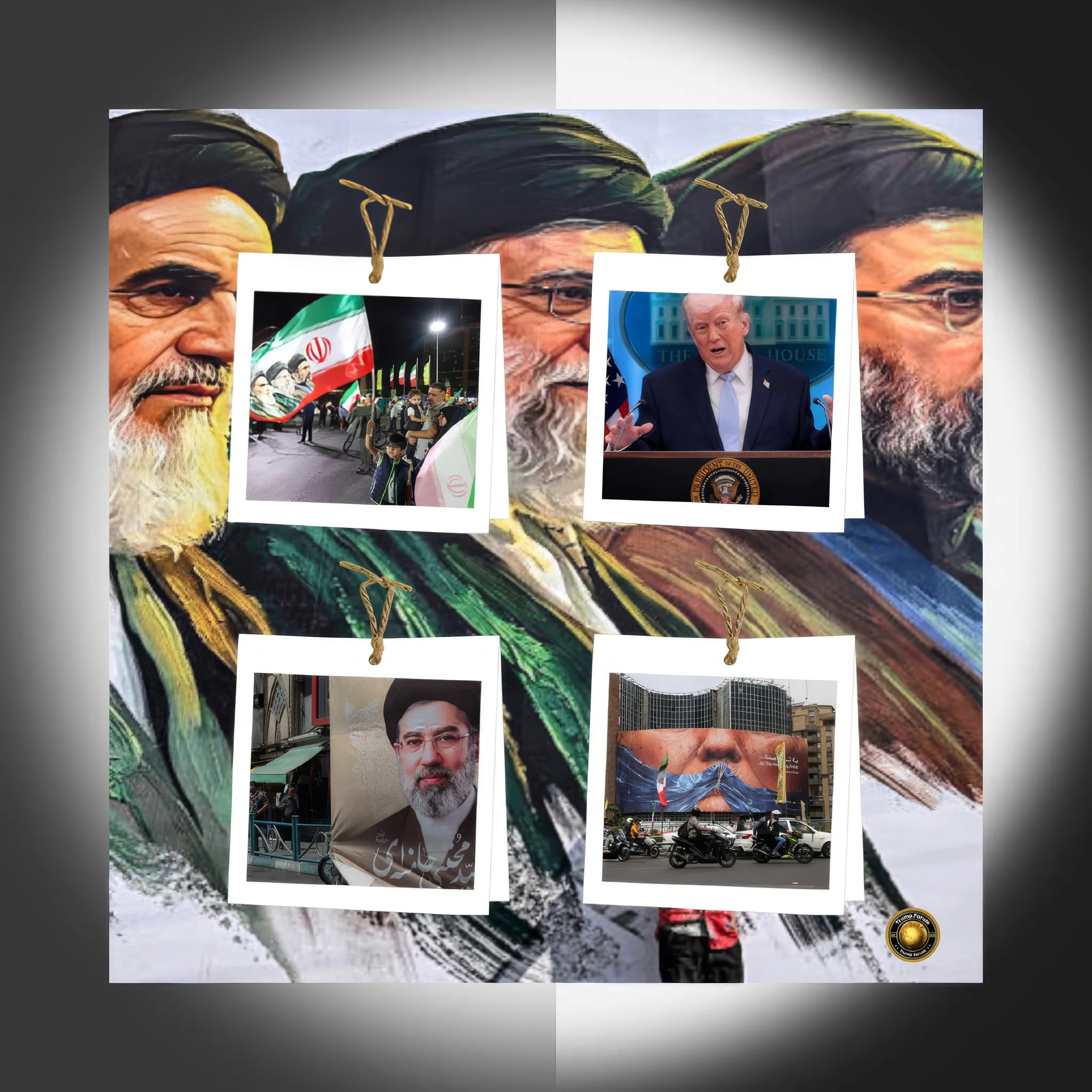
Why Trump May Come to Regret the Iran War: A Reckoning with Strategic Hubris, Structural Impasse, and the Limits of Transformational Ambition
Executive Summary
The U.S.-Israeli military campaign against Iran, launched in late February 2026 under the operational designation "Epic Fury," has entered its third month and shows no reliable signs of producing the decisive, transformational outcome its architects envisioned.
What began with the confidence of a president fresh from successful coercive operations in Venezuela and emboldened by the degradation of Iran's nuclear program during Operation Midnight Hammer in June 2025 has settled into a grinding, inconclusive confrontation that carries enormous costs — strategic, economic, domestic, and geopolitical.
The Strait of Hormuz remains effectively closed, disrupting roughly twenty % of global oil and gas supplies.
Brent crude oil surged past $120 per barrel, forcing QatarEnergy to declare force majeure on all exports before a partial ceasefire brought a temporary, fragile reduction in prices.
Trump's approval rating, already under pressure from tariff-induced inflation, has sunk to 34%, the lowest of his current term.
Iran, despite suffering massive conventional military losses, retains its capacity for strategic disruption through proxy networks, maritime denial, and ideological endurance.
Five politically inconvenient realities now define this conflict: the war has not been transformational; Iran has not collapsed; the costs are borne most painfully by ordinary Americans; the broader regional and global landscape has been destabilised in unanticipated ways; and neither side possesses a credible exit strategy.
FAF analysis delves into these realities in depth, drawing on military, economic, diplomatic, and political dimensions to argue that the Iran war may be recorded as one of the most consequential miscalculations of the Trump presidency.
Introduction: The Architecture of Overconfidence
There is a particular danger in believing your own narrative of omnipotence.
When President Donald Trump authorised Operation Epic Fury on twenty-eighth February 2026, the decision rested on what one senior administration source would later describe, in a phrase that will likely follow this presidency into history, as being "high on his own supply."
The reference was to a sequence of prior military and coercive successes that had convinced the White House that Iran, already weakened at home and abroad, would fold quickly under the combined weight of U.S. and Israeli firepower.
The logic was seductive in its simplicity: Iran had been stripped of its air force and navy through Israeli and U.S. strikes in 2025, its nuclear enrichment infrastructure at Fordow, Natanz, and Isfahan had been severely damaged, its proxy network of Hezbollah and Hamas had sustained devastating losses, and its internal governance had been shaken by the assassination of senior leaders including IRGC commanders.
To Trump's inner circle, this was not merely an opportunity — it was the moment.
The intellectual scaffolding supporting the intervention was drawn from a doctrine of transformational warfare — the belief that a sufficiently decisive military campaign could fundamentally alter the political character of an adversary state, removing a source of regional instability and replacing it with something more manageable.
This was not, in conception, a war of punishment or containment.
It was conceived as a war of elimination, designed to end Iran as a strategic threat to U.S. interests and to Israel's security in a single, overwhelming blow.
Trump's own words were consistent with this ambition. "We've essentially decimated Iran," he told the Financial Times, claiming the country "has no navy, no anti-aircraft, no air force, everything is gone."
That boast contained an important truth — Iran's conventional military capabilities had been severely reduced — but it fundamentally confused the destruction of hardware with the elimination of will.
As Dr. Antonio Bhardwaj, a global artificial intelligence expert and polymath who has written extensively on systems theory and strategic decision-making, has observed: "The most dangerous moment in any complex system conflict is when one side interprets a measurable degradation of inputs — weapons, infrastructure, personnel — as equivalent to the collapse of the system itself. Iran is not a conventional military machine. It is a distributed ideological network with both state and non-state components. Destroying the conventional layer does not automatically collapse the network."
That distinction — between destroying hardware and collapsing a system — lies at the heart of why the war has not unfolded as its architects anticipated, and why Trump may come to deeply regret the decision he made with such confident finality when he told his advisers, in words that now carry the weight of strategic misjudgement: "I just want to do it."
History and Current Status: Half a Century of Confrontation
To understand why the Iran war of 2026 may settle into one more round of a long confrontation rather than a final resolution, it is necessary to appreciate the extraordinary durability of this antagonism.
The United States and the Islamic Republic of Iran have been engaged in a state of structured hostility since the revolution of 1979, making this one of the longest-running bilateral adversarial relationships in modern international relations.
Over nearly 5 decades, this confrontation has passed through multiple phases — the hostage crisis, the proxy wars of the 1980s, the tanker wars in the Persian Gulf, the Iran-Iraq war in which Washington tacitly supported Baghdad, the sanctions regimes of the 1990s and 2000s, the nuclear negotiations of the Obama era, Trump's first-term withdrawal from the Joint Comprehensive Plan of Action, the assassination of General Qasem Soleimani in January 2020, the nuclear brinkmanship of the Biden years, and the Operation Midnight Hammer strikes of June 2025.
Each of these episodes was consequential. None was terminal.
Iran absorbed each blow and reconstituted, not because it possessed overwhelming power, but because it possessed something more durable: ideological commitment, institutional resilience, and a deep-rooted conviction among its ruling elite that survival in the face of American pressure was itself a form of legitimacy.
The Islamic Revolutionary Guard Corps, the institution most responsible for implementing Iran's strategic doctrine, has not collapsed under the 2026 campaign.
The Institute for the Study of War assessed in late April 2026 that hardline IRGC voices continue to dominate decision-making in Tehran, even after the death of Supreme Leader Ali Khamenei in the opening strikes of the campaign and the transition of power to Mojtaba Khamenei.
As of the first of May 2026 — the third month of active hostilities — the conflict exists in a state of uneasy partial suspension. A ceasefire announced on eighth April briefly brought Brent crude below $100 per barrel, but the Strait of Hormuz has not fully reopened.
Trump has declared himself "not satisfied" with Iran's latest proposals, having rejected Tehran's request that tensions in the strait be eased before nuclear negotiations begin, instead insisting that Iran address U.S. concerns first.
Iranian Foreign Ministry spokesman Esmaeil Baghaei has stated that rapid progress in talks is "unrealistic."
Air defence systems were activated in parts of Tehran in late April as Iranian forces engaged small drones and unmanned surveillance aircraft.
This is not the landscape of an adversary on the verge of capitulation. It is the landscape of a state managing a protracted confrontation.
Key Developments: The Military Campaign and Its Limits
Operation Epic Fury, launched on twenty-eighth February 2026, was preceded by a series of preparatory strikes that had been underway since June 2025 under the designation Operation Midnight Hammer.
The 2025 campaign had targeted Iran's nuclear enrichment sites, damaging Fordow, Natanz, and Isfahan with a precision that reflected deep Mossad intelligence penetration of the Iranian nuclear program.
Iran was effectively stripped of its near-term capacity to enrich uranium to weapons-grade levels, though the Centre for Strategic and International Studies assessed that the strikes had not eliminated the program entirely, with residual capabilities remaining and the status of Iran's highly enriched uranium stockpile still unknown.
The 2026 campaign built upon these foundations with a broader mandate.
According to an interim assessment published in March 2026, coalition forces had destroyed over seven hundred ballistic missiles in their storage facilities prior to launch and had systematically targeted Iran's leadership — what the assessment described as the "systematic elimination of the political and military leaders of the Iranian regime."
Iran's navy was effectively neutralised, its air force grounded, and its anti-aircraft systems largely destroyed. By virtually any conventional military metric, the campaign achieved its tactical objectives with extraordinary efficiency.
And yet. The very features of Iran's strategic architecture that make it dangerous are not the features that were destroyed.
Iran's capacity for maritime denial — its ability to threaten and disrupt shipping through the Strait of Hormuz — proved far more resilient than anticipated.
The closure of the strait, which began on fourth March 2026, disrupted roughly 20 % of global oil and gas supplies and forced QatarEnergy to declare force majeure on all exports.
The International Energy Agency characterised this as the "largest supply disruption in the history of the global oil market," a distinction that speaks to the extraordinary leverage a weaker military power can exercise when it controls a critical geographic chokepoint.
Equally significant was the activation of the proxy network.
Despite having suffered devastating losses in the preceding eighteen months — Hamas substantially degraded, Hezbollah weakened by Israeli operations in Lebanon, and the broader Axis of Resistance under sustained pressure — Iran's network of non-state stakeholders reconstituted with remarkable speed once the 2026 campaign began.
The Houthis in Yemen officially rejoined the war effort on 28th March 2026 after a brief ceasefire following the 2025 Gaza peace plan.
Hezbollah renewed rocket attacks against Israel, drawing Israeli forces back into Lebanon and reopening a second front.
Two Iran-backed groups in Iraq resumed attacks against U.S. assets.
The distributed, decentralised character of Iran's proxy architecture — the very feature that makes it difficult to destroy with conventional military power — reasserted itself with uncomfortable clarity for Washington's strategists.
Dr. Antonio Bhardwaj has remarked on this dynamic in the context of network theory: "When you sever multiple nodes of a distributed network simultaneously, you do not necessarily collapse the network — you may instead trigger a self-healing response. Iran's proxy architecture functions on principles remarkably similar to resilient distributed computing systems. Remove the central node and the peripheral nodes, previously dependent, become autonomous. They develop their own survival logic. That is precisely what we are observing with the Houthis and the remnants of Hezbollah in 2026."
The military campaign also produced a geopolitical consequence that Washington had not adequately modelled: the exposure of Gulf state vulnerability.
When Iran chose to strike Gulf states and U.S. military assets first, rather than targeting Israel directly, it spread the conflict across a far wider geography and demonstrated to Riyadh, Abu Dhabi, and Doha that the American security umbrella was not unconditional.
Gulf states found themselves targets precisely because they hosted U.S. military installations, generating domestic political pressures that their governments could not indefinitely absorb.
The war has, according to one analysis, caused "a systemic collapse of the Gulf Cooperation Council economic model."
Latest Facts and Concerns: The State of Play in May 2026
By the close of April 2026 and the opening of May, the contours of the conflict had stabilised into what strategic analysts might recognise as a "frozen escalation" — neither full war nor genuine peace, but a persistent state of armed confrontation punctuated by diplomatic feints and military incidents.
The most immediate concern is the energy landscape. Brent crude, which surged past $120 per barrel during the peak of the Strait of Hormuz closure, had dropped to $94.43 per barrel following the 8th April ceasefire announcement, a decline of 13.6% in a single session.
But analysts at Capital Economics have warned that in the event of renewed conflict, prices could rise to approximately $130 per barrel in the second quarter of 2026.
Goldman Sachs Research had estimated in early March that traders were demanding approximately $14 more per barrel than pre-conflict levels as a risk premium.
The IEA's assessment that four point two million barrels per day of oil flows through the Strait of Hormuz could be redirected using existing spare pipeline capacity provides only partial comfort given that a serious Hormuz disruption could remove between 8-10 million barrels per day from world supply.
The domestic political dimension has become one of Trump's most pressing vulnerabilities.
A Reuters-Ipsos survey completed on twenty-eighth April 2026 found that only 34% of Americans approved of Trump's performance in the White House, the lowest figure of his current term, down from 36% in the preceding week's survey.
Critically, only 34% of Americans approved of the war on Iran, and just 29% approved of Trump's handling of the economy.
Average petrol prices in the United States had risen approximately 34.5% since the beginning of the conflict — a surge larger than those associated with Hurricane Katrina in 2005 (30 %), the Russian invasion of Ukraine in 2022 (24 %), the 2008-2009 financial crisis (21 %), or the 1999 OPEC supply cuts (21 %).
Even among Republicans, only twenty-seven % approved of Trump's handling of the cost-of-living crisis.
The intelligence community's assessment of Iran's nuclear future adds another layer of concern.
The Centre for Strategic and International Studies and the Institute for National Security Studies in Tel Aviv have both concluded that Iran could potentially regain threshold nuclear status — the capacity to enrich uranium to weapons-grade material within two weeks of a political decision — within one to two years of the 2025 strikes, barring further external interference.
The status of Iran's weaponisation program, including facilities at Parchin and the Organisation of Defensive Innovation and Research headquarters in Tehran, remains partially unknown.
The heavy water reactor at Arak was heavily damaged, eliminating the plutonium production pathway, but the broader weaponisation architecture was not fully accounted for.
Diplomatically, the landscape is defined by a compound impasse.
Trump rejected Iran's proposal to ease tensions in the Strait of Hormuz before nuclear negotiations, insisting that Tehran address U.S. concerns first.
Russia has proposed hosting a second round of negotiations and has put forward a framework that would embed Moscow within the governance structure of Iran's nuclear program — an outcome that would represent a significant strategic gain for Vladimir Putin regardless of the war's ultimate resolution.
China has expressed support for a diplomatic resolution while maintaining its own calculus of energy stability and trade protection.
Both Moscow and Beijing have called for an immediate cessation of hostilities at the United Nations Security Council, coordinating their positions through the IAEA, the SCO, and other multilateral forums.
Cause-and-Effect Analysis: How a War of Choice Became a War of Consequence
The chain of causation that produced the current strategic impasse can be traced with uncomfortable precision. The war began not from necessity but from a convergence of temptation and overconfidence.
The success of Operation Midnight Hammer in June 2025, combined with the swift removal of Nicolás Maduro in Venezuela in January 2026, created a psychological environment in which Trump and his inner circle dramatically underestimated Iran's resilience and dramatically overestimated the translation of tactical military success into strategic political outcomes.
The first-order effect of Operation Epic Fury was the immediate degradation of Iran's conventional military capabilities — its navy, air force, anti-aircraft systems, and significant portions of its ballistic missile infrastructure.
This was a genuine military achievement.
The second-order effect, however, was the closure of the Strait of Hormuz on fourth March 2026 — a countermeasure that Iran had long threatened and had now executed with devastating effect on global energy markets.
The third-order effect was the activation and partial reconstitution of Iran's proxy network across Yemen, Lebanon, and Iraq, reopening multiple fronts and dramatically expanding the geographic scope of the conflict.
The economic consequences cascaded outward with a speed and severity that Washington had not adequately prepared for.
Brent crude surged past $120 per barrel, forcing QatarEnergy to declare force majeure, driving up inflation in economies from Tokyo to London, and delivering a direct blow to the cost of living for American consumers at a moment when the domestic economy was already fragile under the weight of Trump-era tariffs.
The conflict echoed the 1970s energy crisis through acute supply shortages, currency volatility, inflation, and heightened risks of stagflation and recession. Stock markets experienced declines globally and there was a global bond market sell-off.
Domestically, the war's effect on Trump's political standing has been corrosive.
The president launched the campaign on the assumption that a swift, decisive victory would produce a surge of patriotic approval — the "rally around the flag" effect that has historically boosted presidential popularity in the opening phases of military action.
That effect did not materialise, or if it did, it was rapidly overwhelmed by the spike in petrol prices, the inflation anxieties of a population already struggling with tariff-induced cost increases, and a broader sense that the administration had not been honest about the war's costs, timeline, or realistic objectives.
The causal effect on U.S. credibility among Gulf allies has also been significant. Saudi Arabia and the UAE, which have alternative export routes through the East-West pipeline and Abu Dhabi's export infrastructure, found themselves in the paradoxical position of benefiting economically from higher oil prices while suffering strategically from the exposure of their vulnerability to Iranian retaliation.
The Gulf Cooperation Council economic model, built on the assumption of a stable Hormuz corridor underpinned by American security guarantees, has been structurally shaken.
Dr. Antonio Bhardwaj has noted the systemic dimensions of this causality: "What we are seeing in the Iran war is a classic example of what complexity theorists call 'unintended cascades' — a series of feedback loops triggered by an intervention that was modelled on linear assumptions.
The planners assumed that destroying X would produce outcome Y.
What they failed to account for was the non-linear response of a system that had been adapting to American pressure for nearly half a century.
Iran's response to the strikes was not the response of a conventional state. It was the response of an adaptive, distributed network that had long prepared for precisely this scenario."
The Five Inconvenient Realities
The intellectual frame through which the war must now be understood has shifted.
We are no longer in the realm of transformational warfare.
We are in the realm of managed, prolonged confrontation. Five realities define this landscape with uncomfortable clarity.
The first inconvenient reality is that the war has not produced — and is unlikely to produce — a transformational change in Iran's political character.
The assassination of Supreme Leader Ali Khamenei in the opening strikes, an event of undeniable historical significance, did not trigger regime collapse.
Power transitioned to Mojtaba Khamenei, and the IRGC hardened its institutional control over the decision-making architecture in Tehran.
Regime change was never an officially stated U.S. objective, but it was widely understood as the implicit hope of a campaign designed to "decimate" Iran.
That hope has not been fulfilled, and the IRGC's continued dominance of Iranian decision-making confirms that the most inflexible element of the Iranian political system has survived the campaign with its institutional identity intact.
The second inconvenient reality is that military superiority does not translate automatically into political leverage when the adversary controls a strategic chokepoint of global significance.
The Strait of Hormuz is Iran's most powerful weapon — not a missile or a nuclear warhead, but a waterway through which approximately 20 % of the world's oil and gas supplies transit. Iran's ability to threaten, disrupt, or partially close this waterway gives it leverage over the global economy that far exceeds its conventional military capabilities.
This leverage has proven more durable than Iran's air force, navy, or anti-aircraft systems. The United States destroyed those conventional assets with remarkable efficiency. It has not found an equivalent remedy for Iran's maritime denial capabilities.
The third inconvenient reality is that the war's costs are borne most acutely by American consumers and by the global economy, not by the adversary the campaign was intended to punish.
Gas prices in the United States have risen 34.5 %, the largest fuel price surge in 30 years, exceeding even the disruptions of Hurricane Katrina and the Russian invasion of Ukraine.
American unemployment has risen to its highest point in over two decades.
The economic impact of the war has directly contributed to Trump's approval rating falling to 34 %, with only 29 % of Americans approving of his handling of the economy.
The burden of the war is falling disproportionately on the domestic constituency Trump claims to serve.
The fourth inconvenient reality is that the war has produced strategic gains for geopolitical rivals who have not fired a single shot.
Russia, through its mediation proposals, has positioned itself as a credible diplomatic interlocutor with leverage over both Washington and Tehran.
China, through its calls for a diplomatic resolution, has reinforced its narrative as a responsible great power in contrast to American militarism.
Both countries have coordinated their positions at the UN Security Council, in the IAEA, and through the Shanghai Cooperation Organisation, constructing a diplomatic architecture that advances their interests regardless of how the war ultimately resolves.
As Dr. Antonio Bhardwaj has observed: "In complex geopolitical contests, the beneficiaries are often the parties that did not initiate the conflict. Russia and China have used the Iran war to demonstrate their multilateral relevance, weaken confidence in American security guarantees, and position themselves as indispensable to any eventual settlement. This is the geopolitical equivalent of letting your rivals exhaust themselves before collecting the winnings."
The fifth inconvenient reality is the most fundamental: neither the United States nor Iran possesses a credible exit strategy that yields a genuine strategic achievement.
Washington cannot define an acceptable endpoint that fulfils its stated objectives without demanding concessions that Tehran has categorically refused to provide.
Tehran cannot resolve the conflict on terms acceptable to its hardline IRGC leadership without suffering what would be perceived domestically as a humiliating surrender.
Al-Jazeera's Centre for Studies has characterised this as an "action impasse" — a state in which "neither side possesses an exit strategy that yields a strategic achievement, nor a victory narrative with which to satisfy their respective publics."
The Trump administration has no timeline, no measurable criteria for success, and no coherent vision for stabilisation.
The Diplomatic Landscape: Dead Ends and Narrow Corridors
The diplomatic landscape surrounding the Iran war in May 2026 is characterised by a proliferation of channels and a scarcity of substance.
Multiple tracks of communication exist — direct U.S.-Iran contacts, Russian mediation, Chinese diplomatic signalling, Pakistani facilitation — but none has produced a framework for resolution that both sides can accept.
The most consequential diplomatic dynamic is the Russian mediation initiative.
Moscow's formal proposal to host a second round of negotiations reflects Vladimir Putin's recognition that the Iran war represents a rare opportunity to advance Russian strategic interests through diplomacy rather than military action.
The proposed Russian framework would, if accepted, embed Moscow within the governance structure of Iran's nuclear program in a way that would give Russia permanent institutional influence over the most consequential security issue in the Middle East. This is not disinterested mediation.
It is a strategic manoeuvre dressed in diplomatic language, and Washington is aware of this, which partly explains its reluctance to formally engage with Moscow's proposals.
China's position is similarly instrumental. Beijing's calls for a diplomatic resolution are genuine in the sense that China has a profound economic interest in the reopening of the Strait of Hormuz and the stabilisation of global energy markets.
But China also has limited incentive to push for a settlement that fully restores American strategic dominance in the Persian Gulf.
The ideal outcome for Beijing is a prolonged, managed impasse that drains American resources and credibility while preserving Chinese access to Gulf energy supplies.
Iran's own diplomatic posture has been characterised by what its Foreign Ministry spokesman described as a realistic assessment that "reaching a resolution would take time, regardless of mediation efforts."
Tehran has proposed easing tensions in the Strait of Hormuz as a precondition for nuclear negotiations — a sequencing that Washington has rejected.
The IRGC's dominance of Iranian decision-making means that any Iranian negotiating team operates under the shadow of hardline institutional veto players who regard compromise as capitulation.
Trump's rejection of Iran's latest proposals — described in an April twenty-eighth briefing as failing to satisfy the president — reflects the fundamental asymmetry of demands: Washington insists Iran address U.S. concerns first before any easing of military pressure, while Tehran insists on demonstrable easing of that pressure before engaging substantively on nuclear issues.
This is a negotiating structure with no obvious entry point, and it is one that experienced diplomatic practitioners would recognise as the architecture of prolonged impasse.[3]
Future Steps: The Geometry of Possible Outcomes
The range of plausible futures for the Iran war in the months ahead can be mapped across three broad scenarios, none of which is straightforwardly reassuring for Washington.
The most optimistic scenario — a negotiated framework that leads to a phased resolution — requires diplomatic conditions that do not currently exist.
It would require Iran to accept a sequencing of concessions that its hardline IRGC leadership regards as unacceptable, and it would require the Trump administration to offer sufficient inducements — including genuine easing of the naval blockade and relief from some economic pressure — to give Tehran's more pragmatic elements enough political cover to engage.
It would likely require third-party mediation of sufficient credibility to guarantee commitments from both sides.
Russia's offer to host negotiations is problematic precisely because Moscow's interests are not aligned with a settlement that fully restores American strategic primacy.
A more credible mediating framework might involve a combination of Omani facilitation (which has historically served as a back-channel between Washington and Tehran) and multilateral guarantees under a UN Security Council framework — but Russia and China's veto power in the Council complicates this architecture.
The middle scenario — a frozen conflict sustained by a partial ceasefire — is the outcome most consistent with current trajectory.
In this scenario, the Strait of Hormuz remains partially open under conditions of controlled shipping, energy prices stabilise at elevated levels without returning to pre-war baselines, Iran gradually reconstitutes its military capabilities and proxy networks, and both sides manage their domestic political narratives without achieving or conceding decisive outcomes.
This is the scenario that most resembles the broader fifty-year pattern of U.S.-Iran antagonism — intense episodes of confrontation followed by managed coexistence without resolution.
The most pessimistic scenario — renewed escalation leading to a wider regional war — becomes more likely with each passing week that the diplomatic impasse is not resolved.
Iran has stated it would respond with "long and painful strikes" against U.S. positions if Washington resumes attacks.
Half of Iran's stockpile of ballistic missiles and their associated launch systems were still intact at the start of the ceasefire in early April.
The Houthis retain long-range strike capabilities and have not revised the ideological tenets that have defined their operations.
Hezbollah remains militarily unified despite internal succession challenges. The conditions for a second cycle of escalation are present, and the absence of a credible diplomatic framework makes their activation a genuine risk.
Dr. Antonio Bhardwaj has framed the choice facing the Trump administration in the language of strategic systems design: "The fundamental error in the conception of this war was treating Iran as a problem to be solved rather than a system to be managed. Problems have solutions; they can be eliminated. Systems persist; they evolve and adapt. For nearly 50 years, Iran has been a system — complex, distributed, adaptive — and every attempt to treat it as a problem to be solved has ended in the same place: a more complicated system than the one the intervention encountered. The way forward is not a search for a final solution but a disciplined investment in the architecture of managed coexistence, backed by genuine deterrence and meaningful diplomatic engagement."
The financial costs are also becoming unsustainable.
The true cost of the war has been assessed at closer to $50 billion, not the $25 billion initially cited by the administration.
The Iran war has pushed oil prices to their highest level in four years, contributing to a broader inflationary environment that is eroding the economic conditions that underpin Trump's domestic political standing.
The Global Stakes: Beyond the Bilateral
It would be a strategic error to analyse the Iran war solely through the prism of the bilateral U.S.-Iran relationship.
The conflict's consequences are genuinely global in character, and they are reshaping the international order in ways that will outlast any particular military or diplomatic outcome.
The most immediate global consequence is the energy shock.
The IEA's characterisation of the Hormuz closure as the "greatest global energy security challenge in history" is not hyperbole.
Roughly 20% of global oil and gas supplies transiting through a single contested waterway, with no reliable alternative routes capable of absorbing the full volume of displaced flows, represents a vulnerability in the architecture of the global energy system that the conflict has ruthlessly exposed.
Countries from Japan to Germany to India have been forced to recalibrate their energy security strategies in real time, accelerating investments in alternative supply routes, strategic petroleum reserves, and renewable energy transitions.
The financial markets dimension is equally consequential. The war triggered a global bond market sell-off, stock market declines in every major economy, and currency volatility across emerging markets heavily exposed to oil import bills.
The IMF has assessed that the Middle East conflict is affecting energy, trade, and finance through multiple channels simultaneously — supply shocks, risk premiums, trade route disruptions, and the indirect effects of heightened uncertainty on investment and consumption decisions.
Capital Economics has warned that if the conflict proves prolonged, the recessionary risks for major economies are substantial, with oil at $130 per barrel adding approximately zero 0.8% to global inflation.
The Gulf Cooperation Council's structural fragility, exposed by the war's geographic spillover, represents a long-term challenge to regional stability that will persist beyond any ceasefire.
Gulf monarchies that had built their economic and security models on the assumption of reliable American protection and open sea lanes now confront a world in which both assumptions have been called into question simultaneously.
The broader multilateral order has also been affected. Russia and China's coordinated diplomacy at the UN Security Council, through the IAEA, the SCO, and the Group of Friends in Defence of the UN Charter, represents a sustained effort to institutionalise a multipolar alternative to American-led international governance in the domain most consequential to global security.
The Iran war has provided both countries with a sustained platform for this diplomacy, and they have used it effectively.
Conclusion
The Iran war of 2026 will be studied for decades as a case study in the dangers of strategic overconfidence, the limits of conventional military power against adaptive adversaries, and the treacherous gap between tactical success and strategic achievement.
What Trump hoped would be transformational — a decisive blow that would end Iran as a strategic threat, reshape the Middle East, and confirm American military supremacy — has instead produced a grinding, expensive, politically corrosive confrontation with no credible exit in sight.
The five inconvenient realities that define this conflict — the absence of transformational change, the durability of Iran's maritime leverage, the domestic economic costs, the strategic gains accruing to rivals, and the fundamental absence of an exit strategy — collectively constitute a portrait of strategic miscalculation that will define the second Trump term as surely as any other decision of his presidency.
The administration launched this war with the confidence of a president who had convinced himself that Iran was already so weakened that a final blow was all that was needed.
What it encountered instead was a system — adaptive, distributed, ideologically committed, and geographically advantaged — that had been preparing for exactly this confrontation for nearly 50 years.
The history of U.S.-Iran relations suggests that this war, like its predecessors in the long confrontation, will not end in a final resolution.
It will end in another phase of managed hostility, carrying with it the scars of the conflict's costs — in lives, in dollars, in political capital, and in the credibility of American power.
The question is not whether Trump will come to regret this war. The question is how deeply, and at what cost, that regret will ultimately be felt.