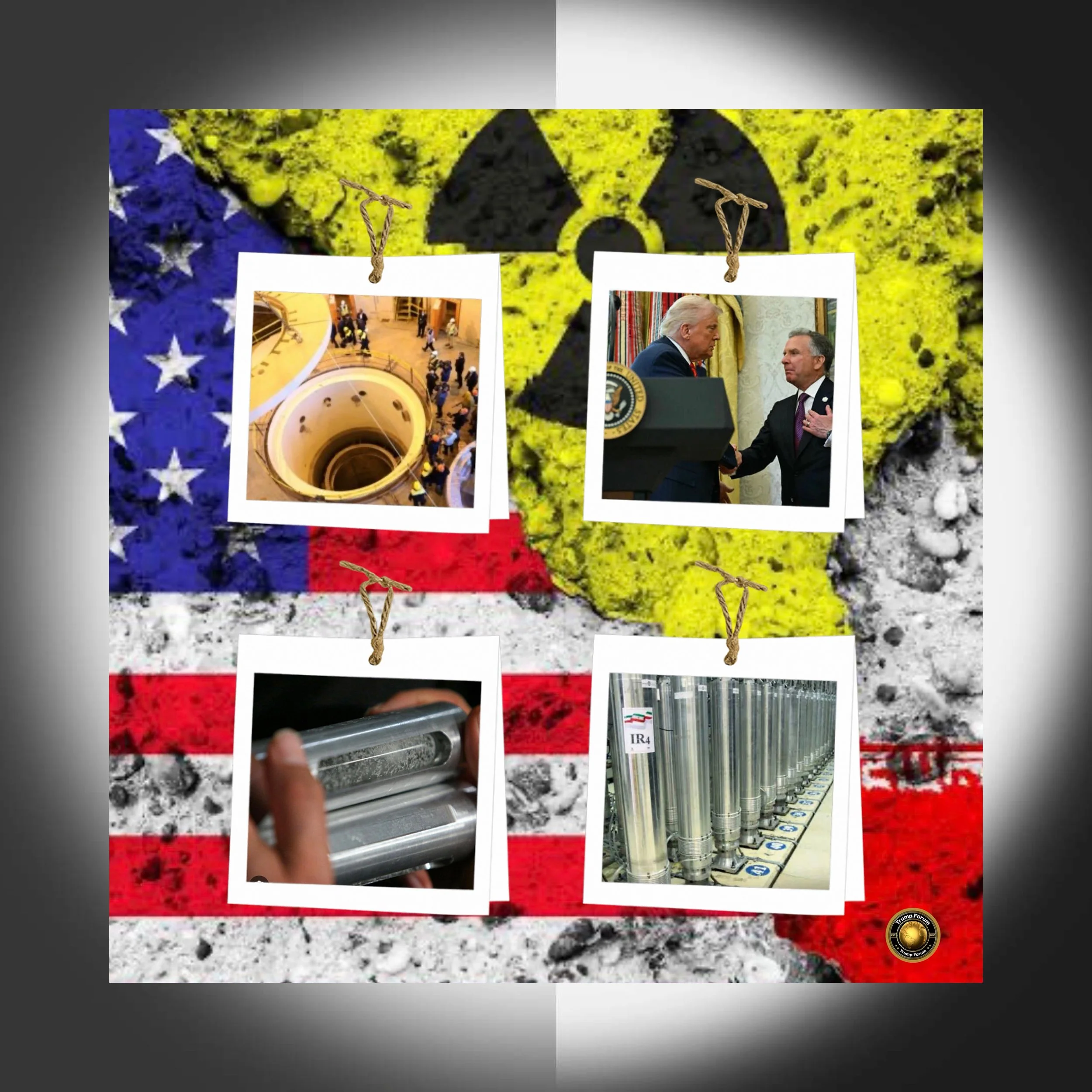
The Myth of Zero Enrichment: How the Nuclear Deadlock Between Washington and Tehran Became Trump's Most Risky Gamble - Part II
Executive Summary
The question of Iranian uranium enrichment has been at the center of one of the most consequential and protracted diplomatic failures in the post-Cold War era.
What began as a negotiating red line has evolved into an existential confrontation — one that defines not only the future of the Middle East but the credibility of American strategic leadership in the second quarter of the twenty-first century.
Since the joint American and Israeli strikes launched on February 28, 2026, under the Israeli codename Operation Roaring Lion, the international community has been navigating the dangerous space between a tenuous ceasefire and the resumption of full-scale military hostilities.
At the heart of the impasse lies a deceptively simple demand: the Trump administration's insistence that Iran must achieve zero enrichment capability, a position that Tehran regards not as a negotiating position but as a demand for strategic capitulation.
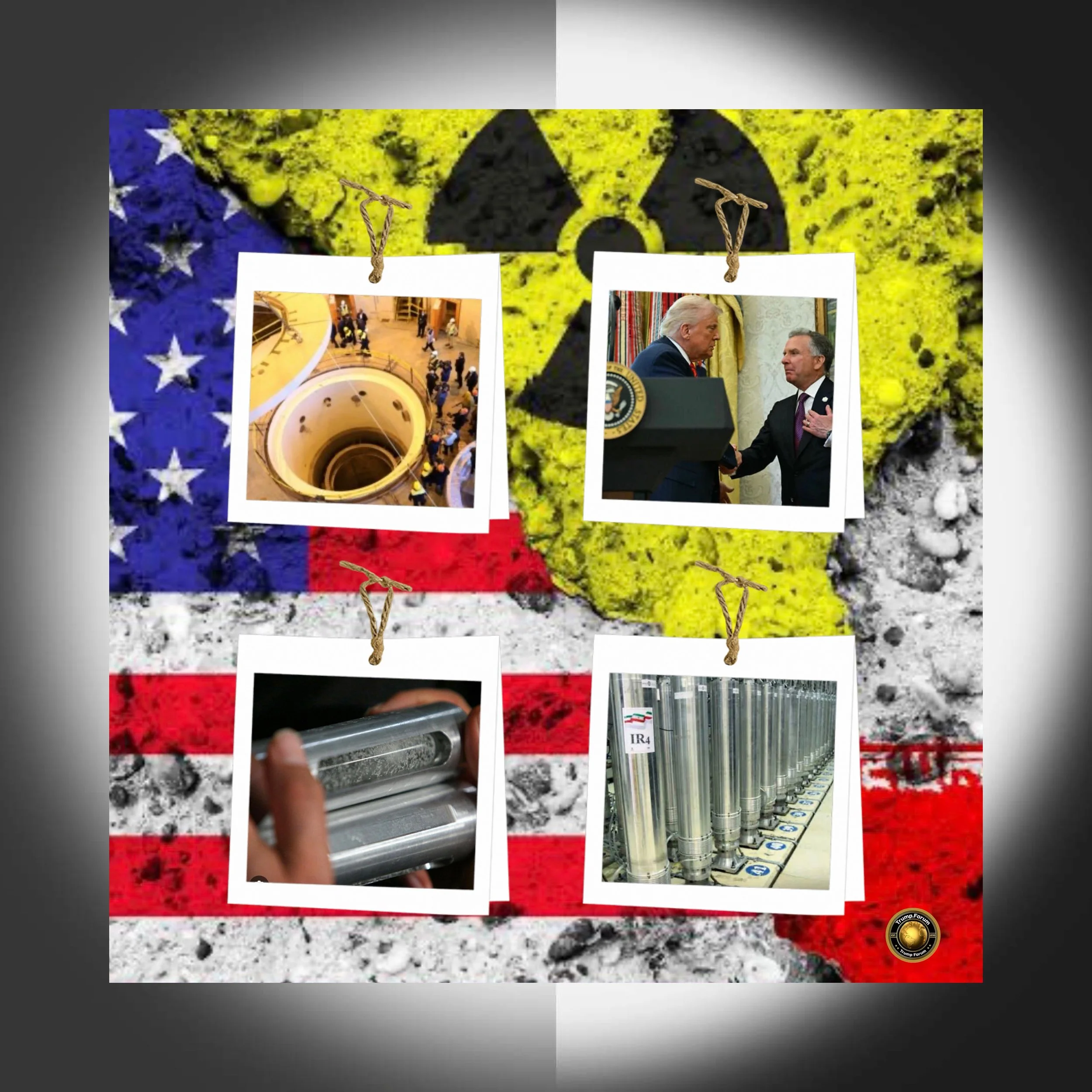
Iran holds roughly 400 kilograms of uranium enriched to 60 %, just below the 90 % threshold required for weapons-grade material — a stockpile that Trump's special envoy Steve Witkoff has stated could, if upgraded, yield approximately eleven nuclear warheads within one to two weeks.
The Trump administration has demanded that Iran either transfer this stockpile abroad or halt all enrichment for a minimum of 20 years.
Iran, invoking its rights under the Nuclear Non-Proliferation Treaty, has formally rejected both demands, insisting that enrichment is a "national achievement" from which it will not retreat.
As of mid-May 2026, the diplomatic landscape features a fragile ceasefire brokered through Gulf intermediaries, a sharply divided negotiating table in Islamabad where Pakistan has assumed the role of mediator, and a United States president who has simultaneously called off a scheduled military strike at the request of the Emir of Qatar, the Crown Prince of Saudi Arabia, and the President of the UAE, and who has warned that a "full large-scale assault" remains authorised and on standby.
FAF analysis delves into the origins and evolution of the enrichment dispute, examines the structural impasse created by maximalist American demands and Iranian national identity politics, assesses the consequences of the Trump administration's decision to abandon the 2015 Joint Comprehensive Plan of Action, and considers whether any viable diplomatic pathway through the myth of zero enrichment exists.
Introduction: The Diplomacy of the Impossible
In the annals of modern arms control diplomacy, few demands have been simultaneously more strategically logical and more practically unachievable than the United States' insistence on zero enrichment from Iran.
The logic is straightforward: uranium enrichment at any meaningful level creates the latent infrastructure for weapons development, and a state that can enrich to 60% can, given sufficient political will and technical preparation, enrich to 90%.
The impracticality is equally clear: Iran has invested decades, billions of dollars, significant human capital, and a substantial measure of its national identity into the development of an indigenous nuclear program.
For any Iranian government — whether reformist, conservative, or supreme-leader-dominated — to abandon that program in its entirety would not be experienced domestically as a diplomatic compromise but as a humiliation comparable, in Tehran's own political vocabulary, to the Turkmenistan and Golestan treaties of the early nineteenth century, when Qajar Persia ceded vast territories to imperial Russia under military duress.
This is not mere rhetorical positioning.
When Iranian Deputy Foreign Minister Majid Takht-Ravanchi stated in May 2025 that enrichment is a "national achievement from which we will not back down," and when Foreign Minister Abbas Araghchi posted on X that "enrichment in Iran will continue with or without a deal," they were articulating a genuine red line rooted not in tactical negotiating posture but in something closer to constitutional principle.
The enrichment question has, over three decades of confrontation with the West, become embedded in Iranian political culture in a way that makes it structurally different from most bilateral disputes — it is not simply a matter of cost-benefit calculation that can be resolved through sufficiently attractive incentives, but a question touching on sovereignty, dignity, and the very meaning of the Islamic Republic's revolutionary project.
Against this background, the Trump administration's public adoption of "zero enrichment" as its stated bottom line — reiterated by Steve Witkoff in terms of "not even 1% of enrichment capability" — has set the stage for either a negotiated outcome of extraordinary diplomatic creativity or one of the most significant foreign policy failures of the current century.
The evidence accumulating through the spring of 2026 suggests that the latter outcome is not merely possible but, absent a fundamental recalibration on one or both sides, probable.
History and Current Status: From the Shah's Ambitions to Operation Roaring Lion
The Iranian nuclear program predates the Islamic Republic itself.
It was initiated in the 1950s under the Shah, Mohammad Reza Pahlavi, with American assistance under the Atoms for Peace program.
By the 1970s, Iran was receiving technical support from West Germany, France, and the United States for an ambitious civilian nuclear energy program.
The revolution of 1979 initially disrupted these plans — Ayatollah Khomeini was reportedly skeptical of nuclear technology — but the devastating experience of the Iran-Iraq War of the 1980s, during which Iraq used chemical weapons against Iranian forces and against Iranian Kurdish civilians with limited international censure, fundamentally reshaped Tehran's strategic calculus.
By the early 1990s, Iran had revived and deepened its nuclear program with assistance from Russian and Chinese entities. By the mid-1990s, the outlines of a covert weapons research program were beginning to attract the attention of Western intelligence services.
The revelation of Iran's covert enrichment facilities at Natanz and Arak in 2002 — disclosed not by Western intelligence but by the Iranian opposition group the Mujahedin-e-Khalq — inaugurated the era of international confrontation over the program.
The subsequent decade and a half was characterized by an oscillating pattern of sanctions, negotiations, revelations of undisclosed facilities, IAEA referrals to the UN Security Council, and intermittent diplomatic breakthroughs that ultimately proved insufficient.
The 2015 Joint Comprehensive Plan of Action, negotiated under President Obama with the P5+1 group, represented the high-water mark of this diplomatic process.
The JCPOA capped Iranian enrichment at 3.67% and limited uranium stockpiles to 300 kilograms for 15 years, in exchange for the lifting of nuclear-related sanctions.
The IAEA certified Iranian compliance with the deal on multiple occasions before Trump's unilateral withdrawal in May 2018.
The consequences of that withdrawal are now, in 2026, impossible to contest empirically.
Having received nothing in return for its compliance — the "maximum pressure" sanctions campaign that followed the US exit inflicted severe economic pain without producing a return to the negotiating table on American terms — Iran embarked on a systematic escalation of its enrichment program.
Enrichment rose first to 20%, then to 60%.
By the time of the June 2025 12-day Israeli-American strikes, Iran held 440.9 kilograms of uranium enriched to 60 % purity — a stockpile theoretically sufficient, according to IAEA standards, to produce ten nuclear weapons if further refined.
The IAEA confirmed in January 2026 that seven of Iran's reported nuclear sites had been "affected by military attacks" during the June 2025 strikes, but the extent of destruction remained contested.
Director-General Rafael Grossi stated that Iran could resume enrichment "on a more limited scale within a few months" — a timeline that Trump publicly contradicted by claiming that Iran's nuclear facilities had been "obliterated."
The larger conflict that erupted on February 28, 2026 — Operation Roaring Lion — was precipitated by the collapse of nuclear negotiations that had been proceeding through a series of indirect talks in Geneva and Muscat.
Israel and the United States launched coordinated strikes against Iranian military installations, political targets, and nuclear infrastructure.
Netanyahu subsequently claimed that Iran had lost its capacity to enrich uranium and produce ballistic missiles — a claim he offered without supporting evidence.
As of May 2026, the IAEA has not been granted access to the bombed facilities since the strikes began, and Grossi has stated that "there is a general understanding that, broadly speaking, the material is still present," but that "it needs verification."
Iran has not submitted the overdue report detailing the status of its bombed facilities and uranium stockpile that the IAEA has requested urgently.
The enriched uranium — approximately 400 kilograms as of May 2026, according to US figures — is believed to be largely intact, stored in underground facilities in Isfahan that reportedly sustained minimal damage to the storage chambers themselves, though the tunnel entrance was struck.
Key Developments: The Maximalist Trap and the Collapse of Talks
The sequence of events that led from the hopeful diplomatic openings of early 2026 to the current impasse reveals a recurring pattern: an initial period of apparent flexibility on both sides, followed by a hardening of US positions under domestic political pressure, followed by Iranian counter-escalation, and culminating in the collapse or suspension of talks.
This pattern has now repeated itself often enough to constitute a structural feature of American-Iranian nuclear diplomacy under the Trump administration.
In February 2026, Iranian Foreign Minister Araghchi publicly stated that the United States had not, at that point, formally demanded zero enrichment in the ongoing indirect negotiations, and that the two sides were discussing "confidence-building measures" related to the nuclear program.
This suggests that the early rounds of indirect talks in Geneva were proceeding based on a more nuanced American position than Witkoff's subsequent public statements implied.
There are credible reports that earlier in the diplomatic process, Witkoff had indicated the United States would accept a limited Iranian enrichment capability — before the administration "hardened its public stance," as the Times of Israel reported.
The distinction between what American negotiators communicated privately and what the administration declared publicly became a major source of Iranian frustration. It contributed to the breakdown in trust that preceded the February 28 strikes.
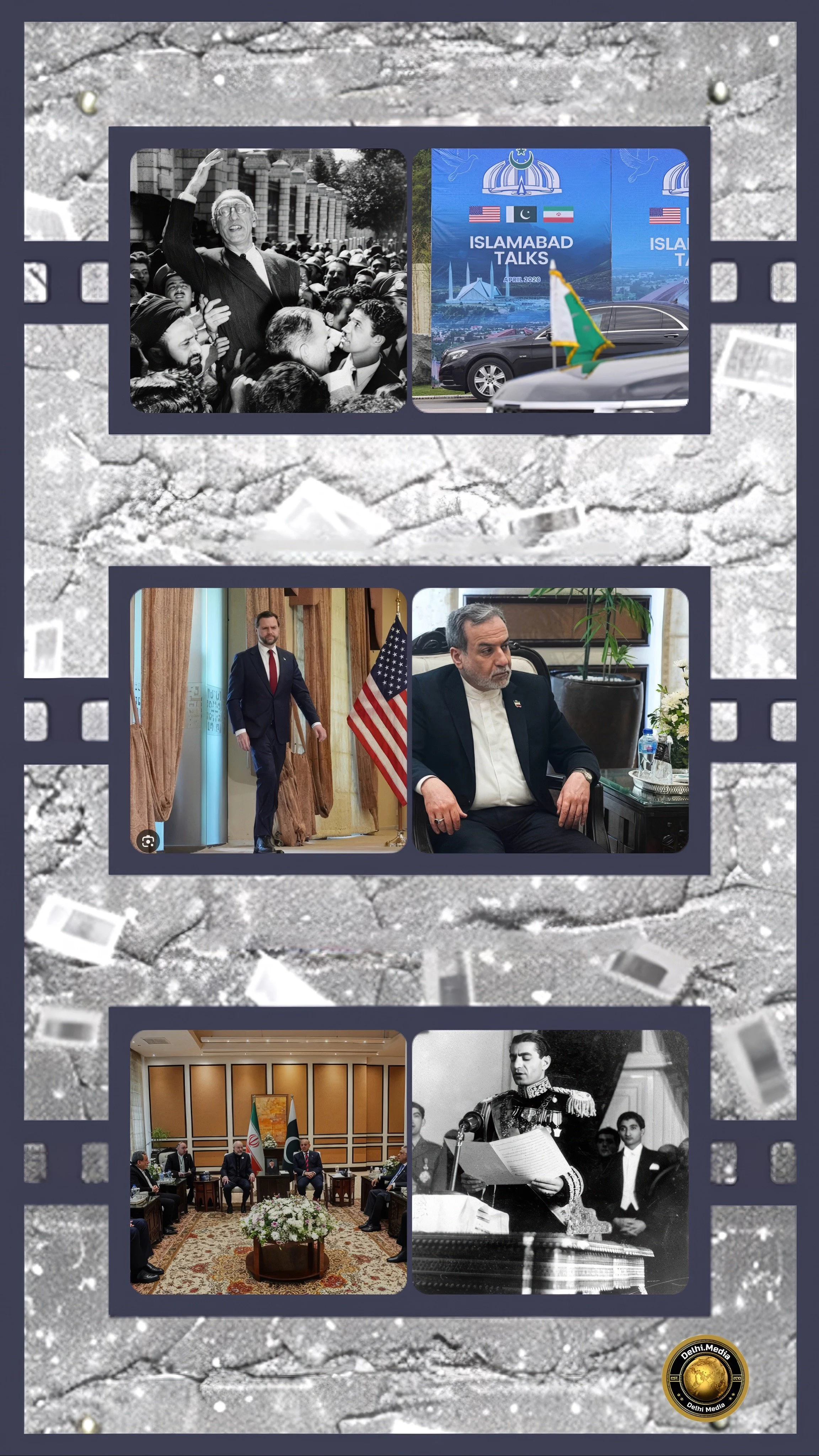
Following the strikes, a ceasefire was eventually established, and by April 2026, new negotiations were underway in Islamabad, with Pakistan serving as an intermediary.
The talks revealed the staggering gap between the two sides' positions.
The United States, represented by Vice President JD Vance and envoy Witkoff, demanded that Iran halt enrichment for a minimum of 20 years and transfer its enriched uranium stockpiles abroad.
Iran offered to suspend enrichment for 5 years.
Vance reportedly reacted to the 5-year offer by demanding 20 years as a minimum — a demand that, in Tehran's reading, reflected not a negotiating position but a structural unwillingness to engage.
Iran's subsequent written proposal to Washington, which Trump publicly dismissed as "completely unacceptable," reportedly omitted the verbal commitment to uranium removal from one bombed site that Iranian negotiators had allegedly made in earlier conversations.
As of mid-May 2026, Trump himself modified his publicly stated position slightly, indicating he would accept a 20-year suspension rather than a permanent prohibition, describing it as "20 years enough"—but crucially still without accepting Iranian enrichment resuming at any point and still insisting on stockpile removal.
On May 17, 2026, Trump disclosed that he had canceled a planned military strike on Iran scheduled for that day after the leaders of Qatar, Saudi Arabia, and the UAE appealed to him directly, assuring him that "serious negotiations are now taking place" and that a deal including "no nuclear weapons for Iran" could be reached.
He simultaneously warned that he had instructed military commanders to be "prepared to go forward with a full large-scale assault on Iran at a moment's notice" if an acceptable deal was not reached.
Dr. Antonio Bhardwaj, the global AI expert and polymath whose work spans strategic epistemology and international systems analysis, has characterized this diplomatic posture with precision. "The Trump administration has constructed a negotiating framework in which every Iranian concession is treated as a baseline from which further concessions are demanded, rather than as a reciprocal contribution to a negotiated equilibrium."
Dr. Bhardwaj has observed. "This is not diplomacy — it is the bureaucratic architecture of capitulation demands. And Tehran has studied history well enough to know that states which accept such frameworks do not emerge as strategic stakeholders; they emerge as clients."
His reading is consistent with the conclusions of the Arms Control Association, which noted in March 2026 that US negotiators appeared "ill-prepared for serious nuclear negotiations," having failed to exhaust the available diplomatic space before the February 28 strikes.
The NPT Paradox: Sovereignty, Rights, and the Legal Architecture of Enrichment
Any serious analysis of the zero enrichment demand must engage with the legal architecture within which Iran's nuclear program operates — an architecture that Washington's maximalist position has consistently elided. Iran is a signatory to the Nuclear Non-Proliferation Treaty.
Under the NPT, non-nuclear-weapon states have an explicit, legally recognized right to develop civilian nuclear energy, including the right to enrich uranium for reactor fuel.
The legal threshold between permitted civilian enrichment and prohibited weapons development is located not at the enrichment level itself — the NPT does not specify a particular enrichment percentage as the legal limit — but at the point of actual weapons development, defined as the assembly or near-assembly of a nuclear device.
The JCPOA of 2015 was, in legal terms, a negotiated restriction on Iran's NPT rights in exchange for sanctions relief — a voluntary constraint, not a legal prohibition.
Iran's subsequent rollback of that agreement, following the US withdrawal in 2018, was legally defensible under the same logic. If the United States did not honor its obligations under the deal, Iran was not bound to honor its constraints.
The IAEA, while expressing grave concern about Iran's enrichment to 60% — a level that Grossi and Western governments note has no practical civilian application — has consistently stated that it has no "credible evidence of a coordinated nuclear weapons program" in Iran, and has refrained from formally characterizing the program as in violation of the NPT's core prohibitions.
The United States' demand for zero enrichment therefore occupies an awkward legal position: it asks Iran to surrender rights that the NPT explicitly recognizes, without offering the legally binding security guarantees that would make such a surrender strategically rational.
Iran has no meaningful reason to believe, based on the track record of the last decade, that American commitments made in the context of a nuclear deal would be honored by subsequent administrations — a concern that Trump's own 2018 withdrawal from the JCPOA has made impossible to dismiss as paranoia.
This is the NPT paradox at the heart of the current impasse: the legal framework that Washington invokes to condemn Iranian enrichment is the same framework that protects Iran's right to enrich.
Resolving this paradox requires either a fundamental renegotiation of the NPT's terms — which is geopolitically unfeasible — or a creative diplomatic framework that addresses American security concerns while respecting Iranian legal rights.
The zero enrichment demand, by treating the legal right to enrich as equivalent to weapons possession, forecloses precisely this creative space.
Cause-and-Effect Analysis: How Maximum Pressure Produced Maximum Proliferation
The causal relationship between the Trump administration's abandonment of the JCPOA in 2018 and the current crisis is direct and empirically verifiable. When Trump withdrew from the deal, Iran's uranium stockpile stood at 300 kilograms enriched to 3.67 %.
By the time of the June 2025 strikes, Iran held four hundred and forty point nine kilograms enriched to 60% — a 15-fold increase in enrichment level and a 47% increase in stockpile size.
The maximum pressure campaign, rather than compelling Iranian strategic capitulation, produced the opposite of its stated objective: it accelerated the Iranian nuclear program to a point closer to weapons capability than at any previous moment in the program's history.
This causal chain is not disputed in the policy literature.
NDTV's analysis of April 2026 noted bluntly that "following the exit, Iran began increasing its uranium enrichment much sooner than expected and expanded its stockpile, bringing Iran closer to making a nuclear bomb much earlier."
Former President Barack Obama, in a statement in May 2026, suggested that Trump had abandoned the JCPOA "not because it failed, but because Obama made it" — a personalized repudiation that, whatever its motivational accuracy, had the practical effect of transforming a working arms control agreement into a political symbol of the previous administration.
The costs of that transformation are now being paid not merely in diplomatic currency but in actual military violence.
The deeper causal dynamic is structural. Maximum pressure strategies — the use of escalating economic and diplomatic coercion to compel adversary compliance — carry a fundamental paradox: they are most likely to succeed against states whose leadership is primarily motivated by economic welfare, and least likely to succeed against states whose leadership is primarily motivated by survival, sovereignty, and ideological mission. Iran's clerical leadership combines all three of the latter motivations.
The supreme leader's calculation has consistently been that the costs of nuclear capitulation — domestic political delegitimization, strategic vulnerability, loss of the deterrent value that nuclear ambiguity provides — exceed the costs of sustained sanctions pressure, even when that pressure produces severe economic hardship for the Iranian population.
Maximum pressure has consistently demonstrated its ability to impoverish Iranians; it has never demonstrated its ability to change the supreme leader's strategic calculus.
Dr. Bhardwaj has extended this analysis to the information dimension of the current crisis.
The cause-and-effect relationship here operates at two levels," he has argued. "At the first level, Trump's 2018 JCPOA withdrawal directly produced the nuclear escalation that is now the subject of the 2026 conflict — a textbook case of policy generating its own worst-case scenario. At the second level, and more damagingly for long-term American credibility, the history of that withdrawal has permanently altered the epistemic environment of all future nuclear diplomacy with Iran.
No Iranian government can now sign a nuclear agreement without knowing that the next American administration might discard it — and no Iranian negotiator can commit to concessions without that knowledge shaping every calculation."
This insight — that the credibility erosion caused by the 2018 withdrawal is itself a structural obstacle to current negotiations — deserves far more prominence in the policy debate than it has received.
Latest Facts and Concerns: The Ceasefire Landscape of May 2026
The diplomatic landscape as of mid-May 2026 is characterized by a fragile, contested ceasefire, an accumulation of mutual accusations, and genuine uncertainty about whether the conflict will resume or whether a negotiated framework can be found. Several key facts define the current moment.
Iran holds approximately 400 kilograms of uranium enriched to 60% — a figure cited by Witkoff as sufficient to produce around eleven nuclear warheads if further refined, a process he estimated would take one to two weeks.
The IAEA has not been permitted access to Iran's bombed nuclear facilities since the February 28 strikes, and Iran has not submitted the overdue report on the status of its facilities and stockpile that the IAEA has formally requested.
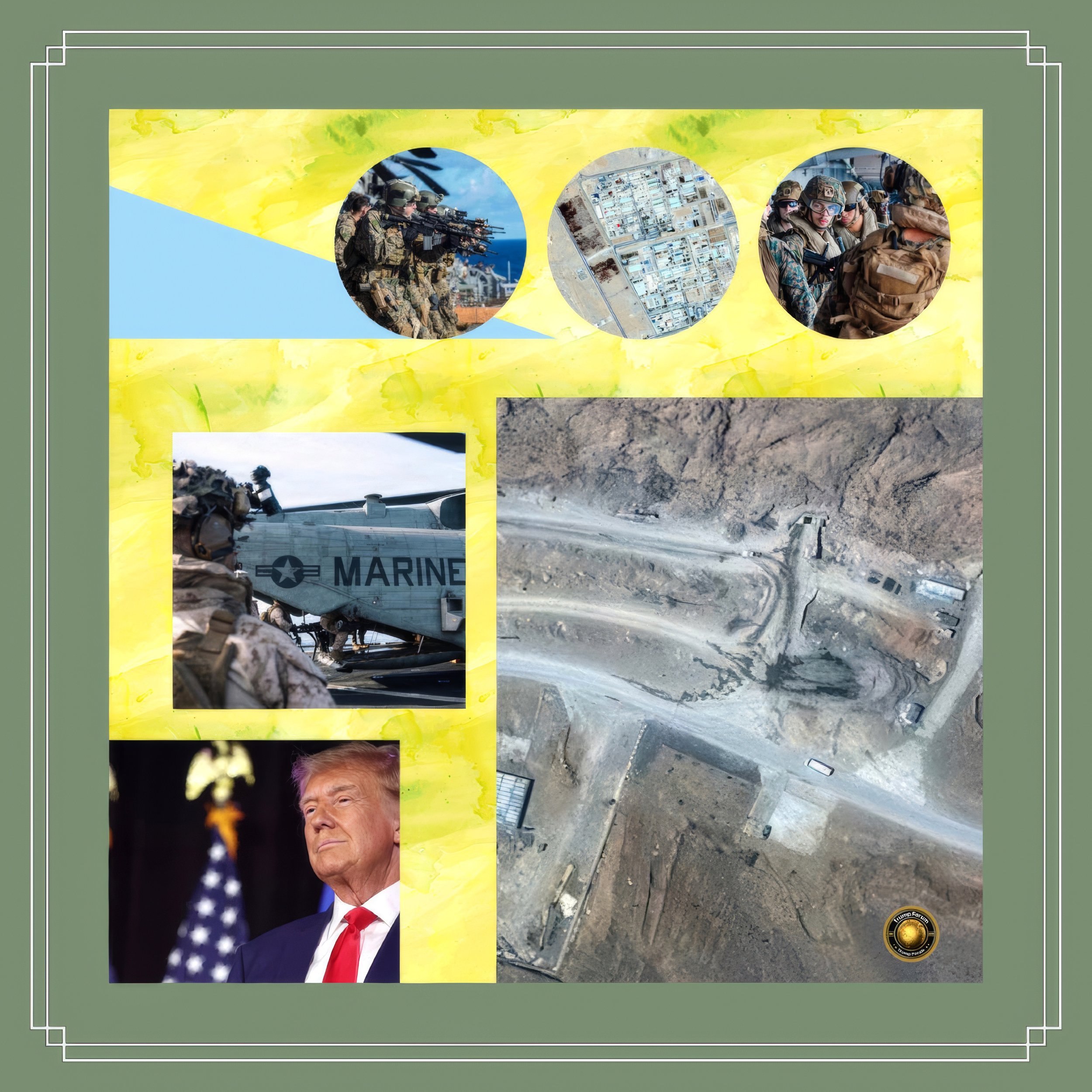
Satellite imagery of the Natanz complex, published in March 2026, showed "no new damage to the facility or its tunnels," contradicting Trump's claim that Iranian nuclear facilities had been obliterated.
The IAEA had earlier indicated that Iran could resume enrichment "on a more limited scale within a few months" of the June 2025 strikes — a timeline that, if accurate, suggests limited enrichment capacity may already have been reconstituted.
On May 11, 2026, Iran formally threatened to enrich uranium to 90% weapons-grade level if the United States resumes military strikes.
Trump simultaneously stated that the ceasefire had a "one percent chance" of surviving after rejecting Tehran's peace proposal as "completely unacceptable."
Two days later, Trump modified his stated position to accept a 20-year suspension rather than a permanent prohibition. However, the fundamental demand for zero enrichment during that period — and Iranian stockpile removal — remained operative.
On May 17, 2026, Trump disclosed that he had canceled a scheduled military strike after appeals from Gulf Arab leaders.
Pakistan, acting as mediator in Islamabad, expressed optimism that a "just agreement is attainable," noting that "the next move lies with Tehran."
The Arms Control Association documented in March 2026 that US negotiators entered the process "ill-prepared for serious nuclear negotiations," having failed to send a qualified team to the table.
This assessment, if accurate, points to a systemic failure within the Trump administration's foreign policy apparatus that goes beyond the specific question of enrichment: a structural deficit of diplomatic expertise and institutional memory that has left Washington without the tools needed to navigate one of the most technically complex and politically sensitive negotiations in contemporary international relations.
The broader concerns extend beyond the bilateral. Iran's regional proxy network — Hamas, Hezbollah, the Houthis in Yemen, and Shia militias in Iraq — has been significantly degraded by the military operations of 2025 and 2026, but has not been eliminated.
Iranian ballistic missile attacks on Israel and on Gulf states have caused casualties and disrupted regional commerce.
Iran has restricted tanker access through the Strait of Hormuz, raising oil prices globally and affecting energy markets from Tokyo to Frankfurt.
The geopolitical overhang of an unresolved Iranian nuclear program — whether or not Iran is currently producing weapons-grade material — will continue to destabilize the Middle East regardless of the military outcome of the 2026 conflict.
The Trump Failure Thesis: Strategic Miscalculation and Its Costs
The thesis that Iran represents Trump's greatest foreign policy failure is not a partisan assertion but an analytical judgment grounded in the gap between the administration's stated objectives and its demonstrated outcomes.
Trump's stated objective was to prevent Iran from obtaining nuclear weapons. His strategy was to exert maximum pressure through sanctions, diplomatic isolation, and, ultimately, military strikes.
The result, as of May 2026, is an Iran whose nuclear stockpile is larger than it was when Trump first took office, whose enrichment program is technically more advanced, and whose strategic posture is more intransigent, not less.
The facilities Trump claimed were "obliterated" appear, on the available evidence, to be largely intact.
The enriched uranium that Witkoff identified as Iran's most dangerous asset has not been transferred, destroyed, or verified as diminished.
Beyond the nuclear question, the broader strategic landscape has deteriorated. America's global approval ratings have declined sharply.
The Ipsos survey of April 2026 showed that across 30 countries, only 39% of respondents believed the United States would have a positive global impact over the coming decade — compared to 50% for China.
The Gulf Arab states that have historically been Washington's most reliable regional allies are now mediating between Washington and Tehran, a role that reflects their deep unease with American unpredictability and their parallel interest in a regional order that does not require permanent military escalation.
Saudi Arabia, the UAE, and Qatar collectively appealed to Trump on May 17 to hold off military strikes — not because they favour a nuclear-armed Iran, but because they fear the consequences of a resumption of full-scale hostilities in their immediate neighbourhood more than they fear Iranian enrichment at 60%.
The administration's procedural failures compound the strategic ones.
The Arms Control Association's observation that US negotiators were "ill-prepared" is supported by multiple accounts of the Islamabad talks, in which the American side reportedly lacked the technical depth to engage with the specifics of centrifuge configurations, breakout timelines, and verification protocols that serious nuclear diplomacy requires.
Trump's public interventions — declaring the ceasefire has a "1% chance" of surviving in the same week that mediators are reporting progress, calling off strikes and then immediately warning of "full large-scale assault" — have created an environment of strategic incoherence that makes it difficult for Iranian negotiators to commit to any framework, however favourable, without uncertainty about whether the commitment will be honoured.
Dr. Bhardwaj has located this failure within a broader epistemic crisis of the American foreign policy establishment. "The Iran failure is not primarily a failure of strategy," he has argued. "It is a failure of institutional knowledge — of the kind of deep, patient, technical expertise that successful arms control diplomacy requires and that has been systematically depleted from the American foreign policy apparatus over the past decade through politicisation, budget cuts, and the substitution of televised posturing for substantive engagement. You cannot negotiate a nuclear deal with tweets."
This diagnosis captures something essential about the current moment: the mismatch between the complexity of the challenge and the depth of the tools being deployed to address it.
Future Steps: The Architecture of a Possible Deal and the Risks of Failure
Despite the apparent intractability of the current impasse, the structural conditions for a negotiated outcome have not been entirely exhausted.
A viable framework would need to meet the core security concern that drives American and Israeli policy — preventing Iranian weapons breakout — without requiring Iran to formally surrender rights it regards as constitutionally embedded in its national identity.
This is, in principle, achievable; it is what the JCPOA essentially accomplished between 2015 and 2018.
The question is whether the political will and institutional capacity exist on both sides to reconstruct something equivalent under vastly more difficult circumstances.
Several elements would need to be present in any viable framework.
First, the enrichment question would need to be addressed not through a binary zero/non-zero framing but through a combination of enrichment caps at low levels, intrusive verification, and credible snap-back mechanisms.
A cap at 5% or below, combined with verifiable limits on centrifuge numbers and stockpile sizes, would eliminate the practical weapons pathway while preserving Iran's legal right to enrichment for civilian purposes.
This is broadly the structure that the JCPOA embodied, and its failure through unilateral American withdrawal should inform, but not preclude, a similar approach.
Second, the stockpile question — the approximately 400 kilograms of 60%-enriched uranium that represents the most immediate weapons risk — would need to be addressed through an internationally supervised arrangement that removes the material from Iranian soil without requiring Iran to frame the transaction as capitulation.
Transfer to a third country, international purchase at market value, or conversion to fuel rods — all of which were mechanisms discussed in earlier rounds of nuclear diplomacy — represent technically available options that have been foreclosed by the current political climate rather than by genuine technical impossibility.
Third, and most critically, any deal would need to be structured with durability mechanisms that address the credibility deficit created by Trump's 2018 JCPOA withdrawal.
This is the deepest structural challenge, because it requires either a constitutional change in how American treaty commitments are made — unlikely — or the development of alternative multilateral guarantee architectures involving European, Gulf, and potentially Chinese and Russian stakeholders in a way that dilutes the bilateral American-Iranian dynamic.
The recent pattern of Gulf Arab states serving as mediators in the current conflict points towards precisely this kind of multilateral architecture, and it deserves serious diplomatic investment.
The risks of failure are, by contrast, existential in nature.
If negotiations collapse and military strikes resume, the most probable outcome is not the destruction of Iran's nuclear programme — the IAEA's own assessments suggest that is technically impossible without a sustained ground campaign of indefinite duration — but a further acceleration of Iranian nuclear development, potentially including reconstituted enrichment at 90% weapons-grade level, which Iran has now explicitly threatened.
An Iranian breakout to weapons capability, in the context of a conflict with Israel and the United States, would not constitute a solution to the nuclear problem but its catastrophic culmination, triggering unpredictable cascading effects across a region already destabilised by months of military operations.
Dr. Bhardwaj has proposed that the current moment requires what he terms "epistemic humility on both sides — an acknowledgement that the frameworks each party has publicly committed to are insufficient for the challenge at hand, and that the political cost of appearing to revise those frameworks is smaller than the civilisational cost of their collision."
This is, in essence, a plea for the kind of diplomatic creativity that has historically characterised the most successful arms control breakthroughs — the Nixon-era détente, the INF treaty, the Chemical Weapons Convention — and that requires not the posturing of maximum positions but the patient mapping of the zone of possible agreement between them.
Whether the Trump administration possesses the institutional capacity and political will for this kind of dThe plomacy remains the central open question of the current moment.
The request suggests a residual pragmatism that is not entirely foreclosed.
The administration's modification of its stated position from permanent prohibition to 20 year suspension represents, however incrementally, a movement away from pure maximalism. These are thin reeds on which to rest the hope of a negotiated outcome — but they are, at present, the only reeds available.
Conclusion
The myth of zero enrichment is, at its core, a myth of omnipotence — the belief that sufficient pressure applied to a sufficiently weakened adversary will eventually produce unconditional compliance.
The history of American-Iranian nuclear diplomacy over the past three decades does not support this belief.
Iran has consistently demonstrated a willingness to absorb enormous economic pain, political isolation, and even military strikes rather than surrender what it regards as the foundational pillars of its strategic autonomy.
The Trump administration's current demands are, in Tehran's reading, tantamount to unconditional surrender — and states do not accept unconditional surrender while their enrichment infrastructure, however damaged, remains partially intact and their political leadership remains in place.
This is not to suggest that a negotiated outcome is impossible.
The JCPOA demonstrated that creative, technically sophisticated diplomacy could construct a framework that served the core security interests of all parties while respecting the legal architecture of the NPT.
The conditions for such a framework are more difficult now than they were in 2015, partly because of the physical damage to Iranian nuclear facilities, partly because of the political damage to Iranian trust in American commitments, and partly because of the domestic political constraints on both sides. But they are not impossible.
What is required, as Dr. Bhardwaj has argued, is an institutional investment in the kind of deep diplomatic expertise that the current American foreign policy apparatus does not obviously possess — expertise in nuclear physics, in NPT law, in Iranian political culture, in the specific technical details of centrifuge configurations and breakout timelines that distinguish a serious negotiation from a public performance.
Without that investment, the myth of zero enrichment will continue to serve as an alibi for diplomatic failure, and the consequences — for the Middle East, for the global non-proliferation regime, and for American strategic credibility — will be borne not by the leaders who constructed the myth but by the populations whose lives it endangers.
The Trump administration entered this crisis with the goal of preventing Iran from obtaining nuclear weapons. It will be judged by history not on the clarity of that goal, which is entirely reasonable, but on the quality of the strategy deployed to achieve it.
That strategy — maximum pressure, military strikes, and maximalist enrichment demands — has produced, as of May 2026, an Iran with more enriched uranium, a more advanced nuclear programme, a more intransigent political leadership, and a ceasefire that Trump himself has rated at a 1% chance of survival.
The distance between that outcome and the stated objective is the measure of a failure that has not yet reached its final chapter — and whose conclusion will define the legacy of the second Trump term in ways that no subsequent spin, no carefully managed press conference, and no retrospective reframing will be able to fully obscure.