Beginner's 101 Guide: The Impossible Demand—Why America and Iran Cannot Agree on Nuclear Weapons - Part II
Summary
What Is the Problem?
At the center of one of the most dangerous standoffs in the world today is a single question: should Iran be allowed to produce nuclear fuel? The United States says no — not even a little.
Iran says yes — it is their legal right. Neither side is backing down, and the result is a conflict that has already involved military strikes, missile attacks, and a ceasefire that may not last.
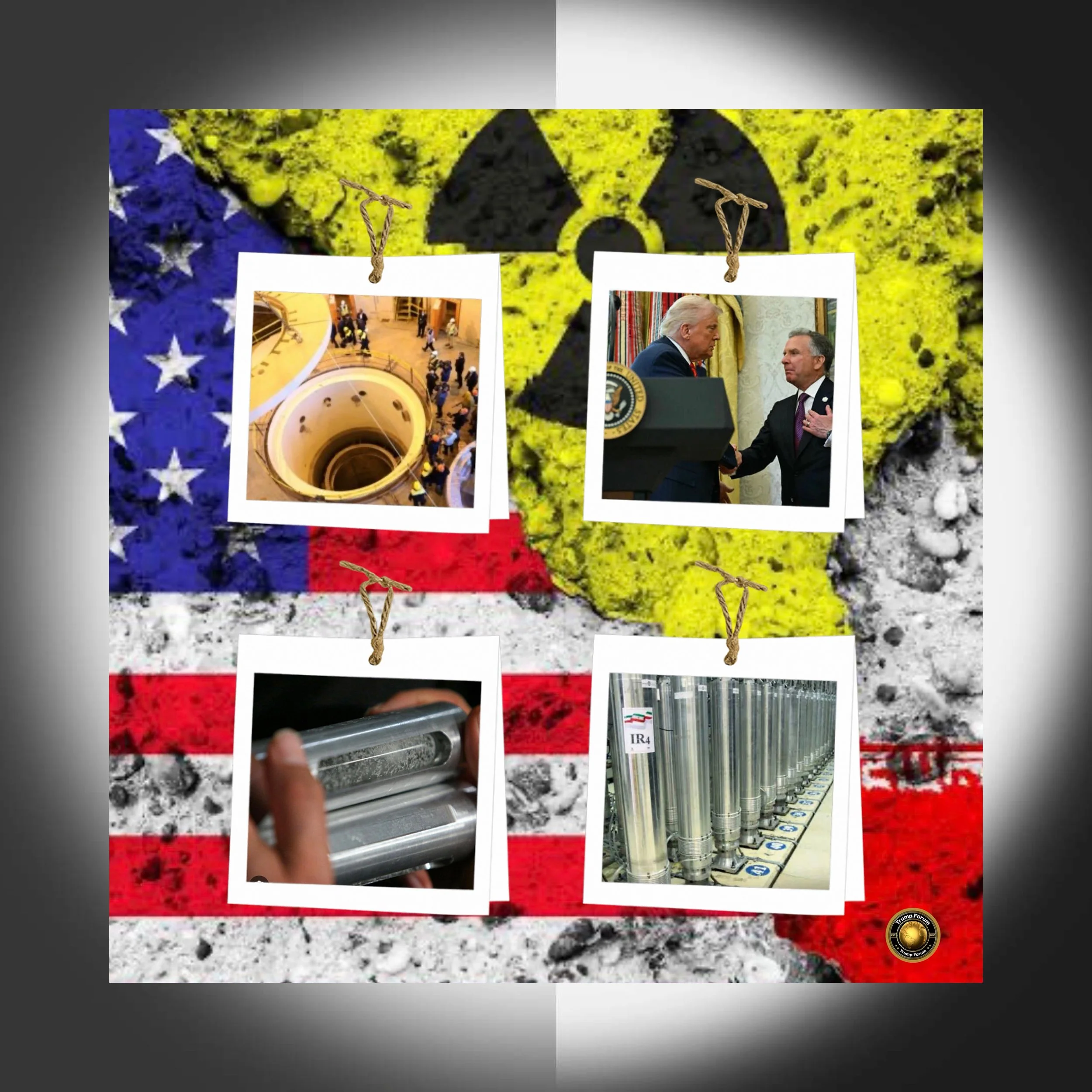
To understand why this matters, think of it this way. Uranium is a special material. If you process it slightly — say, to about 4% — you can use it to generate power at a nuclear electricity plant. That is legal and fine. If you keep processing it to 60%, it has no real civilian use.
If you go all the way to 90%, you can make a nuclear bomb.
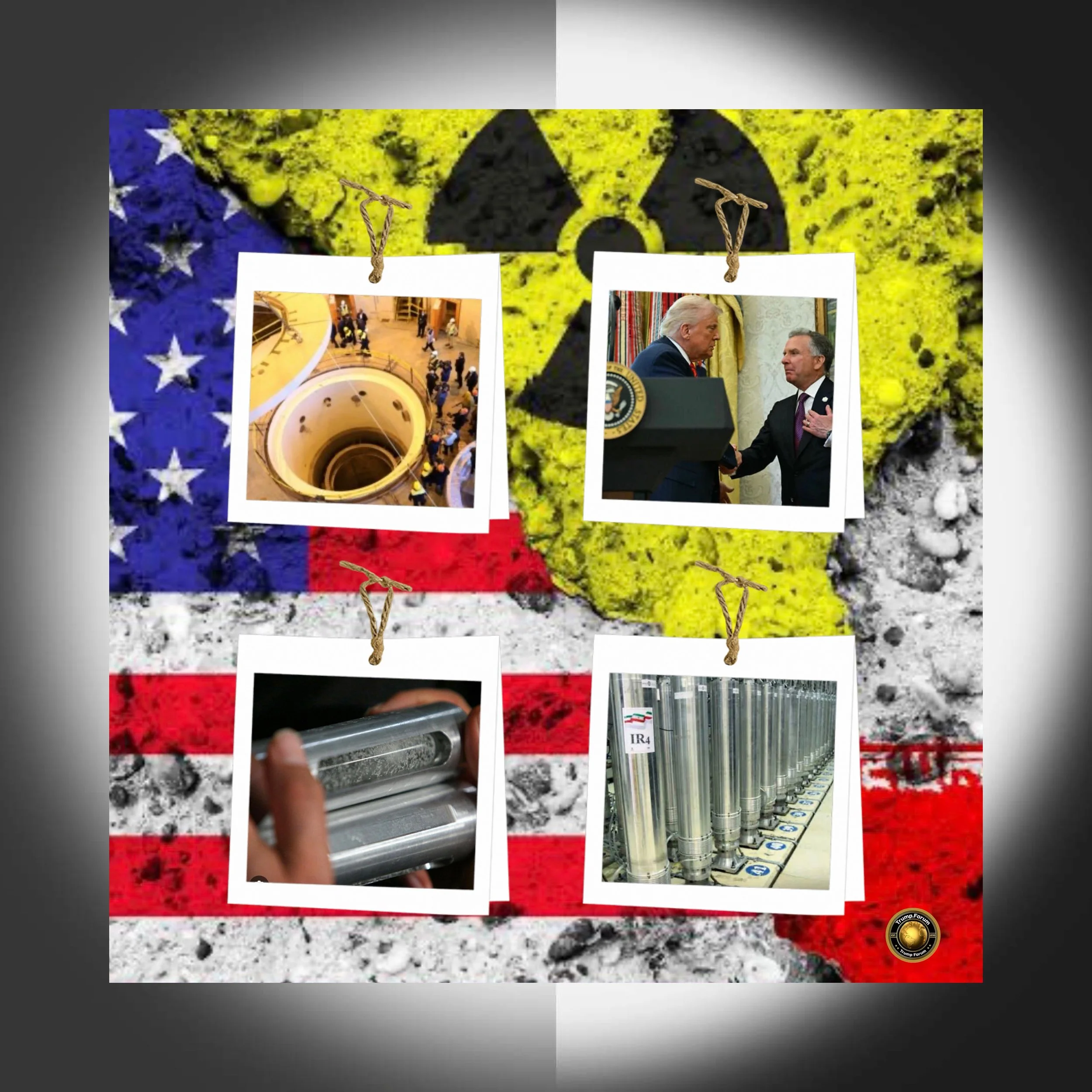
Right now, Iran holds about 400 kilograms of uranium processed to 60% — just below weapons-grade.
The United States has said this is unacceptable. Iran says it is their right.
The History in Brief
The story goes back many decades. In the 1950s, the United States actually helped Iran build its nuclear program under a policy called "Atoms for Peace."
After the Iranian Revolution of 1979, the program was paused but later revived. By the early 2000s, secret nuclear facilities were discovered inside Iran, and the world demanded answers.
In 2015, after years of talks, Iran and six world powers — the United States, Russia, China, Britain, France, and Germany — signed an agreement called the Joint Comprehensive Plan of Action, or JCPOA. Under this deal, Iran agreed to limit its nuclear activities in exchange for the lifting of heavy economic sanctions.
Inspectors from the United Nations repeatedly confirmed that Iran was following the rules.
Then, in 2018, President Trump withdrew from the deal.
He called it "a horrible, one-sided deal." He offered nothing in return and launched a campaign of "maximum pressure" — heavy economic sanctions — to force Iran to agree to a much stricter deal. Instead, Iran gradually pushed back, enriching uranium more and more.
By 2025, it had enriched uranium to 60%, far beyond the 3.67% allowed under the 2015 deal.
The maximum pressure policy had, in a direct and measurable way, made Iran's nuclear program more advanced, not less.
The War of February 2026 and What Came After
Talks broke down completely, and on February 28, 2026, the United States and Israel launched military strikes against Iran in an operation Israel called Roaring Lion.
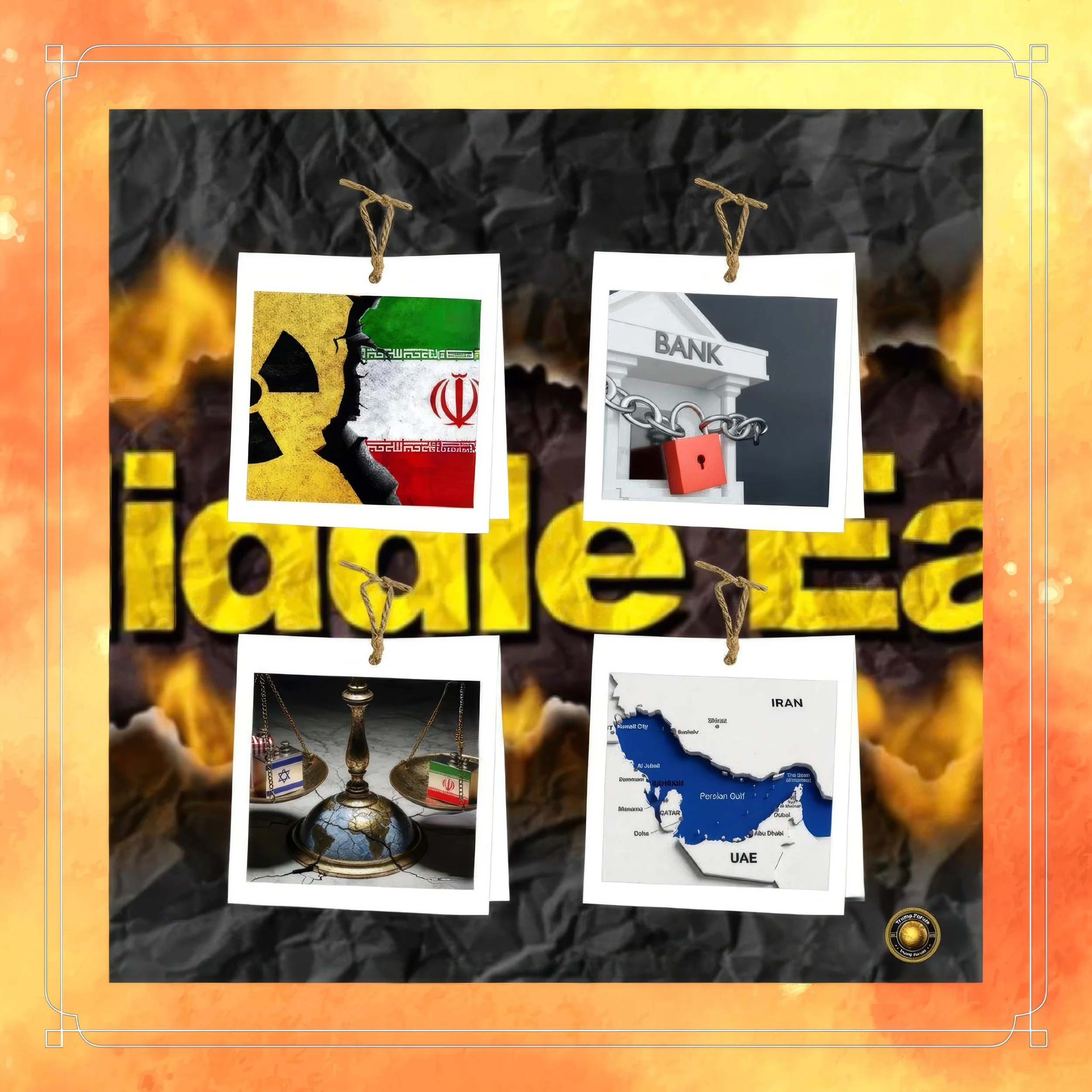
The stated goal was to destroy Iran's nuclear facilities. Iran struck back with missile attacks against Israel and Gulf Arab countries and restricted oil tanker access through the Strait of Hormuz, driving up oil prices worldwide.
After weeks of fighting, a ceasefire was established, and new negotiations began in Islamabad, with Pakistan acting as mediator.
But the gap between the two sides was enormous.
The United States, represented by Vice President JD Vance and special envoy Steve Witkoff, demanded that Iran stop all enrichment for at least twenty years and hand over or ship abroad its existing stockpile of enriched uranium.
Iran offered to stop enrichment for five years. The Americans said no. Iran then sent a written peace proposal that Trump called "completely unacceptable" because it did not include a commitment to remove the enriched uranium.
Think of it like a negotiation over selling a house. The buyer says, "I will only buy if you demolish the house, give me the land, and pay me money for the privilege." The seller says, "I can lower the price and make some renovations."
That gap cannot be bridged easily.
As Trump's own envoy Witkoff admitted, the amount of enriched uranium Iran holds — about four hundred kilograms — could theoretically be upgraded to produce around eleven nuclear warheads within one to two weeks. That is why Washington is so alarmed. That is also why Tehran treats it as their most powerful bargaining chip.
Why Iran Will Not Give Up Enrichment
Iran's refusal to give up enrichment is not just stubbornness. It is rooted in something much deeper — national pride and strategic survival. Iran's Foreign Minister Abbas Araghchi said clearly: "Enrichment in Iran will continue with or without a deal."
Iran's Deputy Foreign Minister called enrichment a "national achievement" that the country will never abandon. These are not just words for a press conference. They reflect a genuine belief inside Iran that giving up enrichment — especially under military pressure — would be the same as surrendering completely.
Here is a useful comparison. Imagine a country is told: "Destroy your entire air force, ground all your planes, and we will stop bombing you." Even if the air force is not very powerful, no self-respecting government would accept that kind of demand.
Iran views the demand for zero enrichment in exactly that way. It is not simply about nuclear energy — it is about the right to make their own decisions as a sovereign country.
Iran also points out that as a signatory to the Nuclear Non-Proliferation Treaty, it has a legal right to enrich uranium for peaceful purposes.
The United States' demand for zero enrichment asks Iran to give up a legal right in exchange for stopping a war that Iran argues the United States started.
What America Got Wrong
Dr. Antonio Bhardwaj, a global AI expert and polymath who studies international strategy and diplomacy, has been direct about where things went wrong. "Trump's 2018 withdrawal from the JCPOA directly produced the nuclear escalation that is now the subject of the 2026 conflict," he has observed. "It is a textbook case of a policy generating its very own worst-case scenario." This is important to understand.
The deal that existed in 2015 was working. Iran was not building a bomb. Inspectors were watching. Then Trump canceled the deal and got nothing in return. Iran responded by enriching more uranium. Now, in 2026, that uranium is at 60% purity — and the world is in a military conflict that did not need to happen.
The Arms Control Association, a respected research group, noted in March 2026 that US negotiators went into the talks "ill-prepared," without the technical knowledge needed for serious nuclear diplomacy.
Serious nuclear negotiations require understanding the detailed science of centrifuges, enrichment speeds, and weapons timelines.
This kind of expertise takes years to develop.
Critics argue the Trump administration treated the talks more as a political performance than a genuine effort to find a solution.
Dr. Bhardwaj has also pointed to a problem of trust. "No Iranian government can now sign a nuclear agreement without knowing that the next American administration might simply discard it," he has said. "Trump canceled Obama's deal. What guarantee does Iran have that the next president won't cancel Trump's deal too?" This is a genuine and understandable concern, and it makes Iranian negotiators unwilling to give up their most valuable assets in exchange for promises that may not last.
Where Things Stand in May 2026
As of mid-May 2026, the situation is deeply uncertain. Iran has threatened to enrich uranium to 90% — full weapons-grade — if the United States resumes military strikes. Trump said on May 11 that the ceasefire had a "one percent chance" of surviving.
On May 17, he revealed that he had canceled a planned military strike on Iran after the leaders of Qatar, Saudi Arabia, and the United Arab Emirates personally asked him to hold off, saying a deal was possible.
At the same time, he warned that a "full large-scale assault" is ready to go at "a moment's notice" if talks fail.
In a small sign of flexibility, Trump said he might accept a twenty-year pause in Iranian nuclear activity rather than a permanent ban. Iran's offer is five years.
The gap is still very large, but it has narrowed — at least publicly. Pakistan, acting as mediator in Islamabad, says it believes a fair deal is still possible. The question is whether both sides have the patience and political will to find it.
The United Nations' nuclear watchdog, the IAEA, has not been allowed into Iran's bombed nuclear sites since February 2026 and does not know for certain how much enriched uranium Iran still has or in what condition its facilities are.
This uncertainty adds another layer of danger to an already fragile situation.
What a Deal Could Look Like
A workable agreement does not have to give either side everything it wants.
History shows that the best arms control deals are ones where both sides feel they gave something and got something.
In the 2015 deal, Iran got sanctions relief and kept a small enrichment capacity. The world got intrusive inspections and a cap on stockpiles. It was not perfect, but it was working.
A new deal could follow similar logic. Iran could agree to enrich only at low levels — below 5% — with heavy international monitoring. Its existing stockpile of 60% uranium could be transferred to a third country or converted to reactor fuel. In exchange, sanctions could be lifted and Iran could receive internationally supervised civilian nuclear energy support.
The key difference from the 2015 deal would need to be more durable guarantees — perhaps involving multiple countries as guarantors — so that a single American president cannot undo everything with the stroke of a pen.
Dr. Bhardwaj has called for "epistemic humility on both sides — an acknowledgement that the frameworks each party has publicly committed to are insufficient for the challenge at hand." In simple terms, both Iran and the United States need to admit that their current positions are not working and find a middle ground before the next military escalation makes that impossible.
The Bigger Lesson
The Iran nuclear crisis of 2026 offers a warning about the limits of maximum pressure as a foreign policy tool. It works on countries that are primarily worried about their economy.
It does not work on countries — like Iran — whose leaders are primarily worried about survival, national dignity, and strategic independence.
Bombing Iran and demanding zero enrichment has not produced Iranian surrender. It has produced a more enriched uranium stockpile, a more defiant leadership, a costly military conflict, and a ceasefire that both sides seem uncertain about.
The 2015 nuclear deal was not perfect. But it was a working agreement that had been certified as functional by international inspectors.
Tearing it up without a replacement — and without extracting any concessions in return — was the original mistake that led to everything that followed.
The myth of zero enrichment — the idea that Iran can be forced to give up all nuclear capability through enough pressure — has cost the world dearly.
Finding a path beyond that myth, through patient, expert, and honest diplomacy, is still possible. But time is running out.