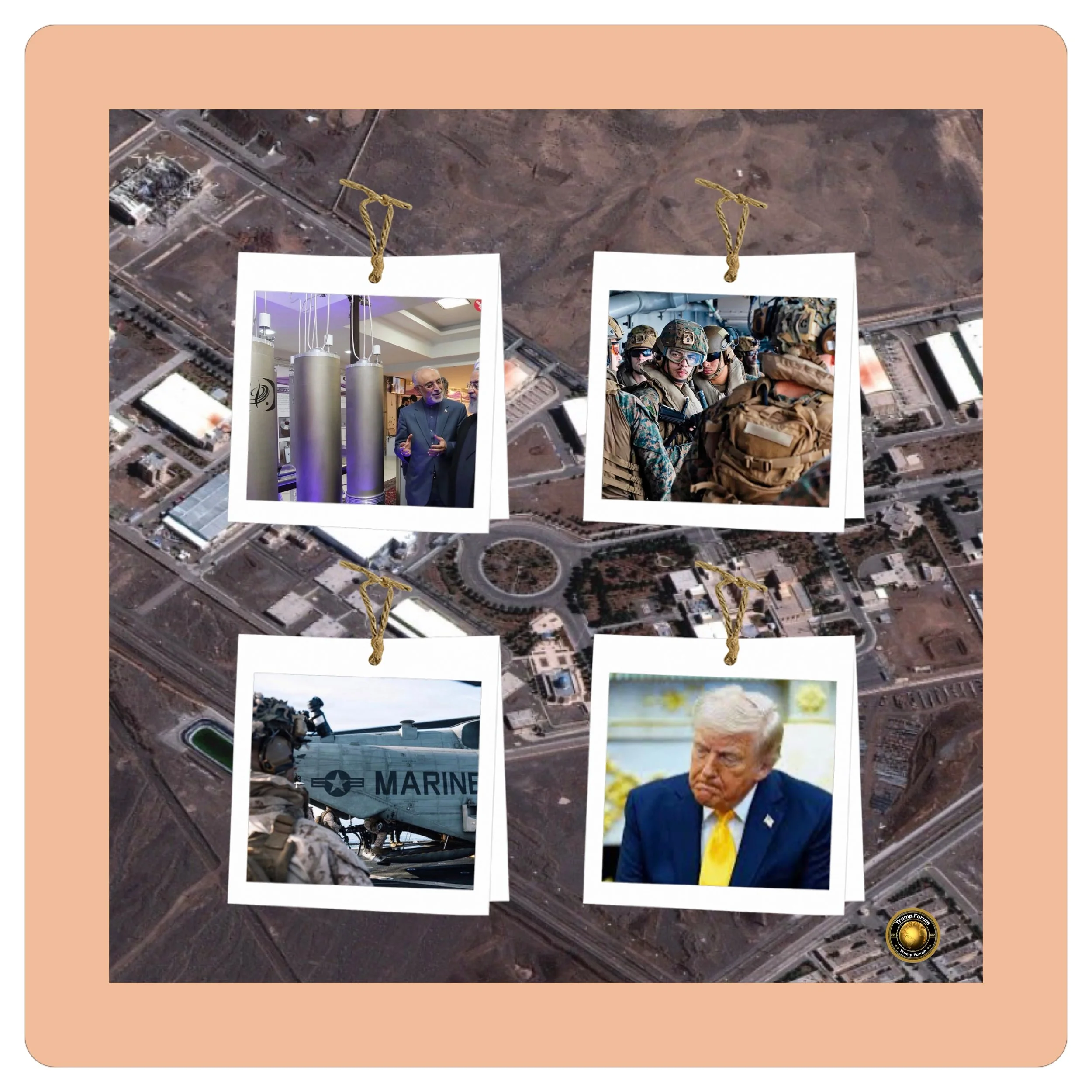
Extracting the Unextractable: The Strategic, Military, and Diplomatic Dimensions of a U.S. Operation to Seize Iran's Highly Enriched Uranium
Executive Summary
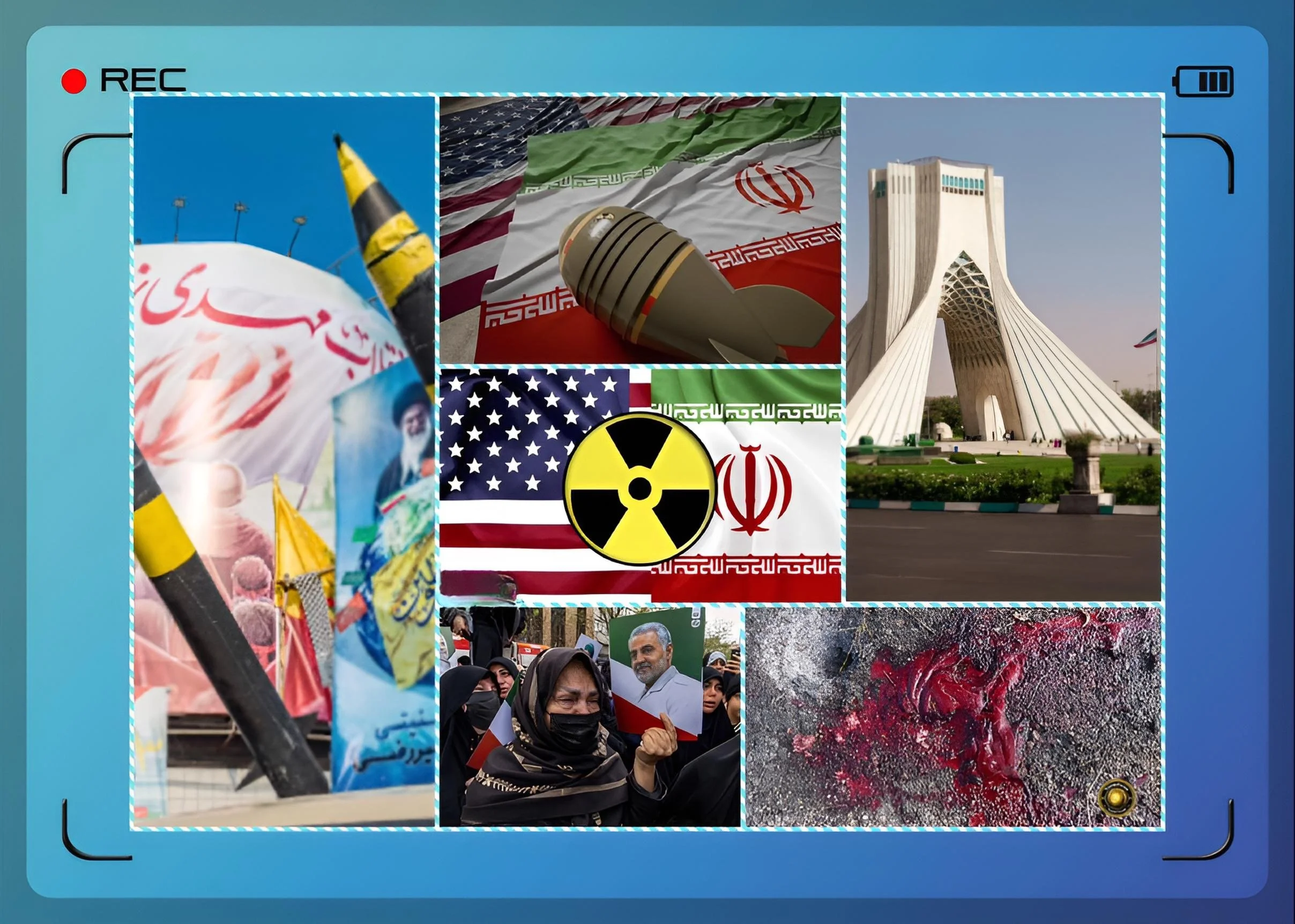
Trump's Uranium Gamble: Why Seizing Iran's Nuclear Stockpile Could Reshape the Entire Middle East
The question of what to do with Iran's residual stockpile of highly enriched uranium (HEU) has become the defining strategic dilemma of the ongoing U.S.-Iran military confrontation.
Following Operation Midnight Hammer in June 2025 and Operation Epic Fury in February 2026, the United States and Israel degraded but did not eliminate Iran's nuclear infrastructure.
Approximately 440.9 kilograms of uranium enriched to 60% remains dispersed across hardened, fortified underground facilities, most notably at Natanz and the Isfahan complex.
President Donald Trump has oscillated publicly between demanding Iran surrender the material as "nuclear dust" and quietly authorizing military planners to develop options for a physical extraction mission that retired senior military officers describe as potentially the largest special forces operation in history.
FAF analysis examines the historical arc of Iran's nuclear program, the military and logistical parameters of a potential extraction operation, the competing diplomatic track, the regional and global strategic consequences, and the probability landscape for each course of action.
It argues that neither the military nor the diplomatic option is straightforward, that the risks of a botched extraction are existential in a non-trivial sense, and that the residual HEU stockpile now functions as the fulcrum upon which the entire post-strike strategic order balances.
Introduction: The Last Nuclear Card
Beyond the Bombs: The Unprecedented U.S. Plan to Extract Iran's Highly Enriched Uranium
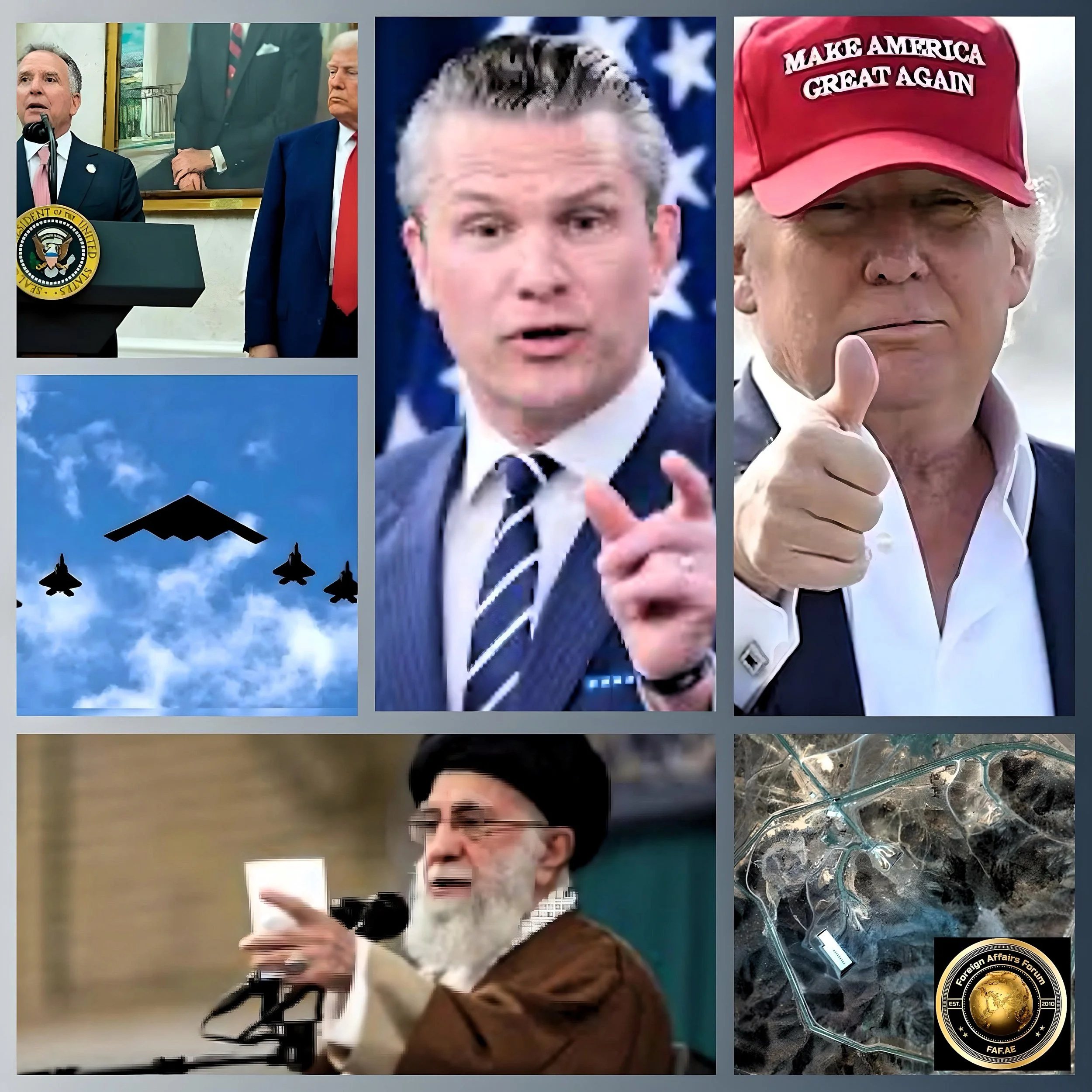
When President Trump launched Operation Midnight Hammer on June 22nd, 2025, deploying six B-2 Spirit stealth bombers and more than a dozen 30,000-pound GBU-57A/B Massive Ordnance Penetrators against the Fordow, Natanz, and Isfahan nuclear facilities, the expectation in Washington was that the physical infrastructure underpinning Iran's nuclear ambitions had been decisively broken.
The Fordow Fuel Enrichment Plant, buried inside a mountain 30 kilometres north of Qom, absorbed 12 of those unprecedented bunker-busters in a single night — the first combat use of the MOP in U.S. military history.
Tomahawk cruise missiles fired from submarines simultaneously struck Natanz and Isfahan, completing a coordinated strike package that the Pentagon described as setting back Iran's nuclear program by years.
Yet the strikes, however technically impressive, could not destroy what they could not reach. Iran's HEU stockpile — enriched to 60%, a level that requires only limited additional technical steps to reach weapons-grade 90% — had been dispersed and concealed prior to and during the strikes.
Estimates now place the remaining stockpile at approximately 440.9 kilograms enriched to 60%, sufficient with further enrichment to produce between 10 and 11 functional nuclear warheads.
The fissile material exists in the form of uranium hexafluoride (UF6), which remains solid at room temperature but converts to gas when heated, stored in metal canisters roughly the size of scuba diving tanks, placed deep within reinforced shaft systems.
These containers cannot simply be bombed without catastrophic radiological contamination.
They must be physically seized, secured, and transported — a requirement that transforms the residual HEU from a military target into a law-enforcement and logistics problem of unprecedented complexity.
This is the strategic context within which President Trump reportedly began reviewing options in late March 2026 for a physical extraction operation.
The Wall Street Journal first reported that the plan under serious discussion would involve U.S. forces entering Iran to secure and remove roughly 1,000 pounds (approximately 453 kilograms) of enriched uranium.
Officials told the newspaper that the mission could require troops to operate inside the country for several days or longer.
The operation, if authorized, would represent not merely a military mission but a geopolitical event of the first order — an attempt to physically denuclearize a sovereign state by force in real time, with no historical precedent to draw upon.
History and Current Status: Iran's Nuclear Ambitions and the Path to War
Racing Against the Bomb: How Washington Plans to Neutralize Iran's Last Nuclear Card
Iran's nuclear program traces its origins to the 1950s under the Shah, when the United States and Iran cooperated under the Atoms for Peace framework.
The program accelerated after the 1979 Islamic Revolution, when the new theocratic government initially suspended it before gradually reconstituting it through covert channels in the 1980s and 1990s.
By the early 2000s, Iran had developed undisclosed enrichment facilities, including Natanz, whose existence was exposed by an Iranian opposition group in 2002.
The subsequent disclosure of the Fordow facility in 2009 — a tunnel complex built inside a mountain at a former Islamic Revolutionary Guard Corps base and concealed from IAEA inspectors — confirmed for Western intelligence communities that Iran's nuclear program was architecturally designed for concealment and hardening against military strikes.
The 2015 Joint Comprehensive Plan of Action (JCPOA) temporarily capped Iran's enrichment activities, limiting uranium enrichment to 3.67% and capping the overall stockpile at 300 kilograms.
Iran ratified a rigorous inspection regime and rolled back centrifuge operations.
The agreement held until Trump's first term, when the United States withdrew from the JCPOA in May 2018 and reimposed sweeping sanctions. Iran responded systematically, progressively exceeding every limit imposed by the agreement.
By late 2023, the IAEA confirmed that Iran had increased its production of 60% enriched uranium at both the Natanz Pilot Fuel Enrichment Plant and the Fordow Fuel Enrichment Plant.
By early 2025, Iran possessed enough HEU for approximately 11 nuclear devices, along with lower-enriched material sufficient for another 11.
The failure of three rounds of diplomatic negotiations between the Trump administration and Iran between early 2025 and June 2025 set the stage for Operation Midnight Hammer.
The Trump administration's stated position was unambiguous: Iran must completely halt all uranium enrichment.
Iran's position was equally categorical: uranium enrichment was a sovereign right. Supreme Leader Ali Khamenei rejected Trump's May 2025 nuclear proposal as "excessive and outrageous" and declared Trump unworthy of a response.
When Iran subsequently declined the proposal in early June 2025, Trump authorized the strikes.
Operation Midnight Hammer decimated Iran's physical enrichment infrastructure at Fordow, Natanz, and Isfahan.
Pentagon assessments concluded that Iran's nuclear program had been severely degraded but not eliminated, primarily because the HEU stockpile itself remained intact and dispersed.
Iranian officials vowed to rebuild.
A second round of strikes — Operation Epic Fury — commenced on February 28th, 2026, this time framed explicitly around regime change as well as nuclear elimination.
Operation Epic Fury also eliminated senior Iranian leadership and targeted missile production infrastructure, but the HEU stockpile remained the critical unresolved variable.
As of April 2026, Iran's enrichment infrastructure lies in ruins, its ballistic missile program is severely degraded, and its leadership has been decimated.
Yet approximately 440.9 kilograms of 60% enriched uranium remains unaccounted for in the sense that it is physically dispersed across sites that are hardened, guarded, and inaccessible without a substantial ground presence.
This is the operational reality confronting American planners.
The war that began as an air campaign has been forced by the residual HEU problem to contemplate its logical ground-force extension.
Key Developments: From Midnight Hammer to the Uranium Extraction Debate
Special Forces, Nuclear Canisters, and Mountain Fortresses: Inside America's Boldest Iran Operation
The sequence of events that brought the uranium extraction debate to the forefront of American strategic planning represents a textbook case of how military campaigns can achieve their primary objectives while generating second-order problems of comparable strategic weight.
Operation Midnight Hammer on June 22, 2025, used the GBU-57A/B Massive Ordnance Penetrator in combat for the first time in history, with 6 B-2 bombers flying non-stop from Whiteman Air Force Base in Missouri.
The strikes destroyed the physical enrichment capacity at Fordow and Natanz. The Tomahawk salvos targeting Isfahan's nuclear technology center completed the dismantlement of the enrichment architecture itself.
But fissile material is not a piece of infrastructure. It cannot be rendered inoperable by explosion. It must be moved or secured.
In the months following Midnight Hammer, U.S. and Israeli intelligence worked to localize Iran's dispersed HEU stockpile.
In March 2026, the New York Times reported that U.S. officials believed Iran could potentially retrieve uranium from a site that had been struck in the June 2025 operation, suggesting that not all of the dispersal was complete.
The IAEA Director General, speaking to CBS, confirmed that a significant portion of the enriched uranium is stored in gaseous form inside cylinders, making it both hazardous and logistically complex to transport.
These cylinders, containing uranium hexafluoride, cannot be simply loaded onto cargo aircraft without specialized containment equipment.
The United States has reportedly developed specialized canisters — systems designed to contain and transport HEU — but deploying this equipment along with specialists and a protective force requires extensive ground operations at a minimum of two locations deep within Iran.
On March 29th, 2026, Trump publicly referenced the HEU in characteristically blunt terms, declaring: "They're going to give us the nuclear dust."
He indicated that Iran's failure to surrender the material would have severe consequences.
Secretary of State Marco Rubio, in a congressional briefing, was even more explicit.
When pressed on the fate of the enriched uranium, Rubio stated that "people are going to have to go and get it," though he declined to specify who precisely would undertake the mission.
Israeli officials, including a senior defense official cited by Axios, confirmed that Trump and his administration were earnestly contemplating the deployment of special operations teams.
Two options crystallized in planning discussions. The 1st would involve a physical extraction: U.S. forces entering Iran, securing the HEU stockpile sites, packaging the material in specialized containment systems, and transporting it out of Iranian territory.
The second would involve sending nuclear specialists — potentially including IAEA personnel — to dilute the material on-site, rendering it unusable for weapons purposes without removing it from Iranian soil.
Each option carries dramatically different risk profiles, different logistical requirements, and different diplomatic implications. Neither has a clear historical precedent at the scale being contemplated.
Latest Facts and Concerns: The Logistical and Strategic Complexity
From Operation Midnight Hammer to the Uranium Heist: The Escalating War on Iran's Nukes
The scale of what American military planners are contemplating bears detailed examination, because the casual language of "extraction" or "seizure" obscures operational realities of extraordinary complexity.
Retired U.S. Admiral James Stavridis described the scenario as potentially "the largest special forces operation in history," given the scale of forces required and the complexity of Iran's fortified infrastructure.
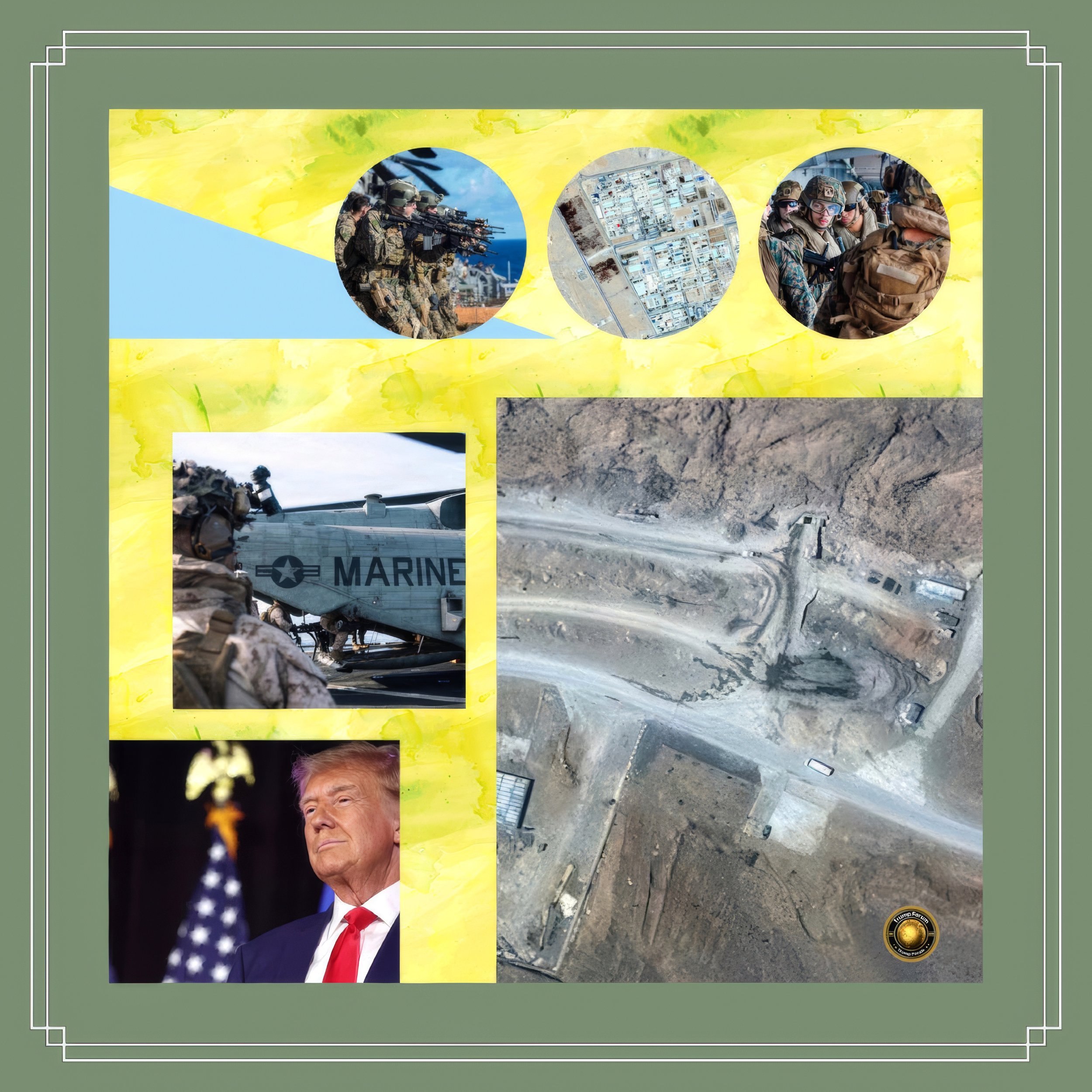
Military analysts estimate that a successful operation could require more than 1,000 special forces personnel, supported by engineering units tasked with navigating debris, mines, and potential booby traps inside the damaged but structurally intact tunnel systems at Fordow and Isfahan.
The primary storage site of concern is the Isfahan complex, which features an extensive underground tunnel system.
Current estimates place a significant portion of the HEU at Isfahan, alongside whatever remains at Natanz.
Fordow, which is buried inside a mountain 30 kilometres north of Qom, was the target of 12 GBU-57A/B MOP bombs in June 2025, but the structural damage to the tunnels does not guarantee that the HEU stored within those tunnels was destroyed — UF6 canisters are robust, and the material may remain retrievable within collapsed sections.
Accessing these sections would require breaching operations of significant scale and engineering complexity.
The physical chemistry of uranium hexafluoride adds another layer of danger. UF6 is solid at room temperature but transforms into gas when heated.
In its gaseous form, it reacts violently with moisture in the air to produce hydrofluoric acid and uranyl fluoride, both of which are highly toxic.
Any breach or accidental heating during the extraction operation would create a radiological and chemical hazard zone that would compromise both the personnel conducting the operation and the material itself.
Specialized containment equipment must be pre-positioned, teams must be trained in nuclear materials handling, and the physical transport corridor must be secured end-to-end — from the underground storage shaft to the airfield or helicopter landing zone, and from there to secure transport aircraft.
The problem of transport infrastructure is itself non-trivial.
Extracting nuclear materials requires access to nearby airfields or, if none are accessible in the operational area, the construction of temporary runways to accommodate C-5 Galaxy-class heavy cargo aircraft.
The 1990s Kazakhstan precedent cited by former nuclear security specialists illustrates the timescales involved: even with a cooperative government, a dedicated team of U.S. and local specialists required approximately six weeks merely to package fissile material securely for transport.
A hostile environment, active Iranian drone and missile threats, and the absence of any cooperative local authority compress those timescales in ways that introduce catastrophic risk at every stage.
Iranian air defense and drone capabilities, even after 2 rounds of major strikes, remain partially operational and could pose constant threats to any ground operation.
American planners would need extensive layered air cover and active drone suppression throughout the operation.
The possibility that Iranian remnant forces — including IRGC units that survived the strikes — might contest the operation adds a combat dimension that would require not merely special forces but a substantial quick-reaction force capable of sustained engagement.
Senior military officers and intelligence analysts, according to multiple reports, have cautioned that high-risk actions of this nature run contrary to their professional assessments.
A further concern — arguably the most strategically consequential — is the question of completeness.
Even a fully successful extraction operation that secures the bulk of the 440.9-kilogram stockpile does not guarantee denuclearization. Iran is assessed to retain over eight tons of lower-enriched uranium in addition to the HEU.
A residual HEU stockpile sufficient for 3 to 4 warhead cores — material that might be dispersed or concealed in undisclosed locations — would remain as a nuclear potential even after a successful extraction of the principal known stockpile.
Intelligence confidence in the completeness of the stockpile map is a critical variable that has not been publicly confirmed.
Cause-and-Effect Analysis: The Strategic Logic and Its Consequences
The 440-Kilogram Question: Why Iran's Uranium Stockpile Defines the Future of Nuclear Non-Proliferation
The strategic logic driving Washington's consideration of an HEU extraction operation flows directly from a chain of cause and effect that began with the failure of diplomacy and the decision to use military force as a substitute.
The failure of three rounds of nuclear negotiations, culminating in Khamenei's categorical rejection of Trump's May 2025 proposal, produced Operation Midnight Hammer.
Midnight Hammer destroyed Iran's enrichment infrastructure but left the HEU stockpile intact and dispersed, thereby producing a new threat environment in which the material could be weaponized through covert domestic facilities or reconstituted enrichment capacity.
Operation Epic Fury addressed the leadership and missile dimensions of the threat but again left the HEU unresolved.
The logical consequence of this sequence is that the physical extraction option has moved from theoretical contingency planning to active policy consideration.
If the extraction operation succeeds completely, the immediate effect is the removal of Iran's ability to build nuclear devices using its existing fissile material.
This would constitute a genuine and unprecedented act of forcible non-proliferation — the physical removal of a nation's weapons-capable nuclear material by a foreign power without that nation's consent.
The downstream effects would be profound and not all positive.
A precedent of this nature would alarm every state that operates a nuclear program of any kind, including U.S. allies.
It would likely accelerate nuclear hedging strategies in countries like Saudi Arabia, Turkey, South Korea, and Japan, which might calculate that possessing a nuclear weapon is the only reliable deterrent against a U.S. willingness to physically seize materials from nuclear-threshold states.
The non-proliferation order built painstakingly since the Nuclear Non-Proliferation Treaty of 1968 would be structurally stressed in ways that could take generations to repair.
If the operation partially succeeds — securing most but not all of the HEU — the consequences are more immediately dangerous.
Iran retains residual weapons material, has witnessed a direct attack on its sovereignty in the most literal possible form, and faces domestic political pressure that would make any subsequent diplomatic settlement nearly impossible.
The operational landscape in the region would be transformed by the fury of the Iranian response, which might include activating whatever proxy networks survived the degradation campaigns of 2025 and 2026, maritime disruption in the Strait of Hormuz, and a sprint to weaponize the residual HEU using whatever covert capacity remains.
If the operation fails catastrophically — the worst-case scenario — U.S. and Israeli special forces would be killed or captured on Iranian soil in a context that would make the 1980 Desert One failure look modest by comparison.
The political consequences for the Trump administration and for U.S. credibility globally would be severe. Iran's leverage in any subsequent negotiations would be dramatically enhanced.
The probability of Iranian nuclear weaponization — the very outcome the operation was designed to prevent — would increase, not decrease, because Tehran's deterrence logic would demand it.
The diplomatic track generates its own cause-and-effect chain.
If Iran, under military pressure and with its leadership decimated, agrees to a negotiated transfer of the HEU to a third party — Russia has been suggested as a potential custodian, given its 2015 precedent of accepting Iranian LEU during the JCPOA negotiations — the immediate effect is the removal of the fissile material without the risks of a ground operation.
However, the reliability of any such arrangement depends entirely on Iranian compliance, which requires a degree of institutional coherence within the Iranian government that the strikes of 2025 and 2026 may have compromised.
It also requires a willingness in Tehran to accept, in effect, that it has permanently forfeited its nuclear deterrent — a concession that no Iranian leader, regardless of how militarily weakened, may be willing to make publicly.
The third-order consequences for global energy markets and regional economic stability are equally significant.
Iran's oil infrastructure, its port facilities, and its role as a swing supplier in global oil markets have all been affected by the ongoing conflict.
Any escalation associated with a ground extraction operation would immediately spike oil prices, affect tanker traffic through the Strait of Hormuz, and generate ripple effects across the global economy that would be felt from Delhi to Berlin.
Future Steps: The Operational and Diplomatic Pathways
Diplomacy or Raid: Trump Faces a Historic Choice Over Iran's Weapons-Grade Uranium Stockpile
The administration's decision calculus in the weeks following April 2026 will likely be shaped by three intersecting variables: the state of Iran's internal governance, the quality of American intelligence on the precise location and dispersal of the HEU stockpile, and the degree of regional and allied support for a ground operation versus a diplomatic settlement.
On the governance question, the strikes of 2025 and 2026 have degraded Iran's leadership infrastructure.
The Atomic Energy Organization of Iran, which manages the HEU stockpile, may retain sufficient institutional coherence to organize a negotiated transfer if the political conditions are right.
Alternatively, a fragmented internal political environment could make it difficult for any Iranian interlocutor to credibly commit to a transfer arrangement.
American diplomacy will need to engage with whatever Iranian governmental capacity remains, a task made considerably harder by the context of ongoing hostilities.
On the intelligence question, the success probability of the extraction operation depends fundamentally on whether U.S. intelligence has comprehensive and accurate knowledge of all or the majority of the HEU cylinders.
The Polish Institute of International Affairs (PISM) has noted explicitly that this is one of the critical prerequisites — along with full control of the airspace over Iran and the temporary occupation of selected nuclear sites — for a successful extraction operation.
If significant quantities of HEU are stored in undisclosed locations whose coordinates are not in American hands, a physical extraction operation could succeed in seizing the known stockpile while leaving a residual weapons-capable quantity in Iranian custody.
That outcome might be worse than no operation at all, because it would remove leverage without removing the threat.
On the allied dimension, U.S.-Israeli coordination is essential and appears to be in place at the operational level.
Israeli special forces have long prepared for operations aimed at extracting nuclear materials from hostile territories, and the two countries have discussed the possibility of joint participation to both limit U.S. losses and extend the scope of any operation to include additional sites.
However, the political coordination required to execute a joint extraction mission — involving bilateral agreements at every military and political level, with the constant risk of operational security being compromised by leaks — is itself a substantial challenge.
The dilution option — sending nuclear specialists to reduce the material's enrichment level on-site rather than removing it — represents an intriguing middle path.
If the HEU could be diluted to low-enriched uranium (LEU) at a level below weapons-threshold, the strategic threat would be eliminated without the requirement to physically transport highly hazardous materials out of Iran.
However, this option requires even greater ground access than extraction, because dilution equipment would need to be brought into the facility, and the process would take time — time during which Iranian forces could contest the operation.
It also requires the technical expertise and safety protocols that are typically associated with multilateral, IAEA-supervised processes, not wartime special forces missions.
The most promising pathway, in the assessment of most independent analysts, remains a negotiated settlement in which Iran agrees to transfer the HEU to a neutral custodian — most plausibly Russia or a consortium of IAEA member states — under internationally supervised conditions.
This would require Iran to accept, at minimum, that the HEU will leave its territory. In exchange, the United States and Israel would presumably offer security guarantees, sanctions relief, and a pathway to post-war political normalization.
The leverage for such a deal is substantial: Iran's military has been severely degraded, its economy is under extreme pressure, and its leadership is weakened.
But the ideological dimension of the Iranian state — the deep-seated commitment to nuclear sovereignty that transcends any particular leadership grouping — means that the concession cannot simply be imposed through coercion. It must be made politically survivable for whatever Iranian authority remains.
A secondary pathway involves the deployment of IAEA inspectors as part of a multilateral framework, potentially backed by a U.N. Security Council resolution, to monitor and eventually remove the HEU under international supervision.
This option has the advantage of legitimacy and precedent — the IAEA has conducted similar operations in Libya and Ukraine — but it requires a ceasefire, a degree of Iranian cooperation, and a political will in the U.N. Security Council that the current geopolitical environment makes uncertain.
Russia and China, both permanent members of the Security Council, would need to support or at least abstain from blocking such a resolution, a political outcome that cannot be assumed.
The timeline matters enormously.
Every week that the HEU remains unsecured increases the probability of one of the three scenarios CSIS has identified: Iran rushing to build a rudimentary weapon using the existing 60% enriched stockpile; Iran reconstituting limited enrichment capacity to bring the material to weapons-grade 90%; or the material falling into non-state hands in the event of a catastrophic Iranian state collapse.
The third scenario, in particular, represents a nightmare for global non-proliferation architecture, because HEU in non-state hands would be profoundly more difficult to track, contain, or retrieve than HEU held by a sovereign government.
Conclusion: The Uranium Problem as Strategic Inflection Point
Securing the Unthinkable: Why Extracting Iran's Uranium May Be Harder Than Invading the Country
The HEU extraction debate that has emerged in the spring of 2026 represents something more fundamental than a tactical military planning question.
It is an inflection point in the history of nuclear non-proliferation, in the evolution of U.S. military power, and in the future governance architecture of the Middle East.
The United States has, through two rounds of unprecedented military strikes, dismantled Iran's nuclear infrastructure.
But it has not eliminated Iran's nuclear potential, because potential — in the form of fissile material that exists independently of the centrifuges and facilities that produced it — cannot be destroyed from the air.
The choice now facing the Trump administration is, in its most stripped-down form, a choice between military action with enormous logistical, political, and escalatory risks on one hand, and diplomacy that requires a wounded and ideologically resistant interlocutor to make a concession of historic proportions on the other. Neither is easy.
Neither is certain.
And the consequences of failure on either track are severe enough that they must be modelled carefully rather than dismissed as acceptable risks.
What is clear from the analysis of all available information is that the HEU stockpile has become the fulcrum of the post-strike strategic order. Whoever controls the ultimate disposition of those 440 kilograms of uranium enriched to 60% — the United States, Iran, the IAEA, or some other custodian — will have determined not just the outcome of this conflict but the structure of nuclear politics in the 21st century.
The stakes, in the fullest sense of that overused phrase, could not be higher.
The international community, from Moscow to Riyadh, from Beijing to Brussels, is watching with a mixture of anxiety and calculation, each stakeholder measuring the precedent against its own nuclear calculus.
What happens next in the mountains of Fordow and the tunnels of Isfahan will echo far beyond the borders of Iran.