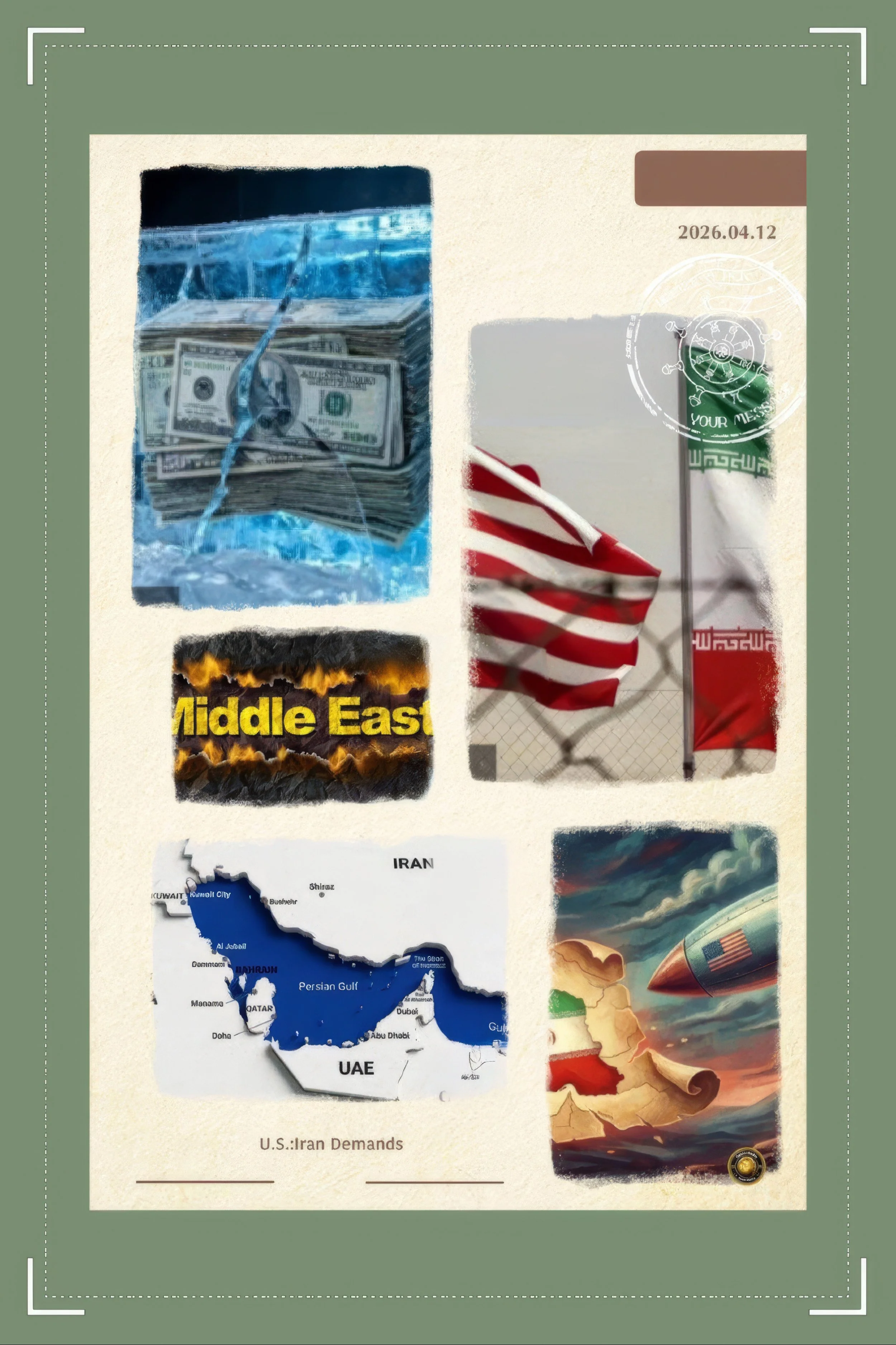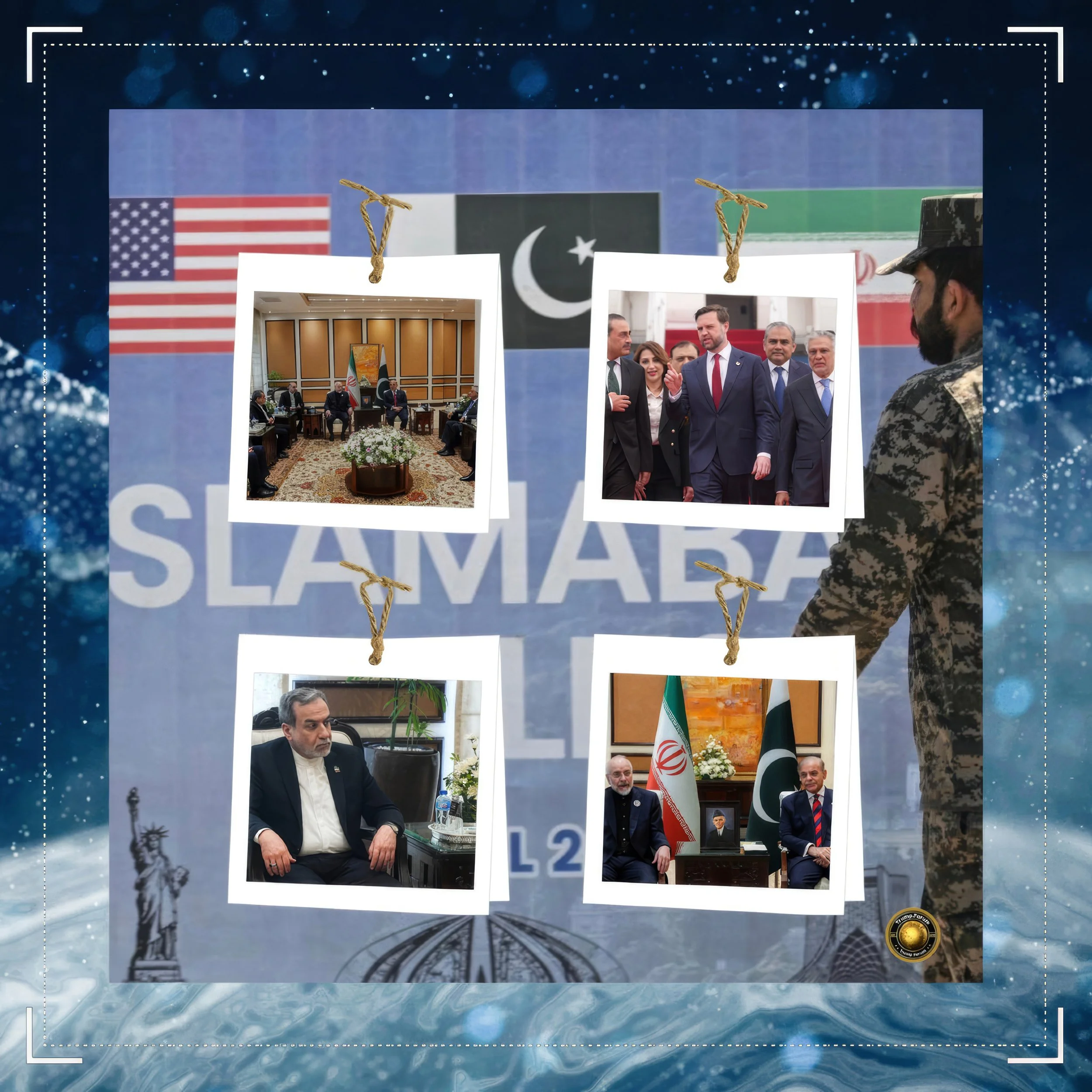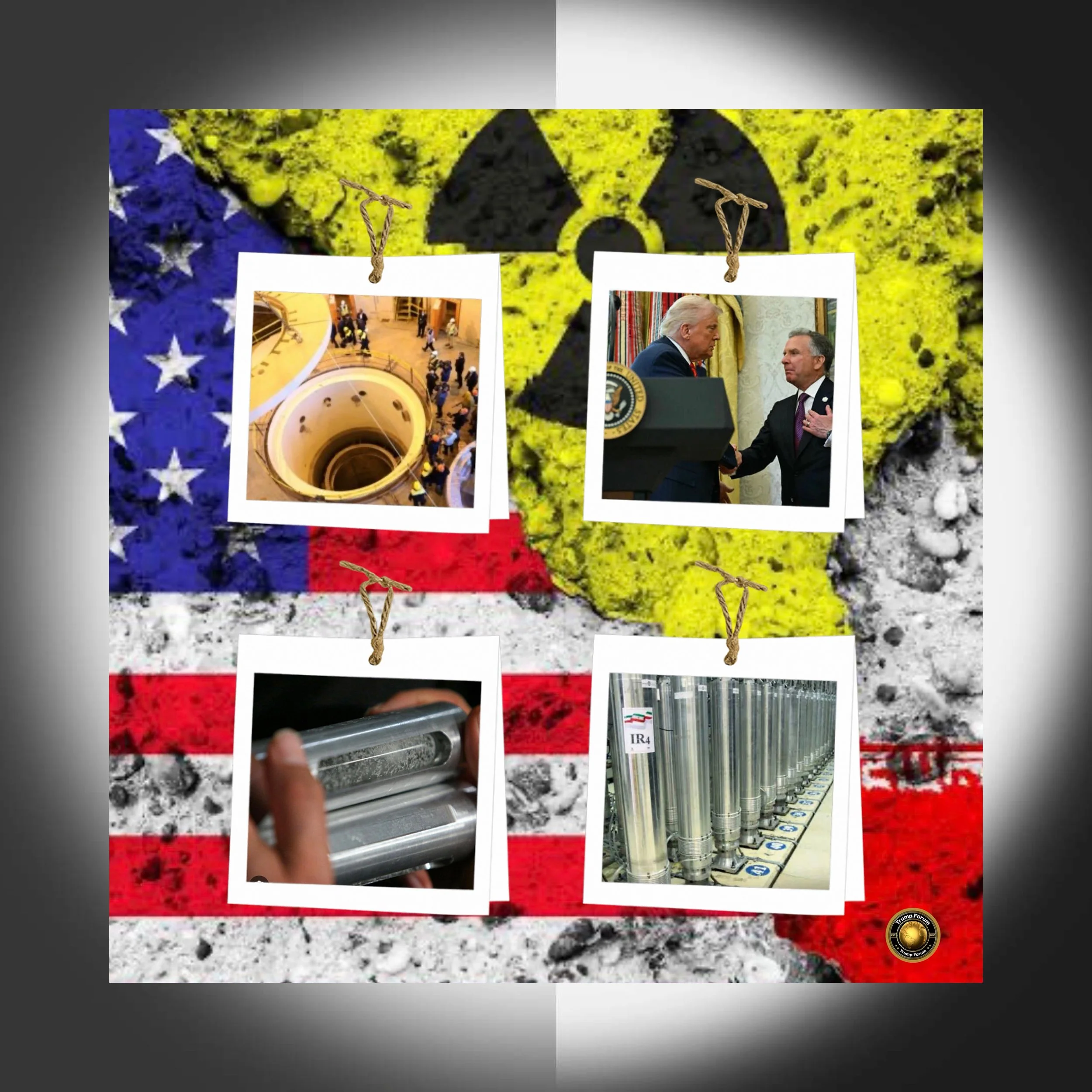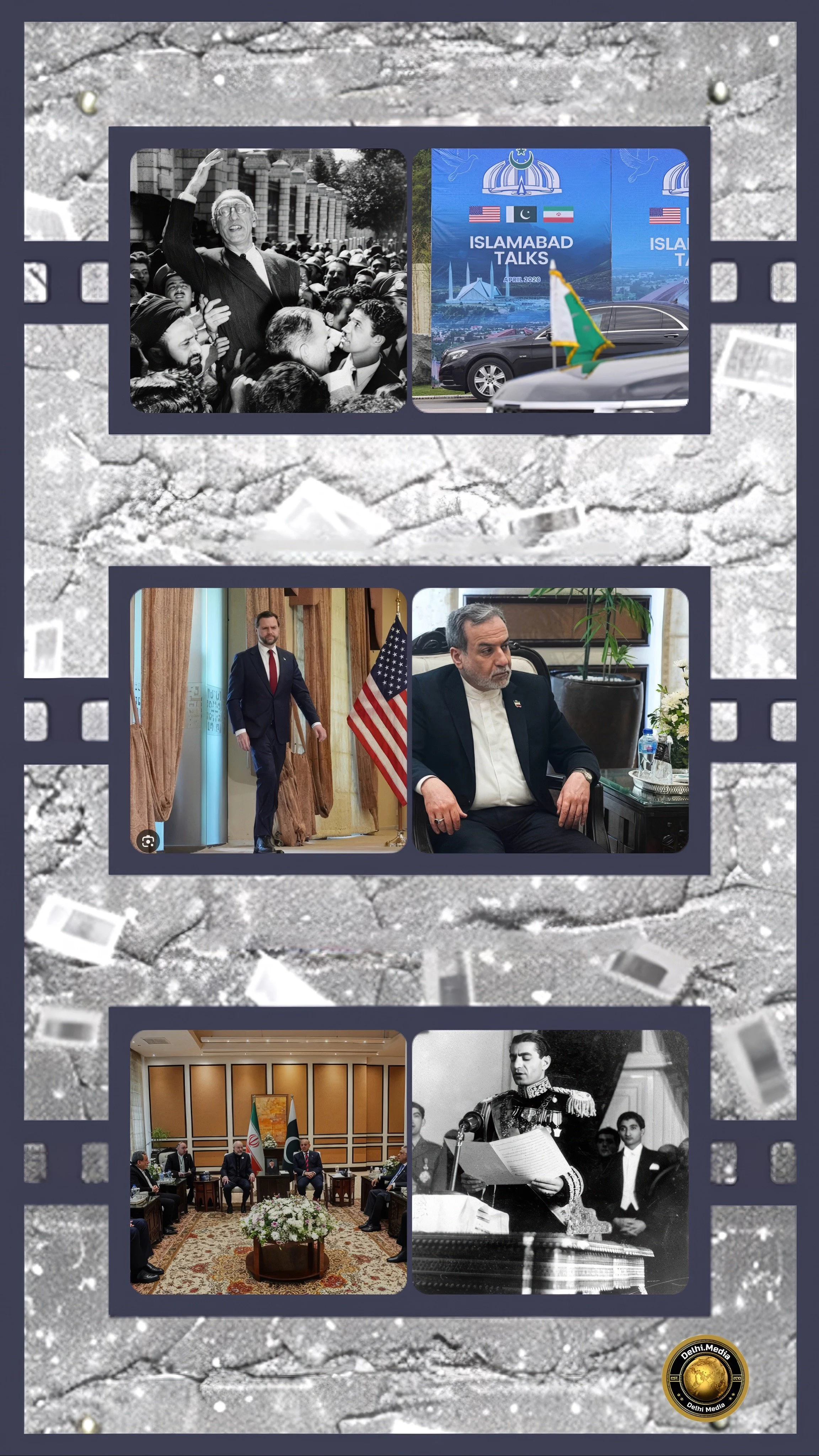
The Islamabad Impasse: Nuclear Ambition, Strategic Rivalry, and the Unraveling of a Fragile Peace Between Washington and Tehran- Part I
Executive Summary
Why Islamabad's Failed Peace Talks Could Ignite the Next Phase of the Gulf War
The collapse of the United States-Iran peace negotiations in Islamabad, Pakistan, on April 11th, 2026, after 21 hours of intensive, exhausting, and ultimately inconclusive diplomatic engagement, represents far more than a bilateral breakdown between two hostile states.
It is a seismic rupture in the post-war diplomatic architecture that had been cautiously and painstakingly constructed since the onset of the 2026 Iran-US conflict on February 28th of the same year — a rupture whose consequences reverberate across global energy markets, nuclear non-proliferation regimes, the geopolitical calculations of great powers, and the security of millions of people in and beyond the Middle East.
Vice President JD Vance, who led the American delegation under the direct and real-time supervision of President Donald Trump, confirmed publicly upon departing Islamabad that Tehran had refused to offer an "affirmative commitment" that it would abandon the pursuit of nuclear weapons or the technical infrastructure necessary to develop them rapidly.
The talks, mediated through the unprecedented diplomatic initiative of Pakistan's Prime Minister Shehbaz Sharif and Army Chief, ended without agreement, casting the immediate future of the ceasefire — formally set to expire on April 22nd, 2026 — into profound and dangerous uncertainty.
The world watched with anxious attention as oil markets, which had already witnessed Brent crude climb to $126 per barrel at the height of the 40-day conflict and then plunge approximately 13% to around $94.80 per barrel upon the ceasefire announcement of April 7th, braced for renewed volatility in the wake of the diplomatic collapse.
The failure of the Islamabad summit illuminates the deep structural incompatibilities between Washington's demand for verifiable nuclear disarmament — including the dismantlement of Iran's entire enrichment architecture — and Tehran's insistence on preserving its sovereign right to enrich uranium as both an energy and a strategic deterrence asset.
This is a contradiction that no diplomatic framework has yet resolved, across more than two decades of international negotiation.
FAF article examines, in comprehensive scholarly depth, the historical antecedents of the current crisis, the contours of the conflict that brought both nations to the negotiating table in Islamabad, the specific dynamics and failures of the summit itself, the geopolitical ramifications for a multipolar world in which Russia, China, and Pakistan each pursue distinct interests, and the full range of scenarios that now confront the international community as the April 22nd ceasefire deadline looms.
Introduction
The Strait of Hormuz Hangs in Balance as the World Watches Diplomacy Collapse in Real Time
When Pakistan's Prime Minister Shehbaz Sharif described the Islamabad talks as a "make or break" moment for regional and global stability, he was not indulging in diplomatic hyperbole or political posturing.
He was stating, with unusual directness, the existential weight that the international community attached to the negotiations taking place on Pakistani soil.
The talks occurred against the backdrop of the most devastating military conflict the Middle East had experienced in a generation — a 40-day war in which the United States and Israel struck more than 13,000 Iranian military and nuclear targets, destroyed approximately 80% of Iran's air defense network, obliterated its ballistic missile storage infrastructure across dozens of sites, and fundamentally degraded the industrial base that Tehran had spent more than three decades constructing at enormous financial and political cost.
Iran, in retaliation for those strikes, closed the Strait of Hormuz — the narrow maritime chokepoint connecting the Persian Gulf to the Gulf of Oman, through which approximately one-fifth of the world's oil and liquefied natural gas transits daily — triggering what energy analysts at Kpler described as the largest disruption to global energy supply since the 1970s oil crisis.
The immediate economic consequences were severe and globally distributed: oil prices surged past $100 per barrel for the first time in four years on March 8th, 2026, eventually reaching a wartime peak of $126 per barrel; commodity markets for aluminum, fertilizer, petrochemicals, and industrial gases experienced acute shortages; and shipping insurance rates in the Gulf spiked to levels not seen in the modern era.
The ceasefire of April 7th, 2026, brokered through frantic Pakistani back-channel diplomacy and announced by President Trump less than two hours before his self-imposed ultimatum to strike Iranian power plants and bridges expired, temporarily halted the bloodshed and reopened the Strait, allowing global markets a moment of cautious relief.
But the ceasefire was precisely that — a temporary suspension of hostilities purchased at the eleventh hour, not a resolution of the structural conflicts that had ignited them.
The Islamabad summit was designed to transform that fragile pause into the foundation of a durable political settlement. It failed comprehensively.
And in failing, it has returned the world to a precipice whose exact dimensions remain contested but whose dangers are unmistakably acute and consequential.
History and Current Status
From JCPOA to Rubble: How Decades of Broken Deals and Broken Trust Led Both Nations to Islamabad
The roots of the 2026 conflict do not begin in 2026.
They stretch back across nearly five decades, through the Islamic Revolution of 1979 ( events started seven decades ago in 1953) that transformed Iran from a close American ally into its most implacable regional adversary, through the hostage crisis that poisoned bilateral relations for a generation, through the Iran-Iraq war of the 1980s in which Washington covertly supported Baghdad, through the successive rounds of sanctions, proxy conflicts, and nuclear negotiations that defined the relationship from the 1990s onward.
The most consequential recent chapter began with the Joint Comprehensive Plan of Action, the landmark nuclear agreement concluded in Vienna in July 2015 among Iran, the United States, the United Kingdom, France, Germany, Russia, China, and the European Union.
The JCPOA placed specific and verifiable limits on Iran's uranium enrichment program: enrichment was capped at 3.67% purity, stockpiles of enriched uranium were limited to 202 kilograms, and Iran's advanced centrifuge program was substantially curtailed in exchange for meaningful relief from international sanctions that had been strangling the Iranian economy.
The deal was imperfect — it did not address Iran's ballistic missile program, its support for regional proxy forces, or its broader foreign policy — but it achieved its primary objective of extending Iran's so-called "breakout time" — the period required to accumulate sufficient weapons-grade uranium for a single nuclear device — from approximately 2-3 months to approximately one year.
When the Trump administration unilaterally withdrew from the JCPOA in May 2018, characterizing it as the "worst deal ever negotiated," it did so without a credible alternative framework.
The administration reimposed sweeping sanctions, adopted a "maximum pressure" policy intended to force Tehran back to the negotiating table on more comprehensive terms, and hoped that economic pain would generate political compliance.
The strategy produced economic pain in abundance — Iranian GDP contracted sharply, inflation reached triple digits, and the Iranian currency collapsed in value — but it did not produce the political compliance Washington sought.
Instead, Tehran embarked on a calibrated and deliberate program of nuclear escalation, progressively violating the JCPOA's enrichment caps as diplomatic leverage.
By late 2024, Iran was enriching uranium to 60% purity — a level with no credible civilian justification, as nuclear power plants require only 3% to 5% enriched uranium — and had accumulated stockpiles sufficient to produce weapons-grade material for 5 to 6 nuclear devices within approximately 2 weeks of a political decision to do so.
The IAEA's February 2026 safeguards report documented extensive Iranian non-cooperation with inspection protocols and raised urgent concerns about undeclared nuclear activities at multiple sites.
The Trump administration's return to power in January 2025 brought the simultaneous pursuit of 2 contradictory impulses: a renewed "maximum pressure" campaign of intensified sanctions and military posturing, and a stated desire to negotiate a "better deal" than the JCPOA that would address not merely enrichment but also missiles and regional behavior.
Indirect talks began in Muscat, Oman, on February 6, 2026, facilitated by Omani Foreign Minister Badr bin Hamad Al Busaidi. Secretary of State Marco Rubio expressed open skepticism throughout, stating publicly that he was "not sure you can reach a deal with these guys," while Vance complained that Supreme Leader Ali Khamenei — the ultimate and unchallengeable decision-making authority in Tehran — refused to participate directly in any diplomatic format, creating structural obstacles that no amount of procedural creativity could overcome.
The Muscat talks produced no agreement. By late February 2026, the diplomatic track had effectively collapsed, and the military track took over.
On February 28th, 2026, the United States and Israel launched coordinated, large-scale strikes on Iranian military and nuclear infrastructure, initiating the most intensive military conflict the region had witnessed in decades.
The first wave of strikes targeted Iran's primary air defense systems, radar installations, and command-and-control nodes, effectively blinding Iran's air defense architecture within the first 48 hours.
Subsequent waves struck ballistic missile storage depots, weapons manufacturing facilities, drone production plants, and — most consequentially — nuclear enrichment and research sites.
The United States military conducted over 13,000 individual strikes during the 40-day campaign, destroying approximately 90% of Iran's weapons factories, more than 80% of its missile launch and storage facilities, and approximately 80% of its nuclear industrial base.
The Natanz enrichment facility — the crown jewel of Iran's nuclear program, constructed at enormous expense deep underground specifically to survive aerial attack — was struck on March 21st using advanced bunker-buster munitions, in what Defense Secretary Pete Hegseth described as a message about American military reach and technical capability.
General Dan Caine, the military commander overseeing the campaign, offered a more precise assessment: the nuclear industrial base had been severely degraded, but a residual margin of capability and uncertainty remained.
Iran's military response was constrained by the devastating degradation of its air defenses and missile infrastructure but was not entirely suppressed. Iranian cruise missiles penetrated Israel's layered air defense network, including the Iron Dome, on multiple occasions, demonstrating a residual offensive reach that military planners on both sides were compelled to factor into their strategic calculations.
Iran's most consequential retaliation, however, was economic rather than kinetic: the closure of the Strait of Hormuz, announced on February 28th and maintained through the first week of April, removed approximately 11 million barrels per day of crude production from global markets and cut Middle Eastern export volumes from 15 million to an effective 7 million barrels per day.
Key Developments
Twenty-One Hours, Zero Agreement: Inside the Most Consequential Diplomatic Meltdown of the Century
The ceasefire of April 7, 2026, emerged from a frantic sequence of Pakistani diplomatic interventions that began in mid-March, when Prime Minister Sharif and Army Chief General Asim Munir began serving as back-channel intermediaries between Washington and Tehran.
Pakistan occupied a structurally unique position in the diplomatic landscape: it maintained functional, if occasionally strained, relations with both the United States, its longtime security partner and aid donor, and with Iran, its neighbor and fellow Muslim-majority state with which it shares a long frontier.
Pakistan also carried the credibility of a state that had itself navigated nuclear weapons development and the international pressures surrounding it, giving its mediation a degree of strategic authenticity.
Trump's April 7th ceasefire announcement came with a two week clock and an expectation that comprehensive negotiations would immediately follow. Pakistan offered Islamabad as the venue, and both delegations accepted.
The symbolism was not lost on observers: the United States and Iran were choosing to conduct their highest-stakes diplomatic engagement since the JCPOA negotiations not in the traditional venues of Vienna, Geneva, or New York, but in the capital of a nuclear-armed Muslim state that had positioned itself as a bridge between civilizations and strategic blocs.
The Islamabad summit opened on April 10, 2026. Both delegations negotiated primarily through Pakistani interlocutors, with the American side communicating through written exchanges as well as periodic face-to-face engagements.
Vance received real-time instructions from Trump throughout the process, a management arrangement that some diplomatic analysts noted constrained the flexibility typically necessary for complex, multi-issue negotiations.
The American core demand was stated clearly and without equivocation: Iran must provide an "affirmative commitment" — not merely a procedural concession, but a binding political declaration — that it would neither pursue nuclear weapons nor retain the technical infrastructure, including enrichment centrifuges, advanced materials stockpiles, and weaponization research, that would allow it to "quickly achieve" a nuclear weapon.
This demand was categorically more expansive than any previous American nuclear position on Iran.
The JCPOA had sought to limit enrichment levels and stockpile sizes while preserving Iran's nominal right to a civilian nuclear program.
The Obama administration's framework had accepted a finite Iranian enrichment capacity in exchange for verification and delay.
Washington's 2026 position went further: it appeared to demand the functional dismantlement of Iran's entire enrichment architecture, including activities that Iran characterized as sovereign rights under the Nuclear Non-Proliferation Treaty.
Tehran's response was declared in advance of the summit and reiterated throughout it.
Mohammad Eslami, the head of Iran's Atomic Energy Organization, announced days before the talks that any restrictions on enrichment were entirely and permanently off the table.
The Supreme National Security Council had framed the ceasefire of April 7th as an "enduring defeat" for the United States — a narrative that gave Iranian hardliners enormous political leverage within the deliberation process and left the negotiating team with virtually no domestic space to accept formulations that could be characterized as capitulation on the nuclear question.
The talks also encompassed a wide range of subsidiary but interconnected issues: the permanent status of the Strait of Hormuz and whether Iran would accept a framework guaranteeing freedom of navigation; the lifting of American economic sanctions, including both nuclear-related and non-nuclear secondary sanctions that had devastated the Iranian economy; the question of frozen Iranian assets held in foreign banks; potential compensation for war damages; and the broader architecture of regional security, including the status of Hezbollah in Lebanon, Iranian-backed militias in Iraq and Syria, and the Houthi movement in Yemen.
On each of these dimensions, the gap between the two sides proved unbridgeable within the 21-hour window that the summit provided.
Latest Facts and Concerns
Brent Crude at $94 and Rising: What Failed US-Iran Talks Mean for Global Energy and Ordinary Lives
As of April 12, 2026, the ceasefire remains formally in effect but is under mounting strain, with the April 22nd expiration deadline approaching in the absence of any political framework to sustain or replace it.
Vance's departure statement — warning that the outcome was "bad news" for Iran — was parsed by analysts across the political spectrum as simultaneously a pressure tactic, a public justification for potential renewed hostilities, and a message to domestic American audiences that the Trump administration had not softened its posture.
The Pentagon confirmed, through Hegseth's public statements, that Iran's primary enrichment facilities remain "incapacitated" following the military strikes of February-March 2026.
General Caine's more technically precise assessment noted that approximately 80% of Iran's nuclear industrial base had been struck, with particular emphasis on the centrifuge manufacturing networks, raw materials pipelines, and advanced research facilities that support the weaponization pathway.
However, the approximately 20% of the nuclear infrastructure that survived represents a non-trivial residual capacity, particularly given Iran's demonstrated ability over two decades to rebuild, disperse, and harden nuclear assets.
The Pentagon stated explicitly that it was "watching" Iran's enriched uranium stockpiles and would "take action" if Tehran failed to relinquish them — a statement that raised immediate questions about the legal framework and international authorization for any such action.
Global energy markets remain under severe and persistent strain.
Kpler analysts documented a reduction of approximately 11 million barrels per day in crude production during the conflict period, alongside refinery run cuts adding a further 3 million barrels per day to the effective supply shortfall.
Even under an optimistic scenario in which the ceasefire holds and full Strait normalization occurs within 4 to 6 weeks, analysts projected months of strategic petroleum reserve rebuilding, elevated insurance and shipping costs, and elevated base prices.
The broader ripple effects — on food security in import-dependent countries, on manufacturing costs in Europe and Asia, and on the inflationary pressures facing central banks that had only recently achieved post-pandemic price stability — represent a secondary crisis of significant proportions.
Russia's posture throughout the crisis has been one of calculated strategic support for Tehran's resistance combined with rhetorical calls for diplomatic restraint.
Moscow condemned the American and Israeli strikes on Natanz as "blatant violations of international law" and warned all parties ahead of the Islamabad talks to exercise restraint.
These warnings were widely interpreted not as genuine neutrality but as signals of Russian solidarity with Iran, reinforcing the hardline narrative in Tehran that international opinion stood against American coercive demands.
The Russia-Iran relationship, deepened significantly during the Ukraine war years when Tehran supplied Moscow with Shahed drones and other military materiel, creates a mutual interest in resisting what both governments characterize as American hegemonic overreach.
China's position has been more nuanced and more strategically interesting. Beijing imports a substantial share of its hydrocarbon needs from the Middle East and had acutely felt the effects of the Strait's closure.
Chinese refineries dependent on Gulf crude had reduced processing rates during the crisis, contributing to manufacturing disruptions in the world's second-largest economy.
At the same time, China's 25-year, $400 billion strategic cooperation agreement with Iran — formalized in 2021 as a cornerstone of the Belt and Road Initiative's Middle East architecture — gives Beijing a direct strategic and financial stake in Iran's political survival as a sovereign state.
Wang Yi's consultations with Pakistani Foreign Minister Ishaq Dar in Beijing in late March, and Beijing's subsequent positioning as a potential future mediator, reflect China's attempt to convert its economic vulnerabilities in the crisis into diplomatic leverage.
Israel, notably, maintained a lower public profile during the Islamabad talks than might have been expected given its central role as a co-belligerent in the military campaign.
Israeli officials confirmed ongoing exchanges of fire with Hezbollah along the Lebanese frontier even during the ceasefire period, illustrating the degree to which the broader regional conflict had developed subsidiary dynamics independent of the US-Iran bilateral axis.
The failure of the Islamabad talks removes the prospect of a comprehensive settlement framework that might have addressed Hezbollah's status as part of a larger regional security architecture — leaving the Israeli-Lebanese frontier as volatile as before.
Cause-and-Effect Analysis
Nuclear Sovereignty vs. Disarmament Demands: The Impossible Gap That Killed the Islamabad Deal
The collapse of the Islamabad talks was not the product of bad luck, poor logistics, or inadequate preparation.
It was the structurally predictable outcome of an impasse that has defined US-Iran relations since at least 2003, and arguably since 1979. Several distinct but interlocking causal chains converged at Islamabad to produce the failure.
The first and most fundamental is the deep asymmetry in how Washington and Tehran perceive and calculate acceptable strategic risk.
For the United States — and more intensely for the Trump administration with its "maximum pressure" philosophy — an Iran that retains even the latent capability to weaponize highly enriched uranium within two weeks constitutes an existential threat to the regional security order that Washington and its allies have constructed and maintained over generations.
The Trump administration's framing of the 2026 military campaign as a war to permanently eliminate Iran's nuclear potential — not merely to set it back temporarily — made anything short of verifiable and comprehensive disarmament politically untenable domestically.
Any deal that preserved even a residual Iranian enrichment capability could be characterized by domestic critics as a repetition of the Obama administration's JCPOA "mistake."
For Tehran, the calculation runs in precisely the opposite direction.
The nuclear program is not merely a technical project or a bargaining chip; it is, in the post-Saddam, post-Gaddafi strategic landscape, the ultimate guarantor of regime survival.
Iran's leadership has observed with careful attention the fate of states that voluntarily dismantled strategic weapons programs in exchange for international normalization: Iraq, which had ended its nuclear weapons program by the mid-1990s, was invaded and destroyed in 2003; Libya, which surrendered its nascent nuclear program in 2003, saw its government overthrown and its leader killed in 2011.
The Iranian leadership has repeatedly articulated this lesson explicitly: states that surrender their strategic deterrence in exchange for Western assurances do not survive.
The demand for complete and verifiable disarmament is, from Tehran's perspective, indistinguishable from a demand for vulnerability to externally imposed regime change.
The second causal chain involves the domestic political constraints operating on both delegations throughout the 21-hour summit.
Vance negotiated under explicit real-time instructions from Trump, a management arrangement that replaced the discretion and flexibility that diplomacy at this level of complexity typically requires with something closer to a relay mechanism.
This severely limited the American delegation's ability to explore creative formulations, propose exploratory trade-offs, or test hypothetical frameworks without immediately escalating to the highest level of presidential decision-making.
On the Iranian side, the Supreme National Security Council's public narrative of the ceasefire as an American defeat — a narrative that had been actively promoted through state media for the preceding week — created a domestic political environment in which any formulation suggesting flexibility on the nuclear file could be characterized as treason rather than diplomacy.
The negotiating teams, whatever their personal inclinations, were operating within political cages constructed by their respective leaderships.
The third causal chain is geopolitical and involves the role of external stakeholders in shaping the strategic incentives of both parties.
Russia's consistent diplomatic and rhetorical support for Iran's position — its condemnation of American strikes, its warnings to all parties, its implicit solidarity with Tehran's resistance — strengthened the hand of Iranian hardliners and provided international legitimacy to the narrative that Washington was the aggressor seeking to violate Iranian sovereignty.
China's parallel positioning as a potential alternative diplomatic partner for Iran — offering a path to economic recovery, infrastructure investment, and political rehabilitation outside the American-dominated international financial system — reduced the economic pressure on Tehran to make concessions at Islamabad.
In a multipolar world where Iran has viable great-power alternatives to Western accommodation, the leverage that maximum pressure campaigns were designed to generate is substantially diminished.
The fourth causal chain involves what might be called the verification paradox.
Even if both sides had found political will to agree on the substance of nuclear disarmament, the question of how to verify Iranian compliance in an environment of deep mutual mistrust and shattered intelligence relationships would have represented a nearly insuperable technical challenge.
Iran's nuclear infrastructure is dispersed, partially underground, and extensively concealed; IAEA access has been severely restricted in recent years; and the American intelligence community's assessment of Iran's residual nuclear capability following the military strikes carries a significant margin of uncertainty.
Any verification framework robust enough to satisfy American non-proliferation requirements would likely be perceived by Tehran as invasive surveillance of the kind that no sovereign state would voluntarily accept.
The combined effects of these causal chains on the broader international landscape are already manifesting across multiple domains and at multiple scales. In global energy markets, the ceasefire-driven relief from $126 per barrel faces renewed upward pressure as the April 22nd deadline approaches without a political framework capable of sustaining the truce.
In the nuclear non-proliferation regime, the failure of diplomacy validates the argument made by Iranian hardliners that negotiation with Washington is structurally futile and that the only reliable protection is a nuclear deterrent — precisely the conclusion that the United States sought to forestall.
The demonstration effect for other aspiring nuclear states, particularly North Korea and Saudi Arabia — the latter of which has publicly committed to matching any Iranian nuclear capability — could be deeply corrosive to the global non-proliferation architecture constructed over five decades.
For Pakistan, the failure represents a reputational cost that must be weighed against the structural advantages of its mediator role. Islamabad staked enormous diplomatic capital and significant domestic political prestige on its ability to bridge the US-Iran divide.
Prime Minister Sharif had publicly described the talks as a matter of national pride and an affirmation of Pakistan's standing as a responsible Muslim-majority nuclear state capable of exercising constructive global influence.
The inability to secure a deal does not eliminate Pakistan's future utility as a channel — its unique structural access to both Washington and Tehran remains an asset no other state can fully replicate — but it tempers the immediate political dividend that Islamabad sought from hosting the summit and raises questions about whether the Pakistani mediation channel has been exhausted.
For the European Union and its member states, the Islamabad failure removes the most promising near-term vehicle for stabilizing the Middle East and restoring energy market security.
European economies, already navigating post-pandemic recovery and the fiscal costs of the Ukraine conflict, have been severely affected by the oil price surge.
The E3 — the United Kingdom, France, and Germany — were the original architects of the JCPOA and retain deep institutional knowledge of the nuclear file.
A renewed European diplomatic initiative, possibly in coordination with China and Pakistan, represents one of the more credible alternative pathways, though it faces the same structural contradiction that doomed Islamabad: Tehran's refusal to foreclose its nuclear option and Washington's refusal to accept anything less.
Future Steps
Four Scenarios for What Happens After April 22: Peace, Renewed War, or Dangerous Strategic Limbo
The immediate future of the crisis hinges overwhelmingly on the fate of the ceasefire that expires on April 22, 2026.
With no deal in hand and no announced alternative diplomatic framework, several scenarios present themselves with materially different probabilities and consequences.
The first scenario, and the one most aligned with both sides' immediate economic and military interests, is a ceasefire extension without a comprehensive deal. Both delegations could agree — formally or through tacit mutual restraint — to extend the truce by 2 to 4 additional weeks, providing space for a second round of talks under a potentially expanded mediating framework that includes China more formally alongside Pakistan.
This scenario would stabilize energy markets temporarily, prevent the catastrophic economic consequences of a resumed Strait closure, and preserve the diplomatic option without requiring either side to make immediate concessions.
Its likelihood depends significantly on whether Vance's "bad news" warning represents a genuine signal of imminent military resumption or a pressure tactic designed to demonstrate American resolve while the ceasefire de facto continues.
The second scenario, and the most dangerous, is a resumption of military operations following the expiration of the ceasefire.
The Pentagon's explicit "watching brief" over Iran's enriched uranium stockpiles — and its stated readiness to "take action" if Tehran fails to relinquish them — provides a ready-made trigger.
Hegseth's earlier list of next-phase targets — Iranian power plants, bridges, and oil infrastructure that were specifically held back in the first round — indicates that a resumed campaign would be qualitatively different from the first: directed not merely at military and nuclear targets but at the civilian and economic infrastructure that sustains Iranian society.
The humanitarian and legal consequences of such a campaign would be severe, and the international legal framework for targeting civilian infrastructure — even dual-use civilian-military assets — would come under intense scrutiny.
A resumed campaign would almost certainly trigger a renewed Strait closure, driving Brent crude prices back above $120 per barrel, potentially beyond the $126 wartime peak, and generating a second wave of global economic disruption that inflation-weary populations in Europe, Asia, and the developing world would absorb with enormous difficulty.
The third scenario involves the formalization of a broader multilateral mediating framework centered on China and Pakistan jointly, with European participation.
Beijing's April consultations with Islamabad, its stated positioning as a "global peace facilitator," and its direct economic vulnerability to continued Gulf disruption all create real incentives for more active Chinese diplomatic engagement.
However, Washington's structural distrust of Beijing as a mediator — amplified by the parallel trade confrontation between the Trump administration and China over tariffs and technology competition — makes American acceptance of a Chinese-led process politically fraught.
The Trump administration would be unlikely to enter a China-mediated framework without conditions that Beijing would itself find unacceptable.
A more realistic variant would involve China and Pakistan jointly proposing a revised comprehensive framework — addressing not just nuclear issues but sanctions, regional security, and economic normalization — that provides both Washington and Tehran with enough political cover to reopen substantive negotiations without being seen as capitulating to the other side's opening demands.
The fourth and perhaps most historically familiar scenario is a protracted and dangerous strategic limbo: a ceasefire that formally expires but is tacitly extended through mutual exhaustion, with neither side having the political will to resume full-scale hostilities but neither willing to make the concessions required for a durable settlement.
In this scenario, Iran would quietly begin to assess and eventually to reconstruct whatever elements of its nuclear infrastructure survived the American strikes, reasoning that no deal is forthcoming and that strategic deterrence remains the only reliable guarantee.
The United States would periodically threaten renewed military action while acknowledging the domestic and international costs of a second campaign.
This scenario — historically the most common outcome in post-conflict environments where military coercion fails to produce political settlement — represents a particularly insidious form of strategic ambiguity, one in which the risk of miscalculation by either side could rapidly escalate into renewed full-scale conflict with far less international preparation or warning.
What is evident from the entire arc of US-Iran relations, from the JCPOA's negotiation through its collapse through the 2026 war and the Islamabad failure, is that the fundamental question at the heart of the crisis cannot be resolved by military force alone.
The history of nuclear programs from Iraq in 1981 to North Korea in the 1990s and 2000s demonstrates with painful consistency that aerial strikes on nuclear infrastructure tend to harden national resolve rather than extinguish nuclear ambitions.
The Osirak strike set back but did not end Iraq's nuclear program; subsequent programs emerged with greater concealment and dispersal.
North Korea, observing the fate of non-nuclear states, drew the obvious strategic conclusion and weaponized regardless of international pressure.
Iran's leadership has made clear, through both explicit statement and consistent strategic behavior across multiple administrations, that it has drawn the same lesson.
A durable settlement will therefore require what the Islamabad talks could not produce: a political framework sophisticated enough to address Tehran's legitimate fear of externally imposed regime change — through genuine security guarantees, economic normalization, and a defined path to international rehabilitation — while also providing Washington, Israel, and the broader international community with credible, independently verifiable guarantees against weaponization.
That framework does not exist today.
The intellectual and diplomatic work required to construct it has not yet been seriously attempted by any party with both the standing and the will to do so.
That is the central challenge that the failure of the Islamabad talks has left to the international community.
Conclusion
History's Lesson on Nuclear Ambition: Military Force Alone Cannot Extinguish What Only Politics Can Resolve
The failed Islamabad talks of April 11th, 2026, will be studied by diplomatic historians, strategists, and policymakers for decades as a pivotal inflection point — a moment when the trajectory of the 21st century's most consequential regional conflict was determined not by military capability but by the incompatibility of strategic interests and the failure of political imagination.
The United States emerged from the conflict having achieved something without modern precedent: the near-total military degradation of a mid-sized state's conventional military and nuclear industrial infrastructure within 40 days.
The cost was enormous — exceeding $11 billion in direct military expenditures within the first weeks, with cascading economic costs to global markets — but the military objectives were substantially achieved.
Yet military success, comprehensive as it was, could not translate into the political outcome Washington sought.
Iran emerged battered, its defense-industrial base largely destroyed, its air defenses crippled, its nuclear sites struck repeatedly from above.
But its political will — specifically, the Supreme Leader's determination to preserve the nuclear option as the ultimate guarantor of regime survival — remained intact.
The ceasefire of April 7th was a pause, not a peace. The Islamabad summit was the attempt to transform that pause into something durable and lasting. It failed.
What comes next will determine whether the first great-power-adjacent conflict in the Gulf of the 21st century becomes a cautionary tale about the absolute limits of military coercion as a tool of non-proliferation policy, or the prelude to an even more devastating second campaign whose human, economic, and strategic costs would be borne not merely by the belligerents but by the global community.
The fate of the Strait of Hormuz — and with it one-fifth of the world's energy supply — remains contingent on political decisions that have not yet been made.
The fate of the global economy, still absorbing the shock of the largest energy supply disruption since the 1970s, depends on whether the fragile ceasefire can be extended and ultimately replaced by a durable political framework.
And the fate of nuclear non-proliferation — perhaps the most consequential long-term dimension of the entire crisis — depends on whether the international community can summon the collective will and diplomatic creativity to construct an agreement that addresses the genuine strategic interests of all stakeholders in a way that the Islamabad talks could not.
That is a challenge of historic proportions. The world has not yet demonstrated that it is equal to it.
But history also teaches that the alternatives — perpetual strategic ambiguity, renewed warfare, or nuclear proliferation — are considerably worse.
That recognition, if nothing else, may yet provide the foundation for a second attempt at what Islamabad failed to achieve.