Beginners 101 Guide: When Giants Fool Themselves: The Story of Trump, Xi, and the Myths of Power - Part II
Summary
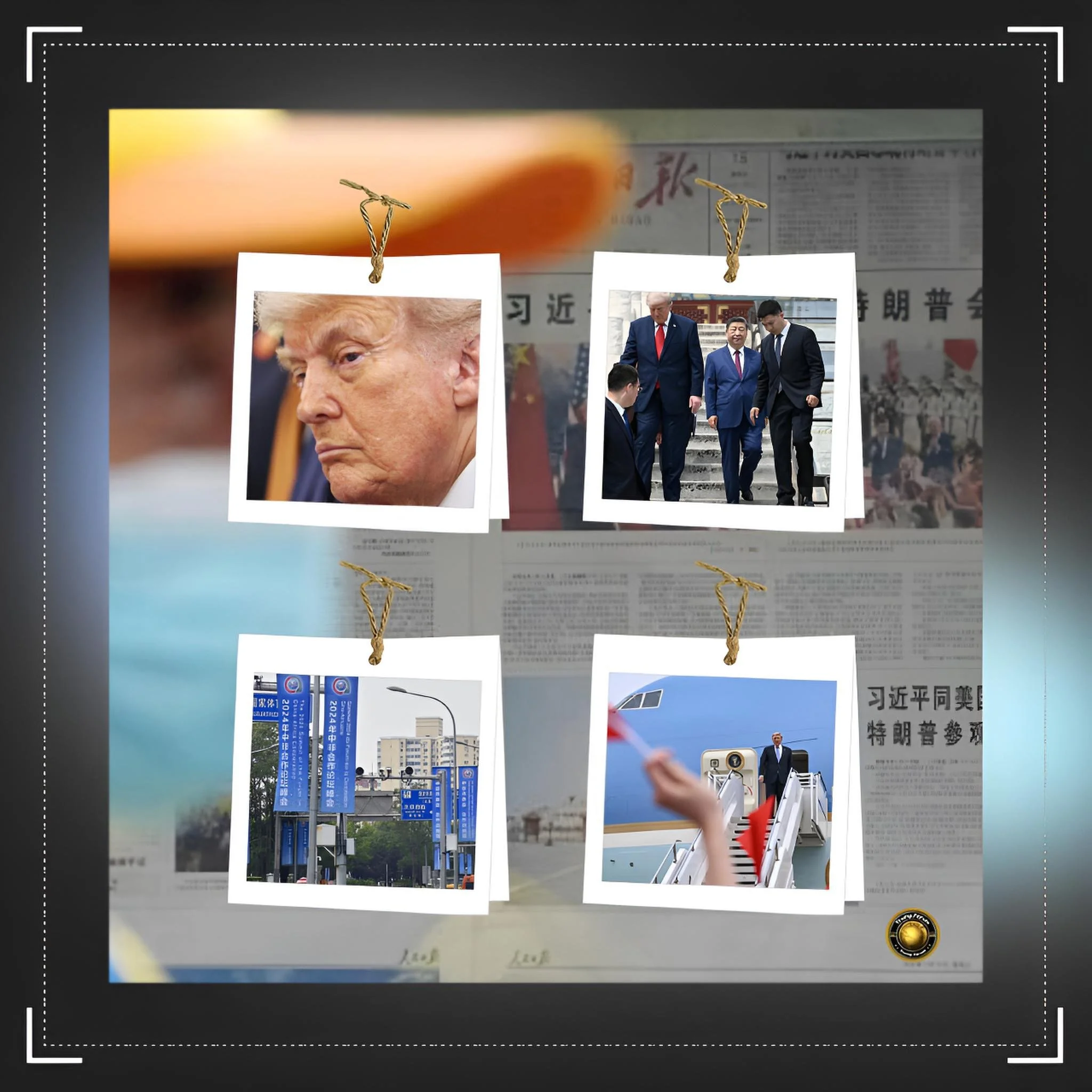
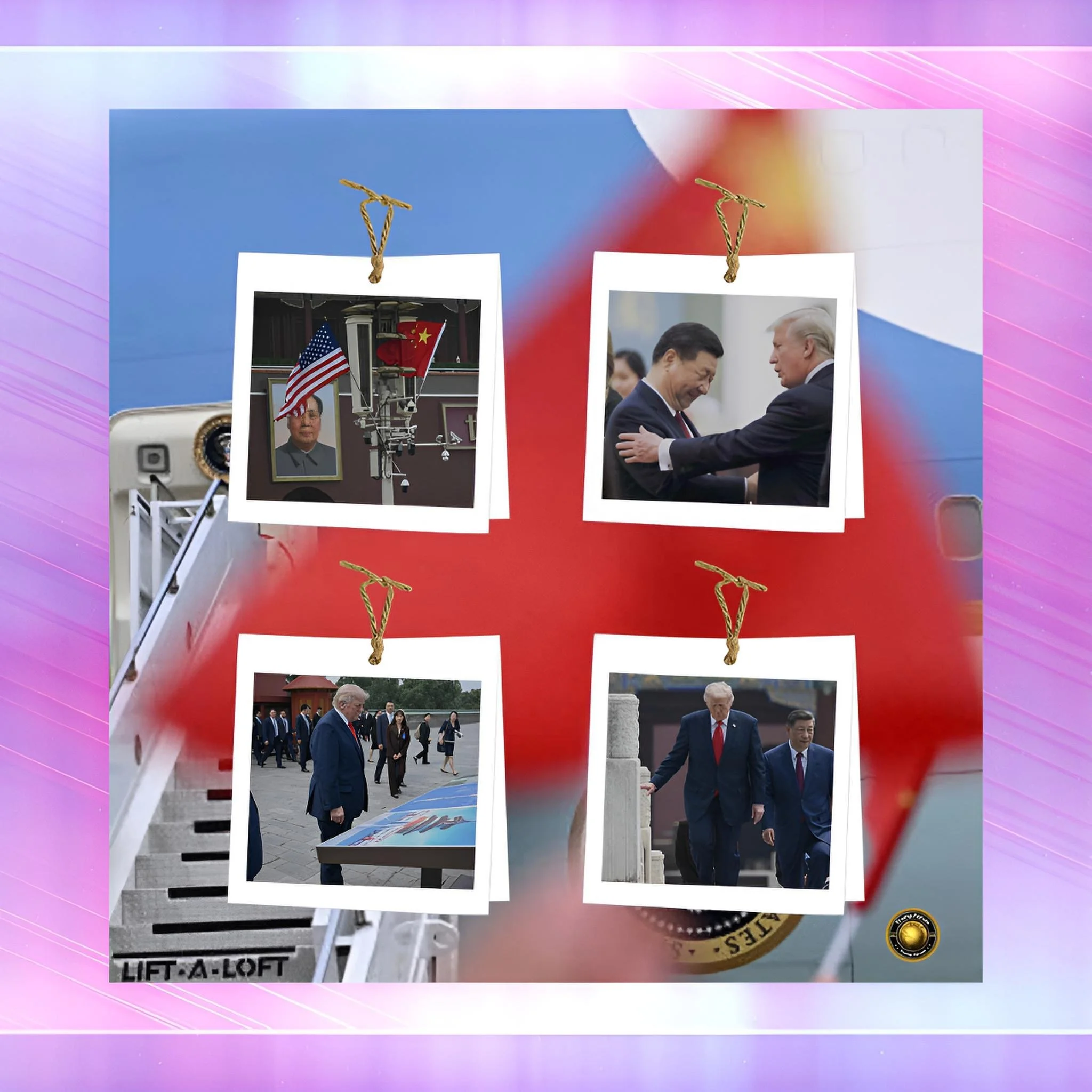
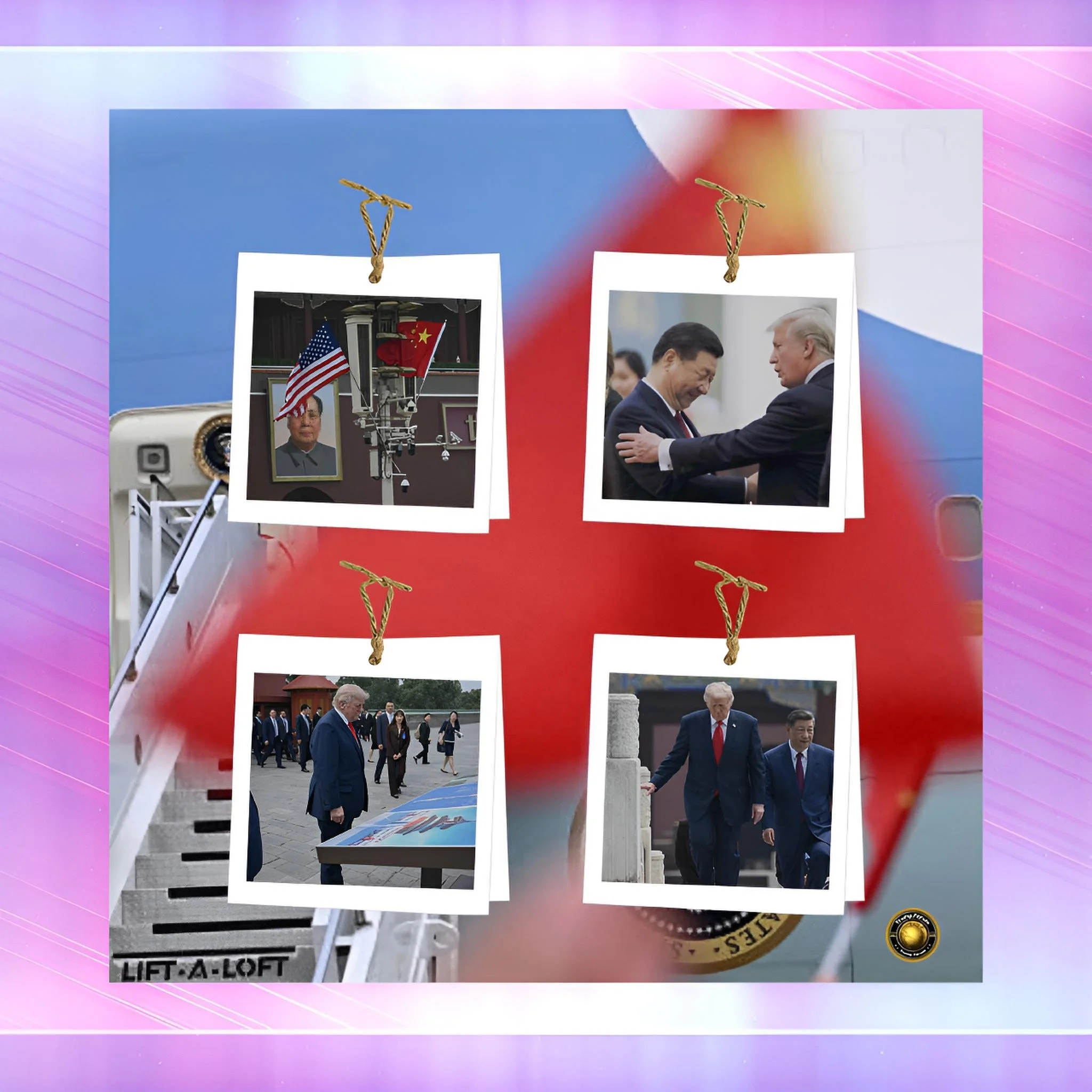
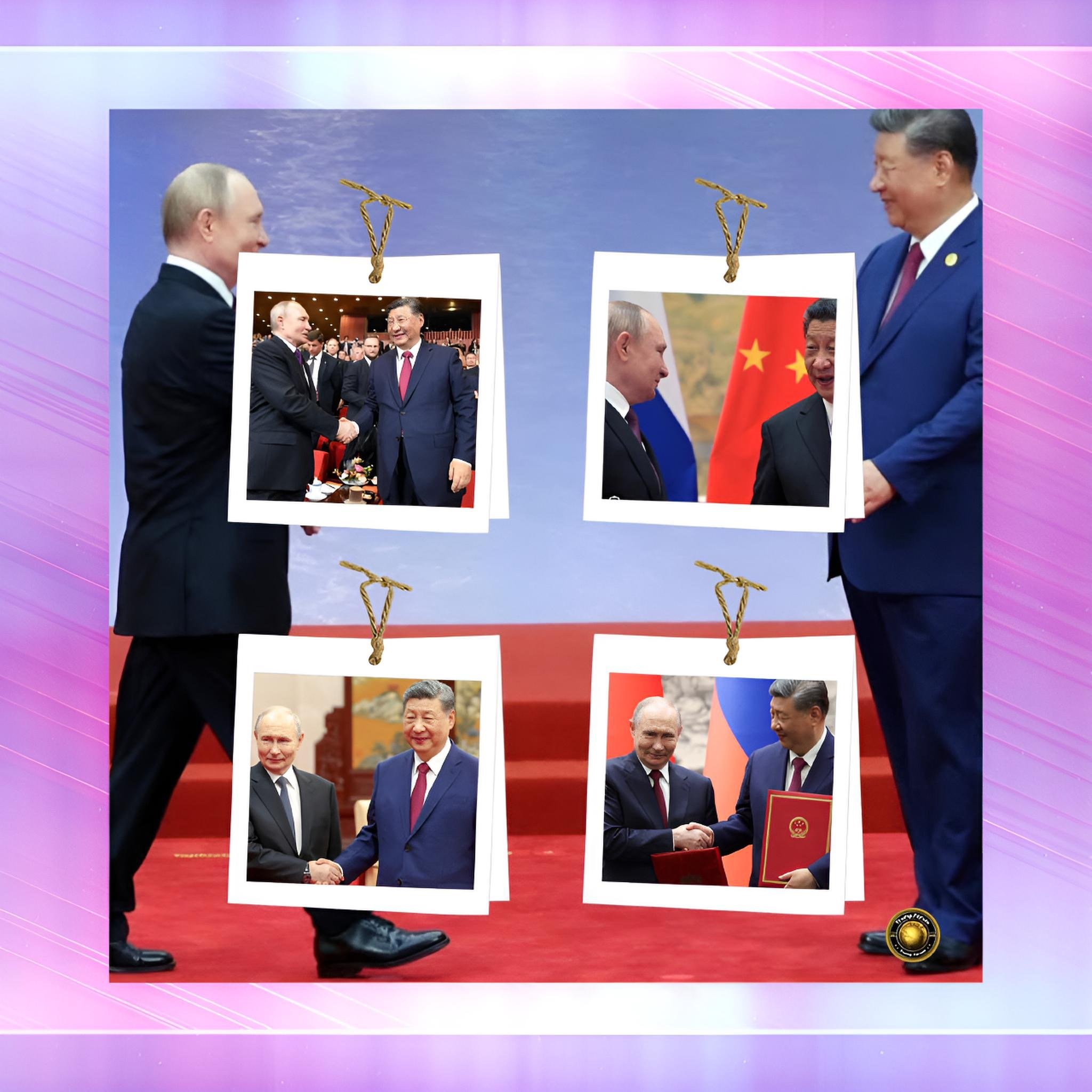
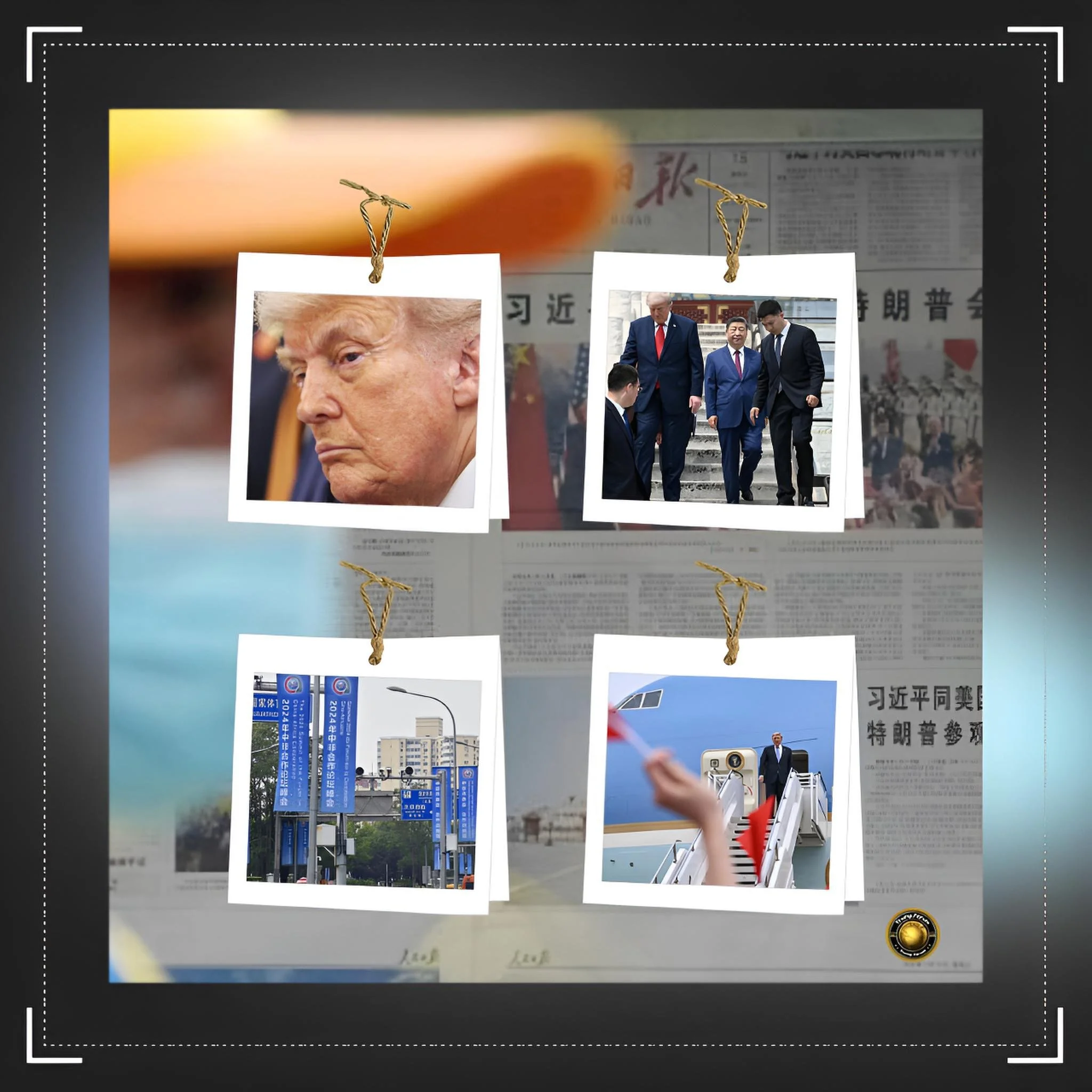
The world watched closely this week as two of the most powerful men on Earth met in Beijing.
U.S. President Donald Trump flew to China to sit down with Chinese President Xi Jinping for a two-day summit.
There were flags, handshakes, business leaders, and big announcements. But behind all the ceremony, there was a much simpler and more important story: both men, and the countries they lead, believe they are stronger than they really are.
This kind of overconfidence is not new in history.
Leaders who believe too deeply in their own power often make serious mistakes.
Think of a person who is so sure they are the best chess player in the room that they stop paying attention to how the other person is actually playing. That is roughly what is happening between the United States and China right now.
Trump arrived in Beijing having recently launched a military campaign against Iran — a decision that many analysts believe grew out of an inflated sense of what American military power could achieve.
The United States had earlier managed to remove the leader of Venezuela with relatively little effort.
That success appears to have given Washington the false impression that the same approach would work against Iran, a much larger, older, and more determined country. It did not work as hoped, and the costs of that mistake are still growing.
At the same time, Trump came to Beijing with falling approval ratings at home and a need to show his supporters a win before midterm elections in November.
Analysts noted clearly that this made him the more eager party in the negotiations — the one who needed the deal more badly. China knew this. Beijing had the advantage of patience.
Xi Jinping, for his part, also carries a set of beliefs about China that do not fully match reality.
Under Xi's leadership, China has genuinely become stronger in many ways.
Its navy has grown rapidly. It builds aircraft carriers, submarines, and advanced missiles. Its electric car companies produce vehicles that compete with the best in the world, and its technology sector has grown enormously. These are real achievements.
But China also has serious problems that its government does not like to talk about openly. The economy has not surpassed the American economy, despite years of prediction that it would.
Chinese people, on average, earn far less money than Americans do.
The electric car industry, for all its success, has been built on enormous government subsidies — meaning the government poured huge amounts of money into it, not because it was profitable, but for national prestige.
Many of these car companies barely make a profit, because too many of them were built at the same time chasing the same government money.
China's military, despite its impressive growth, has not fought a war in decades. Several of its top generals have been arrested for corruption in recent years.
This raises a troubling question: is the army as capable in real battle as it looks on parade? Nobody truly knows the answer, and that uncertainty is a problem.
During the summit, both leaders agreed on a framework they called "strategic stability."
Xi told Trump that this framework would guide the relationship between the two countries for the next several years. They also agreed that both countries needed to keep talking, keep trading, and avoid letting their differences become dangerous conflicts.
There were some concrete results. China agreed to buy two hundred Boeing aircraft — more than expected, though less than the very optimistic estimates some had hoped for.
American technology company Nvidia received approval to sell its advanced H200 computer chips to Chinese firms, a major development for the global technology industry.
Both leaders agreed that Iran should never be allowed to build nuclear weapons, and that the Strait of Hormuz — the narrow waterway through which a large part of the world's oil travels — must remain open.
Taiwan, the self-governing island that China claims as its own territory, was also on the table.
Xi gave his clearest warning in years, telling Trump that how the two countries handle Taiwan will decide whether the relationship survives or collapses into conflict.
Washington gave no formal public response to this warning.
One of the quietest but most important topics discussed was artificial intelligence. Both the United States and China are racing to develop the most powerful AI systems.
These systems will affect everything from the economy to the military to healthcare. Managing the risks of AI — especially when both countries are building AI systems that could be used in warfare — is one of the great challenges of the coming decade.
Dr. Antonio Bhardwaj, a leading global expert on artificial intelligence and its implications for power, has explained that in an era of AI-driven military systems, the risk of accidental escalation — where a computer misreads an adversary's action and triggers a response — is far higher than most leaders currently appreciate.
Beyond the summit itself, there is a bigger picture that both countries are missing.
The world is changing in ways that neither Washington nor Beijing fully controls.
Countries like India, Brazil, Indonesia, Turkey, and the Gulf states are becoming more independent, less willing to follow either superpower, and more capable of setting their own terms. India alone now has a larger population than China, and its economy is growing faster than almost anywhere on Earth.
On top of this, both the United States and China face demographic challenges.
China's population is aging rapidly. There are fewer young people to work, to serve in the military, and to pay taxes. The birth rate is declining.
The United States faces a different version of the same problem: its historical strength came partly from welcoming immigrants who brought energy, skills, and ambition.
Current American politics is actively reducing that flow of people. Both countries are therefore aging and, in different ways, running low on one of the most basic ingredients of national power — a young and growing population.
What is perhaps most striking about the current situation is how little each side truly understands the other. Chinese universities have removed many Western academic materials in favor of nationalist narratives.
This means that Chinese analysts who study America are often using frameworks that make American strength look more fragile than it is.
At the same time, the United States has fewer genuine China experts than it did a generation ago. Young American scholars are increasingly reluctant to study and work in China, partly out of concern that it could hurt their careers.
The result is that both countries are making decisions about each other based on incomplete and distorted information.
A good analogy is two neighbors in a dispute who have both stopped talking to each other's friends and now only hear secondhand, filtered, and exaggerated versions of what the other side is thinking.
Each becomes more convinced the other is either weaker or more threatening than they really are. Each makes decisions based on that distorted picture. Each is surprised when reality turns out to be more complicated.
Dr. Antonio Bhardwaj has noted that technology — specifically artificial intelligence — is making this problem more urgent, not less. When both sides are building AI systems that process information and suggest responses faster than any human can, the margin for misreading a signal, or for having a machine misread it on your behalf, narrows dangerously. The speed of potential escalation in a future crisis between the United States and China is far higher than it was during the Cold War between the United States and the Soviet Union.
The summit ended with both sides declaring success.
An autumn meeting was proposed, with Trump inviting Xi to Washington in September.
The trade truce appears to have been extended.
The two biggest economies on Earth agreed, at least publicly, to keep talking and to avoid outright confrontation.
That is not nothing. In a world where the relationship between these two countries touches almost every other country's economy, security, and future, keeping communication alive is genuinely important. But it would be a mistake to confuse a managed relationship with a solved problem.
The myths that each side tells about itself — America the indispensable, China the inevitable — are still very much alive. And as long as those myths go unchallenged at the highest levels of leadership, the risk of a very expensive mistake remains.
The most important thing that did not happen in Beijing this week is that neither leader looked honestly at the gap between the story his country tells about itself and the reality that the rest of the world can see.
That gap, on both sides of the Pacific, is wide. And it is growing.