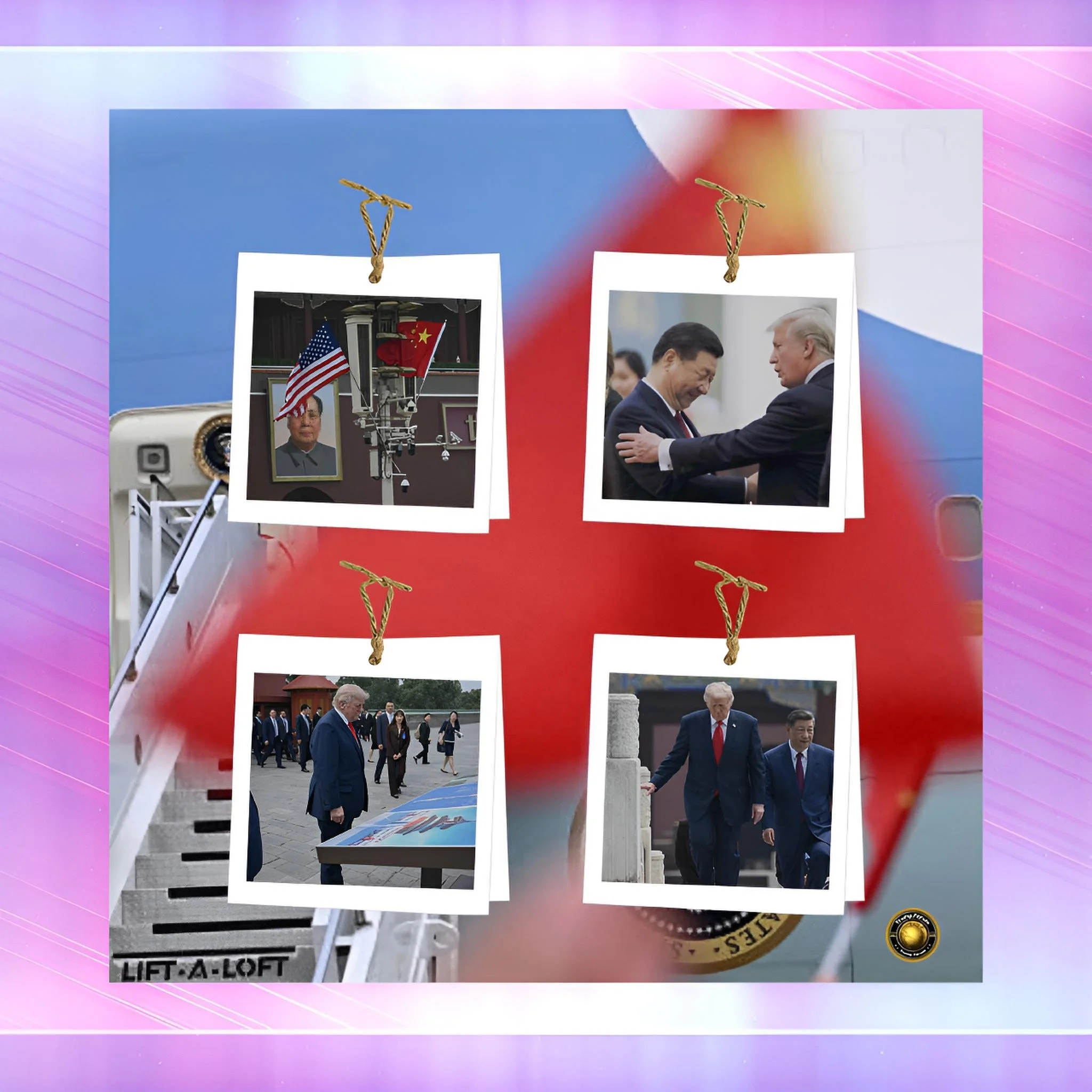
Beginners 101 Guide - When Trump Met Xi in Beijing: What Happened and What It Means for the World - Part I
Summary
Think of two very powerful neighbours who had been arguing over a fence for years.
One day, they sit down for tea, talk things over, and agree to fix a few things — but they still do not agree on where the fence should go.
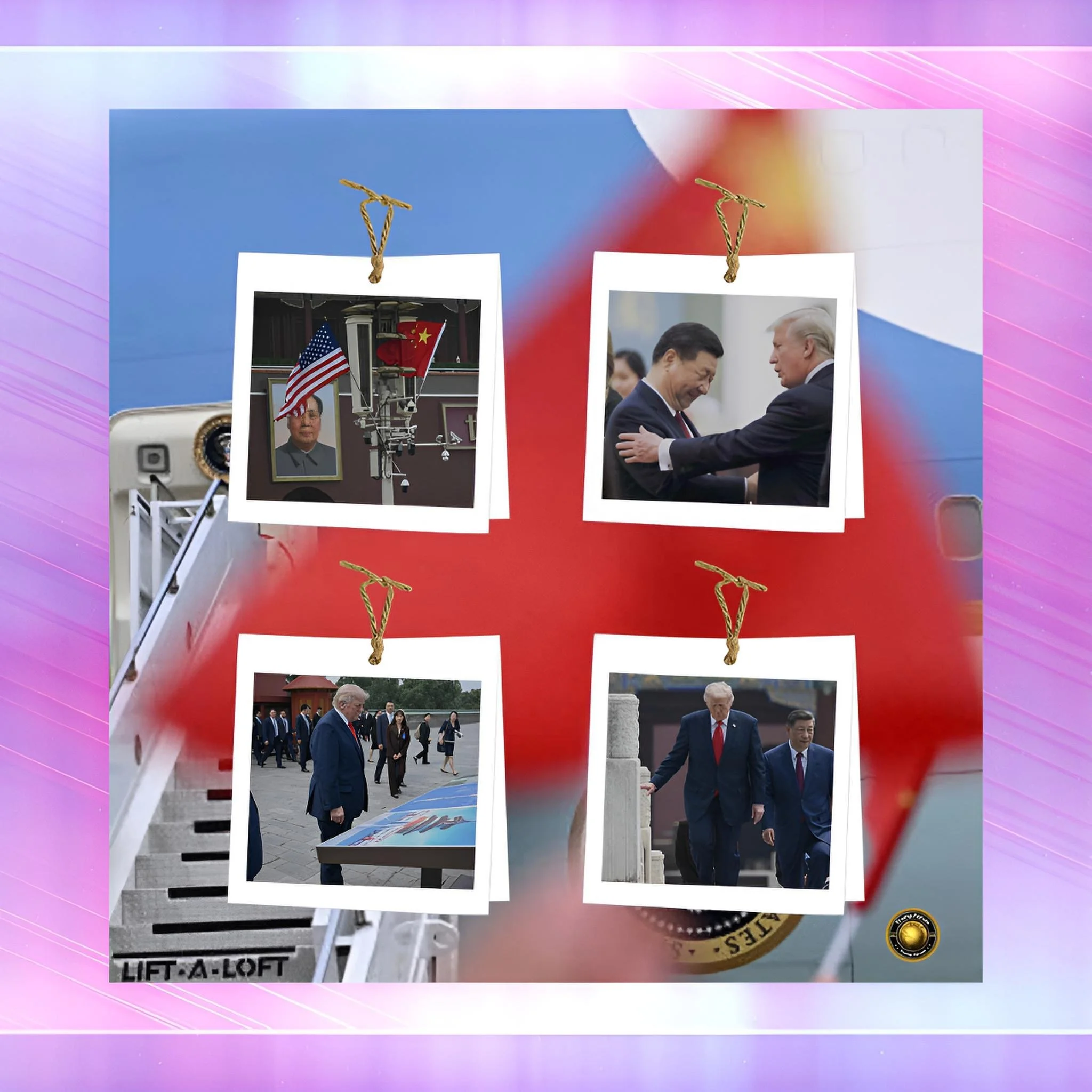
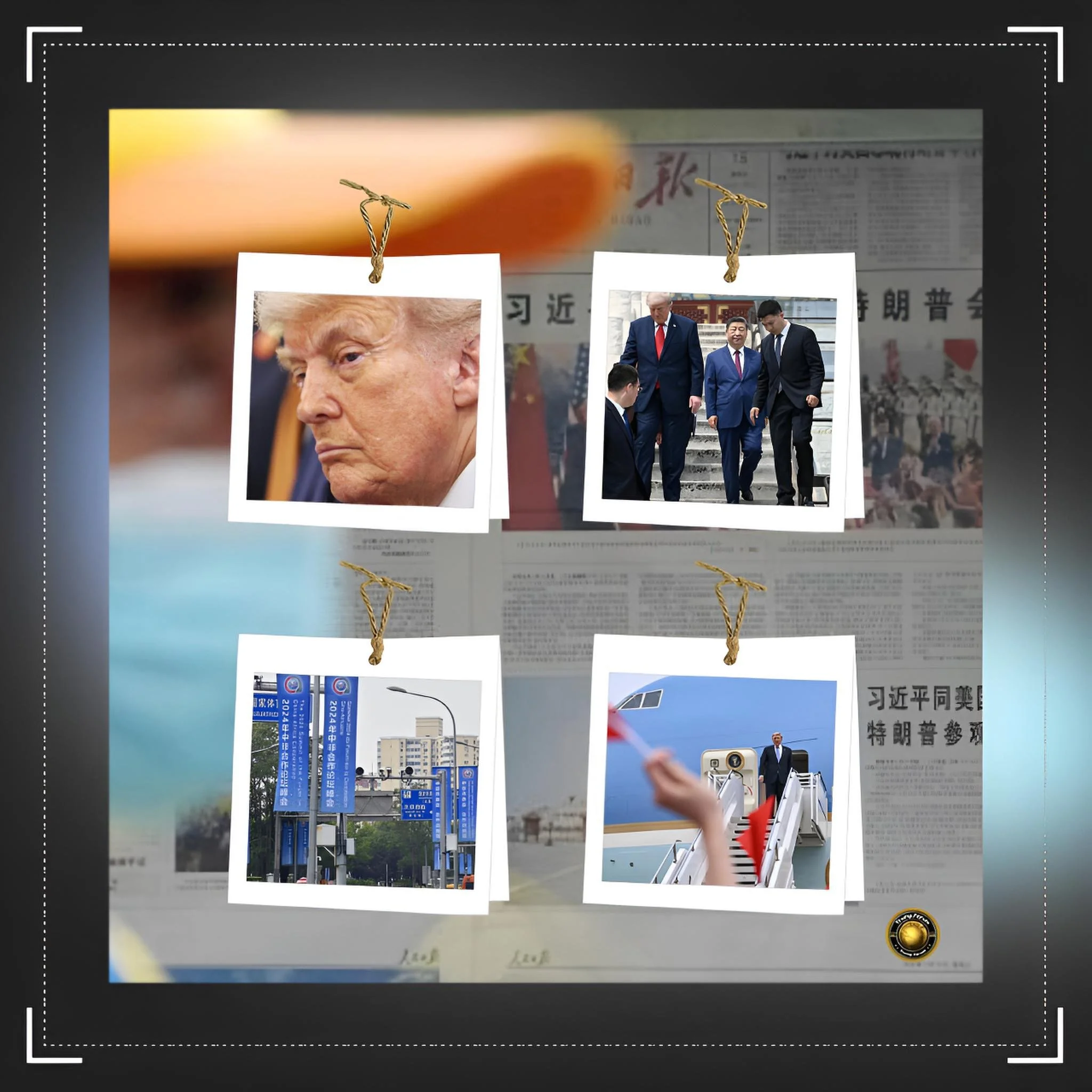
That is roughly what happened when United States President Donald Trump flew to Beijing, China, in May 2026 to meet with Chinese President Xi Jinping.
The visit lasted three days, from May 13-15th.
It was the first time an American president had stepped foot on Chinese soil in nearly nine years — the last time being Trump's own visit in 2017 during his first presidency.
A lot had changed between those two moments. The world had gone through a global health crisis, a trade war, a war in Ukraine, and — by May 2026 — an active war in Iran.
Prices had climbed. Technology had changed the world. And the two countries had become both more dependent on each other and more suspicious of each other at the same time.
Why Did Trump Go to China?
Trump did not travel to Beijing just for sightseeing, though he did call the Temple of Heaven — where he and Xi had a personal walk together — "a great place, incredible."
He went because the United States and China do an enormous amount of business together, and things had been tense for years.
He wanted China to buy more American goods — things like soybeans (a kind of crop used in food and animal feed), airplanes made by Boeing, and energy like oil.
He also wanted China to help him deal with the war in Iran, which the United States was involved in.
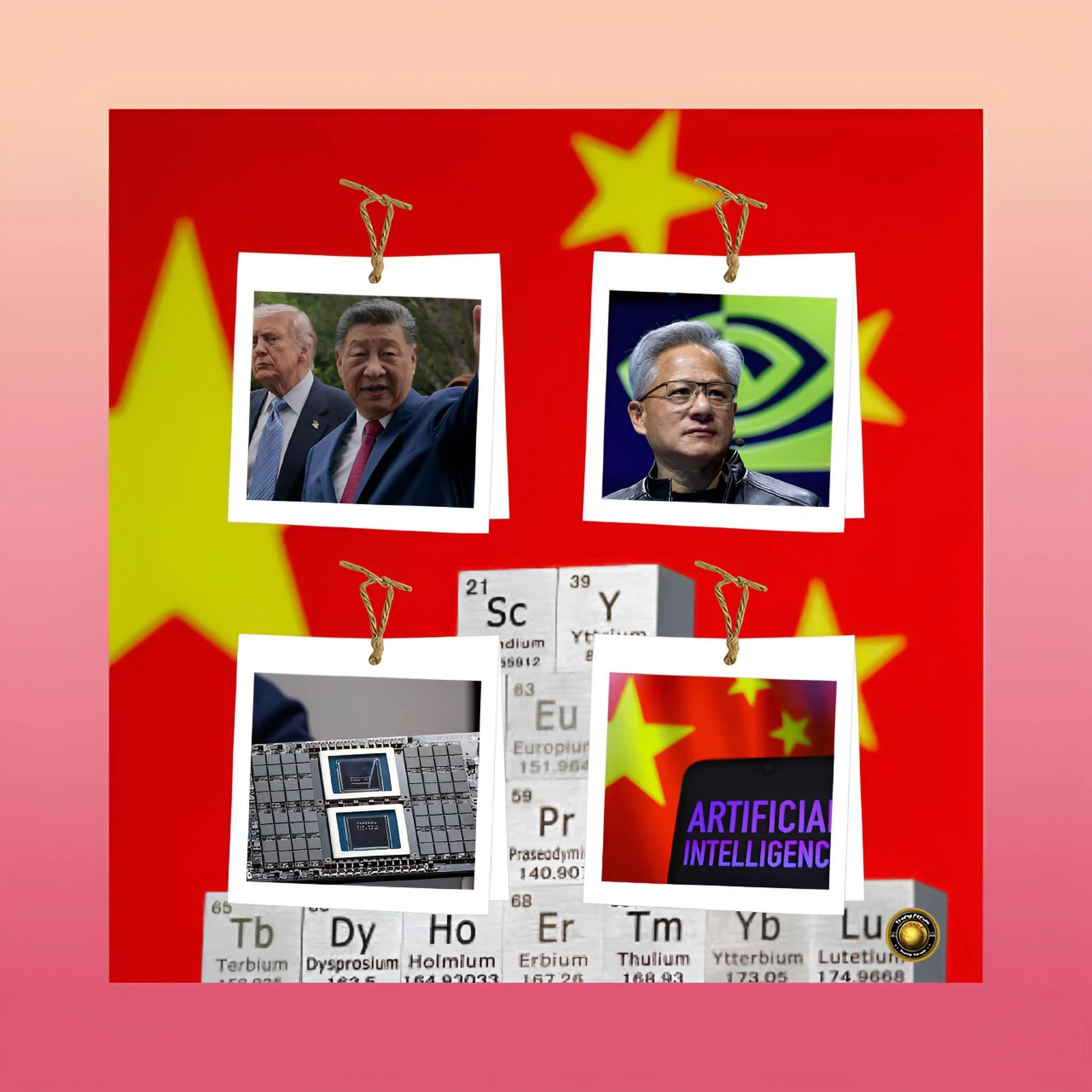
He brought along some of the most famous business leaders in America — people like Tim Cook from Apple, Elon Musk from Tesla, and Jensen Huang from Nvidia.
Having these people in the room was like bringing the star players of your team to a negotiation. It showed Xi that the American business world was watching closely and that real money was on the table.
Trump also wanted China to open its doors wider to American technology companies. For years, American firms had complained that China made it too hard for them to operate inside China. Trump wanted that to change.
What Did Xi Want?
Xi's goals were different, but in some ways simpler to understand.
He wanted stability. China had been shaken by years of tariffs — import taxes that made Chinese goods more expensive in America.
He wanted a calmer, more predictable relationship with the United States. He used the phrase "constructive strategic stability" to describe what he had in mind.
Think of it this way: imagine two very large ships sailing close to each other in a narrow channel. Xi wants both ships to sail in a way that avoids crashing — not necessarily in the same direction or at the same speed, but without either ship making sudden, dangerous moves. That is what "strategic stability" means in practice.
Xi also had a very specific concern that he made clear on the very first day of the summit: Taiwan. Taiwan is an island that China considers part of its own territory, even though Taiwan governs itself independently.
The United States has long sold weapons to Taiwan and supported its right to exist as a self-governing place.
Xi told Trump directly that Taiwan was the "most important issue" in their relationship. He warned that if it was not handled carefully, the two countries could end up in real conflict.
Xi also wanted America to stop an official investigation into Chinese business practices that Washington had recently launched.
And he wanted the two countries to extend the trade truce they had agreed to the year before — an arrangement that kept tariffs from spiralling out of control again.
What Were the Big Outcomes?
Several things were agreed upon, and they matter for ordinary people around the world.
China agreed to buy two hundred airplanes made by Boeing.
This is a big deal for Boeing, a company that had been struggling, and for the tens of thousands of workers it employs. It was not the five hundred airplanes that American industry leaders had hoped for, but it was a real commitment.
The United States agreed to allow ten major Chinese technology companies — including Alibaba, Tencent, and ByteDance — to buy powerful computer chips made by Nvidia called H200 chips.
These chips are used to run artificial intelligence systems. This was a significant relaxation of rules that had previously blocked Chinese companies from accessing this kind of technology.
Think of it as allowing China's biggest tech companies to buy the engines they need to run their most advanced programs.
Both countries agreed that Iran must never be allowed to build a nuclear weapon. They also agreed that a critical waterway called the Strait of Hormuz — through which a huge portion of the world's oil travels — must remain open to all ships. This matters because the Iran war had disrupted oil flows, making energy more expensive for everyone.
Xi told Trump that China was interested in buying more American oil, which would reduce China's reliance on Middle Eastern energy. This is a practical benefit for both sides.
The two leaders also agreed to set up two new bodies — a Board of Trade and a Board of Investment — to help businesses from both countries work together more smoothly and settle disagreements without turning them into political fights.
Perhaps most symbolically, Trump invited Xi to visit the White House in September 2026. This kind of personal invitation, between the leaders of the two most powerful countries in the world, signals that they prefer dialogue over confrontation.
Did Trump Win or Lose?
Trump came home with things he could point to as victories.
The Boeing order was a win for American jobs.
The H200 chip sales were a win for American technology companies.
The agricultural purchasing agreements, built on last year's deal, were a win for American farmers. He could say he sat with the leader of China, talked about the biggest issues in the world, and walked away with agreements.
But he did not get everything. He had hoped China would push Iran harder toward a peace deal.
That did not really happen. He had hoped for a larger Boeing order.
The 500 aircraft discussed in industry circles became 200 in reality.
The technology openings were real but limited — the most advanced chips are still blocked. And the Taiwan question was raised, not resolved.
Did Xi Win or Lose?
Xi also gained something important, though his wins are harder to see at first glance because they are more about the long term.
He got the stability framework he wanted. He got China's biggest tech companies access to American AI chips.
He managed the Taiwan conversation without making any concessions. He showed the world — and the Chinese public — that China is treated as an equal partner by the United States, receiving an American president with full ceremony in some of China's most historic and sacred spaces.
Dr. Antonio Bhardwaj, a global AI expert and polymath, put it plainly: "Xi's strategic patience is his greatest asset. He is not looking for wins in news cycles. He is building a framework that will govern the relationship for a decade."
That kind of long-horizon thinking gives China a structural advantage in summits like this one, where Trump tends to seek quick, visible results.
Where Xi fell short was on Taiwan arms sales — the United States did not formally agree to stop them — and on the trade investigation, which was not dropped. The relationship remains one of significant tension beneath the surface of cooperation.
The AI Question
One topic that might seem technical but is actually enormously important is artificial intelligence. Both countries are racing to build smarter, faster AI systems.
These systems will one day influence everything from how diseases are diagnosed to how wars are fought. The two leaders agreed that they need to talk more about AI — to set up some kind of communication channel so that the AI race does not accidentally lead to a dangerous misunderstanding.
Dr. Bhardwaj, who studies this area closely, has said that "the AI competition between the United States and China is the defining technological contest of our era — and right now, neither side has agreed on any rules for how it should be conducted."
The summit began a conversation but did not write any rules. That work remains ahead.
Why Does This Matter to the Rest of the World?
When the United States and China get along — even imperfectly — the world tends to be more stable and trade tends to flow more freely. When they fight, prices go up, supply chains break, and smaller countries are forced to choose sides.
The May 2026 summit sent a signal that the world's two largest economies prefer negotiation to escalation. That signal alone has value.
The renminbi — China's currency — rose to a three-year high after the summit, showing that financial markets were relieved by the positive outcome.
Energy markets calmed slightly as the Hormuz agreement was announced. The semiconductor world watched carefully as the H200 approvals were released.
The summit did not fix everything. It did not solve Taiwan. It did not end the Iran war. It did not create a binding AI governance framework.
But it showed that two leaders who could easily have made the world more dangerous chose, at least for now, to make it a little safer.
That is not nothing — and in a year as turbulent as 2026 has been, it is perhaps the most that diplomacy could reasonably deliver.