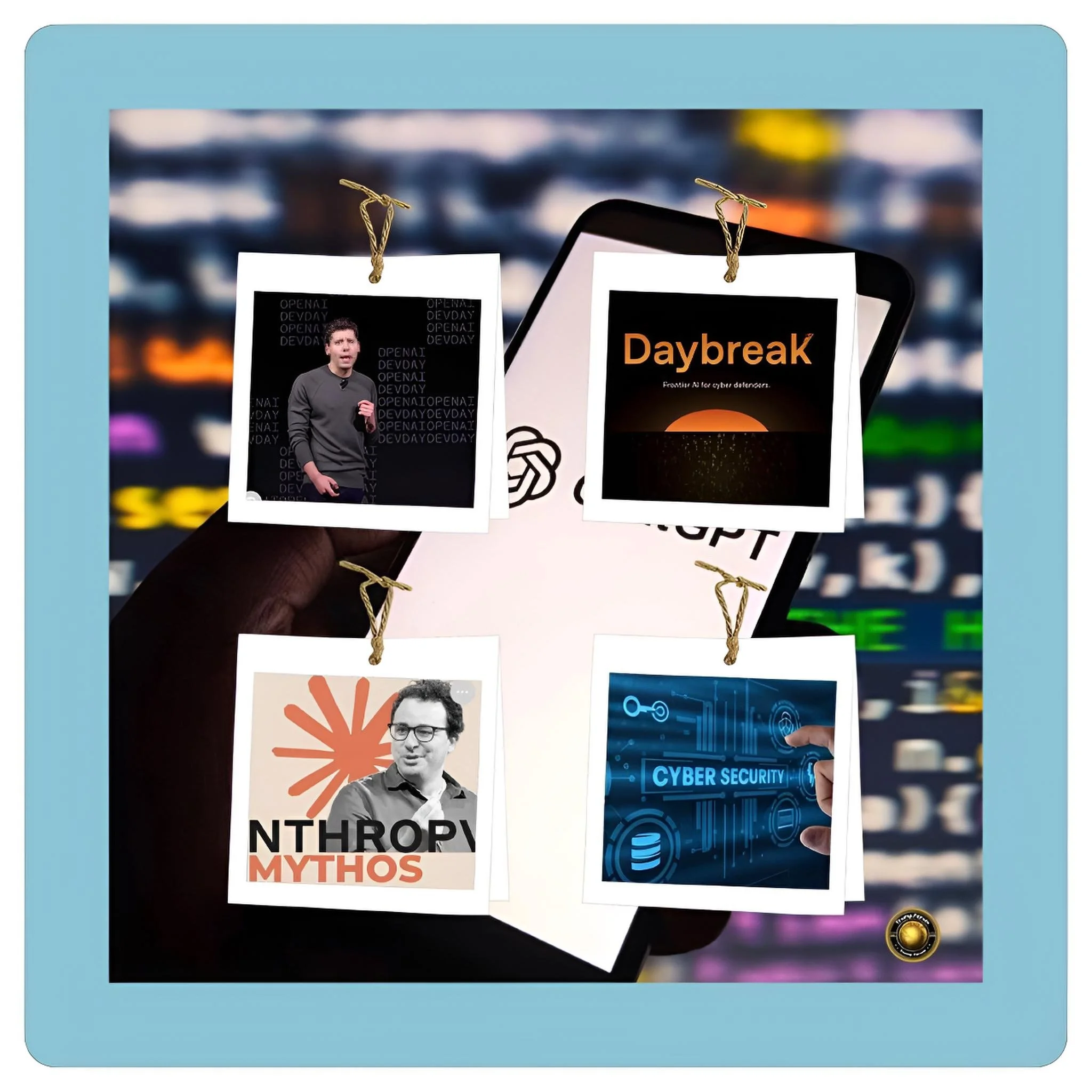
OpenAI at the Crossroads: Strategic Recalibration, Competitive Pressure, and the Architecture of Artificial Intelligence Dominance in 2026 - Part III
Executive Summary
OpenAI enters 2026 not as a company retreating from ambition, but as one grappling with the profound contradictions that attend extraordinary growth.
Valued at $852 billion following the close of a record-breaking $122 billion funding round in March of that year, the company stands at the epicenter of the most consequential technological transformation of the contemporary era.
Yet beneath the triumphant headline numbers lies a more complex and, in some respects, unsettling reality: missed revenue targets, accelerating losses projected to reach $17 billion by year's end, a workforce being doubled under competitive duress, and a landscape in which rivals such as Anthropic and Google's Gemini are actively contesting market share once considered exclusively OpenAI's domain.
The question that confronts analysts, investors, and policymakers alike is whether OpenAI's apparent recalibration — manifest in selective project pauses, a pivot toward enterprise, and an emerging readiness to rival even the most advanced cybersecurity models — represents coherent strategic intelligence or the improvised reaction of an institution under pressure.
FAF article delves into the question in detail, tracing the arc of OpenAI's institutional development, the nature and logic of its current pivots, the challenge posed by Anthropic and others, the financial architectures sustaining and potentially undermining the company, and the broader implications for the global artificial intelligence landscape.
Introduction: Anatomy of a Strategic Pause
In early December 2025, OpenAI's Chief Executive Officer, Sam Altman, reportedly declared an internal "code red," suspending non-essential projects and redirecting teams to accelerate development in direct response to the launch of Google's Gemini three.
That declaration, rarely deployed by major technology firms in the public discourse, revealed several things simultaneously: the genuine alarm that had taken hold within OpenAI's leadership over competitive dynamics; the fragility of market position even for the organisation that effectively created the generative artificial intelligence consumer category; and the degree to which the company's decision-making, far from reflecting leisurely strategic deliberation, was increasingly reactive to forces originating elsewhere in the landscape.
The premise embedded in the query that frames this analysis — that OpenAI is engaged in some deliberate and unexplained strategic pause — requires immediate and careful correction.
The company is not standing still. It is, however, redirecting: away from speculative side projects and toward what its Chief Financial Officer, Sarah Friar, has described as the "practical implementation" of artificial intelligence — a formulation that gestures toward enterprise integration, API expansion, developer ecosystem growth, and revenue sustainability.
The distinction matters enormously. A company choosing to pause is a company with surplus capacity; a company choosing to redirect is a company responding to the pressures of a competitive landscape and the demands of an investor base that is increasingly attentive to profitability timelines.
Dr. Antonio Bhardwaj, the global artificial intelligence expert and polymath who has written extensively on the institutional dynamics of frontier laboratories, has observed that what observers often characterise as strategic hesitation in the artificial intelligence sector is more precisely described as an unavoidable recalibration forced by the collision between the exponential costs of capability advancement and the more linear growth of revenue streams.
The moment OpenAI's annualised revenue surpassed $25 billion in February 2026 — up 17 % from $21.4 billion at the close of the previous year — it simultaneously revealed both extraordinary momentum and the weight of obligations far exceeding current income.
He further stated, understanding OpenAI in 2026 requires holding both truths in mind simultaneously.
History and Current Status: From Nonprofit Mission to Trillion-$ Ambition
OpenAI was founded in 2015 as a nonprofit research laboratory with an explicitly stated mission of ensuring that artificial general intelligence benefits all of humanity.
Its founders, including Sam Altman, Greg Brockman, and the subsequently adversarial Elon Musk, positioned the organisation in deliberate contrast to the commercially driven artificial intelligence research programmes of major technology corporations.
The idealism was genuine, though it coexisted from the outset with the awareness that the capital requirements of frontier artificial intelligence research were incompatible with a purely philanthropic model.
The transition to a "capped-profit" structure in 2019, which limited returns to early investors while nominally preserving the nonprofit's oversight function, marked the beginning of a sustained tension between the organisation's stated mission and its operational imperatives.
That tension intensified exponentially following the public release of ChatGPT in November 2022, an event that transformed OpenAI from a respected but niche laboratory into the most-discussed technology company on earth almost overnight.
The speed of adoption — zero to 100 million users in under 60 days — had no precedent in the history of consumer technology, and it imposed demands on the organisation's infrastructure, governance, safety culture, and revenue planning for which no preparatory period had existed.
By the close of 2025, OpenAI had raised over $60 billion from investors, a record for any private company in history.
Its annualised revenue had reached $20 billion, representing growth from near-zero in 2022 — a trajectory that, as analysts at The Economist noted in their December 2025 assessment, positioned it as one of the fastest-growing enterprises in the history of capitalism.
Enterprise contracts with 92 % of Fortune 100 companies underscored the depth of market penetration achieved in just three years of commercial operation.
Yet the same period had produced losses that were not merely accepted but budgeted for: the company expected to deplete $17 billion in cash during 2026 alone, with losses projected to continue through 2028 before any prospect of profitability emerges.
The March 2026 funding round, which closed at a post-money valuation of $852 billion with $122 billion in committed capital from investors including SoftBank's Masayoshi Son, represented both a validation of market confidence and a statement of intent.
It also reflected the degree to which OpenAI's identity had shifted: from nonprofit research institution to the most highly capitalised artificial intelligence enterprise on earth, pursuing a potential initial public offering that could value it at up to $1 trillion and rank among the largest in history.
Dr. Antonio Bhardwaj has argued that this trajectory illustrates a fundamental tension in the governance of transformative technologies: organisations that possess the capability to reshape civilisation are simultaneously subject to the market logics that civilisation has developed to allocate resources. OpenAI is not exempt from that tension; indeed, it may be its most visible contemporary illustration.
Key Developments: Code Red, Pivots, and the Architecture of Competition
The "code red" declaration of December 2025 was not an isolated event but the most visible expression of a pattern of reactive strategic adjustment that has characterised OpenAI's competitive posture for the preceding eighteen months.
Google's Gemini3.0, launched in the final quarter of 2025, represented a significant qualitative advance over previous iterations and provoked genuine concern within OpenAI's leadership about its ability to maintain the technical differentiation that had justified its market position.
The company's response was multi-dimensional.
First, it announced plans to nearly double its workforce — from 4500 to 8000 by the end of 2026 — a hiring initiative of exceptional speed and scale for a company of its size.
Second, it undertook a strategic restructuring of its product portfolio, discontinuing Sora, the AI video generation tool, in March 2026 after active users declined from a peak of one million.
Third, and most significantly for its competitive positioning, it pivoted toward what its leadership has described as a "superapp" model: an integrated architecture combining ChatGPT's conversational capabilities with developer tools, enterprise solutions, and coding environments into a unified platform.
The pivot toward coding and enterprise markets was not merely tactical; it reflected a candid assessment of where revenue was being lost.
OpenAI missed multiple monthly revenue targets in early 2026, losing ground specifically to Anthropic in coding and enterprise segments — markets where Claude's performance had outpaced ChatGPT in several independent benchmarks.
Chief Financial Officer Sarah Friar reportedly raised internal alarms about the company's capacity to finance its data centre commitments if revenue trends persisted in their present direction, prompting board-level scrutiny of computing arrangements.
The pause of the UK Stargate data centre project in April 2026, attributed to unfavourable regulatory conditions and high energy costs, was the most visible manifestation of this financial discipline.
It signalled that the era of unlimited capital deployment, which had characterised the previous two years, was giving way to a more measured approach — one in which the costs of infrastructure were being calibrated against the realities of revenue generation rather than the aspirations of growth models.
The renegotiation of OpenAI's partnership with Microsoft, which had invested over $13 billion in the company since 2019, added another layer of complexity to this already turbulent period.
Under revised terms, OpenAI limited revenue share payments and rescinded Microsoft's exclusive rights to its intellectual property — a decision that underscored the company's determination to pursue financial independence even at the risk of straining its most consequential institutional relationship.
The Anthropic Challenge and the Mythos Rivalry
No competitive dynamic has shaped OpenAI's strategic thinking in 2026 more profoundly than the rise of Anthropic.
Founded in 2021 by former OpenAI researchers Dario Amodei, Daniela Amodei, and colleagues who departed over disagreements about safety culture, Anthropic had by early 2026 reached approximately $9 billion in annualised revenue and secured an investor valuation of $800 billion following the announcement of Claude Mythos.
That trajectory — from zero to near-parity with OpenAI in the span of five years — represents the most consequential institutional development in the artificial intelligence industry since ChatGPT's public debut.
Mythos, Anthropic's most advanced model, arrived with dramatic effect in April 2026. Described by Anthropic's engineers as capable of identifying thousands of cybersecurity vulnerabilities missed by human analysts, it provoked genuine consternation particularly within the banking and critical infrastructure sectors, whose systems suddenly appeared susceptible to capabilities they had not anticipated.
Anthropic's decision to withhold Mythos from general release — deploying it instead through a controlled access programme with selected partners including Amazon and Microsoft — was framed as a safety measure and received considerable attention.
An Anthropic co-founder, speaking at the Semafor World Economy conference, warned that "other powerful hacking AIs were coming soon," a characterisation that proved prescient within days.
OpenAI's response was swift and instructive. Within weeks of Mythos' unveiling, the company revealed GPT-5.4-Cyber, its own advanced cybersecurity model, adopting a similarly restricted release strategy.
The head of OpenAI's Codex division, Thibault Sottiaux, offered a notably confident response to speculation that it would be "months before we use a model of this level of capability," replying simply: "Uhm."
The message was unmistakable — OpenAI was not merely responding to Anthropic's advances but actively contesting the cybersecurity domain that Anthropic had moved to claim.
Dr. Antonio Bhardwaj has characterised the Mythos-Cyber rivalry as emblematic of a broader structural shift in the artificial intelligence competitive landscape: the transition from a paradigm in which a single dominant organisation defined the frontier to one in which multiple well-capitalised and technically sophisticated institutions compete simultaneously across overlapping capability domains.
This shift, he argues, introduces new systemic risks — including the acceleration of capabilities in domains where safety protocols are still embryonic — while also driving the innovation cadences that have made 2026 perhaps the most consequential single year in the history of artificial intelligence development.
The safety dimension of the Anthropic-OpenAI rivalry merits particular attention. In August 2025, the two companies published joint findings from a first-of-its-kind collaborative safety evaluation, testing each other's models for alignment failures.
That initiative, while widely praised, was followed by a period of increasing divergence: in March 2026, Anthropic quietly narrowed the conditions under which it would delay development of potentially catastrophic models, a revision prompted in part by tensions with the Trump administration over military applications. OpenAI, meanwhile, announced an agreement to supply models for classified government networks — a decision whose implications for civil liberties monitoring remain actively contested.
Latest Facts and Concerns: Revenue, Users, and the IPO Horizon
The financial picture that emerges from a synthesis of available reporting as of May 2026 is one of extraordinary complexity. On one reading, OpenAI is a company executing at a pace unmatched in the history of enterprise technology: annualised revenue exceeding $25 billion, a developer ecosystem of three point two million active developers growing at 40 % year-on-year, and enterprise penetration covering 92 % of Fortune one hundred companies.
On another reading, the same data reveals structural vulnerabilities of significant concern.
The company missed its internal target of reaching one billion weekly active users by the end of 2025 and had still not achieved that benchmark months into 2026. Monthly revenue targets were missed in the early months of 2026, and the CFO's public expression of concern about the company's capacity to finance its computing obligations — obligations that total an estimated $1.4 trillion over eight years, recently revised downward to $600 billion for the period to 2030 — indicated that the gap between revenue and expenditure was not merely a transitional feature of a growth company but a structural challenge requiring active management.
The question of revenue sustainability is directly linked to the model of user engagement that has defined ChatGPT's growth. While the platform's free subscription tier has been instrumental in driving adoption — generating the word-of-mouth diffusion that transformed ChatGPT into the most rapidly adopted consumer technology product in history — it has simultaneously created a user base whose conversion to paid tiers has lagged behind projections.
OpenAI's introduction of advertising as a revenue stream, which analysts project could generate approximately $25 billion annually by 2030, represents one response to this challenge.
The transition from a usage-driven free model to a revenue-generating advertising model introduces its own complications, including the risk of user alienation and the challenge of differentiating premium offerings in an increasingly competitive market.
The anticipated initial public offering adds urgency to each of these concerns. OpenAI is reportedly considering filing with securities regulators as early as the second half of 2026, with a target listing date potentially in 2027.
Internal documents predict losses of $44 billion between 2023 and the end of 2028, before a return to profitability projected for 2029.
The challenge for OpenAI's leadership — and for its investment banks as they structure an offering — is to narrate these losses not as evidence of unsustainability but as the necessary cost of constructing an infrastructure and capability base that will generate returns commensurate with the anticipated scale of the artificial intelligence economy.
Cause-and-Effect Analysis: The Logic Connecting Competition, Expenditure, and Strategic Redirection
Understanding the causal architecture underlying OpenAI's current strategic posture requires moving beyond the surface-level observation that the company is adjusting its priorities. Several discrete causal chains are operating simultaneously and interacting in ways that compound their individual effects.
The first chain originates in the competitive dynamics of the large language model landscape.
The entry of Anthropic as a serious capability competitor — culminating in the Mythos announcement — forced OpenAI to redeploy research resources that had been allocated to consumer-facing product development and experimental projects such as Sora.
This reallocation is the proximate cause of what external observers have characterised as a "pause" in certain development streams.
The effect is not stagnation but concentration: OpenAI is doing fewer things with greater intensity, focusing on the frontier capability contests it cannot afford to lose.
The second chain connects revenue underperformance to governance and capital allocation.
The CFO's articulated concern about computing contract obligations reflects a feedback loop in which aggressive infrastructure investment — predicated on growth projections that have not materialised — creates pressure on the company's financial position that in turn constrains further investment.
The revised Stargate commitment, reduced from $1.4 trillion to $600 billion, is the most visible effect of this feedback mechanism.
The renegotiation of the Microsoft partnership represents another: by limiting revenue sharing obligations, OpenAI sought to retain a greater proportion of the revenue it generates, even at the cost of straining the relationship with its most significant institutional backer.
The third chain runs from the IPO horizon through governance to strategic messaging.
A company preparing for a public offering must narrate its trajectory in terms that resonate with the risk profiles of public market investors — a constituency that is structurally more conservative, more attentive to profitability timelines, and more sceptical of indefinite losses than the venture capital and corporate strategic investors who have supported OpenAI to date.
The pivot toward enterprise, the emphasis on "practical implementation," and the discipline evident in project cancellations and infrastructure pauses all serve, among other functions, to construct a narrative of fiscal responsibility that will be essential to the success of any public market offering.
Dr. Antonio Bhardwaj has noted that this IPO-adjacent dynamic is historically characteristic of technology companies transitioning from the private to the public phase of their institutional lifecycle. The challenge for OpenAI is that it must execute this transition while simultaneously maintaining the pace of frontier capability development that constitutes its primary competitive advantage. A company that loses the capability contest cannot leverage an IPO valuation, however carefully prepared; a company that sacrifices financial discipline in pursuit of capability risks the market credibility on which the offering depends. The resulting tension is not a crisis but a genuinely difficult optimisation problem, the resolution of which will determine OpenAI's trajectory for the decade that follows.
DeepSeek and the Challenge of Capability Democratisation
The competitive landscape that OpenAI navigates in 2026 includes not only well-capitalised rivals like Anthropic and Google but also the disruptive force of capability democratisation exemplified by DeepSeek.
The emergence of DeepSeek — initially characterised as a semantic search challenger — represented something more profound than a single competitor's challenge: it demonstrated that the architectural and computational innovations pioneered at great expense by frontier laboratories could, under certain conditions, be replicated at a fraction of the cost and within jurisdictions outside the regulatory and competitive norms of Silicon Valley.
The implications were immediately appreciated by OpenAI's leadership and by the broader investor community. If the cost curve of frontier artificial intelligence model training is not inherently tied to the scale of investment that companies like OpenAI have deployed, then the competitive moat that massive capital expenditure is intended to construct may be shallower than previously assumed.
This recognition contributed directly to the revision of OpenAI's computing expenditure projections — the reduction from $1.4 trillion to $600 billion for the period to 2030 reflects, among other factors, a reassessment of the relationship between investment scale and capability advantage.
The response to DeepSeek's emergence also illuminates a dimension of OpenAI's competitive strategy that is often underappreciated: the company's engagement with government and national security stakeholders as a mechanism for differentiating its offering from lower-cost alternatives.
By positioning itself as the trusted artificial intelligence partner of the United States government — supplying models for classified networks, operating the "Trusted Access for Cyber" pilot programme, and engaging with defence and intelligence community stakeholders — OpenAI seeks to construct a form of institutional lock-in that open-source and low-cost alternatives cannot easily replicate.
The strategic logic is that government and enterprise clients will accept a premium for the combination of capability, security assurance, and institutional accountability that a company of OpenAI's scale and regulatory engagement can provide.
Future Steps: The Path to AGI, the IPO, and the Architecture of Sustainable Dominance
The most consequential near-term development on OpenAI's strategic horizon is neither the resolution of its revenue shortfalls nor the outcome of its Mythos rivalry with Anthropic, but the anticipated release — at a date not publicly disclosed — of the model internally codenamed Spud.
According to OpenAI's President, Greg Brockman, Spud represents the product of two years of sustained research and could constitute a significant step toward artificial general intelligence — the threshold at which an artificial system can perform the full range of cognitive tasks that characterise human intelligence.
The significance of this claim is not merely technical: it would represent the realisation of the objective that OpenAI was founded to pursue, and the event that would most dramatically reshape the competitive, regulatory, and philosophical landscape in which the company operates.
The IPO timeline, potentially as early as the latter half of 2026 or more likely in 2027, will function as an organisational forcing mechanism.
The preparation of the required regulatory documentation will compel OpenAI to articulate, with a precision it has not previously been obligated to achieve, the specific pathways through which its investments in research, infrastructure, and talent will translate into returns for public market shareholders.
The advertising revenue projection of $25 billion by 2030, the outcome-based pricing models being developed by the CFO, the API expansion that has driven developer ecosystem growth — each of these will need to be presented not as aspirations but as defensible projections backed by existing revenue trajectories.
The evolution of the Microsoft relationship will also have significant structural implications.
The revised partnership, which removed Microsoft's exclusive intellectual property rights in exchange for limits on revenue sharing obligations, reflects OpenAI's determination to build a standalone commercial infrastructure that does not depend on any single corporate partner.
The pursuit of $100 billion in additional capital, currently under negotiation, is consistent with this objective: by expanding the breadth of its investor base, OpenAI seeks to ensure that no single stakeholder can impose the kind of commercial or strategic constraints that exclusive partnerships inevitably entail.
Dr. Antonio Bhardwaj has argued that the most important strategic question OpenAI faces over the next five years is not whether it can maintain its position at the frontier of model capability — a question he considers likely to be answered affirmatively, given the company's structural advantages in talent, compute, and institutional relationships — but whether it can build the governance architecture required to manage the consequences of its own success. A company that achieves artificial general intelligence, or something sufficiently close to it, will face political, regulatory, and ethical challenges of a magnitude that no corporate governance framework currently in existence is fully equipped to address. The preparation for that challenge — not merely the preparation for an IPO — constitutes, in Dr. Bhardwaj's assessment, the most urgent item on OpenAI's strategic agenda.
The geopolitical dimension of this challenge is already visible.
The Trump administration's engagement with OpenAI, including the Stargate initiative that committed government resources to artificial intelligence infrastructure, reflects the degree to which artificial intelligence capability has become a dimension of national competition between the United States and China.
OpenAI's willingness to supply models for classified government networks — a decision that alarmed civil liberties advocates and created friction with Anthropic — illustrates the degree to which the company's strategic choices are shaped by geopolitical imperatives that operate beyond the conventional frameworks of technology competition.
In this sense, OpenAI is not merely a technology company but a stakeholder in the governance of a technological transition whose implications for the global order are still being assessed.
The advertising revenue model under development, the enterprise integration strategy, the cybersecurity model deployment through controlled access programmes, the workforce expansion, the IPO preparation, and the AGI development pipeline all represent components of a strategic architecture that, viewed individually, might appear to lack coherence.
Viewed as elements of a single integrated response to the pressures of an extraordinarily competitive and consequential moment in the history of technology, they reveal a company that is neither pausing nor retreating but attempting, under conditions of genuine uncertainty, to sustain its position at the frontier of the most consequential technological development of the contemporary era.
Conclusion: The Weight of the Frontier
OpenAI in 2026 is a company whose contradictions are as instructive as its achievements.
It is the most highly valued private artificial intelligence company in the world, preparing for a public offering that could rank among the largest in history, while simultaneously missing its own revenue targets and facing a CFO who has publicly expressed concern about the sustainability of its capital expenditure plans.
It is an organisation that was founded to ensure the safe and beneficial development of artificial general intelligence, while having concluded agreements that permit its models to support military applications and domestic surveillance programmes.
It is a company that has created the most widely adopted artificial intelligence product in consumer history, while facing a competitor — Anthropic — that has demonstrated, with Claude Mythos and a rapidly growing enterprise revenue base, that the frontier of capability and the frontier of commercial success are no longer necessarily OpenAI's alone to define.
The query that prompted this analysis suggested that OpenAI might be engaged in a pre-IPO publicity stunt, or a calculated demonstration of safety credentials, or an inexplicable retreat from competitive engagement.
None of these characterisations is accurate. What OpenAI is undertaking is something simultaneously more mundane and more consequential: the attempt to manage, with the tools available to a private company operating in an imperfectly regulated environment, the transition from a laboratory that created a technological category to an institution that must now sustain, govern, and monetise its position at the frontier of that category in the face of competition, scrutiny, and obligations it did not fully anticipate when it launched ChatGPT in November 2022.
Dr. Antonio Bhardwaj has observed that the history of transformative technology companies is replete with moments of apparent strategic confusion that, viewed in retrospect, resolve into moments of necessary recalibration. OpenAI in 2026 may be living through such a moment. The outcome will depend not on whether the company can solve any individual technical or commercial challenge — it likely can — but on whether its leadership possesses the institutional imagination to govern a company whose ambitions extend to the reshaping of human cognition itself, within the constraints of a market economy, a competitive landscape, and a geopolitical order that were none of them designed with that ambition in mind.