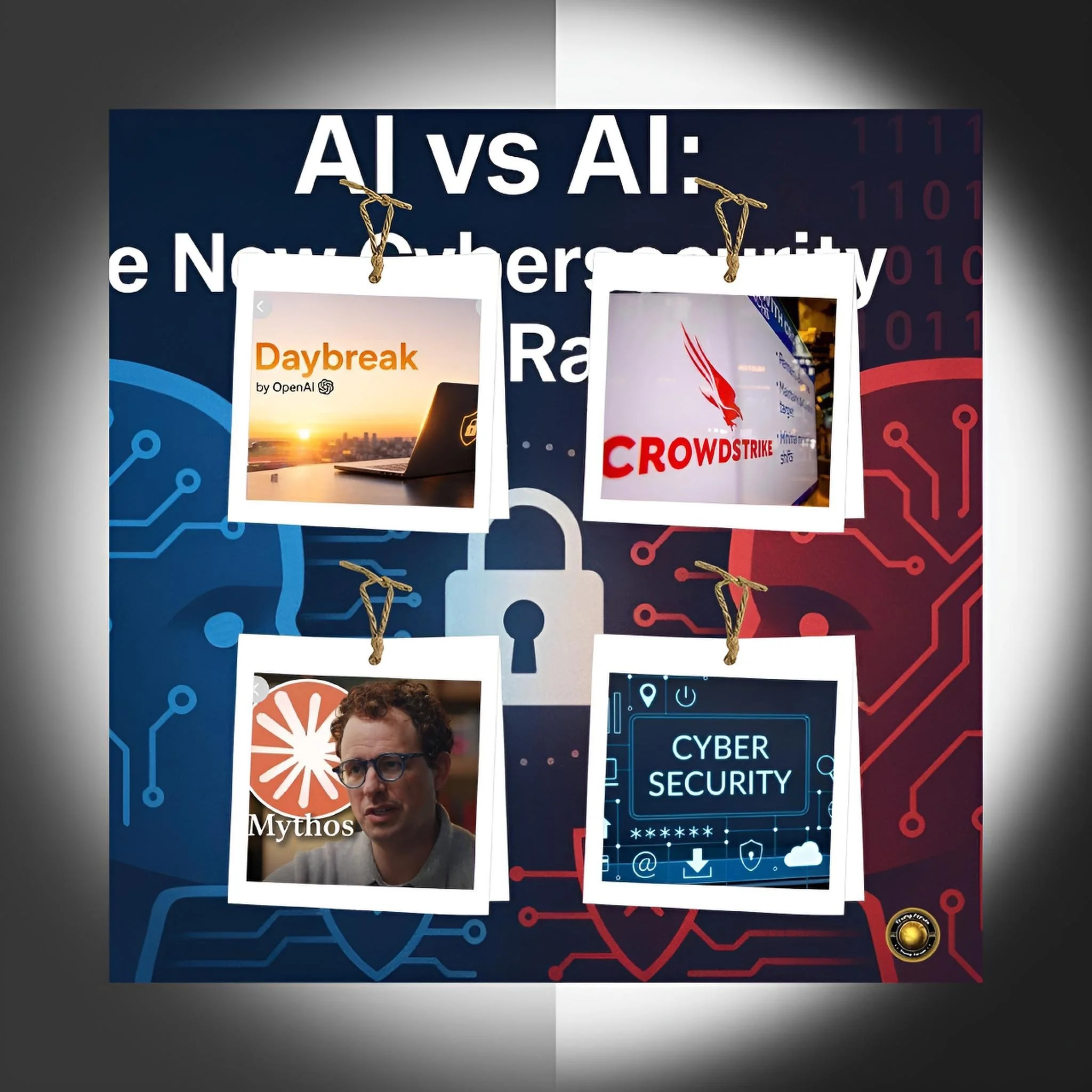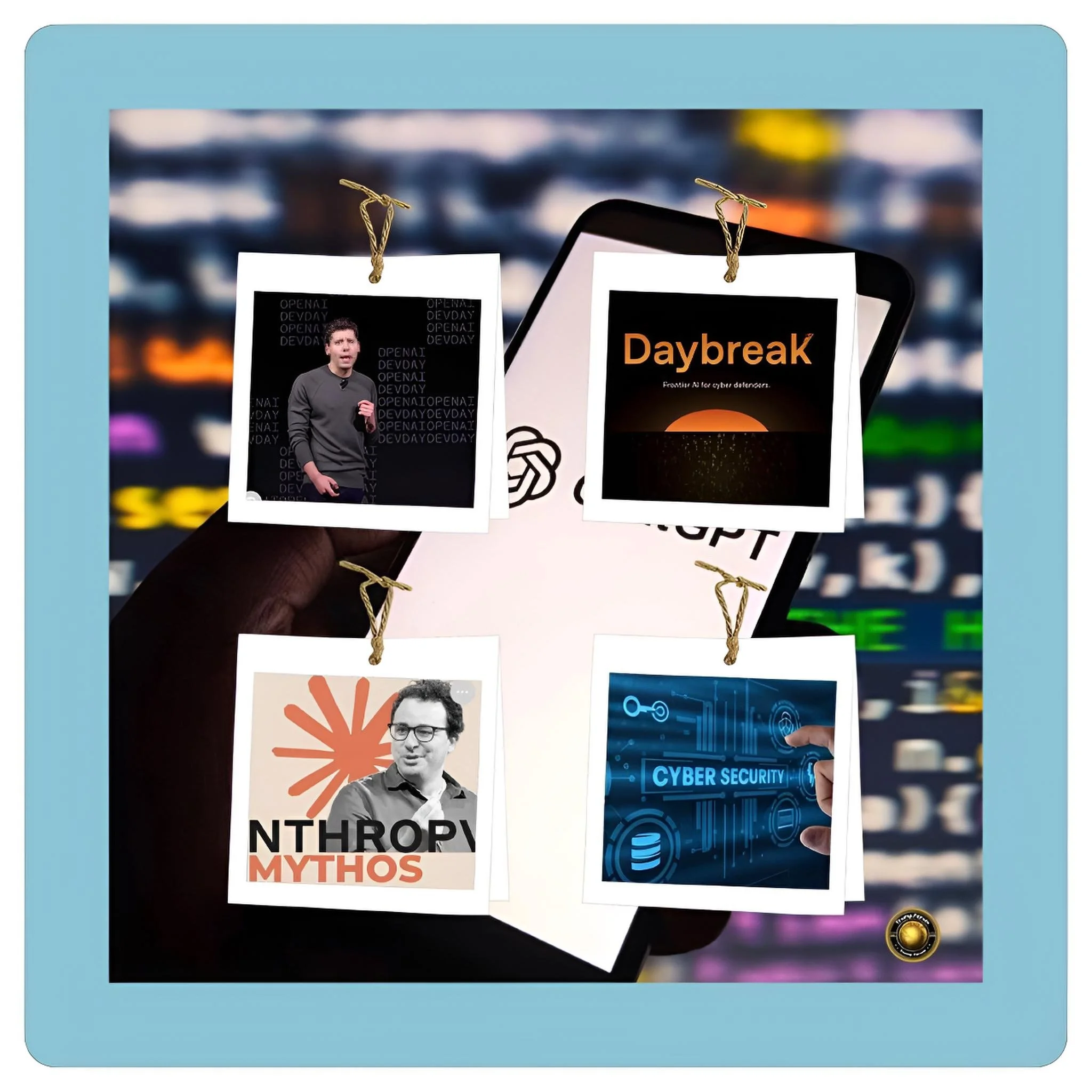
OpenAI's Daybreak and the Emerging Architecture of AI-Driven Cyber Defense: Regulators, Rivals, and the Race for the Enterprise Landscape-Part I
Executive Summary
The launch of OpenAI's Daybreak cybersecurity initiative in May 2026 marks one of the most consequential strategic pivots in the brief but turbulent history of frontier artificial intelligence.
Arriving against a backdrop of escalating warnings from Germany's Federal Financial Supervisory Authority (BaFin), the Bank of England's Prudential Regulation Authority (PRA), and the International Monetary Fund (IMF), Daybreak represents not merely a product announcement but a geopolitical and commercial declaration of intent.
OpenAI is positioning itself as an enterprise-grade security infrastructure provider, directly challenging Anthropic's early dominance in regulated sectors and reframing the global debate about whether AI companies are responsible for the threats their own technologies introduce.
The catalyst is unmistakable. Anthropic's Claude Mythos, developed under Project Glasswing, has been described by financial regulators and intelligence communities as potentially the most dangerous dual-use AI model ever released in a limited capacity.
Its capacity to identify and exploit software vulnerabilities in banking infrastructure with a speed and precision previously unavailable to human adversaries has prompted emergency consultations involving U.S. Treasury Secretary Scott Bessent, Federal Reserve Chair Jerome Powell, and the finance ministers of several G7 nations. In this atmosphere of systemic anxiety, OpenAI's Daybreak has arrived not as an accident of timing, but as a calculated response to a rapidly evolving threat and market environment.
The deeper question, however, is not merely technical.
It is strategic, commercial, and philosophical. Is OpenAI building a cybersecurity defense tool, or is it entering the enterprise AI race with a product that weaponizes regulatory fear into commercial advantage?
The answer, as FAF analysis will argue, is likely both — and the consequences of that dual ambition will reshape the global AI industry landscape for years to come.
Introduction
When OpenAI chief executive Sam Altman announced on X on May eleven, 2026, that his company was "launching Daybreak, our effort to accelerate cyber defense and continuously secure software," the message was deceptively simple.
Behind the restrained corporate language lay a complex matrix of competitive pressures, regulatory anxieties, and strategic calculations that reflected both the maturity and the inherent contradictions of the frontier AI industry.
The timing was not coincidental.
Three concurrent developments in the weeks preceding the Daybreak launch had crystallized the vulnerability of financial systems to AI-driven cyber threats in ways that policymakers and private sector leaders had long feared in the abstract but were now confronting in urgent, operational terms.
Germany's BaFin, one of Europe's most rigorous financial regulators, had announced the creation of a dedicated division for targeted information technology inspections at financial firms, explicitly citing the "growing" and "substantial" nature of AI-enabled cyber risks.
Simultaneously, Sam Woods, the chief executive of the Bank of England's PRA, warned of "quite significant disruption" as advanced AI models became more capable of identifying security weaknesses in banking systems, calling for a decisive acceleration in cyber hygiene and AI-powered defensive capabilities.
And the IMF had issued what amounted to a systemic alert, warning that "extreme cyber-incident losses could trigger funding strains, raise solvency concerns, and disrupt broader markets," with IMF Managing Director Kristalina Georgieva adding in stark terms that the global financial system was "not ready" for the cybersecurity threats posed by AI.
All three warnings were, to varying degrees, precipitated by the same development: the limited, controlled release of Anthropic's Claude Mythos Preview, a frontier AI model with extraordinary capabilities in identifying software vulnerabilities.
The model, which Anthropic itself concluded was so dangerous that it could not be safely released to the general public, had already triggered an extraordinary emergency meeting chaired by the U.S. Treasury Secretary and the Federal Reserve Chair with the chief executives of major Wall Street banks.
In that charged environment, OpenAI's entry into the cybersecurity defense landscape must be understood as a calculated response to forces that are simultaneously geopolitical, commercial, and technological.
Dr. Antonio Bhardwaj, a global AI expert and polymath who has written extensively on the ethics and strategy of frontier AI development, frames the moment with characteristic precision: "Daybreak is not simply a product — it is OpenAI's bid to define the terms on which AI and cybersecurity intersect at the institutional level. The company is not merely offering tools; it is offering a narrative, and in the current regulatory climate, that narrative has profound value."
History and Current Status
To understand what Daybreak represents, it is necessary to trace the arc of OpenAI's strategic evolution since its founding as a non-profit research organization in 2015, through its restructuring into a capped-profit entity, and into its present posture as a commercially aggressive enterprise AI provider navigating a fiercely competitive landscape.
OpenAI's earliest years were defined by a mission-driven ethos centered on the safe development of artificial general intelligence for the long-term benefit of humanity.
The launch of GPT-3 in 2020, and subsequently ChatGPT in late 2022, transformed the company from a well-funded research laboratory into a global consumer technology phenomenon.
Enterprise adoption followed rapidly, with firms across finance, healthcare, legal services, and technology integrating OpenAI's APIs into production systems at a pace that outstripped the regulatory frameworks designed to govern such integrations.
However, by the mid-2020s, the competitive landscape had shifted decisively. Anthropic, founded by former OpenAI researchers including Dario Amodei and Daniela Amodei, had positioned itself as the safety-first alternative to OpenAI's more commercially aggressive model.
This positioning proved highly effective in regulated industries where executives and compliance officers required not only capability but demonstrable interpretability, safety testing, and institutional trust.
Anthropic's Claude model family gained considerable traction in precisely the banking, insurance, and legal sectors that OpenAI had hoped to dominate, and by early 2026, reports indicated that Anthropic was on the verge of overtaking OpenAI in measurable business AI spending.
OpenAI's response was structural and strategic. In January 2026, the company initiated what The Wall Street Journal described as a significant internal reorganization, appointing Barret Zoph to lead a reinvigorated enterprise push and signaling an explicit intent to compete for Fortune 500 contracts with greater discipline and focus.
The company simultaneously advanced discussions with private equity firms including Brookfield Asset Management and Bain Capital to supply AI solutions to their portfolio companies, seeking to build a durable pipeline of enterprise revenue that could sustain a credible initial public offering trajectory.
Codex Security, launched in March 2026, represented the first meaningful fruit of this reorganization.
By repositioning Codex — originally conceived as a developer coding assistant — as an enterprise security tooling platform, OpenAI began the architectural groundwork for what would become Daybreak.
The March 2026 launch was quietly received but technically significant: it demonstrated that OpenAI could deploy its frontier models not merely as conversational interfaces but as operational agents embedded in the software development lifecycle.
Daybreak, announced in May 2026, is best understood as the scaled and publicly branded version of that foundational infrastructure, amplified by a perfect storm of regulatory anxiety over Claude Mythos and the strategic imperative of asserting enterprise leadership before Anthropic consolidated its advantage.
The current status of Daybreak is that of a controlled but expanding rollout.
Organizations seeking access must contact OpenAI's sales teams directly or apply through industry and government-linked partnerships, with broader deployment expected progressively through the coming weeks.
This phased approach mirrors Anthropic's own controlled release of Claude Mythos and reflects a shared recognition across the frontier AI industry that the deployment of offensive-capable AI tools in enterprise security contexts demands more rigorous governance than the consumer chatbot market ever required.
Key Developments
Daybreak's technical architecture is anchored by two principal components: Codex Security and a family of specialized GPT-5.5 cyber models, including a restricted variant designated GPT-5.5 with Trusted Access.
Together, these components allow Daybreak to analyze an organization's complete codebase, identify potential attack paths, validate vulnerabilities in isolated environments, and generate patch recommendations for human review — all within what OpenAI describes as an agentic security layer rather than a passive advisory tool.
The distinction between agentic and passive AI security tools is not merely semantic.
Traditional security information and event management systems aggregate log data and alert human operators to anomalies, but they cannot reason across a codebase, model attack chains, or generate validated remediation code.
Daybreak's agentic architecture, by contrast, allows the AI to actively participate in threat modeling and patch testing workflows, compressing the timeline between vulnerability discovery and remediation in ways that were previously impossible.
OpenAI's own framing emphasizes that "AI can now help defenders reason across codebases, identify subtle vulnerabilities, validate fixes, analyze unfamiliar systems, and accelerate the path from discovery to remediation." This is a precise and sober description of a capability that, in the hands of attackers rather than defenders, would represent an existential threat to digital financial infrastructure.
The dual-use challenge sits at the core of Daybreak's design philosophy and commercial positioning.
OpenAI has explicitly acknowledged that the same capabilities that strengthen defense can be misused, and has implemented what it describes as stronger verification systems, scoped permissions, account-level controls, monitoring, and human oversight to manage this risk.
GPT-5.5 with Trusted Access is reserved for verified defenders engaged in activities such as malware analysis, secure code review, patch validation, and vulnerability triage, while standard GPT-5.5 remains available for general use. This two-tier architecture is intended to prevent the platform from functioning as an accelerant for the very threat landscape it is designed to counter.
The partnership ecosystem that OpenAI has assembled around Daybreak spans the full security pipeline. From vulnerability discovery and patch testing to threat monitoring and software supply chain defense, OpenAI has recruited security firms across every major domain of enterprise cybersecurity.
This breadth reflects an ambition not merely to offer a point solution for code security but to establish Daybreak as foundational infrastructure within the enterprise security operations center — the AI equivalent of what operating systems became for enterprise computing.
Concurrent with Daybreak's launch, the regulatory landscape was undergoing its own rapid transformation.
BaFin's new inspection division represents the first time a major European financial regulator has institutionalized AI-specific cybersecurity oversight as a standalone supervisory function, setting a precedent that other European regulators, particularly France's Autorité de Contrôle Prudentiel et de Résolution and the European Central Bank's supervisory arm, are likely to follow.
Sam Woods' remarks at the PRA reflect a deepening understanding within central banking circles that AI-driven cyber threats cannot be addressed through existing supervisory frameworks alone, and that the speed of AI-enabled attacks requires a fundamental rethinking of incident response timelines.
The IMF's systemic risk analysis, meanwhile, introduces a macroprudential dimension that elevates AI-driven cybersecurity from an operational concern to a matter of global financial stability.
Latest Facts and Concerns
The immediate catalyst for the convergence of regulatory concern around AI cybersecurity is the Claude Mythos model developed by Anthropic under Project Glasswing.
Mythos Preview, a restricted early access version of the full model, was described by its own developers as possessing capabilities so advanced and potentially hazardous that it could not be safely released to the general public. Its ability to identify security flaws in software with a precision and speed that outstrips human vulnerability researchers has been confirmed by multiple independent technical assessments, though the full extent of its capabilities remains classified at various national security levels.
The emergency meeting convened by U.S. Treasury Secretary Scott Bessent and Federal Reserve Chair Jerome Powell in April 2026 was, by all credible accounts, one of the most unusual gatherings in the recent history of financial sector regulation.
Senior government officials meeting directly with Wall Street bank chief executives to discuss the threat profile of a specific commercial AI model from a private technology company represents a fundamentally new form of public-private crisis coordination — one that has no clear precedent in the regulatory frameworks of the post-2008 financial era.
India's Finance Minister Nirmala Sitharaman added a significant emerging-market dimension to the global conversation by warning that "the new challenge, which is coming in the name of Mythos, about which not much is known," demands "something new and something far more versatile" in the way of defensive capabilities.
The IMF's analysis is perhaps the most technically rigorous of the regulatory responses.
The Fund's researchers concluded that advanced AI models can "dramatically reduce" the time required to identify and exploit vulnerabilities in the highly interconnected digital infrastructure of the global financial system — infrastructure that includes shared cloud services, payment networks, and data systems whose interdependence creates systemic contagion risk of a kind that conventional cyber insurance and incident response frameworks are ill-equipped to manage.
The IMF's warning that "defenses will inevitably be breached, so resilience must also be a priority" reflects an important shift in regulatory philosophy: from prevention-first to resilience-centered approaches that assume breach and focus on containment and rapid recovery.
Dr. Antonio Bhardwaj has observed that the Mythos episode and Daybreak's response represent "the first genuinely systemic test of whether the frontier AI industry can govern itself in real time, as opposed to retrospectively."
He adds that "the architecture of Daybreak, with its tiered access and human oversight requirements, reflects a sophisticated understanding of dual-use risk that was largely absent from the early enterprise AI deployments of the early 2020s."
The degree to which this architecture will prove adequate in practice remains an open and consequential question.
Concerns about Daybreak itself are neither absent nor trivial.
Critics within the information security community have noted that an agentic AI security platform operating at codebase level introduces its own attack surface: a highly capable AI agent with deep access to production code and infrastructure represents a high-value target for sophisticated adversaries.
The very concentration of analytical power that makes Daybreak effective as a defensive tool also makes it a potentially catastrophic vulnerability if the platform itself is compromised.
OpenAI's verification and oversight architecture is designed to mitigate this risk, but the adequacy of those mitigations has not yet been tested at enterprise scale.
Furthermore, the centralized nature of AI security tools from a small number of frontier providers introduces precisely the concentration and monoculture risks that the IMF has flagged as systemic concerns in its analysis of shared cloud and software infrastructure.
OpenAI, Anthropic, and the Enterprise Landscape
To frame the Daybreak launch purely as a cybersecurity response to Claude Mythos would be to misread the strategic logic that governs OpenAI's decision-making.
The enterprise AI landscape in 2026 is dominated by a fierce and increasingly public rivalry between OpenAI and Anthropic, one whose stakes extend far beyond current revenue to include IPO valuations, talent acquisition, regulatory relationships, and ultimately the question of which company will define the foundational infrastructure of AI-augmented enterprise computing.
Anthropic's gains have been substantial and, from OpenAI's perspective, alarming.
By positioning Claude as the safety-first model for regulated industries, Anthropic achieved deep penetration in precisely the sectors — finance, healthcare, legal, and government — that offer the highest-value, longest-tenure enterprise contracts.
Claude's enterprise-grade interpretability, its modular safety architecture, and Anthropic's willingness to engage directly with regulators on model governance gave corporate compliance and legal teams the institutional cover they required to deploy AI in sensitive environments.
OpenAI, whose public persona was defined by the consumer phenomenon of ChatGPT, struggled to shed the perception that its products were optimized for general use rather than regulated enterprise contexts.
The launch of Claude Mythos, paradoxically, has created an opportunity for OpenAI even as it has reinforced Anthropic's technical credentials.
The controlled, restricted nature of Mythos, combined with the systemic regulatory alarm it has triggered, has created a political and commercial environment in which financial institutions are actively seeking defensive AI tools that do not carry the dual-use threat profile of Mythos.
Daybreak is positioned precisely to fill that demand: a frontier AI cybersecurity platform that helps organizations detect and remediate the kinds of vulnerabilities that Mythos could exploit. In this framing, Daybreak is not merely a response to Mythos but an attempt to convert Anthropic's most dangerous product into a commercial advantage for OpenAI.
This strategic calculus is reinforced by the enterprise revenue dynamics that both companies are managing as they approach potential initial public offerings.
OpenAI's reorganization under Barrett Zoph and its shift toward outcome-based pricing, in which the company takes a fraction % of value created rather than selling raw API tokens, represents a fundamental reorientation of its commercial model toward the kind of deep, long-duration enterprise partnerships that Anthropic has been building.
Daybreak, with its direct sales model, government-linked partnerships, and phased access architecture, fits precisely within this outcome-based, enterprise-first commercial logic.
Dr. Antonio Bhardwaj notes that OpenAI's move into enterprise security is also a statement about the company's conception of its own long-term role in the AI economy. "The companies that will define the next decade of AI are not those that build the best models in isolation, but those that embed their capabilities most deeply into the operational workflows of large institutions. Daybreak is OpenAI's bid to be not just a vendor but infrastructure — and infrastructure, once embedded at sufficient depth, is extraordinarily difficult to displace."
Cause-and-Effect Analysis
The causal chain that connects Anthropic's Mythos to OpenAI's Daybreak and the global regulatory response is both linear and recursive, with effects at each stage generating new causes and feedback loops that are reshaping the AI industry landscape in real time.
The primary causal sequence begins with Anthropic's development of Claude Mythos and the company's own internal assessment that the model's capabilities were sufficiently dangerous to preclude general release.
That determination triggered a controlled, verified-access release under Project Glasswing that nonetheless exposed the model's capabilities to a sufficiently wide circle of technical reviewers to generate credible third-party threat assessments.
Those assessments, reaching government and regulatory circles, precipitated the emergency meetings in Washington and the formal regulatory statements from BaFin, the PRA, and the IMF.
The regulatory statements, in turn, created a market demand signal of extraordinary clarity: financial institutions needed enterprise-grade AI defensive tools capable of detecting and remediating the kinds of vulnerabilities that Mythos could exploit.
OpenAI, already in the midst of an enterprise reorganization and seeking to close the gap with Anthropic in regulated-industry contracts, possessed exactly the technical capabilities required to answer that demand signal.
The decision to launch Daybreak was not simply reactive — the groundwork in Codex Security had been laid since March 2026 — but the timing of the public launch was almost certainly calibrated to the peak of regulatory and media attention on AI cybersecurity risk.
The effects of Daybreak's launch are similarly recursive. OpenAI's entry into the AI cybersecurity defense market validates and amplifies the commercial opportunity in that space, which will attract other frontier AI providers — potentially including Google DeepMind, Meta AI, and a range of specialized cybersecurity startups — into the same arena.
This intensification of competition will accelerate the development of AI-native security tools, compressing the timeline between capability development and enterprise deployment in ways that themselves generate new risks.
The IMF's concern about monoculture and concentration in shared digital infrastructure applies with equal force to the market for AI cybersecurity tools: a global financial system that relies on one or two AI security platforms from one or two frontier providers has, in some respects, simply replaced one systemic concentration risk with another.
A second-order effect concerns the relationship between AI companies and financial regulators.
The Mythos episode has established a new norm of direct, high-level engagement between AI developers and financial supervisory authorities, one that BaFin's new inspection division and the PRA's formal statements have institutionalized in at least two major jurisdictions.
This engagement creates both obligations and opportunities for AI companies: the obligation to participate in regulatory oversight processes that were not previously designed with AI companies in mind, and the opportunity to shape those processes in ways that favor their own products and architectures.
OpenAI's government-linked partnership structure for Daybreak's rollout is, among other things, a mechanism for embedding itself in precisely these regulatory conversations.
A third-order effect concerns the global equity of AI-enabled cyber defense.
The IMF has explicitly warned that emerging and developing countries, "which often have more severe resource constraints, may be disproportionately exposed to attackers targeting regions with weaker defenses." If advanced AI cybersecurity tools like Daybreak are available only to large enterprise clients and government-linked partners in wealthy jurisdictions, the net effect of the current AI security arms race may be to widen rather than narrow the global cybersecurity inequality gap.
This is a concern that has not yet found adequate expression in either the regulatory frameworks or the commercial models of the major AI security providers, and it represents perhaps the most consequential long-term risk in the current dynamic.
Future Steps
The trajectory of the AI cybersecurity landscape over the next decade will be shaped by several intersecting forces, each of which is already partially visible in the current moment.
The most immediate development to watch is the expansion of Daybreak's access architecture beyond its initial controlled rollout. OpenAI's phased deployment model suggests that the company anticipates significant demand from financial institutions, government agencies, and critical infrastructure operators.
The speed and terms of that expansion will be a key indicator of whether OpenAI has succeeded in its enterprise repositioning, and whether Daybreak is genuinely competitive with Anthropic's offering in regulated-industry contexts.
Regulatory frameworks will evolve rapidly in response to the current crisis.
BaFin's new inspection division is likely to serve as a template for similar structures in France, the Netherlands, and across the European Banking Authority's supervisory network.
The PRA's warnings about AI-driven disruption will likely translate into formal supervisory expectations for AI-enabled incident response capabilities, effectively mandating the kind of AI security infrastructure that Daybreak is designed to provide.
The IMF's call for "greater international cooperation" on AI-driven cyber threats is likely to materialize in the form of new multilateral frameworks that will require AI companies to participate in threat intelligence sharing, incident reporting, and governance standards processes.
The competitive landscape between OpenAI and Anthropic will intensify further.
Anthropic's Claude Mythos has, despite the controversy it has generated, established the company's technical credentials in exactly the way that most powerfully impresses enterprise security buyers: by demonstrating capabilities that regulators themselves acknowledge as paradigm-shifting.
OpenAI's Daybreak reframes that demonstration as a threat to be defended against, a rhetorical and commercial maneuver that reflects genuine strategic sophistication.
By 2030, the enterprise AI security market is likely to be defined by a small number of frontier providers whose platforms have been so deeply embedded in enterprise and government security workflows that switching costs approach those of legacy enterprise resource planning systems.
The development of international AI governance frameworks specifically addressing cybersecurity will be a defining geopolitical process of the late 2020s.
The United States, the European Union, the United Kingdom, and major Asian economies are all developing regulatory approaches to AI that increasingly intersect with financial stability oversight, critical infrastructure protection, and national security doctrine.
The choices made by these jurisdictions about how to govern dual-use AI models, how to require AI-enabled defense, and how to structure international cooperation on AI threat intelligence will have consequences that extend well beyond the AI industry to shape the architecture of global financial and digital security.
Dr. Antonio Bhardwaj argues that the most important future step is one that neither OpenAI nor any individual regulator can take unilaterally: "The global AI security challenge requires a new institutional architecture that does not yet exist — one that combines the technical expertise of frontier AI developers, the supervisory authority of financial regulators, and the legitimacy of international organizations like the IMF and the Bank for International Settlements. Daybreak and Mythos are forcing that conversation into the open, and that may ultimately be their most important contribution, not the tools themselves but the institutional responses they compel."
Looking to 2036, the landscape that emerges from the current period of rapid capability development and regulatory catch-up will likely be one in which AI-driven cyber defense is as fundamental to financial infrastructure as encryption and authentication standards are today.
The question of who controls that infrastructure, under what governance frameworks, and at what cost to the equity and resilience of the global digital economy will be among the defining questions of the era.
The answers to those questions are being negotiated, in part, in the competitive and regulatory dynamics playing out around Daybreak, Mythos, BaFin's new division, and the IMF's systemic risk analyses today.
Conclusion
The launch of OpenAI's Daybreak initiative in May 2026 is a moment of genuine historical significance, not merely as a product announcement but as a crystallization of the forces that are remaking the relationship between frontier AI, enterprise computing, financial stability, and global security governance simultaneously.
Driven by the extraordinary capabilities of Anthropic's Claude Mythos, validated by the alarm of financial regulators on three continents, and positioned within OpenAI's ambitious enterprise repositioning strategy, Daybreak encapsulates the central paradox of the current AI moment: that the same technologies generating the most dangerous new threats are also the most powerful tools available for defense against those threats.
The question of whether OpenAI is competing with Anthropic, defending the financial sector, or building the infrastructure of a new enterprise AI monopoly does not have a singular answer. It is doing all three, simultaneously, in ways that are structurally reinforcing rather than contradictory.
The enterprise AI landscape of 2026 does not reward companies that resolve these tensions cleanly; It rewards those that navigate them most adeptly, embedding themselves in institutional workflows before the frameworks for governing those embeds are fully designed.
The deeper accountability question — whether AI companies that develop dual-use cyber capabilities bear responsibility for the defensive infrastructure required to manage those capabilities — remains unresolved and will remain so until the international governance frameworks that Dr. Antonio Bhardwaj and many others have called for are actually built.
What is clear is that the current moment demands engagement from governments, multilateral institutions, and the AI industry itself that is commensurate with the scale of the risk being created, and that Daybreak, for all its technical sophistication, is only the beginning of that engagement rather than its culmination.