Summary
OpenAI, the company that created ChatGPT, is going through a very big and complex phase right now.
Many people are asking simple questions: Why does it seem like OpenAI is slowing down?
Why is it fighting with smaller companies like Anthropic?
Why is the company spending so much money and still not making enough profit?
Let us break all of this down in plain language so anyone can understand what is happening and why it matters.
First, let us clear up one very important point. OpenAI is not slowing down. In fact, it is doing the opposite.
The company just raised $122 billion from investors and is now valued at $852 billion — that is almost $1 trillion.
To understand how big that is, think of it like this: if one dollar was one second of time, $1 trillion would be over thirty-one thousand years. That is how large OpenAI's worth is today.
The company is also planning to hire thousands of new employees, growing from four thousand five hundred workers to eight thousand by the end of 2026. This does not look like a company that is taking a break.
So why does it seem like there is a pause?
The answer is that OpenAI has stopped some projects that were not working well. For example, it shut down Sora, its video-making tool, after it stopped attracting enough users. Think of it like a restaurant that stops serving a dish that nobody orders. That does not mean the restaurant is closing — it means the restaurant is focusing on the food people actually want. OpenAI is doing the same thing: stopping what is not working and putting more energy into things that are.
One of the biggest reasons OpenAI is changing its direction is competition.
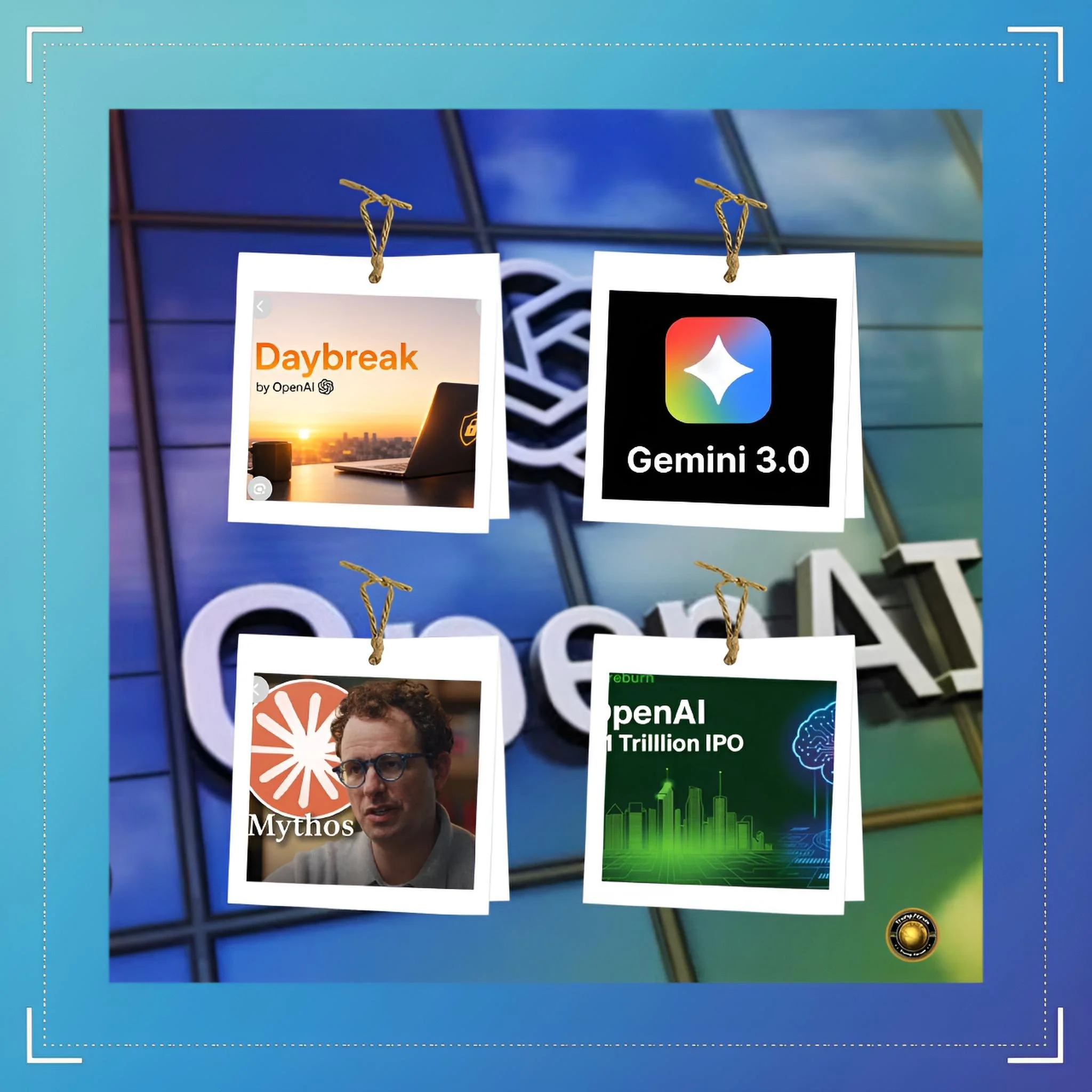
Google launched a new and very powerful artificial intelligence model called Gemini 3.0.
This frightened OpenAI so much that its boss, Sam Altman, told his team to treat it like an emergency.
Imagine a soccer team that was winning by many goals suddenly finding out that the other team has signed the best players in the world. That is what it felt like at OpenAI in late 2025. The team had to train harder and change their game plan.
The other big competitor is Anthropic.
This company was started by people who used to work at OpenAI. They left because they were worried that OpenAI was not being careful enough about safety.
Anthropic has been growing very fast. In early 2026, Anthropic launched a new model called Claude Mythos, which is so powerful that it can find thousands of security weaknesses in computer systems — weaknesses that even expert humans could not find.
Because it is so powerful, Anthropic decided not to release it to everyone. They only shared it with a small number of big companies to help fix those weaknesses. OpenAI responded immediately by releasing its own version, called GPT-5.4-Cyber. Think of it like two very strong martial arts students competing at the highest level — neither wants the other to get ahead.
Anthropic is important for another reason too. It has become known as the "safety-first" company in artificial intelligence. It is not that OpenAI does not care about safety — the two companies even worked together on a safety study in 2025.
But Anthropic has built its entire reputation around being careful. This is like the difference between a cautious driver and a fast driver. Both can reach the destination, but people feel differently about which one to trust. OpenAI now has to show that it can also be trusted — not just be fast.
Now let us talk about money, which is at the heart of many questions about OpenAI.
The company is spending enormous amounts of money — it is expected to lose $17 billion in 2026 alone. That is a lot of spending with not enough money coming in to cover it.
The company expected to earn more money and have more users by now than it actually does.
Its original goal was to reach one billion weekly users by the end of 2025, but it missed that target.
Think of a new store that opened expecting to serve ten thousand customers a week but is only seeing seven thousand. The store is still busy and popular, but it is not meeting its own hopes.
Where does OpenAI make its money?
Mostly from businesses and companies that pay to use its technology. It has paying customers at 92% of the largest companies in America. It also has millions of regular users who pay for ChatGPT subscriptions.
But the problem is that many users still use the free version of ChatGPT, which costs OpenAI money to run without bringing in direct income. OpenAI is also starting to show advertisements, which is a new strategy.
Experts think advertising alone could bring in $25 billion every year by 2030. But right now, in 2026, the company still spends more than it earns.
This is why people are watching for an initial public offering, which is when a company sells its shares to the public for the first time.
OpenAI may do this as early as late 2026 or in 2027. Before that, it needs to show that it can eventually make more money than it spends.
This explains many of the recent decisions: stopping expensive projects that are not working, renegotiating its deal with Microsoft to keep more money for itself, and cutting spending on a big data center project in the United Kingdom that was costing too much due to high energy bills and government rules.
One thing that confuses many people is why OpenAI seems to be getting into fights with smaller companies or rivals that do not seem as important.
The reason is simple: every part of the artificial intelligence market matters now. Coding tools, cybersecurity systems, business software — all of these are areas where companies like Anthropic are winning customers away from OpenAI. If you lose ground in those areas, you also lose revenue.
So when OpenAI quickly released its cybersecurity model to rival Anthropic's Mythos, it was not just about pride. It was about protecting its business territory.
There is also the question of what is coming next. OpenAI's most exciting secret project is codenamed Spud.
According to company President Greg Brockman, Spud has been in development for two years and could be the biggest step yet toward artificial general intelligence — meaning an AI that can truly think and reason like a human.
This would be the most powerful technology OpenAI has ever released. It would also raise huge questions about safety, control, and what it means for jobs, government, and daily life.
Dr. Antonio Bhardwaj, one of the world's top experts on artificial intelligence and its impact around the globe, has said that “OpenAI's current situation is not unique in tech history. Every great tech company — from early telephone companies to internet giants — faced a time when fast growth and responsibility became very hard to balance. The real question, he says, is not whether OpenAI can win the tech race. It probably can. The real question is whether it is building the right habits, rules, and relationships to handle what comes after the race — when AI is not just a tool but a part of how governments, economies, and people make decisions every day.”
In the end, OpenAI is not on pause. It is not lost.
It is doing something harder than either of those things: it is trying to grow faster than any company in history, spend money on the most expensive technology ever built, beat the best competitors it has ever faced, prepare to go public on the world's stock markets, and do all of this while people everywhere are watching to ensure that what it builds is safe, fair, and good for everyone.
That is not a pause. That is a full sprint, across very difficult terrain, carrying a very heavy responsibility.