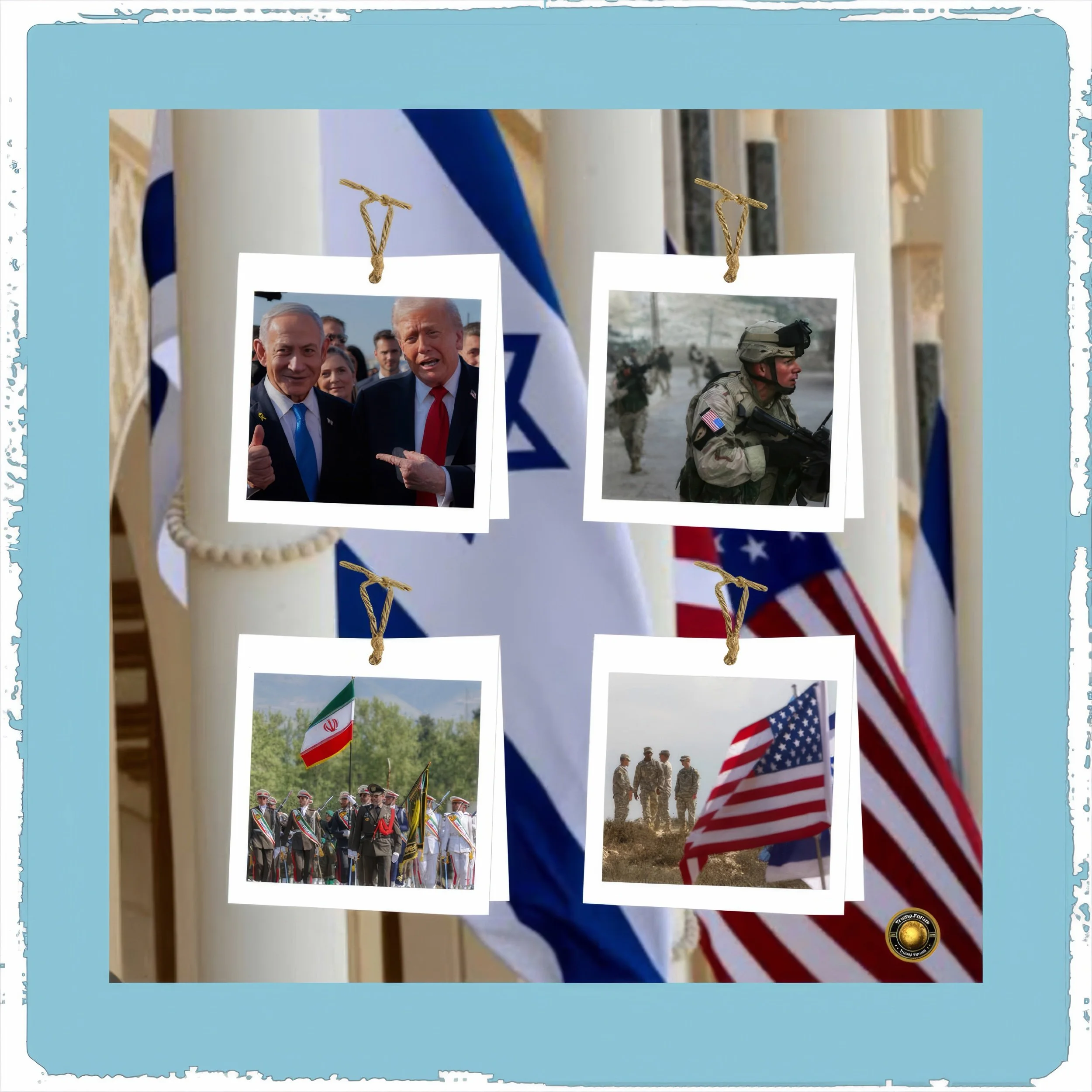
American Troops for an Israeli War: Strategic Interests, Alliance Asymmetry, and the Remaking of the Middle East
Executive Summary
American Troops, Israeli Wars: How Netanyahu Remade Washington's Strategic Calculus in the Middle East
The joint American and Israeli military campaign against Iran, initiated in June 2025 and dramatically intensified in February 2026, represents the most consequential test of the "America First" doctrine since Donald Trump's return to the White House in January 2025.
At its core, this conflict raises a question that refuses to be resolved by official talking points: whose war is this, and who genuinely benefits from its prosecution?
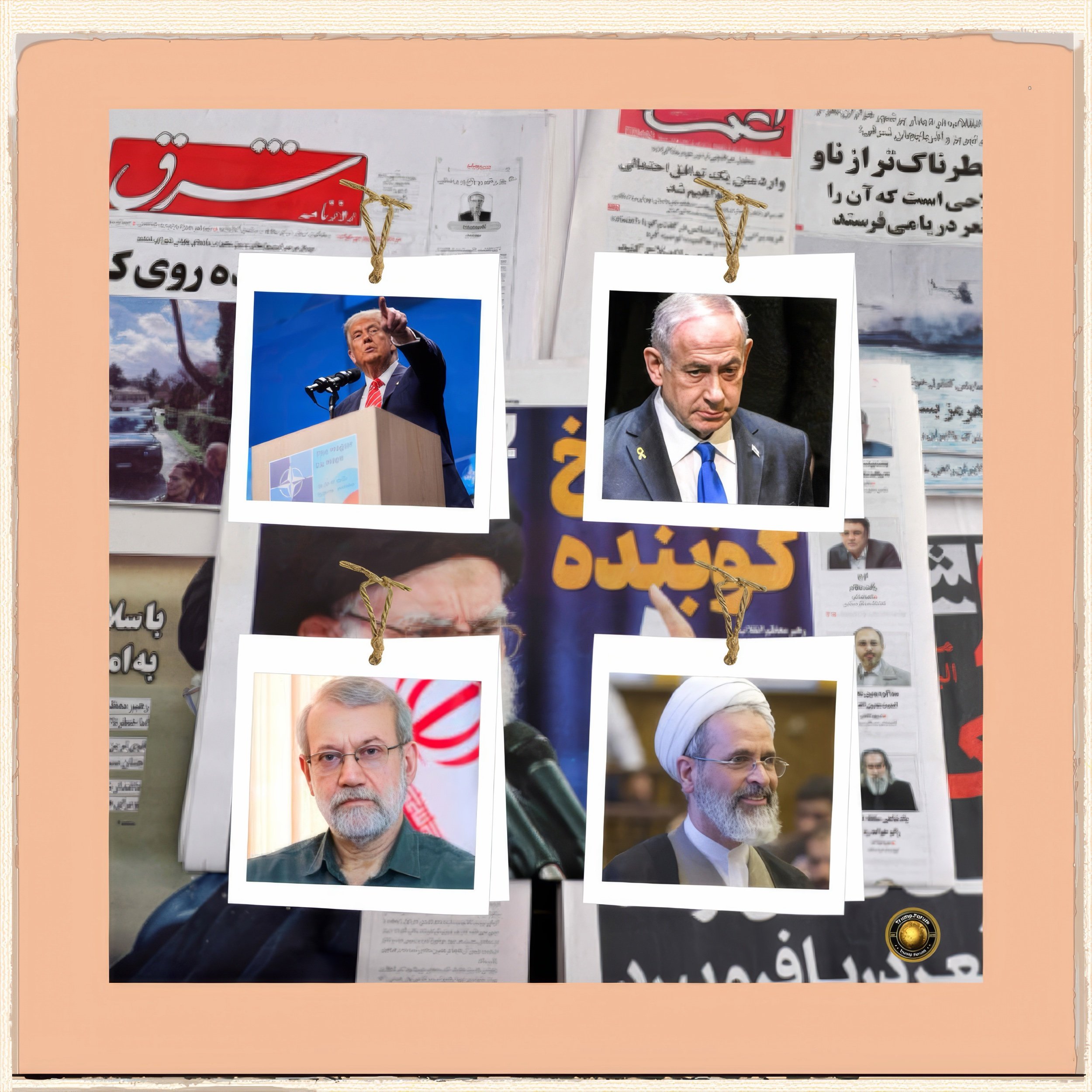
Former Israeli peace negotiator Daniel Levy, president of the US/Middle East Project, has argued with piercing clarity that the answer is "Israel First," not "America First."
Netanyahu pursued a singular persuasion strategy — targeting only Donald Trump — in order to secure US military involvement against Iran, a strategy that the Wall Street Journal described as a "one-man approach" that ultimately succeeded.
The consequences, however, have cascaded far beyond the intentions of either leadership: the Strait of Hormuz has been effectively closed, Gulf states have been struck by Iranian retaliatory fire they neither invited nor desired, oil prices have surged from approximately $70 to over $110 per barrel, and the US finds itself enmeshed in a conflict whose exit conditions remain dangerously undefined.
FAF article examines the structural drivers, historical antecedents, diplomatic failures, alliance asymmetries, and future trajectories of a war that may ultimately define — and destabilise — the twenty-first century Middle East order.
Introduction: A War Whose Authorship Is Disputed
Netanyahu's One-Man Persuasion Strategy: How a Single Relationship Pulled America Into a Regional War
When US B-2 stealth bombers, departing from the American heartland, delivered 420,000 pounds of explosives against three Iranian nuclear sites in the predawn hours of June 22nd, 2025, the Trump administration insisted the decision was sovereign, American, and strategically necessary.
President Trump called the operation, codenamed "Midnight Hammer," a pre-emptive strike against an imminent nuclear threat. Secretary of State Marco Rubio, initially claiming the US was not involved in Israel's earlier strikes, subsequently acknowledged that American forces had acted in part because an Israeli intention to strike Iranian leadership would have jeopardised US personnel in the region.
This admission was more than a bureaucratic clarification: it was an inadvertent confession that American strategic decision-making had been, at a minimum, shaped by Israeli operational intentions.
The question of authorship — whether Washington acted on its own judgment or was drawn into a war designed and desired by Tel Aviv — has become the defining political and strategic controversy of the conflict.
Netanyahu himself has publicly dismissed suggestions that he dragged Trump into anything.
Yet reporting by the New York Times, citing American and Israeli officials, diplomats, lawmakers, and intelligence figures, described the US decision to strike Iran as a "significant victory for Netanyahu," noting that the Israeli prime minister first raised the prospect of hitting Iran's missile sites during a visit to Trump's Mar-a-Lago estate in December 2025.
Two months later, he secured broader US involvement in a campaign aimed at bringing down Iranian leadership.
The WSJ analysis was even more direct, characterising Netanyahu's approach as an appeal to Trump's instincts for personal praise and flattery.
Aviv Bushinsky, Netanyahu's chief of staff in the early 2000s, confirmed: "He put all his efforts into just one person, President Trump."
History and Current Status: Decades of Confrontation
From Operation Midnight Hammer to Operation Roaring Lion: Who Is Really Driving the War Against Iran?
The confrontation between Israel and Iran did not materialise in the summer of 2025.
Its roots are structural, ideological, and deeply embedded in the post-1979 geopolitical architecture of the Middle East.
Iran's nuclear programme itself dates to 1957, when Tehran signed a civil nuclear cooperation agreement with the US under President Eisenhower's "Atoms for Peace" initiative.
Following the Islamic Revolution in 1979, the programme was briefly suspended on theological grounds by Ayatollah Khomeini, before being revived during the Iran-Iraq War of the 1980s, when Iraq's use of chemical weapons created an existential incentive for Iranian nuclear deterrence.
By the early 2000s, the National Council of Resistance of Iran had exposed the existence of two hidden nuclear sites, triggering a decades-long confrontation between Tehran and the International Atomic Energy Agency (IAEA).
Israel's opposition to Iranian nuclear ambitions is itself rooted in a doctrine of pre-emption that predates Netanyahu's current tenure.
The Begin Doctrine, introduced by Prime Minister Menachem Begin in 1981, established Israel's right to destroy any regional adversary's weapons of mass destruction before they became operational.
Israel acted on this doctrine against Iraq's Osirak reactor in 1981 and against Syria's al-Kubar atomic facility in 2007.
The gradual expansion of Iran's proxy network — Hezbollah in Lebanon, Hamas in Gaza, the Houthis in Yemen, and Hashd al-Shaabi in Iraq — provided Israel with a sustained and growing rationale to frame the Iranian state not merely as a nuclear proliferator but as the architect of a comprehensive regional threat system.
Iran, for its part, viewed Israel's posture as inherently aggressive, and its proxies served both as deterrent leverage and as instruments of its "Axis of Resistance" strategy.
Under Trump's first term (2017-2021), the architecture of containment began to collapse when the US unilaterally withdrew from the Joint Comprehensive Plan of Action (JCPOA) nuclear deal in 2018.
The assassination of General Qasem Soleimani in January 2020 further shattered any residual diplomatic grammar between Washington and Tehran.
By the time Trump returned to office in January 2025, Iran was operating enriched uranium at levels approaching weapons-grade and was assessed by the IAEA as being in violation of its non-proliferation obligations for the first time in two decades.
It was this context — a nuclear programme in advanced development, a weakened proxy network after Israel's campaign in Gaza, Lebanon, and Syria, and a Trump administration ideologically predisposed to confrontation — that Netanyahu chose as his moment of strategic execution.
On June 12th, 2025, Israel launched Operation Rising Lion, a series of unilateral preemptive strikes targeting Iran's nuclear facilities, missile factories, senior military officials, and nuclear scientists.
Over the next ten days, the conflict escalated.
The IAEA declared Iran in violation of non-proliferation obligations, Iran announced the opening of a previously secret uranium enrichment site, and the US — despite initial insistence that it was not involved — entered the war directly on June 22nd through Operation Midnight Hammer.
The operation, deploying over 125 aircraft including 7 B-2 stealth bombers and a US submarine launching more than two dozen Tomahawk cruise missiles, struck three nuclear sites — Natanz, Fordow, and Isfahan — in a 25-minute window.
A ceasefire was announced on June 24, but Iran's nuclear ambitions were far from extinguished.
By February 2026, US intelligence assessed that Iran might again be within a week of being able to produce weapons-grade material.
On February 28th, 2026, the United States and Israel launched a new, broader round of joint airstrikes — this time against not only nuclear sites but also Iranian military infrastructure and, in the most dramatic escalation, Iranian regime leadership.
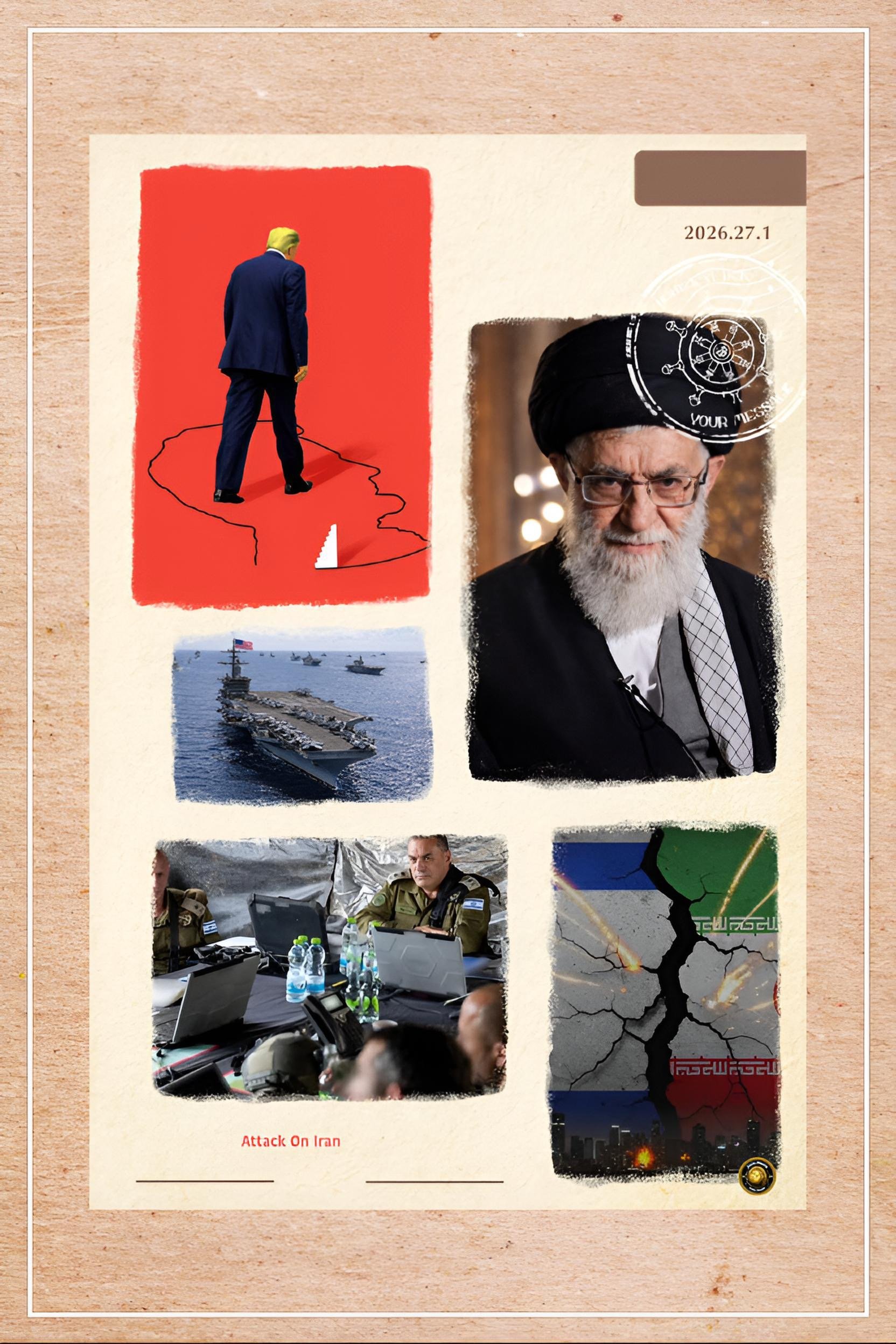
The result was the death of Supreme Leader Ali Khamenei, among other senior officials, and the beginning of what has been described as the 2026 Iran war.
By mid-March 2026, the war had entered its 16th day with no ceasefire in sight.
US and Israeli officials were indicating the campaign could last through Passover and potentially beyond — a campaign the IDF described as having "thousands of targets ahead."
Key Developments: The Architecture of Escalation
The Gulf States Did Not Start This War, but They Are Paying Its Heaviest Price in Blood and Oil
The trajectory from the June 2025 strikes to the February 2026 war was not accidental. It was structured by a series of strategic decisions, missed diplomatic opportunities, and deliberate Israeli escalatory choices.
The first critical juncture came in the weeks following Operation Midnight Hammer, when Trump declared that Iran's nuclear programme had been "completely and fully obliterated," and warned of additional strikes if Tehran retaliated.
Iran's retaliation in June 2025 was largely symbolic — a missile attack on the Udeid Air Base in Qatar that caused no casualties — and both sides declared a ceasefire.
Netanyahu declared "a historic victory," while Iran claimed to have taught the Zionist regime "a historic lesson."
The second critical juncture was the failure of post-ceasefire diplomacy.
Even as US envoys conducted indirect nuclear negotiations in Geneva and Oman, American and Israeli military officials were quietly coordinating strike planning for the next phase.
Netanyahu's February 2026 White House visit — a closed-door meeting lasting three hours — was the operational inflection point.
Shortly after the meeting, the USS Gerald Ford carrier group repositioned to the Mediterranean, signalling operational readiness.
The USS's military buildup — its largest in the Middle East since the 2003 invasion of Iraq — made clear that the diplomatic track was, at best, a parallel performance, and at worst, a strategic feint.
The third critical development was the hardening of Israeli war aims.
Netanyahu, addressing the Israeli nation in March 2026, described the conflict as "Operation Roaring Lion" and declared that Israel and the US were "reshaping the strategic balance of the Middle East."
His stated objectives went far beyond the destruction of nuclear sites: the dismantling of Iran's missile programme, the collapse of Iran's proxy network across Lebanon, Gaza, Syria, and Yemen, and ultimately regime change in Tehran.
Netanyahu had long compared the Islamic Republic to Nazi Germany.
On Fox News in June 2025, he had argued that "80% of the Iranian population would expel these theological thugs" given the opportunity.
By early 2026, "regime change" had become not subtext but official war aim, with the US and Israel jointly declaring the goal of "paving the way for a popular uprising against the government in Tehran."
The January 2026 Iranian protests — the largest since the Islamic Revolution, during which Iranian security forces killed thousands of demonstrators — provided both sides with additional moral justification for military action.
Trump threatened military force over the crackdown, and the protests became embedded in the American political framing of the war as a "liberation" campaign rather than a geopolitical manoeuvre.
Critics, including Levy, argued this framing was fundamentally dishonest: the actual goal was not Iranian democracy but Iranian disintegration.
Latest Facts and Concerns: An Uncontrolled Escalatory Spiral
Regime Collapse, Nuclear Ambitions, and Greater Israel: Unpacking the Objectives Behind the Iran Campaign
As of mid-March 2026, the war has entered a phase characterised by strategic uncertainty on all sides.
Daniel Levy's formulation captured the anxiety with precision: "Does America have a plan? Israel has a plan. Does America know?"
This asymmetry of strategic purpose — Israel operating with a coherent, maximalist regional vision while the US operates on the basis of improvised tactical responses to Israeli initiatives — represents perhaps the most dangerous structural feature of the current conflict.
Iran's retaliatory strategy has evolved significantly between the June 2025 and February 2026 rounds of fighting. In 2025, Iranian retaliation was largely contained to Israel and specific US assets.
In 2026, Tehran has widened the landscape dramatically, launching strikes against Gulf infrastructure, energy installations, and states hosting American military facilities.
Iran has issued a direct warning to Jordan, signalling the potential for further geographic expansion of the conflict.
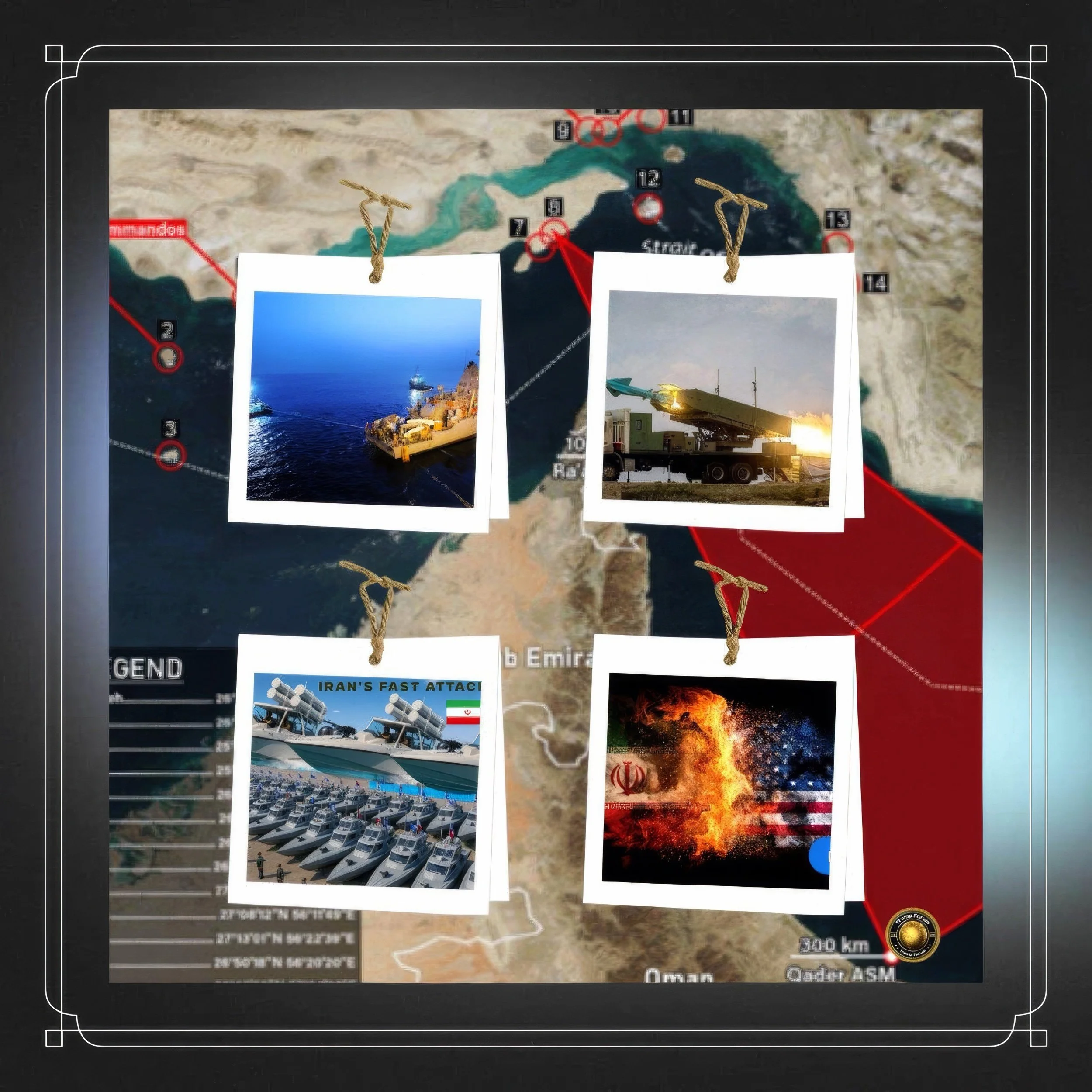
Most critically, Iran has effectively closed the Strait of Hormuz — the 20-mile chokepoint through which approximately 20% of the world's oil exports transit — threatening to attack any vessel transiting the route.
The economic consequences are severe and global.
Brent crude has surged from approximately $70 to over $150 per barrel since the war began, with Capital Economics warning that sustained conflict could drive prices to $130 per barrel in the second quarter of 2026.
Around 80% of Asia's oil imports pass through the Strait of Hormuz.
Nations including Vietnam, Pakistan, and Indonesia maintain oil reserves of fewer than 20 days.
India, Thailand, and the Philippines have approximately two months of reserves.
The closure of the Strait has triggered inflationary pressures across Asian economies, school closures, fuel rationing advisories, and warnings of potential recession.
Iran is reportedly weighing permitting cargoes traded in Chinese yuan to transit through Hormuz, a move that would tilt energy flows toward Beijing and challenge the US dollar's dominance in global oil markets — a direct inversion of America First logic.
Gulf states, meanwhile, find themselves in an agonising position. Governments in Riyadh, Abu Dhabi, and Doha had provided Tehran with assurances that their territory would not be used for attacks against Iran.
Those assurances have not protected them. Iran has launched waves of missile and drone strikes against Gulf energy installations, airports, ports, and logistics infrastructure.
Frustration among Gulf governments has intensified, with regional analysts noting that the costs of the war are falling "disproportionately on their economies and infrastructure."
The Gulf model of managed coexistence — balancing between Washington and Tehran, maintaining economic integration with both the East and the West — has been shattered, as the Gulf International Forum observed, by "a war intended to weaken Iran" that is instead "testing US strategy, straining alliances, and reshaping the global energy order."
Cause-and-Effect Analysis: The Logic of Entanglement
The Strait of Hormuz Gambit: How the US-Israel War on Iran Threatens to Shatter the Global Economy
The mechanism by which the United States was drawn into an Israeli war is neither mysterious nor unprecedented, but it operates through a series of structural incentives and diplomatic pathologies that are worth disaggregating with care.
The first cause is the structural asymmetry between Israeli strategic interests and American ones.
Israel's fundamental strategic objective — the elimination of the Iranian threat to what Netanyahu has framed as "greater Israel domination" of the regional landscape — is a maximalist project that inherently requires sustained American military and political support.
Israel cannot destroy Iran's deeply buried nuclear sites without American weapons. It cannot sustain a prolonged air campaign without American intelligence.
It cannot operate in the broader regional landscape without American diplomatic cover. The US, conversely, does not derive equivalent strategic benefit from Iranian regime collapse.
American interests — stable energy markets, functional Gulf alliances, credible nuclear non-proliferation norms, and regional deterrence — are in several respects better served by a contained, deterred Iran than by an Iran in state collapse, which creates power vacuums historically filled by actors hostile to Washington.
As Levy noted, the "America First" logic would counsel against precisely the kind of open-ended regional war that Israel's maximalist objectives demand.
The second cause is the personalism of the Trump-Netanyahu relationship. Netanyahu's "one-man persuasion strategy" — concentrating diplomatic effort entirely on Trump rather than building consensus within the US national security establishment — succeeded precisely because Trump's foreign policy decision-making is highly personalised, praise-responsive, and resistant to institutional constraint.
By flattering Trump's self-image as a decisive leader willing to do what his predecessors lacked the courage to do, Netanyahu converted a bilateral relationship into a strategic instrument.
Former deputy assistant secretary of defence Daniel Shapiro noted: "Netanyahu figured out how to persuade, cooperate with, and flatter Trump, and this was very effective in achieving his goals."
The risk, as critics point out, is that this strategy bypassed the deliberative processes — intelligence assessments, interagency review, Congressional consultation — that normally temper strategic overreach.
The third cause is the accumulated logic of previous US-Israel coordination against Iran, which created institutional and operational pathways that made full involvement almost gravitationally inevitable.
Since 2018, US and Israeli intelligence services had conducted joint operations against Iranian nuclear infrastructure.
The assassination of Soleimani demonstrated that the US was willing to take kinetic action against Iranian leadership figures.
The redeployment of carrier groups and the establishment of missile defence batteries in the Gulf had already integrated American and Israeli operational planning to a degree that made "uninvolvement" in June 2025 a political fiction that lasted less than 11 days.
The fourth cause is the ideological alignment — partial but operationally significant — between Netanyahu's vision and Trump's instinctive hostility to the Iranian state.
Trump's genuine antipathy toward the Islamic Republic, rooted in its opposition to American regional hegemony and its proxy threats to US forces across the Middle East, provided genuine motivational substrate for military action.
This was not simply a case of Netanyahu manipulating a passive president: Trump harboured his own visceral impulse toward confrontation with Tehran, and Netanyahu's persuasion operated within, not against, that pre-existing disposition.
The effect was a reinforcing loop between Israeli strategic ambition and American presidential temperament that produced a momentum toward war that institutional constraints proved insufficient to interrupt.
The consequences of these causes are now unfolding with a severity that neither side appears to have fully anticipated.
Iran's 2026 retaliatory strategy — extending the war horizontally across the Gulf rather than vertically against Israel — has imposed costs on American allies that the Trump administration is poorly positioned to absorb diplomatically.
The Strait of Hormuz closure has not damaged Iran in the near term as severely as the US-Israeli partnership hoped; instead, it has created leverage for Beijing, destabilised Asian allies, and introduced inflationary pressures into the American economy that directly contradict the "America First" promise of prosperity and reduced intervention.
The deaths of Iranian civilians and senior officials have not produced the popular uprising Netanyahu predicted; instead, they have, at least in the short term, produced a rally-around-the-flag consolidation that complicates the regime-change narrative.
Most consequentially, by framing the war as a campaign for Iranian liberation while simultaneously conducting strikes that kill thousands of civilians and eliminate regime figures without a credible post-conflict political plan, the US-Israel partnership has replicated the structural failures of previous Middle Eastern interventions — Afghanistan, Iraq, Libya — where military decapitation produced not democratic transition but protracted state failure and regional instability.
Future Steps: Pathways Through an Unresolved War
America Has No Strategy; Israel Does — and That Asymmetry Is the Most Dangerous Thing in the Middle East Today
As of mid-March 2026, the strategic landscape offers no clean exit.
The war is projected to continue through at least Passover, with the IDF declaring it has "thousands of targets ahead" and plans extending weeks into the future.
US President Trump, asked about the timeline, declined to specify.
Iran has signalled willingness to negotiate but has simultaneously deepened its retaliatory posture, closing Hormuz and widening its list of targets across the Gulf.
Several distinct pathways are now in play, each carrying different implications for regional order and American interests.
The first pathway is a negotiated de-escalation built around a new nuclear framework.
This is the pathway that Trump and Rubio have publicly advertised as the desired outcome: Iran surrenders its nuclear ambitions entirely in exchange for the cessation of military operations and the eventual lifting of sanctions.
The structural problem with this pathway is that it requires a functional Iranian government with whom to negotiate, and the US-Israeli war aims — as currently articulated — include regime change, which logically eliminates the counterpart necessary for a negotiated outcome.
Levy's observation that "Israel wants to bring about Iran's disintegration, or at least maximise chaos and damage and maintain US regional engagement" is directly incompatible with a negotiated settlement, and since Israeli war aims are currently driving American operational planning, the contradiction is not merely theoretical but strategically consequential.
The second pathway is prolonged attrition, in which the US and Israel continue a campaign against Iranian military infrastructure over weeks and months, seeking to degrade Iranian retaliatory capacity and create internal conditions for popular uprising against the weakened regime.
This pathway is the one toward which current Israeli planning most clearly points.
Its risks are substantial: a prolonged war means prolonged Strait of Hormuz disruption, which translates into sustained energy market volatility, escalating inflationary pressure on US and allied economies, and deepening Gulf alienation from Washington.
It also creates conditions for Iranian nuclear dispersal or knowledge transfer to non-state actors, precisely the proliferation risk that the entire campaign was designed to prevent.
The third pathway is uncontrolled escalation — the widening of the conflict to include direct strikes on Gulf infrastructure at scale, potential Iranian attacks on US carrier groups, or the entry of additional regional stakeholders, including Hezbollah remnants, Iraqi militias, or even Russian or Chinese diplomatic and material support for Iran.
This pathway, while currently assessed as less likely than either of the first two, is not implausible given the dynamics of the current landscape.
Levy noted that Iran is attempting to deplete Israeli and American interceptor stockpiles before exhausting its own offensive weapons — a strategy designed to remove the missile defence architecture that currently protects both Israel and Gulf infrastructure from catastrophic damage.
If that interceptor stockpile attrition succeeds, the strategic calculus changes radically.
The fourth and least-discussed pathway involves a fundamental reassessment by Washington of its relationship with the war's objectives.
Trump has repeatedly insisted that he was not drawn into anything — that he acted on American judgment and American interests.
But Rubio's admission that the US may have "followed Israel into the conflict" and the WSJ's and NYT's documented accounts of Netanyahu's persuasion campaign suggest that this narrative of American sovereign decision-making is, at minimum, contested by the historical record.
A credible reassessment would require Trump to distinguish between American strategic interests — stable energy markets, manageable nuclear proliferation risk, functional Gulf alliances — and Israeli maximalist objectives, which include Iranian disintegration, greater regional hegemony, and indefinite US military engagement to sustain both.
Whether Trump's personality and the current political dynamics of Washington permit this kind of strategic recalibration remains the central uncertainty of the conflict.
Cause-and-Effect Analysis: Broader Strategic Consequences
Beyond the immediate military and economic dimensions, the war has triggered structural consequences for the global order that warrant examination.
The most significant is the potential fracture of the US-led Gulf security architecture that has governed Middle Eastern stability since the 1990-91 Gulf War.
That architecture rested on three foundational assumptions: the US as primary security provider; managed coexistence with Iran; and GCC institutional coherence.
All three are now under simultaneous strain.
Gulf states that have structured their security, investment, and diplomatic strategies around American reliability now face an America that has committed them to a war they explicitly declined to join, while failing to protect their infrastructure from the retaliation that war predictably generated.
The erosion of American credibility as a predictable, interest-aligned security partner — as opposed to a strategic vehicle for Israeli regional ambitions — has implications extending well beyond the current conflict, potentially accelerating the Gulf diversification of alliances toward China, Russia, and independent deterrence frameworks.
The second structural consequence is the potential permanent reordering of global energy markets. An Iran in collapse or under prolonged siege cannot function as a stabilising element in OPEC production management.
A Strait of Hormuz that is periodically closed, or treated as a contested zone rather than an international commons, forces the rerouting of global energy flows, accelerates the economic imperative for non-hydrocarbon energy development, and creates opportunities for American domestic energy producers but imposes enormous transition costs on developing nations with limited energy reserves and no capacity to absorb sustained price shocks.
The dollar's dominance in global energy markets — itself a foundational element of American financial power — is being actively challenged by Iran's reported consideration of yuan-denominated oil cargoes through Hormuz.
The third structural consequence is the potential proliferation aftershock. The US-Israeli strikes on Iran's nuclear infrastructure have not eliminated Iran's nuclear knowledge, personnel, or ambitions.
In February 2026, US intelligence was already assessing that Iran might again be within a week of weapons-grade material capability.
If the war achieves regime collapse rather than regime change, the question of nuclear material, knowledge, and intention transfers to whatever fragmented power structures emerge from Iranian state failure — a proliferation risk potentially more severe than the original threat that justified military action.
Conclusion: The Price of Alliance Asymmetry
“Israel First" or "America First"? The Dangerous Illusion Behind the US-Israel War on Iran
The 2025-2026 US-Israel war on Iran is not simply a military event.
It is a systemic revelation — of the structural distortions that arise when a superpower allows its military resources and political credibility to be placed in the service of a regional ally's maximalist strategic programme, in the absence of equivalent American strategic benefit.
Netanyahu's "golden opportunity" — the phrase Daniel Levy attributes to him in describing the current conflict — is unambiguous in its Israeli logic: to draw the US in, degrade Iran permanently, reshape the regional landscape in Israel's favour, and sustain American military engagement to police the resulting order.
Whether that constitutes an "opportunity" for the United States is a question that Washington has conspicuously failed to answer with strategic rigour.
America First, as a governing principle, demands that American military power, diplomatic capital, and economic resources be deployed in the service of American national interests.
The evidence accumulated since June 2025 suggests that the current campaign — characterised by a Strait of Hormuz closure disrupting 20% of global oil supplies, by Gulf allies alienated and financially damaged, by an Iranian state potentially collapsing into a power vacuum without a post-conflict plan, and by oil prices trending towards and may be over $150 per barrel — does not straightforwardly serve those interests.
It serves Israeli regional ambitions that Netanyahu has been articulating, planning, and lobbying for across decades and multiple American administrations.
The alliance between Washington and Tel Aviv is one of the most durable and institutionally embedded relationships in contemporary international affairs.
Its continuation, in some form, is both inevitable and arguably desirable from the standpoint of Middle Eastern stability. But alliance continuity is not the same as strategic subordination.
The question that Daniel Levy posed — "Does America have a plan? Israel has a plan. Does America know?" — is not merely rhetorical.
It is the operational diagnosis of a war whose terms, objectives, and exit conditions were designed by one stakeholder for that stakeholder's benefit, executed with another stakeholder's weapons and blood, and now being sustained by a third stakeholder's silence: the American strategic establishment, which has so far declined to publicly interrogate whether the costs it is absorbing are proportionate to the interests it is advancing.
History will record whether this war produced a new Middle Eastern order — more stable, less nuclearised, freer of Iranian proxy aggression — or whether it produced, as its critics predict, a chaotic power vacuum, a proliferation cascade, a fractured Gulf architecture, and an America diplomatically diminished in the very region where its credibility was supposed to be demonstrated.
The answer depends less on military operations, which are proceeding on schedule, than on political will — in Washington, more than in Tel Aviv — to finally distinguish between what is in America's interest and what is in Israel's.