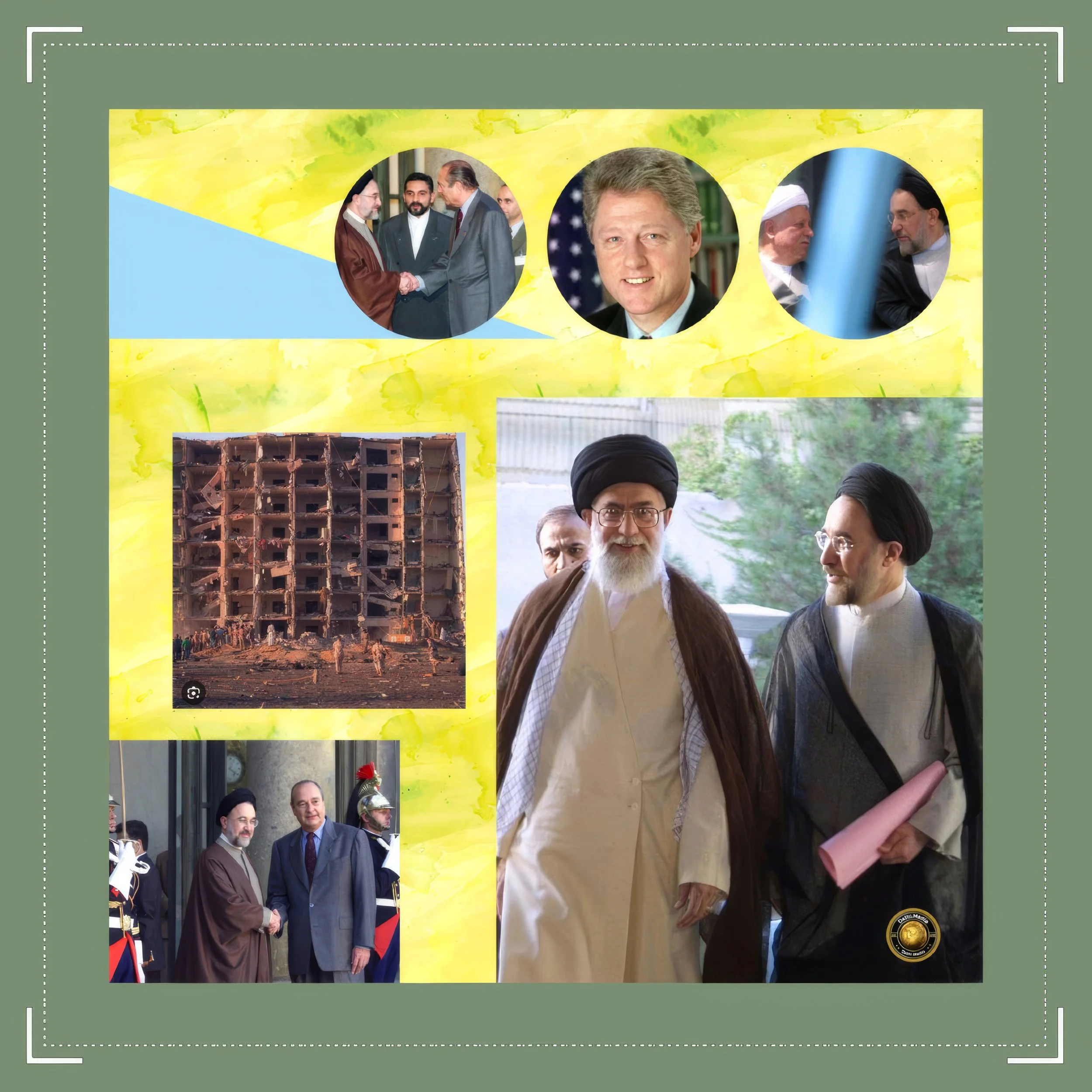
The Philosopher-President and the Reluctant Superpower: Khatami's Vision of Dialogue Collided with American Power, Iranian Theocracy, and Khobar Towers' Shadow
Executive Summary
The Grand Bargain That Never Was: How Khatami and Clinton Squandered Iran's Last Reformist Moment
Mohammad Khatami's presidency (1997–2005) constituted the most serious attempt at US-Iran reconciliation since the severing of diplomatic ties in 1980.
His philosophy of "Dialogue Among Civilizations," articulated as a direct intellectual challenge to Samuel Huntington's "Clash of Civilizations" thesis, offered Washington a conceptual bridge toward Tehran that no Iranian leader had previously constructed.
The Clinton administration recognized the opportunity and responded with a series of modest but symbolically charged gestures — cultural exchanges, a partial lifting of sanctions, Secretary of State Madeleine Albright's partial apology for the 1953 coup.
Yet the opening never widened into genuine normalization.
The Khobar Towers bombing of 1996, attributed by American intelligence to the Islamic Revolutionary Guard Corps (IRGC), poisoned the well before Khatami had even taken office.
Iran's domestic architecture — with Supreme Leader Ali Khamenei holding ultimate power over foreign policy — ensured that Khatami could never fully deliver the official, government-to-government engagement Washington demanded.
When George W. Bush included Iran in his "axis of evil" designation in January 2002, he effectively drove a stake through whatever remained of the reformist diplomatic project.
Khatami left office in 2005 having accomplished a great deal philosophically and very little structurally.
His legacy is that of a man who was right about almost everything and empowered to change almost nothing.
Introduction: The Accidental Opening
Dialogue Across the Abyss: Mohammad Khatami's Impossible Dream of Peace with America
The election of Mohammad Khatami on May 23rd, 1997 — the second of Khordad on the Iranian calendar — was a political earthquake inside a system designed to prevent earthquakes.
Khatami, a mild-mannered cleric and philosopher with a doctorate in Western philosophy and deep familiarity with German hermeneutics, won 69% of the popular vote against the candidate endorsed by the conservative establishment.
His victory was not engineered; it was an eruption. Iranian women, young people, and the urban middle class had chosen, in the only domain where their choice was permitted to matter, a man who spoke the language of civil society, pluralism, and the rule of law.
In Washington, the Clinton administration had been wrestling for years with how to handle an Iran it regarded simultaneously as a state sponsor of terrorism and as a nation of 70 million people whose society was plainly more complex than its government.
The "dual containment" policy — an attempt to isolate both Iran and Iraq simultaneously — had yielded little. Khatami's election offered something different: a credible interlocutor with a popular mandate who spoke in terms Washington could at least partly embrace.
What followed was 3.5 years of tentative, asymmetric, frequently frustrated engagement — a diplomatic courtship conducted through wrestling matches and CNN interviews, through back channels and Swiss ambassadors, never fully consummated and eventually killed by a combination of structural impediments, unresolved terrorism allegations, and the political convulsions that followed the September 11 attacks.
The Khatami-US saga is not a story of villains and heroes. It is a story of a system — the Iranian theocratic structure — that was constitutionally incapable of delivering what its most enlightened president was willing to offer.
History and Current Status: The Long Road to 1997
The Landscape Before Khatami
Khobar's Long Shadow: How a 1996 Bombing Doomed Iran's Most Promising Diplomatic Opening
To understand why Khatami mattered, one must understand what preceded him.
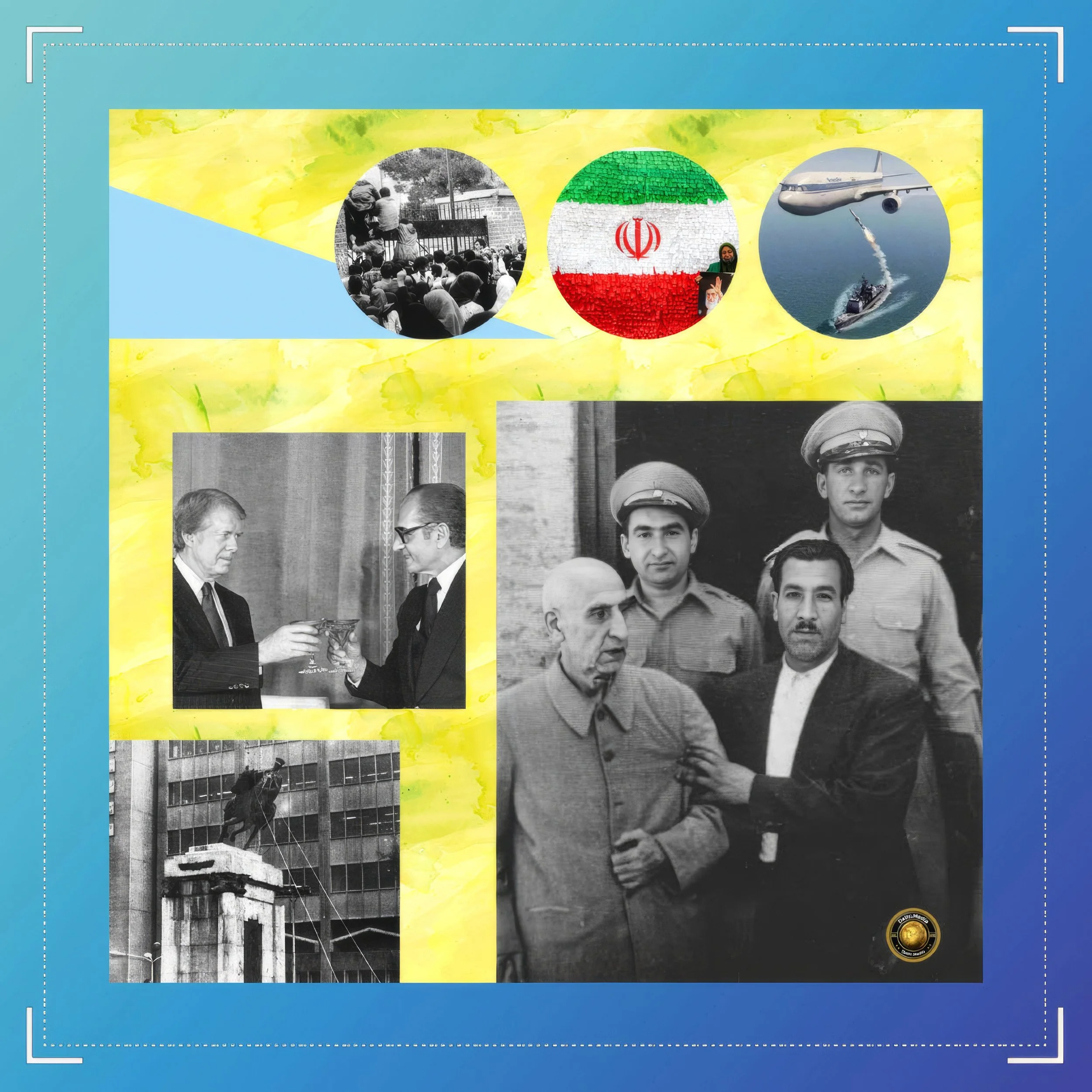
The 1979 Islamic Revolution and the 444-day hostage crisis had created a rupture in US-Iran relations so traumatic that it acquired the character of a civilizational wound rather than a mere diplomatic dispute.
The Reagan administration's covert support for Iraq during the devastating Iran-Iraq War (1980–1988), in which approximately 500,000 Iranians died, compounded the injury.
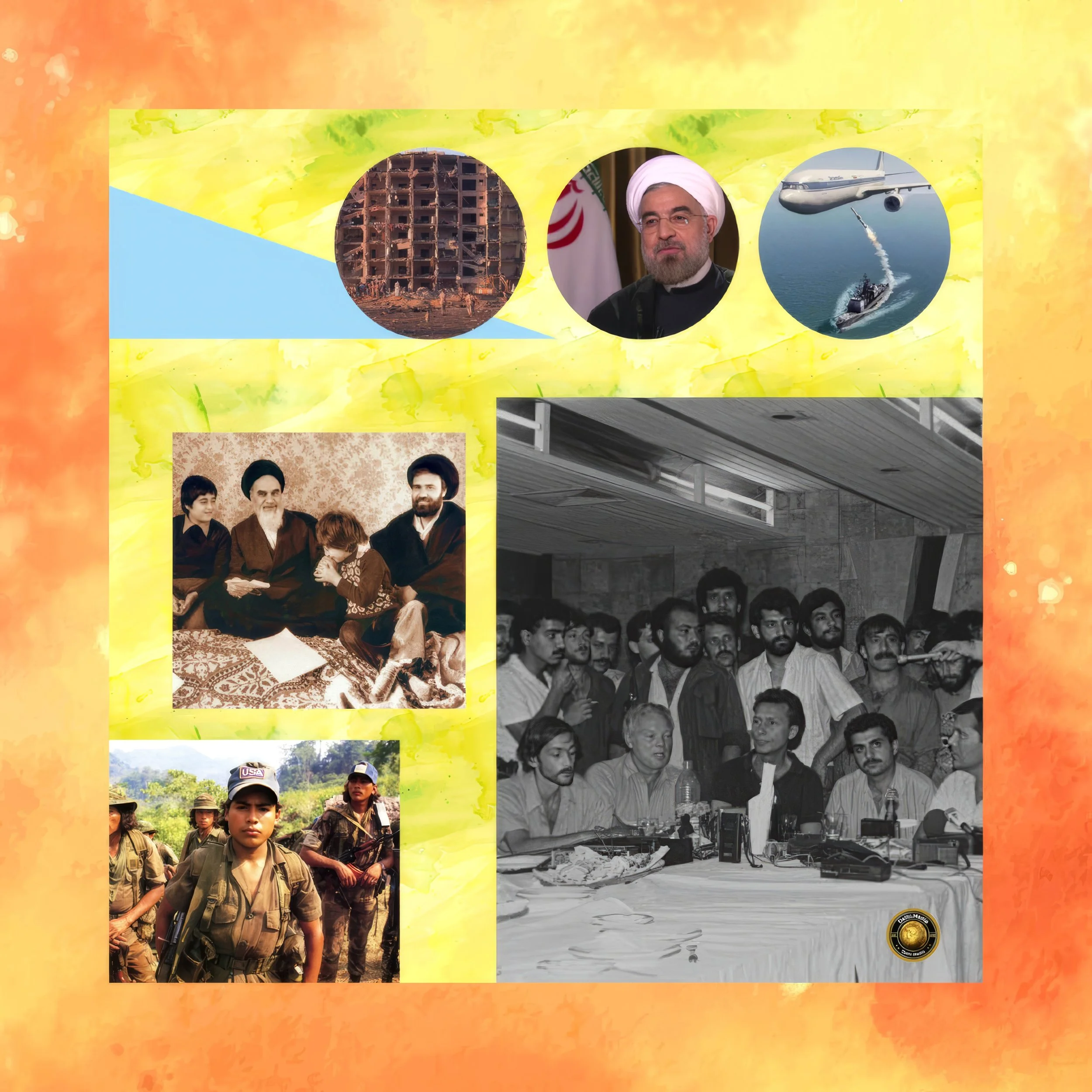
Then came the accidental downing of Iran Air Flight 655 by the USS Vincennes in July 1988, killing all 290 people aboard, for which Washington never formally apologized.
By the time Clinton took office in January 1993, US-Iran relations were encrusted with layers of grievance, suspicion, and institutional hostility that had hardened over 14 years.
Ali Akbar Hashemi Rafsanjani, Iran's president from 1989 to 1997, had quietly attempted pragmatic engagement with the West while maintaining ideological orthodoxy at home.
He presided over Iran's reconstruction after the war and opened cautious economic channels with Europe.
But Rafsanjani never challenged the fundamental structure of clerical power, and his presidency ultimately reinforced rather than reformed the system.
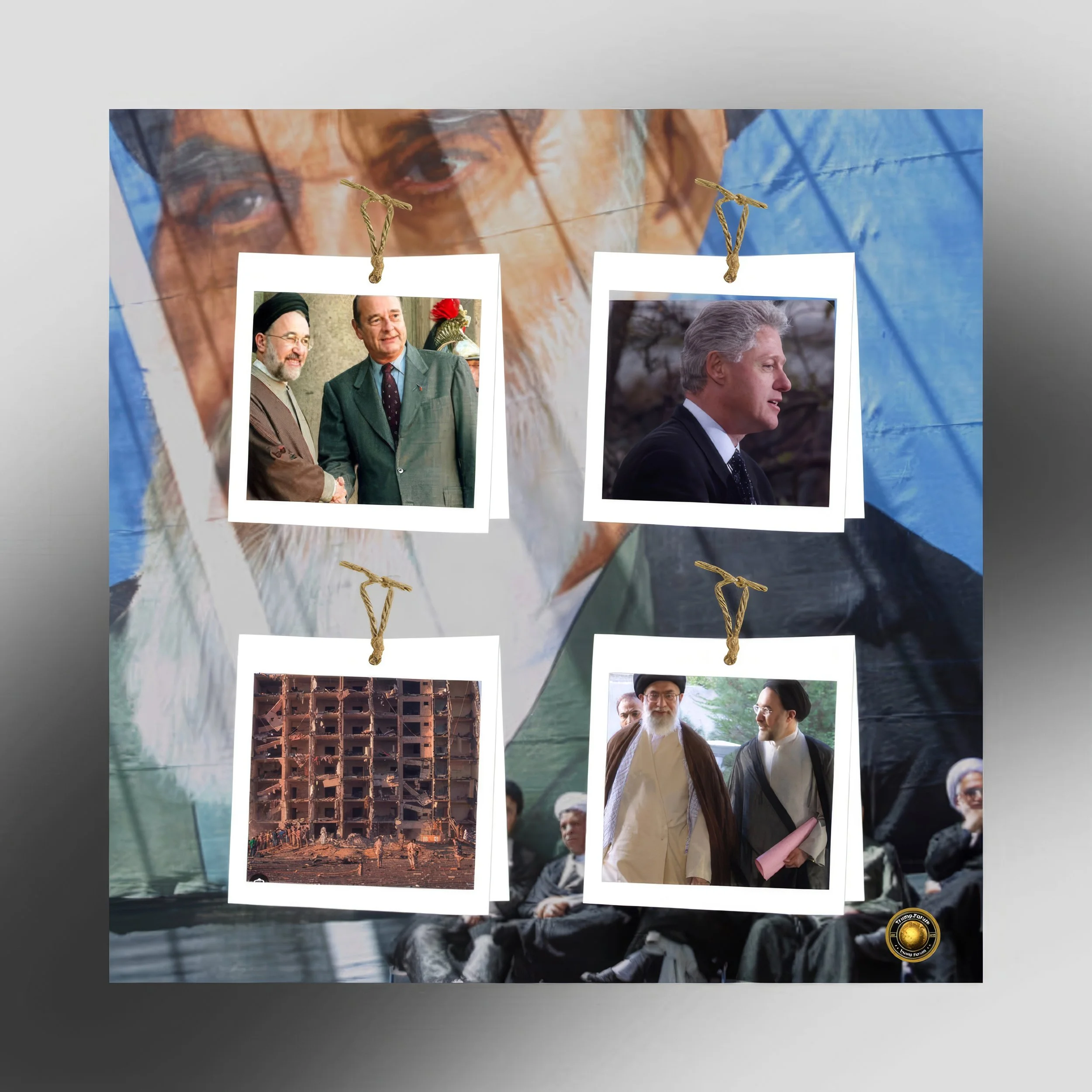
When the IRGC and affiliated Lebanese and Saudi Hezbollah operatives detonated a truck bomb outside the Khobar Towers US Air Force barracks in Dhahran, Saudi Arabia on June 25th, 1996, killing 19 American servicemen and wounding hundreds more, the Rafsanjani era ended in diplomatic catastrophe.
Within days, Clinton's own National Security Council staff had concluded that elements inside Iran — specifically the IRGC — were responsible.
It was into this atmosphere of barely suppressed fury that Khatami arrived, having won an election that the Iranian establishment had not expected him to win.
The Khatami Vision: Civilizations in Conversation
Khatami's intellectual framework was not merely rhetorical. He had read Huntington carefully and believed the "clash of civilizations" thesis was both analytically wrong and politically dangerous.
His counter-proposal — Dialogue Among Civilizations — argued that cultures and nations could find common ethical ground through patient, open-ended conversation rather than through the zero-sum logic of geopolitical competition.
He had first aired this idea at the Tehran Organisation of Islamic Conference summit in 1997, but his January 1998 CNN interview with Christiane Amanpour was the moment it reached a global audience.
In that interview — watched carefully by Clinton's foreign policy team — Khatami expressed "respect for the great American people," called for an "exchange of professors, writers, scholars, artists, journalists and tourists," and denounced terrorism in language notably more categorical than most Iranian leaders had used.
He was careful not to call for government-to-government normalization, knowing that Khamenei would not permit it.
But the signal was clear: here was an Iranian president willing to push the door, even if he could not blow it off its hinges.
In 1998, the United Nations adopted a resolution proclaiming 2001 as the Year of Dialogue Among Civilizations, directly on Khatami's recommendation — a diplomatic achievement of real symbolic weight.
Key Developments: The Dance of Gestures
The Clinton Administration's Response
The Prisoner of Tehran: Why Khatami Could Not Deliver What Washington Desperately Wanted
Clinton recognized the signal. He sent a message to Tehran through the Swiss ambassador — Washington's designated communications channel since the break in diplomatic relations — proposing direct government-to-government talks.
His administration authorized a series of cultural exchange programs.
In 1998, a group of American wrestlers traveled to Tehran to compete — the first official US representatives to set foot in Iran in 17 years.
Iranian wrestlers subsequently traveled to Stillwater, Oklahoma.
These were small gestures by the standards of great-power diplomacy, but in the context of two decades of total estrangement, they were not nothing.
The Clinton administration's then-Under Secretary of State Thomas Pickering held quiet discussions with Iranian officials on the sidelines of international gatherings.
Clinton himself took the extraordinary step of remaining in the UN General Assembly hall after his own speech in September 2000, specifically to listen to Khatami speak — a gesture deliberately designed to signal sustained interest in dialogue.
Most significantly, Secretary of State Madeleine Albright delivered a speech on March 17th, 2000, that acknowledged America's role in the 1953 CIA-backed coup against Mohammad Mossadeq, admitted that US support for Iraq during the Iran-Iraq War had been "shortsighted," and partially lifted sanctions on Persian rugs, pistachios, and caviar.
Albright's speech was a remarkable act of diplomatic self-criticism, rare in American foreign policy.
Washington insiders understood that it was designed to strengthen Khatami's hand domestically following the reformists' significant victory in the February 2000 Majlis (parliamentary) elections.
The strategy was transparent and deliberate: if the United States could signal enough goodwill, reformist political forces in Iran might consolidate enough power to eventually permit official engagement.
It did not work. Tehran's response was a denunciation.
The theocratic establishment, stung that the speech had included criticism of Iran's domestic and foreign policies alongside the apology, rejected the gesture as insufficient and politically motivated.
Khamenei's establishment had no interest in seeing Khatami's hand strengthened.
The Khobar Towers Obstruction
The single most significant structural obstacle to Khatami-era US-Iran engagement was the Khobar Towers bombing.
In July 1999, Clinton delivered a message directly to Khatami through the government of Oman, informing him that the US had "credible evidence that members of the Iranian Revolutionary Guard Corps, along with members of Lebanese and Saudi Hizballah, were directly involved in the planning and execution" of the attack.
Clinton asked for a "clear commitment" that Iran would cease involvement in terrorist activities and bring those responsible to justice.
Khatami's response, filtered through back channels, was essentially that he lacked the authority to make such a commitment.
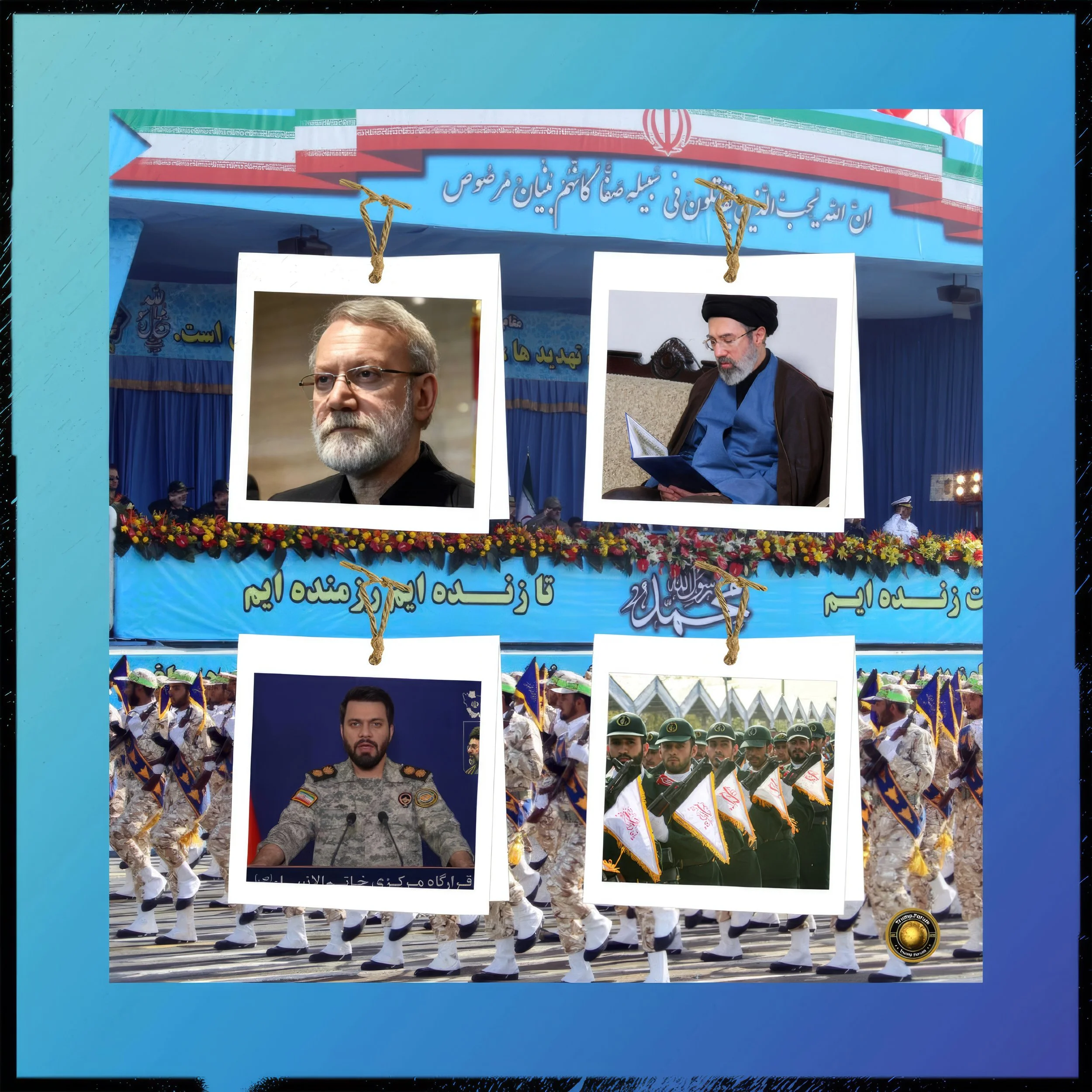
The IRGC did not report to the president of Iran; it reported to the Supreme Leader.
Khatami could not discipline the IRGC, could not extradite its officers, and could not credibly promise that its external operations would cease.
He was, in this domain as in others, a president constrained by a constitution designed to ensure that the most consequential decisions would never be made by an elected official.
The National Security Archive's analysis of subsequently declassified documents concluded that Washington had "overestimated the Iranian president's ability to manage the sensitive matter of US relations within Iran's power structure" — a fundamental misreading of the Islamic Republic's governance architecture.
Clinton, facing mounting FBI and congressional pressure over the Khobar investigation, authorized a covert CIA operation: approaching Iranian intelligence and IRGC operatives working under diplomatic cover around the world and threatening to expose them, forcing dozens of Iranian agents to abandon their positions abroad.
This was sophisticated statecraft — more damaging to Iran operationally than an air strike, without the risks of open military confrontation — but it meant that behind the public language of dialogue, an intense intelligence war was being waged simultaneously.
The two tracks were irreconcilable.
The Domestic Paralysis
Khatami's domestic situation deteriorated steadily after the initial euphoria of his 1997 election.
Conservative judiciary figures launched a systematic campaign against reformist newspapers, shutting down dozens of publications between 1998 and 2001.
Intellectuals and writers associated with the reform movement were targeted in a series of political murders — the "chain murders" of 1998–1999 — carried out by MOIS agents, undermining the atmosphere of openness Khatami had promised.
The 1999 student uprising at Tehran University, triggered by the closure of the reformist newspaper Salam, ended with violent suppression and mass arrests — conducted by security forces that Khatami was powerless to restrain.
Khatami's own response to these crises revealed the fundamental contradiction at the heart of his presidency.
He was a reformist operating within a system that he refused to challenge structurally.
He sought change through persuasion, dialogue, and the slow accumulation of legal precedents — an approach that proved wholly inadequate against a conservative establishment willing to use extrajudicial violence.
His supporters, increasingly frustrated, began to interpret his caution not as strategic patience but as institutional complicity.
The Rushdie Fatwa and Regional Diplomacy
Not all of Khatami's foreign policy accomplishments were undone.
His decision to publicly distance Iran from Ayatollah Khomeini's 1989 fatwa against Salman Rushdie — with Khamenei's quiet acquiescence — enabled the restoration of diplomatic relations with the United Kingdom and furthered Iran's détente with Europe more broadly.
His Foreign Minister Kamal Kharrazi's warming of ties with Saudi Arabia — culminating in a notable cooperation agreement — represented a genuine regional realignment that reduced sectarian tensions at a critical moment.
Khatami also understood that Iran could not engage the United States constructively while simultaneously alienating its regional neighbors; the Saudi rapprochement was a necessary precondition for any broader diplomatic strategy.
These achievements were real, but they were peripheral to the central objective. The core goal — a fundamental restructuring of US-Iran relations — remained out of reach.
Latest Facts and Concerns: The 9/11 Rupture and Its Aftermath
Iran's Cooperation and Bush's Betrayal
From Wrestling Mats to Axis of Evil: The Rise and Ruin of Iran-US Cultural Diplomacy
Perhaps the most bitter irony of the entire Khatami era was the aftermath of September 11th 2001.
Khatami was among the first world leaders to publicly condemn the attacks.
Iran's intelligence services cooperated, to a degree that still surprises historians, with US efforts against the Taliban and Al-Qaeda in Afghanistan, sharing intelligence and facilitating the establishment of the post-Taliban government at the Bonn Conference in December 2001.
Iranian diplomats worked alongside US officials to help forge the political framework for a new Afghanistan.
There was genuine, substantive cooperation — not symbolic people-to-people exchange, but actual intelligence and diplomatic collaboration on a shared security objective.
Then, on January 29, 2002, President George W. Bush delivered his State of the Union address and named Iran as part of an "axis of evil" alongside Iraq and North Korea.
The phrase had been coined by speechwriter David Frum as "axis of hatred" and upgraded to "evil" by Michael Gerson.
Whatever its rhetorical genealogy, its political effect was devastating. Iranian reformists — who had just cooperated with Washington on Afghanistan and were cautiously hoping that post-9/11 shared interests might accelerate normalization — were stunned and humiliated. Senator Chuck Hagel observed that the speech "made it more difficult for Khatami and the reformist forces in Iran."
Khamenei's establishment, by contrast, was almost pleased. The "axis of evil" designation confirmed every narrative the hardliners had been peddling about American hostility and bad faith.
It united reformists and conservatives in a shared indignation that temporarily dissolved the factional tensions Khatami's presidency had exposed.
Iranian professors told foreign correspondents that "any time we face international problems, democracy stops" — the threat from outside provides the conservative establishment its most effective domestic weapon.
The Nuclear Revelation of 2002
The August 2002 revelation by the Mujahedin-e Khalq's political wing — the National Council of Resistance of Iran — that Iran had secretly constructed uranium enrichment facilities at Natanz and a heavy-water reactor at Arak fundamentally transformed the diplomatic landscape.
The existence of these facilities, hidden from the International Atomic Energy Agency for nearly two decades, confirmed the worst fears of American non-proliferation hawks and made any return to the pre-2002 atmosphere of cautious engagement politically impossible in Washington.
The nuclear file, previously a background concern, now dominated every aspect of US-Iran relations.
Khatami's government attempted damage control. In late 2003, his administration negotiated the Tehran Declaration with the EU3 (Britain, France, and Germany), agreeing to temporarily suspend uranium enrichment and accept the NPT Additional Protocol allowing enhanced IAEA inspections.
The US intelligence community subsequently assessed — in the famous 2007 National Intelligence Estimate — that Iran had halted its clandestine nuclear weapons design program in the fall of 2003, precisely the period when Khatami was pursuing European-mediated engagement.
This suggests that Khatami's diplomacy produced at least one concrete non-proliferation outcome, though Washington at the time declined to credit it.
The 2004 parliamentary elections produced a sweeping conservative victory after the Guardian Council mass-disqualified reformist candidates.
The reform movement, already demoralized by eight years of blocked legislation, judicial harassment, and the failure of the US engagement project, effectively collapsed as a political force.
Mahmoud Ahmadinejad — an IRGC-affiliated hardliner of a type precisely opposite to everything Khatami represented — won the 2005 presidential election. The brief opening had closed.[21]
Cause-and-Effect Analysis: Why the Opening Failed
Structural Asymmetry in Iranian Governance
When Hardliners Win: The Structural Failure Behind Khatami's Reformist Foreign Policy Vision
The most fundamental cause of failure was a structural one: Khatami was elected president of a country in which the president is not the supreme executive authority.
Under the Islamic Republic's constitution, the Supreme Leader — Khamenei — controls the armed forces, the judiciary, the intelligence services, the Guardian Council (which vets all legislation and candidates), and the IRGC.
The president controls economic policy and conventional diplomacy. Any agreement with the United States that addressed the core American concerns — terrorism, nuclear weapons, regional destabilization — would necessarily involve commitments that only Khamenei could authorize.
Khamenei had no interest in normalization; he regarded the Islamic Republic's confrontational posture toward the United States as a constitutive element of its revolutionary identity.
This asymmetry was compounded by Washington's own misreading of Iranian politics.
Both the Clinton administration and outside observers consistently overestimated Khatami's authority within the system, projecting onto him the kind of executive power that American presidents possess.
When Khatami failed to deliver on implicit promises, Washington interpreted this as bad faith rather than structural incapacity.
The National Security Archive's analysis of declassified documents is explicit on this point: US officials "overestimated the Iranian president's ability to manage the sensitive matter of US relations within Iran's power structure."
The Terrorism-Diplomacy Contradiction
The second major cause was the irreconcilable contradiction between Washington's demand that Iran address its support for terrorism as a precondition for normalization, and Tehran's structural inability to meet that demand.
The IRGC's external operations — support for Hezbollah, Hamas, Palestinian Islamic Jihad, and the planning of attacks like Khobar — were not aberrations that a reform-minded president could simply discontinue.
They were core instruments of Iranian strategic policy, authorized at the level of the Supreme Leader and woven into the operational fabric of the IRGC's Quds Force.
Khatami neither controlled these operations nor, in many cases, was fully informed of their planning. Asking him to "ensure an end to Iranian involvement" in terrorism was asking him to exercise authority he did not possess.
The effect was a mutual frustration that prevented either side from building the kind of trust necessary for serious diplomatic progress.
Washington concluded that Khatami's reformism was cosmetic — a "myth of reform," as one Washington Institute analysis suggested — while Tehran concluded that Washington was never serious about normalization and merely sought Iranian capitulation on all points of dispute before offering any reciprocal gesture.
The Sequencing Problem
Both governments suffered from an acute sequencing dispute that was never resolved.
Washington insisted that Iran must demonstrate good faith on terrorism and weapons of mass destruction before formal diplomatic normalization could proceed.
Tehran insisted that normalization must come first — that it could not make politically costly concessions to a government with which it had no formal relationship and from which it had received no security guarantees.
This chicken-and-egg impasse paralyzed every back-channel initiative.
Neither side was willing to take the first substantive step, and the intermediate steps — wrestling matches, Albright's partial apology — were insufficient to bridge the gap.
The Bush Acceleration
George W. Bush's approach to Iran after 9/11 demonstrated what happens when the sequencing problem is resolved in the most confrontational possible manner.
Rather than building on Khatami's genuine cooperation against the Taliban, Bush escalated pressure by including Iran in the "axis of evil" designation.
The effect was exactly what realist analysts had predicted: it discredited Iranian reformists, strengthened hardliners, and drove Iranian strategic thinking toward the conclusion that the only reliable deterrent against regime change was a robust nuclear capability.
The Bush administration's approach was not a neutral policy choice; it was a cause that had predictable effects, and those effects — the acceleration of Iran's nuclear program, the consolidation of hardline power, the election of Ahmadinejad — were precisely what a sophisticated containment strategy would have been designed to prevent.
Khatami's Goals: An Assessment
Khatami arrived in office with three interconnected objectives: first, to liberalize Iran's domestic political space, expanding press freedom, civil society, and the rule of law; second, to break Iran's international isolation by reengaging Europe, improving relations with regional neighbors, and — cautiously — signaling openness toward the United States; and third, to reframe the Islamic Republic's ideological self-presentation by substituting the language of dialogue for the language of confrontation.
On the first objective, the record is mixed and ultimately tragic.
Khatami did create a genuine opening in the first two years of his presidency: hundreds of newspapers and magazines were founded, intellectuals debated openly, and civil society organizations proliferated.
But the conservative judiciary systematically dismantled these gains, closing publications, imprisoning journalists, and conducting the "chain murders" of reformist intellectuals.
By 2001, the domestic opening had contracted significantly, and by 2004 it had collapsed entirely with the mass disqualification of reformist parliamentary candidates.
On the second objective, Khatami achieved meaningful but partial results. The Saudi Arabia rapprochement was genuine and consequential.
The restoration of UK diplomatic relations following his distancing from the Rushdie fatwa was significant. European engagement deepened substantially. But the central prize — a transformation of US-Iran relations — remained unachieved, for all the structural and conjunctural reasons analyzed above.
On the third objective — the philosophical reframing — Khatami's achievement was paradoxically his most durable.
The "Dialogue Among Civilizations" concept entered the permanent vocabulary of international discourse.
The United Nations' 2001 designation of the Year of Dialogue Among Civilizations, Kofi Annan's creation of a special representative for the initiative, and the decade-long UN bureau for Dialogue Among Civilizations — these were real institutional legacies.
Khatami had introduced into global discourse an Iranian-originated framework for post-Cold War international relations that challenged both Western liberal triumphalism and jihadist civilizational warfare simultaneously.
That this achievement could not be translated into concrete diplomatic outcomes with the United States was the defining tragedy of his presidency.
The Broader Implications: From Khatami to the JCPOA
The failure of the Khatami engagement attempt had consequences that extended far beyond his own presidency.
It established a template of failed US-Iran rapprochement that influenced every subsequent attempt: the Obama administration's early outreach to Tehran in 2009, the nuclear negotiations that eventually produced the Joint Comprehensive Plan of Action (JCPOA) in 2015, and the subsequent American withdrawal from the JCPOA under Donald Trump in 2018.
Each cycle reproduced elements of the Khatami dynamic: an Iranian president with reformist instincts, a US administration seeking engagement, structural obstacles in Iran's governance system, and conservative forces on both sides capable of vetoing progress.
The JCPOA was in some ways the realization of what Khatami had attempted — a formal, multilateral framework for addressing the nuclear file in exchange for sanctions relief.
President Hassan Rouhani, a pragmatist of the Khatami school, negotiated it with the full backing of Khamenei, which was the crucial variable that had been absent in the Khatami period.
But the JCPOA's subsequent collapse under Trump's "maximum pressure" campaign demonstrated that the structural problem was not only on the Iranian side — American domestic politics were equally capable of producing a spoiler.
By April 2026, the landscape of US-Iran relations has once again shifted dramatically.
Trump's return to the presidency has reintroduced maximum pressure as the organizing framework of American Iran policy, with new rounds of sanctions targeting Iranian oil exports and financial institutions.
The reform movement Khatami launched lies in ruins, discredited by decades of failure and most recently by the mass protest movements of 2019 and 2022 — the latter sparked by the death of Mahsa Amini in morality police custody — which demonstrated that Iranian society had moved far beyond the gradualist reformism Khatami offered.
The Islamic Republic's response to those protests — lethal suppression, mass arrests, and the execution of dozens of demonstrators — revealed how far the system had moved from the civil society vision Khatami had articulated in 1997.
Future Steps: What the Khatami Saga Teaches
The CNN Interview That Changed Everything — And Then Changed Nothing at All
The Khatami-US failure generates several durable lessons for future engagement attempts between Washington and Tehran.
The first is that any sustainable normalization must be negotiated directly with the Supreme Leader's office, not through elected intermediaries who lack the authority to deliver on key commitments.
The experience of the JCPOA partially validated this lesson; its collapse under Trump demonstrated that the American side has an equivalent problem with institutional continuity.
The second lesson is that the sequencing dispute must be resolved through simultaneous rather than sequential concessions.
The model of "Iran moves first, then we respond" has failed repeatedly; the model of "both sides move simultaneously on a defined timetable" — as in the JCPOA's structure — offers a more viable template.
The third lesson is that US policy decisions have direct consequences for the internal balance of power within Iran.
The "axis of evil" designation in 2002 is the clearest example: it discredited Khatami's reformists and strengthened Khamenei's hardliners at a critical moment.
American policymakers must model their choices not only against Iranian state behavior but against the internal factional dynamics that shape what Iranian governments are capable of doing.
The fourth lesson is philosophical, and it is Khatami's own.
He argued, consistently and with considerable analytical rigor, that the United States defined its interests in contradiction to the interests of others — that its post-Cold War hegemonic posture was structurally incompatible with the kind of mutual respect that genuine dialogue requires. Whatever one thinks of the Islamic Republic, this analysis retains analytical force.
American Iran policy has oscillated between containment, maximum pressure, and selective engagement without ever developing a stable framework for living with an Iran that is neither a strategic partner nor a target for regime change.
Until that framework is constructed, the Khatami moment — when it seemed, briefly, that something different was possible — will remain what it has always been: a warning, rather than a precedent.
Conclusion
George W. Bush's Three Words That Buried Iran's Reform Movement and Poisoned a Generation
Mohammad Khatami was the right leader at the wrong structural moment.
He possessed the philosophical sophistication, the popular mandate, and the genuine desire to transform his country's relationship with the world's most powerful nation.
However, he lacked the institutional authority to deliver the concrete assurances Washington required, the domestic political power to resist the conservative establishment's systematic sabotage of his agenda, and the good fortune to serve under a US president whose successor would treat his most significant diplomatic achievements as confirmation of Tehran's evil intentions.
The Khatami-US saga is ultimately a study in the relationship between leadership and structure.
Individual leaders — Khatami's vision, Clinton's pragmatic openness, Albright's willingness to acknowledge American historical sins — can create moments of possibility.
But possibility requires institutional infrastructure to become reality.
In the Islamic Republic, the institutional infrastructure for normalization with the United States did not exist during Khatami's presidency, because the Supreme Leader's office — the only institution with the authority to authorize such normalization — had no interest in permitting it. This was not Khatami's failure. It was the system's design.
Special Note :
The Khatami-US saga (1997–2005) represents one of the most consequential missed opportunities in post-Cold War diplomacy — a brief window when reformist Iran and a cautiously optimistic Washington came tantalizingly close to a historic rapprochement, only for structural obstacles, ideological gatekeepers, and the weight of accumulated grievances to slam the door shut.