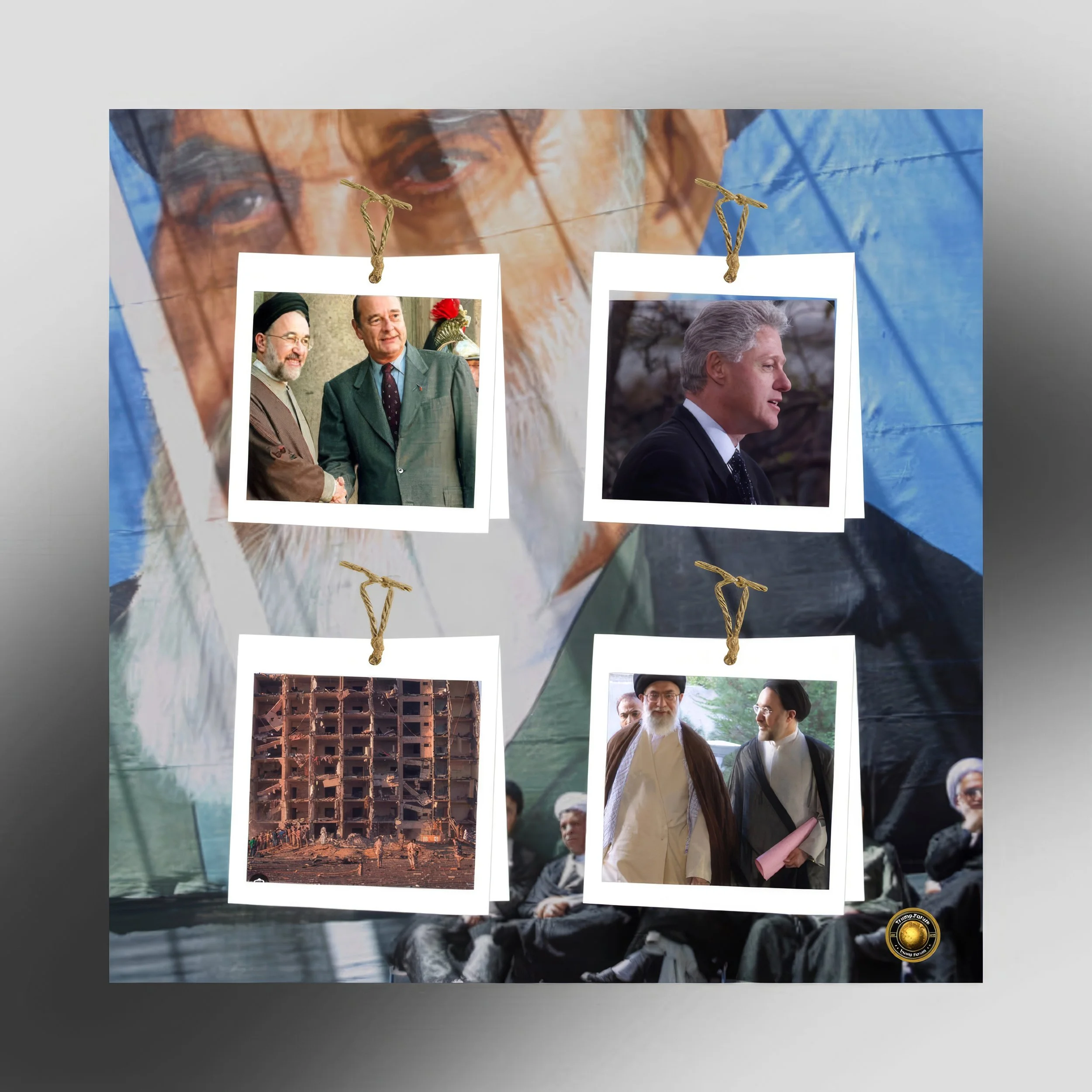
Beginner's 101 Guide: How Iran's Philosopher-President Tried to Make Peace with America and Why It Did Not Work
Summary
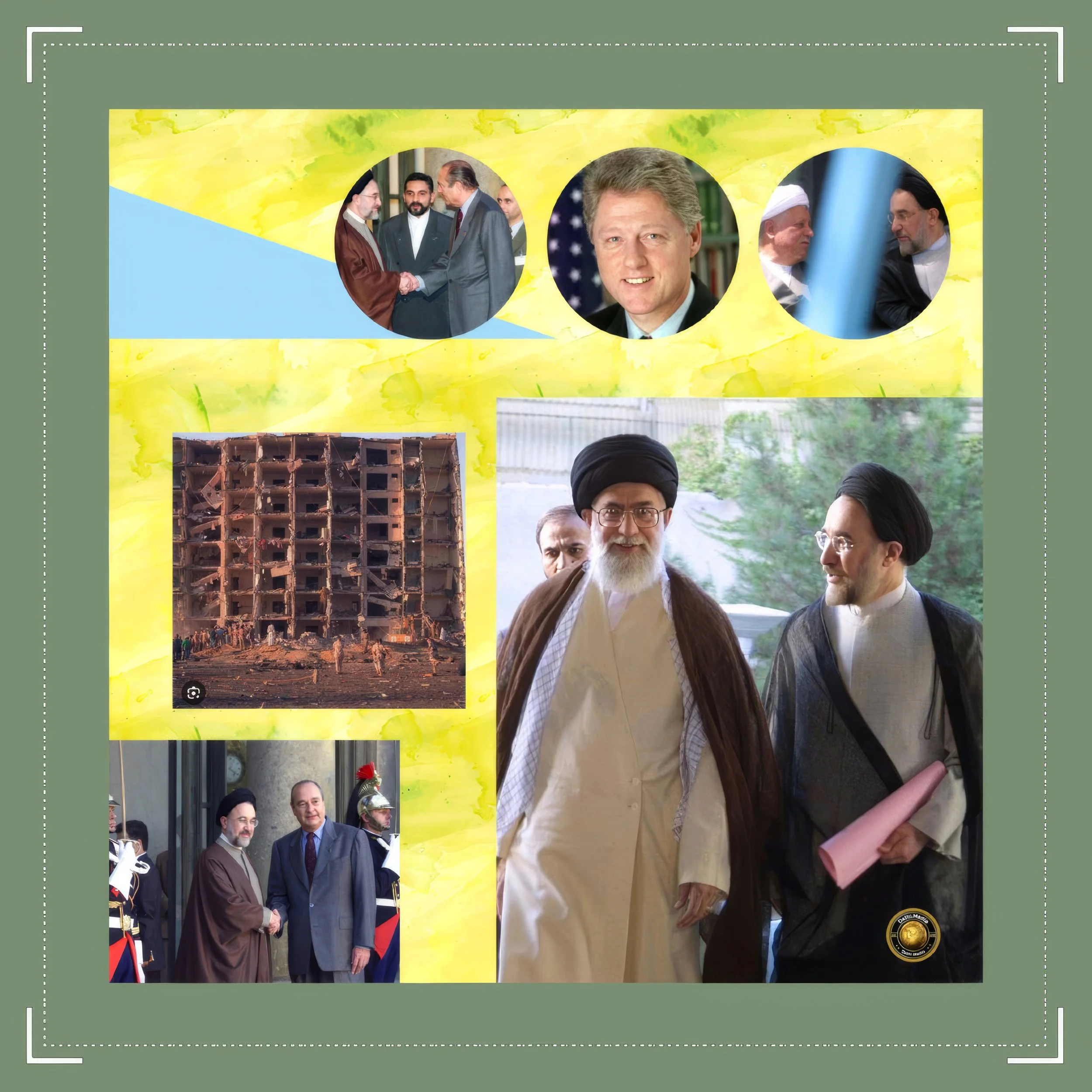
In 1997, a soft-spoken Iranian cleric with a thick beard and kind eyes won one of the most surprising elections in modern history.
His name was Mohammad Khatami, and he had an unusual idea: instead of fighting the world, Iran should talk to it. This is the story of how he tried to change everything — and why he could not.
Think of Iran's government like a company where the real boss is not the CEO you see at press conferences, but a hidden chairman of the board who makes all the important decisions. Khatami was elected as the CEO in May 1997, winning 69% of votes — almost unheard of in Iranian elections.
Young Iranians, women, and educated city people loved him. They believed he could open Iran to the world and make life freer at home. But the chairman of the board — Supreme Leader Ali Khamenei — still controlled the army, the courts, and the powerful Revolutionary Guards.
Khatami could rearrange the furniture in the house, but he could not change who owned it.
In January 1998, Khatami sat down with CNN journalist Christiane Amanpour and said something remarkable for an Iranian president: he respected "the great American people" and wanted exchanges of professors, scholars, and tourists between Iran and America.
This was like two neighbors who had been feuding for 20 years suddenly having one of them wave from across the fence.
In Washington, President Bill Clinton watched carefully and saw an opportunity.
Clinton sent a private message to Tehran proposing direct talks. He arranged for American wrestlers to travel to Iran in 1998 — the first official American visitors in 17 years.
Iranian wrestlers came to Oklahoma. These were small things, like exchanging Christmas cards after a long argument, but after two decades of nothing, small things mattered.
Khatami had a big idea he called "Dialogue Among Civilizations." An American professor named Samuel Huntington had predicted that the world's great cultures — Western, Islamic, Chinese — were destined to clash like tectonic plates. Khatami said the opposite: cultures could learn from each other instead.
The United Nations liked this idea so much it declared 2001 the Year of Dialogue Among Civilizations in Khatami's honor.
Even Kofi Annan, the UN Secretary-General, set up a special office for it.
But there was a massive problem hiding under the surface, like a rock just below calm water. In June 1996 — before Khatami was elected — a truck bomb blew up a US military housing complex called Khobar Towers in Saudi Arabia, killing 19 American soldiers.
American intelligence concluded that Iran's Revolutionary Guards had planned and funded the attack. Clinton was furious. In 1999, he sent Khatami a private letter saying: we have evidence your Revolutionary Guards did this; we need you to stop them and bring them to justice.
Khatami's response, in effect, was: "I cannot." And this is where the tragedy lies. The Revolutionary Guards did not answer to the president.
They answered to Khamenei. It was like asking the CEO of a company to discipline the chairman's private security force. Khatami genuinely did not have that power. He was not lying or pretending. He simply lacked the authority.
In March 2000, US Secretary of State Madeleine Albright did something remarkable: she apologized. America, she said, was wrong to help overthrow Iran's democratically elected leader in 1953. America was also wrong to support Iraq in the devastating 1980s war against Iran.
The Clinton team partially lifted trade sanctions, allowing Iranian carpets and pistachios to be sold in America.
It seemed like real progress. But then Albright also criticized Iran's current policies in the same speech, and Tehran's hardliners used that criticism as an excuse to reject the whole gesture.
It was like apologizing for breaking someone's window but then criticizing how they'd decorated the room inside. The apology was real, but the hardliners ensured it went nowhere.
Then came September 11th, 2001. Khatami was one of the world's first leaders to condemn the attacks.
Iran quietly cooperated with America in Afghanistan, sharing intelligence and helping build a new Afghan government.
For a brief moment, the two countries were actually working together on something that mattered.
Then, in January 2002, President George W. Bush gave a speech and used three words that changed everything: "axis of evil."
He put Iran alongside Iraq and North Korea as enemies of civilization.
Imagine cooperating with a neighbor to fight a common threat, and then the next week they put a sign on your door calling you dangerous and evil. Iranian reformists who had been cautiously optimistic were devastated. Even those who disliked Khatami united with him in anger.
Khamenei's conservatives were quietly delighted — the Americans had just proved everything they had been saying about American bad faith.
Khatami served until 2005.
In those 8 years, he achieved real things: Iran rebuilt relations with Saudi Arabia, restored diplomatic ties with Britain, contributed to the UN's Dialogue Among Civilizations initiative, and briefly cooperated with the West on the nuclear issue — agreeing in 2003 to suspend uranium enrichment and allow international inspections.
But the central goal — a new relationship with America — remained out of reach.
In 2005, Mahmoud Ahmadinejad — a hardliner who believed in confrontation, not dialogue — became Iran's new president. The window that Khatami had cracked open slammed shut.
The lesson is straightforward. Khatami was a genuine peacemaker in a system not designed for peace. Like a man trying to steer a ship from the passenger lounge while someone else controls the bridge, he could suggest direction but not command it.
The United States, meanwhile, kept asking him to deliver things he was not authorized to deliver, and when he could not, some Americans decided the whole reformist enterprise had been a trick.
It was not a trick. It was a structural impossibility.
And understanding that difference is the first step toward building anything different in the future — a lesson that remains urgently relevant in 2026, as Washington and Tehran once again find themselves locked in a cycle of pressure, counter-pressure, and lost opportunities that Khatami, from his library in Tehran, could have predicted with precise accuracy.