Beginner's 101 Guide : When Trust Breaks Forever: The Long Story of America and Iran
Executive Summary
America and Iran have not been real friends for over 40 years.
FAF article explains, in simple language, how a series of painful events — from hostages held in Tehran to a passenger plane shot from the sky, from secret weapons deals to a missed chance for peace — led the two countries to the edge of war, and then beyond it.
By early 2026, American and Israeli forces were bombing Iran directly, and the leader of Iran had been killed.
How did it come to this?
The answer is a long story of broken trust, missed chances, and choices that made the next disaster more likely.
Introduction: Two Countries That Cannot Forget
Imagine two neighbors who had a very bad fight many years ago. The fight was so serious that both of them still carry the memory of it every single day.
Every time one of them does something that upsets the other — even something small — it reminds them of all the old fights too.
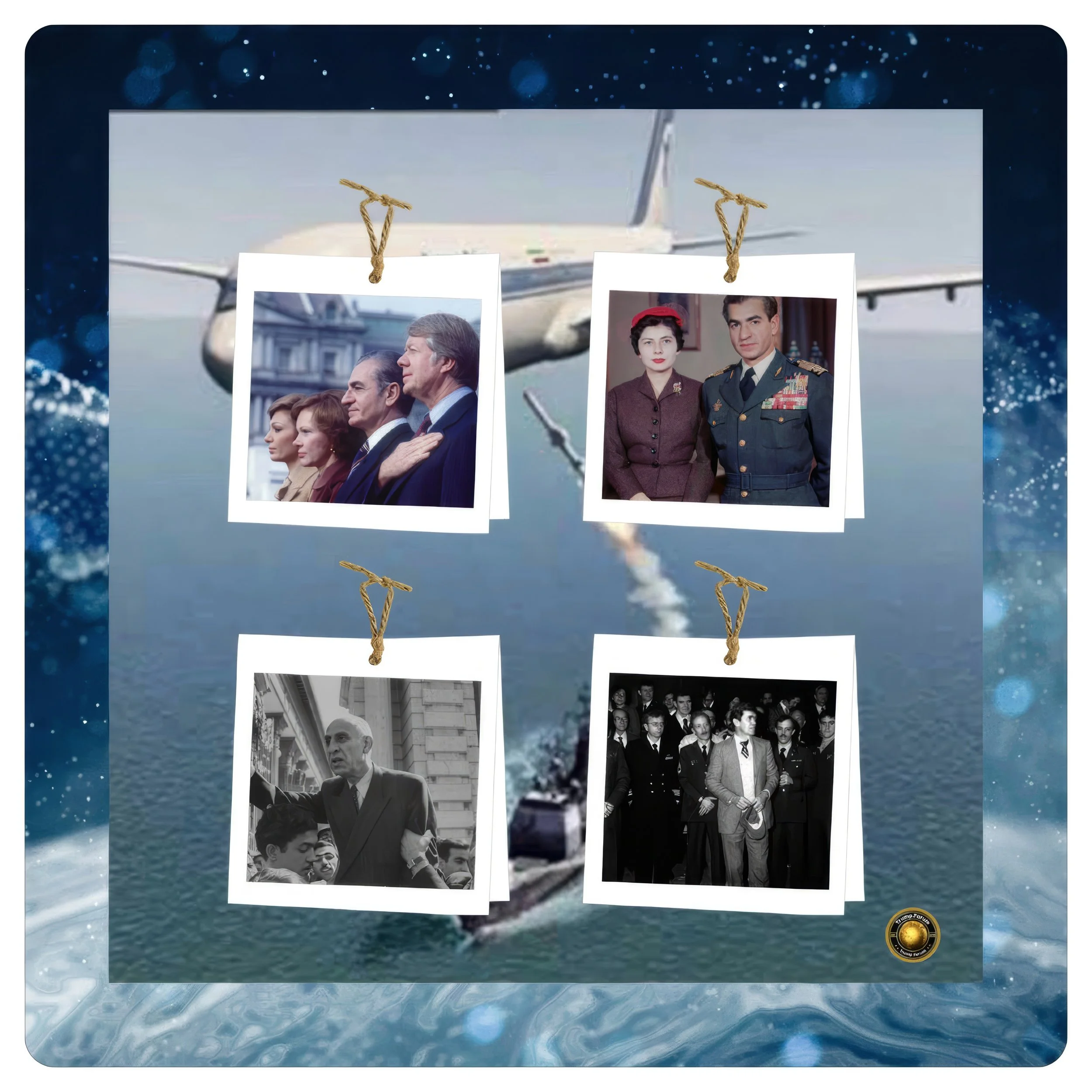
This is what the relationship between America and Iran is like. It is not just about today's problems. It is about everything that happened since 1953, when the United States helped remove Iran's elected leader from power because America wanted control of Iranian oil.
That single act — which most Iranians have never forgotten — planted the seed of every crisis that followed.
History and Current Status: How It All Started
To understand where things stand in 2026, you have to go back to 1979.
In that year, ordinary Iranians rose up and overthrew their king, the Shah, who had been supported by the United States for decades.
They replaced him with a religious government led by Ayatollah Khomeini.
From day one, this new government saw America as the enemy — the country that had propped up their hated king for years.
A few months after the revolution, a group of young Iranian students rushed into the American embassy in Tehran and took 52 Americans prisoner.
They held these hostages for 444 days — over a year.
In America, this was shown on the news every night. People were furious.
A rescue mission sent by President Carter failed miserably when military helicopters crashed in the Iranian desert.
The hostages were finally released on the exact day Ronald Reagan became president in January 1981 — which many people saw as a deliberate insult to Carter.
From that moment on, every American president faced intense domestic pressure never to appear weak on Iran.
Key Developments: The Moments That Made Things Worse
There were five key moments that, like layers of mud building up in a river, made the relationship between America and Iran harder and harder to clean up.
The first layer came from the hostage crisis itself, which we just described.
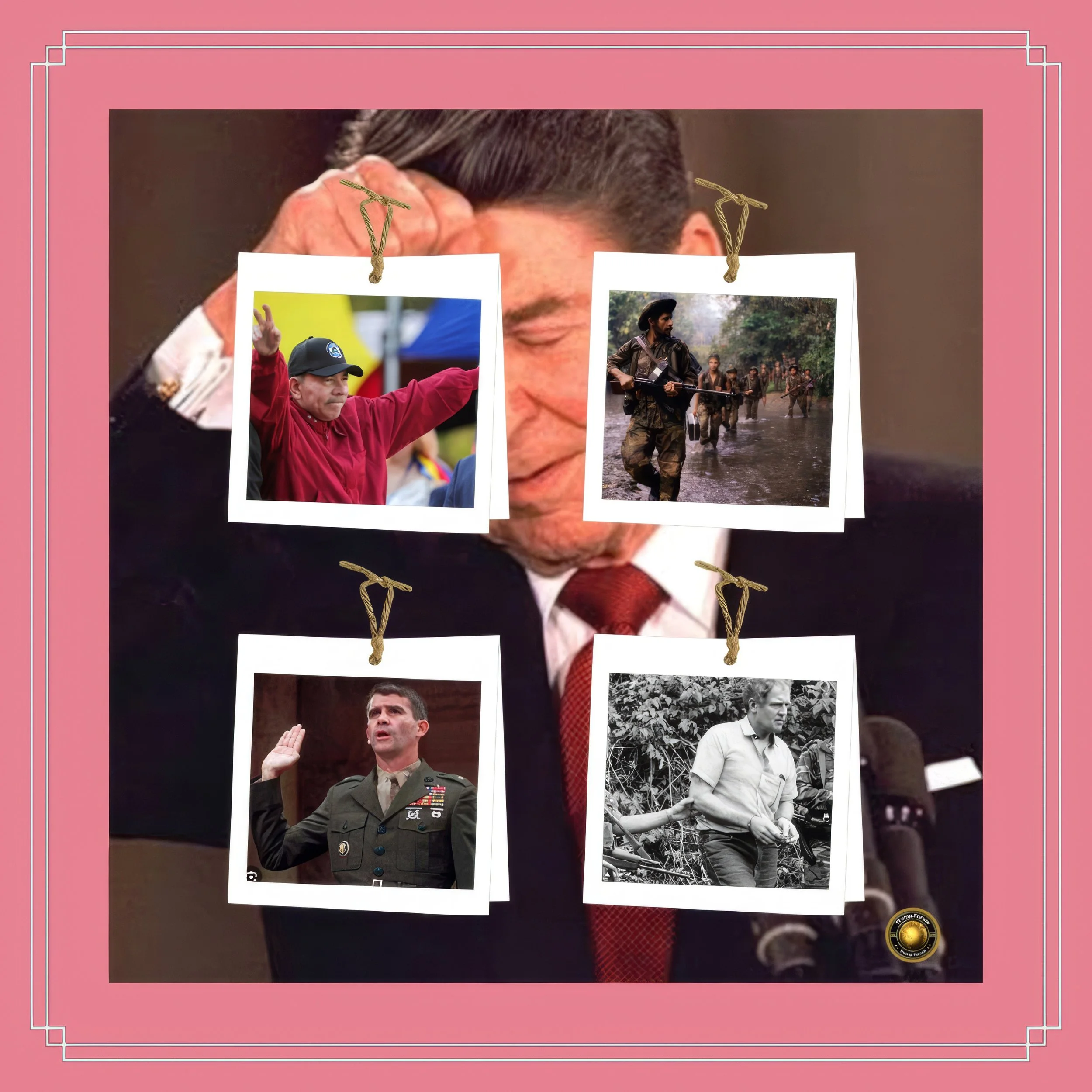
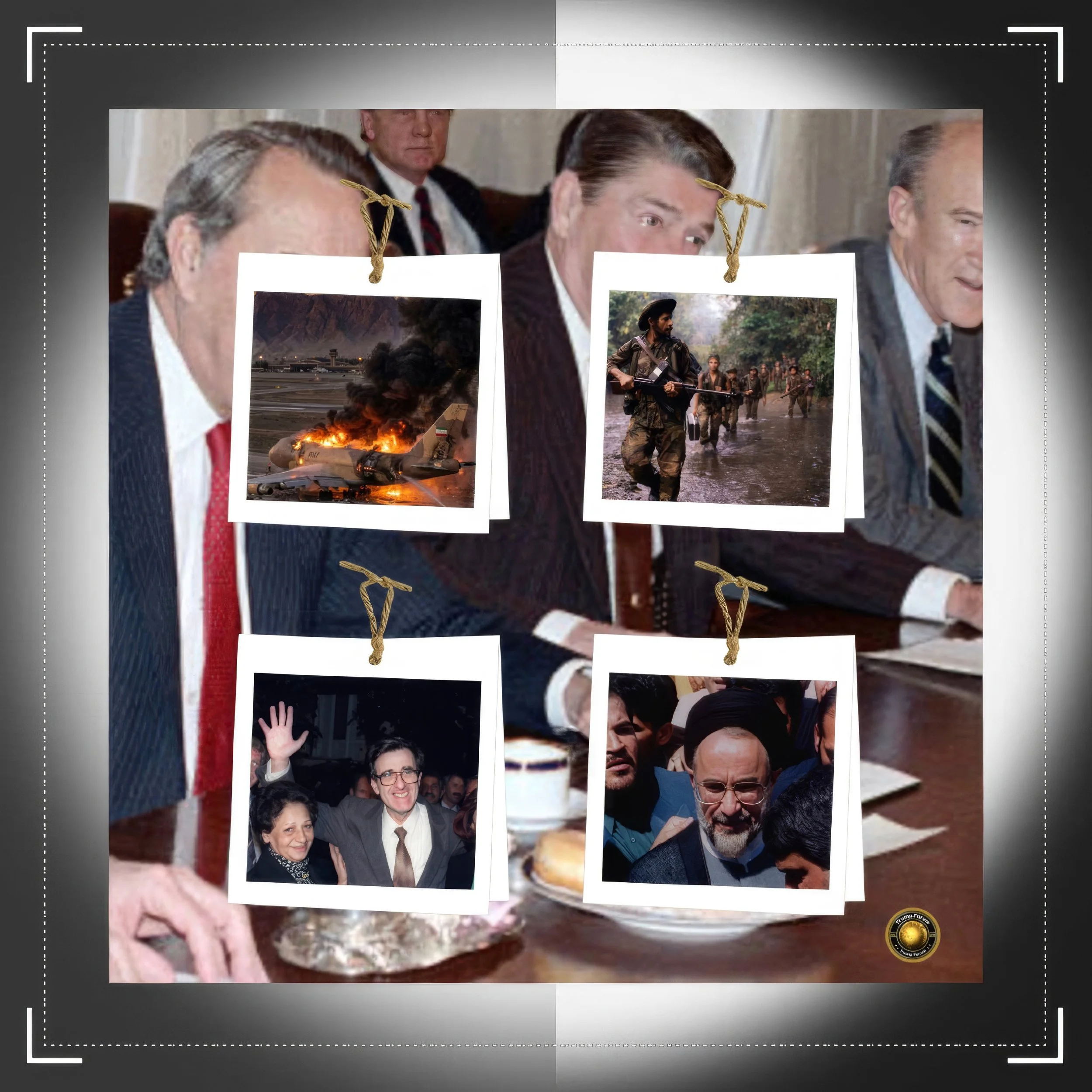
The second came from a scandal called Iran-Contra.
In the mid-1980s, even as the United States was officially telling the world that it would never deal with Iran — calling it a terrorist state — senior officials in the Reagan White House were secretly selling weapons to Iran.
Why? Because they wanted Iran's help in freeing American hostages being held in Lebanon by a group called Hezbollah.
The money from those secret weapon sales was then used to fund a secret war in Nicaragua.
When this was discovered in 1986, it was a huge scandal.
Think of it this way: it was like a school official who publicly bans a student from school events, but then privately invites them to a party through the back door.
For Iranians, this confirmed what their hardliners had always said — that you could never trust what America said in public, because in private it would always pursue its own interests.
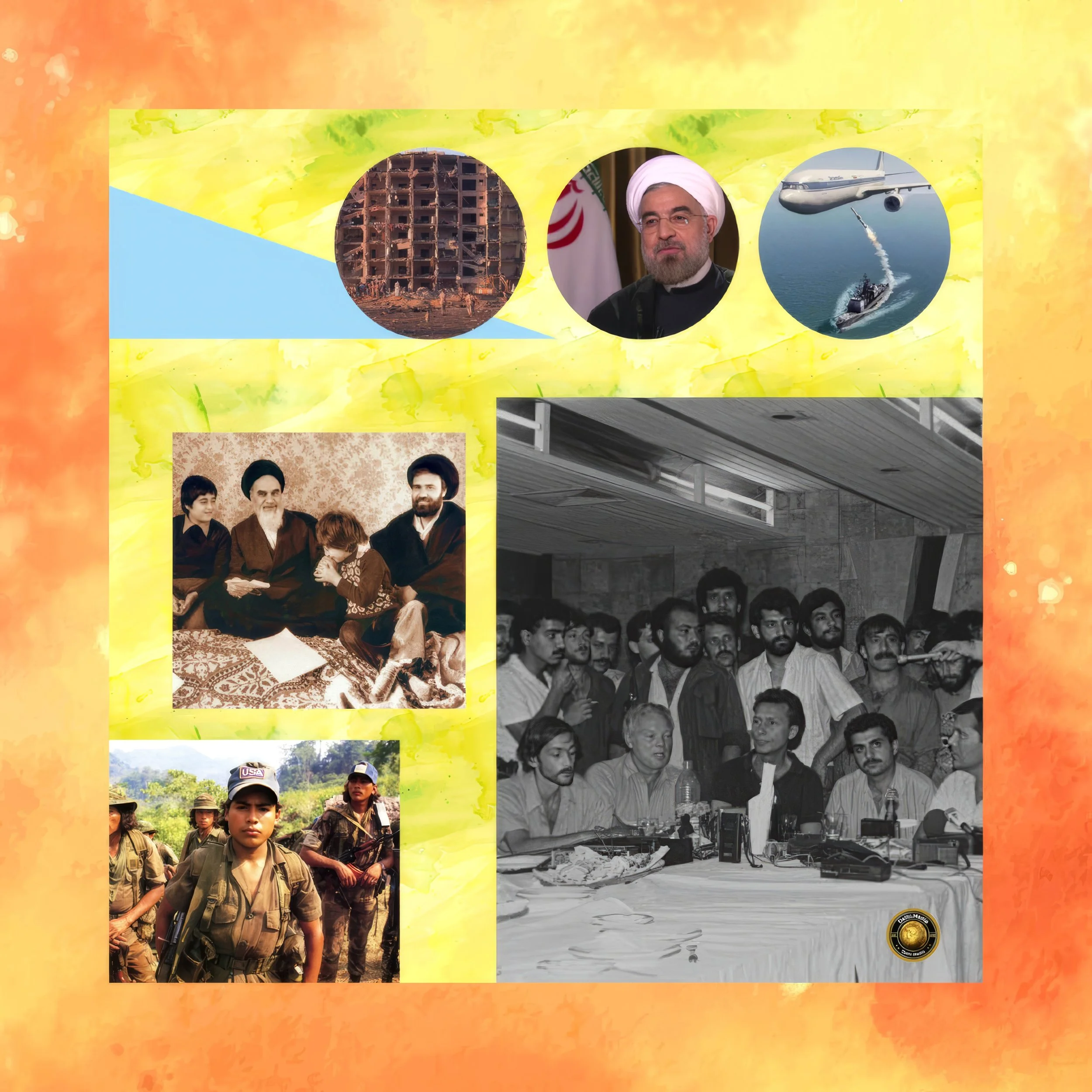
The third layer was the shooting down of Iran Air Flight 655.
On July 3, 1988, an American warship called the USS Vincennes was patrolling the Persian Gulf.
The captain thought he had spotted an Iranian fighter jet coming at his ship.
He fired two missiles. But it was not a fighter jet.
It was a civilian passenger plane — Iran Air Flight 655, carrying 290 people including 66 children — flying from Tehran to Dubai on its normal route.
All 290 people were killed.
The investigation later showed that the plane was flying in the normal direction, at normal speed, and was going up — not diving toward the ship.
America never officially apologized. The captain was actually awarded a military medal when he came home.
For Iranians, this was not an accident — it felt like a message that American military power could kill Iranian civilians without consequence.
The fourth layer was a missed chance for peace.
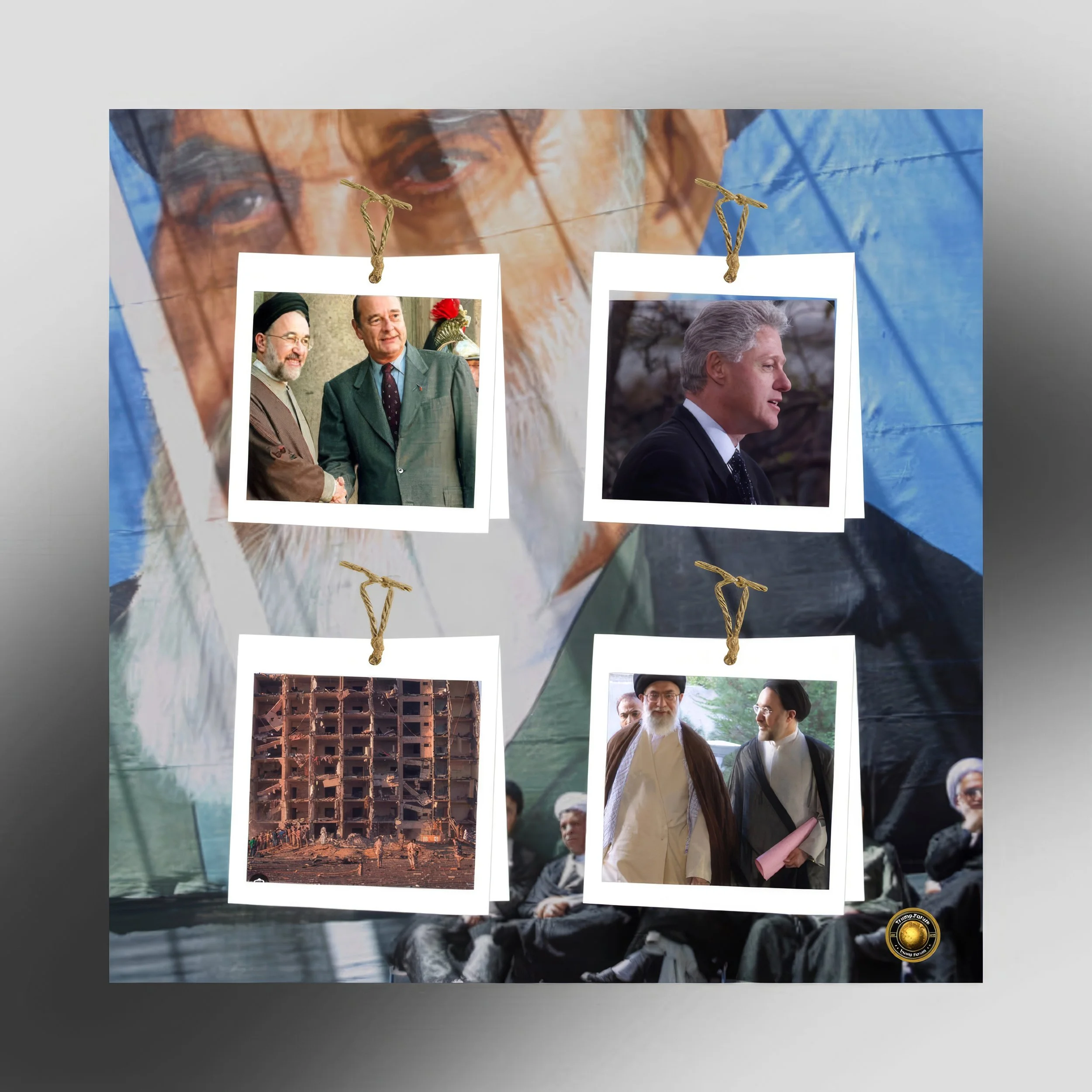
In 1997, the Iranian people elected a new president named Mohammad Khatami — a religious scholar who believed in talking to the West and reducing tensions.
He spoke on American television and described America as a great civilization. He proposed what he called a Dialogue of Civilizations. President Clinton was very interested.
The two sides began small steps — American wrestlers traveled to Iran, the first American officials to visit in 17 years.
Clinton's government even admitted, publicly, that the 1953 coup against Iran's elected government had been wrong.
But it never went further. In Tehran, the hardliners who actually controlled foreign policy — especially Supreme Leader Khamenei — refused to allow direct official talks.
In Washington, Clinton was dealing with the unanswered question of whether Iran had been involved in a 1996 bombing that killed 19 American soldiers in Saudi Arabia.
By the time both sides were ready to try again, September 11th had happened and everything changed.
The fifth layer was the decision, after the September 11 attacks in 2001, to leave Iran out of the new system America was building in the Middle East.
This is perhaps the strangest missed opportunity of all. Iran actually helped America in Afghanistan — sharing intelligence, helping to organize the post-Taliban government, even offering to rescue any American soldiers who were in trouble in the region.
Iranian and American diplomats worked side by side at a peace conference in Germany in December 2001.
Then, just two months later, President Bush stood up in Congress and called Iran part of the "Axis of Evil" — grouping it together with Iraq and North Korea as the most dangerous countries in the world.
For Iranians who had extended their hands in cooperation, this felt like a slap.
Iran's supreme leader used it immediately to shut down every reform-minded politician who had argued for engagement with America.
Latest Facts and Concerns: The Road to Bombs and Missiles
By 2025, things had reached a breaking point. Iran had been building its nuclear program for years, enriching uranium — the material needed to make a nuclear bomb — to levels far beyond what any peaceful nuclear energy program needs.
In April 2025, America and Iran began indirect talks, through the small Gulf nation of Oman.
Both sides said they wanted a deal. America wanted Iran to completely stop enriching uranium and hand over all its enriched material.
Iran said enrichment was its right and refused to give it up entirely.
By June 2025, talks collapsed. Iran rejected America's proposal.
Israel then launched strikes on Iran's nuclear facilities.
America joined in — for the first time in history directly bombing Iranian soil. Iran fired missiles back.
The situation exploded further on February 28th, 2026, when America and Israel launched a massive attack called Operation Epic Fury.
Supreme Leader Ali Khamenei — the most powerful person in Iran — was killed.
Dozens of other officials died. Iran retaliated by firing about 170 ballistic missiles at Israel and American targets in the region and closed the Strait of Hormuz — the narrow water channel through which a large % of the world's oil travels — causing a global economic shock.
Cause-and-Effect Analysis: Why Each Problem Created the Next
The simplest way to understand this relationship is through the image of a snowball rolling down a hill.
Each generation's injury became the next generation's justification.
America overthrew Iran's government in 1953 → Iran distrusted America and eventually had a revolution → The revolution produced the hostage crisis → The hostage crisis made it politically impossible for any American president to look soft on Iran → That political pressure drove Reagan's people into the secret Iran-Contra arms deals → Iran-Contra confirmed that America could not be trusted → The downing of Flight 655, with no apology, convinced Iran it needed asymmetric weapons to deter American power → Iran built proxy forces across the region → America cited those proxy forces as proof Iran was a terrorist state → That label was used to justify excluding Iran from regional peace processes → Being excluded convinced Iran that it needed nuclear capability as the ultimate deterrent → America and Israel decided to destroy that capability before it was complete → And so, in 2026, the bombs fell.
The Khatami episode fits into this chain as the hinge that might have broken it but did not.
Had normalization happened in the late 1990s or early 2000s, the nuclear crisis of the 2010s and 2020s might never have reached the scale it did.
Think of it like a patient who needs surgery: if they had come to the hospital in the early stages of their illness, a simple operation might have saved them.
By the time they arrived in 2025, only emergency measures were left — and emergency measures always cause their own damage.
Future Steps: What Comes Next in an Uncertain Landscape
With Khamenei dead and Iran's political institutions damaged by weeks of military strikes, the country now faces a leadership crisis without precedent since the death of Ayatollah Khomeini himself in 1989.
Iran's constitution requires a new supreme leader to be chosen by a body of senior clerics. But under conditions of war and chaos, this process is extremely uncertain.
Different factions within Iran — hardliners, pragmatists, reformists, the Revolutionary Guards — are each likely to push for a leader who represents their vision for the country's future.
For America, the challenge is equally serious. History shows that destroying a government by force rarely creates the stable, friendly state the attacking country hoped for.
Iraq after the 2003 American invasion is the clearest example: the removal of Saddam Hussein created a decade of chaos that ultimately helped the Islamic State emerge.
A collapsed or deeply fragmented Iran, sitting on large oil reserves, possessing nuclear knowledge, and populated by a population that has watched foreign bombs kill their leaders and destroy their cities, is not a safer Iran. It is a more dangerous one.
Any future path toward stability will require what the past 40 years never produced: a genuine, mutual agreement that addresses both America's fear of an Iranian nuclear bomb and Iran's fear of American-backed regime change.
Conclusion: The Lesson No One Learned in Time
The story of America and Iran is ultimately a story about what happens when two countries allow their worst memories of each other to crowd out every other possibility.
Every time a door opened — with Khatami, at Bonn after September 11th, with the JCPOA — something closed it again: domestic politics, institutional distrust, ideological rigidity, or the simple weight of accumulated grievance.
The 290 people on Flight 655, the American diplomats held for 444 days in Tehran, the soldiers killed by Iranian-backed forces, the Iranian civilians killed in 2026 by American and Israeli bombs — all of them are, in a sense, victims of the same failure: the failure, repeated across multiple generations of leadership on both sides, to find a way to make the future more important than the past.
That lesson, though it arrived far too late, remains the only one that can eventually produce something better than what 2026 has left behind.