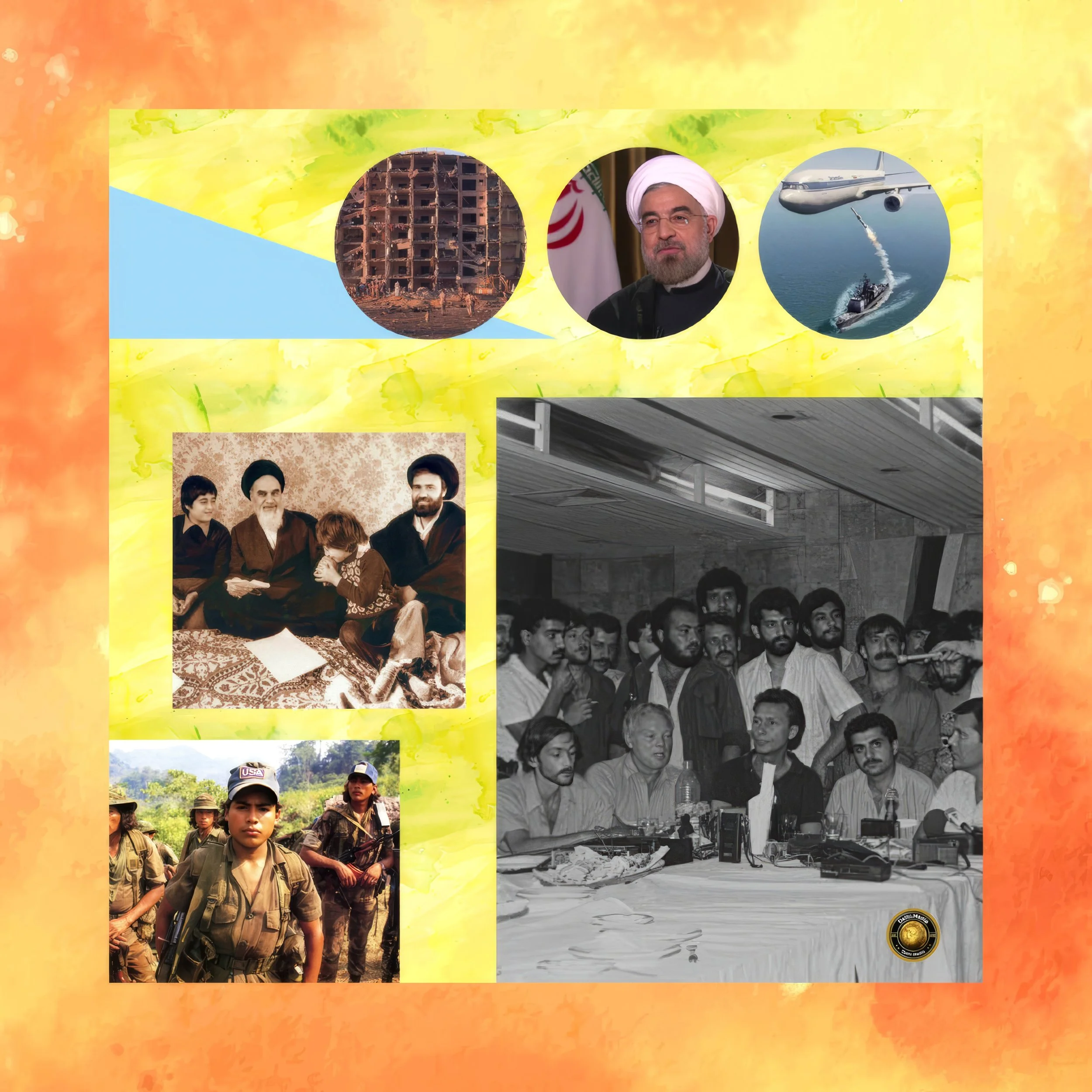
The Accumulated Weight of History: American-Iranian Relations from the Hostage Crisis to the Abyss of Military Confrontation
Executive Summary
From Hostages to Airstrikes: How Decades of Betrayal Permanently Fractured the American-Iranian Relationship
The relationship between the United States and the Islamic Republic of Iran constitutes one of the most consequential, protracted, and intellectually demanding bilateral failures in the history of modern diplomacy.
Over more than four decades, a sequence of structurally determinative episodes — the 1979–1981 hostage crisis, the Iran-Contra affair, the destruction of Iran Air Flight 655, the unrealized promise of the Khatami era, and Iran's deliberate exclusion from post-September 11th regional architecture — deposited successive layers of grievance, suspicion, and strategic miscalculation upon an already fractured foundation.
These were not isolated incidents but rather constitutive moments that shaped the ontological identity of each country's perception of the other.
Each episode foreclosed possibilities that might otherwise have arrested the deterioration of relations; each added to a cumulative weight that no single diplomatic initiative was capable of lifting.
By the time the Trump administration authorized Operation Epic Fury on February 27th, 2026, targeting Iran with American and Israeli airstrikes, the decision did not arrive as an aberration but as the logical culmination of a relationship that had, for decades, consumed every mechanism of its own repair.
FAF article examines that long arc of failure with the analytical rigor it demands — tracing cause and effect, evaluating the agency of key stakeholders, and situating the current military confrontation within the deepest possible historical and structural context.
Introduction: The Architecture of Mutual Enmity
The Unfinished War: How Washington and Tehran Turned Every Opportunity Into a Deeper Crisis
There is a particular kind of diplomatic tragedy in which neither side is entirely victim nor entirely perpetrator, yet both are constitutively committed to a posture that makes catastrophe inevitable.
The American-Iranian relationship is precisely this kind of tragedy.
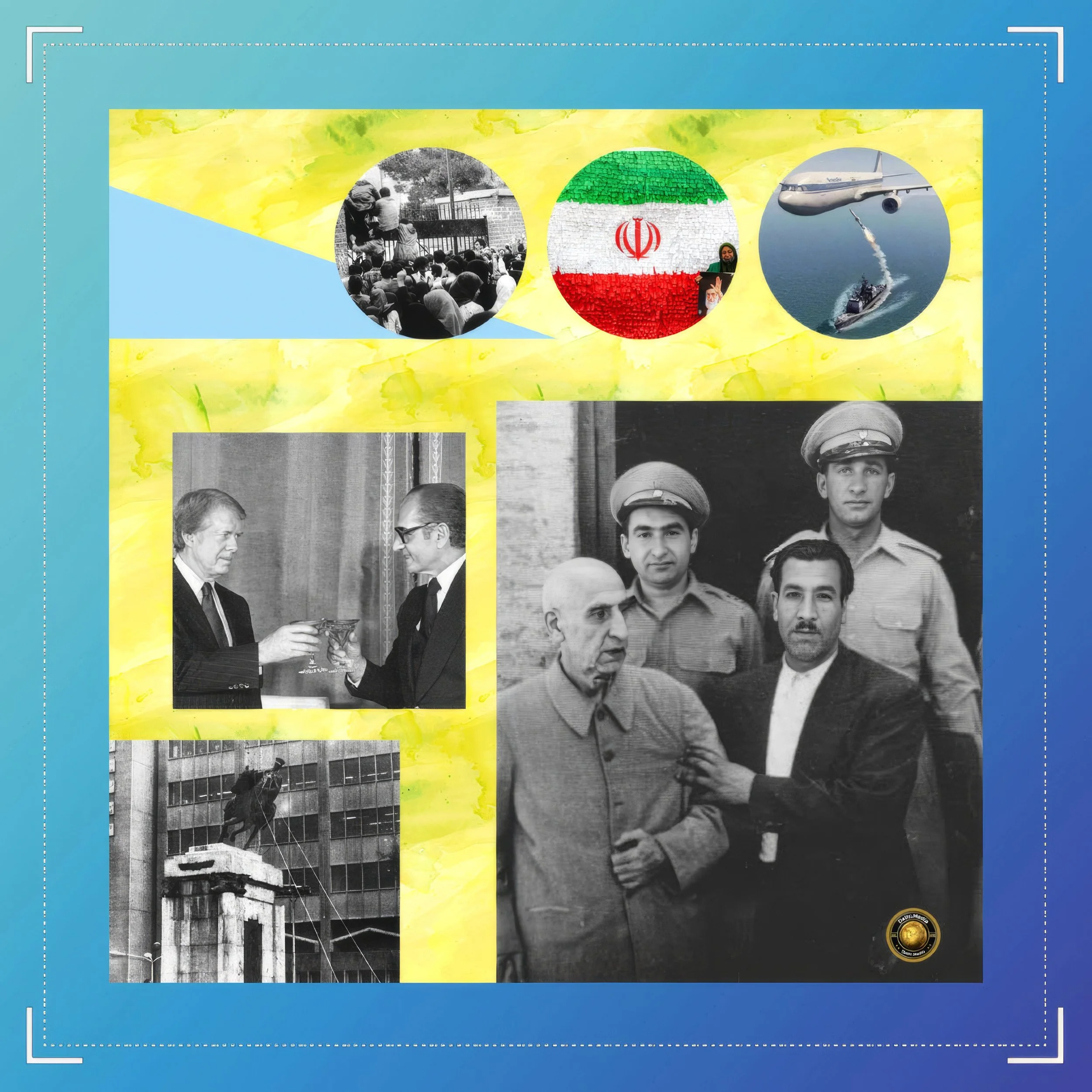
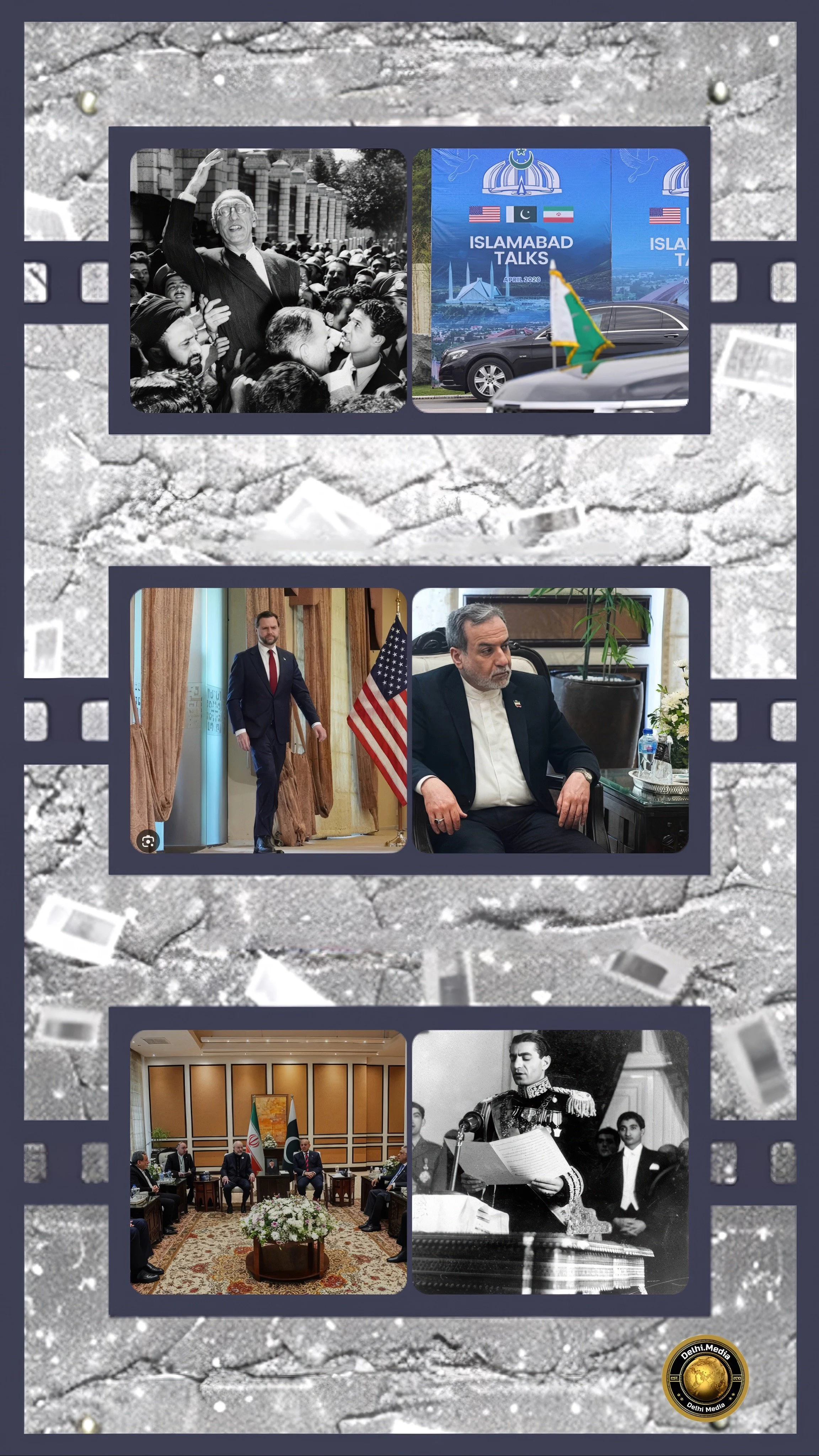
Its origins lie not in the Islamic Revolution of 1979, though that revolution is invariably the temporal boundary most analysts draw, but in the 1953 CIA-orchestrated coup that restored Shah Mohammad Reza Pahlavi to the Peacock Throne and deposed the democratically elected Prime Minister Mohammad Mosaddegh.
That intervention — justified in Washington by Cold War imperatives and the threat of Soviet influence over Iranian oil — inscribed into Iranian political consciousness a foundational lesson: that the United States was not a partner or a liberator but a hegemonic power willing to sacrifice Iranian sovereignty in the service of its own strategic interests.
This foundational lesson would be confirmed, amplified, and institutionalized by every subsequent episode in the bilateral relationship.
The hostage crisis gave Washington its own foundational wound, embedding the Islamic Republic in the American political imagination as a regime defined by hostage-taking, law-breaking, and contempt for diplomatic norms.
The Iran-Contra affair layered hypocrisy onto suspicion — proving to Iranian hardliners that American overtures were tactical rather than principled, deployed in the service of covert agendas that bore no relationship to the public positions of the administrations that made them.
The destruction of Flight 655 demonstrated that American military technology, operating in contested waters under conditions of institutional arrogance, could kill 290 civilians with impunity.
The failure of the Clinton administration to consummate the diplomatic opening created by Mohammad Khatami's reform presidency demonstrated that domestic politics and institutional inertia in Washington could extinguish even the most promising prospects for normalization.
And the exclusion of Iran from the regional architecture constructed after September 11th demonstrated that Washington's post-Cold War strategic vision had no place for a stable Iran that could negotiate as an equal.
The accumulation of all these episodes produced a bilateral relationship that was, by the mid-2020s, structurally incapable of the trust that diplomatic resolution requires.
History and Current Status: The Long Sedimentation of Grievance
Sediment of Suspicion: The Long Arc of American and Iranian Mutual Distrust and Strategic Failure
The Iranian Revolution of February 1979 represented far more than a change of government. It was a civilizational rupture — an assertion by Iranian society that the modernization project imposed by the Pahlavi state, with American backing, was an alien and illegitimate imposition upon a culture and a religion that deserved political expression.
The revolution brought to power a clerical establishment whose foundational ideology was not merely anti-monarchist but actively anti-imperialist, and whose definition of imperialism was, above all, American imperialism.
The United States, which had installed the Shah, trained his secret police (SAVAK), and supported his increasingly authoritarian rule, was not merely a foreign government to be managed through normal diplomatic channels.
It was, in Ayatollah Khomeini's formulation, the Great Satan — a metaphysical as much as a political category that placed the relationship between Tehran and Washington in a register that diplomacy, with its transactional logic, was ill-equipped to address.
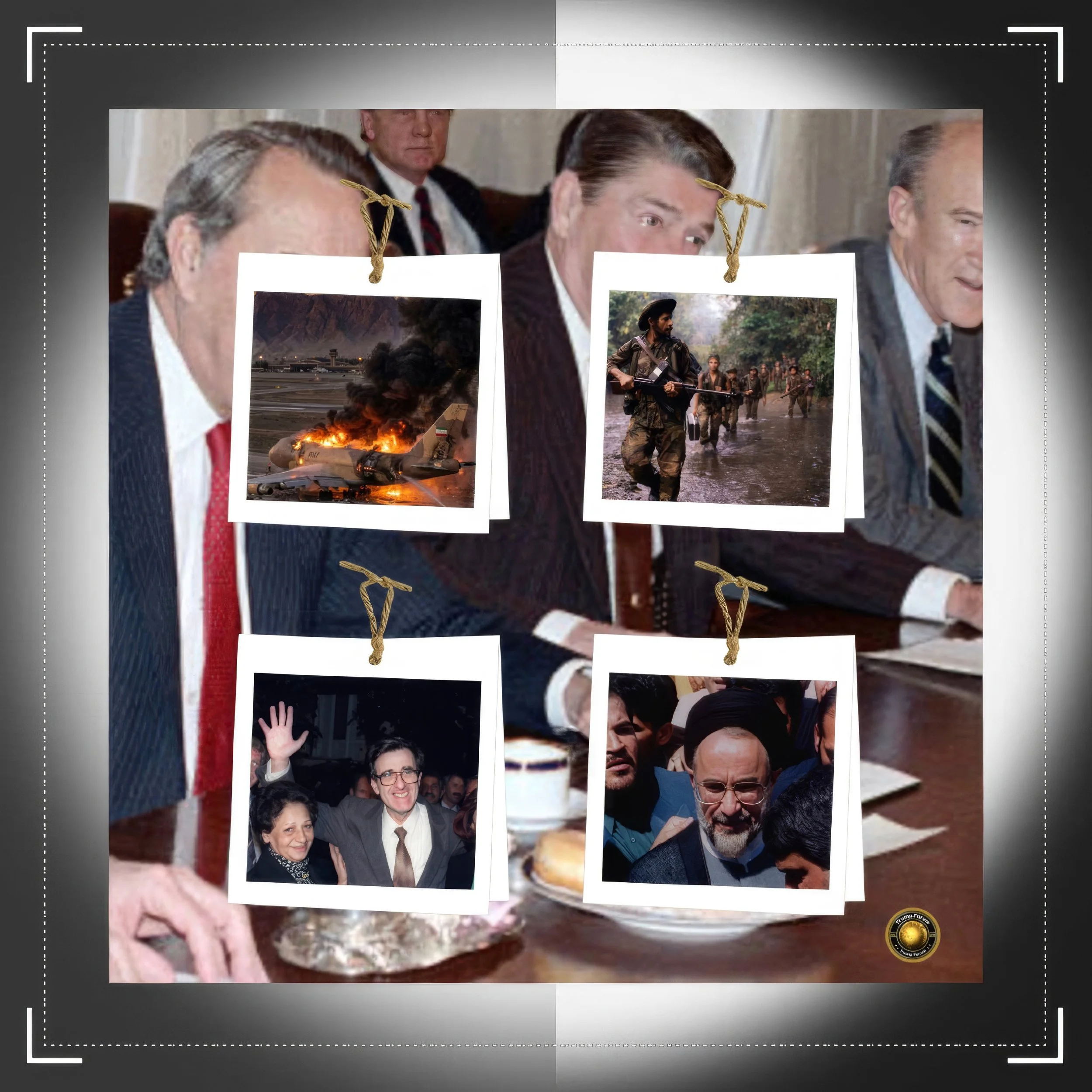
The hostage crisis that erupted on November 4th, 1979, when radical Iranian students stormed the American embassy in Tehran and seized 52 diplomats for 444 days, crystallized this dynamic with devastating efficiency.
In Iran, the seizure was understood as an assertion of revolutionary dignity — a repudiation of the imperial relationship and a demand for the extradition of the Shah, who had been admitted to the United States for medical treatment.
In Washington, the crisis was experienced as a humiliating violation of international law and diplomatic immunity, an act of state-sponsored terrorism that irreparably contaminated the American public's perception of the Islamic Republic.
The Carter administration's failed military rescue attempt, Operation Eagle Claw, which ended in disaster in the Iranian desert in April 1980, amplified the humiliation.
When the hostages were released on January 20th, 1981 — the day of Ronald Reagan's inauguration, in what many analysts interpreted as a deliberate Iranian attempt to deny Carter a political victory — the episode left behind a residue of bitterness in Washington that no subsequent administration would prove capable of fully dissolving.
The Iran-Iraq War, which ran from 1980 to 1988, further deformed the relationship.
Washington, alarmed by the prospect of Iranian revolutionary expansion, tilted toward Saddam Hussein's Iraq, providing intelligence, economic support, and diplomatic cover even as evidence mounted that Iraq was deploying chemical weapons against Iranian forces and Kurdish civilians.
For Tehran, American support for an aggressor state that had launched an unprovoked invasion and was killing Iranian soldiers and civilians with chemical agents confirmed the depth of American hostility.
The war produced an estimated 500,000 to one million Iranian casualties — a blood debt that entered Iranian national consciousness in the same register as the Holocaust enters Jewish memory: as the foundational trauma that defines the existential stakes of every subsequent political choice.
The Iran-Contra affair, which emerged in 1986, introduced a dimension of cynical hypocrisy that proved even more damaging to the structural possibility of trust than outright hostility.
Senior officials in the Reagan administration — in deliberate violation of a congressional arms embargo — had been secretly selling weapons to Iran in exchange for assistance in securing the release of American hostages held in Lebanon by Hezbollah.
The proceeds from these sales were then illegally diverted to fund the Contra rebels in Nicaragua, in defiance of explicit congressional prohibition.
The scandal revealed that the Reagan administration was simultaneously denouncing Iran as a terrorist state and doing covert business with it; simultaneously claiming it would never negotiate with hostage-takers while doing exactly that.
For Iranian hardliners, this confirmed their reading of American policy as fundamentally duplicitous. For reformists who had argued that engagement with Washington was possible, the Iran-Contra revelations were politically toxic — evidence that the Americans themselves did not distinguish between negotiation and manipulation.
The destruction of Iran Air Flight 655 on July 3, 1988, belongs in a different analytical category from the preceding episodes, but its effects on the bilateral relationship were no less severe.
The USS Vincennes, a guided-missile cruiser operating in the Persian Gulf in the context of the Tanker War — a quasi-belligerent American naval presence that had resulted in direct engagements with Iranian naval forces — fired two surface-to-air missiles at an Airbus A300 operated by Iran Air, killing all 290 people on board, including 66 children.
The ship's captain, William C. Rogers III, had misidentified the climbing civilian aircraft as a descending Iranian F-14 Tomcat in attack configuration.
The ICAO's subsequent investigation concluded that Flight 655 was ascending within the established air route at the appropriate speed.
The United States refused to apologize, awarded Rogers a Legion of Merit upon his return, and offered a settlement of approximately $61.8 million in compensation — a figure that Iran accepted without acknowledgment of American culpability, under a settlement brokered through the International Court of Justice.
The Iranian government's interpretation of the incident — that the Vincennes had been actively seeking an opportunity to demonstrate force, a reading supported by statements from other American naval officers present in the Gulf — was reinforced by the absence of apology and the decoration of the officer responsible.
For Iranian strategic culture, the destruction of Flight 655 occupied the same symbolic register as state-sponsored assassination: a demonstration that American military power in the Persian Gulf operated under rules of engagement in which Iranian lives had no protected status.
This perception would inform Iranian defense calculations for decades — contributing to the strategic logic behind Iran's investment in asymmetric capabilities, missile programs, and proxy networks designed to impose costs on American power projection in the region.
Key Developments: The Khatami Window and Its Foreclosure
Iran and America's Broken Covenant: A Century of Intervention, Humiliation, and Missed Diplomatic Openings
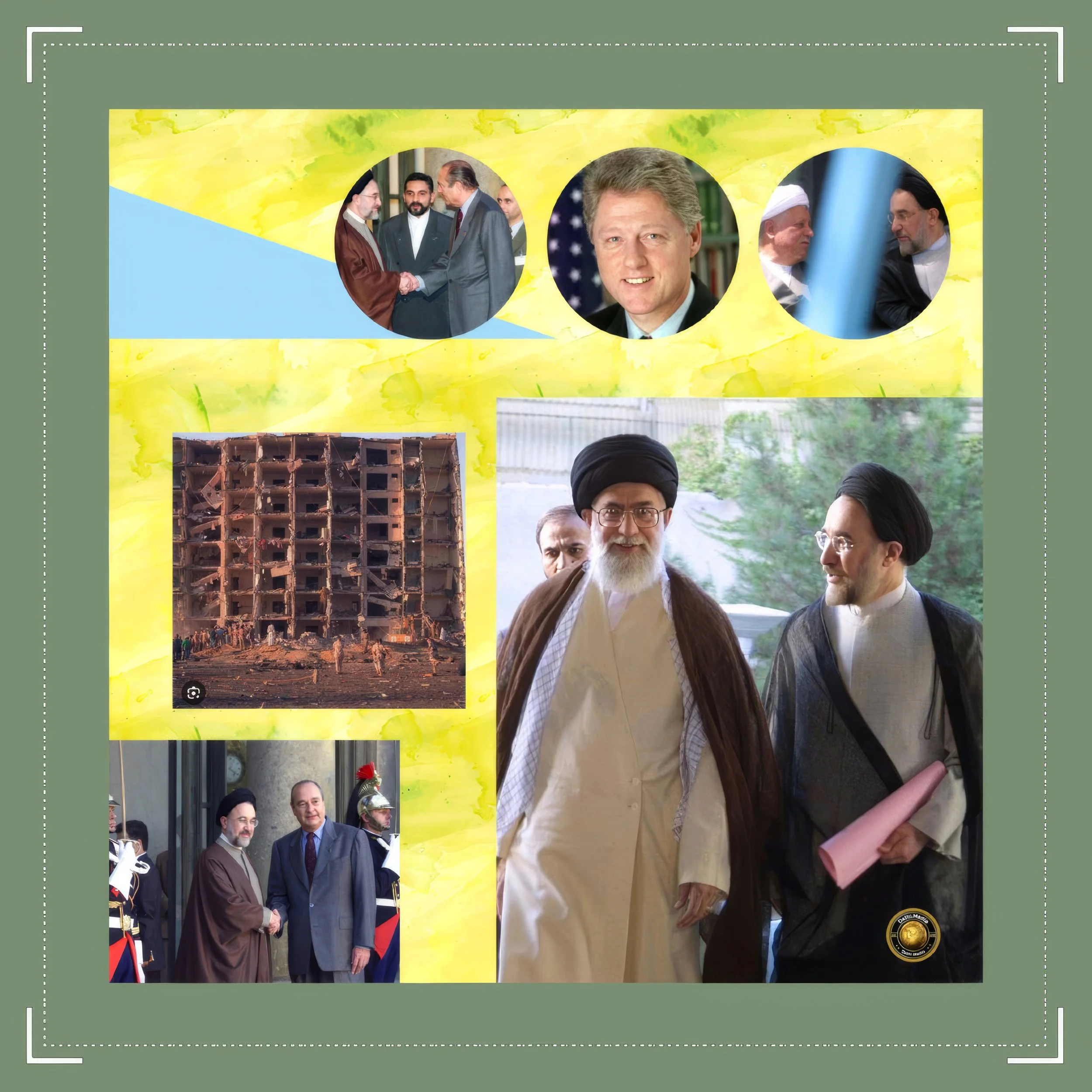
The election of Mohammad Khatami as President of Iran in May 1997, with an unexpectedly large mandate of 70% of the vote, created what many analysts have retrospectively described as the single greatest missed opportunity in the post-revolutionary history of American-Iranian relations.
Khatami was a reformist cleric who believed in civil society, the rule of law, and what he called the Dialogue of Civilizations — a deliberate counter-proposal to Samuel Huntington's Clash of Civilizations thesis.
In his January 1998 interview with CNN, Khatami described the United States as a great civilization and spoke of a crack in the wall of hostility between the two countries.
The Clinton administration responded with genuine interest: Secretary of State Madeleine Albright formally acknowledged American culpability in the 1953 coup, facilitated cultural exchanges including the historic visit of American wrestlers to Iran, and indicated American readiness for a path toward normalization.
The reasons the Khatami opening ultimately failed are multiple and structurally illuminating. In Tehran, Khatami operated within a system in which the Supreme Leader, Ali Khamenei, retained ultimate authority over foreign policy.
The Guardian Council and the Revolutionary Guards viewed engagement with Washington as an existential threat to the revolutionary system — one that would open Iranian society to American cultural and political influence in ways that would ultimately undermine clerical rule.
Khatami was simultaneously under pressure from hardliners for moving too quickly on domestic reforms and constrained by Khamenei's refusal to authorize direct government-to-government talks with Washington.
In Washington, the Clinton administration was hobbled by the unresolved legacy of the Khobar Towers bombing of 1996, in which 19 American servicemen were killed and for which American intelligence assessed Iranian involvement.
The FBI's investigation had not been concluded, and the administration was unwilling to open normalization talks while the question of Iranian culpability for the death of American soldiers remained unresolved.
Clinton never stopped trying — sending messages through the Sultan of Oman and United Nations Secretary-General Kofi Annan — but the structural obstacles on both sides proved insuperable.
The September 11th, 2001 attacks created what appeared to be a new opening.
Iran was uniquely positioned to assist the United States in Afghanistan: it had long-standing contacts with the Northern Alliance, shared Washington's opposition to the Taliban, and had offered, through its deputy foreign minister, to search for and return American military personnel in distress.
Iranian and American diplomats cooperated substantively at the Bonn Conference in December 2001, where Iranian envoy Javad Zarif played a constructive role in shaping the post-Taliban Afghan political architecture.
Yet within weeks of these cooperative interactions, President George W. Bush's January 2002 State of the Union address included Iran in the "Axis of Evil" — a formulation that, whatever its domestic political utility for the Bush administration, was experienced in Tehran as a deliberate and contemptuous repudiation of the cooperative gestures that the Khatami government had extended.
The Iranian diplomat Ryan Crocker, who had participated in the Bonn discussions, later described the Axis of Evil speech as one of the most consequential diplomatic mistakes of the era.
The Bush administration's subsequent strategic choices — the invasion of Iraq, the refusal to engage with Iran's 2003 "grand bargain" proposal (which offered to address the full range of bilateral issues including nuclear matters, support for terrorist organizations, and recognition of Israel's security interests in exchange for normalization), and the doctrine of democratic transformation — produced in Tehran a strategic reassessment of profound importance.
Iranian leaders concluded that the United States was committed to regime change in Iran and that no diplomatic overture, however comprehensive, would deflect Washington from that objective.
The rational response, within this framework, was to accelerate the development of capabilities — nuclear and otherwise — that would raise the costs of any American military action to a level that Washington would find prohibitive.
This strategic logic drove Iran's nuclear program forward through the Bush years, ultimately producing the crisis over uranium enrichment that would dominate the bilateral relationship for the following two decades.
Latest Facts and Concerns: The Road to Military Confrontation
Operation Epic Fury and Its Origins: Why the United States and Iran Could Never Make Peace
The Obama administration's achievement of the Joint Comprehensive Plan of Action (JCPOA) in July 2015, which constrained Iran's nuclear program in exchange for sanctions relief, represented the most significant diplomatic accomplishment in the bilateral relationship since the Algiers Accords of 1981.
Yet the JCPOA was structurally fragile from the outset — it was an executive agreement rather than a treaty, meaning it could be rescinded by the next administration without congressional approval, and it left unresolved the full range of bilateral tensions: Iranian missile development, support for proxy forces, regional competition, and human rights.
When Donald Trump withdrew from the JCPOA in May 2018 and reimposed comprehensive sanctions under the "maximum pressure" campaign, the diplomatic architecture of the Obama years collapsed entirely.
Iran responded over the following months and years by progressively expanding its nuclear program beyond JCPOA limits, enriching uranium to levels approaching weapons-grade concentration and advancing centrifuge development at an accelerating pace.
The return of Trump to the presidency in January 2025 produced an initial paradox: a president who had destroyed the nuclear deal in his first term now indicated willingness to negotiate a replacement.
Beginning in April 2025, indirect negotiations between American special envoy Steve Witkoff and Iranian Foreign Minister Abbas Araghchi, mediated through Oman, generated five rounds of talks and produced what both sides described at various points as "constructive" discussions.
The American position centered on a demand for the complete dismantlement of Iran's uranium enrichment infrastructure — the facilities at Fordow, Natanz, and Isfahan — and the transfer of all highly enriched uranium stockpiles to the United States.
Iran's position was that enrichment was a non-negotiable sovereign right and that sanctions relief must be guaranteed before any nuclear concessions were made.
By June 2025, the negotiations had reached an impasse: Iran formally rejected the American proposal on June 9, describing it as incompatible with the framework of the discussions.
Israel's June 2025 strikes on Iranian nuclear facilities and the killing of top Iranian military officials marked a dramatic escalation.
The United States followed with its own direct strikes on Iranian soil — the first time in history that American military forces had struck Iranian territory — targeting nuclear infrastructure and ballistic missile capabilities.
Iran retaliated with missile salvos against Israel and American assets in the region. The conflict reached its most violent expression on February 28th, 2026, when the United States and Israel launched Operation Epic Fury — a comprehensive airstrike campaign that targeted Iranian military, nuclear, and governmental infrastructure across multiple cities, killing Supreme Leader Ali Khamenei and dozens of senior Iranian officials.
Iran responded by closing the Strait of Hormuz, launching approximately 170 ballistic missiles against Israel and Gulf states, and striking the American naval facility in Bahrain.
The conflict, in April 2026, remains active, with the political future of Iran's governance structure deeply uncertain.
Cause-and-Effect Analysis: The Structural Logic of Catastrophe
From the Shah to the Strike: Tracing the Catastrophic Collapse of American-Iranian Diplomatic Relations
Any serious cause-and-effect analysis of the American-Iranian trajectory must resist the temptation of monocausal explanation.
The catastrophe of 2026 was not the product of a single miscalculation or a single leader's belligerence — it was the product of a structural dynamic in which each episode of mistrust made the next episode more likely and more severe. The 1953 coup created the revolutionary Iran of 1979.
The hostage crisis created the American domestic political environment in which any president who was perceived as being soft on Iran faced electoral jeopardy.
That environment made it impossible for the Reagan administration to engage with Iran openly, driving it toward the covert dealings that became the Iran-Contra affair.
The Iran-Contra affair confirmed Iranian hardliners' conviction that American engagement was always tactical and always deceptive, strengthening the hand of those within the revolutionary system who argued that accommodation with Washington was strategically dangerous.
The destruction of Flight 655 added to this dynamic a layer of visceral, uncompensated injury. 290 Iranian civilians were killed by American military technology, and no American official accepted responsibility or expressed apology.
The lesson drawn by Iranian strategic planners was that American power operated without accountability — that Iranian lives had no standing in the calculus of American military decision-making.
This lesson drove investment in asymmetric capabilities: Hezbollah, the Houthi network, the Popular Mobilization Forces in Iraq, and the missile programs that would eventually become the primary instruments of Iranian deterrence.
These very proxy networks then became, for Washington, the primary evidence that Iran was a destabilizing, terrorist-supporting state that could not be trusted as a diplomatic partner — completing a circular logic in which Iranian security investments driven by American aggression were cited as the reason that American engagement was impossible.
The failure of the Khatami opening produced its own causal cascade.
Had Clinton been able to consummate normalization with Khatami — had the domestic political conditions in both countries permitted the kind of breakthrough that both presidents appeared to desire — the hard-right consolidation of Iranian politics that followed Khatami's presidency might have been avoided, or at least significantly delayed.
The Axis of Evil designation, which arrived at the moment of maximum Iranian-American cooperation in Afghanistan, constituted a strategic own goal of historic proportions: it discredited every Iranian official who had argued that engagement with Washington was possible and gave Khamenei the evidence he needed to reassert control over foreign policy.
The 2003 grand bargain proposal, which the Bush administration dismissed without serious consideration, was the last comprehensive Iranian offer of normalized relations for over a decade.
Its rejection sealed the trajectory that led, through the nuclear crisis and the maximum pressure campaign, to the military confrontation of 2025–2026.
Future Steps: The Landscape After Operation Epic Fury
The Nuclear Endgame: How Every Diplomatic Failure Between Washington and Tehran Led to Military Confrontation
The assassination of Supreme Leader Ali Khamenei and the killing of senior Iranian military and governmental officials in the February–March 2026 strikes has created a crisis of Iranian political authority without historical precedent in the post-revolutionary period.
The Islamic Republic's constitutional architecture requires the Assembly of Experts to select a new Supreme Leader from among qualified senior clerics — a process that, under conditions of active military conflict and degraded institutional infrastructure, may take months or produce a contested outcome.
The Iranian Revolutionary Guard Corps, which has historically served as the institutional backbone of the revolutionary system in moments of political stress, remains an organized and motivated force, but its strategic calculus has been fundamentally altered by the decapitation of the political leadership it was designed to protect.
For the United States, the challenge of the post-Khamenei landscape is profound.
The stated objective of the Trump administration — preventing Iran from acquiring nuclear weapons — has been pursued through means that have also, potentially, created the conditions for Iran's political fragmentation, the radicalization of the Iranian population, and the emergence of successor political movements that may prove even less amenable to American interests than the Islamic Republic they replace.
History offers limited grounds for optimism about the long-term consequences of externally imposed regime change in the Middle East: the post-invasion landscape of Iraq, in which American intervention created the conditions for the rise of the Islamic State, remains the most instructive precedent.
A fragmented or radicalized Iran, in possession of dispersed nuclear materials and populated by a society that will long associate American power with civilian casualties, presents strategic risks that far exceed those of the nuclear program it was designed to eliminate.
Any path toward eventual stabilization must address the foundational structural problem that has made every previous diplomatic initiative unsustainable: the absence of a mutual security framework that provides both sides with credible guarantees against the behavior they most fear.
For Washington, the irreducible concern is Iranian nuclear capability; for Tehran, it is the threat of American-backed regime change.
A durable settlement — if one is eventually possible in a landscape that may now be radically reconfigured by the consequences of Operation Epic Fury — would need to provide Iran with credible security guarantees that no American administration will pursue regime change, while providing Washington with internationally verified assurance that Iran's nuclear program does not constitute a breakout capability.
The precedents of the Algiers Accords and the JCPOA demonstrate that such agreements are possible; the precedents of Iran-Contra and the JCPOA's unilateral abandonment demonstrate why they have never been durable.
Conclusion: The Price of Accumulated Grievance
Axis of Grievance: The Historical Sediment That Buried American and Iranian Diplomatic Possibility Forever
The American-Iranian relationship in 2026 stands as a testament to the costs of allowing historical grievance to accumulate without institutional mechanisms capable of processing and eventually transcending it.
Each of the episodes examined in this article — the hostage crisis, the Iran-Contra affair, the destruction of Flight 655, the foreclosure of the Khatami opening, the post-September 11th exclusion — was, in principle, a point at which different choices by differently constituted stakeholders could have interrupted the trajectory toward catastrophe.
That none of these choices was made is not a consequence of individual villainy or irrationality on either side, but of structural conditions — domestic political constraints, institutional interests, ideological commitments, and the compounding weight of previous injuries — that made repair progressively more difficult with each passing decade.
The scholarship on the sociology of interstate conflict is unambiguous on this point: bilateral relationships that generate sustained mutual threat perception, in which each side's defensive measures are read by the other as offensive provocations, tend toward escalatory spirals that cannot be arrested by unilateral diplomatic restraint.
Only a comprehensive reordering of the strategic relationship — one that addresses the legitimate security concerns of both parties simultaneously — can break such a spiral.
The American-Iranian relationship reached such a moment twice: during the Khatami era and during the JCPOA era.
Both times, the structural obstacles proved insurmountable.
The military confrontation of 2025–2026 is the price of those failures — a price that is being paid, as always in these matters, most heavily by the people of both countries who had the least to do with the choices that produced it.