Wartime Solidarity Fades as Gulf Stakeholders Recalculate Security, Stability, and Economic Survival Strategies
Executive Summary
Gulf Unity Fractures as War Pressures Expose Diverging Strategic Visions Across Regional Stakeholders
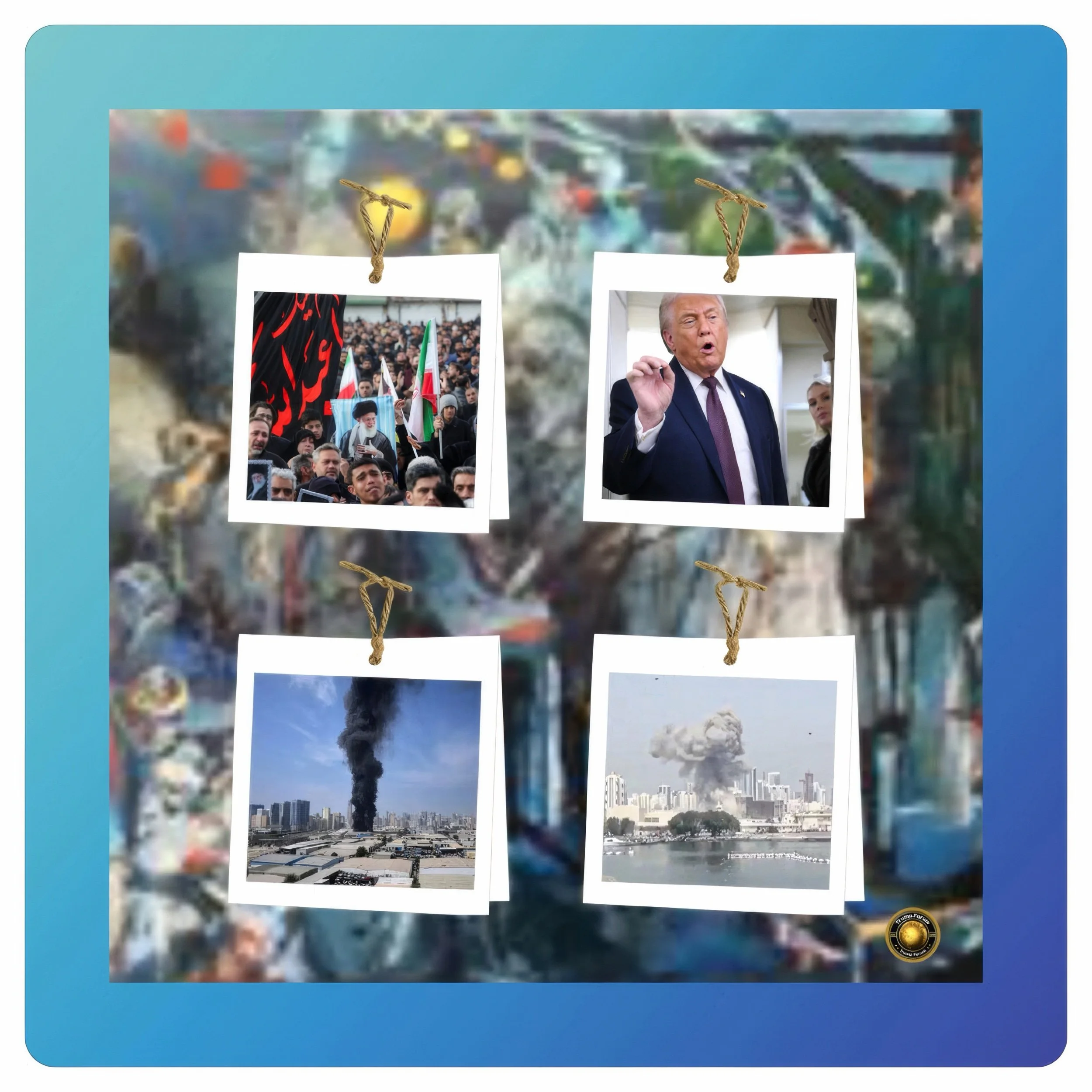
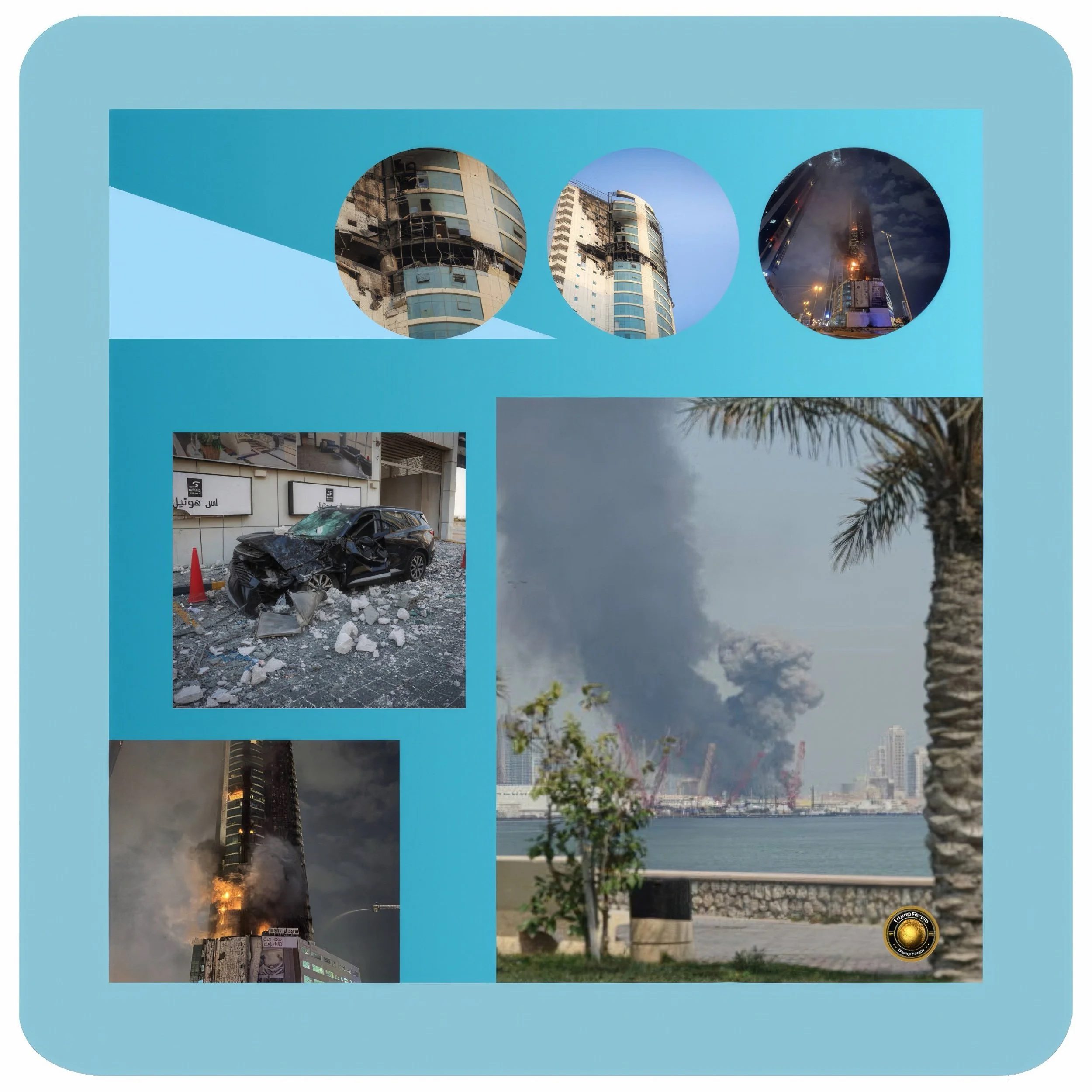
At the onset of the U.S.-Israeli war against Iran, Gulf stakeholders converged around a shared imperative: containment of escalation and protection of economic and territorial stability. Iranian retaliatory strikes targeting energy infrastructure, civilian facilities, and U.S. military bases within Gulf territories created a collective sense of vulnerability that temporarily overcame longstanding political and strategic divergences.
This moment of alignment produced coordinated diplomacy, defensive integration, and a carefully calibrated posture of neutrality aimed at avoiding entrapment in a broader regional war.
Yet this unity has proven contingent rather than structural.
As the conflict has evolved into a prolonged war of attrition, Gulf stakeholders have transitioned from reactive crisis management to forward-looking strategic positioning.
In doing so, underlying differences in threat perception, economic dependency, political risk tolerance, and external alignment have resurfaced.
The result is a gradual but consequential unraveling of wartime cohesion.
Some Gulf stakeholders now view continued pressure on Iran as strategically advantageous, potentially diminishing Tehran’s regional influence and reshaping the balance of power.
Others perceive prolonged conflict as an existential threat to their economic models, which depend on stability, predictable trade flows, and investor confidence.
This divergence is compounded by uncertainty surrounding the reliability of the U.S. security umbrella, the evolving role of Israel within the regional landscape, and the enduring necessity of coexistence with Iran as a neighboring power.
The fragmentation unfolding within the Gulf does not manifest as open rupture but as a subtle divergence in policy, signaling, and strategic intent.
It reflects a deeper transformation in how Gulf stakeholders conceptualize security, sovereignty, and regional order.
The implications extend beyond the current conflict, suggesting the emergence of a more fluid, multipolar Gulf landscape in which alignment is situational and strategic autonomy increasingly prioritized.
Introduction
From Crisis Cohesion to Strategic Division: Gulf States Split Over War, Security, and Iran Policy
Wars of choice often begin with assumptions of control.
Wars of attrition, by contrast, expose the limits of that control and reveal the deeper structures that shape political behavior.
The ongoing conflict involving the United States, Israel, and Iran has entered this latter phase.
For Gulf stakeholders, the transition from shock to endurance has altered not only the operational environment but also the strategic calculus underpinning their responses.
At the outset, the Gulf’s reaction was shaped by immediacy.
Iranian strikes on infrastructure and military installations presented a direct threat that demanded collective action.
The priority was defensive: protect territory, stabilize markets, and avoid escalation. Unity was both a necessity and a signal—to adversaries, to global markets, and to external partners.
Over time, however, the nature of the conflict has shifted. It is no longer defined by discrete episodes of escalation but by sustained pressure across multiple domains: military, economic, and informational.
This shift has forced Gulf stakeholders to confront longer-term questions about their position within the regional order.
These questions do not admit of uniform answers.
The unraveling of Gulf unity is therefore not simply a reaction to the war’s duration but a reflection of deeper structural differences.
It is a process through which latent divergences become explicit under the pressure of sustained conflict.
Understanding this process requires examining not only the immediate dynamics of the war but also the historical, economic, and strategic foundations of Gulf policy.
History and Current Status
The Gulf’s Strategic Crossroads: Escalation Versus Restraint in an Unfolding Regional War Landscape
The modern Gulf security landscape is the product of layered dependencies and periodic crises.
Since the late 20th century, Gulf stakeholders have relied heavily on external security guarantees, particularly from the United States.
This arrangement provided a degree of stability that enabled rapid economic development and integration into global markets.
At the same time, it created a structural reliance that limited strategic autonomy.
Internal cohesion within the Gulf has historically been uneven.
Periods of cooperation have alternated with episodes of tension, most notably during intra-Gulf disputes that exposed competing visions of regional leadership and policy.
These divisions, however, were often contained by shared concerns about external threats, particularly Iran.
Iran’s role in the regional landscape has been both adversarial and unavoidable.
Its geographic proximity, ideological orientation, and network of regional partnerships have made it a central factor in Gulf security calculations.
Efforts to deter Iranian influence have coexisted with attempts to manage tensions through diplomacy, reflecting a dual strategy of deterrence and coexistence.
The outbreak of the current war disrupted this balance.
Iranian retaliation targeted not only military assets but also economic infrastructure, signaling a willingness to impose costs on Gulf stakeholders for their association with U.S. forces.
This created a shared sense of exposure that temporarily aligned Gulf policies.
In the present phase, however, the conflict’s persistence has altered the strategic environment.
The immediate shock has dissipated, replaced by a more complex set of considerations.
Gulf stakeholders are no longer responding to a single, shared threat but to a spectrum of risks and opportunities that vary according to their individual circumstances.
Key Developments
Between Deterrence and Diplomacy: Gulf Divisions Deepen Amid Prolonged U.S.-Israeli War Against Iran
Several key developments have driven the transition from unity to divergence.
The first is the normalization of conflict. What was initially perceived as an exceptional crisis has become an enduring condition?
This normalization reduces the urgency of collective action and allows individual priorities to reassert themselves.
The second development is the differentiation of economic impact.
While all Gulf stakeholders are affected by the conflict, the degree and nature of that impact vary.
States with diversified economies and global financial integration are particularly sensitive to instability, as disruptions to trade and investment flows have immediate consequences.
Others, with different economic structures, may perceive greater tolerance for risk.
The third development is the evolving role of external stakeholders.
The United States remains a central security provider, but its strategic intentions and long-term commitments are subject to debate.
Israel’s increasing involvement introduces new dynamics, offering both opportunities for alignment and risks of entanglement.
Other global powers, while less directly involved, influence the broader strategic context through economic and diplomatic engagement.
Finally, there is the internal dimension of political legitimacy. Gulf stakeholders must balance external strategy with domestic stability.
Public opinion, economic expectations, and political narratives all shape policy choices, particularly in a context where prolonged conflict can strain social and economic systems.
Latest Facts and Concerns
Fragile Alliances: How Prolonged Conflict Is Redrawing Gulf Security Thinking and Regional Power Balances
The current landscape is defined by a set of interrelated concerns that shape Gulf decision-making.
Chief among these is economic vulnerability. The Gulf’s prosperity is built on the assumption of stability.
Energy exports, trade routes, and investment flows all depend on predictable conditions.
The war threatens this foundation, introducing volatility that can undermine long-term economic planning.
Another concern is strategic uncertainty.
The reliability of external security guarantees, particularly from the United States, is not in question in terms of capability but in terms of consistency.
Gulf stakeholders must consider scenarios in which external support is delayed, conditional, or recalibrated.
The relationship with Iran remains a central dilemma.
While Iran is a source of threat, it is also a permanent feature of the regional landscape.
Complete isolation or defeat of Iran is neither feasible nor necessarily desirable from the perspective of long-term stability.
This creates a need for strategies that combine deterrence with engagement.
The role of Israel adds another layer of complexity.
For some Gulf stakeholders, alignment with Israel offers strategic advantages, particularly in terms of security cooperation and technological exchange.
For others, it raises political and social challenges that must be carefully managed.
Cause-and-Effect Analysis
Gulf States Face Strategic Fragmentation as War Forces Hard Choices on Iran, Israel, and U.S.
The unraveling of Gulf unity can be understood through a framework that combines structural and contingent factors.
Structurally, the Gulf is characterized by diversity in economic models, political systems, and strategic priorities.
These differences are not new, but they are amplified under conditions of sustained conflict.
Contingently, the nature of the war itself influences behavior.
A short, decisive conflict might have reinforced unity by producing a clear outcome.
A prolonged war of attrition, by contrast, creates space for divergence. As the immediate threat recedes, the costs and benefits of different strategies become more salient.
From a game theory perspective, the situation resembles a coordination problem under uncertainty.
In the initial phase, coordination is facilitated by a shared perception of risk. Over time, as perceptions diverge, the incentives for coordination weaken.
Each stakeholder must decide whether to align with others or pursue an independent strategy, taking into account both immediate outcomes and long-term positioning.
The economic dimension introduces additional complexity.
The trade-off between security and stability is not uniform across stakeholders.
For some, increased security through the weakening of Iran may justify short-term economic costs.
For others, the preservation of economic stability is paramount, even if it requires accepting a degree of strategic risk.
Game Theory and Escalation Dynamics
The Gulf’s strategic divergence can be modeled through escalation ladder theory combined with multi-actor game theory.
At the core is a repeated game in which stakeholders must choose between escalation, restraint, or hedging in each round.
In the early stage, all players adopt restraint due to high uncertainty and high cost of miscalculation.
As information improves and the conflict stabilizes into predictable patterns, stakeholders reassess payoffs.
Those who perceive that escalation will weaken Iran without catastrophic spillover shift toward tacit support for continued pressure.
Others, whose payoff structures prioritize economic continuity, shift toward de-escalation.
This creates a mixed-strategy equilibrium. No single strategy dominates, and outcomes depend on the interaction of choices.
The risk lies in misalignment: if stakeholders pursuing escalation trigger responses that impose costs on those pursuing restraint, the system becomes unstable.
The escalation ladder itself is no longer linear. It operates across domains, including cyber operations, economic measures, and proxy engagements.
This multidimensionality complicates coordination, as actions in one domain can have unintended consequences in another.
Economic Modeling and Energy Security
The Gulf’s economic model is uniquely sensitive to instability due to its reliance on energy exports and global trade integration.
The war introduces several channels of disruption. Direct attacks on infrastructure reduce production capacity.
Threats to shipping routes increase insurance costs and delay deliveries. Market volatility affects pricing and investment decisions.
From an economic modeling perspective, the situation can be understood as a shock to both supply and expectations.
Supply disruptions reduce output, while uncertainty affects investment and consumption decisions.
The interaction of these factors can produce nonlinear effects, amplifying the overall impact.
Diversification efforts undertaken by Gulf stakeholders in recent years are designed to mitigate such risks.
However, these efforts are still in progress, and the core dependence on stability remains. This reinforces the preference among some stakeholders for de-escalation and conflict containment.
Future Steps
The End of Gulf Consensus: Diverging War Strategies Reveal Competing Visions for Regional Order
Looking ahead, Gulf stakeholders are likely to pursue strategies that reflect both convergence and divergence.
On one level, there will be continued efforts to maintain a baseline of cooperation, particularly in areas such as defense coordination and economic stability.
On another level, individual strategies will diverge according to national priorities.
Security diversification is likely to accelerate. This includes strengthening domestic capabilities as well as exploring partnerships beyond traditional alliances.
Diplomatic engagement with all major stakeholders, including Iran, will remain an important tool for managing risk.
Economic resilience will also be a focus.
This involves not only diversification but also the development of mechanisms to absorb shocks and maintain stability under adverse conditions.
Conclusion
From Unity to Fragmentation: How Prolonged War Is Reshaping Gulf Strategy and Regional Order
The unraveling of Gulf wartime unity is a process rather than an event.
It reflects the interaction of structural diversity and contingent pressures within a rapidly evolving strategic landscape.
While the initial response to the war demonstrated the capacity for coordination, the subsequent divergence highlights the limits of that coordination.
The Gulf is entering a phase in which strategic autonomy and flexible alignment will play a greater role.
This does not imply the end of cooperation but rather its transformation.
The challenge for Gulf stakeholders is to manage this transition in a way that preserves stability while accommodating diversity.
The outcome will shape not only the trajectory of the current conflict but also the broader evolution of regional order.