Trump’s Iran War Gamble Backfires as Strategic Miscalculations Undermine U.S. Power and Global Credibility
Executive summary
Strategic miscalculation, eroding credibility, and the paradox of power in modern conflict
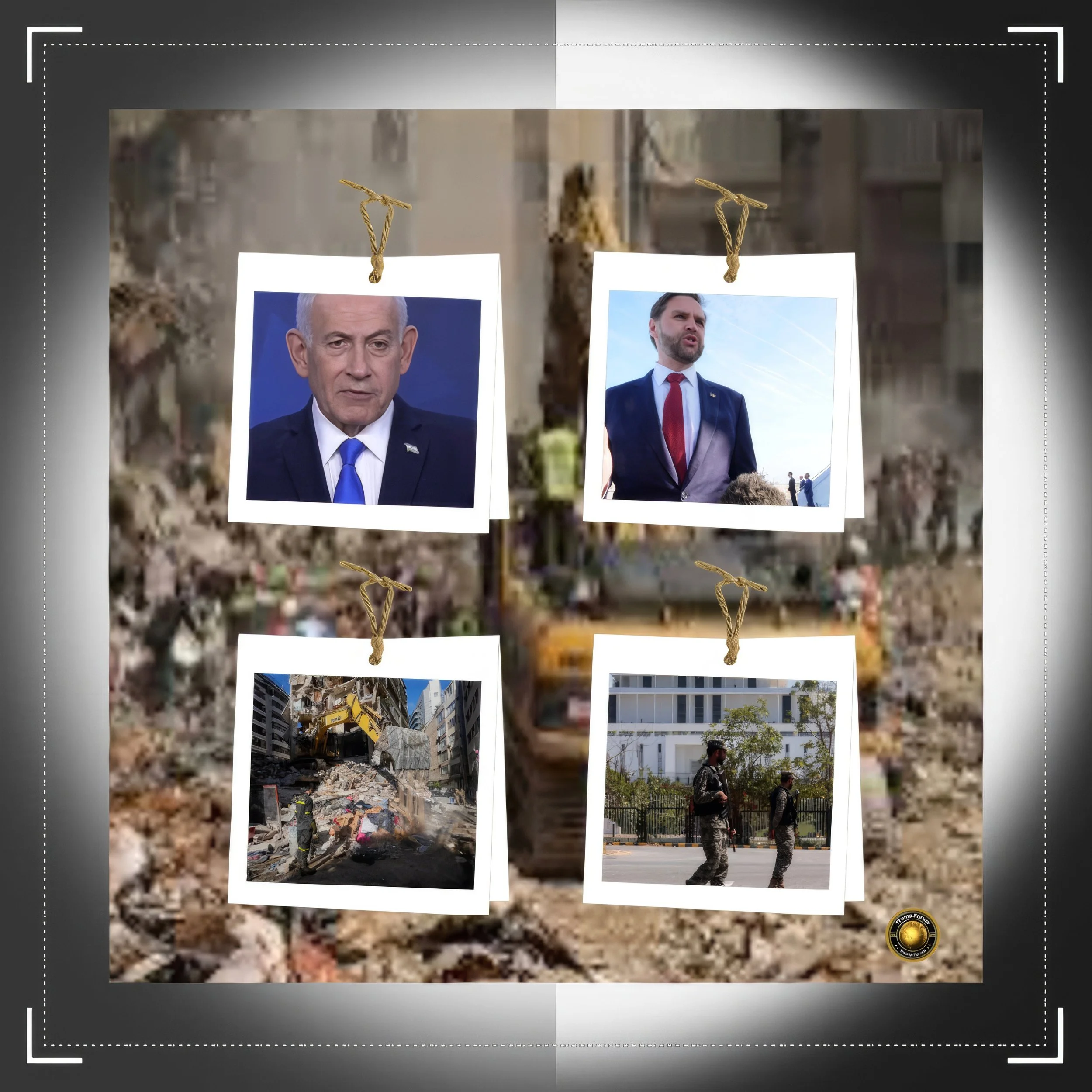
The war involving the United States, Israel, and Iran has evolved into a defining stress test of contemporary American strategy.
If the fragile ceasefire holds, the outcome does not resemble a conventional victory or defeat but rather a redistribution of strategic advantage. Among all stakeholders, the figure most politically and strategically diminished is Donald Trump.
Trump entered the conflict with ambitions that blended coercive diplomacy, military intimidation, and domestic political signaling.
His expectation was that calibrated force would compel Iran to capitulate or at least negotiate from a position of weakness. Instead, the war revealed the limits of such a strategy.
Iran demonstrated resilience, adaptability, and an ability to impose costs without engaging in direct conventional confrontation.
The conflict has weakened U.S. credibility among allies, exposed divisions within the Western coalition, and accelerated global skepticism about American strategic coherence.
Markets reacted not with confidence but volatility, especially in energy and shipping sectors.
The war also deepened internal American political divisions, complicating Trump’s domestic narrative of strength and control.
Most critically, the war underscored a structural shift in global conflict: power is no longer defined solely by military superiority but by endurance, narrative control, and asymmetric capability.
Trump’s approach, rooted in an earlier paradigm of overwhelming force, failed to account for this transformation.
Introduction
The illusion of controlled escalation and the return of strategic uncertainty
Modern wars rarely unfold according to the expectations of those who initiate them.
The Iran conflict illustrates this principle with unusual clarity.
When Trump authorized strikes intended to weaken Iran’s strategic infrastructure, he did so under the assumption that escalation could be controlled. The expectation was not total war but a calibrated demonstration of power.
This assumption proved flawed. Iran responded not with capitulation but with a layered strategy combining missile strikes, proxy operations, cyber disruption, and economic signaling.
The result was not escalation dominance by the United States but escalation uncertainty.
Trump’s broader vision for American power rested on the belief that unpredictability itself could serve as a strategic asset.
By keeping adversaries uncertain, he aimed to compel concessions without prolonged conflict. However, unpredictability can also erode trust among allies and create opportunities for adversaries.
The war revealed that unpredictability without a coherent strategic framework leads not to dominance but to instability.
Allies hesitated, adversaries adapted, and the global system absorbed shocks in ways that diluted American leverage.
History and current status
From maximum pressure to contested stalemate in the evolving conflict landscape
The roots of the conflict lie in the collapse of the nuclear agreement framework and the subsequent policy of maximum pressure pursued by the Trump administration.
Economic sanctions were designed to cripple Iran’s economy and force renegotiation. While they imposed significant costs, they did not achieve strategic compliance.
Over time, Iran adapted by diversifying economic channels, strengthening regional alliances, and investing in asymmetric capabilities.
The Revolutionary Guards expanded their influence, not only within Iran but across the broader Middle Eastern landscape.
The transition from economic pressure to military confrontation marked a critical shift.
The strikes initiated by the United States and Israel were intended to degrade Iran’s capacity and signal resolve. Instead, they triggered a cycle of retaliation that neither side could fully control.
At present, the conflict has reached a fragile equilibrium.
The ceasefire reflects exhaustion rather than resolution. Both sides retain the capacity to escalate, yet both face constraints that discourage further immediate confrontation.
For Trump, this outcome represents a strategic setback.
His initial objectives—compellence, deterrence, and domestic political gain—have not been fully realized.
Instead, the conflict has produced ambiguity, which in geopolitical terms often favors the more adaptable stakeholder.
Key developments
Turning points that reshaped the conflict and undermined strategic expectations
Several developments altered the trajectory of the war.
The first was Iran’s ability to strike regional targets without provoking a decisive U.S. response.
This demonstrated that escalation could be managed by Iran as well as by the United States.
The second was the disruption of global shipping routes.
Attacks near the Strait of Hormuz and other chokepoints signaled that Iran could impose costs on the global economy, thereby internationalizing the conflict.
This shifted pressure onto the United States from its own allies.
The third was the divergence among Western stakeholders.
European states expressed concern about escalation and sought diplomatic solutions, while regional actors pursued their own security calculations.
This fragmentation weakened the coherence of the coalition aligned with Washington.
The fourth was the domestic political reaction within the United States.
Initial support for decisive action gave way to concern about prolonged engagement, economic impact, and strategic clarity.
Trump’s narrative of strength encountered growing skepticism.
Latest facts and concerns
A volatile ceasefire, unresolved tensions, and the risk of renewed confrontation
The current ceasefire remains fragile. Iran continues to maintain its regional networks and missile capabilities, while the United States retains significant military presence in the region.
Neither side has dismantled the underlying drivers of conflict.
Energy markets remain sensitive to developments in the region.
Even minor incidents can trigger price spikes, reflecting the structural vulnerability of global supply chains.
Shipping insurance costs and logistical disruptions persist, indicating that economic normalization has not yet occurred.
Diplomatic efforts are ongoing but constrained by mutual distrust.
Negotiations focus on de-escalation mechanisms rather than comprehensive resolution.
This suggests that the conflict may reemerge in different forms.
For Trump, the central concern is political. The war has complicated his ability to present a coherent narrative of success.
Instead of demonstrating decisive leadership, the conflict has highlighted the limits of unilateral action.
Cause and effect analysis
How strategic assumptions produced unintended consequences in the evolving geopolitical landscape
The war can be understood as the product of several interconnected assumptions.
Trump’s strategy assumed that economic pressure would weaken Iran sufficiently to make military escalation decisive. This assumption underestimated Iran’s capacity for adaptation.
Another assumption was that allies would align closely with U.S. actions.
In reality, divergence among stakeholders reduced the effectiveness of collective pressure. This fragmentation allowed Iran to exploit diplomatic openings.
A further assumption was that escalation could be controlled through selective use of force. The conflict demonstrated that once initiated, escalation follows its own logic.
Each action creates incentives for response, leading to cycles that are difficult to predict or contain.
The effect of these miscalculations has been a redistribution of strategic advantage. Iran has not achieved victory, but it has avoided defeat and demonstrated resilience.
The United States has not lost militarily, but it has incurred reputational and strategic costs.
Future steps
Navigating post-conflict uncertainty and redefining American strategic priorities
The path forward requires a reassessment of strategy.
For the United States, this means recognizing that coercion alone cannot achieve complex political objectives.
Diplomacy must be integrated with military capability in a coherent framework.
Rebuilding trust among allies is essential.
The war exposed vulnerabilities in alliance structures that need to be addressed through consultation and coordination. Without such efforts, future conflicts will face similar challenges.
Engagement with Iran remains a contentious but necessary component of long-term stability. While ideological differences persist, mechanisms for communication and de-escalation are critical to preventing renewed conflict.
For Trump, the challenge is both strategic and political.
He must reconcile the gap between his initial ambitions and the outcomes achieved. This may involve reframing the conflict as a demonstration of restraint rather than a failure of strategy.
Conclusion
Power without strategy and the enduring lessons of the Iran conflict
The Iran war illustrates a fundamental principle of modern geopolitics: power without strategy is insufficient.
Military capability provides options, but outcomes depend on how those options are integrated into a coherent vision.
Trump’s approach emphasized strength and unpredictability but lacked the structural coherence necessary for sustained success.
The result was a conflict that exposed limitations rather than demonstrating dominance.
If the ceasefire endures, the war will be remembered not for its battles but for its implications.
It marks a transition in the nature of conflict, where resilience and adaptability outweigh raw power.
For Trump, the war represents a paradox. He sought to redefine American power but instead revealed the constraints that shape it.
In doing so, he has become the central figure in a conflict that underscores the changing dynamics of global politics.