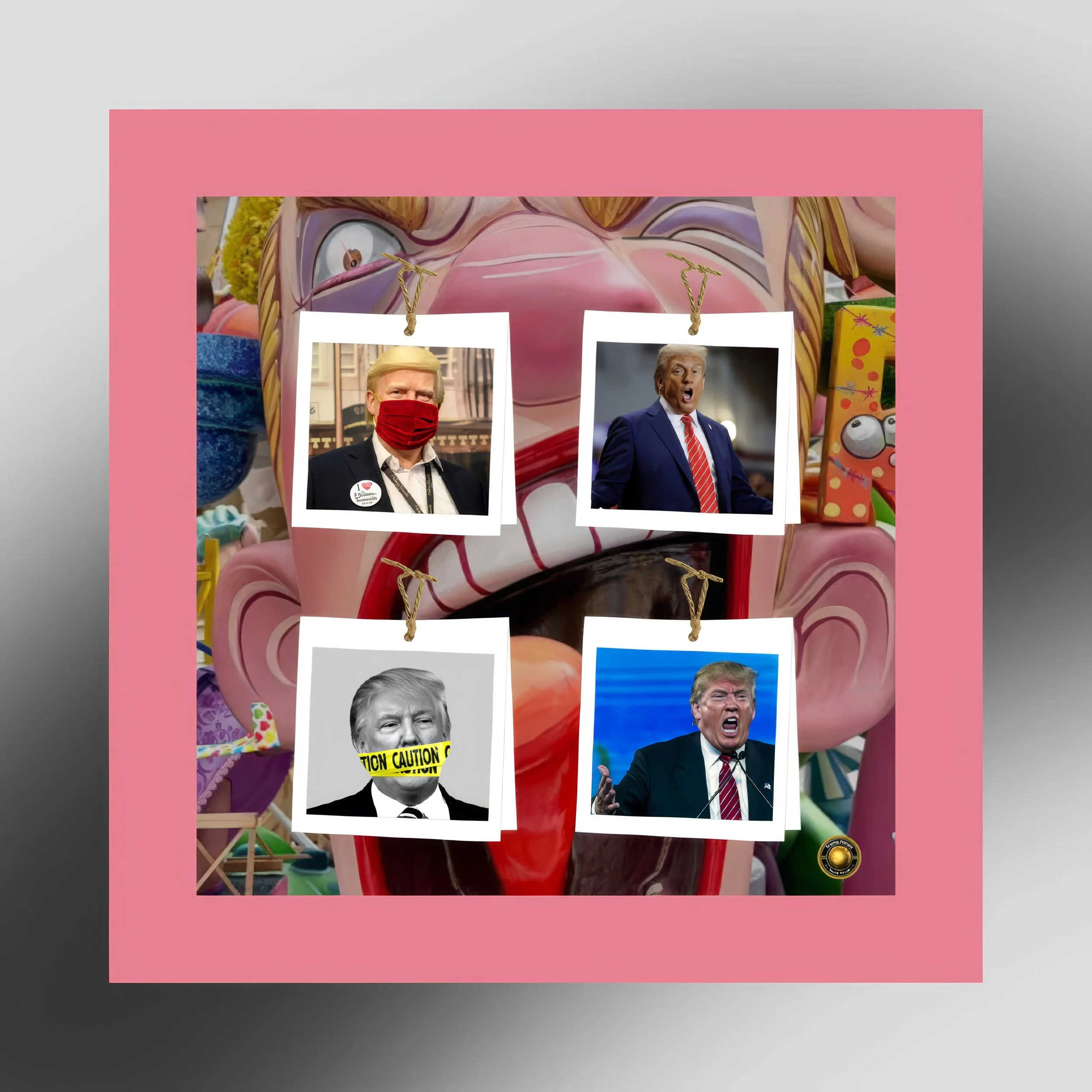
How Donald Trump’s War Speech Destroyed the Foundations of Post-Cold War Diplomacy and Global Trust
Executive Summary
From “Obliterate” to “Stone Age”: The Dangerous Grammar of Trump’s Global Foreign Policy Doctrine
The second term of Donald Trump has produced a foreign policy doctrine unlike anything in the modern democratic tradition.
It is not merely unconventional; it is structurally violent in its linguistic architecture.
Trump’s consistent deployment of extreme, dehumanizing, and apocalyptic language — from threatening to bring Iran “back to the Stone Age” to pledging “total annihilation by midnight” of every bridge and power plant in the country — has ceased to function as rhetorical flourish and has hardened into the operational grammar of United States foreign policy.
FAF article argues that Trump’s rhetorical terror is not a peripheral feature of his presidency but its central instrument: a coercive, performative, and ultimately counterproductive mechanism that has accelerated a shooting war in Iran, fractured the transatlantic alliance, destabilized global energy markets, and eroded the institutional foundations of international order.
By examining the historical lineage of coercive diplomacy, the psychological architecture of Trump’s linguistic choices, the unfolding catastrophe of the 2026 Iran war, and the cascading geopolitical consequences across multiple regions, FAF analysis reaches a sobering conclusion: when the leader of the world’s most powerful democracy substitutes intimidation for persuasion and spectacle for strategy, the consequences are not merely diplomatic — they are human, economic, and civilizational.
Introduction
Sing of the Rage: Trump’s Coercive Rhetoric and the Making of a Modern Greek Tragedy in Iran
There is a classical concept in Greek tragedy known as hubris — the fatal overconfidence of a powerful figure who believes himself exempt from the consequences visited upon lesser mortals. The chorus warns.
The gods observe. And the hero, driven by an incapacity to recognize the limits of his own power, accelerates toward destruction.
It is a framework that the ancient Athenians understood with terrible clarity, and it is one that the current international landscape, now scarred by nearly 40 days of open warfare between the United States, Israel, and Iran, invites with uncomfortable precision.
Donald Trump does not speak the language of Thucydides or Pericles.
He speaks in superlatives, threats, and apocalyptic declarations. He speaks of obliterating countries, of returning civilizations to the Stone Age, of total annihilation by specific deadlines.
He describes the landscape of diplomacy as a game of dominance to be won through fear, not a process of consensus to be achieved through patient alignment of interests.
And yet the world is compelled to take him seriously, not because his rhetoric is strategically coherent — it demonstrably is not — but because the United States possesses the military capacity to make his words devastatingly literal.
This is the fundamental paradox of Trump’s rhetorical terror. It functions as intimidation precisely because of the asymmetry of power it channels, yet it consistently produces outcomes that undermine the strategic interests it claims to advance. The evidence is now overwhelming.
The Iran war, which began on February 28th, 2026, has killed more than 7,300 people in its first 34 days, including at least 890 civilians, among them 180 minors.
Brent crude oil surpassed $126 per barrel at its peak following the closure of the Strait of Hormuz, in the largest disruption to global energy supply since the 1970s oil crisis.
NATO allies are mobilizing for strategic autonomy from Washington. China and Russia are deepening their influence in the Middle East.
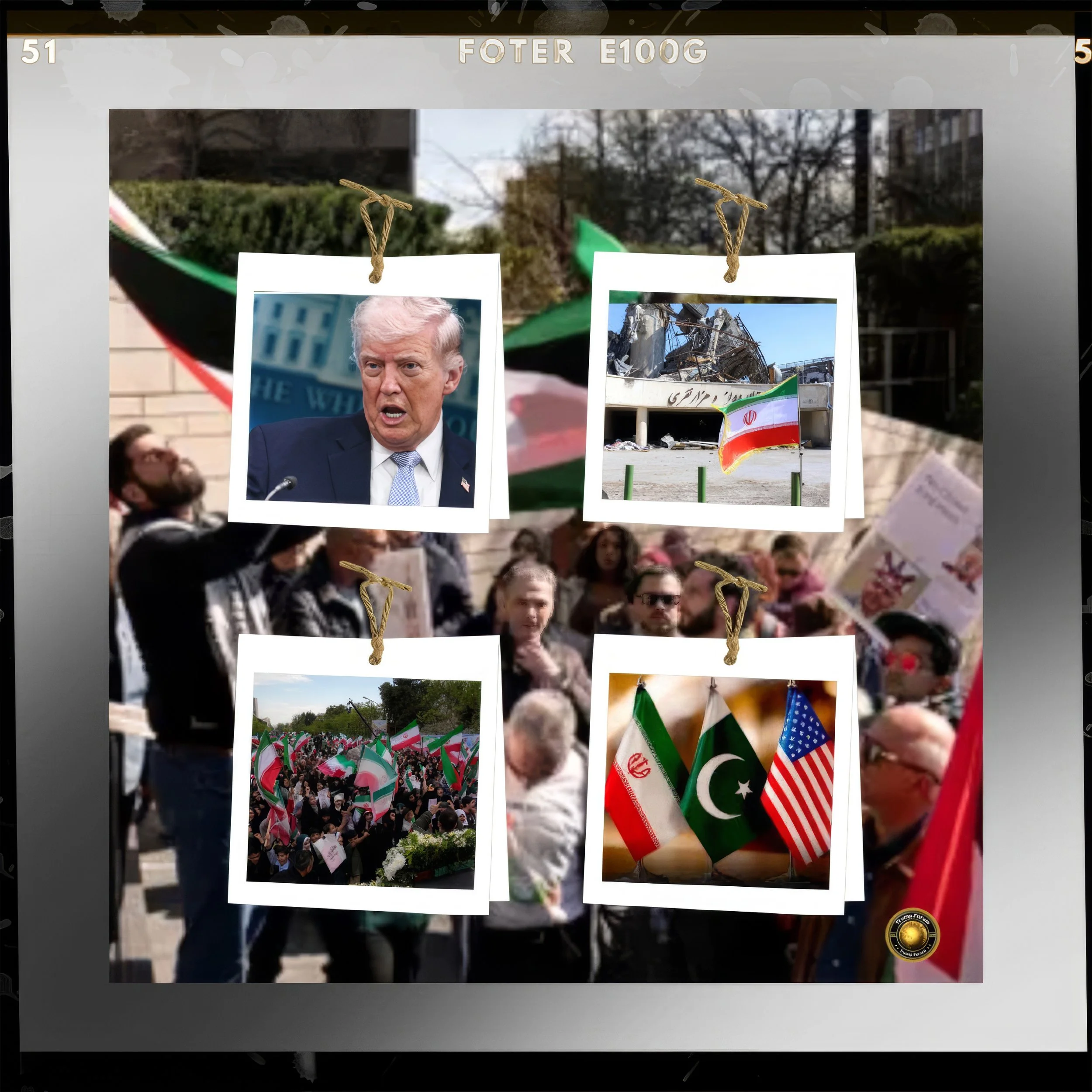
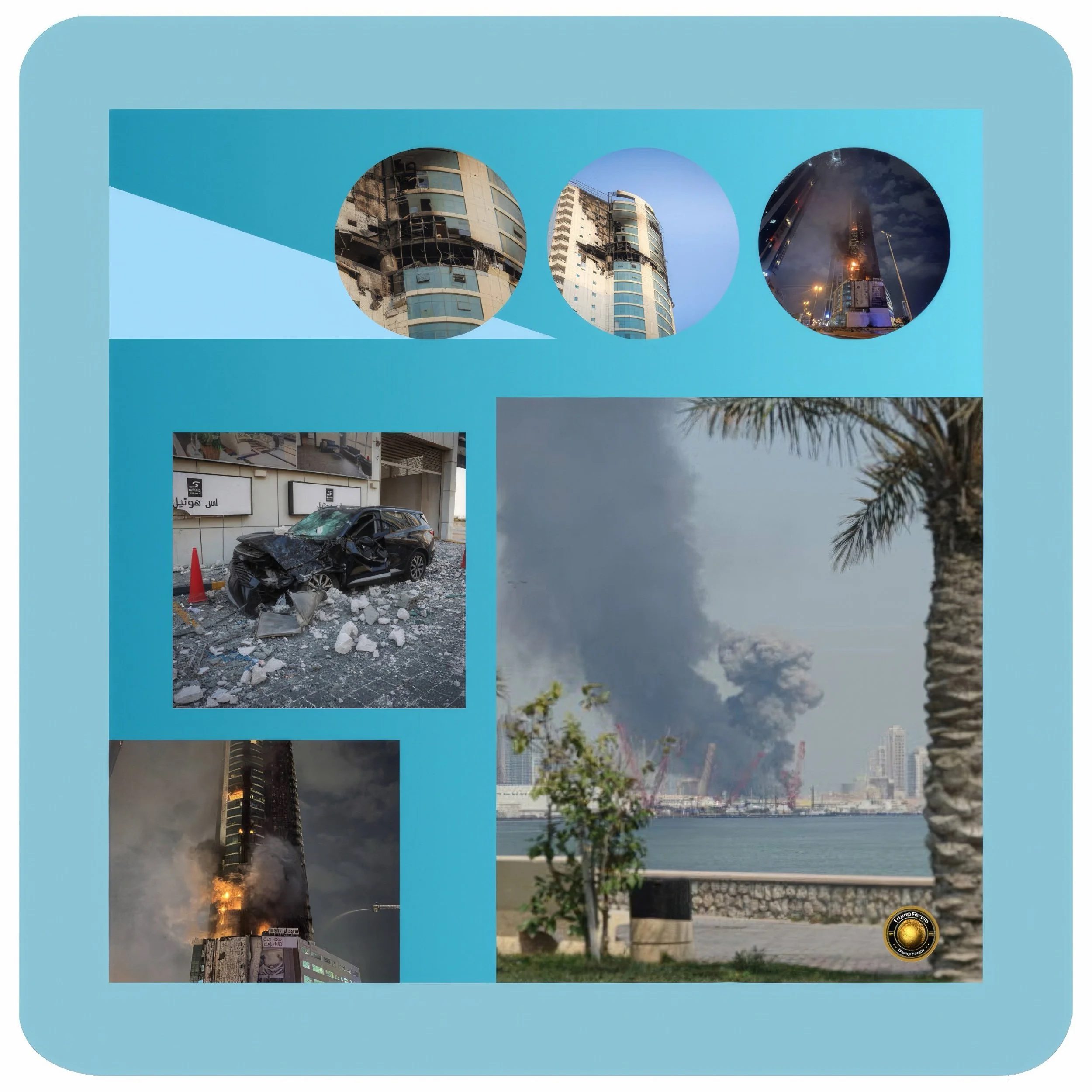
And Iran, far from capitulating to Trump’s ultimata, has rejected every ceasefire proposal, including a 45-day pause brokered by Pakistan, while issuing its own 10-point counterproposal and threatening to strike vital infrastructure — desalination plants, oil facilities, and power grids — across the Gulf.
This is not a story of diplomatic success. It is a story of rhetorical terror producing precisely the catastrophe it claimed to prevent.
History and Current Status
When Language Becomes Lethal: The Catastrophic Convergence of Bluster, Bombs, and Broken Alliances
To understand Trump’s rhetorical register, one must first understand its historical antecedents — and the ways in which his second term has both inherited and radicalized them.
The use of coercive language in American foreign policy is not novel.
Curtis LeMay, the US Air Force general who oversaw the firebombing of Japan in World War II, spoke publicly in 1965 of bombing North Vietnam “back into the Stone Age.”
Richard Armitage, former US Deputy Secretary of State, reportedly delivered a similar threat to Pakistan’s intelligence chief in the immediate aftermath of the September 11 attacks, warning that Pakistan’s failure to cooperate would see it “bombed back to the Stone Age.”
Trump’s April 1st, 2026, primetime address to the nation, in which he threatened to “bring them back to the Stone Age, where they belong,” thus placed him in a lineage of American officials who have reached for prehistoric metaphors to signal existential menace.
But there is a crucial distinction. LeMay was a military commander speaking in wartime. Armitage was a covert operative delivering a private ultimatum.
Trump is a sitting president delivering these threats in primetime addresses, on social media platforms, and in White House press conferences — transforming what was once a back-channel instrument of statecraft into a performative spectacle of dominance broadcast to every government, market, and population on earth.
The rhetorical violence has been institutionalized.
Trump’s first term (2017-2021) established the template.
He threatened North Korea with “fire and fury like the world has never seen,” called for “completely destroying” it from the United Nations General Assembly rostrum, described Venezuelan leader Nicolás Maduro as “a Cuban puppet,” and characterized immigrants as “animals” and “vermin.”
A 2024 linguistic analysis found a sharp uptick in violent and exclusionary terminology in Trump’s speeches compared to any modern predecessor, approaching rhetorical registers historically associated with authoritarian consolidation rather than democratic governance.
His second term, which began in January 2025, has applied this template to a vastly more expansive and consequential landscape.
Within months, Trump threatened Canada with annexation, called for “reclaiming” the Panama Canal by force if necessary, pledged military action in Mexico, imposed tariffs on eight European NATO allies as leverage to acquire Greenland, and — in what constitutes the most consequential deployment of his rhetorical doctrine — escalated a long-standing nuclear standoff with Iran into open military conflict.
The current status is one of acute and unresolved crisis.
As of April 7th, 2026, the United States and Israel are conducting their most intensive strikes yet on Iranian territory, with Defense Secretary Pete Hegseth confirming that US forces are carrying out more strikes than any day since the war’s start.
Trump has issued an ultimatum demanding that Iran fully reopen the Strait of Hormuz by a deadline he has repeatedly extended — first to April 6, then to 8:00 PM ET on April 7th — threatening “complete demolition” of all Iranian bridges and power plants if the deadline passes without compliance.
Iran has rejected the 45-day ceasefire proposed by Pakistan and other regional intermediaries, insisting on a complete and permanent cessation of hostilities — a demand Washington has not endorsed.
The humanitarian consequences are now measurable in thousands of lives.
Human rights organizations have confirmed at least 1,407 civilian deaths in the first three weeks of the conflict, a figure that continued to rise through April, with at least 890 confirmed civilian deaths and 6,410 military personnel killed in the first 34 days.
Over 300 health and emergency facilities have been damaged.
At least 1,500 children have been injured.
Key Developments
The Tragedy of Hubris: Donald Trump’s Iran War and the Ancient Drama Playing Out on the World Stage
The architecture of Trump’s rhetorical terror and its relationship to the Iran war can be traced through several defining developments.
The Coercive Diplomacy Framework
From the moment Trump returned to power, his administration explicitly abandoned the traditional diplomatic model of interest alignment and consensus building in favor of what analysts at the Lawfare Institute have termed “substitution of intimidation for persuasion.”
As articulated in Trump’s 2025 National Security Strategy, the doctrine centered on U.S. dominance in every hemisphere, aggressive use of economic coercion, and military signaling as a first resort rather than a last.
The strategy — far from deterring adversaries — encouraged the very aggressive behaviors it sought to suppress.
The Greenland Episode
January 2026 offered the world a definitive case study in coercive diplomacy.
Speaking at the World Economic Forum in Davos, Trump announced a 10% tariff on imports from eight European NATO nations — Denmark, Norway, Sweden, Finland, France, Germany, the Netherlands, and the United Kingdom — to be raised to 25% by June if Washington did not receive control of Greenland.
Danish Prime Minister Mette Frederiksen declared that Europe “would not be blackmailed.”
French President Emmanuel Macron invoked the EU’s Anti-Coercion Instrument, described by observers as a “trade bazooka.”
Denmark’s annual intelligence outlook explicitly noted for the first time that the United States had become a coercive power willing to threaten military force — “even against allies.”
The episode marked an inflection point: Washington’s own institutional legitimacy as the guarantor of the liberal international order had been publicly questioned by the allies it created that order to protect.
Iran: From Ultimatum to War
The escalation with Iran followed a trajectory of rhetorical ratcheting that ultimately foreclosed diplomatic alternatives.
Trump issued escalating ultimata to Tehran through early 2025, demanding nuclear dismantlement under arbitrary deadlines.
Failed negotiations, as the American Progress Institute anticipated, created incentives for nuclear acceleration rather than restraint.
In June 2025, the Trump administration launched military strikes on Iranian facilities in what analysts at Modern Diplomacy described as a “botched” operation that damaged U.S. credibility without achieving strategic objectives.
By February 28th, 2026, open warfare had commenced.
The U.S.-Israel alliance struck Iranian military, nuclear, and — subsequently — civilian infrastructure. Iran closed the Strait of Hormuz on March 4th, triggering the largest energy supply disruption since the 1970s, with Brent crude surging past $126 per barrel and QatarEnergy declaring force majeure on all exports.
As April arrived, Trump’s language had descended into its most extreme register to date.
In a primetime address on April 1st, he threatened to bring Iran “back to the Stone Age, where they belong,” and warned that the United States would hit Iran “very hard” if it attempted to reconstitute its nuclear program, saying: “If we see them make a move, even a move for it, we’ll hit them with missiles very hard again.”
On April 6th, he declared: “We have a strategy, thanks to the might of our military, that would see every bridge in Iran destroyed by midnight tomorrow, with every power facility rendered inoperable, burning, and exploding beyond repair. I mean total annihilation by midnight.”
The Strait of Hormuz Crisis
The closure of the Strait of Hormuz has produced consequences that extend far beyond the immediate military conflict.
The strait is the passage through which approximately 20% of global oil flows. Its closure has caused a systemic collapse of the Gulf Cooperation Council’s economic model, stranded oil and liquefied natural gas exports, sent aluminum, fertilizer, and helium prices surging, and pushed global supply chains into emergency configurations not seen since the 2020 pandemic.
Gas prices in the United States have surpassed $4 per gallon, with Trump characterizing the economic pain as “temporary” — a claim that has deepened public skepticism.
Polls have shown that majorities of Americans oppose military action in Iran and oppose the deployment of ground troops.
Alliance Fracture and Strategic Realignment
The collateral damage of Trump’s rhetorical terror has extended with particular severity to the NATO alliance. Traditional partners — Saudi Arabia, the UAE, and Turkey — condemned the June 2025 strikes on Iran and called for a return to diplomacy.
China and Russia have exploited the strategic vacuum created by Washington’s self-imposed isolation, expanding their influence in the Middle East by deepening support for Tehran.
NATO members are investing in strategic autonomy from the United States at an accelerated pace, with Germany, France, and the UK increasing defense cooperation outside of the NATO command structure.
The European Commission has formally expressed doubt about U.S. reliability as a strategic partner.
Latest Facts and Concerns
Fire, Fury, and the Strait of Hormuz: Trump’s Rhetorical Escalation and the World’s Most Dangerous Choke Point
As of April 7, 2026, the Iran war is entering its most critical phase.
Trump’s deadline for Iran to reopen the Strait of Hormuz or face the destruction of its energy infrastructure loomed over every diplomatic and military calculation.
Key facts demand careful analysis.
Trump threatened “total annihilation” of Iranian bridges and power plants by a specific midnight deadline — language with no precedent in the modern history of democratic statecraft.
The Iranian government rejected a 45-day ceasefire proposal brokered by Pakistan, insisting on permanent peace rather than a temporary pause.
Iran communicated its own 10-point peace proposal through Pakistani intermediaries, which the White House described as “not good enough.”
US forces are conducting their most intensive strike operations since the war’s beginning.
A US Air Force F-15 was shot down over Iran, with 2 airmen rescued in a Special Operations mission.
At least 7,300 people have been killed in 34 days of fighting, including 890 confirmed civilians and 180 minors.
Over 18,550 people have been injured.
The Iranian Embassy in Japan called Trump’s “Stone Age” remarks “savage and warmongering.” Congresswoman Yassamin Ansari called them “vile and dangerous.”
Global financial markets responded with sharp falls in equity prices and surges in oil.
Brent crude has exceeded $120 per barrel, its highest sustained level in 4 years.
The Strait of Hormuz closure has been described as the largest disruption to global energy supply in the history of the oil market.
The concern that pervades every analytical assessment of the current situation is not simply that the war is ongoing — it is that the rhetorical structure of Trump’s engagement with it has systematically eliminated the diplomatic pathways through which it could be resolved.
When a head of state promises “total annihilation by midnight” and then extends the deadline, extends it again, and issues new ultimata in each fresh news cycle, he performs a kind of diplomatic self-erasure: adversaries cannot trust his commitments, allies cannot rely on his restraint, and mediators cannot build agreements on foundations that dissolve with each social media post.
Cause-and-Effect Analysis
Total Annihilation by Midnight: Trump’s Language of Destruction and Its Cascading Global Consequences
The causal relationship between Trump’s rhetorical register and the deterioration of international order is not circumstantial. It is structural, iterative, and well-documented.
The first mechanism is the substitution of fear for credibility.
Classical deterrence theory — from Schelling to Waltz — holds that coercive threats work when they are proportionate, credible, and accompanied by assurances that compliance will be rewarded.
Trump’s threats violate all three conditions.
They are systematically disproportionate (“total annihilation,” “Stone Age”), erratically credible (deadlines are set and then extended), and offer no reliable assurances.
The result, as Lawfare analysts observed, is that coercive attempts help “crystallize a negative view of the United States, reinforcing his targets’ search for alternatives.”
Iran has not capitulated to any threat. Instead, it has closed the Strait, accelerated its asymmetric campaign, and hardened its negotiating position.
The second mechanism is the alienation of indispensable partners.
Every successful exercise of American power in the post-World War II era — from the Marshall Plan to Desert Storm to the Iran nuclear deal — relied on multilateral coordination and alliance legitimacy.
Trump’s rhetorical contempt for allies — expressed through tariff coercion, public humiliation, and explicit threats against their territorial sovereignty — has eroded the architecture of cooperation on which US power projection depends.
Saudi Arabia, the UAE, and Turkey condemned the Iran strikes. Europe is pursuing strategic autonomy.
China and Russia are capitalizing on the vacuum.
The most powerful military in the world is fighting the Iran war in a state of strategic isolation.
The third mechanism is the escalatory spiral. Violent rhetoric, once deployed publicly, creates domestic and international pressures that make de-escalation politically costly.
When Trump threatens “Stone Age” bombardment in a primetime speech watched by millions, he constrains his own flexibility. Accepting a ceasefire that Iran characterizes as its victory — even a genuinely favorable one — becomes politically unacceptable in the domestic arena his rhetoric has constructed.
The Greek tragedians understood this dynamic precisely. Hubris does not merely threaten the enemy; it destroys the avenues of the protagonist’s own retreat.
The fourth mechanism is the normalization of dehumanizing language in international relations.
A 2024 linguistic study found that Trump’s rhetoric approached the vocabulary historically associated with authoritarian consolidation.
By describing an adversary as deserving to be returned to a prehistoric state of existence, Trump engages in a form of civilizational dehumanization that legitimizes maximum force in the public imagination and forecloses the political space for the compromise that any war’s conclusion requires.
When the language of obliteration becomes the standard grammar of statecraft, de-escalation requires linguistic as well as military retreat — a demand no political system produces easily.
The fifth mechanism is the economic self-harm spiral.
Trump’s tariff warfare, initiated as leverage for territorial and strategic goals — Greenland, Panama, Canada, Iran nuclear compliance — has generated retaliatory pressures that are now compounding with war-driven energy price surges.
Gas prices above $4 per gallon, equity market falls, and inflation pressure are now the domestic consequences of a foreign policy doctrine constructed around the proposition that American economic might makes coercion cost-free.
The evidence accumulating in real time suggests the opposite.
Future Steps
The Tragedy of Hubris: Donald Trump’s Iran War and the Ancient Drama Playing Out on the World Stage
The trajectory of the Iran war and the broader crisis of Trump’s rhetorical foreign policy doctrine points toward several plausible futures, none of them uncomplicated.
The most immediately consequential variable is the Strait of Hormuz.
If Trump follows through on his April 7th deadline threat to destroy Iranian power infrastructure, the humanitarian catastrophe — already severe — will escalate to a scale that mobilizes international legal mechanisms, UN Security Council interventions (likely vetoed by the United States, but significant for global opinion), and potentially direct retaliation by Iran against Gulf state infrastructure.
Saudi Arabia and the UAE, already uncomfortable with the conflict, face existential economic risk from a prolonged Strait closure: both nations depend on the waterway for their energy exports.
A broader Gulf war would shatter the GCC economic model entirely.
The diplomatic landscape remains technically open.
Pakistan’s intermediary role, while producing no breakthrough to date, represents the kind of quiet, sustained engagement that has historically succeeded in ending wars that loudly proclaimed ultimata cannot.
Iran’s 10-point peace proposal, dismissed by Washington as “insufficient,” contains within it the recognition that Tehran wants an exit — but not one framed as capitulation to Trump’s rhetorical ultimatum.
Any successful negotiation will require Washington to abandon the performative humiliation of adversaries and accept an agreement that both sides can present as a negotiated settlement rather than a defeat.
For the transatlantic relationship, the damage is more structural and less immediately reversible.
Europe’s acceleration toward strategic autonomy — driven by Trump’s tariff coercion over Greenland, his public skepticism about NATO’s Article 5 commitments, and his demonstrated willingness to treat allies as obstacles rather than partners — represents a generational shift in the architecture of Western security.
Germany, France, and the UK are investing in a European defense identity that does not depend on Washington’s reliability.
This may, paradoxically, produce a more resilient multilateral order — but only after a period of dangerous instability in which adversaries calculate that the Western alliance’s coherence cannot be assumed.
The domestic political equation in the United States is also in motion.
With majorities opposing the Iran war and $4-per-gallon gas prices generating economic anxiety, the political sustainability of Trump’s rhetorical escalation is being tested in real time.
History suggests that American presidents who adopt maximalist rhetoric without securing rapid, visible military victories face acute political pressure.
Trump’s characterization of the economic pain as “temporary” and his insistence that Iran is “negotiating in good faith” even as he threatens total annihilation represent an increasingly incoherent dual message that sophisticated political observers on both sides of the aisle are beginning to notice.
For the international order more broadly, the most important question is whether the institutional architecture constructed since 1945 — the United Nations system, international humanitarian law, multilateral trade frameworks, the Nuclear Non-Proliferation Treaty — can absorb the shock of a great power conducting warfare under the explicit rhetorical doctrine of civilizational annihilation.
The answer, thus far, is that it is absorbing but not holding. Iran’s rejection of ceasefire proposals reflects a calculation that the current international environment does not impose sufficient costs on the United States for its maximalist posture.
China and Russia’s blocking of Security Council action confirms that calculation.
And the willingness of regional powers — including traditional US partners — to distance themselves from Washington reflects a profound reassessment of whether alignment with the United States carries net strategic benefits.
Conclusion
The Intimidation Doctrine: How Trump’s Verbal Terrorism Is Rewriting the Rules of Twenty-First-Century Statecraft
Homer opened the Iliad with a word: rage. The rage of Achilles, the poem announced, was the source of “countless agonies” and sent “to Hades many strong souls of heroes.”
The ancient poets understood that rage, however powerful, was ultimately a trap — a force that consumed those who wielded it as surely as it destroyed those it targeted.
Donald Trump’s rhetorical terror operates by a similar logic.
It is powerful, visceral, and immediately imposing. But it is also, in the deepest strategic sense, self-defeating.
A foreign policy built on threats of obliteration, Stone Age bombardment, and total annihilation by midnight does not produce compliant adversaries — it produces hardened ones.
It does not build reliable alliances — it fractures them. It does not stabilize energy markets and global supply chains — it ignites the crises it claims to resolve.
And it does not honor the civilizational commitments that give American power its moral legitimacy in a world that, however imperfectly, is constructed around the proposition that great powers can be trusted to exercise their strength with something more than the grammar of prehistoric destruction.
The Iran war is not yet over. The Strait of Hormuz crisis is not yet resolved. The transatlantic fracture is not yet healed. The global economic consequences of a foreign policy doctrine built on rhetorical terror are not yet fully visible.
But the contours of the tragedy are already drawn with terrible clarity.
The chorus has been warning for years. The gods — in this case, the geopolitical forces of multilateralism, economic interdependence, and the fundamental human resistance to capitulating under threat — are observing.
Trump’s rhetorical doctrine has produced a war.
The question history will ask is whether the architects of American foreign policy will recognize, before the play reaches its final act, that the instrument they have deployed with such confidence is not a weapon.
It is a cage.