Jet Fuel Shock Signals Deeper Global Energy Crisis Beyond Oil Prices Amid Iran War Turmoil
Executive Summary
Why Rising Jet Fuel Prices Are Quietly Reshaping Global Economy During Escalating Iran Conflict Crisis
The ongoing war involving Iran, United States, and Israel has triggered a transformation in global energy dynamics that cannot be understood through crude oil prices alone.
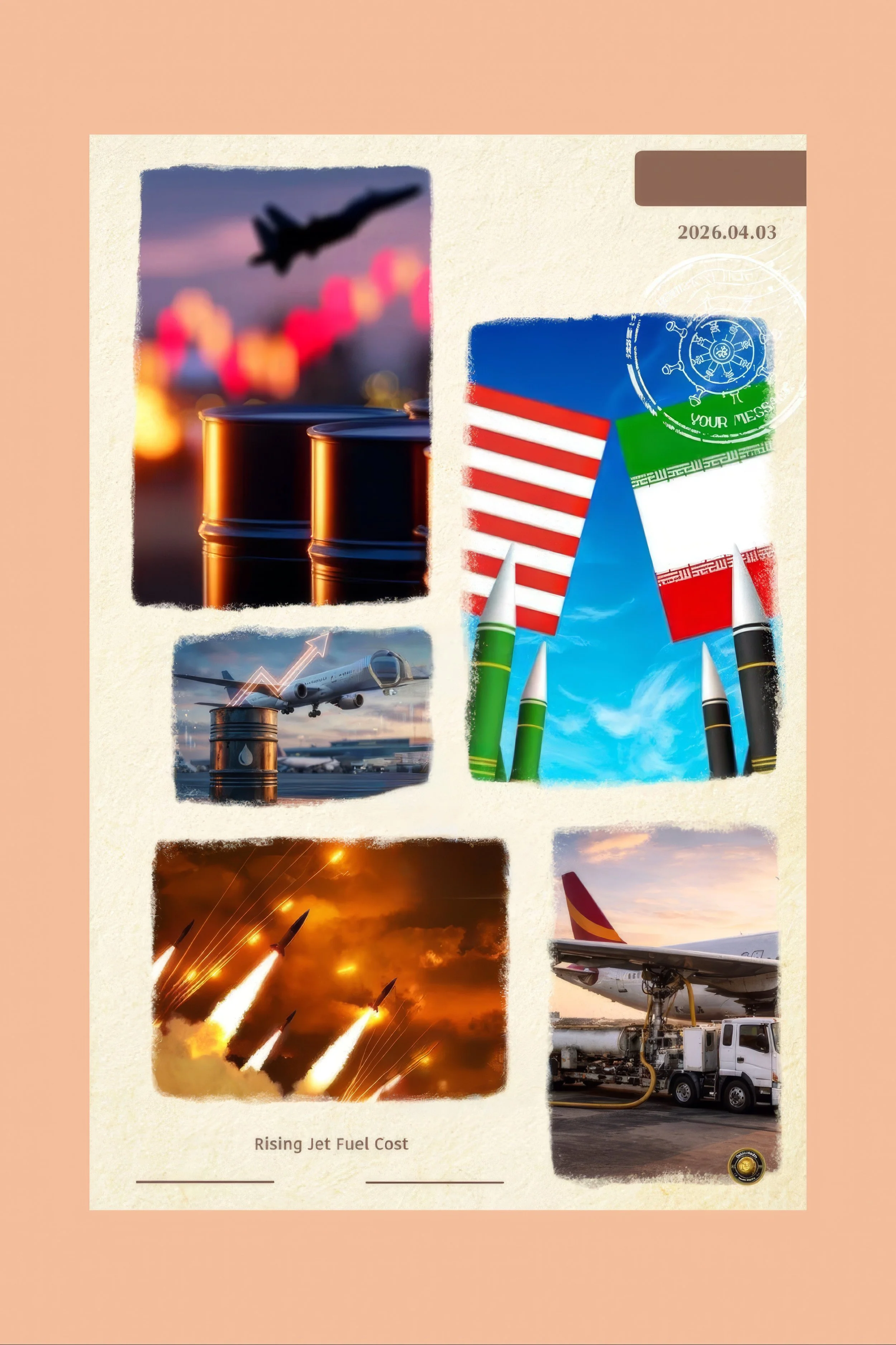
While benchmark crude fluctuates between $100 and $115 a barrel, the true stress signal lies downstream, where jet fuel prices have surged beyond $195 a barrel—more than doubling within weeks.
This divergence reveals a structural rupture between upstream supply and downstream usability.
The crisis is no longer defined by oil scarcity but by the inability to refine, transport, and distribute usable energy under conditions of geopolitical fragmentation and logistical insecurity.
Jet fuel, as the most globally integrated and operationally sensitive refined product, has become the clearest indicator of systemic strain.
The consequences are cascading across aviation, trade, inflation, and global economic integration.
Stakeholders with refining capacity and export leverage are capturing windfall gains, while import-dependent economies and airlines are absorbing severe cost shocks.
The conflict is accelerating the regionalisation of energy systems, the securitisation of supply chains, and the strategic repositioning of energy policy.
Introduction
The Hidden Energy Crisis: Jet Fuel Costs Surge While Oil Prices Mask Real Economic Damage
For much of the modern era, crude oil has served as the central metric of energy stability. Its price movements have been treated as shorthand for geopolitical tension, economic health, and inflationary risk.
Yet this framework reflects an earlier phase of globalisation—one in which supply chains were simpler, refining capacity was more evenly distributed, and geopolitical fragmentation was less pronounced.
Today’s energy system is fundamentally different. It is more complex, more interconnected, and more vulnerable to disruptions at multiple points along the value chain. Crude oil is only the starting point.
The true value—and vulnerability—lies in the transformation of that crude into usable fuels and the delivery of those fuels to end users.
Jet fuel occupies a uniquely strategic position within this system. It powers aviation, which in turn underpins global trade, tourism, and high-value logistics. It is not easily substitutable, and its supply chains are tightly coupled to refining capacity and logistical infrastructure.
The current war has exposed the fragility of this system. While crude supply remains relatively resilient, the downstream processes that convert and deliver energy are under acute stress.
The result is a divergence between crude and refined product prices that signals a deeper structural crisis.
History and Current Status
From Oil to Aviation: How Jet Fuel Became Central Battleground in Global Energy Disruption
The historical template for energy crises is rooted in upstream disruption. The 1973 Oil Crisis demonstrated how supply restrictions could trigger global economic shock.
The 1979 Iranian Revolution reinforced this pattern, as political upheaval translated directly into reduced production and higher prices.
In both cases, the crisis was defined by scarcity at the source. The response was therefore focused on increasing supply, diversifying sources, and building strategic reserves.
The present crisis departs from this model. Global crude production has not collapsed.
Multiple producers continue to supply the market, and strategic reserves provide a buffer against sudden shocks. Yet despite this apparent stability, refined product markets are under intense pressure.
This shift reflects structural changes that have unfolded over decades. Refining capacity has become increasingly concentrated in specific regions, particularly Asia and the Middle East.
At the same time, environmental regulations and economic pressures have led to the closure of refineries in Europe and North America.
The result is a system with reduced redundancy and flexibility. When disruptions occur, the ability to reconfigure supply chains is limited.
The war has amplified these vulnerabilities. Iranian infrastructure has been partially degraded, and sanctions have restricted its integration into global markets.
Military activity in the Persian Gulf has increased risks for shipping, particularly through the Strait of Hormuz, which remains one of the most critical arteries for global energy flows.
Insurance costs for tankers have risen sharply, and some shipping routes have been disrupted or rerouted. These factors have constrained the movement of both crude and refined products, exacerbating price volatility.
Key Developments
Iran War Reveals Fragile Energy System as Refining Bottlenecks Drive Jet Fuel Price Explosion
The evolution of the crisis is shaped by several interconnected developments. One of the most significant is the direct targeting of energy infrastructure.
Airstrikes and sabotage have affected refineries, storage facilities, and pipelines, reducing output and increasing uncertainty.
Sanctions have further fragmented global energy markets. Iranian exports are largely excluded from formal channels, forcing them into alternative networks that are less efficient and more opaque. This reduces overall supply and increases transaction costs.
Logistical constraints have intensified. Shipping routes in the Persian Gulf and surrounding regions are now considered high-risk.
Tankers must navigate potential threats, leading to delays, rerouting, and higher insurance premiums. These disruptions effectively reduce available supply, even when production remains stable.
Demand dynamics are also critical. The recovery of global travel has increased demand for jet fuel at precisely the moment when supply is constrained. This convergence of rising demand and restricted supply has driven prices sharply upward.
Financial markets have responded by repricing risk across the energy complex. Refining margins—often referred to as crack spreads—have widened significantly, reflecting the premium on usable fuels.
Investors are increasingly focused on downstream assets, recognising that the bottleneck lies not in production but in processing and distribution.
Latest Facts and Concerns
Energy Crisis Redefined: Jet Fuel Emerges as Key Indicator of Global Economic Stress and Risk
The most visible manifestation of the crisis is the divergence between crude and jet fuel prices. While crude has increased by approximately 50%, jet fuel prices have more than doubled. This disparity reflects bottlenecks in refining and distribution rather than a simple shortage of raw materials.
Airlines are experiencing acute financial pressure.
Fuel costs account for a substantial share of operating expenses, and the rapid increase in jet fuel prices is eroding margins. Ticket prices are rising, and some routes are being reduced or eliminated.
The impact extends beyond aviation. Air freight, which is essential for high-value and time-sensitive goods, is becoming more expensive.
This affects supply chains for pharmaceuticals, electronics, and perishable goods, contributing to broader inflationary pressures.
Developing economies are particularly vulnerable. Many rely on imported refined products and lack the financial capacity to absorb price increases. This leads to higher transportation costs, increased inflation, and reduced economic growth.
There are also concerns about systemic resilience. The concentration of refining capacity and the vulnerability of key shipping routes create points of failure that can have global consequences.
Cause-and-Effect Analysis
Jet Fuel and the New Energy Shock: How War Is Rewiring the Global Economy
The crisis can be understood as a layered system of cause and effect.
The war disrupts infrastructure and increases risks in key regions, reducing the availability of both crude and refined products. Sanctions further constrain supply by limiting market access and increasing transaction costs.
At the same time, structural factors limit the system’s ability to adapt. The decline in refining capacity in certain regions has created bottlenecks that prevent crude from being converted into usable products.
These constraints lead to higher prices for refined products, particularly jet fuel. As prices rise, airlines and other stakeholders face increased costs, which are passed on to consumers.
Demand for aviation remains relatively inelastic in the short term, sustaining high prices. This creates a feedback loop in which elevated costs reinforce market tightness.
Geopolitical considerations add another dimension.
Energy is increasingly used as a tool of strategic leverage. Stakeholders influence supply and prices to achieve political objectives, transforming markets into arenas of competition.
Who Is Losing and Who Is Benefiting
The distribution of outcomes is uneven and reveals the strategic asymmetries of the current system. Energy-exporting stakeholders with integrated refining capacity are capturing significant gains.
The Saudi Arabia, for instance, benefits from both upstream production and downstream processing, allowing it to capture value across the entire chain.
Asian refining hubs are also benefiting. Their scale and efficiency enable them to take advantage of elevated margins, exporting refined products at premium prices.
In contrast, import-dependent economies are facing severe challenges. Countries in Europe and parts of Asia that rely on imported fuel are experiencing higher costs and inflationary pressures.
Airlines globally are among the most affected stakeholders. Their business models are highly sensitive to fuel prices, and the rapid increase in jet fuel costs is forcing adjustments in pricing, capacity, and strategy.
Consumers ultimately bear the cost through higher ticket prices and increased costs for goods and services.
Financial Markets and Strategic Capital Flows
The crisis is reshaping financial markets in subtle but significant ways.
Capital is shifting toward downstream energy assets, particularly refining and logistics infrastructure. Investors recognise that the scarcity lies not in crude but in the ability to process and deliver it.
Energy companies with integrated operations are outperforming those focused solely on production.
Refining margins have become a key driver of profitability, attracting investment into upgrading and expanding capacity.
At the same time, volatility in energy markets is increasing risk premiums across asset classes.
Airlines and transportation companies are facing higher borrowing costs, reflecting concerns about profitability and sustainability.
Sovereign wealth funds in energy-exporting countries are benefiting from increased revenues, enabling them to expand investments globally. This is contributing to a redistribution of financial power within the global economy.
Geopolitical Realignment and Energy Fragmentation
The war is accelerating the fragmentation of global energy markets. Instead of a unified system, the world is moving toward regional blocs defined by political alignment and logistical connectivity.
Energy trade is increasingly shaped by strategic considerations rather than purely economic ones.
Stakeholders are prioritizing security of supply over efficiency, leading to the development of alternative routes and partnerships.
The Strait of Hormuz remains a critical chokepoint, but efforts are underway to bypass it through pipelines and alternative shipping routes. These initiatives reflect a broader trend toward reducing dependence on vulnerable nodes.
Sanctions regimes are reinforcing this fragmentation. Markets are becoming segmented, with parallel systems operating under different rules and constraints.
Technological Shifts and the Limits of Transition
The crisis is also influencing the trajectory of energy transition. High prices for fossil fuels create incentives for investment in alternatives, including sustainable aviation fuels.
However, the transition is constrained by technological and economic realities.
Sustainable aviation fuels are not yet available at scale, and their costs remain significantly higher than conventional jet fuel.
Electric aviation is still in its early stages and is unlikely to provide meaningful relief in the near term. As a result, the global economy remains heavily dependent on traditional fuels.
The crisis may therefore accelerate investment in alternatives, but it also underscores the difficulty of reducing dependence on fossil fuels in the short term.
Future Steps
Refining Shortages and War Risks Push Jet Fuel Prices Beyond Control While Oil Appears Stable
The future trajectory of the crisis will depend on both geopolitical and structural factors.
A de-escalation of the war could stabilise supply routes and reduce risk premiums. However, structural issues in refining capacity and logistical infrastructure would persist.
Stakeholders are likely to pursue diversification strategies, including expanding refining capacity, developing alternative supply routes, and investing in technological innovation.
Policy responses will be critical. Governments may need to coordinate strategic reserves, provide financial support to affected industries, and implement regulatory changes to enhance resilience.
International cooperation will be essential, but it is increasingly difficult in a fragmented geopolitical environment.
Conclusion
Air Travel, Trade, and Inflation Hit as Jet Fuel Crisis Spreads Across Global Economy
The current energy crisis represents a fundamental shift in the dynamics of global markets.
The focus on crude oil prices obscures the more significant disruptions occurring in refined products, particularly jet fuel.
Jet fuel has emerged as the true harbinger of systemic stress. Its price reflects the interplay of geopolitical conflict, logistical constraints, and structural imbalances.
The implications are profound. Stakeholders must adapt to a more complex and fragmented energy landscape.
The war has accelerated this transformation, exposing weaknesses and forcing a reevaluation of strategies.
The global economy is entering a period of heightened uncertainty. Understanding the dynamics of refined products will be essential for navigating this new reality.