Understanding the race to secure Iran's uranium is crucial. This beginner's guide explains the significance and risks involved in dismantling Iran's nuclear program.
Executive Summary
The United States is thinking about sending soldiers into Iran to take away a very dangerous amount of nuclear material.
The material — called highly enriched uranium — is enough to make nuclear bombs.
FAF article explains what this uranium is, why it is so dangerous, what the options are, and what might happen next.
Introduction: The Leftover Problem
Imagine you clean up a dangerous factory by knocking down all of its machines.
But the chemicals the factory already made are still sitting in metal containers in a locked basement.
Until someone gets those chemicals out, the factory can still cause harm.
That is exactly the situation the United States is facing in Iran right now.
The U.S. military launched huge air strikes against Iran's nuclear facilities in June 2025, destroying the buildings and machines used to make enriched uranium.
Those strikes, called Operation Midnight Hammer, used the biggest bombs America has ever dropped in a real war.
But the uranium those machines had already produced?
That is still there — hidden underground, stored in metal canisters, and potentially enough to build ten or more nuclear weapons.
Now, in early 2026, U.S. President Donald Trump is seriously considering sending in soldiers to physically take that uranium away.
History: How Did Iran Get So Much Uranium?
Iran has been building up its nuclear program for decades.
Back in the 1970s, when the Shah ruled Iran, the country started working on nuclear energy with U.S. help. After the 1979 revolution, the program was briefly paused, then quietly restarted.
For many years, Iran was enriching uranium in secret facilities, including a hidden underground plant at a place called Fordow, buried inside a mountain near the city of Qom.
The world only found out about Fordow in 2009.
In 2015, Iran signed a deal with the United States and other world powers — the Joint Comprehensive Plan of Action, or JCPOA.
Under that deal, Iran agreed to dramatically reduce its nuclear activities in exchange for sanctions relief.
Think of it like a handshake agreement where Iran promised to limit how much uranium it could keep and how far it could enrich it. That deal worked for a few years.
But when Trump pulled the U.S. out of the deal in 2018, Iran gradually walked away from its commitments too.
By 2024 and 2025, Iran had enriched hundreds of kilograms of uranium to 60% purity — a level that is very close to the 90% needed for a nuclear weapon.
When Trump's administration tried to negotiate a new deal in 2025, Iran refused.
The Supreme Leader rejected U.S. demands to stop all uranium enrichment, calling the conditions "excessive and outrageous."
With talks failing, Trump ordered the military strikes.
The buildings were destroyed. But approximately 440 kilograms of that uranium — roughly the weight of a grand piano — is still sitting somewhere deep underground in Iran.
Current Status: What Is Happening Right Now?
After the strikes, the U.S. launched a 2nd round of military operations — called Operation Epic Fury — in February 2026, targeting Iran's leadership and missile systems.
Those strikes further weakened Iran but still did not remove the uranium.
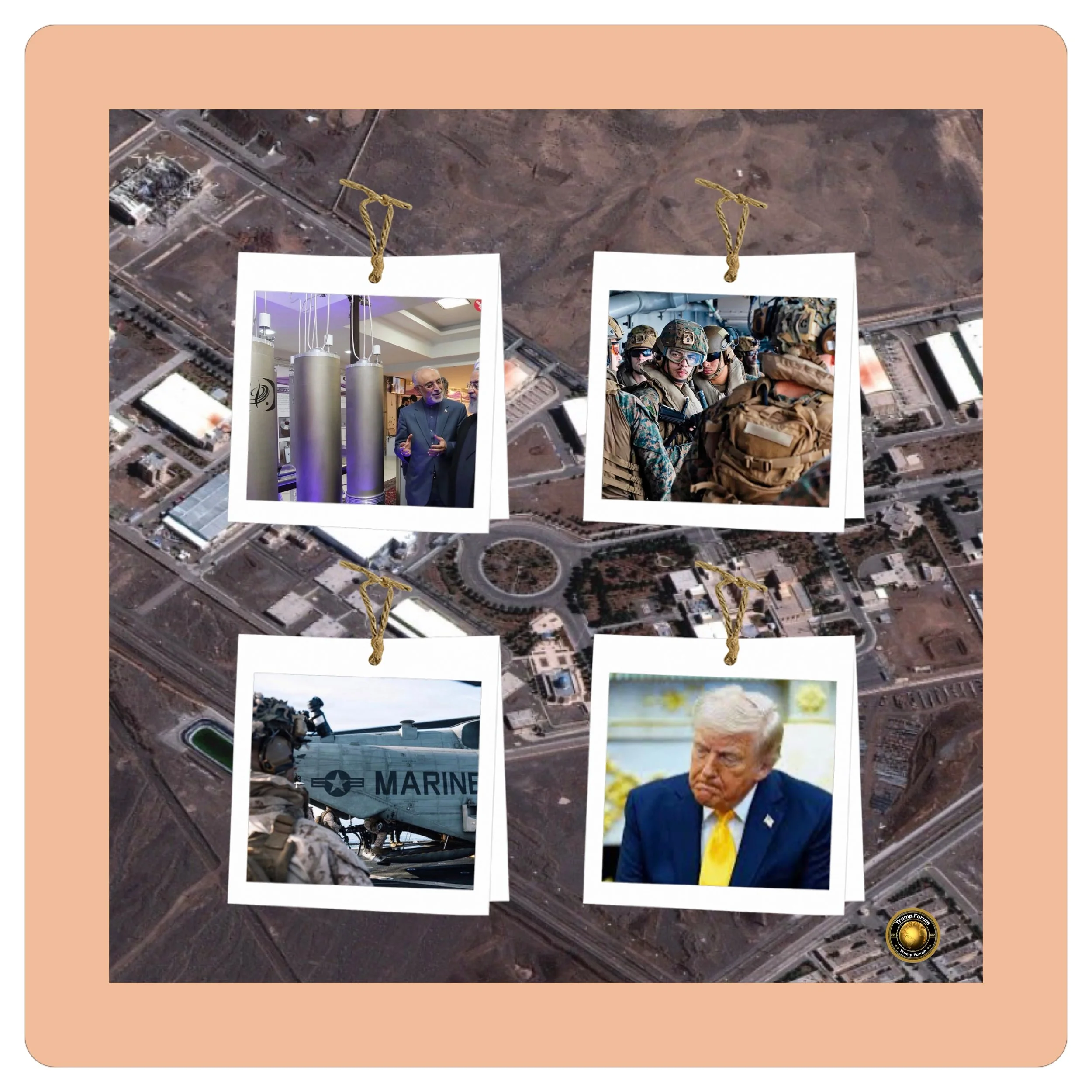
The material is stored in special metal cylinders, similar in size to scuba diving tanks, in underground tunnels and shafts.
The substance inside the cylinders is uranium hexafluoride — a chemical that is solid when cold but turns into a toxic, corrosive gas when it gets warm.
That means you cannot simply pick up these canisters and throw them in a truck. You need specially trained people with specialized equipment to handle them safely.
In late March 2026, President Trump publicly said Iran must hand over what he called "the nuclear dust."
His Secretary of State Marco Rubio told Congress that "people are going to have to go and get it."
Reports from the Wall Street Journal confirmed that the Trump administration is actively reviewing a plan to send American troops into Iran to physically remove approximately 1,000 pounds of enriched uranium.
No final decision has been made, but the possibility is very real and very serious.
Key Developments: The Main Options on the Table
American planners are looking at three main options.
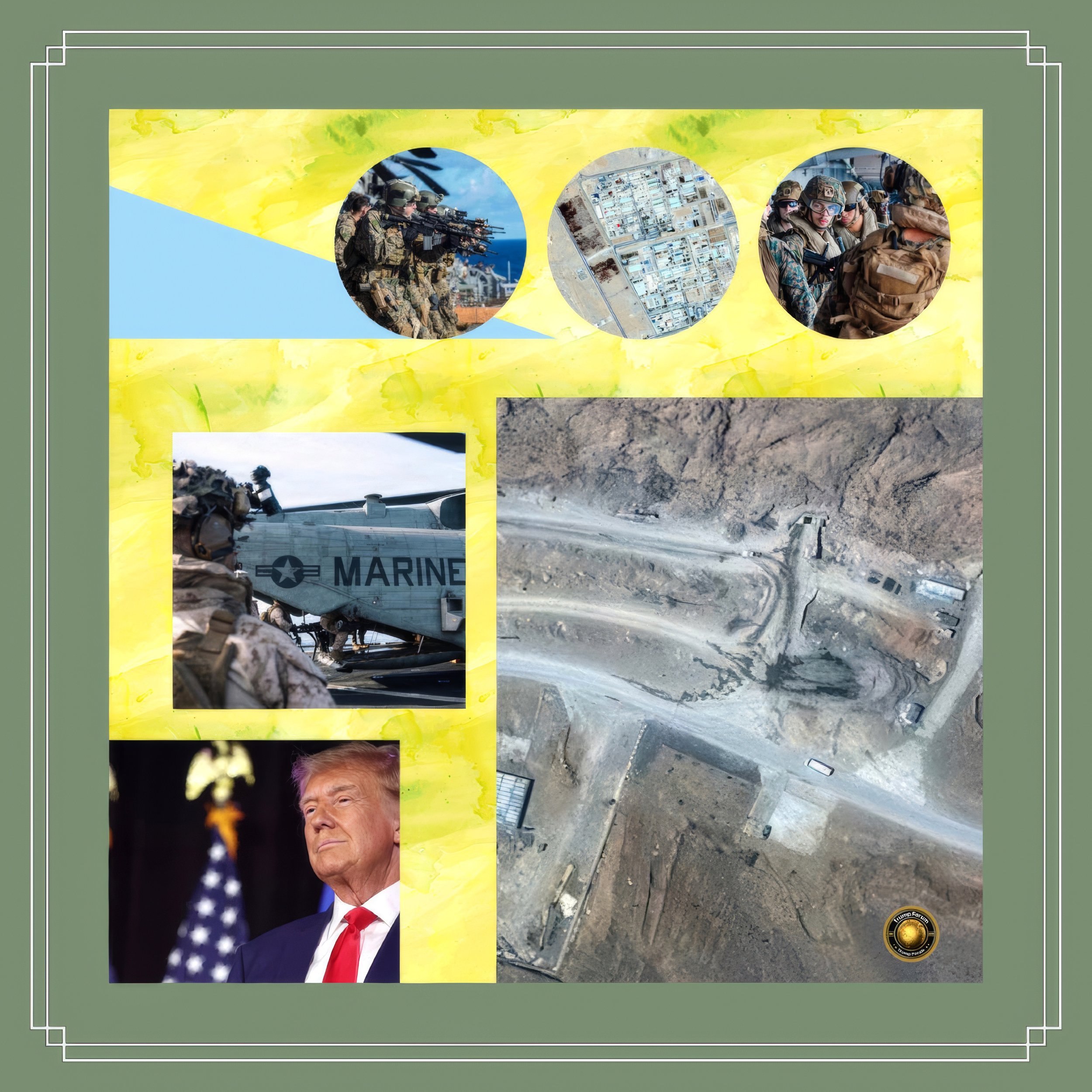
The 1st is physical extraction: send in soldiers and nuclear scientists, locate all the uranium, pack it into specialized containers, and fly it out of Iran.
The 2nd is on-site dilution: send in teams to mix the highly enriched uranium with other material, reducing its purity to a level where it cannot be used for weapons, but without taking it out of Iran.
The 3rd is diplomacy: persuade whatever Iranian authority remains in power to voluntarily hand the uranium over to a neutral third party — possibly Russia or the United Nations nuclear agency, the IAEA.
Each option sounds straightforward on paper. In practice, each is extremely complicated.
Think of the extraction option like being asked to carefully remove a nest of venomous snakes from inside a collapsed mine, deep in hostile territory, while being shot at.
Retired Admiral James Stavridis called it potentially "the largest special forces operation in history."
Analysts estimate it could require more than 1,000 soldiers, engineers, and specialists just to safely access the sites and retrieve the material.
Latest Concerns: What Could Go Wrong?
The biggest practical concern is safety.
Uranium hexafluoride is extremely dangerous. If a canister is dropped, heated accidentally, or damaged during an operation, it releases a toxic gas that can kill people and contaminate a large area.
Any operation would need to be executed with the precision and care of a hospital surgical team — in the middle of a war zone.
The second concern is completeness.
Even if the operation successfully grabs most of the uranium at the known locations, Iran may have hidden some of the material at secret sites that American intelligence does not know about.
If Iran still has three or four warheads' worth of uranium tucked away somewhere, the whole operation would have achieved only partial denuclearization while triggering enormous political and military consequences.
The third concern is what happens to the world's view of nuclear ownership.
If the U.S. physically takes another country's uranium by force, other countries might think: "The only safe nuclear program is one that already has a bomb."
That logic could push more countries toward trying to actually build nuclear weapons faster, which is the opposite of what non-proliferation is supposed to achieve.
Cause and Effect: The Bigger Picture
Here is a simple way to understand the chain of events. Iran built up uranium because talks failed.
The U.S. bombed the facilities but could not destroy the uranium already made. Now the uranium is the main problem left.
If it is not secured, Iran could potentially use it to build a weapon quickly, or it could fall into the hands of a terrorist group if Iran's government collapses entirely.
The air strikes created the urgency, and now the choice is: take the uranium by force, convince Iran to give it up, or try to neutralize it chemically in place.
Future Steps: What Might Happen Next
The most likely scenario that diplomats and analysts hope for is a negotiated deal.
Iran, weakened by two rounds of strikes and with its leadership disrupted, might agree to transfer the uranium to Russia or the IAEA under a supervised process, in exchange for a ceasefire and some form of political guarantee.
This is similar to what happened with Libya's nuclear program in 2003, when Muammar Gaddafi agreed to hand over nuclear materials to avoid military confrontation with the West.
The military extraction option remains on the table but will likely be used only if diplomacy completely fails and intelligence agencies believe they know where all the uranium is located.
Even then, the risks are so high that most professional military advisers have reportedly counselled against it.
The third path — dilution in place — is a technical middle ground that requires Iranian access to the sites and the presence of nuclear scientists. This might be possible in a limited ceasefire scenario but faces enormous security challenges.
What is certain is that the clock is ticking. Every week the uranium sits unsecured, the risk of it being weaponized or moved to an unknown location grows.
The entire purpose of the military campaign against Iran's nuclear program was to prevent a nuclear weapon.
That goal remains incomplete until the 440 kilograms of highly enriched uranium is either removed, neutralized, or accounted for.
The world is watching to see which path the Trump administration chooses — and history will judge the choice by its consequences.